
- شراء عملات مشفرة
- الأسواق
- العقود الآجلة
- تداول فوري
- نسخ التداول
 WE-Launch
After the financial markets were bloodbathed, how do Wall Street tycoons view Trump's tariff policy?

Billionaire Bill Ackman, founder of Pershing Square, has issued a warning to world leaders: "Don't wait for a war to start negotiating, pick up the phone and call the president now."
Ackman's warning is not just hyperbole—it's more like a plea.
A few days ago, President Trump's tariff plan was like a nuclear bomb, causing chaos in global markets, with the U.S. stock market losing $6 trillion in market value in a week, and the Dow Jones Industrial Average experiencing its largest intraday swing of 2595 points on Monday. Oil prices fell, interest rates were cut, inflation concerns lingered, and Trump confidently declared on Truth Social, "Tariffs are a wonderful thing," but Wall Street titans couldn't sit still, speaking out one after another and forming a symphony of tariffs on Wall Street.
On April 6, 2025, Ackman posted on Twitter, "By imposing massive and disproportionate tariffs on our friends and enemies, we are simultaneously waging a global economic war on the world. We are heading towards a self-induced economic nuclear winter."
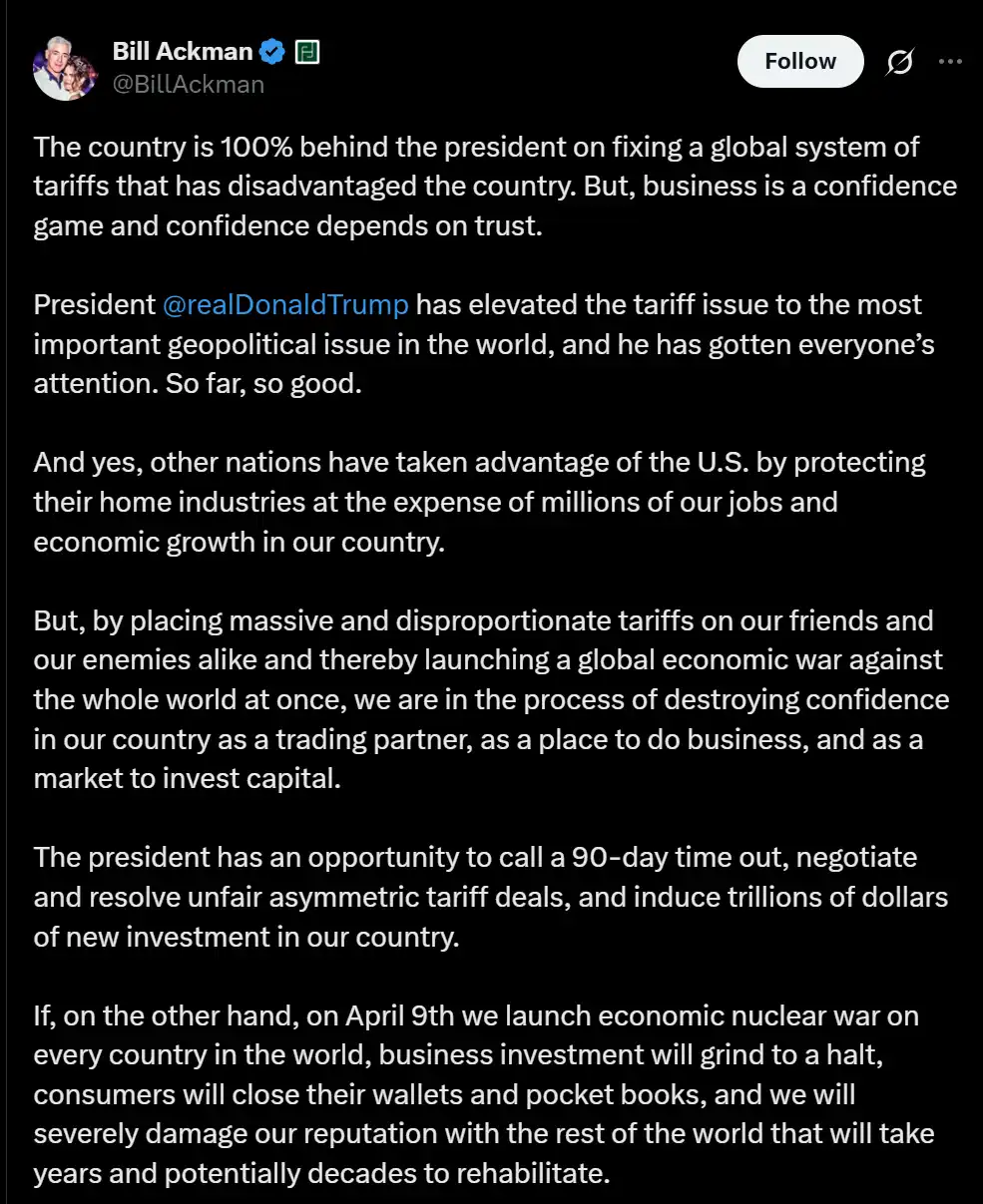
Faced with the Trump administration's escalating tariff policy, Ackman is not the only one sounding the alarm. Many Wall Street heavyweights have openly opposed the expansionary tariff policy, even those who once supported him or hoped for deregulation and economic growth under his administration.
Former Goldman Sachs CEO Lloyd Blankfein also questioned, "Why not give them a chance?" and suggested that Trump should negotiate with other countries on a "reciprocal" tariff rate.
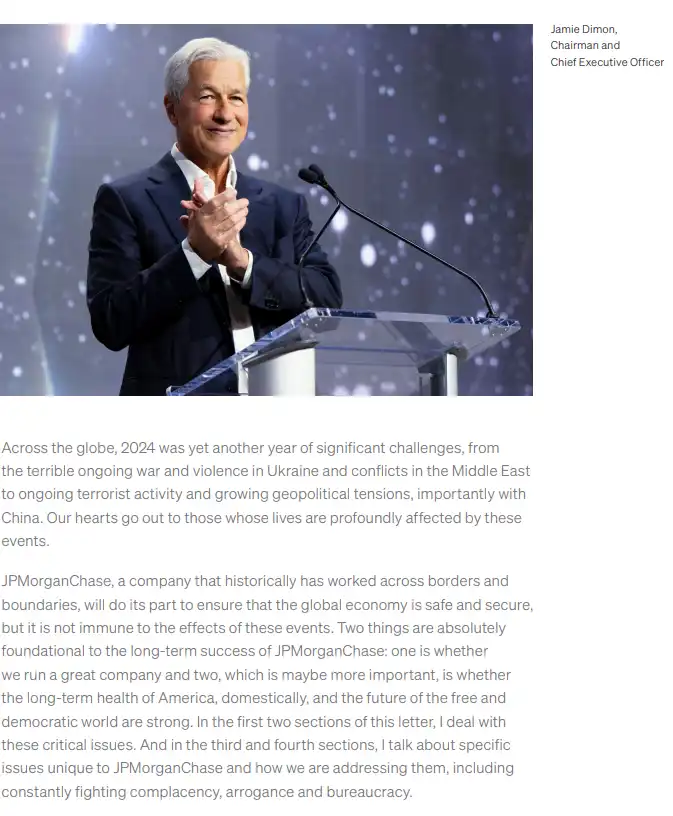
Other voices included Boaz Weinstein, CEO and President of Gerber Kawasaki Ross Gerber, and JPMorgan Chase CEO Jamie Dimon.
Boaz Weinstein predicted that "the avalanche is just beginning." Dimon bluntly said, "The sooner this issue is resolved, the better, as some of the negative impacts will accumulate over time and be difficult to reverse," warning that a catastrophic split in America's long-standing economic alliances could occur. Gerber called President Donald Trump's tariff policy "destructive," saying it could lead to an economic recession.
It is clear that even those accustomed to market volatility, and even financial titans who once supported Trump, are now beginning to worry that this tariff war could trigger uncontrollable chain reactions.
More and more criticism has been directed at Trump for not giving any indication that he is ready to back down from the punitive trade reform set to begin on April 9. The market can tolerate uncertainty but not strongman "policy speculation." This collective outcry from Wall Street indicates that capital is unwilling to foot the bill for political gambling.
Oaktree Capital's Co-Chairman Howard Marks, in an interview with Bloomberg, noted that the tariff policy has altered the established global trade and economic pattern, making the market environment more complex. Investors need to consider a range of unknown variables, such as the inflation that tariffs may trigger, supply chain disruptions, retaliatory measures from trading partners, and the potential impact of these factors on economic growth and asset prices.
Marks's warning actually reveals the anxiety of the entire professional investment community. When policy dominance overrides market rules, the traditional analytical framework is failing, and even the most seasoned fund managers must relearn how to place bets in a global economic game.
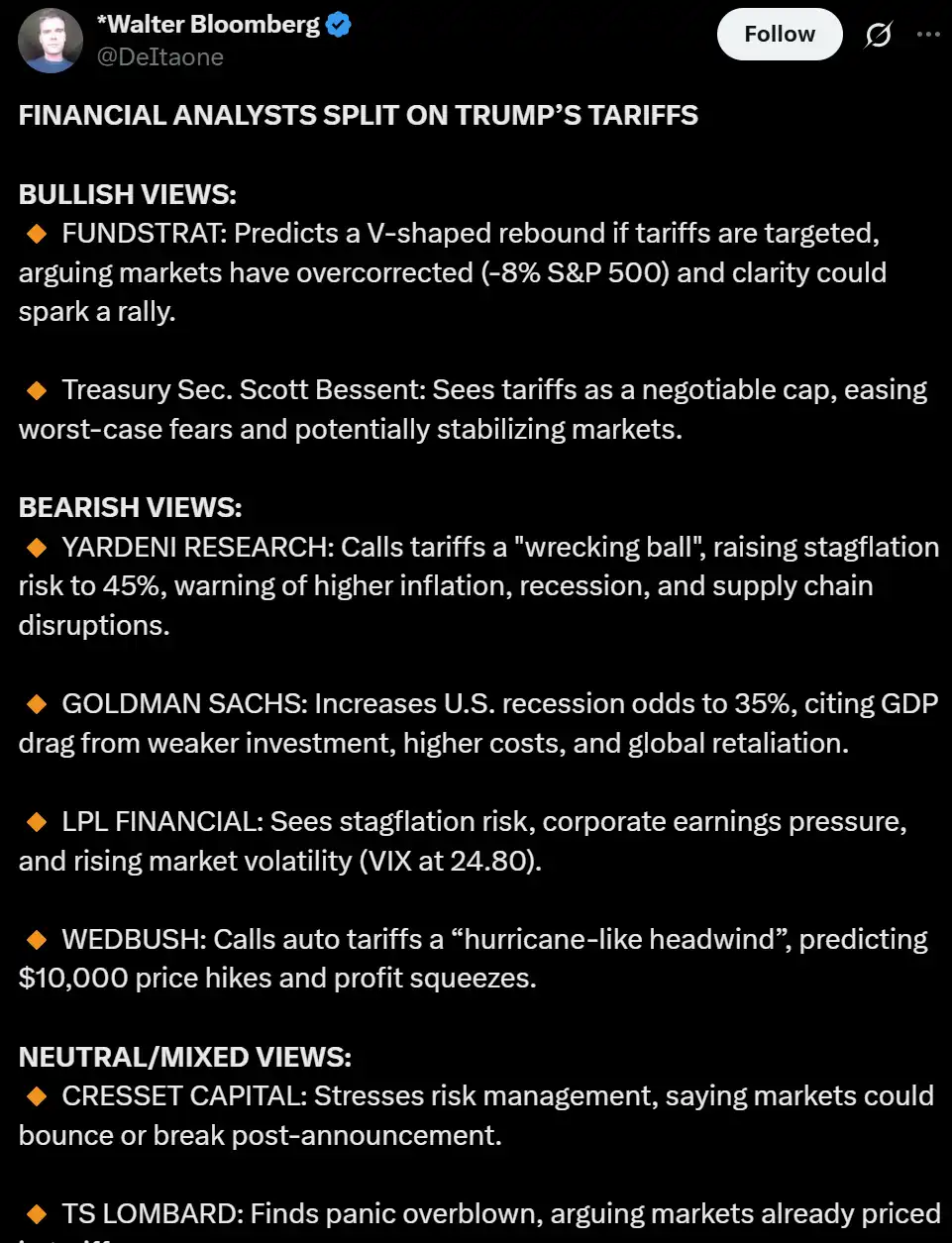
As of April 3, 2025, Wall Street's stance on Trump's tariff policy remains divided. The bulls camp, such as Fundstrat and Treasury Secretary Scott Besent, believe that the previous market adjustment was oversold and that once the policy direction becomes clear, it may trigger a "V-shaped rebound." The bears warn of escalating risks, with Yardeni Research likening tariffs to a "wrecking ball," Goldman Sachs raising the U.S. recession probability to 35%, and LPL and Wedbush expressing concerns about stagflation shadows, corporate profit pressures, and the automotive industry facing severe damage.
Meanwhile, moderates emphasize more on risk management, pointing out that some negative factors have already been priced in by the market, and the future trend largely depends on the intensity of tariff implementation and the actual resilience of the manufacturing sector. However, with the market experiencing severe turbulence and rising panic, voices that were originally in a wait-and-see attitude are also shifting, significantly questioning Trump's tariff policy.
Despite Ken Fisher's ruthless criticism of Trump's tariff plan launched in early April as "stupid, wrong, and extremely arrogant," he still maintains his usual optimism. He believes that "fear is often more frightening than reality" and that this storm may only be a market correction similar to 1998, ultimately potentially yielding up to a 26% annualized return.
Steve Eisman, known for his role in shorting the subprime mortgage crisis and the prototype of "The Big Short," warns that the market has not yet truly reflected the worst-case scenario of Trump's tariff policy and that it is not the time to be a "hero." He bluntly states that Wall Street is overly reliant on the old paradigm of "beneficial free trade" and is inevitably at a loss in the face of a president who breaks with tradition.
He admitted that he also suffered heavy losses from going long, pointing out that the market is filled with the "grievances of the losers." Eiseman also emphasized that current policies are attempting to address the overlooked groups under free trade, and Wall Street should not be surprised by this, as Trump "has long said he would do so, but no one took it seriously."
Amidst the clamor, U.S. Treasury Secretary Scott Bessent emphasized that tariffs are essentially a "maximized leverage" negotiation chip, rather than a long-term economic barrier. He asked, "If tariffs are really so bad, why are our trading partners also using them? If they will only harm American consumers, why are they so nervous?" In his view, this is a counterattack against China's "low-cost, forced labor, and subsidy" system.
However, in reality, Bessent does not seem to have played a key role in the decision-making process and appears more like a "spokesperson" within the government used to appease the market. The dramatic fluctuations caused by the tariffs have also alerted the White House internally.
This tariff storm has exposed the impact of policy uncertainty on market confidence, leading to a rare "collective venting" on Wall Street. Regardless of their position, the majority of voices are questioning or even criticizing the radical and hasty nature of the policy. Behind the disagreements lies a general dissatisfaction with the logic of the policy and the pace of its implementation, and perhaps what really needs to be discussed is how confidence can be rebuilt amidst this chaos?
قد يعجبك أيضاً

سرقة مبتكرة – الهاكرز يستهدفون Trust Wallet ويستولون على أصول كبيرة
Key Takeaways تعرض Trust Wallet لهجوم سيبراني كبير، مما أدى إلى خسارة مالية فادحة لأحد المحافظ النشطة. حدد…

عنوان: محفظات BDXN تضخ 400 ألف دولار في تبادلات عديدة
النقاط الرئيسية ثلاثة محافظ مرتبطة بمشروع BDXN أودعت ما يقرب من 400 ألف دولار من عملات BDXN في…

التغيرات في سوق Hyperliquid: تراجع واضح في مراكز صفقات الحيتان
Key Takeaways تراجع عدد الحيتان المتفائلين بعملة BTC بنسبة تقارب 50% منذ أكتوبر. تضاعف عدد الحيتان المتشائمين من…

Trust Wallet يعالج ثغرة أمنية بعد خسارة المستخدمين 6 مليون دولار
Key Takeaways Trust Wallet أكدت اكتشاف حادثة أمنية في نسخة محددة من امتداد المتصفح. النسخة 2.68 من امتداد…

انطلاق أكبر موجة استحقاق عقود خيار بيتكوين في التاريخ وتأثيرها المحتمل
مع اقتراب نهاية ديسمبر 2025، شهدت الأسواق المالية حدثاً هاماً أثر بشكل كبير على مسار العملات الرقمية، خصوصاً…

التراكم الكبير لحيتان الإيثيريوم وتأثيرات السوق: ماذا يحدث؟
Key Takeaways تظهر البيانات أن حيتان الإيثيريوم جمعت حوالي 7.6 مليون ETH منذ أبريل، مما قد يشير إلى…

تغيرات السوق المشفرة: توجهات بيتكوين وتقارير Matrixport
Key Takeaways تذبذبات أسعار بيتكوين منذ أكتوبر تشير إلى مرحلة محفوفة بالحذر، حيث يتزايد الحديث عن الدورة الرباعية.…
توقعات الفيدرالي الأمريكي للربع الأول من 2026: الأثر المحتمل على Bitcoin وسوق العملات المشفرة
النقاط الرئيسية استقرار معدلات الفائدة قد يضغط على سوق العملات المشفرة، لكن “التيسير الكمي الخفي” قد يخفف من…

حجم تداول عقود الكريبتو يرتفع إلى 86 تريليون دولار بحلول 2025 مع هيمنة Binance
أهم النقاط من المتوقع أن يصل حجم تداول العقود في العملة الرقمية إلى 86 تريليون دولار في عام…

الاكتتاب العام لشركة Kraken وإعادة إشعال دورة العملات الرقمية: توقعات وسطية
نقاط رئيسية اكتتاب Kraken العام المحتمل في السوق الأمريكية قد يجذب تدفقات جديدة من المستثمرين التقليديين. سعر Bitcoin…

إيثريوم في عام 2026: ترقية Glamsterdam وHegota، والتوسع في L1 والمزيد
زيادة كبيرة في قدرة إيثريوم على معالجة المعاملات من خلال ترقية Glamsterdam. تحويل 10% من شبكة إيثريوم إلى…

التهديدات البشرية في أمان العملة المشفرة: نصائح الخبراء لعام 2026
النقاط الرئيسية تُظهر البيانات أن معظم الهجمات على العملات المشفرة في عام 2025 لم تكن نتيجة للأخطاء البرمجية،…

عيد ميلاد سعيد، Caroline Ellison: الإفراج المبكر من الحجز
النقاط الرئيسية: تطور مفاجئ يسمح بالإفراج المبكر عن المديرة التنفيذية السابقة لشركة Alameda Research، Caroline Ellison، في يناير.…

نصائح للعملات المشفرة للمبتدئين والمخضرمين والمتشككين في عام 2026
مفاتيح رئيسية: أهمية فهم العملات المشفرة قبل الاستثمار فيها. الخطوات الفعالة التي يجب على المخضرمين اتباعها لتعزيز تبني…
حوسبة الكم في 2026: لا نهاية وشيكة للعملات الرقمية ولكن الوقت قد حان للتحضير
النقاط الرئيسية حوسبة الكم قد لا تهدد Bitcoin في عام 2026، لكن تهديدات “جمع الآن، فك التشفير لاحقًا”…
التزام Trust Wallet بتغطية خسارة 7 ملايين دولار في اختراق عيد الميلاد
النقاط الرئيسية تسبب اختراق Trust Wallet في خسائر بقيمة 7 ملايين دولار لمستخدميه في يوم عيد الميلاد، وبدأت…

نهاية World Liberty Financial Token لعام 2025 بانخفاض يتجاوز 40%
خلاصة النقاط الرئيسية مشروع العملة الخاصة بعائلة ترامب، World Liberty Financial، شهد تناقصًا كبيرًا في قيمة توكناته مع…
تطلعات El Salvador تجاه Bitcoin تصبح أكثر واقعية بحلول 2025
النقاط الرئيسية قادت El Salvador ثورة تبني Bitcoin عندما اعترفت به كعملة قانونية، لكن رؤاها الطموحة واجهت صعوبات…
سرقة مبتكرة – الهاكرز يستهدفون Trust Wallet ويستولون على أصول كبيرة
Key Takeaways تعرض Trust Wallet لهجوم سيبراني كبير، مما أدى إلى خسارة مالية فادحة لأحد المحافظ النشطة. حدد…
عنوان: محفظات BDXN تضخ 400 ألف دولار في تبادلات عديدة
النقاط الرئيسية ثلاثة محافظ مرتبطة بمشروع BDXN أودعت ما يقرب من 400 ألف دولار من عملات BDXN في…
التغيرات في سوق Hyperliquid: تراجع واضح في مراكز صفقات الحيتان
Key Takeaways تراجع عدد الحيتان المتفائلين بعملة BTC بنسبة تقارب 50% منذ أكتوبر. تضاعف عدد الحيتان المتشائمين من…
Trust Wallet يعالج ثغرة أمنية بعد خسارة المستخدمين 6 مليون دولار
Key Takeaways Trust Wallet أكدت اكتشاف حادثة أمنية في نسخة محددة من امتداد المتصفح. النسخة 2.68 من امتداد…
انطلاق أكبر موجة استحقاق عقود خيار بيتكوين في التاريخ وتأثيرها المحتمل
مع اقتراب نهاية ديسمبر 2025، شهدت الأسواق المالية حدثاً هاماً أثر بشكل كبير على مسار العملات الرقمية، خصوصاً…
التراكم الكبير لحيتان الإيثيريوم وتأثيرات السوق: ماذا يحدث؟
Key Takeaways تظهر البيانات أن حيتان الإيثيريوم جمعت حوالي 7.6 مليون ETH منذ أبريل، مما قد يشير إلى…
العملات الرائجة
أحدث أخبار العملات المشفرة


دعم العملاء:@weikecs
التعاون التجاري:@weikecs
التداول الكمي وصناع السوق:[email protected]
خدمات (VIP):[email protected]
 App
App