
- Buy Crypto
- Markets
- Futures
- Spot
- Copy Trade
 WE-Launch
The Cryptocurrency Landscape: Vanguard’s Shift and Its Implications

Key Takeaways
- Vanguard, previously known for its conservative stance, is now allowing ETF and mutual fund investments in cryptocurrencies for its brokerage clients.
- The shift marks a dramatic change in Vanguard’s longstanding policy against cryptocurrency investments.
- This decision reflects growing retail and institutional demand, alongside rival BlackRock’s success, which has influenced Vanguard’s strategic adjustments.
- The entrance into crypto investments could significantly alter Vanguard’s market position and affect its competition with BlackRock.
WEEX Crypto News, 2025-12-03 08:01:22
Over the past decade, the financial markets have witnessed a transformative evolution driven by the exponential rise of cryptocurrencies. Initially viewed with skepticism, these digital assets have now garnered substantial interest from both retail and institutional investors. In this rapidly evolving landscape, one of the most significant recent stories is Vanguard’s decision to allow its vast clientele to engage with cryptocurrency investments through ETFs and mutual funds, a move that has far-reaching implications across the global financial markets.
Vanguard’s Strategic Pivot: Open Doors to Cryptocurrency
Historically, Vanguard has maintained a conservative investment strategy, championing low-cost, passive funds designed for long-term value over speculative gains. This is evident in their staunch resistance to digital assets, which they deemed too volatile and speculative for their core investment philosophy. However, a shift has occurred. From December 2, 2025, Vanguard has permitted clients with brokerage accounts to buy and trade major cryptocurrency ETFs and mutual funds, including the iconic BlackRock’s iShares Bitcoin Trust ETF (IBIT).
Vanguard’s decision is significant for several reasons. Firstly, it represents a concession to the overwhelming market sentiment and demand for digital asset exposure. Secondly, it acknowledges that cryptocurrencies, despite their volatility, are cementing their status as a credible asset class, meriting consideration within diversified investment portfolios. As demand for varied asset allocations grows, this move aligns Vanguard with modern portfolio theory, adapting to the dynamic financial ecosystem.
Analyst Eric Balchunas from Bloomberg describes this development as the “Vanguard Effect,” signaling a ripple throughout the industry. On the inaugural day post-announcement, Bitcoin, for instance, experienced a notable surge, reclaiming its $9,000 mark with a 6% increase. Ethereum too saw a resurgence past the $3,000 threshold, indicative of the broader market’s optimism propelled by Vanguard’s entry into crypto territories.
Understanding the Timeline and Backdrop
The trail leading up to this decision began in early January 2024, when the United States officially approved the listing of Bitcoin spot ETFs. Since then, the financial sector has been in anticipatory suspension, noting that companies like BlackRock quickly capitalized on this approval, pulling substantial assets towards their offerings. BlackRock’s IBIT ETF astonished the market by amassing over $100 billion in less than two months, garnering accolades for breaking previous records set by traditional gold ETFs.
Yet, even amidst BlackRock’s success, Vanguard remained reticent, citing the unpredictability of digital currencies as a deterrent. Now, however, competitive pressures and internal strategies, particularly under the influence of Vanguard’s current CEO, Salim Ramji, have catalyzed a paradigm shift. Ramji, with his history as a prominent advocate for blockchain technologies during his tenure at BlackRock, has been pivotal in steering Vanguard toward embracing digital asset classes, marking a shift from resistance to acceptance.
This shift by Vanguard unveils a broader narrative of adaptation and survival in the financial industry, where strategic agility in evolving market landscapes is paramount. Waves of clients, both institutional and retail, have pressured traditional firms to innovate – or risk obsolescence.
Vanguard versus BlackRock: A Changing Dynamic
The decision to embrace crypto investment opens a new chapter in the competitive saga between Vanguard and BlackRock. These financial titans, synonymous with defining the investment landscape, have historically embodied different investment philosophies. BlackRock, with its nimble trading ethos and robust risk management systems, embraces a full spectrum of asset classes, viewing ETFs as essentials in portfolio craftsmanship. They have not shied away from pioneering the availability of new assets through products like the IBIT, which have swiftly monopolized the nascent cryptocurrency ETF market.
In contrast, Vanguard’s ethos is rooted deeply in the principles established by its founder John Bogle: advocating low-cost index funds and emphasizing broad market exposure to the benefit of their clients with cost-sensitive investment strategies. Their business model, characterized by mutual ownership and a focus on minimizing fees, has long positioned them favorably among a base of long-term, prudent investors.
The disparity between Vanguard and BlackRock’s approaches is most apparent in their dealings with cryptocurrency ETFs. BlackRock’s proactive policies have enabled them to gain a formidable head start. In contrast, Vanguard’s initially tentative step into the crypto domain reflects a calculated blend of caution and competitiveness.
Looking ahead, this foray into digital assets might recalibrate Vanguard’s strategies, potentially eroding BlackRock’s previously unchallenged lead in the crypto ETF space. With its extensive client base of over 8 million self-directed investors, Vanguard’s entry could siphon a significant portion of market interest away from its rivals, reshaping competitive dynamics.
Future Prospects and Challenges
Vanguard’s calculated move into crypto investment avenues may be perceived as overdue; however, its impacts are anything but negligible. The embrace of ETFs and mutual funds with a crypto focus comes at a time when investor sentiment towards digital currencies is warmer than ever before. With global capital markets keenly tuned to innovation, Vanguard’s stride resonates broadly.
Nevertheless, challenges abound. Security, regulatory compliance, and market volatility remain pressing considerations for all facing this terrain. While Vanguard has set the stage with market intermediaries by permitting cryptocurrency transactions, the road towards launching proprietary crypto products remains less certain. For instance, leveraging ETFs or platforms with underlying leverages or inverse exposures are excluded at present to ensure client protection against heightened risk profiles.
Vanguard’s strategic plan remains judicious, taking cues from market receptivity and evolving regulations. The impact of these advancements is evident within the broader landscape of investor options, offering more choices for individual financial strategies. Meanwhile, the question of launching proprietary digital asset products hangs in anticipation, inviting curiosity about potential forthcoming innovations.
Conclusion
This repositioning of Vanguard marks a turning point not only for the company but for the financial services sector as a whole. By bridging the gap between traditional finance and emerging digital assets, Vanguard symbolizes a broader transformation occurring within the investment realm. As the company carefully intertwines its conservative foundations with modern, versatile offerings, it signals an exciting gauntlet being picked up; one likely to inspire a domino effect across financial institutions.
In an ever-changing economic environment, the decision to venture into cryptocurrency underscores a strategic acknowledgment of true market potential and the necessity of diversification. Most importantly, it highlights the shifting dynamics in customer expectations and the fundamental rethinking that industry leaders must undertake to resonate with today’s investors. The move from resistance to acceptance, and hopefully, eventual innovation in crypto investments, bodes well for Vanguard’s future and its competitive alignment with BlackRock.
Vanguard’s freshly forged path through bitcoin-cast trails signifies remarkable prospects, poised to paint new landscapes where digital assets and index funds coexist harmoniously, fostering a forward-thinking investment era.
FAQs
What has prompted Vanguard to allow cryptocurrency investments?
Vanguard has shifted its policy due to increasing demand from retail and institutional investors for exposure to cryptocurrency assets. The success of competitors, notably BlackRock’s Bitcoin ETF, has further influenced Vanguard to adapt its strategies in response to market changes.
How does Vanguard’s new policy affect investors?
Investors now have the opportunity to diversify their portfolios through cryptocurrency ETFs and mutual funds available on Vanguard’s platform. This move enhances investment options and aligns Vanguard with modern financial asset trends.
Will Vanguard introduce its own crypto-focused funds?
While Vanguard is open to third-party cryptocurrency products, it has no current plans to launch its proprietary crypto funds. The company aims to proceed cautiously, evaluating market trends and regulatory landscapes.
How does Vanguard’s approach differ from BlackRock’s?
Vanguard traditionally favors low-cost index funds, aiming for widespread market exposure and cost efficiency. In contrast, BlackRock embraces a broader asset spectrum, leveraging new products quickly, such as the popular IBIT ETF, well ahead of Vanguard’s current offerings.
What are the broader implications of Vanguard’s shift in strategy?
Vanguard’s policy change potentially reshapes competitive dynamics with BlackRock, influencing market trends and broadening asset class exposure. It underscores the evolving landscape of finance where traditional firms are integrating digital assets into their strategic planning.
You may also like
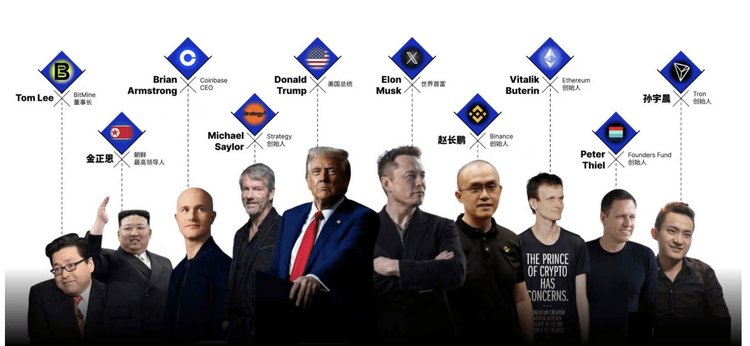
Ten People Redefining the Power Boundaries of Crypto in 2025
From Wall Street to the White House, from Silicon Valley to Shenzhen, a new power network is taking shape.

Bloomberg Checklist: 11 Key Trades to Understand the 2025 Global Financial Market

Lighter Founder's Latest Response on Token Launch Progress, What Was Said

Whale Withdraws 2,218 ETH from Kraken Sparking Market Interest
Key Takeaways A massive withdrawal of 2,218 ETH, 37.1 million SKY, and 4,772 AAVE occurred from Kraken. The…

Whale Trader Reaps Significant Profits from Ethereum Sales
Key Takeaways A whale, identified as address “0xa339”, has executed a large sale of 50,623 ETH. The total…

Whale Withdraws Millions in Ethereum and Other Tokens from Kraken
Key Takeaways A whale has withdrawn 2,218 ETH, valued at approximately $6.52 million, from Kraken. The whale also…

ZKC Price Surge Shakes Crypto Market
Key Takeaways ZKC (Boundless) experienced a significant 20.72% increase over the past 24 hours, reaching $0.14. The transition…

Smart Trader Closes Ethereum Positions, Faces $3.4 Million Loss
Key Takeaways Smart trader pension-usdt.eth closed a 30,000 ETH short position, incurring a $3.4 million loss. Despite this…

Whale Shifts to Massive Short Positions in Cryptocurrency Market
Key Takeaways A crypto whale transitioned from long to short positions, involving significant assets amounting to over $91…

Japanese Central Bank Signals Potential Interest Rate Hikes Impacting Crypto Market
Key Takeaways The Japanese Central Bank has indicated potential interest rate hikes as the yen weakens, affecting the…

Gate ETF Achieves $5 Billion Trading Volume Over 30 Days
Key Takeaways Gate ETF has reached approximately $5 billion in trading volume over the last 30 days, covering…

Bitcoin Reaches $90,000 Amid Geopolitical Tensions and Oil Price Surge
Key Takeaways Bitcoin recently surged past $90,000, driven by heightened geopolitical tensions and rising oil prices. The cryptocurrency…

Crypto Whale Strategically Bets on Bitcoin, Ethereum, Solana Shorts
Key Takeaways A prominent crypto whale has launched a substantial $243 million short position across Bitcoin, Ethereum, and…

Hong Kong Implements Basel Crypto Standards for Banking
Key Takeaways Hong Kong Monetary Authority will enforce the Basel crypto asset regulatory standards starting January 1, 2026.…

Plasma Token Surges 14.3% as Stablecoin Blockchain Gains Traction
Key Takeaways Plasma Token’s Price Surge: The price of Plasma (XPL) surged by 14.3% over the last 24…

ZEC Price Soars Amidst Market Frenzy as Major Positions Shift
Key Takeaways ZEC witnessed a price surge of 14.36% within 24 hours, reaching $512.25 on December 27. The…

Whale Executes Major Position with $1.8 Million USDC on HyperLiquid
Key Takeaways A significant crypto whale has deposited $1.8 million USDC into HyperLiquid. The whale used the funds…

Crypto Treasury Companies Face Uncertain Future by 2026, Ethereum and Solana May Be Affected
Key Takeaways Altan Tutar, CEO of MoreMarkets, predicts a grim outlook for most cryptocurrency treasury companies by 2026.…
Ten People Redefining the Power Boundaries of Crypto in 2025
From Wall Street to the White House, from Silicon Valley to Shenzhen, a new power network is taking shape.
Bloomberg Checklist: 11 Key Trades to Understand the 2025 Global Financial Market
Lighter Founder's Latest Response on Token Launch Progress, What Was Said
Whale Withdraws 2,218 ETH from Kraken Sparking Market Interest
Key Takeaways A massive withdrawal of 2,218 ETH, 37.1 million SKY, and 4,772 AAVE occurred from Kraken. The…
Whale Trader Reaps Significant Profits from Ethereum Sales
Key Takeaways A whale, identified as address “0xa339”, has executed a large sale of 50,623 ETH. The total…
Whale Withdraws Millions in Ethereum and Other Tokens from Kraken
Key Takeaways A whale has withdrawn 2,218 ETH, valued at approximately $6.52 million, from Kraken. The whale also…
Popular coins
Latest Crypto News


Customer Support:@weikecs
Business Cooperation:@weikecs
Quant Trading & MM:[email protected]
VIP Services:[email protected]
 App
App