
- Buy Crypto
- Markets
- Futures
- Spot
- Copy Trade
 WE-Launch
What is Sky (SKY)? A Comprehensive Guide

Key Takeaways
- Definition and Core Concept: Sky (SKY) is a cryptocurrency designed to power a decentralized internet infrastructure, aiming to create a more secure, efficient, and user-controlled web through its unique blockchain technology called Obelisk, which emphasizes consensus without traditional mining.
- Key Mechanisms: It operates on a proof-of-stake-like model with a focus on scalability and privacy, allowing for fast transactions and the development of decentralized applications (dApps) within its ecosystem, while avoiding the energy-intensive issues of proof-of-work systems.
- Use Cases and Advantages: Primarily used for payments, data storage, and building a mesh network for internet services, SKY offers advantages like low fees, high speed, and resistance to centralization, making it appealing for users seeking alternatives to traditional crypto like Bitcoin or Ethereum.
- Market Position: As of August 20, 2025, SKY holds a market cap of over $1.6 billion, ranking #55 among cryptocurrencies, with strong potential in the growing decentralized web space despite market volatility.
What Is Sky (SKY)?
Sky (SKY) is a cryptocurrency and blockchain platform designed to revolutionize the internet by creating a decentralized, peer-to-peer network that empowers users with control over their data and connectivity, free from centralized intermediaries.
Imagine you’re tired of big tech companies tracking every click you make online— that’s where Sky comes in. Launched as part of the Skycoin project, it originated in 2013 with the vision of building a new internet ecosystem. The founding team, led by anonymous developers with backgrounds in cryptography and blockchain (more on that later), aimed to address the flaws in existing systems like Bitcoin’s energy consumption and Ethereum’s scalability issues. At its core, Sky isn’t just a coin; it’s the fuel for Skywire, a mesh network that rewards users for sharing bandwidth, kind of like turning your home router into a mini-earning machine. The ecosystem includes tools for secure messaging, VPN services, and even digital asset management, all built on a custom blockchain. As of today, August 20, 2025, with a price hovering around $0.066 USD and a market cap of $1.6 billion, it’s gaining traction amid the broader crypto boom. Think of it as the rebel cousin in the family of cryptocurrencies—focusing on real-world utility rather than just speculation. But hey, like any crypto, it’s had its ups and downs, from early hype to regulatory scrutiny.
Origins and Background
The Sky project kicked off in the early 2010s, during the height of Bitcoin’s rise, when developers saw the need for something more advanced. It was conceived as a response to the centralization creeping into blockchain spaces. The core concept revolves around “Skywire,” a decentralized internet protocol that uses SKY tokens to incentivize participation. Proponents argue it’s not just about money; it’s about reclaiming the web from corporations. The ecosystem has grown to include wallets, exchanges, and developer tools, fostering a community-driven approach.
Key Features of the Ecosystem
Sky’s ecosystem is built around modularity. You’ve got Skywire for networking, Fiber for scalable sidechains (like mini-blockchains branching off the main one), and CX, a programming language for building dApps. It’s like Lego blocks for crypto enthusiasts—easy to assemble custom solutions.
Who Created Sky (SKY)?
Sky (SKY) was spearheaded by a team of pseudonymous developers, with Synth often credited as a key figure, drawing from expertise in software engineering and cryptography to challenge the status quo of centralized internet and finance.
The origins trace back to 2013, when a group of blockchain pioneers, frustrated with Bitcoin’s limitations, started conceptualizing Skycoin. Synth, believed to be the primary founder, has a background in open-source projects and has remained somewhat enigmatic, much like Satoshi Nakamoto. The team released a whitepaper in 2017, outlining Obelisk—a consensus algorithm that’s more democratic than proof-of-work, relying on a web-of-trust model to prevent centralization.
Historical Milestones
- 2013: Project inception, focusing on decentralized internet ideas.
- 2017: Whitepaper release and initial coin distribution, raising funds without a traditional ICO to avoid hype-driven pitfalls.
- 2018: Launch of Skywire testnet, allowing early users to experiment with mesh networking.
- 2020: Mainnet activation, marking the shift from concept to functional blockchain.
- 2023-2025: Expansions into DeFi integrations and partnerships, boosting adoption amid crypto’s maturation. By August 20, 2025, it’s weathered market crashes and emerged stronger, with ongoing updates to enhance scalability.
Ever wonder why founders stay anonymous? In crypto, it’s often to dodge regulations or personal risks—adds a bit of mystery, doesn’t it?
How Does Sky (SKY) Work?
At its heart, Sky operates on a custom blockchain using the Obelisk consensus mechanism, which differs from proof-of-work by relying on a network of trusted nodes to validate transactions, ensuring efficiency and security without massive energy use.
Picture this: instead of miners racing to solve puzzles (like in Bitcoin), Obelisk uses a “web of trust” where nodes vote on blocks based on their reputation. It’s like a community election—nodes with good track records get more say. This makes transactions fast, often settling in seconds, and keeps fees low.
Blockchain and Consensus Mechanisms
Sky’s blockchain is designed for scalability, using Fiber technology to create parallel chains. Consensus is achieved through Obelisk, a proof-of-stake variant that’s resistant to 51% attacks. No heavy computations here; it’s all about trust and efficiency.
Role of Smart Contracts
Smart contracts on Sky are written in CX, a simple language that’s secure and easy for developers. They automate agreements, like paying for bandwidth in Skywire automatically. Public keys secure your identity, while private keys let you sign transactions—think of them as your digital signature and lock.
Technical Principles
Transactions use elliptic curve cryptography for privacy. Nodes in the network relay data, earning SKY rewards. It’s decentralized, meaning no single point of failure, which is crucial in a world where hacks happen daily.
FAQs on How Sky Works
- What’s the difference between Obelisk and PoS? Obelisk adds a trust layer, making it harder for bad actors to dominate.
- Is it compatible with other blockchains? Yes, through bridges, allowing cross-chain swaps.
How Is New Sky (SKY) Created?
New SKY tokens are created through a combination of staking and network participation rewards, with a fixed total supply to control inflation and encourage long-term holding.
Unlike Bitcoin’s mining, Sky doesn’t rely on energy-guzzling hardware. Instead, users stake SKY to run nodes in the Skywire network, earning rewards based on bandwidth contributed. The inflation model is minimal, with a total supply capped
You may also like
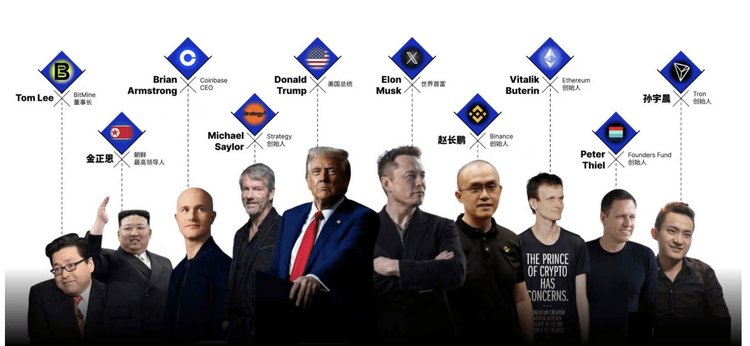
Ten People Redefining the Power Boundaries of Crypto in 2025
From Wall Street to the White House, from Silicon Valley to Shenzhen, a new power network is taking shape.

Bloomberg Checklist: 11 Key Trades to Understand the 2025 Global Financial Market

Lighter Founder's Latest Response on Token Launch Progress, What Was Said

Whale Withdraws 2,218 ETH from Kraken Sparking Market Interest
Key Takeaways A massive withdrawal of 2,218 ETH, 37.1 million SKY, and 4,772 AAVE occurred from Kraken. The…

Whale Trader Reaps Significant Profits from Ethereum Sales
Key Takeaways A whale, identified as address “0xa339”, has executed a large sale of 50,623 ETH. The total…

Whale Withdraws Millions in Ethereum and Other Tokens from Kraken
Key Takeaways A whale has withdrawn 2,218 ETH, valued at approximately $6.52 million, from Kraken. The whale also…

ZKC Price Surge Shakes Crypto Market
Key Takeaways ZKC (Boundless) experienced a significant 20.72% increase over the past 24 hours, reaching $0.14. The transition…

Smart Trader Closes Ethereum Positions, Faces $3.4 Million Loss
Key Takeaways Smart trader pension-usdt.eth closed a 30,000 ETH short position, incurring a $3.4 million loss. Despite this…

Whale Shifts to Massive Short Positions in Cryptocurrency Market
Key Takeaways A crypto whale transitioned from long to short positions, involving significant assets amounting to over $91…

Japanese Central Bank Signals Potential Interest Rate Hikes Impacting Crypto Market
Key Takeaways The Japanese Central Bank has indicated potential interest rate hikes as the yen weakens, affecting the…

Bitcoin Reaches $90,000 Amid Geopolitical Tensions and Oil Price Surge
Key Takeaways Bitcoin recently surged past $90,000, driven by heightened geopolitical tensions and rising oil prices. The cryptocurrency…

Crypto Whale Strategically Bets on Bitcoin, Ethereum, Solana Shorts
Key Takeaways A prominent crypto whale has launched a substantial $243 million short position across Bitcoin, Ethereum, and…

Hong Kong Implements Basel Crypto Standards for Banking
Key Takeaways Hong Kong Monetary Authority will enforce the Basel crypto asset regulatory standards starting January 1, 2026.…

Plasma Token Surges 14.3% as Stablecoin Blockchain Gains Traction
Key Takeaways Plasma Token’s Price Surge: The price of Plasma (XPL) surged by 14.3% over the last 24…

ZEC Price Soars Amidst Market Frenzy as Major Positions Shift
Key Takeaways ZEC witnessed a price surge of 14.36% within 24 hours, reaching $512.25 on December 27. The…

Whale Executes Major Position with $1.8 Million USDC on HyperLiquid
Key Takeaways A significant crypto whale has deposited $1.8 million USDC into HyperLiquid. The whale used the funds…

Crypto Treasury Companies Face Uncertain Future by 2026, Ethereum and Solana May Be Affected
Key Takeaways Altan Tutar, CEO of MoreMarkets, predicts a grim outlook for most cryptocurrency treasury companies by 2026.…
Trend Research Significantly Boosts Ethereum Holdings
Key Takeaways Trend Research has increased its Ethereum holdings by purchasing 46,379 ETH. The firm now owns approximately…
Ten People Redefining the Power Boundaries of Crypto in 2025
From Wall Street to the White House, from Silicon Valley to Shenzhen, a new power network is taking shape.
Bloomberg Checklist: 11 Key Trades to Understand the 2025 Global Financial Market
Lighter Founder's Latest Response on Token Launch Progress, What Was Said
Whale Withdraws 2,218 ETH from Kraken Sparking Market Interest
Key Takeaways A massive withdrawal of 2,218 ETH, 37.1 million SKY, and 4,772 AAVE occurred from Kraken. The…
Whale Trader Reaps Significant Profits from Ethereum Sales
Key Takeaways A whale, identified as address “0xa339”, has executed a large sale of 50,623 ETH. The total…
Whale Withdraws Millions in Ethereum and Other Tokens from Kraken
Key Takeaways A whale has withdrawn 2,218 ETH, valued at approximately $6.52 million, from Kraken. The whale also…
Popular coins
Latest Crypto News


Customer Support:@weikecs
Business Cooperation:@weikecs
Quant Trading & MM:[email protected]
VIP Services:[email protected]
 App
App