
- Comprar cripto
- Mercados
- Contratos
- Spot
- Copy trading
 WE-Launch
Top 10 Most Famous Computer Programmers of All Time in 2025

Computer programming has turned dreams into reality, shaping the world we live in today. Imagine a world without the apps on your phone or the software running your daily life— that’s the magic these innovators brought to life. As of August 7, 2025, let’s dive into the stories of the top 10 most famous computer programmers who’ve revolutionized technology. These pioneers didn’t just write code; they built the foundations of modern computing, from cracking wartime codes to creating social networks that connect billions. Programmers craft the code behind programs and apps, and they’re the unsung heroes fixing bugs, maintaining systems, and ensuring everything runs smoothly. Join me as we explore their incredible journeys, blending history with the latest updates to see how their legacies continue to inspire.
Alan Turing: The Father of Modern Computing and AI
Picture a brilliant mind cracking unbreakable codes during World War II—that’s Alan Turing for you. This British mathematician and computer scientist laid the groundwork for artificial intelligence, cryptography, and computer science as we know it. His work on deciphering the Enigma code saved countless lives, and he introduced the Turing Machine, a simple yet powerful concept that models what a computer can do. Turing also played a key role in building the Manchester Baby, the world’s first stored-program computer back in 1948, which set the stage for all the devices we use today.
Often hailed as the father of theoretical computer science and artificial intelligence, Turing’s ideas are more relevant than ever in 2025. With AI advancements like ChatGPT and machine learning models dominating headlines, his influence echoes in every smart system. Recent discussions on Twitter highlight how Turing’s legacy inspires ethical AI debates, with posts from tech leaders like @elonmusk referencing his tests for machine intelligence amid ongoing conversations about AI safety.
Ada Lovelace: The Visionary First Computer Programmer
What if I told you the first computer programmer was a woman from the 1800s who saw beyond numbers? Ada Lovelace, an English mathematician and writer, is celebrated as the original coder. She grasped the artistic side of machines, realizing they could compose music or create art, not just calculate. Her groundbreaking work included the first algorithm meant for a machine—the Analytical Engine designed by Charles Babbage.
Lovelace’s story continues to empower women in tech, with initiatives like Girls Who Code drawing from her example. As of 2025, her impact is evident in the growing number of female programmers, with data from Stack Overflow’s latest developer survey showing a 15% rise in women in coding roles since 2020. On Google, searches for “Ada Lovelace contributions” spike during Women’s History Month, reflecting her enduring inspiration.
Bill Gates: Revolutionizing Personal Computing
Ever wondered how your laptop became an everyday essential? Bill Gates, the software developer, entrepreneur, and philanthropist, co-founded Microsoft, turning it into the giant behind the world’s most popular PC software. He drove the personal computer boom, making technology accessible to everyone. Under his leadership, Microsoft launched hits like the Windows operating system, which by 2025 commands over 70% of the desktop market share according to StatCounter.
Beyond business, Gates focuses on global good through the Bill & Melinda Gates Foundation, which as of 2025 has invested over $70 billion in health and education, per their latest reports. Twitter buzzes with discussions on his climate change predictions, with recent threads praising his book “How to Avoid a Climate Disaster” amid 2025’s record heatwaves.
Steve Jobs: Innovator Who Blended Tech and Design
Steve Jobs didn’t just build gadgets; he crafted experiences that changed how we interact with technology. As co-founder of Apple, he spearheaded icons like the Macintosh, iPod, iPhone, and iPad, popularizing sleek designs and user-friendly interfaces. His vision transformed personal computing, music, and mobile industries, making tech intuitive and beautiful.
Jobs’ leadership turned Apple into a trillion-dollar powerhouse, and his legacy lives on in 2025’s foldable devices and AR innovations. Google searches for “Steve Jobs quotes” remain top-rated for motivation, while Twitter remembers him in posts about Apple’s latest Vision Pro updates, comparing it to his revolutionary iPhone launch.
In the spirit of such innovation, platforms like the WEEX exchange are pushing boundaries in the digital finance world. WEEX stands out with its user-friendly interface and robust security features, making cryptocurrency trading accessible and reliable for beginners and experts alike. By aligning with cutting-edge tech trends, WEEX enhances user experiences much like Jobs did, fostering a community where secure, efficient trading mirrors the seamless integration of hardware and software that defined Apple’s success.
Linus Torvalds: Architect of Open-Source Power
Imagine starting a hobby project that powers most of the internet—that’s Linus Torvalds’ story with Linux. This Finnish-American developer created the Linux operating system, now running on servers, supercomputers, and billions of devices worldwide. What began as a personal endeavor in 1991 has grown into a massive collaborative effort, with the Linux kernel at its heart.
Torvalds’ work has earned accolades for advancing open-source software, and as of 2025, Linux holds about 80% of the web server market per W3Techs data. Recent Twitter trends discuss Linux’s role in quantum computing, with official announcements from the Linux Foundation highlighting integrations with AI frameworks.
Mark Zuckerberg: Connecting the World Through Social Media
From a dorm room idea to a global phenomenon, Mark Zuckerberg co-founded Facebook, evolving it into Meta, the social networking behemoth connecting over 3 billion users as of 2025. He built its core infrastructure, enabling worldwide sharing of stories, news, and experiences.
Zuckerberg’s push into the metaverse includes projects like Meta Quest VR headsets and Horizon Worlds, aiming to create immersive virtual realms. Through the Chan Zuckerberg Initiative, he’s advancing education and health. Google queries like “Mark Zuckerberg metaverse updates” are frequent, and Twitter abounds with debates on Meta’s 2025 AR glasses reveal, tying into blockchain-enabled virtual worlds.
Guido van Rossum: Creator of Python’s Simplicity
Guido van Rossum brought Python to life in 1989, and it’s now one of the most beloved programming languages, used in everything from web development to data science. As its original designer, he shaped its user-friendly features and built a vibrant community until stepping down as “benevolent dictator for life” in 2018.
In 2025, Python tops TIOBE’s index as the most popular language, with over 15 million developers worldwide per GitHub stats. Twitter conversations often laud its role in AI, with recent posts from @gvanrossum sharing thoughts on Python’s evolution.
Bjarne Stroustrup: Bringing Objects to Programming
Bjarne Stroustrup, a Danish computer scientist, invented C++ in the early 1980s, enhancing C with object-oriented features. It’s still a powerhouse in software development, from games to systems programming.
Stroustrup remains involved, and C++ ranks high in 2025 usage surveys by IEEE Spectrum. Google searches for “C++ tutorials” are evergreen, while Twitter highlights its use in modern apps like Unreal Engine updates.
Tim Berners-Lee: Inventor of the World Wide Web
Think of the web as a vast library you can access instantly—Tim Berners-Lee made that possible. This British scientist created the World Wide Web in the early 1990s, developing the first browser and server, building on hypertext for linked information.
As director of the World Wide Web Consortium, he champions an open web. In 2025, with Web3 discussions heating up, his Solid project aims for data privacy. Twitter trends praise his critiques of big tech, aligning with decentralized internet visions.
Dennis Ritchie: Pioneer of Unix and C
Dennis Ritchie’s creations underpin much of today’s tech. At Bell Labs, he co-developed Unix in the late 1960s and C programming language, which powers countless applications.
Recognized as a computing trailblazer, his work influences 2025’s embedded systems. Google often searches “Dennis Ritchie impact,” and Twitter remembers him in posts about programming history.
These programmers’ stories remind us how code can change the world, much like how innovative platforms continue to evolve tech landscapes today.
FAQ
Who is considered the greatest computer programmer of all time?
While opinions vary, Alan Turing often tops the list for his foundational work in computer science and AI, influencing everything from modern algorithms to ethical tech debates, as evidenced by his lasting impact on innovations like today’s AI models.
What programming language should beginners learn first in 2025?
Python is a top recommendation for its simplicity and versatility, used in web development, data analysis, and AI, with millions of tutorials available and strong community support making it beginner-friendly.
How have these famous programmers influenced modern technology?
Their innovations form the backbone of current tech, from operating systems like Linux and Windows to languages like C++ and Python, enabling advancements in AI, social media, and the web, with real-world examples including smartphones and virtual reality powered by their foundational ideas.
También te puede gustar

El token financiero World Liberty de Trump termina 2025 con una caída de más del 40%
Key Takeaways El proyecto de criptomoneda de la familia Trump, World Liberty Financial, ha experimentado una caída significativa…

Vitalik Buterin opina que Grok mantiene a X más honesto a pesar de sus fallas
Key Takeaways Grok, el chatbot de inteligencia artificial desarrollado por xAI, está diseñado para desafiar las suposiciones de…

El token financiero de World Liberty de Trump termina 2025 con una caída de más del 40%
Key Takeaways El proyecto cripto de la familia Trump, World Liberty Financial, experimenta una caída significativa del valor…

El token World Liberty Financial de Trump termina 2025 con una caída de más del 40%
Los esfuerzos criptográficos de la familia Trump han generado controversia debido a caídas significativas en sus inversiones. World…

La oferta de USD1 vinculada a la familia Trump aumenta $150M con la promoción de Binance
Key Takeaways La capitalización de mercado de la stablecoin USD1, vinculada a la familia Trump, aumenta $150 millones…

Faros de innovación: La sutil batalla por el control de la inteligencia artificial
Key Takeaways Hay una “guerra silenciosa” en marcha sobre cómo se distribuyen las capacidades de la IA, dentro…

Desentrañando los Desafíos de la Economía de Agentes AI: Identidad, Arbitraje y Atribución
Key Takeaways La interoperabilidad y autonomía de los agentes AI tienen un impacto directo en cómo las transacciones…

Nofx: Breve Auge y Rápida Caída en el Universo Web3
Key Takeaways La transformación rápida de Nofx de un proyecto prometedor a uno en crisis destaca problemas sistémicos…
MiniMax: La Carrera hacia la Innovación en la Bolsa de Hong Kong
Key Takeaways MiniMax, una prometedora empresa de IA, se está preparando para una oferta pública inicial (IPO) en…

Trump’s World Liberty Financial token ends 2025 down over 40%
Key Takeaways World Liberty Financial (WLFI), a major crypto portfolio project led by the Trump family, faced a…

WEEXPERIENCE Whales Night: AI Trading, comunidad criptográfica y perspectivas del mercado criptográfico
El 12 de diciembre de 2025, WEEX organizó WEEXPERIENCE Whales Night, una reunión comunitaria fuera de línea diseñada para reunir a los miembros de la comunidad de criptomonedas locales. El evento combinó intercambio de contenido, juegos interactivos y presentaciones de proyectos para crear una experiencia relajada pero atractiva fuera de línea.
Riesgo de trading de IA en criptomonedas: ¿Por qué mejores estrategias de comercio criptográfico pueden crear mayores pérdidas?
El riesgo ya no radica principalmente en la mala toma de decisiones o errores emocionales. Vive cada vez más en la estructura del mercado, las vías de ejecución y el comportamiento colectivo. Comprender este cambio importa más que encontrar la siguiente estrategia “mejor”.
Los agentes de IA están reemplazando a la criptoinvestigación? Cómo la IA autónoma está remodelando el cripto comercio
La IA está pasando de ayudar a los traders a automatizar todo el proceso de investigación a ejecución en los criptomercados. La ventaja ha cambiado de la visión humana a los sistemas de canalización de datos, velocidad y IA listos para la ejecución, lo que hace que los retrasos en la integración de la IA sean una desventaja competitiva.
AI Trading Bots and Copy Trading: Cómo las estrategias sincronizadas remodelan la volatilidad del criptomercado
Los comerciantes minoristas de criptomonedas han enfrentado durante mucho tiempo los mismos desafíos: mala gestión de riesgos, entradas tardías, decisiones emocionales y ejecución inconsistente. Las herramientas de trading de IA prometían una solución. Hoy en día, los sistemas de copy trading y los bots de ruptura impulsados por IA ayudan a los traders a dimensionar posiciones, establecer stops y actuar más rápido que nunca. Más allá de la velocidad y precisión, estas herramientas están remodelando silenciosamente los mercados: los traders no solo operan de manera más inteligente, sino que se mueven en sincronización, creando una nueva dinámica que amplifica tanto el riesgo como la oportunidad.
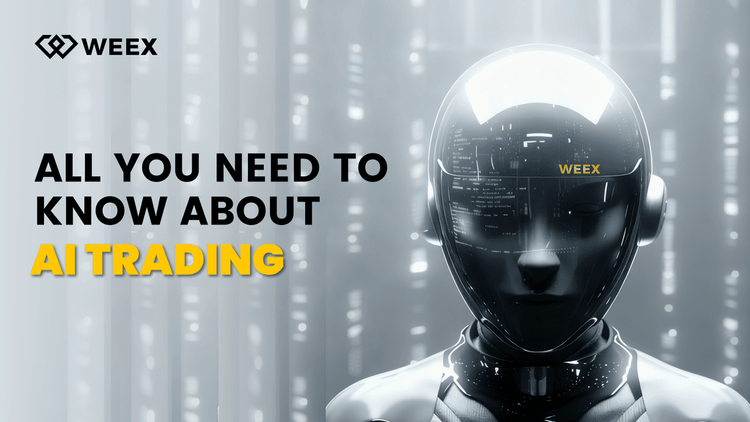
Comercio de IA en criptografía Explicado: Cómo el comercio autónomo está remodelando los mercados de cifrado y los intercambios de cifrado
AI Trading está transformando rápidamente el panorama criptográfico. Las estrategias tradicionales luchan por mantenerse al día con la volatilidad continua de las criptomonedas y la compleja estructura del mercado, mientras que la IA puede procesar datos masivos, generar estrategias adaptativas, gestionar el riesgo y ejecutar operaciones de forma autónoma. Este artículo guía a los usuarios de WEEX a través de lo que es AI Trading, por qué la criptoaceleración de su adopción, cómo la industria está evolucionando hacia agentes autónomos y por qué WEEX está construyendo el ecosistema de comercio de IA de próxima generación.
El Audiera (BEAT) Incrementa su Valor: Análisis del Aumento de Precio
Key Takeaways El token BEAT de Audiera mostró un aumento del 165% tras su inclusión en varias plataformas…
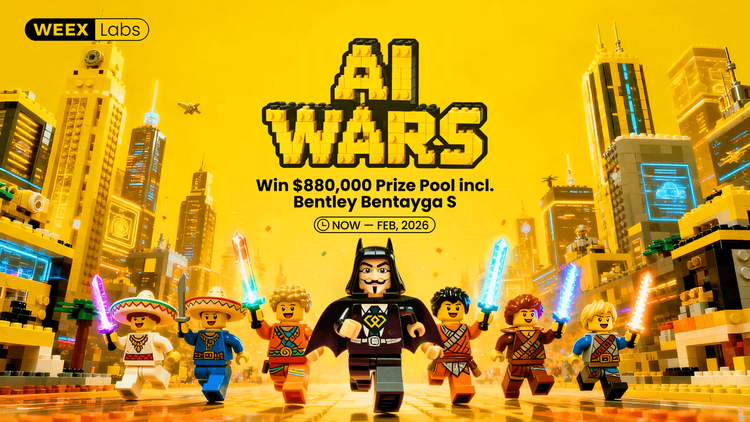
Llamar para unirse a AI Wars: WEEX Alpha Awakens — Competencia Global de Trading de IA con un fondo de premios de $880,000
Ahora, pedimos a los traders de IA de todo el mundo que se unan a las Guerras de IA: WEEX Alpha Awakens, una competencia global de comercio de IA con un premio acumulado de $880,000.

Grayscale revela las principales tendencias de inversión en criptomonedas para 2026 a medida que crece la adopción institucional
Puntos Clave Grayscale predice que 2026 marcará el inicio de una era institucional para los mercados de criptomonedas,…
El token financiero World Liberty de Trump termina 2025 con una caída de más del 40%
Key Takeaways El proyecto de criptomoneda de la familia Trump, World Liberty Financial, ha experimentado una caída significativa…
Vitalik Buterin opina que Grok mantiene a X más honesto a pesar de sus fallas
Key Takeaways Grok, el chatbot de inteligencia artificial desarrollado por xAI, está diseñado para desafiar las suposiciones de…
El token financiero de World Liberty de Trump termina 2025 con una caída de más del 40%
Key Takeaways El proyecto cripto de la familia Trump, World Liberty Financial, experimenta una caída significativa del valor…
El token World Liberty Financial de Trump termina 2025 con una caída de más del 40%
Los esfuerzos criptográficos de la familia Trump han generado controversia debido a caídas significativas en sus inversiones. World…
La oferta de USD1 vinculada a la familia Trump aumenta $150M con la promoción de Binance
Key Takeaways La capitalización de mercado de la stablecoin USD1, vinculada a la familia Trump, aumenta $150 millones…
Faros de innovación: La sutil batalla por el control de la inteligencia artificial
Key Takeaways Hay una “guerra silenciosa” en marcha sobre cómo se distribuyen las capacidades de la IA, dentro…
Monedas populares
Últimas noticias cripto


Atención al cliente:@weikecs
Cooperación comercial:@weikecs
Trading cuantitativo y MM:[email protected]
Servicios VIP:[email protected]
 App
App