
- Comprar cripto
- Mercados
- Futuros
- Spot
- Copy trading
 WE-Launch
Revisiting "Read Write Own": 16 Classic Insights from a16z's Founder

Original Article Title: 16 insights from New York Times bestseller Read Write Own
Original Source: a16z Crypto
Original Translation: Scof, ChainCatchert
This article features some insightful excerpts from the new book "Read Write Own: Blockchain Network Trends and Potential to Unlock the Web3 Paradigm" by Chris Dixon, founder and general partner at a16z Crypto. The content is compiled from relevant a16z tweets. Here is the translation of the original text:
Looking for a deeper understanding of the world of technology, business, and startups? Want to explore the history and future of the internet? Need a concise explanation of cryptocurrency, the blockchain movement, and its significance? We have the answers for you.
Here, we have selected the sharpest excerpts and most provocative points from the bestselling book "Read Write Own" by Chris Dixon, founder and general partner at a16z Crypto. This book is dense with information, delving into the hidden structures that govern how money and power flow on the network. Leveraging his decades of experience investing in startups, author Chris Dixon reveals how the networks that dominate our lives operate and how to restructure these networks to empower internet users as true owners.
The insights presented in "Read Write Own" offer a fresh perspective on business and life—from nurturing innovation, to seizing disruptive opportunities, to boldly betting on non-mainstream directions. Sam Altman, CEO of OpenAI, described this book as a "remarkable vision of the future of the internet and its path to realization." Whether you are passionate about the crypto space, just starting to explore, or simply curious about the turbulence in this field, this book will bring value to you.
Here are some of the most compelling excerpts from the book, each containing valuable insights:
1. The Essence of "Permission"
In business, seeking permission is not as straightforward as asking your parents or teacher for approval, where you can simply receive a "yes" or "no" answer; nor is it as clear-cut as traffic signals dictating the rules of the road. In the business world, permission often becomes a disguised tyranny. Dominant tech companies use the power of "permission" to block competition, disrupt markets, and extract value.
2. Software as Art
Software is extraordinarily expressive, and rather than seeing it as a product of the engineering field, it is better to view it as an art form. The malleability and flexibility of code provide a vast design space, a breadth of possibility closer to creative activities like sculpture or novel writing than to engineering practices like bridge-building. Like other art forms, practitioners in the software field continuously pioneer new genres and movements, fundamentally expanding the boundaries of possibility.
3. Problems Solved by Blockchain
Blockchain can make strong commitments about its future behavior, enabling the creation of entirely new networks. Blockchain networks address many issues present in early network architectures: they can connect people, build social networks while empowering users, rather than letting corporate interests dominate; they can support marketplaces and payment networks, facilitating commercial activities while significantly reducing intermediary costs; they can also foster new forms of monetizable media, interoperability, and immersive digital worlds that reward creators rather than exploit them with AI products...
Asking "What problems does blockchain solve?" is like asking "What problems does steel solve compared to wood?" You can build structures or railways with either wood or steel, but steel allowed us to construct taller buildings, sturdier railways, and grander public works during the early days of the Industrial Revolution. Similarly, through blockchain, we can create fairer, more sustainable, more resilient networks with broader horizons compared to today's network systems.
4. A New Era of the Internet
Our current decisions will determine the future of the internet: who builds, owns, and uses the internet; where innovation will happen; and how everyone's user experience will be. Blockchain and the networks it supports unleash the extraordinary power of software as an art form, with the internet becoming its canvas. This transformative movement has the opportunity to rewrite history, reshape the relationship between humanity and the digital world, redefine possibilities... It is an opportunity to create an ideal internet, rather than passively accepting the inherited internet.
5. The Supremacy of Networks
Network design determines destiny.
A network is an organizational framework that enables billions of people to interact orderly. It determines the world's winners and losers, with its algorithms guiding the flow of capital and attention. The structure of a network not only directs its own development but also determines the concentration of wealth and power. Given the scale of today's internet, even seemingly insignificant software design decisions could have profound ripple effects. When analyzing the power dynamics of the internet, "who controls a particular network" is the most critical question.
6. Protocol vs. Enterprise
The difference between a protocol network, such as email, and an enterprise network, like Twitter, is that the network effect of email belongs to a community rather than a specific company. Email is not owned or controlled by any company; anyone can access it using software created by independent developers that support the underlying protocol. Developers and users are free to decide what to build and what to use. The decisions that affect the community are also collectively made by the community itself.
7. Impact of New Technology
There are primarily two ways people use new technology: (1) to do things they could already do but now can do faster, cheaper, simpler, or with higher quality, and (2) to do entirely new things that were previously impossible. In the early stages of technological development, the first type of application is usually more popular, but the ones that have a lasting impact on the world are often the second type.
8. Corporate-Controlled Internet
The structure of an enterprise network is very simple: it is controlled by a single company that provides centralized services to the network. This company has absolute control and can modify the terms of service at any time and for any reason, decide who can access the network, and govern how funds flow.
Enterprise networks are centralized because ultimately all rules are determined by one person, typically the CEO.
9. Blockchain as a Contrarian Bet
Blockchain is unique. It is a contrarian bet. Despite many people (myself included) recognizing its potential, mainstream institutions often overlook it. In fact, the prevalent view in the tech industry is that only the technology improvements already focused on by incumbents matter, such as larger databases, faster processors, bigger neural networks, and smaller devices. This perspective is myopic.
10. How Hobbies Drive Future Industries
Unlike mainstream technologies, "outsider" technologies often emerge from the fringes. They are propelled by hobbyists, tech enthusiasts, open-source developers, and startup founders, incubating and growing outside the mainstream. These endeavors often involve less capital and formal training, leveling the playing field to some extent with industry insiders. However, the lower barriers also lead insiders to underestimate these technologies and their proponents.
Hobbies are the catalyst for future industries. Hobbies are often what the smartest people work on when unconstrained by short-term economic goals. I like to say that what the smartest people do on weekends will be what others do during the workweek ten years later.
11. The Simplicity of Tokens
What a token "is" is far less important than what it "can do."
A token can represent ownership of any digital asset, including money, art, photos, music, text, code, in-game items, voting rights, access rights, or even anything people might come up with in the future. With some additional building blocks, they can also represent real-world items such as physical goods, real estate, or dollars in a bank account. Anything that can be represented in code can be wrapped in a token for purposes of buying, selling, using, storing, embedding, transferring, or any other use.
If this sounds too simple or even trivial, that is precisely the intention of token design—simplicity is a virtue.
12. Owner vs. User
The concept of ownership is so deeply ingrained in our lives that we can hardly imagine what the world would be like without it.
Imagine if the clothes you bought could only be worn on the occasion of purchase; if you couldn't resell or reinvest in your house and car; or if you had to change your name every time you went somewhere? This is the digital world built by today's corporate networks.
13. Blockchain as a City
The functionality of blockchain has striking similarities to urban planning.
Launching a blockchain network is like building a new city on undeveloped land. City designers construct some initial buildings, then design a system of land allocation and tax incentives to attract residents and developers. Property rights—i.e., ownership—play a key role, providing property owners with a strong commitment: they will always own their property and can confidently invest in it. As the city grows, the tax base widens. Taxes are reinvested in public projects like streets, parks, more land is allocated, and the city continues to expand.
14. Restoring Community through Tokens
Blockchain networks embed community ownership deep into their core design, almost as if it's in their DNA.
While meme coin variants like Dogecoin may seem like a joke, they demonstrate how users seek community through various tokens (whether humorous or serious) to fill the sense of belonging and connection in the digital world.
These tokens are not just technical tools; they have become a way for people to rally around a community. By holding these tokens, users become participants and owners of the community, not just consumers. This design empowers users, disrupting the control traditionally dominated by centralized companies in the platform economy, creating possibilities for more decentralized, goal-oriented communities.
15. Blockchain as Network Constitution
Network designers can use blockchain to create formal rules enforced by code. These rules act as a network's constitution. The content of the constitution can be the subject of debate, discussion, and experimentation, but the mere existence of it and the ability to embed rules into immutable software represent an unprecedented advancement. This was not achievable in previous network designs.
16. The Two Cultures of Cryptocurrency
There exist two starkly different cultures interested in blockchain.
The first culture sees blockchain as a way to build a new type of network... I refer to this culture as the **"computing"** culture because its core idea is that blockchain is driving a new kind of computational revolution.
The other culture is primarily interested in speculation and making money. People in this mindset view blockchain solely as a tool to create new tokens for trading. I call this culture the **"casino"** culture because at its core, it's all about gambling.
But the "casino" culture should not drag down the "computing" culture.
Additional Section: The Good Old Days
Blockchain is at the forefront of computing development, much like personal computers in the 1980s, the internet in the 1990s, and mobile phones in the 2010s.
Today, people look back on classic moments in computing history, imagining scenes from that time—Noyce and Moore, Jobs and Wozniak, Page and Brin. Those amateur enthusiasts exploring, debating, and driving technological advancements, those creators who spent nights and weekends "coding."
It may seem late, but it's actually early. Now is the best time to reimagine what the internet can be and what it can do. Software is an unparalleled innovation playground. You don't have to accept the current state of the internet you find; you can create something better... as a builder, creator, user, and most importantly, as an owner.
You are here now. This is the "Good Old Days."
Te puede gustar

Cómo la IA ayuda a los operadores criptográficos a analizar mercados, gestionar riesgos y operar de forma más inteligente
El cripto trading ya no se trata solo de tener una buena idea, se trata de ejecutar de manera consistente en un mercado que nunca se detiene. A medida que aumentan los volúmenes de datos y la velocidad del mercado, el análisis manual tradicional alcanza sus límites. La IA ayuda a los traders a superar estos límites al transformar la forma en que se analizan los mercados, cómo se interpreta el sentimiento y cómo se controla el riesgo. Este artículo explora cómo la IA está remodelando el comercio de criptomonedas, y lo que eso significa para los comerciantes de hoy.
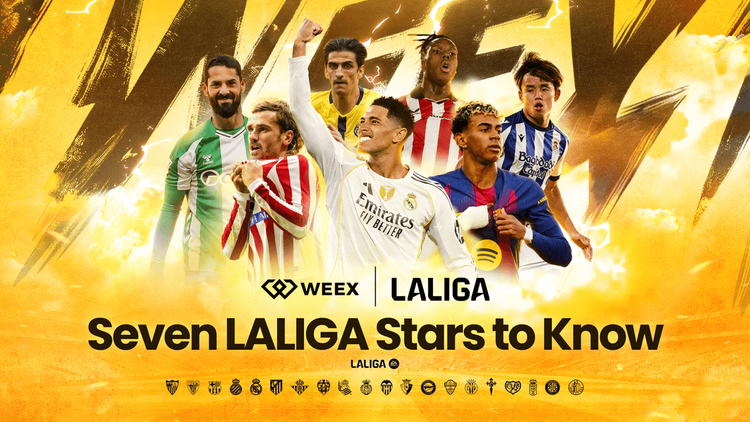
WEEX × LALIGA: Siete estrellas que representan un estándar de excelencia compartido
La verdadera excelencia en el fútbol nunca es accidental. Se basa en la disciplina, la consistencia y la capacidad de cumplir bajo presión, temporada tras temporada. Los mismos principios se aplican en el comercio profesional, donde el rendimiento a largo plazo importa más que el impulso efímero. Como socio regional oficial de LALIGA, WEEX destaca a siete jugadores destacados que encarnan el espíritu competitivo y el atractivo global de la liga. Cada uno aporta un estilo único al terreno de juego, pero todos comparten valores que se alinean estrechamente con el compromiso de WEEX con la estabilidad, la precisión y la ejecución profesional. Esta asociación se basa en estándares compartidos, donde la coherencia y el control definen el desempeño bajo presión.

De Wuhan a Silicon Valley, Manus lo hizo en solo nueve meses.
Puedes llamarlo un “envoltorio”, pero envolvió su camino hasta Meta.
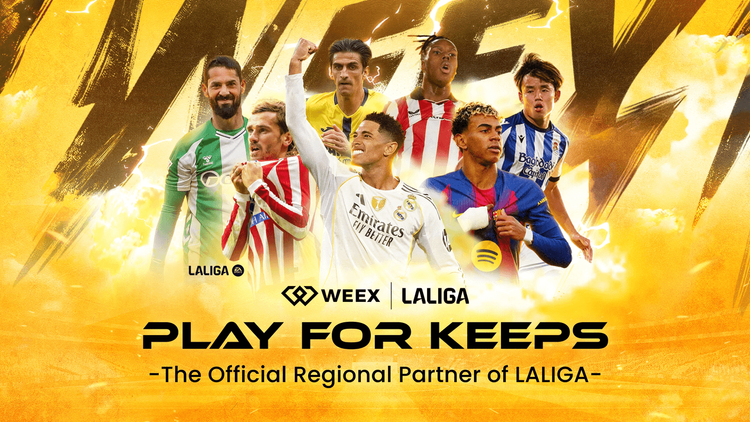
WEEX se asocia con LALIGA para expandir el alcance global e integrar criptografía en la cultura deportiva convencional
Hong Kong, 1 de enero de 2026. WEEX ha establecido una nueva asociación con LALIGA, como socio regional oficial de LALIGA en Taiwán y Hong Kong. El acuerdo incorpora WEEX a la red de colaboradores regionales de LALIGA y abre la puerta a nuevas formas de involucrar a aficionados y comerciantes durante la temporada.
AI Trading en Crypto: Cómo los traders aplican realmente la IA en criptomercados reales
La inteligencia artificial ha ido más allá de la experimentación en criptomercados. En 2025, las herramientas de trading impulsadas por la IA son cada vez más utilizadas por los traders que desean una mejor disciplina, una ejecución más rápida y una toma de decisiones más estructurada en mercados volátiles. Esta guía explica cómo se utiliza realmente la IA en el comercio criptográfico, paso a paso, con un enfoque en cómo se ejecutan estas estrategias en entornos de comercio reales.

Actualización del mercado — 31 de diciembre
Desde Corea del Sur y la OCDE acelerando la implementación de marcos de criptorregulación y cumplimiento, hasta el desarrollo simultáneo de ETF de TAO, tecnologías de privacidad, minería y reservas de Bitcoin, mientras los incidentes de seguridad y las pérdidas financieras continúan aumentando, el criptomercado ha entrado en una nueva fase en medio de múltiples desafíos de "regulación fuerte + evolución tecnológica + riesgos amplificados".
Cuando todo el mundo utiliza el comercio de IA, ¿a dónde va la criptomoneda Alpha en 2026?
En 2025, el comercio de IA se ha convertido en el predeterminado, pero Alpha no ha desaparecido: se ha erosionado por la multitud, ya que datos, modelos y estrategias similares hacen que los operadores actúen en sincronización y pierdan su ventaja.
Real Alpha ha cambiado a capas más difíciles de copiar como datos de comportamiento y en cadena, calidad de ejecución, gestión de riesgos y juicio humano en mercados extremos, donde actuar de manera diferente —o no actuar en absoluto— importa más que mejores predicciones.

El 2026 Podría Iniciar un “Cripto Invierno,” pero la Institucionalización y la Transformación en la Cadena Están Acelerándose
Key Takeaways Cantor Fitzgerald advierte sobre una posible tendencia bajista sostenida en el mercado de Bitcoin hacia 2026.…

Caixin: Desde el 1 de enero de 2026, los Saldos en Monederos de RMB Digital Puederán Generar Intereses
Key Takeaways A partir del 1 de enero de 2026, los saldos en los monederos digitales de RMB…

Key Market Information Discrepancy on December 30th – A Must-See!
Meta’s Strategic Acquisition: Meta has made a monumental move by acquiring Manus for several billion dollars. TRON’s Market…

Después de 500 Rechazos, Comencé a Desarrollar un Producto que la Gente Realmente Usa
Key Takeaways En la industria cripto, la percepción de que la complejidad técnica garantiza el éxito puede desviar…

Respuesta más Reciente del Fundador de Lighter sobre el Progreso del Lanzamiento de Tokens
Puntos Clave Lighter planea completar su Evento de Generación de Tokens (TGE) en los últimos tres días del…

Lighter: Airdrop completamente distribuido, negociación de tokens abrirá pronto
La comunidad china de Discord de Lighter ha anunciado la distribución total de un airdrop de tokens LIT.…

La víspera de un cambio en la Fed: Wall Street se prepara para una batalla de tasas sin ‘Powell’
Key Takeaways Los inversores se enfrentan a un escenario potencialmente diferente en la Reserva Federal, donde Trump se…

Oportunidad de Arbitraje para la Quema de Tokens UNI y Debate de Liquidez de Acciones Tokenizadas de Ondo: ¿De qué Habla la Comunidad Cripto Internacional Hoy?
Key Takeaways El mercado cripto está en medio de amplias discusiones que abarcan desde pronósticos para 2026 hasta…

Alt5 Sigma Enfrenta Crisis Financiera Debido a Problemas de Auditoría
El cambio recurrente de auditores en Alt5 Sigma ha generado una crisis de informes financieros y riesgo de…

Rentabilidad Agrícola al 86% APY: Cómo Usar Bots para “Ganar Mientras Duermes” en Polymarket
Puntos Clave La creación de bots en Polymarket puede incrementar significativamente las oportunidades de arbitraje debido a la…

6-Week, 3-Auditor Swap Highlights Financial Crisis at Trump Crypto Firm Alt5 Sigma
Key Takeaways Alt5 Sigma faces financial instability, marked by frequent changes in auditors and executive resignations, risking its…
Cómo la IA ayuda a los operadores criptográficos a analizar mercados, gestionar riesgos y operar de forma más inteligente
El cripto trading ya no se trata solo de tener una buena idea, se trata de ejecutar de manera consistente en un mercado que nunca se detiene. A medida que aumentan los volúmenes de datos y la velocidad del mercado, el análisis manual tradicional alcanza sus límites. La IA ayuda a los traders a superar estos límites al transformar la forma en que se analizan los mercados, cómo se interpreta el sentimiento y cómo se controla el riesgo. Este artículo explora cómo la IA está remodelando el comercio de criptomonedas, y lo que eso significa para los comerciantes de hoy.
WEEX × LALIGA: Siete estrellas que representan un estándar de excelencia compartido
La verdadera excelencia en el fútbol nunca es accidental. Se basa en la disciplina, la consistencia y la capacidad de cumplir bajo presión, temporada tras temporada. Los mismos principios se aplican en el comercio profesional, donde el rendimiento a largo plazo importa más que el impulso efímero. Como socio regional oficial de LALIGA, WEEX destaca a siete jugadores destacados que encarnan el espíritu competitivo y el atractivo global de la liga. Cada uno aporta un estilo único al terreno de juego, pero todos comparten valores que se alinean estrechamente con el compromiso de WEEX con la estabilidad, la precisión y la ejecución profesional. Esta asociación se basa en estándares compartidos, donde la coherencia y el control definen el desempeño bajo presión.
De Wuhan a Silicon Valley, Manus lo hizo en solo nueve meses.
Puedes llamarlo un “envoltorio”, pero envolvió su camino hasta Meta.
WEEX se asocia con LALIGA para expandir el alcance global e integrar criptografía en la cultura deportiva convencional
Hong Kong, 1 de enero de 2026. WEEX ha establecido una nueva asociación con LALIGA, como socio regional oficial de LALIGA en Taiwán y Hong Kong. El acuerdo incorpora WEEX a la red de colaboradores regionales de LALIGA y abre la puerta a nuevas formas de involucrar a aficionados y comerciantes durante la temporada.
AI Trading en Crypto: Cómo los traders aplican realmente la IA en criptomercados reales
La inteligencia artificial ha ido más allá de la experimentación en criptomercados. En 2025, las herramientas de trading impulsadas por la IA son cada vez más utilizadas por los traders que desean una mejor disciplina, una ejecución más rápida y una toma de decisiones más estructurada en mercados volátiles. Esta guía explica cómo se utiliza realmente la IA en el comercio criptográfico, paso a paso, con un enfoque en cómo se ejecutan estas estrategias en entornos de comercio reales.
Actualización del mercado — 31 de diciembre
Desde Corea del Sur y la OCDE acelerando la implementación de marcos de criptorregulación y cumplimiento, hasta el desarrollo simultáneo de ETF de TAO, tecnologías de privacidad, minería y reservas de Bitcoin, mientras los incidentes de seguridad y las pérdidas financieras continúan aumentando, el criptomercado ha entrado en una nueva fase en medio de múltiples desafíos de "regulación fuerte + evolución tecnológica + riesgos amplificados".


 App
App