
- Comprar cripto
- Mercados
- Futuros
- Spot
- Copy trading
 WE-Launch
Ray Dalio's Latest Interview: Current Market Resembles the 1930s in an "Amazing" Way, Three Major Orders Are Collapsing

Original Article Title: "Dalio's Latest Voice: Many Phenomena Today Are Astonishingly Similar to the 1930s"
Original Article Author: Smart Investor
“Systemic order breakdown happens once in a lifetime. Yet, in history, it has never been absent.”
“I do agree that ‘not making things is a big problem,’ but the question is, do we have the manufacturing capacity?”
Ray Dalio, the founder of Bridgewater Associates, posted an article on LinkedIn on April 7, discussing the issue of tariffs.
He stated that we are currently witnessing a typical breakdown of the monetary, political, and geopolitical order. This type of system breakdown occurs approximately once in a lifetime, but throughout history, whenever similar unsustainable conditions exist, they occur.
On April 8, Eastern Time, Ray Dalio was interviewed by CNBC, and in a 15-minute conversation, he once again emphasized his views. Faced with sharp questions from three top hosts, Dalio also spoke his mind.
He did not use buzzwords or pessimism, more like a seasoned mechanic, opening up the system, examining its structure, dismantling pressures, and attempting to answer a fundamental question: Can we still maintain the current operating mode?
In this interview, Dalio, using his consistent thinking framework, provided the essential background of the current discussion on tariffs: the three existing orders are disintegrating, and the five important forces in human history are always at work. “Tariffs are actually addressing the issue of global imbalance.”
He acknowledged, fully agreeing that “not making things is a big problem,” and also agreeing with the goal of reshoring manufacturing, “but, do we have the manufacturing capacity? This is a deeper structural issue.”
Dalio's sobering realization is that he dissects the U.S. population structure and finds the feasibility too challenging.
“Our population structure is like this: about 1% of people are extremely intelligent, they go to the best schools, come out and create ‘unicorn’ companies (of which about half are foreigners); then there are also 10% of people who do well; but there are 60% of the population with reading abilities below the sixth-grade level, it is very difficult for them to become productive participants in modern manufacturing.”
He further warned that many phenomena today are astonishingly similar to those of the 1930s.
Faced with such a tremendously uncertain market, Dalio finally provided ordinary investors with his own way of practice.
He emphasized that only when you are in a sufficiently secure financial position can you truly build a diversified investment portfolio that suits you. Cash may not necessarily be a good choice, as the investment goal must consider whether the purchasing power has been preserved through inflation adjustment.
Question 1: Ray, frankly, we are also trying to figure out what will happen next. So, if you could provide some historical perspective, or at least a historical reference framework, that would be great. How do you view the current situation?
Ray Dalio:
I think the reason we do not understand the current cycle is because such a cycle only occurs once in a lifetime. But there is an "order" in this, meaning there is a whole set of systems. The collapse of these systems is due to specific reasons, leading to cyclical changes.
For example, there is a monetary system, and then there is a debt cycle.
So the current situation is this: one person's debt is another person's asset.
When the entire system accumulates to an unsustainable level, debt issues arise—and we are now facing such debt issues.
Of course, this is part of the monetary cycle.
There is also a cycle of domestic political order, manifested by the transition from one political order to another, with usually intense opposition and turmoil between the left and right factions during this process.
Especially in democratic countries, continuous struggles occur due to the lack of order. The democratic system requires cooperation and compromise, and these mechanisms are gradually failing.
What we are experiencing is precisely this transition of political order.
In addition, there is a larger system—the international order.
This international order began in 1945, after the end of World War II. The victorious side—the dominant power—was able to establish rules.
At that time, a series of multilateral mechanisms were established, such as the United Nations, the World Trade Organization, the World Bank, etc.
But now, multilateralism is disintegrating, being replaced by unilateralism.
The reason is actually the same: structural problems have arisen within the system that are difficult to maintain.
Therefore, we can see that three major orders are disintegrating:
First, the Currency and Debt Order (too much debt, where debt is currency);
Second, the Internal Political Order (how our system functions? Who controls the issues?);
Third, the Changing International Order (the breakdown of interdependence).
Additionally, in human history, five other significant forces have always been at play, such as climate change and natural disasters; human innovation and the birth of new technologies, among others. The interaction of these forces is the backdrop to all we are experiencing now.
Returning to the issue of tariffs, tariffs are actually addressing the problem of global imbalances. Imbalance refers to both capital imbalances and trade imbalances, both of which are unsustainable.
At the same time, it also involves the issue of international conflicts. For example: How can the U.S. achieve national security without producing any goods? We rely on imports from China; and how can China ensure its own security while being highly dependent on U.S. capital? This interdependent relationship is being broken.
This is the essence of what we are currently discussing.
Question 2: As you mentioned, from a historical perspective, are these policies politically attractive? Are they popular in the U.S. or other countries? What about from an economic standpoint? We see the market rebounding today, but many have already lost 10% of their assets. What does this mean structurally?
Ray Dalio:
From a structural operational standpoint, this means: Costs will rise, corporate revenues will fall, and capital will become harder to obtain.
What does this mean for businesses? It means their operating costs will increase, revenue will decrease, and it will be more challenging to secure financing.
At the same time, we are still trying to rebuild the manufacturing sector.
I completely agree that "not making things is a big problem," and I agree with this goal. However, do we have the manufacturing capacity? This is a deeper structural issue.
Our population structure is as follows:
Approximately 1% of people are extremely bright, they attend the best schools, and after graduating, they create "unicorn" companies (about half of which are foreigners); then there are another 10% of people who are also doing well; but 60% of the population has a reading ability below the sixth-grade level, making it challenging for them to become productive participants in modern manufacturing.
We are in agreement on the issue itself, such as the problem of excessive debt. The Finance Minister and others also believe that we should keep the budget deficit within 3% of GDP.
However, the question is: How should we do it? When should we do it? How can we truly achieve "self-sufficiency" in this context?
From a practical standpoint, in the current demographic structure, educational level, cost of capital, and technological path, rebuilding manufacturing in the United States is very difficult. Yet it is indeed very necessary.
Question 3: So are you ultimately in support of the President's policies or against them? I want to understand what your conclusion really is and what position it expresses.
Ray Dalio:
I agree with the essence of this issue. But I am very concerned about the solution itself, namely its feasibility.
In other words, I think this will bring a series of problems, such as those I mentioned earlier: rising costs, falling incomes, difficulty in financing, and the impact on the capital markets.
Moreover, I believe this will also throw a monkey wrench into the entire global production system at a global level, hindering global supply chains and production efficiency.
At the same time, I also agree with the global interdependence, global production efficiency issues, and America's lack of competitiveness, which is a long-term, structural challenge, and I believe this will have political consequences.
This is the nature of the cycle. Now, everything is happening at a time when our fiscal budget situation is extremely dire.
Our current budget deficit problem is equally severe. Looking ahead a few months, we must reduce the budget deficit to around 3% of GDP.
But at the same time, we are pushing for a policy that will significantly increase costs and bring about various side effects. These issues are not easy to solve.
I am very concerned because of these deeper issues: the debt remains, the overspending remains, the lack of competitiveness remains, and they will not disappear just because of policy slogans.
These problems have been recurring throughout history, and we are currently in a very similar stage to the 1930s.
Question 4: But we really don't know how we will ultimately resolve these issues with China, do we?
Ray Dalio:
I am not an ideology-driven person. I am more like a mechanic doing the work of system diagnosis.
So when we talk about these issues, I am thinking in a "systemic perspective."
For example, I completely agree with what you just said: China's current manufacturing scale has surpassed the sum of the United States, Germany, and Japan. It is the world's most competitive manufacturing powerhouse.
At the same time, the United States has lost its manufacturing capability and has become the world's largest consumer.
We rely heavily on debt to fund our consumption, which has put us in a very, very difficult situation.
Question 5: In this situation, what does foreign investors buying U.S. Treasury bonds mean? How do you view short-term money supply and demand?
Ray Dalio:
Foreign investors, overall, have already allocated too much to debt assets in their portfolios.
And the scale of U.S. Treasury bonds we now need to sell to them is equivalent to 6.5% of GDP, an amount they are not willing to continue buying into.
Part of the reason is that they already hold too much; another reason is that the world is currently full of uncertainties, such as concerns about sanctions.
You see, these things actually happened in the 1930s.
At that time, conflicts between the U.S. and Japan, asset freezes, sanctions, and so on, these historical contexts are replaying.
The current situation is: an imbalance of supply and demand.
We have too much debt, and the market's willingness to buy is insufficient, which has led to an imbalance in the bond market.
Question 6: Do you think this will lead to an increase in interest rates? Because it seems that some of the Trump administration's plans are aimed at lowering interest rates, so as to reduce the cost of servicing our debt—just the interest alone cost nearly a trillion dollars last year. Do you think we can achieve this goal?
Ray Dalio:
You are right. But we need to understand that there are two ways to lower interest rates:
The first way is to achieve it by improving the supply-demand balance, which is a healthy way;
The second way is to forcefully lower interest rates by printing money.
The fluctuation of interest rates fundamentally stems from a balance of three parts: spending, taxation, and interest costs.
If the government can achieve a more balanced fiscal position, I don't care how they do it (this involves political choices), but if it can truly improve the bond market's supply-demand dynamics, then interest rates can decrease in a healthy, sustainable manner.
This can also help us achieve the goal of reducing the deficit to 3% of GDP.
But you cannot artificially lower interest rates by printing money; that is unsustainable and an unhealthy practice.
Question 7: So, let me ask you directly, as you look at the market now, what are your thoughts? Do you think the market is currently overvalued? Fairly valued? Or undervalued? Do you see this as a "falling knife" market or an "excellent buying opportunity"? How should the average person think about the current market environment?
Ray Dalio:
Some things are certain to happen, while others are possibilities. I don't want to say "now is a buying point" or "now is a selling point." I won't do that, and I never give market timing advice.
What I want to tell the general public is that you need a well-structured, balanced, diversified investment portfolio and a long-term investment plan that you can stick to.
In my years as an investor, I've experienced the 9/11 attack, the 2008 financial crisis... I've been through a lot.
Most importantly, you need to have a robust, diversified investment portfolio that can withstand changes in various environments.
I won't go into details.
But if you ask me, "How should I diversify my investments?" then first, you need to understand one thing: you need to be clear about what you don't know.
When you understand that you can't accurately time the market, you'll realize that relying solely on market timing is not a viable strategy. You'll end up being driven by emotional reactions.
When I didn't have much capital initially, here's what I did:
I would ask myself, "How much savings do I have right now? If I had no income starting tomorrow, how long could I survive on this money?"
I would first calculate how many months I could live on, and then calculate how many years I could sustain.
Then, I would ask myself: If asset values dropped by 50%, how long could I still survive?
Only when you are in a secure enough financial position can you truly build a diversified investment portfolio that suits you.
But there is a misconception here: Don't think that cash is safe.
In the long run, cash may be the worst investment decision you can make.
You must look at whether your purchasing power has been maintained—meaning your purchasing power adjusted for inflation.
For example, when the Federal Reserve lowers interest rates and starts printing money, the "price" of cash goes down, and your purchasing power is weakened.
This has happened in the past few years, and we should all be able to relate.
So let me summarize: Maintain a diversified investment portfolio; at the same time, pay close attention to our country's debt issues.
También te puede interesar

WEEXPERIENCE Whales Night: AI Trading, Crypto Community & Crypto Market Insights
El 12 de diciembre de 2025, WEEX organizó WEEXPERIENCE Whales Night, un encuentro comunitario offline diseñado para reunir a los miembros de la comunidad criptomoneda local. El evento combinó el intercambio de contenido, juegos interactivos y presentaciones de proyectos para crear una experiencia offline relajada pero atractiva.
AI Trading Risk in Cryptocurrency: Why Better Crypto Trading Strategies Can Create Bigger Losses?
El riesgo en long no reside principalmente en una mala toma de decisiones o errores emocionales. Cada vez más en tiempo real en la estructura del mercado, las vías de ejecución y el comportamiento colectivo. Comprender este cambio es más importante que encontrar la próxima estrategia “mejor”.
AI Agents Are Replacing Crypto Research? How Autonomous AI Is Reshaping Crypto Trading
La IA está pasando de asistir trades a automatizar todo el proceso de investigación a ejecución en mercados de criptomonedas. La ventaja cambió de la perspectiva humana a los sistemas de flujos de datos, velocidad y listos para la ejecución, lo que hace que los retrasos en la integración de la IA sean una desventaja competitiva.
AI Trading Bots and Copy Trading: How Synchronized Strategies Reshape Crypto Market Volatility
Los trades minoristas de criptomonedas han enfrentado en long los mismos desafíos: mala gestión de riesgos, entradas tardías, decisiones emocionales y ejecución inconsistente. Las herramientas de tradear de IA prometían una solución. Hoy en día, los sistemas de copy trading potenciados por IA y bots de ruptura ayudan a los trades a dimensionar posiciones, establecer stops y actuar más rápido que nunca. Más allá de velocidad y precisión, estas herramientas están remodelando los mercados silenciosamente: los trades no solo tradean más inteligentemente, sino que se mueven en sincronización, creando una nueva dinámica que amplifica bot riesgo como oportunidad.
AI Trading in Crypto Explained: How Autonomous Trading Is Reshaping Crypto Markets and Crypto Exchanges
AI tradeando está transformando rápidamente el panorama cripto. Las estrategias tradicionales luchan por mantenerse al día con la volatilidad continua de las criptomonedas y su compleja estructura de mercado, mientras que la IA puede procesar datos masivos, generar estrategias adaptativas, gestionar el riesgo y ejecutar trades de forma autónoma. Este artículo guía a los usuarios de WEEX a través de qué es el AI tradear, por qué las criptomonedas acelerar su adopción, cómo evoluciona el sector hacia los agentes autónomos y por qué WEEX está construyendo el ecosistema de tradear de IA de la próxima generación.
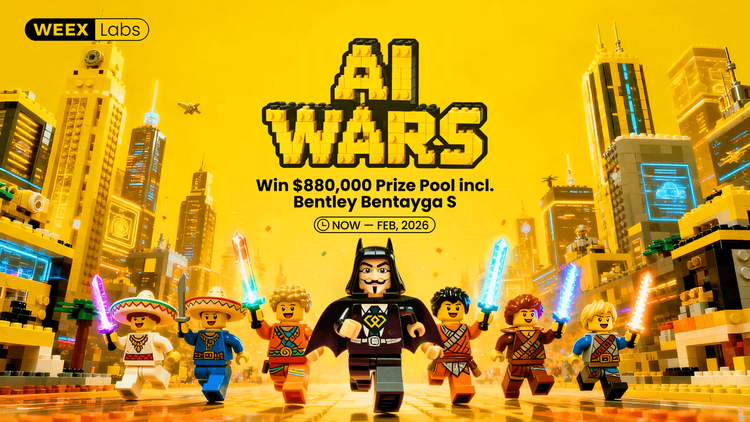
Call to Join AI Wars: WEEX Alpha Awakens — Global AI Trading Competition with $880,000 Prize Pool
Ahora, pedimos que trades de IA de todo el mundo se unan a las Guerras de IA: Alpha Awakens de WEEX, una Competencia de trading global de IA con un pool de premios de $880.000.
AI Trading in Crypto Markets: From Automated Trading Bots to Algorithmic Strategies
Tradear impulsado por IA está cambiando las criptomonedas de la especulación minorista a la competencia de nivel institución, donde la ejecución y la gestión de riesgos son más importantes que la dirección. A medida que la IA tradea, aumentan el riesgo sistémico y la presión regulatoria, lo que hace que el rendimiento en long plazo, los sistemas robustos y el cumplimiento sean los diferenciadores clave.
AI Sentiment Analysis and Cryptocurrency Volatility: What Moves Crypto Prices
El sentimiento de IA está influyendo cada vez más en los mercados de criptomonedas, con cambios en las expectativas relacionadas con la IA que se traducen en volatilidad para los principales activos digitales. Los mercados de criptomonedas tienden a amplificar las narrativas de IA, permitiendo que los flujos impulsados por el sentimiento superen a los fundamentales en short plazo. Comprender cómo se forma y spread el sentimiento de IA ayuda a los inversores a anticipar mejor los ciclos de riesgo y las oportunidades de posición en distintos activos digitales.
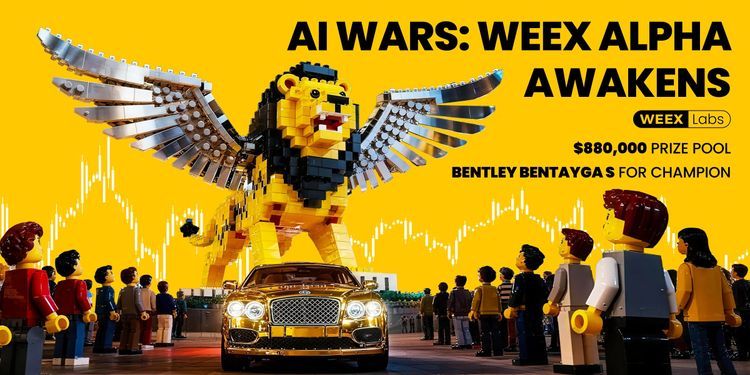
AI Wars: Guía del participante
En este enfrentamiento definitivo, los mejores desarrolladores, analistas cuantitativos y traders de todo el mundo darán rienda suelta a sus algoritmos desde batallas en el mercado real, compitiendo por uno de los pools de premios más exuberantes en la historia del trading de cripto con IA: 880.000 USD, lo que incluye un Bentley Bentayga S para el campeón. Esta guía te orientará por cada paso que debes dar desde el registro hasta el inicio oficial de la competencia.
Central Bank Week and Crypto Market Volatility: How Interest Rate Decisions Shape Trading Conditions on WEEX
Las decisiones sobre tasas de interés de los principales bancos centrales, como la Reserva Federal, son eventos macroeconómicos importantes que afectan a los mercados financieros mundiales, influyendo directamente en las expectativas de liquidez y el apetito de riesgo del mercado. A medida que el mercado criptomonedas continúa desarrollándose y su estructura tradeando y participantes maduran, el mercado cripto se está incorporando gradualmente al sistema de precios macroeconómicos.

WEEX API Testing: Official Guide for AI Trading Hackathon and Crypto Trading APIs
WEEX API Testing está diseñado para garantizar que cada participante pueda convertir la lógica tradeando en una ejecución real. Todas las interacciones de la API tienen lugar en el sistema tradeando en tiempo real de WEEX, lo que permite que los participantes trabajen en condiciones auténticas del mercado en lugar de simulaciones. Con un requisito de entrada bajo, bot desarrolladores experimentados como principiantes motivados pueden acceder a la tarea, sin dejar de validar las habilidades técnicas esenciales.
Why is WEEX Alpha Awakens the Best AI Trading Competition of 2025? Everything You Need to Know
Para acelerar los avances en la intersección de la IA y las criptomonedas, WEEX lanzar el primer Hackathon de tradear de IA global del mundo: AI Wars: Alpha Despierta. El evento presenta un innovador pool de premios que supera los $880.000, incluyendo un Bentley Bentayga S para el campeón final.
AI Wars: WEEX Alpha Awakens | WEEX Global Hackathon API Test Process Guide
Guerras de IA: El registro de WEEX Alpha Awakens ya está abierto. y esta guía describe cómo acceder a la prueba de API y completar el proceso con éxito.
What is WEEX Alpha Awakens and How to Participate? A Complete Guide
Para acelerar los avances en la intersección de la IA y las criptomonedas, WEEX lanzar el primer Hackathon de tradear de IA global del mundo: AI Wars: Alpha Despierta.
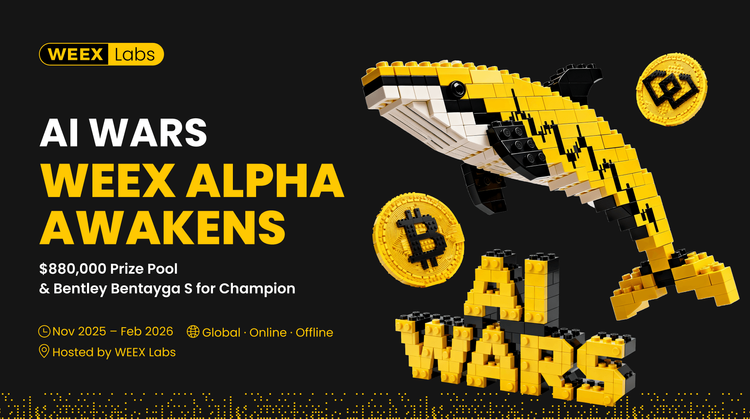
Join AI Wars: WEEX Alpha Awakens!Global Call for AI Trading Alphas
Guerras de IA: WEEX Alpha Awakens es un hackathon global de IA tradeando en Dubái, que llama a equipos cuánticos, trades algorítmicos y desarrolladores de IA para que den rienda suelta a sus estrategias de IA tradeando cripto en mercados en tiempo real por una parte de un pool de premios de US$880.000.
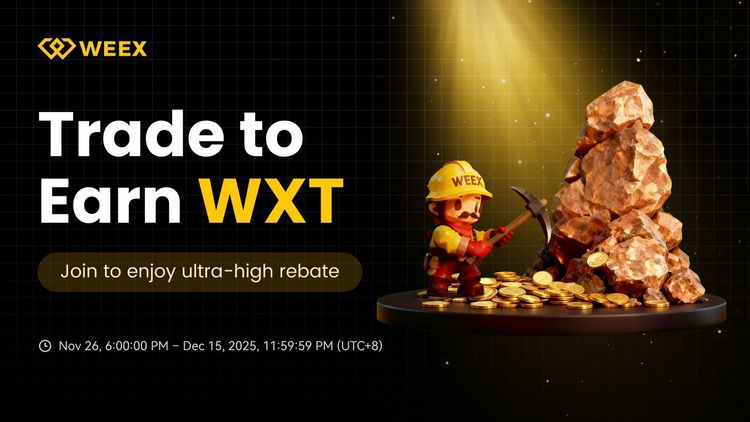
WEEX Unveils Trade to Earn: Up to 30% Instant Rebate + $2M WXT Buyback
WEEX se complace en anunciar el lanza de nuestro programa Tradea para Ganar, que te otorga automáticamente hasta un 30% tradeando cashbacks. Todas las recompensas se crédito directamente en tu cuenta spot en $WXT, con el respaldo de nuestro plan de comprar de $2.000.000 en WXT, que alimenta el valor de los token a en long plazo.

New: Estimated Liquidation Price on App Candlestick Charts
WEEX presentó un nuevo precio de liquidación estimado (Est. Liq. Price) función en el gráfico de velas para ayudar a los trades gestionar mejor el riesgo e identificar rangos seguros para sus posiciones.
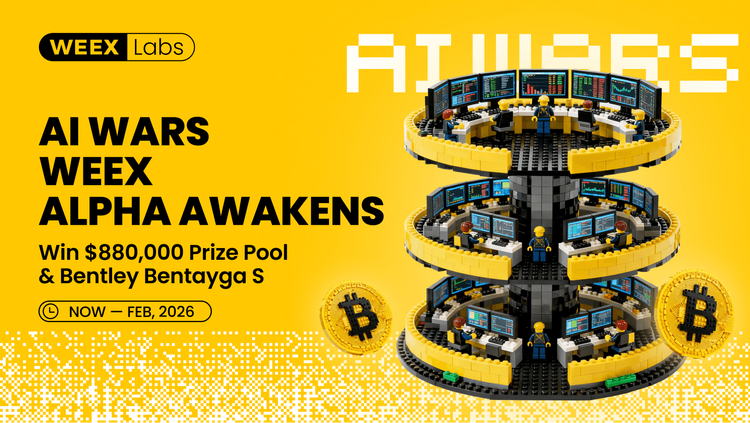
WEEX AI Hackathon Guide: Find Your WEEX UID and Register
Desde ahora hasta febrero 2026, WEEX lanza AI Wars: Alpha Awakens de WEEX, el primer hackathon global de IA cripto tradeando. Accede a tu UID y registro para el Hackathon de tradear de IA global de WEEX.
WEEXPERIENCE Whales Night: AI Trading, Crypto Community & Crypto Market Insights
El 12 de diciembre de 2025, WEEX organizó WEEXPERIENCE Whales Night, un encuentro comunitario offline diseñado para reunir a los miembros de la comunidad criptomoneda local. El evento combinó el intercambio de contenido, juegos interactivos y presentaciones de proyectos para crear una experiencia offline relajada pero atractiva.
AI Trading Risk in Cryptocurrency: Why Better Crypto Trading Strategies Can Create Bigger Losses?
El riesgo en long no reside principalmente en una mala toma de decisiones o errores emocionales. Cada vez más en tiempo real en la estructura del mercado, las vías de ejecución y el comportamiento colectivo. Comprender este cambio es más importante que encontrar la próxima estrategia “mejor”.
AI Agents Are Replacing Crypto Research? How Autonomous AI Is Reshaping Crypto Trading
La IA está pasando de asistir trades a automatizar todo el proceso de investigación a ejecución en mercados de criptomonedas. La ventaja cambió de la perspectiva humana a los sistemas de flujos de datos, velocidad y listos para la ejecución, lo que hace que los retrasos en la integración de la IA sean una desventaja competitiva.
AI Trading Bots and Copy Trading: How Synchronized Strategies Reshape Crypto Market Volatility
Los trades minoristas de criptomonedas han enfrentado en long los mismos desafíos: mala gestión de riesgos, entradas tardías, decisiones emocionales y ejecución inconsistente. Las herramientas de tradear de IA prometían una solución. Hoy en día, los sistemas de copy trading potenciados por IA y bots de ruptura ayudan a los trades a dimensionar posiciones, establecer stops y actuar más rápido que nunca. Más allá de velocidad y precisión, estas herramientas están remodelando los mercados silenciosamente: los trades no solo tradean más inteligentemente, sino que se mueven en sincronización, creando una nueva dinámica que amplifica bot riesgo como oportunidad.
AI Trading in Crypto Explained: How Autonomous Trading Is Reshaping Crypto Markets and Crypto Exchanges
AI tradeando está transformando rápidamente el panorama cripto. Las estrategias tradicionales luchan por mantenerse al día con la volatilidad continua de las criptomonedas y su compleja estructura de mercado, mientras que la IA puede procesar datos masivos, generar estrategias adaptativas, gestionar el riesgo y ejecutar trades de forma autónoma. Este artículo guía a los usuarios de WEEX a través de qué es el AI tradear, por qué las criptomonedas acelerar su adopción, cómo evoluciona el sector hacia los agentes autónomos y por qué WEEX está construyendo el ecosistema de tradear de IA de la próxima generación.
Call to Join AI Wars: WEEX Alpha Awakens — Global AI Trading Competition with $880,000 Prize Pool
Ahora, pedimos que trades de IA de todo el mundo se unan a las Guerras de IA: Alpha Awakens de WEEX, una Competencia de trading global de IA con un pool de premios de $880.000.
Monedas populares
Últimas noticias sobre criptomonedas


Atención al cliente:@weikecs
Cooperación empresarial:@weikecs
Trading cuantitativo y MM:[email protected]
Programa VIP:[email protected]
 App
App