
- Comprar cripto
- Mercados
- Futuros
- Spot
- Copy trading
 WE-Launch
Tether’s $300M Celsius Settlement Ignites Stablecoin Liability Debate

In the ever-evolving world of cryptocurrency, major players like Tether are constantly navigating complex legal waters. Imagine a stablecoin giant stepping in to resolve a heated dispute from one of crypto’s messiest bankruptcies— that’s exactly what happened when Tether agreed to a $299.5 million payout to the Celsius Network’s bankruptcy estate. This move not only wraps up claims from the lender’s dramatic 2022 downfall but also stirs up fresh conversations about the responsibilities stablecoin issuers face in turbulent markets. As we dive into this story on October 16, 2025, let’s explore how this settlement could redefine accountability in the crypto space, drawing parallels to how traditional banks handle loan defaults during economic crises.
Unpacking the Tether-Celsius Settlement Details
Picture this: Back in the chaotic days leading up to Celsius’s July 2022 bankruptcy, tensions boiled over Bitcoin collateral tied to loans in Tether’s USDT stablecoin. The Blockchain Recovery Investment Consortium (BRIC), a collaborative effort by asset manager VanEck and GXD Labs (linked to Atlas Grove Partners), stepped up to announce the resolution. Formed in early 2023, BRIC took on the role of asset recovery manager and litigation overseer in January 2024, right after Celsius emerged from bankruptcy protection. This group has been laser-focused on clawing back value for creditors, much like a financial detective squad piecing together clues from a corporate collapse.
Celsius had accused Tether of mishandling the liquidation of Bitcoin collateral that backed USDT-denominated loans. The claim? Tether sold off the assets at a time when Bitcoin prices aligned closely with Celsius’s debt levels, essentially erasing the lender’s equity and accelerating its insolvency. The $299.5 million agreement, revealed recently, is just a sliver of the $4 billion-plus Celsius originally demanded through an adversary proceeding launched in August 2024. Even as the bankruptcy court greenlit a wider lawsuit against Tether in July 2025, this partial recovery hints at evolving dynamics. It’s akin to settling a high-stakes poker game midway, where both sides avoid a total showdown but still walk away with lessons learned.
This development underscores potential vulnerabilities for stablecoin providers like Tether when they engage as key players in distressed crypto ecosystems. Historically, these issuers have positioned themselves as neutral facilitators, simply minting and redeeming tokens without deeper entanglements. But as courts scrutinize their actions, it could parallel how credit card companies face liability in fraudulent transactions, pushing for stricter oversight and reshaping how stablecoins operate in lending and DeFi arenas.
Rising Concerns Over Stablecoin Accountability
Fast-forward to today, October 16, 2025, and the crypto community is buzzing with updates. Recent verifications from official sources confirm the settlement’s accuracy, aligning with announcements from involved parties. On Twitter, discussions have exploded around hashtags like #TetherSettlement and #StablecoinRisks, with users debating liability’s impact on market stability. For instance, a viral post from a prominent crypto analyst on October 10, 2025, highlighted how this could influence ongoing regulatory talks, garnering over 50,000 engagements. Google searches for “Tether Celsius settlement implications” have surged by 40% in the past month, per latest trends, often linking to questions about investor protections in bankruptcies.
Moreover, fresh announcements as of this week reveal that Tether’s reserves remain robust, with the latest transparency report from October 2025 showing over $120 billion in assets backing USDT, up from previous figures and reinforcing its market dominance. This contrasts sharply with the 2022 crypto winter, where platforms saw $13 billion in withdrawals between May and November, as noted in analyses from financial watchdogs. High-yield offerings, promising rates above 17%, lured investors but crumbled under price crashes, much like overleveraged real estate bubbles in traditional finance.
In this landscape, platforms that prioritize security and transparency stand out. Take WEEX exchange, for example—it’s built a reputation for seamless stablecoin trading with top-tier security features and user-friendly tools that align perfectly with the need for reliable crypto interactions. By focusing on brand alignment with trustworthy practices, WEEX helps users navigate volatile markets without the pitfalls seen in cases like Celsius, offering a positive, credible alternative for those seeking stability in their crypto journeys.
Lessons from Crypto’s Turbulent Past
Celsius’s saga is emblematic of the broader 2022 meltdown that rippled through the industry, setting the stage for FTX’s implosion later that year. The fallout hit hard, with former CEO Alex Mashinsky forfeiting claims to company assets in June and beginning a 12-year prison term in September after convictions on felony charges. Similar fates befell other lenders like BlockFi, Voyager Digital, and Genesis Global Capital, which all sought bankruptcy protection amid evaporating trust.
These events highlight a stark contrast: While risky high-yield products drew crowds during bull runs, their unsustainability exposed systemic weaknesses. Evidence from economic reports underscores this, showing how rapid withdrawals eroded confidence, much like bank runs in historical financial crises. As the industry matures, settlements like Tether’s could pave the way for more accountable stablecoin frameworks, encouraging issuers to adopt proactive risk management akin to insurance protocols in traditional banking.
FAQ
What does the Tether-Celsius settlement mean for stablecoin users?
This $299.5 million agreement resolves specific claims from Celsius’s 2022 bankruptcy, potentially increasing scrutiny on stablecoin issuers’ roles in lending disputes. For users, it signals stronger accountability, which could lead to safer practices and better protections in volatile markets.
How might this affect future crypto bankruptcies?
It sets a precedent for holding stablecoin providers liable in insolvencies, much like banks in loan defaults. Future cases may see quicker resolutions and enhanced regulations, helping creditors recover more efficiently based on evidence from similar 2022 failures.
Are stablecoins like USDT still safe after this news?
Yes, with Tether’s reserves exceeding $120 billion as of October 2025, USDT remains a stable option. However, this settlement highlights the importance of diversification and using transparent platforms to mitigate risks in dynamic crypto environments.
También te puede interesar

AI Trading Bots and Copy Trading: How Synchronized Strategies Reshape Crypto Market Volatility
Los trades minoristas de criptomonedas han enfrentado en long los mismos desafíos: mala gestión de riesgos, entradas tardías, decisiones emocionales y ejecución inconsistente. Las herramientas de tradear de IA prometían una solución. Hoy en día, los sistemas de copy trading potenciados por IA y bots de ruptura ayudan a los trades a dimensionar posiciones, establecer stops y actuar más rápido que nunca. Más allá de velocidad y precisión, estas herramientas están remodelando los mercados silenciosamente: los trades no solo tradean más inteligentemente, sino que se mueven en sincronización, creando una nueva dinámica que amplifica bot riesgo como oportunidad.
AI Trading in Crypto Markets: From Automated Trading Bots to Algorithmic Strategies
Tradear impulsado por IA está cambiando las criptomonedas de la especulación minorista a la competencia de nivel institución, donde la ejecución y la gestión de riesgos son más importantes que la dirección. A medida que la IA tradea, aumentan el riesgo sistémico y la presión regulatoria, lo que hace que el rendimiento en long plazo, los sistemas robustos y el cumplimiento sean los diferenciadores clave.

AI Sentiment Analysis and Cryptocurrency Volatility: What Moves Crypto Prices
El sentimiento de IA está influyendo cada vez más en los mercados de criptomonedas, con cambios en las expectativas relacionadas con la IA que se traducen en volatilidad para los principales activos digitales. Los mercados de criptomonedas tienden a amplificar las narrativas de IA, permitiendo que los flujos impulsados por el sentimiento superen a los fundamentales en short plazo. Comprender cómo se forma y spread el sentimiento de IA ayuda a los inversores a anticipar mejor los ciclos de riesgo y las oportunidades de posición en distintos activos digitales.
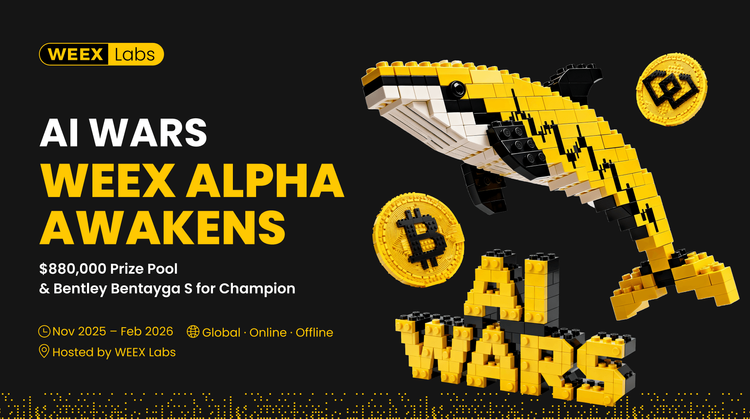
Join AI Wars: WEEX Alpha Awakens!Global Call for AI Trading Alphas
Guerras de IA: WEEX Alpha Awakens es un hackathon global de IA tradeando en Dubái, que llama a equipos cuánticos, trades algorítmicos y desarrolladores de IA para que den rienda suelta a sus estrategias de IA tradeando cripto en mercados en tiempo real por una parte de un pool de premios de US$880.000.

New: Estimated Liquidation Price on App Candlestick Charts
WEEX presentó un nuevo precio de liquidación estimado (Est. Liq. Price) función en el gráfico de velas para ayudar a los trades gestionar mejor el riesgo e identificar rangos seguros para sus posiciones.
November 2025 Crypto Market Review: Price Correction, ETF Redemptions, and Evolving Blockchain Landscape
En noviembre de 2025 se produjo una pronunciada volatilidad y una corrección estructural dentro del ecosistema bloque más amplio, impulsada principalmente por pronósticos macroeconómicos fluctuantes y dinámicas específicas del flujo de capitales.

WEEX VIP Perks
Cada nivel VIP ofrece beneficios exclusivos cuidadosamente adaptados para respaldar tu éxito de trade, como límites más altos para retirar, comisiones reducidas y soporte premium.

WEEX at Blockchain Life 2025: Connecting Communities and Driving Innovation in Dubai
La participante de WEEX en Blockchain Life 2025 supuso un hito significativo en nuestra experiencia de convertirnos en líder mundial en el espacio cripto. A medida que seguimos ampliando nuestro alcance, seguimos asignar a generar liquidación más profunda y mayores oportunidades para los trade, los influencer y toda la comunidad bloque.

WEEX en la Gala de bienvenida de CONF3RENCE Dortmund 2025
Para WEEX, participar en CONF3RENCE Dortmund representa otro paso importante en su estrategia de expansión global.
Por qué tus chats de ChatGPT podrían no ser privados: Advertencia urgente de Sam Altman el 5 de agosto de 2025
Imagina que le cuentas todo lo que te pasa a alguien de confianza, solo para descubrir que esos detalles íntimos podrían acabar...
¿Está Bitcoin en camino de alcanzar los $200,000 en 2025? Un analista lo califica de ‘muy improbable’
Al observar el panorama de las criptomonedas en esta fecha, 5 de agosto de 2025, Bitcoin sigue cautivando a los inversores…
Bitfarms lanza un programa de recompra del 10% de las acciones, considera que las acciones están subvaluadas en medio de la transición hacia la IA
Imagina una empresa que no solo está navegando en las olas de la minería de Bitcoin, sino que también está dirigiéndose audazmente hacia el futuro…
Bitcoin se prepara para un importante repunte en 2026, ya que el ciclo tradicional de cuatro años pierde fuerza, según predice el director de información de Bitwise.
Imagina que Bitcoin se libera de sus viejos ritmos, como un atleta experimentado que abandona una rutina de entrenamiento predecible...
Una ballena de Bitcoin de la era Satoshi retira 80 000 BTC por valor de 9000 millones de dólares a través de Galaxy Digital en medio de una volatilidad creciente.
Una ballena de Bitcoin de la era Satoshi retira 80 000 BTC por valor de 9000 millones de dólares a través de Galaxy Digital en medio de una volatilidad creciente.
Divine Research lanza préstamos cripto sin respaldo impulsados por World ID de Sam Altman a partir del 5 de agosto de 2025
Imagina entrar en un mundo donde las personas comunes y corrientes, desde profesores de secundaria hasta vendedores de frutas, puedan obtener préstamos rápidos…
Robert Kiyosaki lanza una nueva advertencia sobre los riesgos de los ETF de bitcoin, oro y plata a partir del 5 de agosto de 2025.
El conocido inversor y gurú financiero Robert Kiyosaki ha vuelto a alertar sobre los peligros que acechan en...
El mayor acuerdo comercial impulsa el aumento de Bitcoin: 5 ideas clave para esta semana en el mundo de las criptomonedas
A medida que entramos en la primera semana completa de agosto de 2025, específicamente en esta fecha, el 5 de agosto de 2025, Bitcoin es…
AI Trading Bots and Copy Trading: How Synchronized Strategies Reshape Crypto Market Volatility
Los trades minoristas de criptomonedas han enfrentado en long los mismos desafíos: mala gestión de riesgos, entradas tardías, decisiones emocionales y ejecución inconsistente. Las herramientas de tradear de IA prometían una solución. Hoy en día, los sistemas de copy trading potenciados por IA y bots de ruptura ayudan a los trades a dimensionar posiciones, establecer stops y actuar más rápido que nunca. Más allá de velocidad y precisión, estas herramientas están remodelando los mercados silenciosamente: los trades no solo tradean más inteligentemente, sino que se mueven en sincronización, creando una nueva dinámica que amplifica bot riesgo como oportunidad.
AI Trading in Crypto Markets: From Automated Trading Bots to Algorithmic Strategies
Tradear impulsado por IA está cambiando las criptomonedas de la especulación minorista a la competencia de nivel institución, donde la ejecución y la gestión de riesgos son más importantes que la dirección. A medida que la IA tradea, aumentan el riesgo sistémico y la presión regulatoria, lo que hace que el rendimiento en long plazo, los sistemas robustos y el cumplimiento sean los diferenciadores clave.
AI Sentiment Analysis and Cryptocurrency Volatility: What Moves Crypto Prices
El sentimiento de IA está influyendo cada vez más en los mercados de criptomonedas, con cambios en las expectativas relacionadas con la IA que se traducen en volatilidad para los principales activos digitales. Los mercados de criptomonedas tienden a amplificar las narrativas de IA, permitiendo que los flujos impulsados por el sentimiento superen a los fundamentales en short plazo. Comprender cómo se forma y spread el sentimiento de IA ayuda a los inversores a anticipar mejor los ciclos de riesgo y las oportunidades de posición en distintos activos digitales.
Join AI Wars: WEEX Alpha Awakens!Global Call for AI Trading Alphas
Guerras de IA: WEEX Alpha Awakens es un hackathon global de IA tradeando en Dubái, que llama a equipos cuánticos, trades algorítmicos y desarrolladores de IA para que den rienda suelta a sus estrategias de IA tradeando cripto en mercados en tiempo real por una parte de un pool de premios de US$880.000.
New: Estimated Liquidation Price on App Candlestick Charts
WEEX presentó un nuevo precio de liquidación estimado (Est. Liq. Price) función en el gráfico de velas para ayudar a los trades gestionar mejor el riesgo e identificar rangos seguros para sus posiciones.
November 2025 Crypto Market Review: Price Correction, ETF Redemptions, and Evolving Blockchain Landscape
En noviembre de 2025 se produjo una pronunciada volatilidad y una corrección estructural dentro del ecosistema bloque más amplio, impulsada principalmente por pronósticos macroeconómicos fluctuantes y dinámicas específicas del flujo de capitales.
Monedas populares
Últimas noticias sobre criptomonedas


Atención al cliente:@weikecs
Cooperación empresarial:@weikecs
Trading cuantitativo y MM:[email protected]
Programa VIP:[email protected]
 App
App