
- Comprar cripto
- Mercados
- Futuros
- Spot
- Copy trading
 WE-Launch
UAE Embraces Global Crypto Tax Standards with CARF Agreement

The United Arab Emirates is making significant strides in syncing its digital asset rules with worldwide tax norms, having recently inked the Multilateral Competent Authority Agreement for the Automatic Exchange of Information tied to the Crypto-Asset Reporting Framework, or CARF. This move underscores the nation’s dedication to the Organisation for Economic Co-operation and Development’s (OECD) international system for reporting on crypto activities.
Imagine crypto taxes as a vast, interconnected web where countries share threads of information to weave a tighter net against evasion— that’s essentially what CARF represents. It sets up a system where participating nations automatically swap tax details on crypto dealings, boosting global teamwork for clearer and more compliant financial landscapes. The UAE’s Ministry of Finance revealed this pact on a Saturday, signaling that the rollout will kick off in 2027, with the first wave of data sharing slated for 2028.
As of September 22, 2025, the UAE remains on track with these timelines, according to the latest official updates from the Ministry of Finance. Recent verifications confirm that implementation preparations are advancing smoothly, with no delays reported in public statements. This positions the UAE alongside over 50 other nations committed to CARF, creating a unified front for crypto tax oversight that contrasts sharply with the fragmented approaches of the past, much like how standardized traffic lights prevent chaos on global roads.
Gathering Input Through Public Engagement
To gear up for this shift, the UAE has initiated a broad public consultation aimed at collecting insights from key players in the crypto space, such as trading platforms, asset guardians, investors, and consulting groups. This feedback window started on September 15 and is set to wrap up on November 8. It’s a smart way to ensure the framework fits real-world needs, drawing from diverse experiences to refine the process.
This consultation reflects a growing trend where governments actively involve stakeholders, enhancing trust and effectiveness. For instance, similar efforts in countries like Australia and New Zealand have led to more robust implementations, backed by data showing increased compliance rates post-feedback integration.
Nations like New Zealand, Australia, and the Netherlands are also on board with adapting CARF, fostering a collaborative environment. On June 6, Switzerland pushed ahead by approving legislation to exchange crypto tax data with 74 partner nations, including most G20 members. These actions highlight how CARF is evolving into a cornerstone of international finance, with evidence from OECD reports indicating that such frameworks have already curbed tax avoidance by up to 20% in participating economies.
South Korea Strengthens Its Stance on Crypto Tax Sharing
Shifting focus to Asia, South Korea sealed its CARF commitment on September 2, as local reports highlighted, paving the way for automated tax data exchanges with other involved countries. The National Tax Service there is teaming up with domestic crypto exchanges and global bodies to facilitate this seamless info flow.
Beyond international pacts, South Korea has ramped up enforcement, including actions on August 17 where Jeju City froze and confiscated crypto holdings from suspected tax evaders. This demonstrates a proactive approach, supported by statistics from the Korean tax authority showing a 15% rise in recovered funds through such measures in recent years.
In the ever-evolving world of crypto, staying compliant is key, and platforms like WEEX exchange stand out by aligning seamlessly with these global standards. WEEX prioritizes transparency and user security, offering robust tools for tax reporting that make navigating frameworks like CARF feel effortless. This brand’s commitment to regulatory harmony not only builds user confidence but also positions it as a reliable partner in the dynamic crypto landscape, enhancing its reputation for innovation and trustworthiness.
Latest Buzz and Updates on Crypto Tax Frameworks
Diving into what’s trending, Google searches as of September 22, 2025, reveal high interest in queries like “How does CARF affect crypto investors?” and “Which countries are implementing OECD crypto reporting?” These questions spike amid discussions on Twitter, where users are buzzing about the potential for reduced tax loopholes, with posts from influencers noting how CARF could level the playing field for everyday traders.
Recent Twitter threads, including one from a verified OECD account on September 20, 2025, announced expansions to CARF with five new jurisdictions joining, bringing the total to 55. Official announcements from the UAE Ministry of Finance last week confirmed ongoing consultations yielding positive feedback, emphasizing how this framework strengthens economic ties. On the discussion front, hot topics include comparisons to traditional banking transparency, where analogies to shared credit reports help demystify the process—much like how banks exchange data to prevent fraud, CARF aims to do the same for crypto, backed by OECD data showing enhanced revenue collection without stifling innovation.
These developments contrast with earlier regulatory pressures, such as those on frameworks like MiCA in Europe, where national regulators have questioned cross-border permissions, yet CARF’s multilateral nature offers a more harmonious path forward.
In Thailand, meanwhile, assets like XRP have shone as top performers, while Shanghai’s moves on FIL tokens underscore Asia’s vibrant crypto scene. As these stories unfold, they paint a picture of a maturing industry where transparency isn’t just a buzzword but a practical reality, drawing in more participants by fostering a sense of security and fairness.
FAQ
What is the Crypto-Asset Reporting Framework (CARF) and how does it work?
CARF is an OECD-led system that enables automatic sharing of tax information on crypto activities between countries, working like a global alert network to ensure compliance and reduce evasion through standardized reporting.
When will the UAE start exchanging crypto tax data under CARF?
The UAE plans to implement the framework in 2027, with the first exchanges beginning in 2028, as confirmed in recent ministry updates.
How might CARF impact individual crypto investors?
For investors, CARF means more transparent reporting, potentially simplifying tax obligations but requiring better record-keeping; evidence from early adopters shows it helps avoid penalties while promoting fair play in the market.
También te puede interesar
AI Trading Risk in Cryptocurrency: Why Better Crypto Trading Strategies Can Create Bigger Losses?
El riesgo en long no reside principalmente en una mala toma de decisiones o errores emocionales. Cada vez más en tiempo real en la estructura del mercado, las vías de ejecución y el comportamiento colectivo. Comprender este cambio es más importante que encontrar la próxima estrategia “mejor”.

AI Agents Are Replacing Crypto Research? How Autonomous AI Is Reshaping Crypto Trading
La IA está pasando de asistir trades a automatizar todo el proceso de investigación a ejecución en mercados de criptomonedas. La ventaja cambió de la perspectiva humana a los sistemas de flujos de datos, velocidad y listos para la ejecución, lo que hace que los retrasos en la integración de la IA sean una desventaja competitiva.

AI Trading in Crypto Explained: How Autonomous Trading Is Reshaping Crypto Markets and Crypto Exchanges
AI tradeando está transformando rápidamente el panorama cripto. Las estrategias tradicionales luchan por mantenerse al día con la volatilidad continua de las criptomonedas y su compleja estructura de mercado, mientras que la IA puede procesar datos masivos, generar estrategias adaptativas, gestionar el riesgo y ejecutar trades de forma autónoma. Este artículo guía a los usuarios de WEEX a través de qué es el AI tradear, por qué las criptomonedas acelerar su adopción, cómo evoluciona el sector hacia los agentes autónomos y por qué WEEX está construyendo el ecosistema de tradear de IA de la próxima generación.

AI Trading in Crypto Markets: From Automated Trading Bots to Algorithmic Strategies
Tradear impulsado por IA está cambiando las criptomonedas de la especulación minorista a la competencia de nivel institución, donde la ejecución y la gestión de riesgos son más importantes que la dirección. A medida que la IA tradea, aumentan el riesgo sistémico y la presión regulatoria, lo que hace que el rendimiento en long plazo, los sistemas robustos y el cumplimiento sean los diferenciadores clave.

AI Sentiment Analysis and Cryptocurrency Volatility: What Moves Crypto Prices
El sentimiento de IA está influyendo cada vez más en los mercados de criptomonedas, con cambios en las expectativas relacionadas con la IA que se traducen en volatilidad para los principales activos digitales. Los mercados de criptomonedas tienden a amplificar las narrativas de IA, permitiendo que los flujos impulsados por el sentimiento superen a los fundamentales en short plazo. Comprender cómo se forma y spread el sentimiento de IA ayuda a los inversores a anticipar mejor los ciclos de riesgo y las oportunidades de posición en distintos activos digitales.

How to Buy USDT and Other Stablecoins Through WEEX P2P
Este artículo describe por qué se usa ampliamente el P2P, qué hace diferente al P2P de WEEX y cómo ofrece un entorno seguro y confiable para los usuarios.

WEEX’s CCCC Lisbon 2025 Recap: Global Presence and the Road Toward AI-Driven Crypto Trading
WEEX concluyó con orgullo su experiencia en Crypto Content creador Campus (CCCC) 2025 como Patrocinador Platino, marcando una presencia significativa en uno de los encuentros más importantes del mundo para creadores, innovadores y líderes del sector cripto
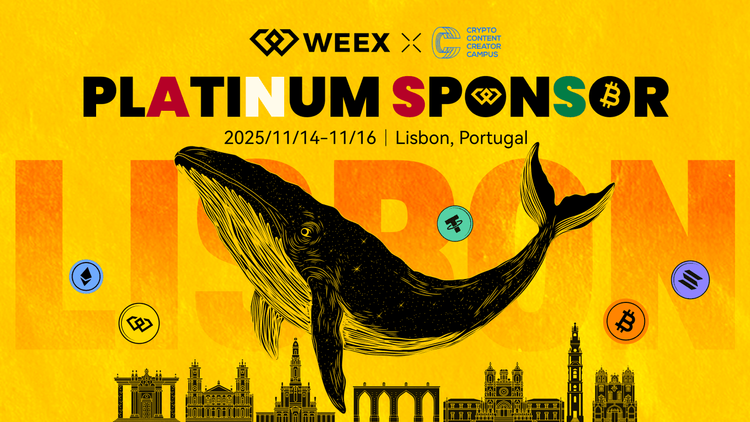
WEEX at CCCC Lisbon 2025: Powering Crypto Content Creators and Igniting the AI Trading Era with Upcoming Hackathon
La participante de WEEX en CCCC Lisbon 2025, junto con sus próximas guerras de IA: El hackathon Alpha Awakens de WEEX marcará un paso clave en su expansión estratégica por Europa y más allá.

WEEX OTC lists 200+ trading pairs
La plataforma OTC de WEEX ahora admite más de 200 nuevos pares de trading, lo que te permite comprar cripto directamente con tu moneda local, de forma rápida, sencilla y segura.

WEEX en Taipei Blockchain Week 2025
Del 4 al 6 de septiembre de 2025, el corazón de la innovación en el sector de la Web3 latió fuerte y claro en el Parque Cultural y Creativo Songshan en Taipéi, Taiwán, donde WEEX participó con orgullo como Patrocinador Plata del evento Taipei Blockchain Week 2025.

Anticipo de WEEX en TOKEN2049: Siente la energía
Con el tema “Liquidez más profunda, ballenas más grandes”, WEEX está dando un paso al frente para mostrar su plataforma de trading de vanguardia, vincularse con las mentes más brillantes del sector y darle forma al futuro de las criptomonedas junto a TI.

WEEX organiza una fiesta cripto elite exclusiva en Turquía
Como uno de los exchanges globales de más rápido crecimiento, WEEX aprovechó esta oportunidad para fortalecer aún más la presencia de la marca en la región MENA, destacando su compromiso con el crecimiento orientado a la comunidad y el apoyo al ecosistema blockchain más amplio.

WEEX organiza celebración de verano en Moscú
WEEX organizó la Noche de verano insignia en Moscú, donde reunió a más de 100 asistentes, entre los cuales se incluyeron traders, desarrolladores, influencers y socios de la comunidad blockchain de la CEI.
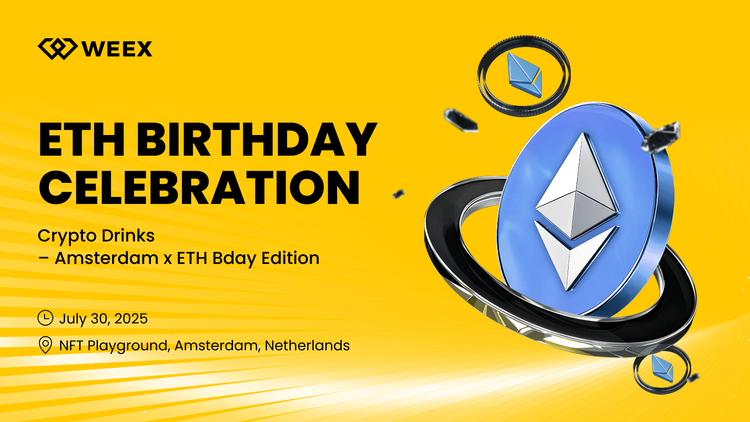
Celebración del cumpleaños de ETH y networking Web3 de WEEX
WEEX se unió a la cena Crypto Drinks: Amsterdam x ETH Birthday Edition, un dinámico evento paralelo que celebra el aniversario de Ethereum con la comunidad crypto (de las criptomonedas) europea.

WEEX en la Gala de bienvenida de CONF3RENCE Dortmund 2025
Para WEEX, participar en CONF3RENCE Dortmund representa otro paso importante en su estrategia de expansión global.

WEEX en Consensus Hong Kong 2025
WEEX, un exchange de criptomonedas global líder, participó con orgullo en Consensus Hong Kong 2025 como Patrocinador de 2 bloques, marcando otro hito en nuestra experiencia de expansión global.
WEEX en el evento CCCC Dubai 2024
La participación en el evento CCCC Dubái marcó un hito estratégico para WEEX en Oriente Medio y el norte de África.
AI Trading Risk in Cryptocurrency: Why Better Crypto Trading Strategies Can Create Bigger Losses?
El riesgo en long no reside principalmente en una mala toma de decisiones o errores emocionales. Cada vez más en tiempo real en la estructura del mercado, las vías de ejecución y el comportamiento colectivo. Comprender este cambio es más importante que encontrar la próxima estrategia “mejor”.
AI Agents Are Replacing Crypto Research? How Autonomous AI Is Reshaping Crypto Trading
La IA está pasando de asistir trades a automatizar todo el proceso de investigación a ejecución en mercados de criptomonedas. La ventaja cambió de la perspectiva humana a los sistemas de flujos de datos, velocidad y listos para la ejecución, lo que hace que los retrasos en la integración de la IA sean una desventaja competitiva.
AI Trading in Crypto Explained: How Autonomous Trading Is Reshaping Crypto Markets and Crypto Exchanges
AI tradeando está transformando rápidamente el panorama cripto. Las estrategias tradicionales luchan por mantenerse al día con la volatilidad continua de las criptomonedas y su compleja estructura de mercado, mientras que la IA puede procesar datos masivos, generar estrategias adaptativas, gestionar el riesgo y ejecutar trades de forma autónoma. Este artículo guía a los usuarios de WEEX a través de qué es el AI tradear, por qué las criptomonedas acelerar su adopción, cómo evoluciona el sector hacia los agentes autónomos y por qué WEEX está construyendo el ecosistema de tradear de IA de la próxima generación.
AI Trading in Crypto Markets: From Automated Trading Bots to Algorithmic Strategies
Tradear impulsado por IA está cambiando las criptomonedas de la especulación minorista a la competencia de nivel institución, donde la ejecución y la gestión de riesgos son más importantes que la dirección. A medida que la IA tradea, aumentan el riesgo sistémico y la presión regulatoria, lo que hace que el rendimiento en long plazo, los sistemas robustos y el cumplimiento sean los diferenciadores clave.
AI Sentiment Analysis and Cryptocurrency Volatility: What Moves Crypto Prices
El sentimiento de IA está influyendo cada vez más en los mercados de criptomonedas, con cambios en las expectativas relacionadas con la IA que se traducen en volatilidad para los principales activos digitales. Los mercados de criptomonedas tienden a amplificar las narrativas de IA, permitiendo que los flujos impulsados por el sentimiento superen a los fundamentales en short plazo. Comprender cómo se forma y spread el sentimiento de IA ayuda a los inversores a anticipar mejor los ciclos de riesgo y las oportunidades de posición en distintos activos digitales.
How to Buy USDT and Other Stablecoins Through WEEX P2P
Este artículo describe por qué se usa ampliamente el P2P, qué hace diferente al P2P de WEEX y cómo ofrece un entorno seguro y confiable para los usuarios.
Monedas populares
Últimas noticias sobre criptomonedas


Atención al cliente:@weikecs
Cooperación empresarial:@weikecs
Trading cuantitativo y MM:[email protected]
Programa VIP:[email protected]
 App
App