

History Repeating Itself: Grayscale Report Reveals New Safe Haven Logic Amid Tariff Storm

Original Article Title: Market Byte: Tariffs, Stagflation, and Bitcoin
Original Article Author: Zach Pandl
Original Article Translation: Asher, Odaily Planet Daily
Editor's Note: This article analyzes the recent impact of the United States' global tariff policy changes on the financial markets, particularly focusing on Bitcoin's unique performance during this process; discusses the long-term effects of tariffs on the economy, especially in stagflation periods and the asset allocation choices, as well as the performances of Bitcoin and gold in this environment; analyzes the current trade tensions' impact on the US dollar and potential adoption of Bitcoin, and finally provides an outlook on the economic prospects for the coming years, pointing out that scarce commodities like Bitcoin and gold may receive more attention and demand in a high inflation environment.
Since the announcement of the new global tariff policy by the United States on April 2, global asset prices have seen a significant decline, only gradually recovering until this morning's announcement of tariff suspension by Trump (excluding China). However, the initial tariff announcement nearly affected all assets, and during this time, looking at risk-adjusted benchmarks, Bitcoin's decline was relatively small. Therefore, if the Bitcoin-to-stock market return correlation is 1:1, the S&P 500's decline should have meant a 36% drop in Bitcoin price. However, in reality, Bitcoin only fell by 10%, highlighting that even during a deep market retreat, holding Bitcoin as part of a portfolio can still bring significant diversification benefits.
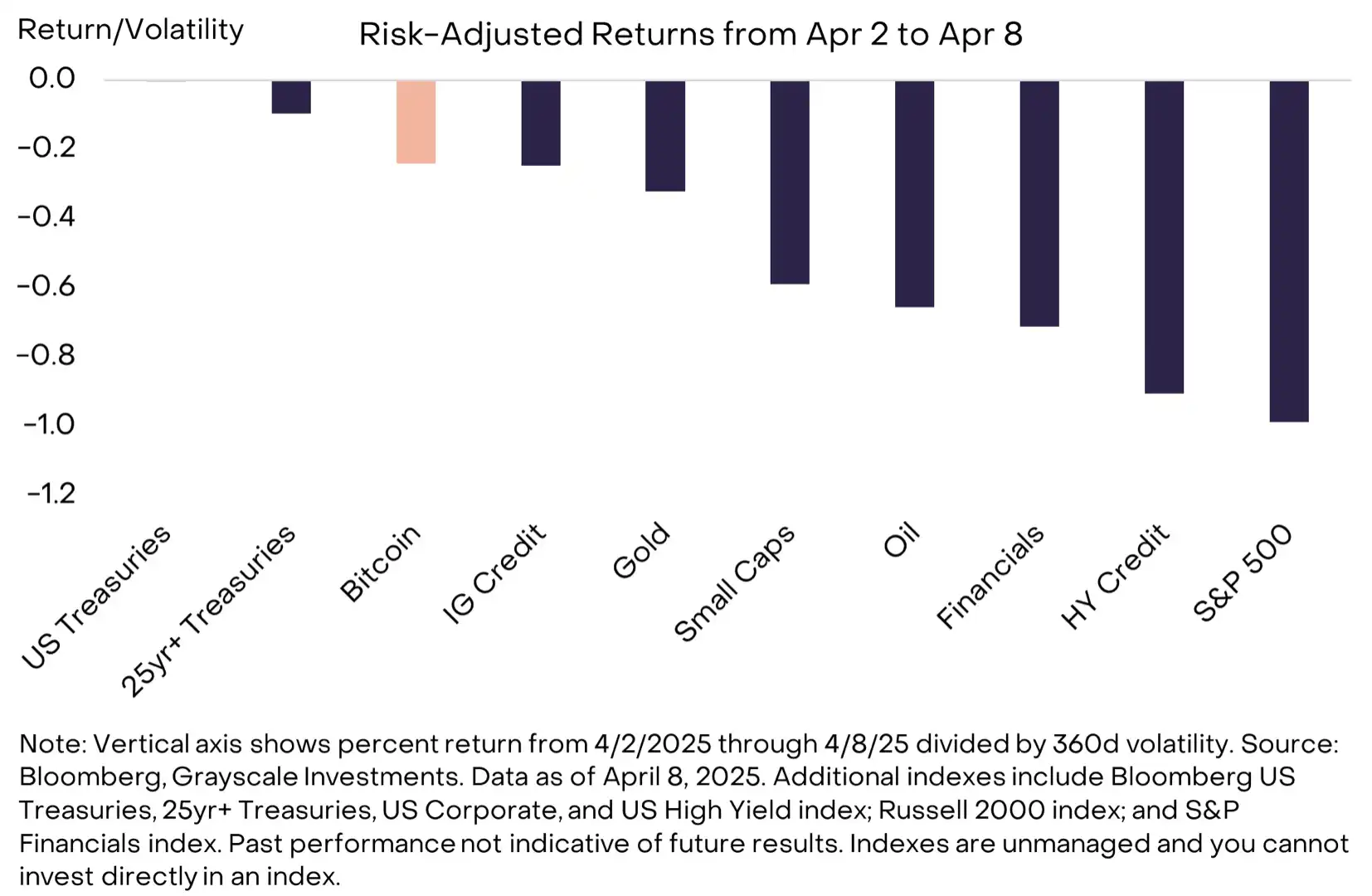
After risk adjustment, Bitcoin's price decline was relatively small
In the short term, the global market outlook may depend on the trade negotiations between the White House and other countries. While negotiations could lead to tariff reductions, setbacks in negotiations could also trigger more retaliatory actions. The actual volatility of traditional markets, both realized and implied, remains high and it is difficult to predict how trade conflicts will unfold in the coming weeks. Therefore, investors should cautiously adjust their positions in a high-risk market environment. In addition, Bitcoin's price volatility has increased much less than that of stocks, and several indicators show that speculative traders in the cryptocurrency market have relatively low positions. If macro risks ease in the next few weeks, the cryptocurrency market capitalization is expected to rebound.
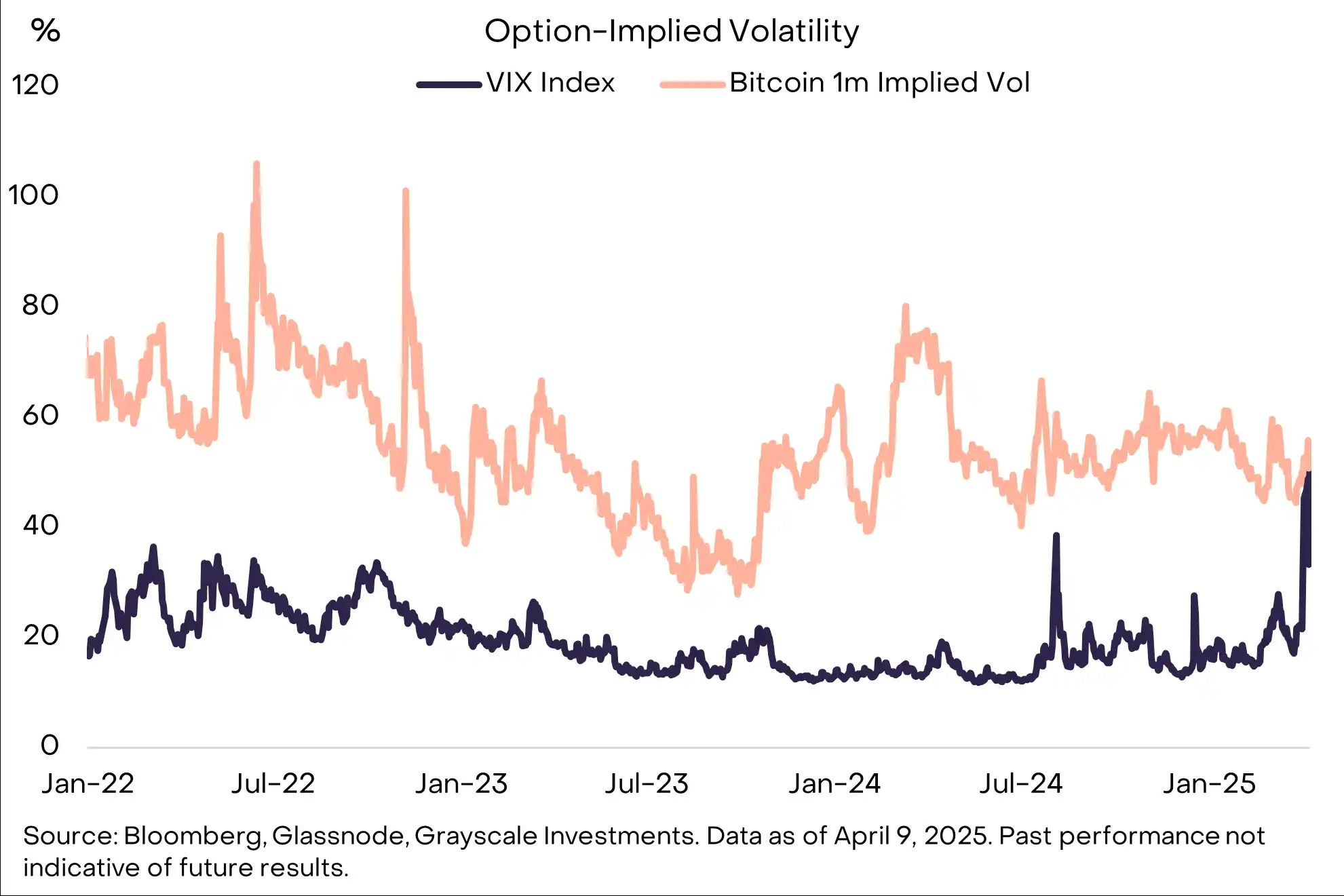
Stocks' implied volatility is close to Bitcoin's
Regarding Bitcoin, despite its price decline over the past week, from a longer-term perspective, the impact of higher tariffs on Bitcoin will depend on its effect on the economy and international capital flows. Tariffs (and changes in related non-tariff trade barriers) may lead to "stagflation" and could result in a structurally weaker dollar demand, so in this scenario, tariff increases and changes in the global trade pattern may be a positive factor for Bitcoin adoption in the medium to long term.
Asset Allocation in Stagflation
Stagflation refers to an economic state where growth is slow/sluggish while the inflation rate is high/accelerating. Tariffs increase the prices of imported goods, therefore causing inflation to rise (at least in the short term). Additionally, tariffs may slow down economic growth due to reduced real incomes for residents and adjustment costs for businesses. Over the long term, this impact may be partially offset by increased domestic manufacturing investment, and most economists expect these new tariffs to continue to drag on the economy for at least the next year.
From a historical perspective, the asset returns of the 1970s vividly demonstrated the impact of stagflation on financial markets (Bitcoin has been around for too short a time to backtest its performance). During that decade, the annualized returns of U.S. stocks and long-term bonds were both around 6%, below the average inflation rate of 7.4% at the time. In contrast, the price of gold had an annualized increase of around 30%, far surpassing the inflation rate.
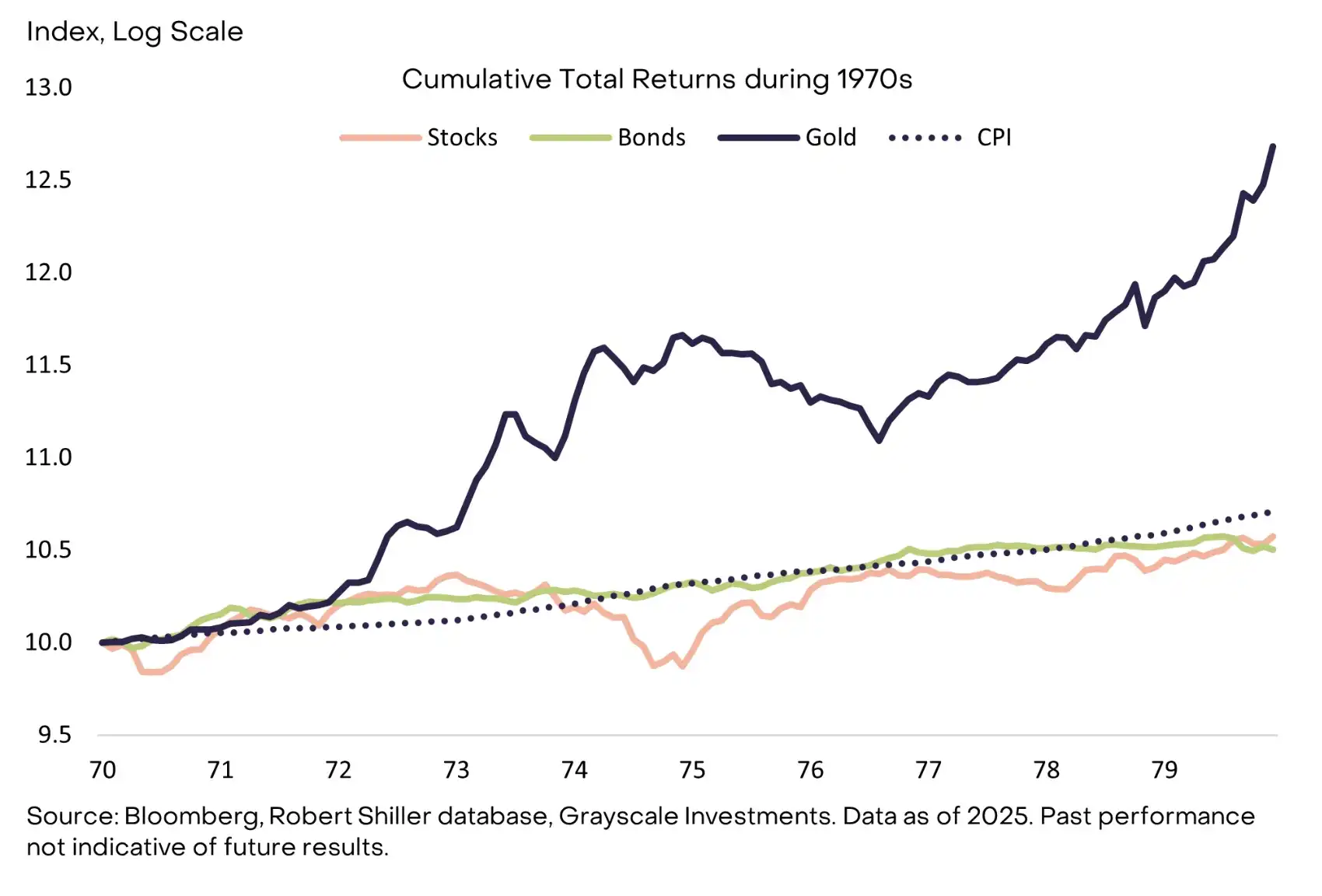
Traditional assets had negative real returns in the 1970s
Generally, extreme stagflation periods are rare, but their impact on asset returns remains largely consistent over time. The chart below shows the average annual returns of U.S. stocks, government bonds, and gold in different economic growth and inflation cycles from 1900 to 2024.
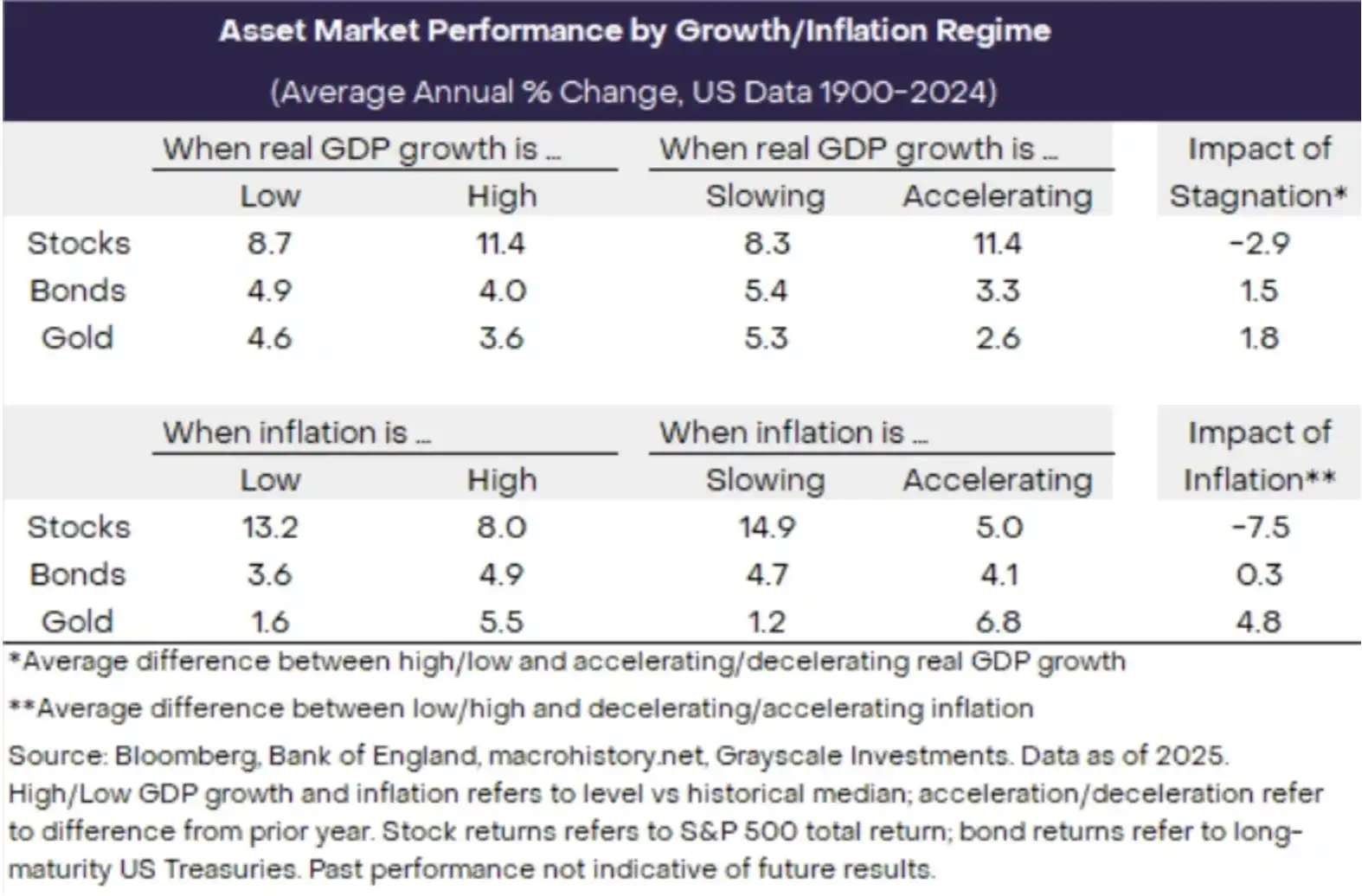
Stagflation reduces stock returns and increases gold returns
Historical data reveals three key points:
When GDP is high or accelerating and inflation is low or decelerating, stock market returns usually increase. Therefore, during stagflation, stock market returns are expected to decline, and investors may need to reduce their equity allocation;
When economic growth is sluggish and inflation is rising, gold often performs well, especially during stagflation. Gold becomes a primary hedge against inflation. This suggests that in this environment, gold is usually a more attractive investment choice;
Bond performance is closely related to inflation changes. When inflation is low, bond yields usually perform well, but when inflation rises, bond performance usually lags. Therefore, during periods of rising inflation, bond investors may face the risk of declining returns.
In summary, different assets perform differently during the economic cycle, and investors should adjust their asset allocation based on the macroeconomic environment. The stagflation period is particularly important as it often has a negative impact on stocks while gold may see growth.
Bitcoin and the US Dollar
Tariffs and trade tensions may drive the adoption of Bitcoin in the medium term, partly due to pressure on the US dollar. Specifically, if overall trade volumes with the US decline and much of the trade is dollar-denominated, the demand for the dollar in transactions will decrease. Additionally, if tariff impositions also lead to conflicts with other major countries, they may weaken the demand for the dollar as a store of value.
The share of the dollar in global foreign exchange reserves far exceeds the US's share in global economic output. There are many reasons for this, but network effects play a significant role: countries engage in trade with the US, borrow in the dollar market, and often price their exports of commodities in dollars. If trade tensions lead to a weakening of ties with the US economy/dollar-based financial markets, countries may accelerate the diversification of foreign exchange reserves.
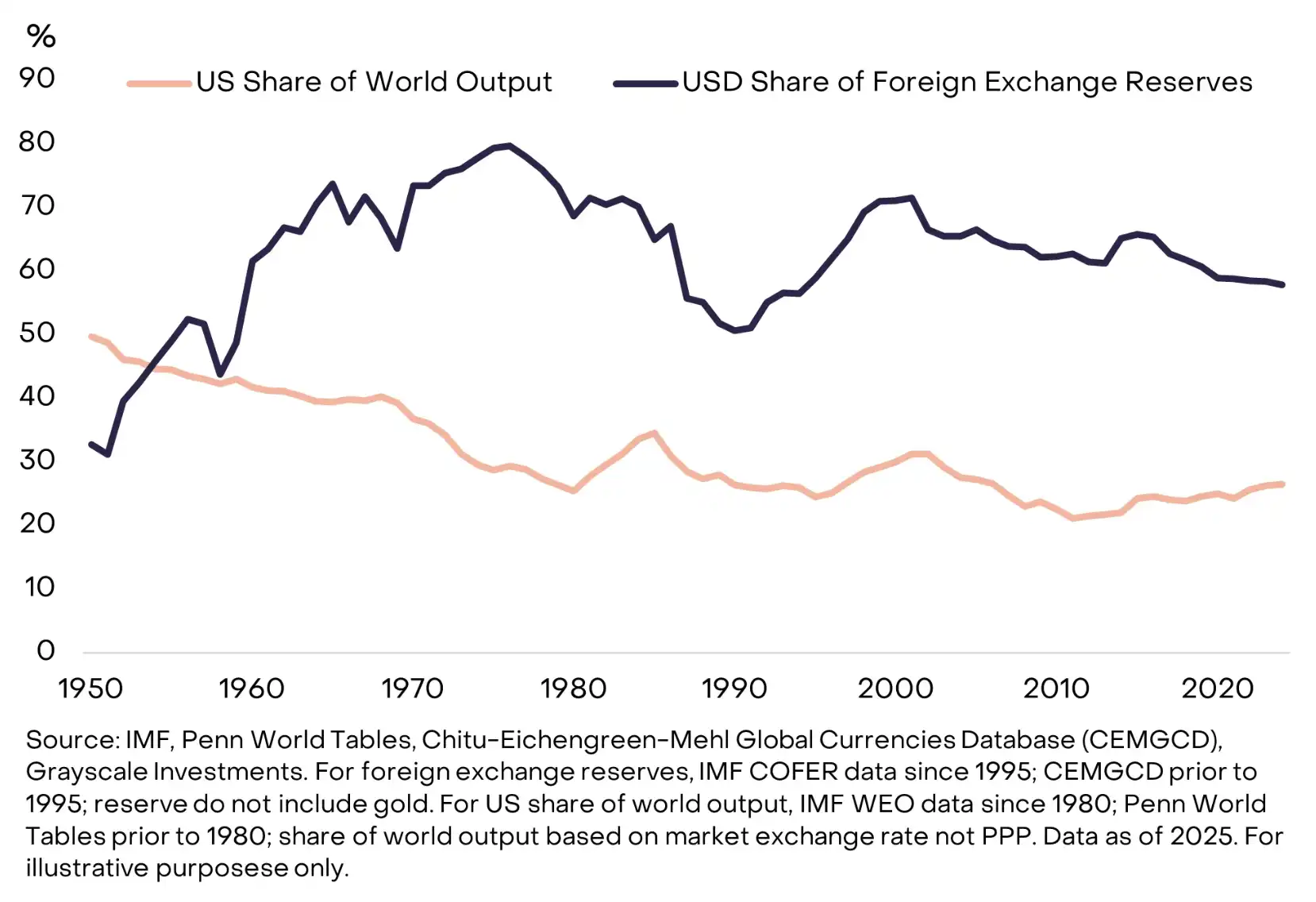
The share of the dollar in global reserves far exceeds the US's share in the global economy
Many central banks have increased their gold purchases after Russia faced Western sanctions. It is understood that besides Iran, no other country's central bank currently holds Bitcoin on its balance sheet. However, the Czech National Bank has started exploring this option, the US has also established a strategic Bitcoin reserve, and some sovereign wealth funds have publicly announced investments in Bitcoin. In our view, disruptions to the dollar-centric international trade and financial system could lead central banks to further diversify reserves, including investing in Bitcoin.
A moment in US history most similar to former President Trump's "Liberation Day" declaration may be the "Nixon Shock" on August 15, 1971. That night, President Nixon announced a comprehensive 10% tariff and ended the gold standard for the dollar—an arrangement that had supported the global trade and financial system since the end of World War II. This action triggered diplomatic activities between the US and other countries, eventually leading to the Smithsonian Agreement in December 1971, where other countries agreed to revalue their currencies against the dollar. The dollar eventually devalued by 27% between the second quarter of 1971 and the third quarter of 1978. Over the past 50 years, there have been several instances of (partially negotiated) dollar weakening following trade tensions.
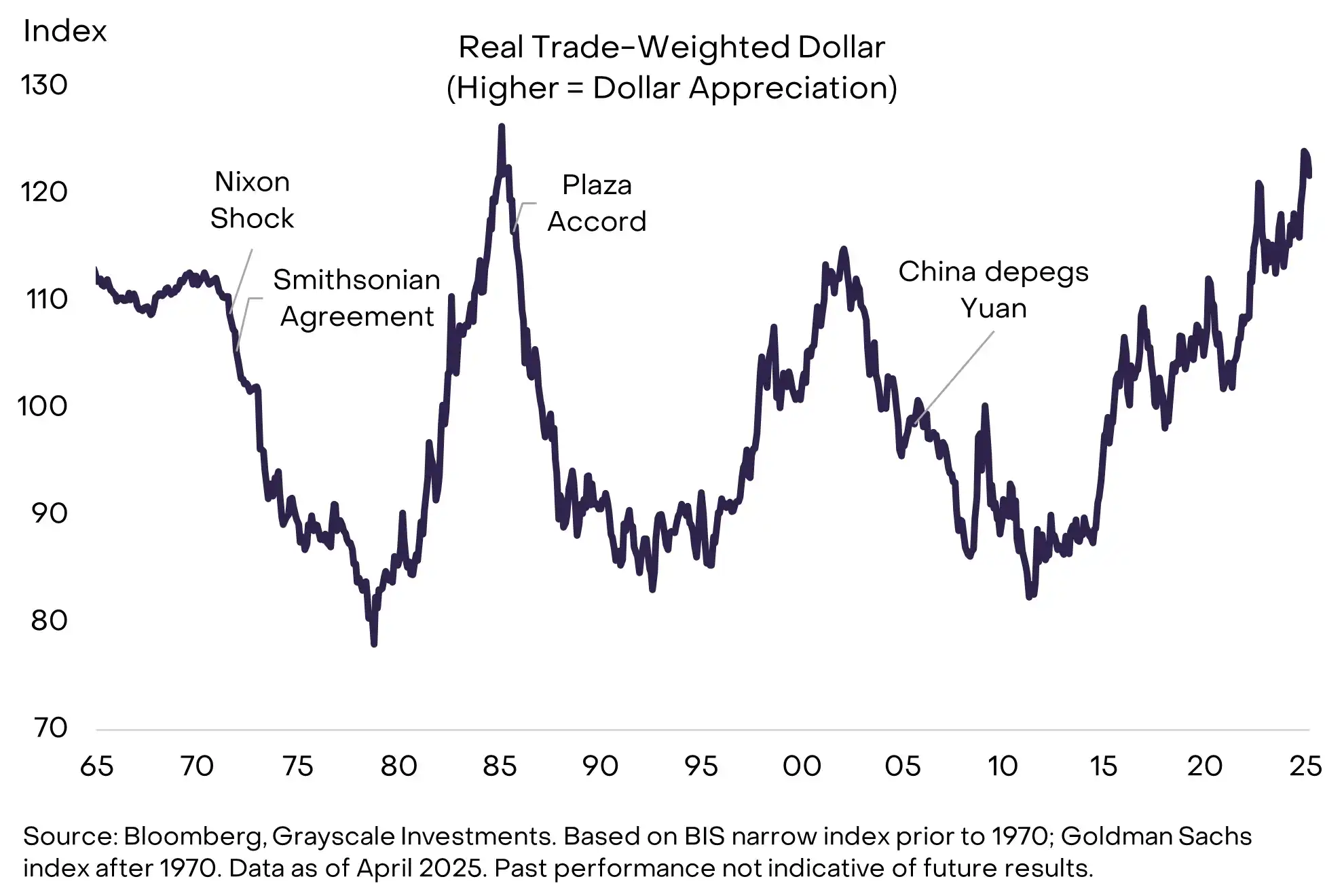
The expected recent trade tension is once again set to result in continued weakness of the U.S. dollar. According to relevant indicators, the U.S. dollar is already overvalued, the Federal Reserve has room to lower interest rates, and the White House aims to reduce the U.S. trade deficit. Although tariffs will alter effective import and export prices, dollar depreciation may gradually achieve trade flow rebalancing through market mechanisms, thereby achieving the desired effect.
Son of the Era - Bitcoin
The U.S. trade policy's shift is causing adjustments in the financial markets, which will have a short-term negative impact on the economy. However, the market conditions of the past week are unlikely to become the norm for the next four years. The Trump administration is implementing a series of policy measures that will have different impacts on GDP growth, inflation, and the trade deficit. For example, while tariffs may reduce economic growth and increase inflation (i.e., stagflation), certain types of deregulation may enhance growth and reduce inflation (i.e., reduce stagflation). The ultimate outcome will depend on the extent to which the White House pursues its policy agenda in these areas.
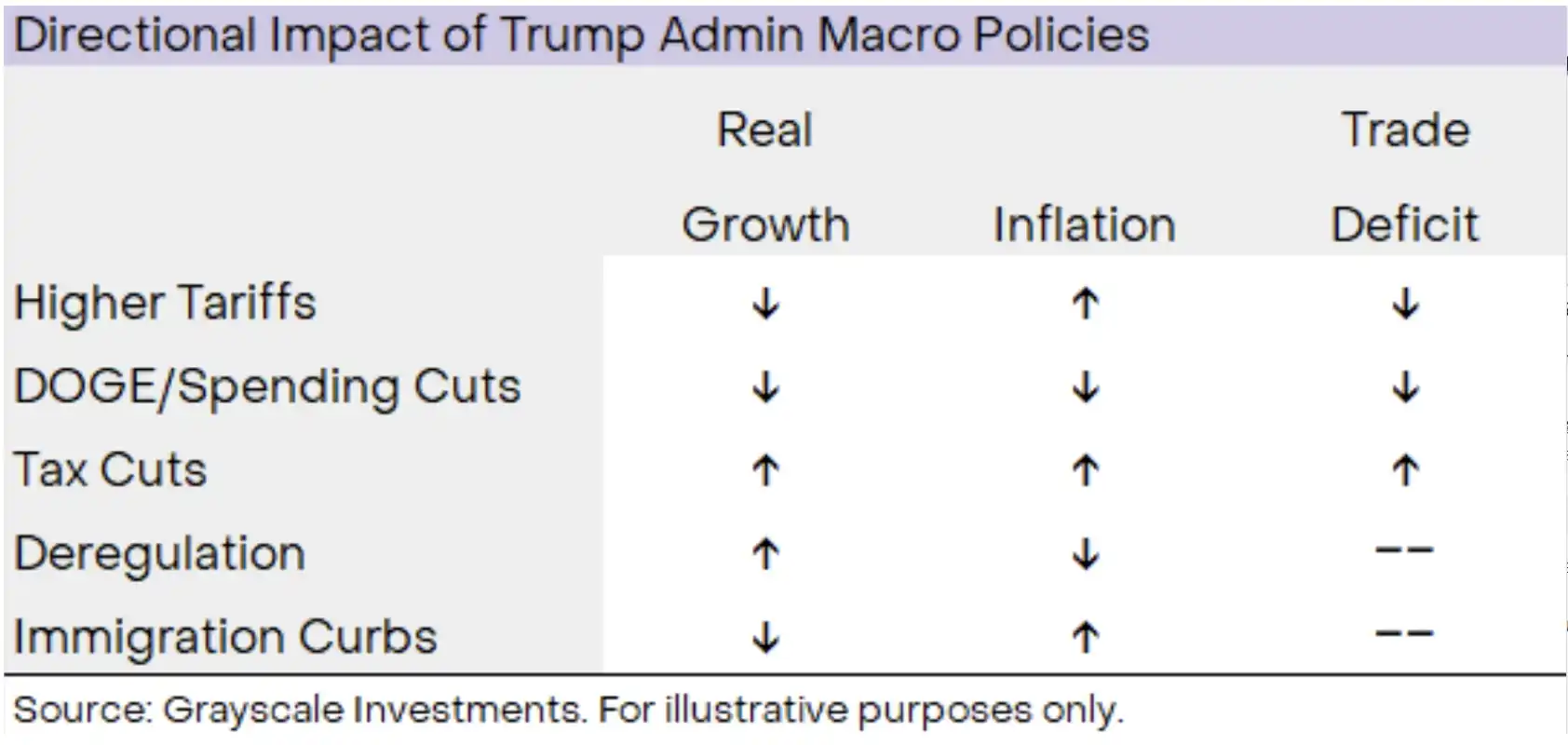
U.S. macroeconomic policies will have a series of impacts on growth and inflation
Despite uncertainties in the outlook, the best guess is that U.S. government policies will lead to sustained dollar weakness and overall above-target inflation in the next 1 to 3 years. Tariffs themselves may slow growth, but this impact may be partially offset by tax cuts, deregulation, and dollar depreciation. If the White House also actively pursues other growth-promoting policies, GDP growth may still remain relatively robust despite the initial impact of tariffs. Regardless of whether actual growth is strong, history suggests that a period of sustained inflationary pressure may be favorable for scarce commodities such as Bitcoin and gold.
Furthermore, much like gold in the 1970s, Bitcoin now has rapidly improving market structure — which is supported by U.S. government policy changes. Throughout this year, the White House has implemented a wide range of policy changes that should support investment in the digital asset industry, including dismissing a series of lawsuits, ensuring asset suitability for traditional commercial banks, and permitting regulated entities (such as custodians) to offer cryptocurrency services. This has, in turn, sparked a wave of mergers and other strategic investments. The new tariffs are a short-term negative factor for the valuation of digital assets like Bitcoin, but the Trump administration's cryptocurrency-specific policies have consistently supported the industry. Overall, the rising demand for scarce commodities assets in the macroeconomy and the improvement in the investor operating environment could be a potent combination for widespread Bitcoin adoption in the coming years.
ممکن است شما نیز علاقهمند باشید

Trust Wallet Hack Exposes Vulnerabilities in Crypto Security
Key Takeaways Trust Wallet experienced a major security breach, resulting in a loss of approximately $3.5 million from…

راهاندازی مشوقهای LP در 12 استخر شبکه Base توسط PancakeSwap
Key Takeaways PancakeSwap مشوقهای جدیدی را برای 12 استخر v3 بر روی شبکه Base با استفاده از Brevis…

تأثیر کاهش تعداد نهنگهای بزرگ بر بازار BTC و ETH
Key Takeaways تعداد نهنگهای بزرگی که بیت کوین را خریداری میکردند بهطور قابلتوجهی کاهش یافته است. تعداد نهنگهای…

Trust Wallet تأثیر حمله امنیتی بر کاربران: میلیونها دلار از دست رفت
Outline H1: Trust Wallet تأثیر حمله امنیتی بر کاربران: میلیونها دلار از دست رفت – H2: مقدمهای بر…

کاهش ریسکهای نزولی بیتکوین در آستانه انقضای کلان اختیارها
Key Takeaways گزارش Matrixport نشان میدهد که فشار ریسک نزولی بیتکوین رو به کاهش است. امکان تغییر بازار…

پیشبینی قیمت اتریوم: تحلیل افزایش فعالیت نهنگها
Key Takeaways قیمت اتریوم (ETH) در محدوده 2800 تا 3000 دلار در حال نوسان است و بازار وارد…

حجم معاملاتی Crypto derivatives در 2025 به 86 تریلیون دلار رسید، Binance پیشتاز
نکات کلیدی بازار Crypto derivatives در سال 2025 به 86 تریلیون دلار رسید و حجم روزانه به طور…
چشمانداز Q1 2026 فدرال و تأثیر احتمالی بر Bitcoin و بازار کریپتو
نکات کلیدی: احتمال فشار بر بازارهای کریپتو در صورت توقف کاهش نرخ توسط فدرال وجود دارد، اما “قرعه…

عرضه عمومی (IPO) Kraken: فرصتی برای تغذیه چرخه “میانی” کریپتو
نکات کلیدی: عرضه عمومی (IPO) پیش روی Kraken انتظار میرود سرمایهگذاران سنتی را به سمت بازار کریپتو جذب…

اتریوم 2026: فورکهای Glamsterdam و Hegota و مقیاسپذیری L1
اجرای موازی کامل باعث افزایش قابل توجهی در توان عملیاتی اتریوم خواهد شد. فورک Glamsterdam با افزایش گس…

تهدیدات امنیتی انسانی در دنیای Crypto در 2026: نکات اساسی برای محافظت
اصلیترین خطری که در سال 2025 به کاربران کریپتو کارنسی ضربه زده، ناشی از مهندسی اجتماعی بوده است،…

کریسمس مبارک، انتشار زودهنگام Caroline Ellison
نکات کلیدی کارولین الیسون، مدیر ارشد سابق Alameda Research، به دلیل نقش او در فروپاشی FTX، قرار است…

نکات کریپتو برای تازهواردان، کهنهکاران و شکاکان از زبان فردی که ۷۰۰ میلیون دلار بیتکوین را دفن کرد
نکات کلیدی: اصول اولیه را درک کنید؛ بدون درک کامل از عملکرد بلاکچینها و مزایای امور مالی غیرمتمرکز،…
Trust Wallet سقوط ۷ میلیون دلاری به دلیل هک؛ اظهارات چانگپنگ ژائو
Key Takeaways کاربران Trust Wallet حدود ۷ میلیون دلار در حملهای در روز کریسمس از دست دادند که…
محاسبات کوانتومی در 2026: روز رستاخیز رمزنگاری در کار نیست، اما زمان آمادهسازی است
نکات کلیدی: به رغم نگرانیهایی که از سوی کامپیوترهای کوانتومی مطرح میشود، احتمال شکستن رمزنگاری بیتکوین تا سال…
توکن World Liberty Financial ترامپ سال 2025 را با کاهش بیش از 40 درصد به پایان میرساند
پروژه World Liberty Financial به راهاندازی توسط خانواده ترامپ با امیدهای بالا آغاز شد اما در نهایت با…

آینده نامطمئن قیمت Ethereum در 2026: تحلیل بن کوون
نکات کلیدی: کارشناسان معتقدند که Ethereum ممکن است در سال 2026 به ارتفاعات جدیدی دست نیابد. تحلیلگر بن…
جاهطلبیهای Bitcoin السالوادور به زمین نزدیکتر شد در 2025
نکات کلیدی السالوادور اولین کشوری بود که Bitcoin را به عنوان پول قانونی به رسمیت شناخت. پذیرش Bitcoin…
Trust Wallet Hack Exposes Vulnerabilities in Crypto Security
Key Takeaways Trust Wallet experienced a major security breach, resulting in a loss of approximately $3.5 million from…
راهاندازی مشوقهای LP در 12 استخر شبکه Base توسط PancakeSwap
Key Takeaways PancakeSwap مشوقهای جدیدی را برای 12 استخر v3 بر روی شبکه Base با استفاده از Brevis…
تأثیر کاهش تعداد نهنگهای بزرگ بر بازار BTC و ETH
Key Takeaways تعداد نهنگهای بزرگی که بیت کوین را خریداری میکردند بهطور قابلتوجهی کاهش یافته است. تعداد نهنگهای…
Trust Wallet تأثیر حمله امنیتی بر کاربران: میلیونها دلار از دست رفت
Outline H1: Trust Wallet تأثیر حمله امنیتی بر کاربران: میلیونها دلار از دست رفت – H2: مقدمهای بر…
کاهش ریسکهای نزولی بیتکوین در آستانه انقضای کلان اختیارها
Key Takeaways گزارش Matrixport نشان میدهد که فشار ریسک نزولی بیتکوین رو به کاهش است. امکان تغییر بازار…
پیشبینی قیمت اتریوم: تحلیل افزایش فعالیت نهنگها
Key Takeaways قیمت اتریوم (ETH) در محدوده 2800 تا 3000 دلار در حال نوسان است و بازار وارد…
رمزارزهای محبوب
آخرین اخبار رمز ارز


پشتیبانی مشتری:@weikecs
همکاری تجاری:@weikecs
معاملات کمّی و بازارسازی:[email protected]
خدمات VIP:[email protected]
 App
App