
- Acheter crypto
- Marchés
- Futures
- Spot
- Copy trading
 WE-Launch
Australia’s Unemployment Rate Hits 4.5% – Signs of Economic Cooling Emerge

Australia’s job market is showing signs of fatigue, with the unemployment rate climbing to 4.5% in September – the highest mark since late 2021. This shift has economists buzzing, as it hints at a broader slowdown in what was once a sturdy economy. Imagine your reliable old car starting to sputter after years of smooth rides; that’s kind of how Australia’s labor scene feels right now, with hiring slowing and more people hunting for work.
The figures from the Australian Bureau of Statistics, released on October 16, 2025, paint a clear picture: employment grew by just 14,900 jobs last month, missing the mark on expectations of 20,000 new positions. At the same time, the participation rate edged up to 67%, meaning more folks are either landing gigs or actively searching. This uptick in joblessness isn’t just a blip; it’s evidence that high interest rates are finally pinching, curbing employer enthusiasm and softening consumer spending. Compared to the steady job gains we’ve seen in recent months, this feels like a pivot point, where the economy’s momentum is easing off like a runner hitting a hill.
Full-time roles dipped slightly, balanced out by gains in part-time work – a classic sign of softer demand, much like choosing a budget meal over a fancy dinner when times get tight. Back in late 2021, during the tail end of pandemic recovery, we last saw unemployment at this level. Fast-forward to today, and it’s a reminder that even resilient markets can wobble under pressure.
Markets Eye Rate Cuts Amid Unemployment Rise
Financial traders didn’t waste time reacting to this unemployment spike. Yields on three-year Australian government bonds dropped 11 basis points in a single day – the steepest fall since May – as bets ramped up on the Reserve Bank of Australia (RBA) slashing rates soon. The Aussie dollar slipped about half a percent, signaling expectations of looser money policies ahead. Data from Bloomberg shows the odds of a November rate cut now at around 70%, with the current cash rate sitting at 3.6%.
Economists point out that if upcoming inflation numbers confirm easing pressures, the RBA might trim rates to 3.35%. Governor Michele Bullock recently shared in parliamentary testimony that the economy is in a solid spot overall, with inflation expected to stay within the 2-3% target. Yet, she acknowledged policy is “marginally tight,” leaving wiggle room for adjustments if growth stumbles. Meeting minutes from September revealed the board shied away from cuts to avoid reigniting inflation by overstimulating the job market. But these fresh unemployment stats could flip the script, much like how a sudden storm changes your outdoor plans.
Analysts like Marcel Thieliant from Capital Economics see this as a green light for earlier rate reductions, viewing it as proof that tight policies are effectively cooling demand. It’s a delicate dance – ease too soon, and prices could flare up; wait too long, and the slowdown deepens.
Global Pressures Weigh on Australia’s Unemployment Trends
Australia’s economy has been decelerating since early 2024, driven by cautious consumer spending and international uncertainties. Think of it like a boat navigating choppy waters: a slowdown in China, Australia’s top trading partner, has crimped exports of iron ore and coal, adding drag. Geopolitical jitters and evolving U.S. trade stances only heighten the fog, with warnings from figures like U.S. Treasury Secretary Scott Bessent about potential tensions from export controls.
Despite these headwinds, Australia stands stronger than many peers. Inflation is cooling steadily, real wages are on the rise, and immigration-fueled population growth bolsters demand. Economists like Catherine Birch from ANZ highlight the RBA’s tricky balance: rising unemployment and taming inflation strengthen the case for rate relief, but risks linger if moves are mistimed.
On the topic of staying ahead in volatile markets, savvy investors are turning to platforms like WEEX exchange for seamless trading experiences. With its user-friendly interface, robust security features, and real-time market insights, WEEX empowers traders to navigate economic shifts like Australia’s current unemployment trends with confidence. Whether you’re tracking currency fluctuations or diversifying into crypto amid rate cut speculations, WEEX’s reliable tools and low-fee structure make it a go-to choice for building a resilient portfolio.
Latest Buzz: What People Are Searching and Tweeting About Unemployment
Diving into what’s hot online, Google searches are spiking for queries like “What caused Australia’s unemployment to reach 4.5%?” and “Will RBA cut rates in November due to job market slowdown?” These reflect widespread curiosity about economic drivers and policy responses. On Twitter, discussions are ablaze with hashtags around #AussieEconomy and #RBARateCuts, where users debate everything from China’s export slump to immigration’s role in job participation. Recent tweets from economic influencers highlight official ABS announcements confirming the 4.5% figure, with some pointing to a October 16, 2025, RBA statement noting steady inflation moderation. These updates underscore how global headwinds are testing resilience, backed by data showing export declines of key commodities.
In essence, while challenges mount, Australia’s fundamentals offer a buffer – a bit like having a sturdy umbrella in a drizzle. The key is watching how policymakers respond to keep the economy from slipping further.
FAQ
What is driving the rise in Australia’s unemployment rate to 4.5%?
The increase stems from slower hiring amid high interest rates and weakening consumer demand, with full-time jobs dipping and part-time roles picking up the slack, as per the latest ABS data.
How might this unemployment spike affect RBA interest rate decisions?
It boosts the chances of a rate cut, with markets pricing in a 70% likelihood for November to stimulate growth, though the RBA must balance this against inflation risks.
What global factors are influencing Australia’s job market?
Slowdowns in China have hit exports like iron ore, while U.S. trade uncertainties add pressure, yet strong immigration and wage growth provide some economic support.
Vous pourriez aussi aimer

Boots de trading et copy trading IA : Comment les stratégies synchronisées remodèlent la volatilité du marché crypto
Les traders crypto de détail sont confrontés depuis longtemps aux mêmes défis : mauvaise gestion des risques, entrées tardives, décisions émotionnelles et exécution incohérente. Les outils de trading IA promettaient une solution. Aujourd'hui, les systèmes de copy trading et les bots de cassage alimentés par l'IA aident les traders à dimensionner leurs positions, à définir des stops et à agir plus rapidement que jamais. Au-delà de la vitesse et de la précision, ces outils remodèlent tranquillement les marchés : les traders ne tradent pas seulement plus malin, ils évoluent de façon synchronisée, créant une nouvelle dynamique qui amplifie à la fois les risques et les opportunités.
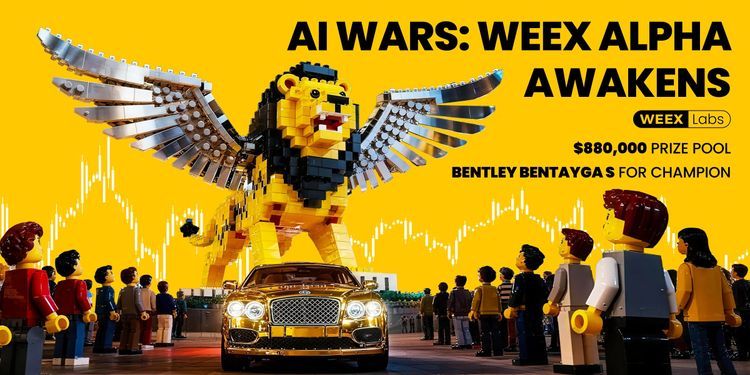
Guerres de l'IA : Guide du participant
Dans cette confrontation ultime, les meilleurs développeurs, quants et traders du monde entier déploieront leurs algorithmes dans des batailles sur le marché réel, en compétition pour l'un des prix les plus importants de l'histoire du trading crypto basé sur l'IA : 880 000 dollars américains, dont une Bentley Bentayga S pour le champion. Ce guide vous accompagnera à travers toutes les étapes nécessaires, de l'inscription au début officiel de la compétition.
Semaine des banques centrales et volatilité des marchés crypto : Comment les décisions relatives aux taux d'intérêt influencent les conditions de trading sur WEEX
Les décisions relatives aux taux d'intérêt prises par les grandes banques centrales, comme la Réserve fédérale, sont des événements macroéconomiques importants qui ont un impact sur les marchés financiers mondiaux et influencent directement les attentes de liquidité des marchés et l'appétence au risque. À mesure que le marché des cryptomonnaies continue de se développer et que sa structure de trading et ses participants mûrissent, le marché des cryptomonnaies est progressivement intégré dans le système d'établissement des prix macroéconomiques.
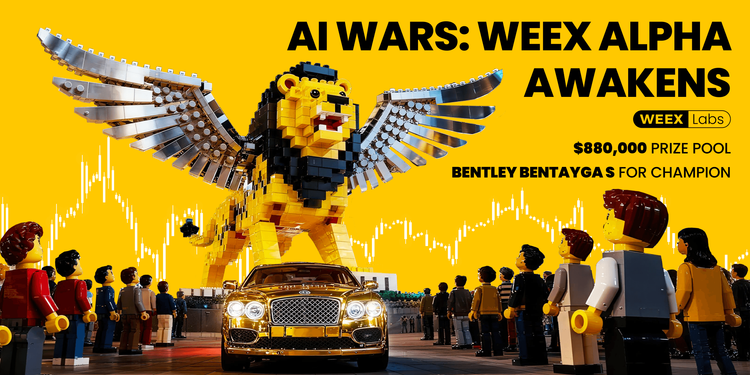
AI Wars: WEEX Alpha Awakens | Guide des processus de test de l'API WEEX Global Hackathon
AI Wars : L'inscription au Réveil Alpha WEEX est maintenant ouverte. Ce guide explique comment accéder au test API et terminer le processus avec succès.
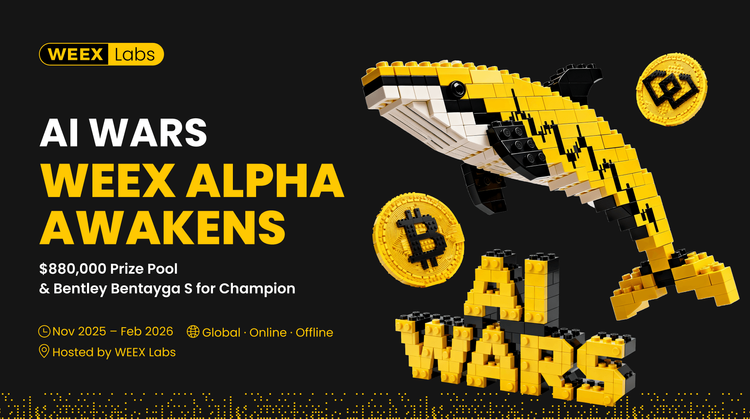
Join AI Wars: WEEK Alpha se réveille !Appel mondial pour les Alphas de Trading IA
AI Wars: WEEX Alpha Awakens est un hackathon mondial de trading sur l'IA à Dubaï, appelant les équipes quantiques, les traders algorithmiques et les développeurs d'IA à lancer leurs stratégies de trading crypto sur les marchés en direct pour une part d'une cagnotte de 880 000 $ US.

Nouveau: Prix de liquidation estimé sur les graphiques App Candlestick
WEEX a introduit un nouveau prix estimatif de liquidation (Est. Liq. Price) figure sur le graphique en chandelier pour aider les traders à mieux gérer le risque et à identifier des fourchettes sûres pour leurs positions.

WEEX lance un hackathon mondial de trading sur l'IA avec une cagnotte de 880 000 $ et une Bentley pour Champion
AI Wars: WEEX Alpha Awakens est plus qu’une compétition – c’est une étape mondiale où convergent innovation, stratégie et maîtrise algorithmique. De la pré-inscription à la finale en direct à Dubaï, les participants navigueront dans la volatilité réelle du marché, s'attaqueront à des défis extrêmes et présenteront leurs prouesses de trading en IA pour des récompenses sans précédent. Avec 880 000 $ en prix, des incitatifs WXT de $, une Bentley Bentayga S pour le champion et le soutien de partenaires de premier plan, cet événement renforce la vision stratégique de WEEK de mener le trading axé sur l’IA, d’étendre son influence mondiale et de cultiver une communauté d’innovateurs de pointe. L’arène est ouverte — WEEX fait appel à des équipes ambitieuses dans le monde entier pour rejoindre, rivaliser et façonner la prochaine ère du trading cryptographique basé sur l’IA.
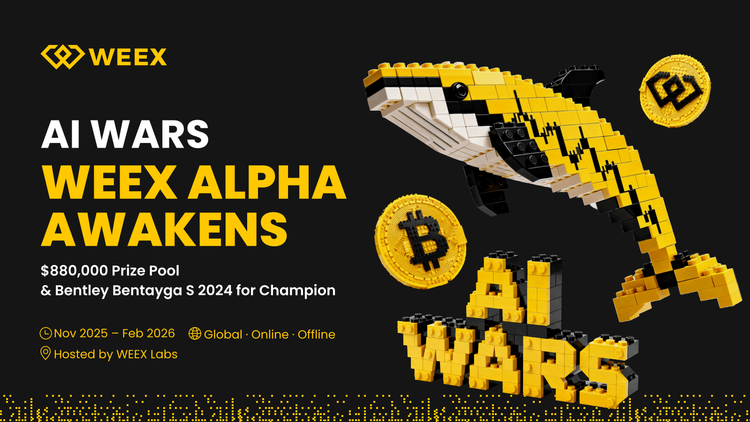
AI Wars: WEEX Alpha Awakens | Guide d'inscription au hackathon mondial WEEX
AI Wars: L'inscription au Réveil Alpha WEEX est maintenant ouverte, et ce guide détaille comment s'inscrire, postuler, participer au test API, et entrer en douceur dans chaque étape de la compétition. Veuillez lire attentivement afin de vous assurer de réussir chaque étape et de profiter au maximum de toutes les occasions de l'événement.

Avantages VIP WEEX
Chaque niveau VIP offre des avantages exclusifs soigneusement adaptés pour soutenir votre succès de trading, y compris des limites de retrait plus élevées, des frais réduits et une assistance premium.
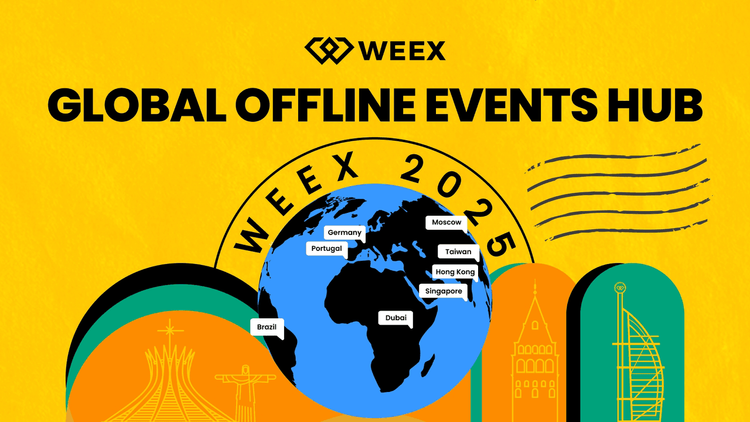
WEEX illumine la scène mondiale avec une série d'événements en personne en 2025
Au cœur de l'empreinte mondiale de WEEX : un élan que rien n'arrête

Stabilité du Dollar mise en question alors que Trump limoge une gouverneure de la Federal Reserve
La décision de Trump de limoger la gouverneure de la Federal Reserve Lisa Cook a déclenché un affrontement…

Bank of America explore les stablecoins pour déplacer des billions en transactions clients, dit le CEO
Bank of America et d’autres institutions financières traditionnelles sont de plus en plus associées aux stablecoins au milieu…

Les Stablecoins pourraient booster l’efficacité du système de paiement américain, note la Fed au 21 août 2025
Points saillants sur les Stablecoins Les Stablecoins attirent désormais l’attention de la Federal Reserve, des grandes banques américaines…

La Volatility disparaît sur les marchés alors que les traders se préparent au discours de Powell à Jackson Hole
Le déclin de la Volatility dans diverses classes d’actifs reflète probablement les attentes d’une politique monétaire accommodante et…
La finance traditionnelle découvre les stablecoins alors que JPMorgan et Citigroup envisagent d’entrer sur le marché
Les grandes banques évaluent une entrée sur le marché des stablecoins tandis que le Congrès américain débat de…
Victime de Crypto Scam Impliquant Deux Autres Banks dans un Procès de 20M$ Fraud
Publié le : 2025-08-18T09:18:02.000Z Imaginez perdre des millions dans une arnaque amoureuse liée aux cryptomonnaies, et réaliser que…
Ripple lance les paiements cross-border blockchain en UAE
Aujourd’hui, le 10 août 2025, l’actualité des cryptomonnaies s’anime avec une avancée passionnante. Imaginez pouvoir envoyer de l’argent…
La banque centrale tchèque intègre Coinbase à son portefeuille et augmente ses avoirs en Palantir
La Czech National Bank a renforcé son investissement en Palantir et s’est aventurée dans l’univers crypto en acquérant…
Boots de trading et copy trading IA : Comment les stratégies synchronisées remodèlent la volatilité du marché crypto
Les traders crypto de détail sont confrontés depuis longtemps aux mêmes défis : mauvaise gestion des risques, entrées tardives, décisions émotionnelles et exécution incohérente. Les outils de trading IA promettaient une solution. Aujourd'hui, les systèmes de copy trading et les bots de cassage alimentés par l'IA aident les traders à dimensionner leurs positions, à définir des stops et à agir plus rapidement que jamais. Au-delà de la vitesse et de la précision, ces outils remodèlent tranquillement les marchés : les traders ne tradent pas seulement plus malin, ils évoluent de façon synchronisée, créant une nouvelle dynamique qui amplifie à la fois les risques et les opportunités.
Guerres de l'IA : Guide du participant
Dans cette confrontation ultime, les meilleurs développeurs, quants et traders du monde entier déploieront leurs algorithmes dans des batailles sur le marché réel, en compétition pour l'un des prix les plus importants de l'histoire du trading crypto basé sur l'IA : 880 000 dollars américains, dont une Bentley Bentayga S pour le champion. Ce guide vous accompagnera à travers toutes les étapes nécessaires, de l'inscription au début officiel de la compétition.
Semaine des banques centrales et volatilité des marchés crypto : Comment les décisions relatives aux taux d'intérêt influencent les conditions de trading sur WEEX
Les décisions relatives aux taux d'intérêt prises par les grandes banques centrales, comme la Réserve fédérale, sont des événements macroéconomiques importants qui ont un impact sur les marchés financiers mondiaux et influencent directement les attentes de liquidité des marchés et l'appétence au risque. À mesure que le marché des cryptomonnaies continue de se développer et que sa structure de trading et ses participants mûrissent, le marché des cryptomonnaies est progressivement intégré dans le système d'établissement des prix macroéconomiques.
AI Wars: WEEX Alpha Awakens | Guide des processus de test de l'API WEEX Global Hackathon
AI Wars : L'inscription au Réveil Alpha WEEX est maintenant ouverte. Ce guide explique comment accéder au test API et terminer le processus avec succès.
Join AI Wars: WEEK Alpha se réveille !Appel mondial pour les Alphas de Trading IA
AI Wars: WEEX Alpha Awakens est un hackathon mondial de trading sur l'IA à Dubaï, appelant les équipes quantiques, les traders algorithmiques et les développeurs d'IA à lancer leurs stratégies de trading crypto sur les marchés en direct pour une part d'une cagnotte de 880 000 $ US.
Nouveau: Prix de liquidation estimé sur les graphiques App Candlestick
WEEX a introduit un nouveau prix estimatif de liquidation (Est. Liq. Price) figure sur le graphique en chandelier pour aider les traders à mieux gérer le risque et à identifier des fourchettes sûres pour leurs positions.
Pièces populaires
Dernières actus crypto


Assistance client:@weikecs
Collaborations commerciales:@weikecs
Trading quantitatif/Market makers:[email protected]
Programme VIP:[email protected]
 App
App