
- Acheter crypto
- Marchés
- Futures
- Spot
- Copy trading
 Gagner
- En savoir plus
Babylon Bitcoin Staking Protocol Launches Cap-3 After TVL Breaks $2 Billion Milestone

Babylon Labs (Babylon Labs), dedicated to developing native use cases for Bitcoin, including Bitcoin’s largest staking protocol with over $2 billion in total value locked (TVL), will launch the first phase of its mainnet, Cap-3, to further expand its staking capacity. Following Cap-2’s 10 Bitcoin block window of 23,857 BTC (approximately $2 billion at today’s prices), the newly launched Cap-3 will open a staking window that will last for 1,000 Bitcoin blocks. The launch of Cap-3 allows the Babylon protocol to continue to solidify its position as the largest and most influential staking solution in the Bitcoin ecosystem.
In this new staking window, institutional and individual participants can access Bitcoin staking through the industry’s leading platform. Anchorage Digital, a leading digital asset platform known for its institutional-grade services, will support Bitcoin staking access on Cap-3, further expanding institutional participation in Babylon's growing ecosystem. Sui, the first smart contract platform built on a Layer-1 blockchain, will also participate in Cap-3, inviting Bitcoin holders to stake Bitcoin on the Sui network, unlocking Bitcoin's $1.8 trillion in liquidity. In addition, well-known institutional wallet and custody providers have integrated with the Babylon protocol, further enhancing institutional access to Cap-3 Bitcoin staking. Other participating platforms include Binance, the first centralized exchange to offer Babylon Bitcoin staking through Binance Earn; Leap Wallet, the first Cosmos wallet to support Bitcoin staking, Onekey Hardware Wallet (Pro Edition), Unisat, and Gate Web3.
The Babylon Bitcoin Staking Protocol provides a secure service marketplace that connects Bitcoin holders who offer staking assets with PoS chains and Rollups seeking Bitcoin security. On the supply side, Bitcoin holders pledge their assets to the Babylon Bitcoin staking protocol, with the total locked value (TVL) now exceeding $2 billion; on the demand side, PoS chains and Rollups are integrating with the Babylon protocol to meet their security needs. As a result, PoS systems and Rollups will be able to leverage Babylon's scalable staking capabilities to unlock the value of the idle and unencumbered $1 trillion-plus Bitcoin ecosystem.
Babylon Labs CTO Fisher Yu said: "Babylon is Bitcoin's largest staking protocol, building on the milestone of Bitcoin stakers and institutional service providers breaking through the $2 billion total locked value (TVL), further expanding the participation opportunities for institutional and individual participants. The latest stage strengthens Babylon's role in unlocking untapped value within Bitcoin's trillion-dollar ecosystem, while advancing our vision of creating Bitcoin-native application scenarios and expanding Bitcoin's utility and influence."
Nathan McCauley, CEO and co-founder of Anchorage Digital, said: "Protocols like Babylon are opening up new ways for institutions to participate in the Bitcoin ecosystem. By partnering with Babylon to launch Cap-3, Anchorage Digital is enabling institutions to safely participate in Bitcoin staking, meeting their needs for security and assurance. We are honored to work with crypto innovators like Babylon as part of our commitment to simplify institutional access to decentralized finance (DeFi).
Jameel Khalfan, Global Ecosystem Lead at Sui Foundation, said: "Bitcoin is here to stay and its utility is now available to participants on the Sui network. We are excited to work with Babylon to bring new staking innovations between Bitcoin and Sui's powerful network to users."
Jeff Li, Vice President of Product at Binance, said: "With the launch of Babylon Bitcoin staking, Binance provides users with a seamless and efficient on-chain Bitcoin staking channel. By partnering with Babylon "By integrating Babylon's protocol, we are enabling users to easily participate in Bitcoin staking while also helping to grow the Bitcoin staking ecosystem. This collaboration reflects our mission to simplify access to decentralized finance and sustainable yield solutions."
"As Babylon's largest liquidity staking partner, we have witnessed first-hand the strong demand from individual and institutional participants to do more with Bitcoin. Babylon's expanded staking capacity enables more Bitcoin to enter the ecosystem as a productive asset, providing Bitcoin holders with the opportunity to earn staking rewards and participate in decentralized finance (DeFi) through LBTC, while ensuring that security is not compromised."
For more information on the first phase of the Babylon Bitcoin Staking Protocol Mainnet Cap-3, please follow @babylonlabs_io on the X platform. You can also visit our website.
About Babylon
Babylon is a project that designs Bitcoin security sharing protocols to build a decentralized world secured by Bitcoin. Its latest development is the world's first trustless and self-custodial Bitcoin staking protocol, which allows Bitcoin holders to stake their Bitcoin on Proof of Stake (PoS) systems (such as PoS chains, L2, Data Availability (DA) layers, etc.), enabling them to earn returns without the need for third-party custody, cross-chain bridges, or packaging services. Babylon's approach combines the high security and widespread adoption of Bitcoin with the efficiency and scalability of PoS systems, increasing the practicality of Bitcoin. Babylon was founded in 2022 by Stanford University Professor David Tse and Dr. Fisher Yu. Professor Tse is a member of the US Academy of Engineering and is known for inventing the legendary proportional fairness scheduling algorithm. Babylon is led by a team of consensus protocol researchers and experienced L1 blockchain engineers from around the world.
For more information about Babylon Labs, please visit:
Official | Twitter | Discord | Linkedin
About Anchorage Digital
Anchorage Digital is a crypto platform designed to enable institutional participation in digital assets through custody, staking, trading, governance, settlement, and industry-leading security infrastructure. Anchorage Digital is the only federally licensed crypto bank in the United States. As the parent company of Anchorage Digital Bank N.A., Anchorage Digital also serves institutions through Anchorage Digital Singapore, Porto by Anchorage Digital, and more.
The company is backed by leading institutions including Andreessen Horowitz, GIC, Goldman Sachs, KKR, and Visa, and was valued at over $3 billion in its Series D round. Founded in 2017, Anchorage Digital is headquartered in San Francisco, California, with offices in New York, Porto, Portugal, Singapore, and Sioux Falls, South Dakota.
For more information, visit anchorage.com, follow @Anchorage on X, or check out Anchorage on LinkedIn.
About Sui
Sui is a unique Layer 1 blockchain and smart contract platform designed from the ground up to make ownership of digital assets fast, private, secure, and accessible to everyone. Its object-oriented model based on the Move programming language supports parallel execution, sub-second confirmations, and a rich set of on-chain assets. With horizontally scalable processing and storage capabilities, Sui supports a wide range of applications at unparalleled speed and low cost. Sui is a leap forward in blockchain technology, allowing creators and developers to build amazing, user-friendly experiences on it.
This article comes from a contribution and does not represent the views of BlockBeats
Vous pourriez aussi aimer

Crypto et IA : le marché gris numérique caché de Xianyu
Crypto et IA : Vous pouvez tout acheter sur Xianyu.

Qu'est-ce qui anime les marchés crypto au début de 2026 : Swings du marché, trading d'IA et flux d'ETF ?
Imaginez que vous consultiez les prix du bitcoin et de l’ethereum en une journée – une minute en hausse de 5 %, la suivante en baisse de 4 %. Des mouvements brusques, des retournements rapides et une sensibilité aux signaux macro ont marqué la première semaine de 2026. Après une remontée en début d'année, les deux actifs se sont retirés, les marchés recalibrant les attentes autour de la politique monétaire américaine et des flux institutionnels. Pour les traders – y compris ceux qui s’appuient sur l’IA ou des systèmes automatisés – cette période a offert un rappel éclatant : l’abondance de signaux ne garantit pas la clarté. Rester discipliné dans l'exécution est souvent le vrai défi.
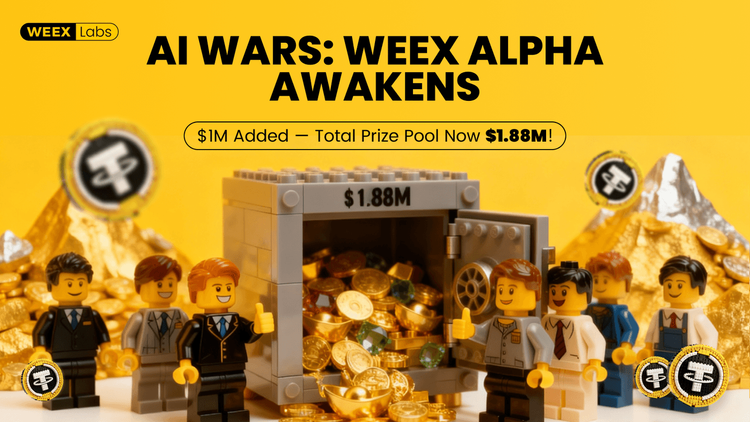
Le Hackathon mondial de trading d'IA WEEX démarre : Une cagnotte de 1,88 M$ alimente la prochaine génération de champions du trading d'IA
WEEX Labs, la branche innovation de WEEX, une plateforme d'échange crypto mondiale de premier plan desservant plus de 6,2 millions d'utilisateurs dans plus de 150 pays, s'apprête à lancer la phase préliminaire de son hackathon phare mondial de trading d'IA, AI Wars: WEEX Alpha Awakens, le 12 janvier 2026. Soutenue par le fort soutien de sponsors de classe mondiale, y compris Amazon Web Services (AWS), la cagnotte totale est passée de 880 000 $ à un montant sans précédent de 1 880 000 $, positionnant AI Wars parmi les plus grands hackathons de trading d'IA dans l'industrie de la crypto. Au sommet du classement vous attend un prix extraordinaire : une Bentley Bentayga S, déjà en attente à Dubaï, prête à être réclamée par le vainqueur ultime du trading d'IA.
Risques concernant le trading par l’IA sur les marchés crypto : Qui assume la responsabilité en cas d'échec ?
Le trading par l’IA fait déjà partie intégrante des infrastructures de marché, mais les régulateurs la traitent toujours comme un simple outil : la responsabilité reste systématiquement attribuée aux humains et aux plateformes qui l'utilisent. Le plus grand risque en 2025 ne vient pas des algorithmes défaillants, mais des stratégies d'IA massivement adoptées qui déplacent les marchés de manière synchronisée et estompent la frontière entre outil et conseil financier non réglementé. La prochaine phase du trading par l’IA sera définie par la responsabilité et la transparence, et non par la performance — la conformité est désormais une condition de survie, et non plus une contrainte.

De la théorie aux marchés en direct : Le système double cerveau de la matrice AOT dans le hackathon de trading d'IA WEEX
Sur les marchés crypto — l’un des systèmes non stationnaires les plus impitoyables —, l’échec de la stratégie est rarement causé par le fait que les modèles sont trop simples. Cela se produit parce que la plupart des stratégies ne sont jamais vraiment exposées aux pressions du marché en direct. C'est exactement le problème que WEEX AI Trading Hackathon est conçu pour faire surface – déplaçant l'accent de l'innovation théorique vers une réelle déployabilité, une exécution réelle et de réelles performances. Parmi les équipes participantes, AOT Matrix s'est démarquée par des capacités quantitatives avancées axées sur l'IA. Grâce à son architecture double cerveau V4.4, le système a réalisé une optimisation de bout en bout, de la logique de base à l'exécution, reflétant le double accent mis par la plateforme sur l'innovation et les performances concrètes.
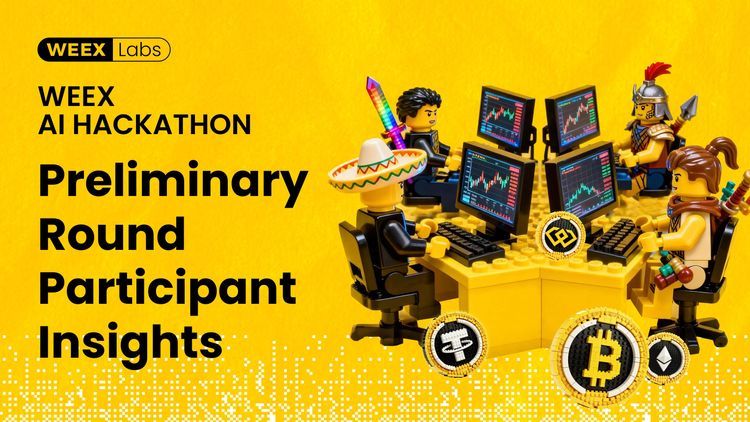
Aperçu des participants au tour préliminaire — Matrice AOT : Analyse du cerveau gauche, Décisions du cerveau droit dans le trading d'IA
Lors du hackathon de trading d’IA WEEX, AOT Matrix a choisi une voie plus prudente dans la conception du système – une voie qui est en fait plus difficile à suivre dans un environnement de trading en direct. Dès le départ, ils ont fait des choix clairs sur le rôle que l'IA doit et ne doit pas jouer dans le système de trading. Nous avons interrogé AOT Matrix sur leur logique décisionnelle, les multiples itérations de leur architecture système et ce que c'est que de la mettre en œuvre dans le contexte réel de trading et des contraintes d'ingénierie de WEEX.

Pourquoi les tokens IA augmentent plus vite que le marché crypto au sens large
Les tokens IA sont plus performants – et pas tranquillement. Le bitcoin bouge. Ethereum tient le terrain. Pourtant, certains des gains relatifs les plus importants proviennent des tokens labellisés IA, et non des majors, et non des mèmes. À première vue, cela semble intuitif. L'IA est une vraie technologie. Elle façonne des industries bien au-delà de la crypto. Mais les marchés se déplacent rarement sur l’intuition seule – surtout pas aussi vite. Lorsque les prix accélèrent avant l’adoption, la question la plus utile n’est pas « L’IA est-elle importante ? » C'est la version de l'histoire de l'IA que le marché achète – en ce moment.

Mise à jour du marché — 7 janvier
Bitmine a misé 28 000 Ethereum supplémentaires, d'une valeur d'environ 91,16 millions de dollars.

Après les premiers jours chaotiques, les makers de marché crypto célèbrent leur arrivée à maturité
La lutte de vie ou de mort pour les makers de marché crypto est comme une évolution des espèces dans des conditions extrêmes.
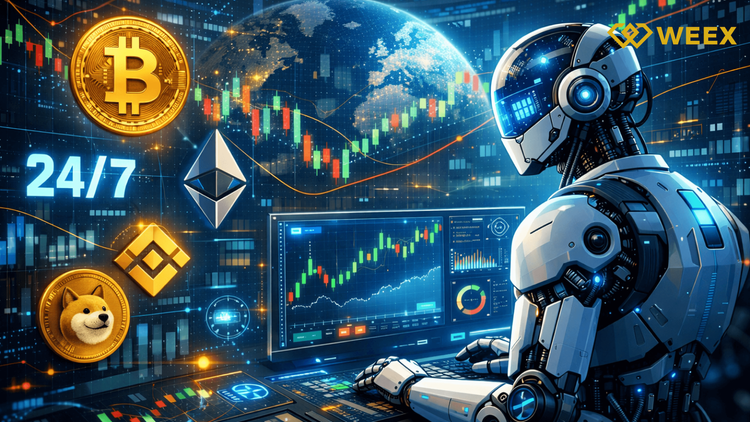
Pourquoi les bots de trading IA deviennent essentiels sur les marchés crypto 24 h/24, 7 j/7
Les marchés des cryptomonnaies fonctionnent en continu et évoluent plus rapidement que l'attention humaine ne peut le soutenir de manière fiable. Les prix réagissent instantanément aux événements mondiaux, les fluctuations de liquidité entre les régions et les occasions de trader existent souvent pendant quelques minutes plutôt que quelques heures. Pour de nombreux traders, le défi essentiel n’est plus de générer des idées, mais d’exécuter les décisions de manière cohérente sans surveillance constante ni interférence émotionnelle. C'est là que les bots de trading IA sont de plus en plus adoptés, non pas comme des garanties de profits, mais comme des outils conçus pour traduire des stratégies prédéfinies en une exécution fiable et répétable.
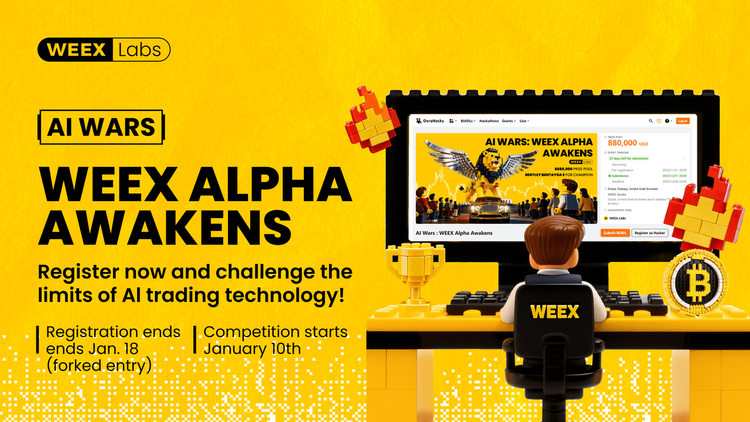
Tournoi de trading de cryptos IA : Guide complet pour connaître le réveil de WEEX Alpha
L'intégration de l'intelligence artificielle dans le trading de cryptomonnaies est passée d'une expérience inédite à un utilitaire de base. En 2026, les outils basés sur l'IA sont devenus indispensables pour les traders en quête d'une discipline renforcée, d'une vitesse d'exécution supérieure et d'une prise de décision structurée et fondée sur les données dans un contexte de volatilité du marché. Ce guide fournit une description pratique, étape par étape, de la façon de participer au Réveil Alpha WEEX, avec un examen ciblé de la manière dont ces stratégies sont mises en œuvre dans les environnements de trading en direct.

Les chandeliers de Life ne peuvent pas guérir l'anxiété, et les marchés de prévision ne peuvent pas calculer la fin.
La vie réelle se déroule souvent au-delà des chandeliers.
Comment l'IA aide les traders crypto à analyser les marchés, à gérer les risques et à trader plus intelligemment
Le trading de crypto ne consiste plus seulement à avoir une bonne idée, mais à s'exécuter de manière cohérente dans un marché qui ne s'arrête jamais. Avec l'augmentation des volumes de données et de la vitesse du marché, l'analyse manuelle traditionnelle atteint ses limites. L'IA aide les traders à dépasser ces limites en transformant la façon dont les marchés sont analysés, comment le sentiment est interprété et comment les risques sont contrôlés. Cet article explore comment l'IA remodèle le trading de crypto – et ce que cela signifie pour les traders aujourd'hui.

WEEX × LALIGA : Sept étoiles qui représentent une norme d’excellence commune
La véritable excellence dans le football n'est jamais accidentelle. Il repose sur la discipline, la constance et la capacité à livrer sous la pression – saison après saison. Les mêmes principes s'appliquent dans le trading professionnel, où les performances à long terme comptent plus que le momentum de courte durée. En tant que partenaire régional officiel de LALIGA, WEEX met en avant sept joueurs exceptionnels qui incarnent l'esprit de compétition et l'attrait mondial de la ligue. Chacun apporte un style unique au terrain, mais tous partagent des valeurs qui s'alignent étroitement sur l'engagement de WEEX en matière de stabilité, de précision et d'exécution professionnelle. Ce partenariat repose sur des normes communes — où la cohérence et le contrôle définissent la performance sous la pression.

De Wuhan à la Silicon Valley, Manus l'a fait en seulement neuf mois.
Vous pouvez l'appeler un « wrapper », mais il s'est emballé jusqu'à Meta.

WEEX s'associe à LALIGA pour étendre sa portée mondiale et intégrer la crypto dans la culture sportive dominante
Hong Kong, le 1er janvier 2026. WEEX a conclu un nouveau partenariat avec LALIGA, en tant que partenaire régional officiel de LALIGA à Taïwan et à Hong Kong. L'accord amène WEEX dans le réseau de collaborateurs régionaux de LALIGA et ouvre la porte à de nouvelles façons d'engager les fans et les traders pendant la saison.
Trading crypto IA : Comment les traders appliquent réellement l'IA sur les marchés crypto réels
L'intelligence artificielle a dépassé le stade de l'expérimentation sur les marchés crypto. En 2025, les outils de trading basés sur l'IA sont de plus en plus utilisés par les traders qui souhaitent une meilleure discipline, une exécution plus rapide et une prise de décision plus structurée sur des marchés volatils. Ce guide explique comment l'IA est réellement utilisée dans le trading de crypto, étape par étape, en mettant l'accent sur la façon dont ces stratégies sont exécutées dans des environnements de trading réels.

Mise à jour du marché — 31 décembre
De la Corée du Sud et de l'OCDE à l'accélération de la mise en œuvre des cadres de réglementation et de conformité crypto, en passant par le développement simultané des ETF TAO, des technologies de confidentialité, du minage et des réserves de bitcoins, alors que les incidents de sécurité et les pertes financières continuent d'augmenter, le marché crypto est entré dans une nouvelle phase au milieu de multiples défis de « réglementation forte + évolution technologique + risques amplifiés ».
Crypto et IA : le marché gris numérique caché de Xianyu
Crypto et IA : Vous pouvez tout acheter sur Xianyu.
Qu'est-ce qui anime les marchés crypto au début de 2026 : Swings du marché, trading d'IA et flux d'ETF ?
Imaginez que vous consultiez les prix du bitcoin et de l’ethereum en une journée – une minute en hausse de 5 %, la suivante en baisse de 4 %. Des mouvements brusques, des retournements rapides et une sensibilité aux signaux macro ont marqué la première semaine de 2026. Après une remontée en début d'année, les deux actifs se sont retirés, les marchés recalibrant les attentes autour de la politique monétaire américaine et des flux institutionnels. Pour les traders – y compris ceux qui s’appuient sur l’IA ou des systèmes automatisés – cette période a offert un rappel éclatant : l’abondance de signaux ne garantit pas la clarté. Rester discipliné dans l'exécution est souvent le vrai défi.
Le Hackathon mondial de trading d'IA WEEX démarre : Une cagnotte de 1,88 M$ alimente la prochaine génération de champions du trading d'IA
WEEX Labs, la branche innovation de WEEX, une plateforme d'échange crypto mondiale de premier plan desservant plus de 6,2 millions d'utilisateurs dans plus de 150 pays, s'apprête à lancer la phase préliminaire de son hackathon phare mondial de trading d'IA, AI Wars: WEEX Alpha Awakens, le 12 janvier 2026. Soutenue par le fort soutien de sponsors de classe mondiale, y compris Amazon Web Services (AWS), la cagnotte totale est passée de 880 000 $ à un montant sans précédent de 1 880 000 $, positionnant AI Wars parmi les plus grands hackathons de trading d'IA dans l'industrie de la crypto. Au sommet du classement vous attend un prix extraordinaire : une Bentley Bentayga S, déjà en attente à Dubaï, prête à être réclamée par le vainqueur ultime du trading d'IA.
Risques concernant le trading par l’IA sur les marchés crypto : Qui assume la responsabilité en cas d'échec ?
Le trading par l’IA fait déjà partie intégrante des infrastructures de marché, mais les régulateurs la traitent toujours comme un simple outil : la responsabilité reste systématiquement attribuée aux humains et aux plateformes qui l'utilisent. Le plus grand risque en 2025 ne vient pas des algorithmes défaillants, mais des stratégies d'IA massivement adoptées qui déplacent les marchés de manière synchronisée et estompent la frontière entre outil et conseil financier non réglementé. La prochaine phase du trading par l’IA sera définie par la responsabilité et la transparence, et non par la performance — la conformité est désormais une condition de survie, et non plus une contrainte.
De la théorie aux marchés en direct : Le système double cerveau de la matrice AOT dans le hackathon de trading d'IA WEEX
Sur les marchés crypto — l’un des systèmes non stationnaires les plus impitoyables —, l’échec de la stratégie est rarement causé par le fait que les modèles sont trop simples. Cela se produit parce que la plupart des stratégies ne sont jamais vraiment exposées aux pressions du marché en direct. C'est exactement le problème que WEEX AI Trading Hackathon est conçu pour faire surface – déplaçant l'accent de l'innovation théorique vers une réelle déployabilité, une exécution réelle et de réelles performances. Parmi les équipes participantes, AOT Matrix s'est démarquée par des capacités quantitatives avancées axées sur l'IA. Grâce à son architecture double cerveau V4.4, le système a réalisé une optimisation de bout en bout, de la logique de base à l'exécution, reflétant le double accent mis par la plateforme sur l'innovation et les performances concrètes.
Aperçu des participants au tour préliminaire — Matrice AOT : Analyse du cerveau gauche, Décisions du cerveau droit dans le trading d'IA
Lors du hackathon de trading d’IA WEEX, AOT Matrix a choisi une voie plus prudente dans la conception du système – une voie qui est en fait plus difficile à suivre dans un environnement de trading en direct. Dès le départ, ils ont fait des choix clairs sur le rôle que l'IA doit et ne doit pas jouer dans le système de trading. Nous avons interrogé AOT Matrix sur leur logique décisionnelle, les multiples itérations de leur architecture système et ce que c'est que de la mettre en œuvre dans le contexte réel de trading et des contraintes d'ingénierie de WEEX.


 App
App