
- Acheter crypto
- Marchés
- Futures
- Spot
- Copy trading
 WE-Launch
Bank of England Confirms Temporary Stablecoin Limits to Boost Financial Stability

Imagine a financial world where new digital currencies like stablecoins burst onto the scene, promising faster transactions and broader access, but regulators step in to ensure the ride isn’t too bumpy. That’s exactly what’s happening in the UK, where the Bank of England is navigating the rise of stablecoins with a careful eye on stability. In a recent clarification, the bank’s deputy governor addressed concerns that proposed limits on stablecoin holdings and transactions might hinder innovation, emphasizing that these measures are just a short-term safeguard.
Why Temporary Stablecoin Limits Make Sense for Now
Picture stablecoins as the speedy new cars on the highway of finance—they’re efficient and user-friendly, but if everyone switches over too quickly, it could cause a massive traffic jam in the traditional banking system. Bank of England Deputy Governor Sarah Breeden highlighted this during her speech at DC Fintech Week, explaining that the limits are designed to give the financial ecosystem time to adapt. Originally proposed in a November 2023 discussion paper, these restrictions aim to prevent sudden shifts that could disrupt credit availability for businesses and households.
Industry voices raised alarms in September, pointing out that caps between roughly $13,000 and $26,000 (equivalent to 10,000 and 20,000 British pounds at the time) might scare off crypto businesses and paint the UK as unfriendly to digital assets. But Breeden reassured everyone that this isn’t the long-term plan. Instead, it’s a temporary bridge to a future where stablecoins play a key role in a diverse money system. She noted the bank’s goal is to monitor stablecoin adoption closely, allowing for gradual adjustments that maintain overall stability—especially crucial in the UK, where credit relies heavily on banks compared to markets like the US.
To back this up, consider real-world data: As of October 2025, stablecoin market capitalization has surged past $200 billion globally, according to recent reports from Chainalysis, underscoring the need for measured integration. This growth contrasts sharply with traditional banking deposits, which grew by only about 3% in the UK last year per Bank of England figures, highlighting why a sudden pivot could strain the system.
Stablecoin Rules Still Evolving with Industry Input
The rules aren’t carved in stone yet, which is great news for those eager to shape the future. Breeden announced that the Bank of England is set to launch a consultation before year’s end, seeking feedback on limit details and rollout strategies. Ideas on the table include higher thresholds for businesses and exemptions for major players like supermarkets, making it easier for everyday operations to incorporate stablecoins.
There’s even talk of special provisions for innovators in the UK’s digital sandbox, which kicked off in October 2024 as a safe space to test distributed ledger technologies. This approach shows the bank’s commitment to fostering growth while managing risks, much like how a gardener prunes a young tree to ensure it grows strong without toppling over.
For the latest buzz, Google searches for “UK stablecoin regulations 2025” have spiked by 40% this month, with users often asking about potential impacts on crypto investments. On Twitter (now X), discussions are heating up around hashtags like #StablecoinLimits and #BoEPolicy, with a recent post from the official Bank of England account on October 10, 2025, confirming the consultation’s focus on balancing innovation and safety. Industry leaders, including fintech influencers, have tweeted support for the temporary nature, noting it aligns with global trends seen in the EU’s MiCA framework, updated in mid-2025 to include similar adaptive limits.
Addressing Concerns Over Rapid Stablecoin Adoption
At the heart of the Bank of England’s worries is the potential for quick outflows from bank deposits into stablecoins, which could slash credit access if the infrastructure can’t scale fast enough. Breeden drew a clear line, stressing the need for the system to evolve gradually. This is particularly vital in the UK, where bank-based credit dominates more than in the US, backed by data from the World Bank showing UK bank lending at over 80% of total credit in 2024, versus around 50% in the US.
Yet, she’s optimistic about the bigger picture. While the central bank wants to keep its role in wholesale payments and asset settlements to minimize risks, Breeden acknowledged that not all transactions will rely solely on central bank money moving forward. Tokenized deposits and regulated stablecoins could fill gaps in emerging markets, creating a more resilient ecosystem.
This vision ties into broader brand alignment efforts in the crypto space, where platforms emphasize security and regulatory compliance to build trust. For instance, aligning with user-focused exchanges that prioritize seamless stablecoin trading can enhance overall market confidence, ensuring that innovations like these temporary limits ultimately support sustainable growth.
Speaking of reliable platforms, if you’re looking to dive into stablecoins with confidence, consider WEEX exchange. As a user-centric crypto trading hub, WEEX stands out for its robust security features, low fees, and commitment to regulatory standards, making it an ideal choice for both new and seasoned traders navigating the evolving landscape of digital assets. With tools that simplify stablecoin transactions and real-time market insights, WEEX helps users stay ahead while aligning perfectly with the push for stable, innovative finance.
Central Bank’s Call for Collaboration in Stablecoin Evolution
Breeden wrapped up by emphasizing that the Bank can’t go it alone—industry players, from established banks to fresh startups, need to collaborate on experiments and use cases. This teamwork is key to deploying technology that benefits everyone, avoiding unnecessary interconnections that could spark stability issues.
It’s a reminder that while stablecoins offer exciting possibilities—like faster, cheaper cross-border payments—they must integrate thoughtfully. Compare it to introducing electric vehicles: You don’t rip out all gas stations overnight; you build charging infrastructure steadily to keep things running smoothly. With the latest updates as of October 16, 2025, including an official Bank of England statement affirming no changes to the temporary framework yet, the path forward looks promising for a multi-money future.
FAQ
What are the proposed stablecoin limits in the UK, and why are they temporary?
The Bank of England has suggested caps on individual stablecoin holdings and transactions, roughly between $13,000 and $26,000, to prevent sudden disruptions in the financial system. These are temporary to allow gradual adaptation, with plans to lift them as the ecosystem stabilizes.
How might these stablecoin limits affect crypto innovation in the UK?
While some fear the limits could stifle growth by signaling a less welcoming environment, the Bank clarifies they’re short-term. Feedback from the upcoming consultation could lead to adjustments, like higher business limits, to support innovation without compromising stability.
Will stablecoins replace traditional banking in the UK?
Not entirely—stablecoins are seen as complementary in a multi-money system. The Bank aims to maintain its role in key settlements, but tokenized assets could handle other areas, fostering a balanced evolution backed by industry collaboration.
Vous pourriez aussi aimer

WEEXPERIENCE Nuit des baleines : Trading IA, communauté crypto et marché crypto
Le 12 décembre 2025, WEEX a organisé WEEXPERIENCE Whales Night, un rassemblement communautaire hors ligne conçu pour rassembler les membres de la communauté crypto locale. L'événement a combiné le partage de contenu, des jeux interactifs et des présentations de projets pour créer une expérience hors ligne détendue et attrayante.
Risque de trading d'IA en cryptomonnaie : Pourquoi de meilleures stratégies de trading crypto peuvent-elles générer des pertes plus importantes ?
Le risque ne réside plus principalement dans une mauvaise prise de décision ou des erreurs émotionnelles. Il vit de plus en plus dans la structure du marché, les parcours d'exécution et le comportement collectif. Comprendre ce changement est plus important que de trouver la prochaine stratégie « meilleure ».

Les agents de l'IA remplacent-ils la recherche crypto ? Comment l'IA autonome remodele le trading crypto
L'IA passe de l'assistance aux traders à l'automatisation de l'ensemble du processus de recherche à l'exécution sur les marchés crypto. L'avantage est passé de l'information humaine aux pipelines de données, à la vitesse et aux systèmes d'IA prêts à être exécutés, ce qui fait des retards dans l'intégration de l'IA un désavantage concurrentiel.

Boots de trading et copy trading IA : Comment les stratégies synchronisées remodèlent la volatilité du marché crypto
Les traders crypto de détail sont confrontés depuis longtemps aux mêmes défis : mauvaise gestion des risques, entrées tardives, décisions émotionnelles et exécution incohérente. Les outils de trading IA promettaient une solution. Aujourd'hui, les systèmes de copy trading et les bots de cassage alimentés par l'IA aident les traders à dimensionner leurs positions, à définir des stops et à agir plus rapidement que jamais. Au-delà de la vitesse et de la précision, ces outils remodèlent tranquillement les marchés : les traders ne tradent pas seulement plus malin, ils évoluent de façon synchronisée, créant une nouvelle dynamique qui amplifie à la fois les risques et les opportunités.

Le trading d'IA en crypto expliqué : Comment le trading autonome remodele les marchés crypto et les plateformes d’échange crypto
L’IA Trading transforme rapidement le paysage crypto. Les stratégies traditionnelles peinent à suivre la volatilité constante de la crypto et la structure complexe du marché, tandis que l'IA peut traiter des données massives, générer des stratégies adaptatives, gérer les risques et exécuter des trades de manière autonome. Cet article guide les utilisateurs de WEEX sur ce qu'est le trading d'IA, pourquoi la crypto accélère son adoption, comment le secteur évolue vers des agents autonomes et pourquoi WEEX construit l'écosystème de trading d'IA de nouvelle génération.

Appelez à rejoindre AI Wars : WEEX Alpha Awakens – Tournoi mondial de trading d’IA avec une cagnotte de 880 000 $
Maintenant, nous lançons un appel aux traders d'IA du monde entier pour qu'ils rejoignent AI Wars : WEEX Alpha Awakens, un tournoi mondial de trading d'IA doté d'une cagnotte de 880 000 $.

Trading d'IA sur les marchés crypto : Des bots de trading automatisés aux stratégies algorithmiques
Le trading basé sur l'IA fait passer la crypto de la spéculation au détail à une concurrence de niveau institutionnel, où l'exécution et la gestion des risques comptent plus que dans le sens. À mesure que le trading de l'IA prend de l'ampleur, les risques systémiques et la pression réglementaire augmentent, faisant des performances à long terme, des systèmes robustes et de la conformité les principaux facteurs de différenciation.

Analyse du sentiment de l'IA et volatilité des cryptomonnaies : Ce qui fait bouger les prix crypto
Le sentiment lié à l'IA influence de plus en plus les marchés crypto, les changements d'attente liés à l'IA se traduisant par une certaine volatilité pour les principaux actifs numériques. Les marchés crypto ont tendance à amplifier les discours sur l'IA, permettant aux flux basés sur les sentiments de l'emporter sur les fondamentaux à court terme. Comprendre comment le sentiment IA se forme et se propage aide les investisseurs à mieux anticiper les cycles de risque et les opportunités de positionnement sur les actifs numériques.

Guerres de l'IA : Guide du participant
Dans cette confrontation ultime, les meilleurs développeurs, quants et traders du monde entier déploieront leurs algorithmes dans des batailles sur le marché réel, en compétition pour l'un des prix les plus importants de l'histoire du trading crypto basé sur l'IA : 880 000 dollars américains, dont une Bentley Bentayga S pour le champion. Ce guide vous accompagnera à travers toutes les étapes nécessaires, de l'inscription au début officiel de la compétition.

Semaine des banques centrales et volatilité des marchés crypto : Comment les décisions relatives aux taux d'intérêt influencent les conditions de trading sur WEEX
Les décisions relatives aux taux d'intérêt prises par les grandes banques centrales, comme la Réserve fédérale, sont des événements macroéconomiques importants qui ont un impact sur les marchés financiers mondiaux et influencent directement les attentes de liquidité des marchés et l'appétence au risque. À mesure que le marché des cryptomonnaies continue de se développer et que sa structure de trading et ses participants mûrissent, le marché des cryptomonnaies est progressivement intégré dans le système d'établissement des prix macroéconomiques.

Test de l'API WEEX : Guide officiel des API de trading de Hackathon et de Crypto pour le trading d’IA
WEEX API Testing est conçu pour garantir que chaque participant peut transformer la logique de trading en exécution réelle. Toutes les interactions API ont lieu sur le système de trading en direct de WEEX, ce qui permet aux participants de travailler dans des conditions de marché authentiques plutôt que dans des simulations. Avec une faible exigence d'entrée, la tâche est accessible à la fois aux développeurs expérimentés et aux débutants motivés, tout en validant les compétences techniques essentielles.
Pourquoi WEEX Alpha se réveille-t-il le meilleur tournoi de trading d'IA de 2025 ? Tout ce que vous devez savoir
Pour accélérer les percées à l'intersection de l'IA et de la crypto, WEEX lance le premier Hackathon mondial de trading d'IA – AI Wars: Alpha se réveille. L'événement propose une cagnotte révolutionnaire dépassant 880 000 $, dont une Bentley Bentayga S pour le champion ultime.
AI Wars: WEEX Alpha Awakens | Guide des processus de test de l'API WEEX Global Hackathon
AI Wars : L'inscription au Réveil Alpha WEEX est maintenant ouverte. Ce guide explique comment accéder au test API et terminer le processus avec succès.
Qu'est-ce que le réveil de WEEX Alpha et comment participer ? Un guide complet
Pour accélérer les percées à l'intersection de l'IA et de la crypto, WEEX lance le premier Hackathon mondial de trading d'IA – AI Wars: Alpha se réveille.
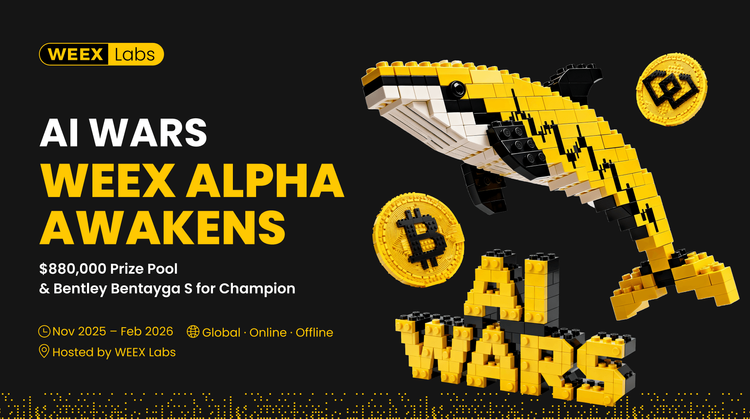
Join AI Wars: WEEK Alpha se réveille !Appel mondial pour les Alphas de Trading IA
AI Wars: WEEX Alpha Awakens est un hackathon mondial de trading sur l'IA à Dubaï, appelant les équipes quantiques, les traders algorithmiques et les développeurs d'IA à lancer leurs stratégies de trading crypto sur les marchés en direct pour une part d'une cagnotte de 880 000 $ US.

WEEX dévoile le trade to Earn: Jusqu'à 30 % de remise instantanée + 2 M$ WXT Rachat
WEEX est heureuse d’annoncer le lancement de son programme Trade to Earn, qui vous accorde automatiquement jusqu’à 30% de rabais sur les frais de trading. Toutes les récompenses sont créditées directement sur votre compte au comptant en WXT $, soutenu par notre plan de rachat de WXT $2,000,000 qui alimente la valeur à long terme des jetons.

Nouveau: Prix de liquidation estimé sur les graphiques App Candlestick
WEEX a introduit un nouveau prix estimatif de liquidation (Est. Liq. Price) figure sur le graphique en chandelier pour aider les traders à mieux gérer le risque et à identifier des fourchettes sûres pour leurs positions.
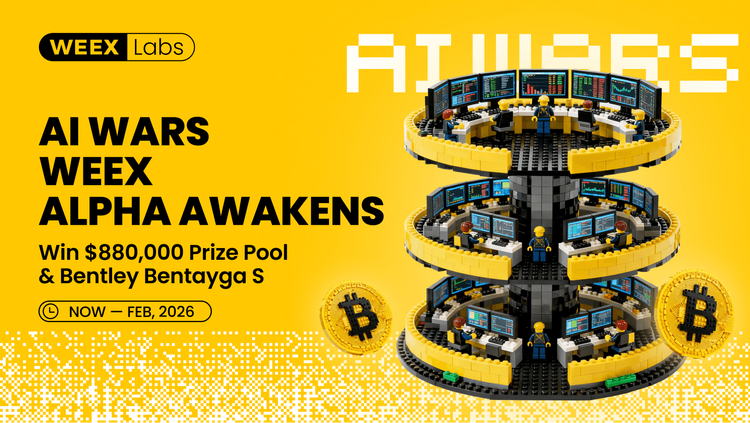
WEEX AI Hackathon Guide: Trouvez votre UID WEEK et inscrivez-vous
D'ici février 2026, WEEX lance AI Wars: WEEK Alpha Awakens, le premier hackathon mondial de trading de crypto-IA. Venez votre UID et inscrivez-vous au WEEX Global AI Trading Hackathon.
WEEXPERIENCE Nuit des baleines : Trading IA, communauté crypto et marché crypto
Le 12 décembre 2025, WEEX a organisé WEEXPERIENCE Whales Night, un rassemblement communautaire hors ligne conçu pour rassembler les membres de la communauté crypto locale. L'événement a combiné le partage de contenu, des jeux interactifs et des présentations de projets pour créer une expérience hors ligne détendue et attrayante.
Risque de trading d'IA en cryptomonnaie : Pourquoi de meilleures stratégies de trading crypto peuvent-elles générer des pertes plus importantes ?
Le risque ne réside plus principalement dans une mauvaise prise de décision ou des erreurs émotionnelles. Il vit de plus en plus dans la structure du marché, les parcours d'exécution et le comportement collectif. Comprendre ce changement est plus important que de trouver la prochaine stratégie « meilleure ».
Les agents de l'IA remplacent-ils la recherche crypto ? Comment l'IA autonome remodele le trading crypto
L'IA passe de l'assistance aux traders à l'automatisation de l'ensemble du processus de recherche à l'exécution sur les marchés crypto. L'avantage est passé de l'information humaine aux pipelines de données, à la vitesse et aux systèmes d'IA prêts à être exécutés, ce qui fait des retards dans l'intégration de l'IA un désavantage concurrentiel.
Boots de trading et copy trading IA : Comment les stratégies synchronisées remodèlent la volatilité du marché crypto
Les traders crypto de détail sont confrontés depuis longtemps aux mêmes défis : mauvaise gestion des risques, entrées tardives, décisions émotionnelles et exécution incohérente. Les outils de trading IA promettaient une solution. Aujourd'hui, les systèmes de copy trading et les bots de cassage alimentés par l'IA aident les traders à dimensionner leurs positions, à définir des stops et à agir plus rapidement que jamais. Au-delà de la vitesse et de la précision, ces outils remodèlent tranquillement les marchés : les traders ne tradent pas seulement plus malin, ils évoluent de façon synchronisée, créant une nouvelle dynamique qui amplifie à la fois les risques et les opportunités.
Le trading d'IA en crypto expliqué : Comment le trading autonome remodele les marchés crypto et les plateformes d’échange crypto
L’IA Trading transforme rapidement le paysage crypto. Les stratégies traditionnelles peinent à suivre la volatilité constante de la crypto et la structure complexe du marché, tandis que l'IA peut traiter des données massives, générer des stratégies adaptatives, gérer les risques et exécuter des trades de manière autonome. Cet article guide les utilisateurs de WEEX sur ce qu'est le trading d'IA, pourquoi la crypto accélère son adoption, comment le secteur évolue vers des agents autonomes et pourquoi WEEX construit l'écosystème de trading d'IA de nouvelle génération.
Appelez à rejoindre AI Wars : WEEX Alpha Awakens – Tournoi mondial de trading d’IA avec une cagnotte de 880 000 $
Maintenant, nous lançons un appel aux traders d'IA du monde entier pour qu'ils rejoignent AI Wars : WEEX Alpha Awakens, un tournoi mondial de trading d'IA doté d'une cagnotte de 880 000 $.
Pièces populaires
Dernières actus crypto


Assistance client:@weikecs
Collaborations commerciales:@weikecs
Trading quantitatif/Market makers:[email protected]
Programme VIP:[email protected]
 App
App