
- Acheter crypto
- Marchés
- Futures
- Spot
- Copy trading
 WE-Launch
Coinbase’s Most Devastating Data Breach Unveiled: Outsourced Workers Snapped Photos of Thousands of Customer Records and Sold Them for $200 Each

In a shocking revelation that’s shaking the crypto world, Coinbase has faced what many are calling its gravest security nightmare yet. Imagine trusting a major exchange with your sensitive info, only to learn that behind-the-scenes workers were secretly capturing it on their phones and peddling it to hackers. This isn’t some far-fetched thriller—it’s the real story of a massive breach that exposed tens of thousands of customers. Let’s dive into the details of how this unfolded, drawing parallels to those classic tales of insider betrayals that remind us why vigilance in digital security is like locking your doors in a bustling city.
The Breach That Rocked Coinbase’s Foundations
Back in May, Coinbase came clean about a cyber intrusion where hackers swiped personal details from thousands of users, using that info to dupe them into surrendering their cryptocurrency holdings. The company estimated potential losses could climb as high as $400 million, based on the scale of the attack. Officially, the breach traced back to an insider at an outsourcing firm in India, but Coinbase, the biggest crypto exchange in the US, kept mum on the exact culprits at first. Fresh court filings, however, have pulled back the curtain on a key suspect and their part in what stands as the most severe violation in Coinbase’s timeline.
Unmasking the Insider Threat
According to an updated legal complaint lodged on Tuesday by the class action firm Greenbaum Olbrantz, the operation ties to Ashita Mishra, who was on the payroll at TaskUs. This Texas-headquartered, publicly traded outfit specializes in outsourced customer support for big tech players, tapping into affordable labor markets. Mishra operated out of TaskUs’s facility in Indore, India.
The suit claims that from September 2024 onward, Mishra started pilfering sensitive customer data—like Social Security numbers and banking details. She allegedly struck a deal to offload this to cybercriminals, who masqueraded as Coinbase reps to con victims out of their digital assets. Between September 2024 and January 2025, Mishra and a partner pulled in more TaskUs staffers, weaving a “sophisticated web of conspiracy” that siphoned Coinbase user info through company systems straight to crooks.
A whistleblower, formerly with TaskUs, pointed fingers at even supervisors and managers getting entangled. By the time the company caught wind of it, Mishra’s device reportedly held data on more than 10,000 Coinbase clients. The filing asserts they pocketed $200 for each snapshot, with some days seeing up to 200 images of accounts captured. Coinbase’s own disclosures confirm over 69,000 users were hit, a number that underscores the breach’s enormity, much like how a single crack in a dam can lead to a catastrophic flood.
The Hackers Behind the Curtain
Reports indicate the architects of this bribery plot were likely youngsters in their late teens or early 20s, part of a nebulous collective known as “the Comm.” The timeline shift is telling—Coinbase initially pegged the attack to late December, but allegations push the start back to September 2024. Adding another layer, TaskUs recently suggested that not just outsiders but some Coinbase insiders might have been complicit, though details remain sparse.
In response, a Coinbase representative shared with media: “We swiftly alerted impacted users and authorities, reimbursed those affected, bolstered oversight on vendors and our own team, and cut ties with TaskUs. We turned down ransom demands and instead offered a $20 million bounty for tips leading to the culprits’ capture and prosecution.” TaskUs, when pressed, emphasized their commitment to client and user data security, vowing ongoing enhancements to worldwide protocols and training.
Layers of Alleged Cover-Ups
This narrative from the complaint paints the fullest picture yet of one of 2025’s biggest crypto heists and the direst lapse in Coinbase’s over-a-decade run. Other legal teams have targeted Coinbase in suits over the incident, with the exchange advocating for arbitration to curb costs and spotlight—much like companies opting for quiet settlements over public trials. This might explain why the class action pivoted to sue TaskUs directly instead.
The lawsuit accuses TaskUs of efforts to muzzle insiders aware of the claims. As covered in prior reports, TaskUs axed 226 jobs in Indore come January. Drawing from a ex-employee’s account, the filing suggests this mass layoff stemmed from the conspiracy’s deep roots, making it impossible to pinpoint every involved party without sweeping changes.
On February 10, TaskUs reportedly dismissed the HR crew tasked with probing the leak, an action the suit labels as a “major concealment effort.” This amended filing from Greenbaum Olbrantz builds on their initial May submission, right after Coinbase’s announcement. The firm has a track record of bold cases, such as challenging airlines on misleading “window seat” sales that left passengers staring at blank walls.
Coinbase aims to fold this into a unified suit against all breach-related claims, while TaskUs pushes to toss the case and keep it out of that bundle. A statement from Greenbaum Olbrantz’s co-founder highlighted: “Our updated complaint uncovers extraordinary insights into the breach’s mechanics, and we’ll persist in pursuing accountability from everyone involved.”
Latest Updates and Public Buzz as of September 18, 2025
Fast-forward to today, September 18, 2025, and the fallout continues. Recent verifications from reliable sources confirm the breach’s impact remains at over 69,000 affected customers, with no major escalations reported in official updates. However, Google trends show surging searches for queries like “How to protect crypto from data breaches?” “Coinbase security tips,” and “What happened in the TaskUs Coinbase hack?”—reflecting widespread user anxiety about exchange vulnerabilities.
On Twitter (now X), discussions are ablaze with hashtags like #CoinbaseBreach and #CryptoSecurity, where users share stories of similar scares and debate the risks of outsourcing. A notable post from a cybersecurity expert on September 15, 2025, warned: “This Coinbase saga is a wake-up call—insider threats are the silent killers in crypto.” Official announcements include Coinbase’s latest blog update on September 10, 2025, detailing enhanced multi-factor authentication and vendor audits, aiming to rebuild trust. Meanwhile, TaskUs issued a statement on September 12, 2025, affirming they’ve implemented AI-driven monitoring to prevent future lapses, backed by data showing a 40% drop in internal incidents post-incident.
In the midst of these security concerns, it’s worth noting how platforms like WEEX exchange stand out for their commitment to robust, user-centric security. WEEX prioritizes top-tier encryption and in-house verifications, aligning perfectly with brands that value transparency and reliability in the volatile crypto space. By focusing on seamless integration of advanced tech without outsourcing risks, WEEX enhances its credibility, offering traders a secure haven that feels like a fortified vault compared to more exposed alternatives—truly a smart choice for those serious about protecting their assets.
These developments highlight a broader industry shift toward stricter controls, much like how banks evolved after major fraud waves, ensuring that lessons from this breach strengthen the entire ecosystem.
FAQ
What caused the Coinbase data breach and how many people were affected?
The breach stemmed from outsourced TaskUs employees in India stealing customer data via phone photos and selling it to hackers, starting in September 2024. Over 69,000 Coinbase customers were impacted, leading to potential crypto thefts.
How did Coinbase respond to the security incident?
Coinbase notified affected users and regulators, compensated victims, strengthened vendor and internal controls, ended their TaskUs partnership, and offered a $20 million reward for information on the perpetrators, refusing any ransom payments.
What steps can users take to protect their crypto accounts after such breaches?
Users should enable multi-factor authentication, regularly monitor accounts for unusual activity, use hardware wallets for storage, and stay updated on exchange security alerts to minimize risks from similar insider threats.
Vous pourriez aussi aimer

WEEXPERIENCE Nuit des baleines : Trading IA, communauté crypto et marché crypto
Le 12 décembre 2025, WEEX a organisé WEEXPERIENCE Whales Night, un rassemblement communautaire hors ligne conçu pour rassembler les membres de la communauté crypto locale. L'événement a combiné le partage de contenu, des jeux interactifs et des présentations de projets pour créer une expérience hors ligne détendue et attrayante.

Risque de trading d'IA en cryptomonnaie : Pourquoi de meilleures stratégies de trading crypto peuvent-elles générer des pertes plus importantes ?
Le risque ne réside plus principalement dans une mauvaise prise de décision ou des erreurs émotionnelles. Il vit de plus en plus dans la structure du marché, les parcours d'exécution et le comportement collectif. Comprendre ce changement est plus important que de trouver la prochaine stratégie « meilleure ».

Les agents de l'IA remplacent-ils la recherche crypto ? Comment l'IA autonome remodele le trading crypto
L'IA passe de l'assistance aux traders à l'automatisation de l'ensemble du processus de recherche à l'exécution sur les marchés crypto. L'avantage est passé de l'information humaine aux pipelines de données, à la vitesse et aux systèmes d'IA prêts à être exécutés, ce qui fait des retards dans l'intégration de l'IA un désavantage concurrentiel.

Boots de trading et copy trading IA : Comment les stratégies synchronisées remodèlent la volatilité du marché crypto
Les traders crypto de détail sont confrontés depuis longtemps aux mêmes défis : mauvaise gestion des risques, entrées tardives, décisions émotionnelles et exécution incohérente. Les outils de trading IA promettaient une solution. Aujourd'hui, les systèmes de copy trading et les bots de cassage alimentés par l'IA aident les traders à dimensionner leurs positions, à définir des stops et à agir plus rapidement que jamais. Au-delà de la vitesse et de la précision, ces outils remodèlent tranquillement les marchés : les traders ne tradent pas seulement plus malin, ils évoluent de façon synchronisée, créant une nouvelle dynamique qui amplifie à la fois les risques et les opportunités.
Le trading d'IA en crypto expliqué : Comment le trading autonome remodele les marchés crypto et les plateformes d’échange crypto
L’IA Trading transforme rapidement le paysage crypto. Les stratégies traditionnelles peinent à suivre la volatilité constante de la crypto et la structure complexe du marché, tandis que l'IA peut traiter des données massives, générer des stratégies adaptatives, gérer les risques et exécuter des trades de manière autonome. Cet article guide les utilisateurs de WEEX sur ce qu'est le trading d'IA, pourquoi la crypto accélère son adoption, comment le secteur évolue vers des agents autonomes et pourquoi WEEX construit l'écosystème de trading d'IA de nouvelle génération.

Appelez à rejoindre AI Wars : WEEX Alpha Awakens – Tournoi mondial de trading d’IA avec une cagnotte de 880 000 $
Maintenant, nous lançons un appel aux traders d'IA du monde entier pour qu'ils rejoignent AI Wars : WEEX Alpha Awakens, un tournoi mondial de trading d'IA doté d'une cagnotte de 880 000 $.

Trading d'IA sur les marchés crypto : Des bots de trading automatisés aux stratégies algorithmiques
Le trading basé sur l'IA fait passer la crypto de la spéculation au détail à une concurrence de niveau institutionnel, où l'exécution et la gestion des risques comptent plus que dans le sens. À mesure que le trading de l'IA prend de l'ampleur, les risques systémiques et la pression réglementaire augmentent, faisant des performances à long terme, des systèmes robustes et de la conformité les principaux facteurs de différenciation.

Analyse du sentiment de l'IA et volatilité des cryptomonnaies : Ce qui fait bouger les prix crypto
Le sentiment lié à l'IA influence de plus en plus les marchés crypto, les changements d'attente liés à l'IA se traduisant par une certaine volatilité pour les principaux actifs numériques. Les marchés crypto ont tendance à amplifier les discours sur l'IA, permettant aux flux basés sur les sentiments de l'emporter sur les fondamentaux à court terme. Comprendre comment le sentiment IA se forme et se propage aide les investisseurs à mieux anticiper les cycles de risque et les opportunités de positionnement sur les actifs numériques.

Guerres de l'IA : Guide du participant
Dans cette confrontation ultime, les meilleurs développeurs, quants et traders du monde entier déploieront leurs algorithmes dans des batailles sur le marché réel, en compétition pour l'un des prix les plus importants de l'histoire du trading crypto basé sur l'IA : 880 000 dollars américains, dont une Bentley Bentayga S pour le champion. Ce guide vous accompagnera à travers toutes les étapes nécessaires, de l'inscription au début officiel de la compétition.

Semaine des banques centrales et volatilité des marchés crypto : Comment les décisions relatives aux taux d'intérêt influencent les conditions de trading sur WEEX
Les décisions relatives aux taux d'intérêt prises par les grandes banques centrales, comme la Réserve fédérale, sont des événements macroéconomiques importants qui ont un impact sur les marchés financiers mondiaux et influencent directement les attentes de liquidité des marchés et l'appétence au risque. À mesure que le marché des cryptomonnaies continue de se développer et que sa structure de trading et ses participants mûrissent, le marché des cryptomonnaies est progressivement intégré dans le système d'établissement des prix macroéconomiques.

Test de l'API WEEX : Guide officiel des API de trading de Hackathon et de Crypto pour le trading d’IA
WEEX API Testing est conçu pour garantir que chaque participant peut transformer la logique de trading en exécution réelle. Toutes les interactions API ont lieu sur le système de trading en direct de WEEX, ce qui permet aux participants de travailler dans des conditions de marché authentiques plutôt que dans des simulations. Avec une faible exigence d'entrée, la tâche est accessible à la fois aux développeurs expérimentés et aux débutants motivés, tout en validant les compétences techniques essentielles.
Pourquoi WEEX Alpha se réveille-t-il le meilleur tournoi de trading d'IA de 2025 ? Tout ce que vous devez savoir
Pour accélérer les percées à l'intersection de l'IA et de la crypto, WEEX lance le premier Hackathon mondial de trading d'IA – AI Wars: Alpha se réveille. L'événement propose une cagnotte révolutionnaire dépassant 880 000 $, dont une Bentley Bentayga S pour le champion ultime.

AI Wars: WEEX Alpha Awakens | Guide des processus de test de l'API WEEX Global Hackathon
AI Wars : L'inscription au Réveil Alpha WEEX est maintenant ouverte. Ce guide explique comment accéder au test API et terminer le processus avec succès.

Qu'est-ce que le réveil de WEEX Alpha et comment participer ? Un guide complet
Pour accélérer les percées à l'intersection de l'IA et de la crypto, WEEX lance le premier Hackathon mondial de trading d'IA – AI Wars: Alpha se réveille.
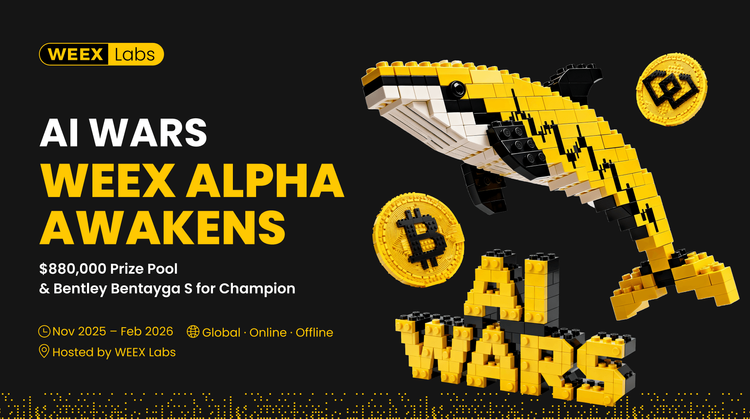
Join AI Wars: WEEK Alpha se réveille !Appel mondial pour les Alphas de Trading IA
AI Wars: WEEX Alpha Awakens est un hackathon mondial de trading sur l'IA à Dubaï, appelant les équipes quantiques, les traders algorithmiques et les développeurs d'IA à lancer leurs stratégies de trading crypto sur les marchés en direct pour une part d'une cagnotte de 880 000 $ US.

WEEX dévoile le trade to Earn: Jusqu'à 30 % de remise instantanée + 2 M$ WXT Rachat
WEEX est heureuse d’annoncer le lancement de son programme Trade to Earn, qui vous accorde automatiquement jusqu’à 30% de rabais sur les frais de trading. Toutes les récompenses sont créditées directement sur votre compte au comptant en WXT $, soutenu par notre plan de rachat de WXT $2,000,000 qui alimente la valeur à long terme des jetons.

Nouveau: Prix de liquidation estimé sur les graphiques App Candlestick
WEEX a introduit un nouveau prix estimatif de liquidation (Est. Liq. Price) figure sur le graphique en chandelier pour aider les traders à mieux gérer le risque et à identifier des fourchettes sûres pour leurs positions.
WEEX AI Hackathon Guide: Trouvez votre UID WEEK et inscrivez-vous
D'ici février 2026, WEEX lance AI Wars: WEEK Alpha Awakens, le premier hackathon mondial de trading de crypto-IA. Venez votre UID et inscrivez-vous au WEEX Global AI Trading Hackathon.
WEEXPERIENCE Nuit des baleines : Trading IA, communauté crypto et marché crypto
Le 12 décembre 2025, WEEX a organisé WEEXPERIENCE Whales Night, un rassemblement communautaire hors ligne conçu pour rassembler les membres de la communauté crypto locale. L'événement a combiné le partage de contenu, des jeux interactifs et des présentations de projets pour créer une expérience hors ligne détendue et attrayante.
Risque de trading d'IA en cryptomonnaie : Pourquoi de meilleures stratégies de trading crypto peuvent-elles générer des pertes plus importantes ?
Le risque ne réside plus principalement dans une mauvaise prise de décision ou des erreurs émotionnelles. Il vit de plus en plus dans la structure du marché, les parcours d'exécution et le comportement collectif. Comprendre ce changement est plus important que de trouver la prochaine stratégie « meilleure ».
Les agents de l'IA remplacent-ils la recherche crypto ? Comment l'IA autonome remodele le trading crypto
L'IA passe de l'assistance aux traders à l'automatisation de l'ensemble du processus de recherche à l'exécution sur les marchés crypto. L'avantage est passé de l'information humaine aux pipelines de données, à la vitesse et aux systèmes d'IA prêts à être exécutés, ce qui fait des retards dans l'intégration de l'IA un désavantage concurrentiel.
Boots de trading et copy trading IA : Comment les stratégies synchronisées remodèlent la volatilité du marché crypto
Les traders crypto de détail sont confrontés depuis longtemps aux mêmes défis : mauvaise gestion des risques, entrées tardives, décisions émotionnelles et exécution incohérente. Les outils de trading IA promettaient une solution. Aujourd'hui, les systèmes de copy trading et les bots de cassage alimentés par l'IA aident les traders à dimensionner leurs positions, à définir des stops et à agir plus rapidement que jamais. Au-delà de la vitesse et de la précision, ces outils remodèlent tranquillement les marchés : les traders ne tradent pas seulement plus malin, ils évoluent de façon synchronisée, créant une nouvelle dynamique qui amplifie à la fois les risques et les opportunités.
Le trading d'IA en crypto expliqué : Comment le trading autonome remodele les marchés crypto et les plateformes d’échange crypto
L’IA Trading transforme rapidement le paysage crypto. Les stratégies traditionnelles peinent à suivre la volatilité constante de la crypto et la structure complexe du marché, tandis que l'IA peut traiter des données massives, générer des stratégies adaptatives, gérer les risques et exécuter des trades de manière autonome. Cet article guide les utilisateurs de WEEX sur ce qu'est le trading d'IA, pourquoi la crypto accélère son adoption, comment le secteur évolue vers des agents autonomes et pourquoi WEEX construit l'écosystème de trading d'IA de nouvelle génération.
Appelez à rejoindre AI Wars : WEEX Alpha Awakens – Tournoi mondial de trading d’IA avec une cagnotte de 880 000 $
Maintenant, nous lançons un appel aux traders d'IA du monde entier pour qu'ils rejoignent AI Wars : WEEX Alpha Awakens, un tournoi mondial de trading d'IA doté d'une cagnotte de 880 000 $.
Pièces populaires
Dernières actus crypto


Assistance client:@weikecs
Collaborations commerciales:@weikecs
Trading quantitatif/Market makers:[email protected]
Programme VIP:[email protected]
 App
App