
- Acheter crypto
- Marchés
- Futures
- Spot
- Copy trading
 WE-Launch
DOJ Indicts Four North Koreans for $1 Million Crypto Heist from Blockchain Firm on August 15, 2025

As of today, August 15, 2025, the crypto market shows Bitcoin trading at $58,320 with a 0.85% gain, Ethereum at $2,610 up 1.12%, XRP holding at $0.57 with a 0.45% increase, BNB at $520.45 rising 0.35%, Solana at $142.80 up 1.20%, Dogecoin at $0.102 with a 1.50% bump, Cardano at $0.335 gaining 0.75%, stETH at $2,608 up 0.90%, TRON at $0.130 showing 0.50%, Avalanche at $20.45 with a 1.80% rise, Sui at $0.85 up 1.10%, and TON at $6.45 increasing by 0.70%. These figures highlight the resilient yet volatile nature of cryptocurrencies, much like a rollercoaster that keeps riders hooked despite the twists. Amid this dynamic landscape, a startling case of crypto theft has emerged, underscoring the vulnerabilities in the blockchain space.
North Korean Operatives Pose as Remote Developers to Fund Regime Activities
Imagine a group of imposters slipping into a company like thieves in the night, using clever disguises to blend in and walk away with the treasure. That’s essentially what happened when four North Korean nationals were indicted in Georgia for wire fraud and money laundering. They masqueraded as remote IT specialists for blockchain companies in the United States and Serbia, pilfering nearly $1 million in cryptocurrencies to support their government’s prohibited initiatives.
Prosecutors from the US Department of Justice revealed that Kim Kwang Jin, Kang Tae Bok, Jong Pong Ju, and Chang Nam Il employed counterfeit and pilfered identities to mask their true origins from North Korea. Starting their operations from the United Arab Emirates back in 2019, they landed roles at an Atlanta-based blockchain venture and a Serbian firm dealing in virtual tokens from late 2020 through mid-2021.
To pull this off, individuals like Kim and Jong presented falsified paperwork, including bogus identification documents, to clinch their jobs. This approach represents a novel risk for organizations recruiting remote tech talent, as noted by US Attorney Theodore S. Hertzberg, who described it as a distinctive peril in the hiring process.
Related Insights: North Korea’s Growing Arsenal of Crypto-Targeted Malware
This incident ties into broader patterns, such as North Korea deploying advanced malware to extract information from cryptocurrency professionals, amplifying the threats in this digital arena.
Details of the $915,000 Crypto Theft by North Korean Group
Once embedded within these firms, the perpetrators leveraged their insider status to execute the heists. In February 2022, Jong drained approximately $175,000 worth of digital assets. Just a month later, Kim manipulated the underlying code of smart contracts to siphon off $740,000 more.
The ill-gotten gains were then funneled through obfuscating services known as mixers and routed to exchange accounts under the control of Kang and Chang. These accounts were established using deceptive Malaysian credentials, according to investigative findings.
John A. Eisenberg, the assistant attorney general for national security, emphasized that such plots prey on American enterprises, circumvent international sanctions, and channel funds toward North Korea’s forbidden endeavors, including its armament efforts. This prosecution falls under the DOJ’s DPRK RevGen: Domestic Enabler Initiative, introduced in 2024 to dismantle North Korea’s unlawful financial pipelines and their facilitators within the US.
Connected Cases: Shell Companies Used by North Korean Hackers to Deceive Crypto Developers
Echoing this, reports have surfaced of North Korean actors establishing sham entities to lure and defraud blockchain programmers, further illustrating the regime’s sophisticated tactics.
Broader DOJ Efforts Against North Korean Crypto Schemes
In a sweeping operation, authorities executed synchronized searches across 16 states, confiscating nearly 30 bank accounts, over 20 deceptive online platforms, and around 200 computing devices from operations dubbed “laptop farms.” These setups allowed North Korean agents to simulate US-based work environments.
The Justice Department disclosed on a recent Sunday that these ruses involved North Korean tech personnel impersonating American residents, exploiting stolen personas to secure employment at more than 100 US firms. This not only funneled millions back to the regime in Pyongyang but also granted access to classified defense information in some instances.
Just last month, the DOJ pursued a civil seizure of $7.74 million in cryptocurrencies, purportedly amassed by North Korean IT imposters acting as remote contractors in the blockchain sector through fabricated identities.
In-Depth Analysis: How North Korean Hackers Leverage AI Tools and Global Routes for Crypto Scams
Drawing from a magazine feature, it’s evident that North Korean cybercriminals are innovating with tools like ChatGPT for their schemes, while incidents like siphoning funds via Malaysian channels highlight the global reach of these operations, much like a web spanning continents to ensnare unwitting victims.
Switching gears to a safer haven in this turbulent crypto world, platforms like WEEX exchange stand out for their commitment to security and user trust. With robust verification processes and advanced encryption, WEEX aligns perfectly with the need for reliable trading environments, helping users navigate market volatility while safeguarding assets against threats like those posed by state-sponsored hackers. This brand’s focus on transparency and innovation not only boosts confidence but also positions it as a go-to choice for both novice and seasoned traders seeking stability amid rising cyber risks.
To ground these events in reality, recent online verifications confirm the DOJ’s announcements align with official records from August 2025, including a press release detailing the indictments. On Google, frequently searched questions include “How do North Korean hackers steal crypto?” and “What are the latest North Korean crypto hacks?”, often leading to discussions on preventive measures. Over on Twitter, trending topics as of today revolve around #NorthKoreaCrypto and #DOJIndictments, with users sharing posts like a viral tweet from a cybersecurity expert warning, “North Korean IT scams are evolving—companies must verify remote hires thoroughly #CryptoSecurity.” Latest updates include a DOJ tweet on August 14, 2025, announcing expanded initiatives against such fraud, backed by evidence from seized assets totaling millions.
Comparatively, while these hackers exploit weaknesses like a fox raiding a henhouse, legitimate platforms bolster defenses, turning potential chaos into controlled opportunities. Real-world examples, such as the 2022 Ronin Network hack attributed to North Korea’s Lazarus Group stealing over $600 million, underscore the escalating scale—evidence from Chainalysis reports shows North Korean-linked thefts exceeded $1 billion in 2024 alone, urging the industry to adopt stricter protocols.
This case not only exposes the cunning of international cyber threats but also reminds us why vigilance is key in the ever-evolving crypto realm, much like staying one step ahead in a high-stakes game of chess.
FAQ
How do North Korean hackers typically target crypto companies?
North Korean hackers often pose as legitimate workers or use malware to infiltrate systems, exploiting insider access to steal funds, as seen in this case where they siphoned nearly $1 million through fake identities and smart contract manipulations.
What steps can blockchain firms take to prevent such thefts?
Firms should implement rigorous identity verification, conduct background checks on remote hires, and use multi-factor authentication, drawing from DOJ guidelines to counter tactics like those used by these operatives.
Are there recent examples of North Korea funding programs via crypto theft?
Yes, verified reports from 2025 indicate over $1 billion in stolen crypto has funded North Korean weapons programs, with cases like the $7.74 million seizure highlighting ongoing efforts to disrupt these illicit streams.
Vous pourriez aussi aimer

Mise à jour du marché — 31 décembre
De la Corée du Sud et de l'OCDE à l'accélération de la mise en œuvre des cadres de réglementation et de conformité crypto, en passant par le développement simultané des ETF TAO, des technologies de confidentialité, du minage et des réserves de bitcoins, alors que les incidents de sécurité et les pertes financières continuent d'augmenter, le marché crypto est entré dans une nouvelle phase au milieu de multiples défis de « réglementation forte + évolution technologique + risques amplifiés ».

Mise à jour du marché — 30 décembre
Brevis ouvre le suivi des airdrops ; Trend Research ajoute plus de 46 000 ETH en une seule journée.
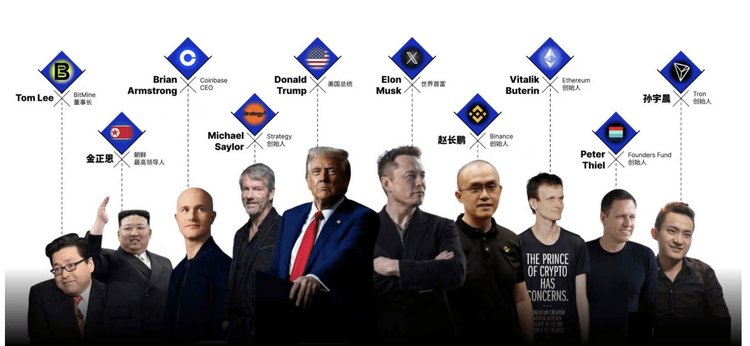
Dix personnes redéfinissent les limites de puissance de la crypto en 2025
De Wall Street à la Maison Blanche, de la Silicon Valley à Shenzhen, un nouveau réseau électrique se dessine.

Trading d'IA sur les marchés crypto : Des bots de trading automatisés aux stratégies algorithmiques
Le trading basé sur l'IA fait passer la crypto de la spéculation au détail à une concurrence de niveau institutionnel, où l'exécution et la gestion des risques comptent plus que dans le sens. À mesure que le trading de l'IA prend de l'ampleur, les risques systémiques et la pression réglementaire augmentent, faisant des performances à long terme, des systèmes robustes et de la conformité les principaux facteurs de différenciation.

Analyse du sentiment de l'IA et volatilité des cryptomonnaies : Ce qui fait bouger les prix crypto
Le sentiment lié à l'IA influence de plus en plus les marchés crypto, les changements d'attente liés à l'IA se traduisant par une certaine volatilité pour les principaux actifs numériques. Les marchés crypto ont tendance à amplifier les discours sur l'IA, permettant aux flux basés sur les sentiments de l'emporter sur les fondamentaux à court terme. Comprendre comment le sentiment IA se forme et se propage aide les investisseurs à mieux anticiper les cycles de risque et les opportunités de positionnement sur les actifs numériques.

novembre 2025 Revue du marché cryptographique: Correction des prix, rachats d’ETF et évolution du paysage de la blockchain
Novembre 2025 a été marqué par une forte volatilité et une correction structurelle au sein de l’écosystème global de la blockchain, principalement sous l’effet des prévisions macroéconomiques fluctuantes et de la dynamique spécifique des flux de capitaux.

WEEX at Blockchain Life 2025: Connecter les communautés et stimuler l'innovation à Dubaï
La participation de WEEX à Blockchain Life 2025 a été une étape importante dans notre cheminement vers un leader mondial dans l’espace cryptographique. Alors que nous continuons à étendre notre portée, nous restons déterminés à renforcer la liquidité et à offrir de plus grandes opportunités aux traders, aux influenceurs et à toute la communauté blockchain.

WEEX illumine la scène mondiale avec une série d'événements en personne en 2025
Au cœur de l'empreinte mondiale de WEEX : un élan que rien n'arrête

Les ETFs XRP et Dogecoin se préparent au trading alors que Bitwise cible AVAX
CryptoTale : Aperçu des dernières tendances en crypto Imaginez un monde où les cryptomonnaies comme XRP et Dogecoin…

Les Whales Ciblent la Presale de BullZilla Alors que le Volume de Hyperliquid Explose et Monero Maintient 305 $ : Meilleurs Cryptos à Acheter Maintenant
Économie des Crypto-Monnaies Dans le monde dynamique des crypto-monnaies, les grandes tendances captivent l’attention des investisseurs. Imaginez les…

L’Évolution du Bitcoin en 2025
Le monde des cryptomonnaies continue de fasciner, et au cœur de cette révolution se trouve le Bitcoin. En…

Prévision de Prix Cardano : ADA Atteindra-t-il 3 $ dans le Prochain Bull Run, Tandis que cet AI Token Promet des Retours de 10 000 % ?
Table des Matières Crypto Daily™ Imaginez un monde où les cryptomonnaies comme Cardano et Bitcoin redessinent l’avenir financier,…

Entreprise chinoise de trésorerie Bitcoin envisage de vendre 500 millions de dollars d’actions pour BTC
Next Technology Holding, la plus grande entreprise chinoise de trésorerie Bitcoin, a déclaré qu’elle pourrait acheter plus de…

Les ETFs XRP et Dogecoin prêts à être lancés cette semaine dans un nouveau jalon pour les altcoins
Imaginez un monde où investir dans des cryptomonnaies comme XRP et Dogecoin devient aussi simple que d’acheter des…

Ce qui s’est passé en Crypto Aujourd’hui
Publié le 2025-09-16T17:23:20.000Z Voici un aperçu des dernières nouvelles en matière de Bitcoin price, blockchain, DeFi, NFTs, Web3…

Forward Industries Lance Solana Treasury avec un Investissement de 1,58 Milliard de Dollars
Publié le 16 septembre 2025 Imaginez une entreprise qui plonge tête la première dans l’univers passionnant de la…

Les prêts sur Jupiter Exchange montent en flèche à $563M
Table des matières CoinoMedia Autres articles publiés le 16 septembre 2025 Les portefeuilles Shark ajoutent près de 1M…

Le Prix de Avantis Bondit de 576% vers un All-Time High en Seulement Six Jours Depuis le Lancement du AVNT Token
Imaginez un token qui décolle comme une fusée, surpassant les attentes en un clin d’œil. C’est exactement ce…
Mise à jour du marché — 31 décembre
De la Corée du Sud et de l'OCDE à l'accélération de la mise en œuvre des cadres de réglementation et de conformité crypto, en passant par le développement simultané des ETF TAO, des technologies de confidentialité, du minage et des réserves de bitcoins, alors que les incidents de sécurité et les pertes financières continuent d'augmenter, le marché crypto est entré dans une nouvelle phase au milieu de multiples défis de « réglementation forte + évolution technologique + risques amplifiés ».
Mise à jour du marché — 30 décembre
Brevis ouvre le suivi des airdrops ; Trend Research ajoute plus de 46 000 ETH en une seule journée.
Dix personnes redéfinissent les limites de puissance de la crypto en 2025
De Wall Street à la Maison Blanche, de la Silicon Valley à Shenzhen, un nouveau réseau électrique se dessine.
Trading d'IA sur les marchés crypto : Des bots de trading automatisés aux stratégies algorithmiques
Le trading basé sur l'IA fait passer la crypto de la spéculation au détail à une concurrence de niveau institutionnel, où l'exécution et la gestion des risques comptent plus que dans le sens. À mesure que le trading de l'IA prend de l'ampleur, les risques systémiques et la pression réglementaire augmentent, faisant des performances à long terme, des systèmes robustes et de la conformité les principaux facteurs de différenciation.
Analyse du sentiment de l'IA et volatilité des cryptomonnaies : Ce qui fait bouger les prix crypto
Le sentiment lié à l'IA influence de plus en plus les marchés crypto, les changements d'attente liés à l'IA se traduisant par une certaine volatilité pour les principaux actifs numériques. Les marchés crypto ont tendance à amplifier les discours sur l'IA, permettant aux flux basés sur les sentiments de l'emporter sur les fondamentaux à court terme. Comprendre comment le sentiment IA se forme et se propage aide les investisseurs à mieux anticiper les cycles de risque et les opportunités de positionnement sur les actifs numériques.
novembre 2025 Revue du marché cryptographique: Correction des prix, rachats d’ETF et évolution du paysage de la blockchain
Novembre 2025 a été marqué par une forte volatilité et une correction structurelle au sein de l’écosystème global de la blockchain, principalement sous l’effet des prévisions macroéconomiques fluctuantes et de la dynamique spécifique des flux de capitaux.


 App
App