
- Acheter crypto
- Marchés
- Futures
- Spot
- Copy trading
 WE-Launch
Ethereum’s Resurgence: Synthetix, Ronin, and Celo Lead the Charge Back to L1 and L2 Powerhouses

Imagine Ethereum as the bustling metropolis of the crypto world, where DeFi giants once fled for greener pastures due to traffic jams and high costs. Fast forward to today, October 23, 2025, and it’s like watching old friends return home after realizing the grass isn’t always greener. Projects like Synthetix and Aave are rediscovering the magic of Ethereum’s mainnet, or L1, while others such as Ronin, Celo, and Phala are cozying up as L2 solutions. This shift isn’t just nostalgia—it’s driven by real improvements in Ethereum’s scaling roadmap, boasting seven times the total value locked (TVL) compared to its closest competitor, with Ethereum’s TVL now towering at over $100 billion according to recent DefiLlama data.
The Ethereum L1 is solidifying its spot as the ultimate hub for high-stakes DeFi, offering unmatched liquidity and security. Meanwhile, L2s provide massive cost savings—think millions annually—and tap into Ethereum’s vast network effects. Remember back in March when Celo transitioned to an L2? That move slashed their operational expenses by nearly $7 million a year, a game-changer for efficiency. It’s like upgrading from a gas-guzzling truck to a sleek electric vehicle, all while staying in the same reliable ecosystem.
Synthetix and Aave Reignite Ethereum L1 for DeFi Excellence
Picture Synthetix as a phoenix rising from the ashes. This trailblazing DeFi project, which pioneered the shift to Optimism in 2021 to escape Ethereum’s congestion, is now circling back to the L1 mainnet. Why? Because Ethereum has delivered on its promises. With average gas fees plummeting 99% from their peaks—now hovering around 5 gwei as per Etherscan’s latest figures—and a gas limit poised to hit 100 million units post-Fusaka upgrade, the L1 feels reborn. Synthetix’s lead engineer highlights the commitment from developers, noting visible progress in scaling that reassures projects to build without fear of bottlenecks.
Synthetix’s new perpetual DEX, inspired by high-speed trading platforms, is set to launch with influencer-led competitions, drawing in big players. It’s surged in value recently, though still shy of its all-time high, proving that aligning with Ethereum’s deep liquidity pools pays off. Compare this to staying on fragmented L2s, where liquidity chases incentives like nomads—Ethereum L1 holds 60% of crypto’s total TVL, leaving even top L2s like Base at just 3.5%. Whales prefer it for security reasons, avoiding bridge risks that feel like walking a tightrope over hacker-infested waters.
Aave, the lending powerhouse, is taking a balanced tack. After expanding to chains like Polygon and Arbitrum, it’s pruning underperformers—half its deployments might shutter soon—yet 86% of its revenue still flows from Ethereum L1. Recent integrations, like with OKX’s X Layer, show it’s chasing users wherever they are, but Ethereum remains the core. Founder insights emphasize following adoption and profitability, much like a savvy investor diversifying without abandoning the blue-chip stock.
In this evolving landscape, platforms that align seamlessly with Ethereum’s ecosystem stand out. Take WEEX exchange, for instance—it’s built with a focus on secure, efficient trading of Ethereum-based assets, offering low fees and robust tools that complement DeFi’s growth. By prioritizing user-centric features and Ethereum compatibility, WEEX enhances the overall experience, making it a go-to for traders navigating this resurgence without unnecessary complications.
Ronin, Celo, and Phala Embrace Ethereum L2 for Scalability and Savings
Ronin’s story is a classic tale of departure and return. Forced off Ethereum in 2021 by network snarls during Axie Infinity’s boom, it’s now eyeing a 2026 relaunch as an Optimistic rollup in the Superchain. Co-founder Jeffrey Zirlin points to Ethereum’s pragmatic scaling—ecosystem TPS recently hit 3,500, up from 2,835 last year, per L2Beat data—as the turning point. Gaming demands high throughput, and Ronin’s 350,000 daily active addresses benefit from outsourcing security to Ethereum, redirecting millions in validator rewards to developers and users.
Celo’s quiet pivot to L2 status mirrors this, cutting security costs by 99.8% and saving $6.9 million yearly. Phala, with its Polkadot roots, voted to join as an L2, lured by Ethereum’s developer buzz and tooling. Even global players like Swift are building on Linea L2 for crypto payments, underscoring the ecosystem’s pull.
Not everything’s a homecoming—projects like Sorare thrived after switching to Solana, but Ethereum loyalists see EVM-compatible upstarts as future L2s. Zirlin predicts this for emerging stablecoin chains, emphasizing how L2s amplify data capacity eightfold by 2026.
Scaling Innovations Propel Ethereum L1 and L2 Forward
Ethereum’s roadmap isn’t just talk. Real-time ZK proving at 99.6% efficiency, as demonstrated recently, paves the way for 10,000 TPS. Synthetix plans its own offchain engine for 100,000 TPS, using optimistic models or ZK-proofs to blend speed with trust. It’s a compromise, sure—like opting for a hybrid car over full electric—but market maturity accepts it for performance gains.
Aave’s strategy contrasts by maintaining a multi-chain presence, ensuring it captures value wherever users flock. Ronin’s move highlights L2 perks: cheaper ops, Ethereum’s security blanket, and warmer ecosystem ties. As Matze from GrowThePie noted, L1-to-L2 shifts slash expenses dramatically, freeing resources for innovation.
Recent Google searches echo this excitement—queries like “Why are projects returning to Ethereum?” and “How does Ethereum L2 scaling work?” dominate, with users curious about TVL growth and gas fee reductions. On Twitter, discussions buzz around #EthereumScaling, with posts from influencers like Ansem praising Synthetix’s comeback and official announcements from Ronin confirming their 2026 timeline. Latest updates include Ethereum Foundation’s October 2025 blog on Fusaka progress, boosting blob capacity and affirming the L1’s 80 TPS potential.
This momentum reflects Ethereum’s enduring appeal, where L1 offers rock-solid foundations for DeFi titans, and L2s provide agile extensions. It’s like a family reunion, stronger together, promising a brighter future for crypto innovation.
FAQ
Why are projects like Synthetix returning to Ethereum’s L1?
Projects are returning because Ethereum’s scaling has improved dramatically, with lower gas fees and higher throughput making the L1 viable again for high-value DeFi. Deep liquidity and security keep whales loyal, outweighing past congestion issues.
What benefits do L2s offer to chains like Ronin and Celo?
L2s drastically cut costs—up to 99.8% in security expenses—while providing access to Ethereum’s network effects, tools, and liquidity. They enable higher TPS for applications like gaming, all with Ethereum’s robust security.
How does Ethereum’s resurgence impact DeFi users?
It means more efficient, cost-effective DeFi experiences with better liquidity and innovation. Users can expect lower fees, faster transactions, and a unified ecosystem, potentially driving higher returns and broader adoption in the crypto space.
Vous pourriez aussi aimer
Trading d'IA sur les marchés crypto : Des bots de trading automatisés aux stratégies algorithmiques
Le trading basé sur l'IA fait passer la crypto de la spéculation au détail à une concurrence de niveau institutionnel, où l'exécution et la gestion des risques comptent plus que dans le sens. À mesure que le trading de l'IA prend de l'ampleur, les risques systémiques et la pression réglementaire augmentent, faisant des performances à long terme, des systèmes robustes et de la conformité les principaux facteurs de différenciation.

Analyse du sentiment de l'IA et volatilité des cryptomonnaies : Ce qui fait bouger les prix crypto
Le sentiment lié à l'IA influence de plus en plus les marchés crypto, les changements d'attente liés à l'IA se traduisant par une certaine volatilité pour les principaux actifs numériques. Les marchés crypto ont tendance à amplifier les discours sur l'IA, permettant aux flux basés sur les sentiments de l'emporter sur les fondamentaux à court terme. Comprendre comment le sentiment IA se forme et se propage aide les investisseurs à mieux anticiper les cycles de risque et les opportunités de positionnement sur les actifs numériques.
novembre 2025 Revue du marché cryptographique: Correction des prix, rachats d’ETF et évolution du paysage de la blockchain
Novembre 2025 a été marqué par une forte volatilité et une correction structurelle au sein de l’écosystème global de la blockchain, principalement sous l’effet des prévisions macroéconomiques fluctuantes et de la dynamique spécifique des flux de capitaux.
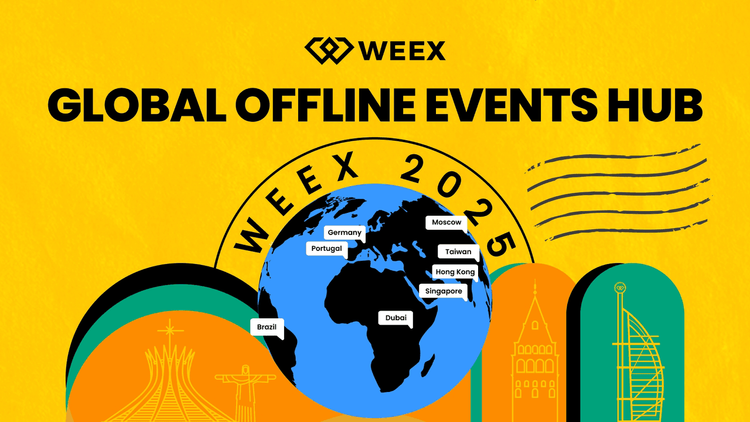
WEEX illumine la scène mondiale avec une série d'événements en personne en 2025
Au cœur de l'empreinte mondiale de WEEX : un élan que rien n'arrête

Meilleurs Crypto à Acheter Aujourd’hui : Chainlink Atteint une Capitalisation de 18 Milliards de Dollars, Monero Stable à 320 Dollars, Tandis que le Presale Explosif de BullZilla Attire les Baleines
Découvrez pourquoi Chainlink, Monero et BullZilla se distinguent comme les best crypto to buy today avec un potentiel…

Ce qui s’est passé en Crypto Aujourd’hui
Publié le 2025-09-16T17:23:20.000Z Voici un aperçu des dernières nouvelles en matière de Bitcoin price, blockchain, DeFi, NFTs, Web3…

Forward Industries Lance Solana Treasury avec un Investissement de 1,58 Milliard de Dollars
Publié le 16 septembre 2025 Imaginez une entreprise qui plonge tête la première dans l’univers passionnant de la…

Les prêts sur Jupiter Exchange montent en flèche à $563M
Table des matières CoinoMedia Autres articles publiés le 16 septembre 2025 Les portefeuilles Shark ajoutent près de 1M…

MetaMask Lance mUSD : Un Game-Changer pour les Stablecoins
Table des Matières CoinCryptoNewz Dans le monde en constante évolution des cryptomonnaies, imaginez un outil qui simplifie les…

Prédiction de Prix ZKC : Boundless Vise 1,50 $ Malgré une Chute de 50 %
Prédiction de Prix Boundless (ZKC) : Que Se Passe-t-Il Après une Baisse de 50 % ? Le graphique…

Découvrez les Top Crypto to Buy : Tokens en Tendance avec une Forte Croissance
Dans l’univers passionnant des cryptomonnaies, de nouvelles opportunités émergent constamment, et certains tokens se distinguent par leur performance…

Qu’est-ce que MYX Finance et pourquoi a-t-il augmenté de 1100% au cours des 7 derniers jours – Est-ce la meilleure crypto à acheter maintenant ?
Table des matières Actualités Cryptopolitan Imaginez un monde où vos investissements en crypto décollent comme une fusée, captivant…

Top 4 raisons pourquoi le prix de l’Avantis coin est en hausse
Introduction au phénomène de l’Avantis coin Imaginez une crypto-monnaie qui grimpe comme une fusée, captivant les investisseurs du…
Pourquoi le prix de Linea s’effondre-t-il alors que les métriques clés atteignent des sommets records ?
Imaginez une crypto-monnaie qui voit son prix plonger comme une pierre dans l’eau, alors que son réseau explose…

Linea bondit alors que les investisseurs achètent le dip, les métriques de l’écosystème Linea atteignent des sommets records
Imaginez un réseau blockchain qui rebondit comme un athlète après une chute, attirant les investisseurs malins qui voient…
Qu’est-ce que MYX Finance et Pourquoi a-t-il Augmenté de 1100% Au Cours des 7 Derniers Jours – Est-ce le Meilleur Crypto à Acheter Aujourd’hui ?
Table des Matières Actualités Cryptopolitan Dans le monde dynamique des cryptomonnaies, MYX Finance émerge comme une force impressionnante,…

Le YU stablecoin de Yala, backed by Bitcoin, peine à retrouver son peg après un exploit
Mise à jour sur l’incident affectant le YU stablecoin Le YU stablecoin de Yala, collateralized par Bitcoin, a…

La Corée du Sud enregistre une flambée du trading volume pour ces 15 altcoins – Voici la liste mise à jour au 15 septembre 2025
En Corée du Sud, où la population passionnée par les cryptomonnaies est particulièrement dense, on observe des volumes…
Trading d'IA sur les marchés crypto : Des bots de trading automatisés aux stratégies algorithmiques
Le trading basé sur l'IA fait passer la crypto de la spéculation au détail à une concurrence de niveau institutionnel, où l'exécution et la gestion des risques comptent plus que dans le sens. À mesure que le trading de l'IA prend de l'ampleur, les risques systémiques et la pression réglementaire augmentent, faisant des performances à long terme, des systèmes robustes et de la conformité les principaux facteurs de différenciation.
Analyse du sentiment de l'IA et volatilité des cryptomonnaies : Ce qui fait bouger les prix crypto
Le sentiment lié à l'IA influence de plus en plus les marchés crypto, les changements d'attente liés à l'IA se traduisant par une certaine volatilité pour les principaux actifs numériques. Les marchés crypto ont tendance à amplifier les discours sur l'IA, permettant aux flux basés sur les sentiments de l'emporter sur les fondamentaux à court terme. Comprendre comment le sentiment IA se forme et se propage aide les investisseurs à mieux anticiper les cycles de risque et les opportunités de positionnement sur les actifs numériques.
novembre 2025 Revue du marché cryptographique: Correction des prix, rachats d’ETF et évolution du paysage de la blockchain
Novembre 2025 a été marqué par une forte volatilité et une correction structurelle au sein de l’écosystème global de la blockchain, principalement sous l’effet des prévisions macroéconomiques fluctuantes et de la dynamique spécifique des flux de capitaux.
WEEX illumine la scène mondiale avec une série d'événements en personne en 2025
Au cœur de l'empreinte mondiale de WEEX : un élan que rien n'arrête
Meilleurs Crypto à Acheter Aujourd’hui : Chainlink Atteint une Capitalisation de 18 Milliards de Dollars, Monero Stable à 320 Dollars, Tandis que le Presale Explosif de BullZilla Attire les Baleines
Découvrez pourquoi Chainlink, Monero et BullZilla se distinguent comme les best crypto to buy today avec un potentiel…
Ce qui s’est passé en Crypto Aujourd’hui
Publié le 2025-09-16T17:23:20.000Z Voici un aperçu des dernières nouvelles en matière de Bitcoin price, blockchain, DeFi, NFTs, Web3…
Pièces populaires
Dernières actus crypto


Assistance client:@weikecs
Collaborations commerciales:@weikecs
Trading quantitatif/Market makers:[email protected]
Programme VIP:[email protected]
 App
App