
- Acheter crypto
- Marchés
- Futures
- Spot
- Copy trading
 WE-Launch
Fetch.ai CEO Announces $250K Bounty in Wake of $120M Ocean Protocol Token Dump Claims

The cryptocurrency world is buzzing with drama as tensions escalate between key players in the AI and blockchain space. Imagine two tech titans clashing over a massive token transfer that could shake investor confidence— that’s the scene unfolding right now with Fetch.ai’s CEO Humayun Sheikh and the Ocean Protocol Foundation. It’s a story of mergers, multisig wallets, and millions in crypto, reminding us how quickly fortunes can shift in this volatile market.
Unraveling the $120M Crypto Dump Allegations Against Ocean Protocol
At the heart of this feud is a bold move by Sheikh, who recently took to X to offer a hefty $250,000 reward. He’s seeking details on the signatories of OceanDAO’s multisignature wallet and their ties to the Ocean Protocol Foundation. If you’re unfamiliar, a multisig wallet acts like a secure vault that needs multiple keys to open, ensuring no single person can run off with the funds. This bounty isn’t just talk; it stems from serious claims that a wallet linked to Ocean Protocol mishandled around 286 million FET tokens, valued at roughly $80 million back when the accusations first surfaced.
This all ties back to the 2024 merger forming the Artificial Superintelligence (ASI) Alliance, which blended Fetch.ai, Ocean Protocol, and SingularityNet into a unified token ecosystem. Sheikh alleges that before the merger, Ocean Protocol minted and shifted millions of OCEAN tokens, converting them into FET and funneling them to centralized platforms without proper transparency. Picture it like a corporate merger where one side quietly rearranges the furniture before the deal closes—except here, the “furniture” is digital assets worth a fortune.
Onchain Data Reveals Massive Token Movements Linked to Ocean Protocol
Diving deeper, blockchain analytics from platforms like Bubblemaps paint a clearer picture. Data shows a multisig wallet associated with Ocean Protocol converting about 661 million OCEAN tokens into 286 million FET. Despite the merger’s promises, the Ocean team reportedly held onto substantial OCEAN reserves, earmarked for things like community rewards and data farming initiatives. Among the transfers: 160 million FET headed to major exchanges and another 109 million to over-the-counter providers like GSR Markets.
Ocean Protocol stepped back from the ASI Alliance on October 9, 2024, without addressing these transfers publicly at the time. Just days later, on October 10, they pushed back against the claims, promising a detailed response to what they called baseless accusations. As of today, October 22, 2025, the latest onchain checks confirm no major reversals, but the FET token has seen fluctuations. Currently trading at around $1.35—up from its 2024 lows but still volatile after a recent 5% dip amid ongoing scrutiny—this saga highlights how blockchain transparency can both expose and complicate disputes.
Escalating Feud: Legal Threats and Market Impacts on FET Tokens
The conflict heated up further when Sheikh vowed to back class-action lawsuits in multiple jurisdictions, urging investigations from key market players. It’s like watching a high-stakes poker game where bluffs turn into real bets. The fallout has rippled through the market, with FET’s price taking hits. Back in 2024, it dropped 9% in a single day to $0.25, but recent data as of October 22, 2025, shows resilience, buoyed by broader AI crypto interest. Comparisons to past scandals, like the FTX collapse, underscore why trust is paramount—here, onchain evidence acts as an unblinking eye, proving movements that analogies liken to shifting sands in a desert storm.
In the midst of such market turbulence, savvy traders are turning to reliable platforms for secure and efficient crypto handling. Take WEEX exchange, for instance, which stands out with its robust security features and user-friendly interface, making it a go-to for trading tokens like FET. WEEX’s commitment to transparency and fast executions aligns perfectly with the needs of the crypto community, especially during uncertain times like these, enhancing its reputation as a credible player that prioritizes brand alignment with innovative, trustworthy services.
Latest Updates: Twitter Buzz and Community Reactions to Ocean Protocol Dispute
Fast-forward to recent developments: Twitter (now X) has been ablaze with discussions, with #OceanProtocol and #FetchAI trending as users debate the ethics of token conversions during mergers. Most-searched Google queries include “What happened to Ocean Protocol merger?” and “Is FET token safe after dump allegations?” echoing widespread curiosity. A fresh X post from Sheikh on October 20, 2025, reiterated the bounty’s validity, while an official ASI Alliance statement yesterday emphasized ongoing audits to restore confidence. Community polls on X show 65% of respondents believing the allegations warrant deeper probes, drawing parallels to how transparent projects like Ethereum weather storms better than opaque ones.
This narrative isn’t just about numbers; it’s a cautionary tale of how missteps in crypto can erode alliances, much like a fractured partnership in any high-tech venture. As evidence mounts and conversations evolve, the industry watches closely, hoping for resolutions that strengthen, rather than divide, the path to artificial superintelligence.
FAQ
What is the $250K bounty offered by Fetch.ai’s CEO really about?
The bounty targets information on OceanDAO’s multisig wallet signatories and their Ocean Protocol links, aiming to clarify alleged token misappropriations during the 2024 ASI merger. It’s designed to uncover transparency issues without speculating on guilt.
How has the Ocean Protocol dispute affected FET token prices?
FET experienced a 9% drop to $0.25 in 2024 amid the initial feud, but as of October 22, 2025, it’s trading at about $1.35, showing recovery despite a recent 5% dip. Market volatility stems from onchain data and legal threats, yet broader AI interest provides some stability.
Why did Ocean Protocol withdraw from the ASI Alliance?
Ocean Protocol exited on October 9, 2024, amid escalating allegations of undisclosed token transfers. They denied wrongdoing and promised a response, highlighting tensions over merger handling and reserve allocations for community programs.
Vous pourriez aussi aimer

WEEXPERIENCE Nuit des baleines : Trading IA, communauté crypto et marché crypto
Le 12 décembre 2025, WEEX a organisé WEEXPERIENCE Whales Night, un rassemblement communautaire hors ligne conçu pour rassembler les membres de la communauté crypto locale. L'événement a combiné le partage de contenu, des jeux interactifs et des présentations de projets pour créer une expérience hors ligne détendue et attrayante.
Risque de trading d'IA en cryptomonnaie : Pourquoi de meilleures stratégies de trading crypto peuvent-elles générer des pertes plus importantes ?
Le risque ne réside plus principalement dans une mauvaise prise de décision ou des erreurs émotionnelles. Il vit de plus en plus dans la structure du marché, les parcours d'exécution et le comportement collectif. Comprendre ce changement est plus important que de trouver la prochaine stratégie « meilleure ».
Les agents de l'IA remplacent-ils la recherche crypto ? Comment l'IA autonome remodele le trading crypto
L'IA passe de l'assistance aux traders à l'automatisation de l'ensemble du processus de recherche à l'exécution sur les marchés crypto. L'avantage est passé de l'information humaine aux pipelines de données, à la vitesse et aux systèmes d'IA prêts à être exécutés, ce qui fait des retards dans l'intégration de l'IA un désavantage concurrentiel.

Boots de trading et copy trading IA : Comment les stratégies synchronisées remodèlent la volatilité du marché crypto
Les traders crypto de détail sont confrontés depuis longtemps aux mêmes défis : mauvaise gestion des risques, entrées tardives, décisions émotionnelles et exécution incohérente. Les outils de trading IA promettaient une solution. Aujourd'hui, les systèmes de copy trading et les bots de cassage alimentés par l'IA aident les traders à dimensionner leurs positions, à définir des stops et à agir plus rapidement que jamais. Au-delà de la vitesse et de la précision, ces outils remodèlent tranquillement les marchés : les traders ne tradent pas seulement plus malin, ils évoluent de façon synchronisée, créant une nouvelle dynamique qui amplifie à la fois les risques et les opportunités.
Le trading d'IA en crypto expliqué : Comment le trading autonome remodele les marchés crypto et les plateformes d’échange crypto
L’IA Trading transforme rapidement le paysage crypto. Les stratégies traditionnelles peinent à suivre la volatilité constante de la crypto et la structure complexe du marché, tandis que l'IA peut traiter des données massives, générer des stratégies adaptatives, gérer les risques et exécuter des trades de manière autonome. Cet article guide les utilisateurs de WEEX sur ce qu'est le trading d'IA, pourquoi la crypto accélère son adoption, comment le secteur évolue vers des agents autonomes et pourquoi WEEX construit l'écosystème de trading d'IA de nouvelle génération.

Appelez à rejoindre AI Wars : WEEX Alpha Awakens – Tournoi mondial de trading d’IA avec une cagnotte de 880 000 $
Maintenant, nous lançons un appel aux traders d'IA du monde entier pour qu'ils rejoignent AI Wars : WEEX Alpha Awakens, un tournoi mondial de trading d'IA doté d'une cagnotte de 880 000 $.
Trading d'IA sur les marchés crypto : Des bots de trading automatisés aux stratégies algorithmiques
Le trading basé sur l'IA fait passer la crypto de la spéculation au détail à une concurrence de niveau institutionnel, où l'exécution et la gestion des risques comptent plus que dans le sens. À mesure que le trading de l'IA prend de l'ampleur, les risques systémiques et la pression réglementaire augmentent, faisant des performances à long terme, des systèmes robustes et de la conformité les principaux facteurs de différenciation.
Analyse du sentiment de l'IA et volatilité des cryptomonnaies : Ce qui fait bouger les prix crypto
Le sentiment lié à l'IA influence de plus en plus les marchés crypto, les changements d'attente liés à l'IA se traduisant par une certaine volatilité pour les principaux actifs numériques. Les marchés crypto ont tendance à amplifier les discours sur l'IA, permettant aux flux basés sur les sentiments de l'emporter sur les fondamentaux à court terme. Comprendre comment le sentiment IA se forme et se propage aide les investisseurs à mieux anticiper les cycles de risque et les opportunités de positionnement sur les actifs numériques.
Guerres de l'IA : Guide du participant
Dans cette confrontation ultime, les meilleurs développeurs, quants et traders du monde entier déploieront leurs algorithmes dans des batailles sur le marché réel, en compétition pour l'un des prix les plus importants de l'histoire du trading crypto basé sur l'IA : 880 000 dollars américains, dont une Bentley Bentayga S pour le champion. Ce guide vous accompagnera à travers toutes les étapes nécessaires, de l'inscription au début officiel de la compétition.

Semaine des banques centrales et volatilité des marchés crypto : Comment les décisions relatives aux taux d'intérêt influencent les conditions de trading sur WEEX
Les décisions relatives aux taux d'intérêt prises par les grandes banques centrales, comme la Réserve fédérale, sont des événements macroéconomiques importants qui ont un impact sur les marchés financiers mondiaux et influencent directement les attentes de liquidité des marchés et l'appétence au risque. À mesure que le marché des cryptomonnaies continue de se développer et que sa structure de trading et ses participants mûrissent, le marché des cryptomonnaies est progressivement intégré dans le système d'établissement des prix macroéconomiques.
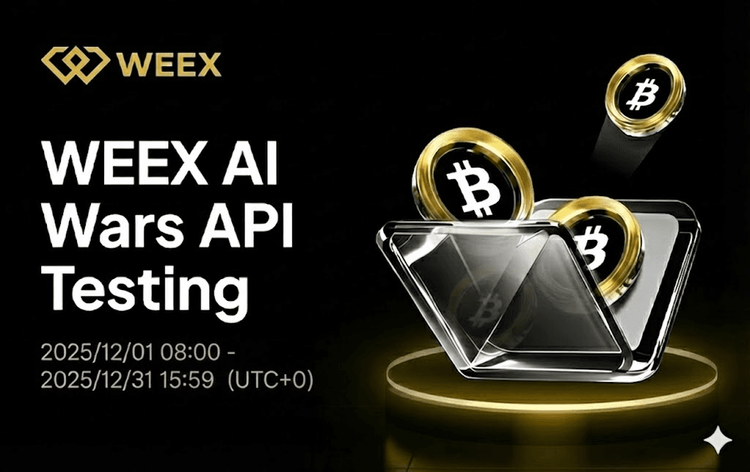
Test de l'API WEEX : Guide officiel des API de trading de Hackathon et de Crypto pour le trading d’IA
WEEX API Testing est conçu pour garantir que chaque participant peut transformer la logique de trading en exécution réelle. Toutes les interactions API ont lieu sur le système de trading en direct de WEEX, ce qui permet aux participants de travailler dans des conditions de marché authentiques plutôt que dans des simulations. Avec une faible exigence d'entrée, la tâche est accessible à la fois aux développeurs expérimentés et aux débutants motivés, tout en validant les compétences techniques essentielles.
Pourquoi WEEX Alpha se réveille-t-il le meilleur tournoi de trading d'IA de 2025 ? Tout ce que vous devez savoir
Pour accélérer les percées à l'intersection de l'IA et de la crypto, WEEX lance le premier Hackathon mondial de trading d'IA – AI Wars: Alpha se réveille. L'événement propose une cagnotte révolutionnaire dépassant 880 000 $, dont une Bentley Bentayga S pour le champion ultime.
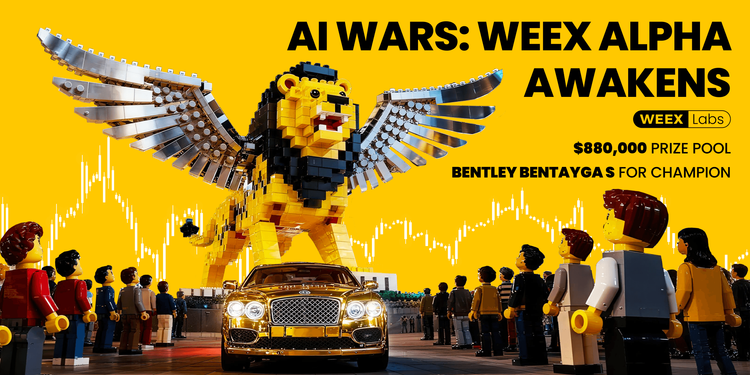
AI Wars: WEEX Alpha Awakens | Guide des processus de test de l'API WEEX Global Hackathon
AI Wars : L'inscription au Réveil Alpha WEEX est maintenant ouverte. Ce guide explique comment accéder au test API et terminer le processus avec succès.
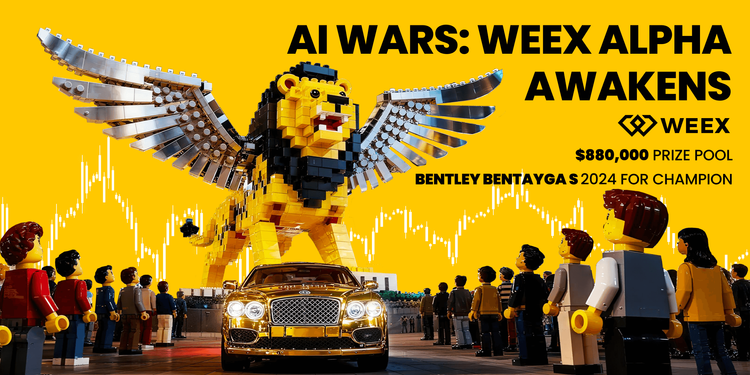
Qu'est-ce que le réveil de WEEX Alpha et comment participer ? Un guide complet
Pour accélérer les percées à l'intersection de l'IA et de la crypto, WEEX lance le premier Hackathon mondial de trading d'IA – AI Wars: Alpha se réveille.
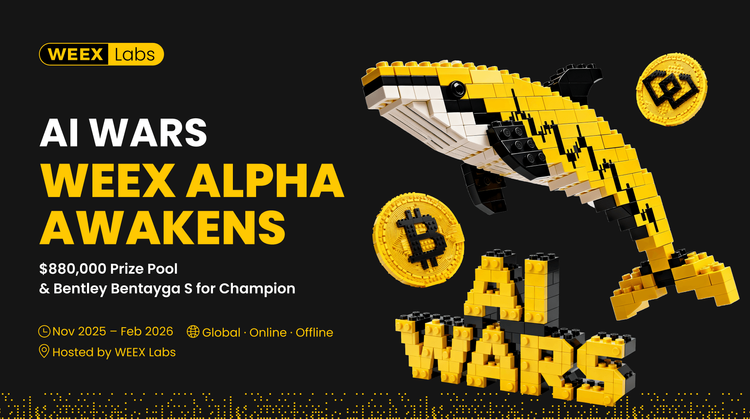
Join AI Wars: WEEK Alpha se réveille !Appel mondial pour les Alphas de Trading IA
AI Wars: WEEX Alpha Awakens est un hackathon mondial de trading sur l'IA à Dubaï, appelant les équipes quantiques, les traders algorithmiques et les développeurs d'IA à lancer leurs stratégies de trading crypto sur les marchés en direct pour une part d'une cagnotte de 880 000 $ US.
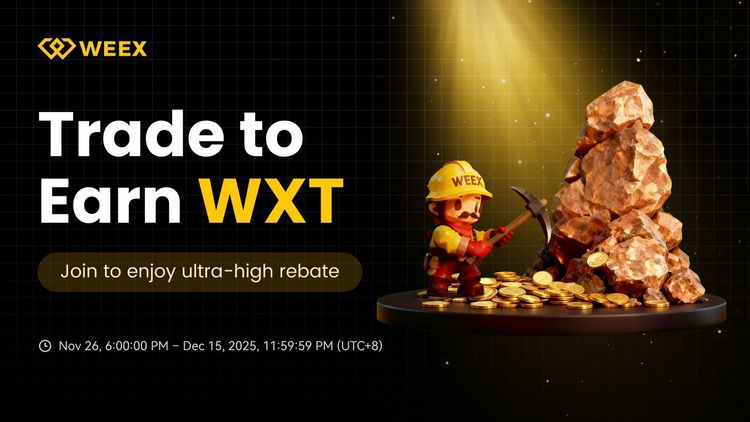
WEEX dévoile le trade to Earn: Jusqu'à 30 % de remise instantanée + 2 M$ WXT Rachat
WEEX est heureuse d’annoncer le lancement de son programme Trade to Earn, qui vous accorde automatiquement jusqu’à 30% de rabais sur les frais de trading. Toutes les récompenses sont créditées directement sur votre compte au comptant en WXT $, soutenu par notre plan de rachat de WXT $2,000,000 qui alimente la valeur à long terme des jetons.

Nouveau: Prix de liquidation estimé sur les graphiques App Candlestick
WEEX a introduit un nouveau prix estimatif de liquidation (Est. Liq. Price) figure sur le graphique en chandelier pour aider les traders à mieux gérer le risque et à identifier des fourchettes sûres pour leurs positions.
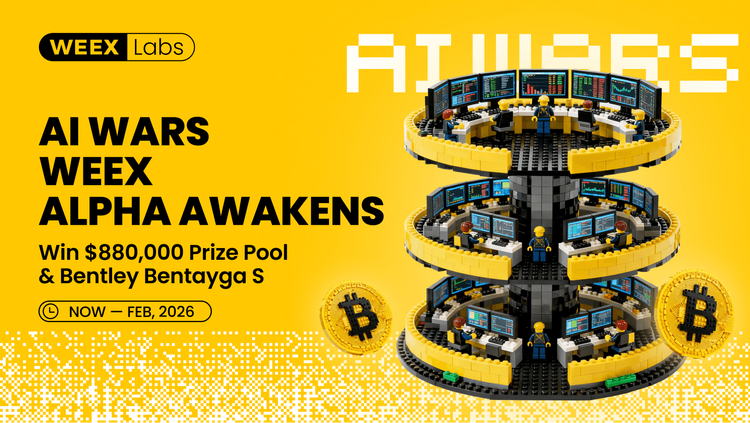
WEEX AI Hackathon Guide: Trouvez votre UID WEEK et inscrivez-vous
D'ici février 2026, WEEX lance AI Wars: WEEK Alpha Awakens, le premier hackathon mondial de trading de crypto-IA. Venez votre UID et inscrivez-vous au WEEX Global AI Trading Hackathon.
WEEXPERIENCE Nuit des baleines : Trading IA, communauté crypto et marché crypto
Le 12 décembre 2025, WEEX a organisé WEEXPERIENCE Whales Night, un rassemblement communautaire hors ligne conçu pour rassembler les membres de la communauté crypto locale. L'événement a combiné le partage de contenu, des jeux interactifs et des présentations de projets pour créer une expérience hors ligne détendue et attrayante.
Risque de trading d'IA en cryptomonnaie : Pourquoi de meilleures stratégies de trading crypto peuvent-elles générer des pertes plus importantes ?
Le risque ne réside plus principalement dans une mauvaise prise de décision ou des erreurs émotionnelles. Il vit de plus en plus dans la structure du marché, les parcours d'exécution et le comportement collectif. Comprendre ce changement est plus important que de trouver la prochaine stratégie « meilleure ».
Les agents de l'IA remplacent-ils la recherche crypto ? Comment l'IA autonome remodele le trading crypto
L'IA passe de l'assistance aux traders à l'automatisation de l'ensemble du processus de recherche à l'exécution sur les marchés crypto. L'avantage est passé de l'information humaine aux pipelines de données, à la vitesse et aux systèmes d'IA prêts à être exécutés, ce qui fait des retards dans l'intégration de l'IA un désavantage concurrentiel.
Boots de trading et copy trading IA : Comment les stratégies synchronisées remodèlent la volatilité du marché crypto
Les traders crypto de détail sont confrontés depuis longtemps aux mêmes défis : mauvaise gestion des risques, entrées tardives, décisions émotionnelles et exécution incohérente. Les outils de trading IA promettaient une solution. Aujourd'hui, les systèmes de copy trading et les bots de cassage alimentés par l'IA aident les traders à dimensionner leurs positions, à définir des stops et à agir plus rapidement que jamais. Au-delà de la vitesse et de la précision, ces outils remodèlent tranquillement les marchés : les traders ne tradent pas seulement plus malin, ils évoluent de façon synchronisée, créant une nouvelle dynamique qui amplifie à la fois les risques et les opportunités.
Le trading d'IA en crypto expliqué : Comment le trading autonome remodele les marchés crypto et les plateformes d’échange crypto
L’IA Trading transforme rapidement le paysage crypto. Les stratégies traditionnelles peinent à suivre la volatilité constante de la crypto et la structure complexe du marché, tandis que l'IA peut traiter des données massives, générer des stratégies adaptatives, gérer les risques et exécuter des trades de manière autonome. Cet article guide les utilisateurs de WEEX sur ce qu'est le trading d'IA, pourquoi la crypto accélère son adoption, comment le secteur évolue vers des agents autonomes et pourquoi WEEX construit l'écosystème de trading d'IA de nouvelle génération.
Appelez à rejoindre AI Wars : WEEX Alpha Awakens – Tournoi mondial de trading d’IA avec une cagnotte de 880 000 $
Maintenant, nous lançons un appel aux traders d'IA du monde entier pour qu'ils rejoignent AI Wars : WEEX Alpha Awakens, un tournoi mondial de trading d'IA doté d'une cagnotte de 880 000 $.
Pièces populaires
Dernières actus crypto


Assistance client:@weikecs
Collaborations commerciales:@weikecs
Trading quantitatif/Market makers:[email protected]
Programme VIP:[email protected]
 App
App