
- Acheter crypto
- Marchés
- Futures
- Spot
- Copy trading
 WE-Launch
How to Track Someone’s Crypto Wallet: A Comprehensive Guide

Cryptocurrency, with its decentralized nature, offers privacy and anonymity, making it both appealing and challenging to track. For enthusiasts eager to understand transactions or ensure security, knowing how to track someone’s crypto wallet can be invaluable. This guide breaks down the essentials of tracking wallet activities, making it accessible even for beginners.
What Is a Crypto Wallet?
A crypto wallet is a digital tool that allows you to store, send, and receive cryptocurrencies. Similar to a bank account number, a crypto wallet comprises a unique string of characters serving as an identifier in the blockchain world. Every transaction made with this address is recorded on a public ledger, making blockchain explorers crucial for monitoring activities.
Why Track a Crypto Wallet?
Tracking a crypto wallet isn’t just about curiosity—it’s about security, financial management, and compliance. By keeping an eye on wallet activities, you can:
- Enhance Security: Spot unauthorized transactions quickly, a necessity given the rise in crypto-related thefts.
- Manage Finances: Keep tabs on your spending habits and portfolio performance.
- Ensure Compliance: Stay prepared for tax season with a detailed record of your crypto transactions.
Tools You Need to Track a Crypto Wallet
Blockchain Explorers
A blockchain explorer functions like a search engine for blockchain transactions. By entering a specific wallet address, you can view all associated transactions. Popular explorers include Etherscan for Ethereum and Blockchain.com Explorer for Bitcoin.
Crypto Wallet Tracking Services
For more advanced tracking, services like Whale Alert offer real-time notifications for significant transactions. This is particularly useful for monitoring large sums and high-frequency trades.
Software and Apps
Applications such as Blockfolio and Delta allow for comprehensive monitoring and analysis of multiple wallets, offering users a detailed financial overview at their fingertips.
How to Track Someone’s Crypto Wallet: Step-by-Step
1. Choose a Blockchain Explorer
Select an appropriate blockchain explorer based on the type of cryptocurrency you’re interested in tracking. Options vary from Etherscan for Ethereum to Blockchair for multiple blockchains.
2. Enter the Wallet Address
Visit the chosen explorer and enter the wallet address in the search bar to reveal transaction history and balance information.
3. Examine Transactions
Once the address is entered, you can see detailed transaction information, including amounts, dates, and associated wallets.
4. Set Up Alerts (If Supported)
If the explorer supports alerts, create an account, configure your alert preferences, and choose your notification methods such as SMS or email.
5. Regular Monitoring
Make a habit of checking the explorer regularly to stay updated with any new transactions or changes in the wallet’s balance.
Best Practices for Tracking Wallet Activities
Regular Monitoring
Ensure that checking the wallet is a regular part of your routine to quickly identify any discrepancies or unauthorized activity.
Enhance Security
Use strong passwords and enable two-factor authentication on any service or application used to track wallets.
Protect Data Privacy
Avoid sharing wallet addresses openly to maintain privacy and prevent potential security breaches.
FAQs
Can anyone track my crypto wallet?
While transactions are recorded on public ledgers, tracking requires the wallet address. Without it, identifying specific activities becomes nearly impossible.
Is it illegal to track someone else’s crypto wallet?
Tracking a crypto wallet is not inherently illegal, but using information maliciously or without consent can lead to ethical and legal issues.
What information can I see through a blockchain explorer?
Blockchain explorers provide insights into transaction history, amounts, sending and receiving addresses, and timestamps, but they do not reveal personal identity details.
Are there any risks associated with tracking wallets?
While tracking itself is risk-free, mishandling or misuse of transaction information can lead to privacy breaches or legal issues.
How accurate are the transaction details in blockchain explorers?
Transaction details are highly accurate as they reflect the information stored on the blockchain, which is immutable.
Can tracking services notify me of every transaction?
Yes, many tracking services offer real-time alerts for transactions, allowing constant monitoring of wallet activities.
Conclusion
Tracking someone’s crypto wallet can be a powerful tool for ensuring security and managing finances, but it requires an understanding of the underlying technology and tools. Blockchain explorers and wallet tracking services offer comprehensive solutions for monitoring wallet activities securely and efficiently. As the crypto landscape continues to evolve, staying informed and cautious with tracking practices remains paramount.
Vous pourriez aussi aimer

WEEX s'associe à LALIGA pour étendre sa portée mondiale et intégrer la crypto dans la culture sportive dominante
Hong Kong, le 1er janvier 2026. WEEX a conclu un nouveau partenariat avec LALIGA, en tant que partenaire régional officiel de LALIGA à Taïwan et à Hong Kong. L'accord amène WEEX dans le réseau de collaborateurs régionaux de LALIGA et ouvre la porte à de nouvelles façons d'engager les fans et les traders pendant la saison.
Trading crypto IA : Comment les traders appliquent réellement l'IA sur les marchés crypto réels
L'intelligence artificielle a dépassé le stade de l'expérimentation sur les marchés crypto. En 2025, les outils de trading basés sur l'IA sont de plus en plus utilisés par les traders qui souhaitent une meilleure discipline, une exécution plus rapide et une prise de décision plus structurée sur des marchés volatils. Ce guide explique comment l'IA est réellement utilisée dans le trading de crypto, étape par étape, en mettant l'accent sur la façon dont ces stratégies sont exécutées dans des environnements de trading réels.

Mise à jour du marché — 31 décembre
De la Corée du Sud et de l'OCDE à l'accélération de la mise en œuvre des cadres de réglementation et de conformité crypto, en passant par le développement simultané des ETF TAO, des technologies de confidentialité, du minage et des réserves de bitcoins, alors que les incidents de sécurité et les pertes financières continuent d'augmenter, le marché crypto est entré dans une nouvelle phase au milieu de multiples défis de « réglementation forte + évolution technologique + risques amplifiés ».

Mise à jour du marché — 30 décembre
Brevis ouvre le suivi des airdrops ; Trend Research ajoute plus de 46 000 ETH en une seule journée.
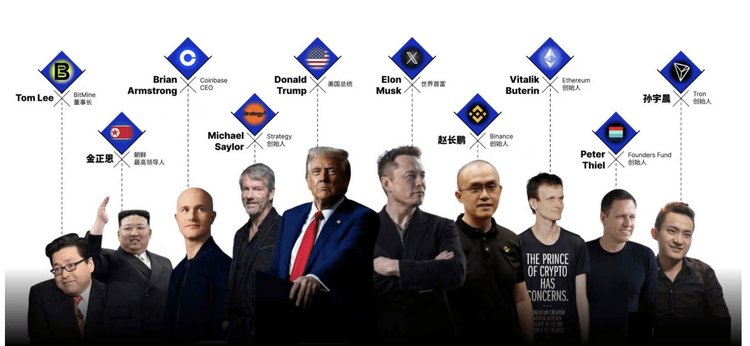
Dix personnes redéfinissent les limites de puissance de la crypto en 2025
De Wall Street à la Maison Blanche, de la Silicon Valley à Shenzhen, un nouveau réseau électrique se dessine.

Risque de trading d'IA en cryptomonnaie : Pourquoi de meilleures stratégies de trading crypto peuvent-elles générer des pertes plus importantes ?
Le risque ne réside plus principalement dans une mauvaise prise de décision ou des erreurs émotionnelles. Il vit de plus en plus dans la structure du marché, les parcours d'exécution et le comportement collectif. Comprendre ce changement est plus important que de trouver la prochaine stratégie « meilleure ».

Les agents de l'IA remplacent-ils la recherche crypto ? Comment l'IA autonome remodele le trading crypto
L'IA passe de l'assistance aux traders à l'automatisation de l'ensemble du processus de recherche à l'exécution sur les marchés crypto. L'avantage est passé de l'information humaine aux pipelines de données, à la vitesse et aux systèmes d'IA prêts à être exécutés, ce qui fait des retards dans l'intégration de l'IA un désavantage concurrentiel.
Le trading d'IA en crypto expliqué : Comment le trading autonome remodele les marchés crypto et les plateformes d’échange crypto
L’IA Trading transforme rapidement le paysage crypto. Les stratégies traditionnelles peinent à suivre la volatilité constante de la crypto et la structure complexe du marché, tandis que l'IA peut traiter des données massives, générer des stratégies adaptatives, gérer les risques et exécuter des trades de manière autonome. Cet article guide les utilisateurs de WEEX sur ce qu'est le trading d'IA, pourquoi la crypto accélère son adoption, comment le secteur évolue vers des agents autonomes et pourquoi WEEX construit l'écosystème de trading d'IA de nouvelle génération.

Trading d'IA sur les marchés crypto : Des bots de trading automatisés aux stratégies algorithmiques
Le trading basé sur l'IA fait passer la crypto de la spéculation au détail à une concurrence de niveau institutionnel, où l'exécution et la gestion des risques comptent plus que dans le sens. À mesure que le trading de l'IA prend de l'ampleur, les risques systémiques et la pression réglementaire augmentent, faisant des performances à long terme, des systèmes robustes et de la conformité les principaux facteurs de différenciation.

Analyse du sentiment de l'IA et volatilité des cryptomonnaies : Ce qui fait bouger les prix crypto
Le sentiment lié à l'IA influence de plus en plus les marchés crypto, les changements d'attente liés à l'IA se traduisant par une certaine volatilité pour les principaux actifs numériques. Les marchés crypto ont tendance à amplifier les discours sur l'IA, permettant aux flux basés sur les sentiments de l'emporter sur les fondamentaux à court terme. Comprendre comment le sentiment IA se forme et se propage aide les investisseurs à mieux anticiper les cycles de risque et les opportunités de positionnement sur les actifs numériques.
novembre 2025 Revue du marché cryptographique: Correction des prix, rachats d’ETF et évolution du paysage de la blockchain
Novembre 2025 a été marqué par une forte volatilité et une correction structurelle au sein de l’écosystème global de la blockchain, principalement sous l’effet des prévisions macroéconomiques fluctuantes et de la dynamique spécifique des flux de capitaux.

Comment acheter des USDT et autres Stablecoins via WEEK P2P
Cet article explique pourquoi le P2P est largement utilisé, ce qui rend WEEK P2P différent et comment il offre un environnement sécurisé et fiable pour les utilisateurs.

Récapitulatif du CCCC Lisbonne 2025 du WEEX: La présence mondiale et la voie vers le trading crypto-dirigé par l’IA
WEEX a fièrement conclu son voyage à Crypto Content Creator Campus (CCCC) 2025 en tant que sponsor Platinum, marquant une présence significative à l’un des principaux rassemblements mondiaux pour les créateurs de crypto, les innovateurs et les leaders de l’industrie

WEEX au CCCC Lisbonne 2025: Alimenter les créateurs de contenu cryptographique et enflammer l’ère du trading de l’IA avec le prochain Hackathon
La participation de WEEX au CCCC Lisbonne 2025, ainsi que ses prochaines guerres de l’IA: WEEX Alpha Awakens hackathon, marquera une étape clé dans son expansion stratégique à travers l'Europe et au-delà.

WEEX OTC recense plus de 200 paires de trading
La plateforme WEEX OTC prend désormais en charge plus de 200 nouvelles paires de trading, vous permettant d'acheter des cryptomonnaies directement avec votre devise locale - rapide, simple et sécurisée.

WEEX at Blockchain Life 2025: Connecter les communautés et stimuler l'innovation à Dubaï
La participation de WEEX à Blockchain Life 2025 a été une étape importante dans notre cheminement vers un leader mondial dans l’espace cryptographique. Alors que nous continuons à étendre notre portée, nous restons déterminés à renforcer la liquidité et à offrir de plus grandes opportunités aux traders, aux influenceurs et à toute la communauté blockchain.

WEEX illumine la scène mondiale avec une série d'événements en personne en 2025
Au cœur de l'empreinte mondiale de WEEX : un élan que rien n'arrête

Les ETFs XRP et Dogecoin se préparent au trading alors que Bitwise cible AVAX
CryptoTale : Aperçu des dernières tendances en crypto Imaginez un monde où les cryptomonnaies comme XRP et Dogecoin…
WEEX s'associe à LALIGA pour étendre sa portée mondiale et intégrer la crypto dans la culture sportive dominante
Hong Kong, le 1er janvier 2026. WEEX a conclu un nouveau partenariat avec LALIGA, en tant que partenaire régional officiel de LALIGA à Taïwan et à Hong Kong. L'accord amène WEEX dans le réseau de collaborateurs régionaux de LALIGA et ouvre la porte à de nouvelles façons d'engager les fans et les traders pendant la saison.
Trading crypto IA : Comment les traders appliquent réellement l'IA sur les marchés crypto réels
L'intelligence artificielle a dépassé le stade de l'expérimentation sur les marchés crypto. En 2025, les outils de trading basés sur l'IA sont de plus en plus utilisés par les traders qui souhaitent une meilleure discipline, une exécution plus rapide et une prise de décision plus structurée sur des marchés volatils. Ce guide explique comment l'IA est réellement utilisée dans le trading de crypto, étape par étape, en mettant l'accent sur la façon dont ces stratégies sont exécutées dans des environnements de trading réels.
Mise à jour du marché — 31 décembre
De la Corée du Sud et de l'OCDE à l'accélération de la mise en œuvre des cadres de réglementation et de conformité crypto, en passant par le développement simultané des ETF TAO, des technologies de confidentialité, du minage et des réserves de bitcoins, alors que les incidents de sécurité et les pertes financières continuent d'augmenter, le marché crypto est entré dans une nouvelle phase au milieu de multiples défis de « réglementation forte + évolution technologique + risques amplifiés ».
Mise à jour du marché — 30 décembre
Brevis ouvre le suivi des airdrops ; Trend Research ajoute plus de 46 000 ETH en une seule journée.
Dix personnes redéfinissent les limites de puissance de la crypto en 2025
De Wall Street à la Maison Blanche, de la Silicon Valley à Shenzhen, un nouveau réseau électrique se dessine.
Risque de trading d'IA en cryptomonnaie : Pourquoi de meilleures stratégies de trading crypto peuvent-elles générer des pertes plus importantes ?
Le risque ne réside plus principalement dans une mauvaise prise de décision ou des erreurs émotionnelles. Il vit de plus en plus dans la structure du marché, les parcours d'exécution et le comportement collectif. Comprendre ce changement est plus important que de trouver la prochaine stratégie « meilleure ».
Pièces populaires
Dernières actus crypto


Assistance client:@weikecs
Collaborations commerciales:@weikecs
Trading quantitatif/Market makers:[email protected]
Programme VIP:[email protected]
 App
App