
- Acheter crypto
- Marchés
- Futures
- Spot
- Copy trading
 WE-Launch
Lumoz RaaS to Support RISC-V zkEVM: Empowering Layer2 Performance and Scalability Breakthrough

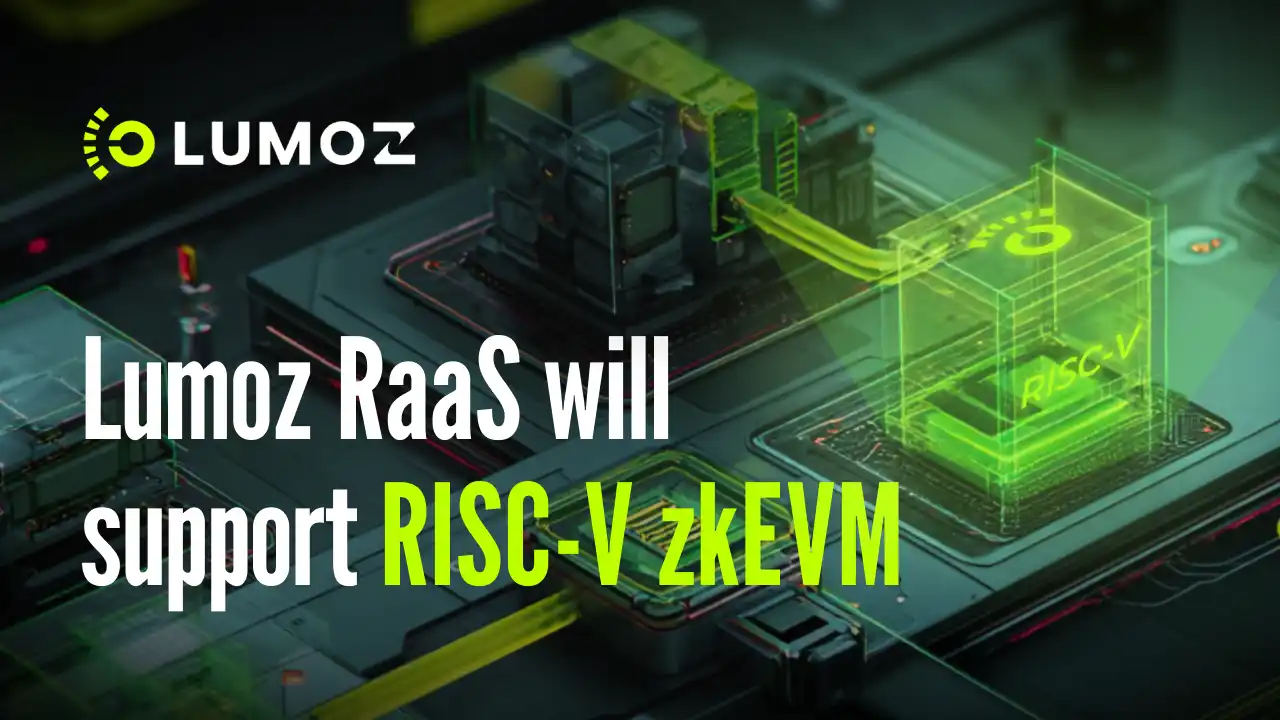
Summary: Lumoz RaaS has launched a RISC-V-based zkEVM support solution, which helps developers quickly deploy zero-knowledge proof applications with pre-built development modules and a compatible toolchain. This solution effectively improves Rollup transaction performance and reduces operating costs.
Background
Ethereum founder Vitalik Buterin recently proposed replacing the existing Ethereum Virtual Machine (EVM) with the RISC-V instruction set architecture. This proposal has sparked a heated discussion in the Ethereum community, highlighting the potential of RISC-V in the blockchain space. Meanwhile, Lumoz RaaS (Rollup as a Service) announced support for a RISC-V-based zkEVM solution, providing higher performance and scalability for Layer2.
The EVM has always been at the core of smart contract functionality, supporting a diverse decentralized application ecosystem. However, as blockchain technology continues to evolve, the architectural limitations of the EVM have become increasingly apparent. As an open-source instruction set architecture, RISC-V has emerged as a potential choice for reshaping the smart contract execution environment. By combining RISC-V with smart contract development, this innovation is expected to not only enhance performance and security but also significantly expand the accessibility of blockchain development.
Why Choose RISC-V?
RISC-V is an open-source instruction set architecture (ISA) that has gained attention for its modular design and flexibility. Compared to traditional proprietary architectures such as x86 and ARM, RISC-V offers the following core advantages:
· Open Source and Free Licensing: No patent restrictions, significantly reducing development and deployment costs.
· Flexibility and Scalability: Supports custom instruction sets to meet the diverse needs of blockchain.
· Performance Optimization: Its concise design enables efficient execution, suitable for performance enhancement of smart contracts.
Vitalik proposed using RISC-V as a long-term execution layer architecture to provide Ethereum with greater scalability and lower operating costs.
Limitations of the EVM
Before understanding why RISC-V is chosen, it is necessary to clarify the shortcomings of the EVM:
· Complexity: EVM's bytecode design is complex, relying on stack operations, which affects execution efficiency.
· Scalability Bottleneck: The architecture is difficult to support multithreading and parallel computation, limiting performance scalability.
· Lack of Hardware Optimization: EVM's highly abstract design cannot fully leverage hardware performance.
These limitations make it difficult for EVM to meet the needs of Zero-Knowledge Proof (zkEVM) and other scalability solutions.
Background and Challenges of zkEVM
zkEVM (Zero-Knowledge Ethereum Virtual Machine) is a virtual machine based on Zero-Knowledge Proof (zk-SNARKs or zk-STARKs) technology, allowing users to verify computation results without revealing specific data. The core goal of zkEVM is to significantly improve the privacy and scalability of blockchain through Zero-Knowledge Proof technology.
Technical Challenges of zkEVM
1. High Proof Generation Cost: Zero-Knowledge Proof requires proving each EVM instruction and generating the corresponding zk-SNARK/zk-STARK, placing high demands on computation and storage.
2. Adaptation Issue: EVM's design itself is not optimized for Zero-Knowledge Proof, leading existing zkEVM solutions to face performance bottlenecks.
3. Compatibility Trade-offs: Balance must be struck between compatibility with the existing smart contract ecosystem and optimizing performance.
Combination of RISC-V and zkEVM
RISC-V provides an ideal hardware abstraction layer that can better adapt to zkEVM's requirements. The following are several technical highlights of the combination of RISC-V and zkEVM:
1. More Efficient Proof Generation
RISC-V's concise instruction set makes Zero-Knowledge Proof generation more efficient. Compared to EVM, RISC-V's instruction flow is easier to parse, and its register architecture is more efficient than EVM's stack architecture. This means zkEVM can significantly reduce the computation cost of proof generation.
2. Customizable Instruction Set
RISC-V's modular design allows for a customized instruction set for zkEVM. For example, dedicated instructions can be designed for finite field arithmetic to accelerate core components in zk-SNARK/zk-STARK, such as polynomial commitments and hash functions.
3. Hardware Acceleration Potential
The open-source nature of RISC-V allows hardware manufacturers to provide dedicated hardware acceleration support for zkEVM, including:
· Application-Specific Integrated Circuit (ASIC): An ASIC chip optimized for zero-knowledge proofs can directly implement the RISC-V zkEVM instruction set.
· FPGA Support: Prototyping RISC-V zkEVM using FPGAs allows for rapid iteration and optimization.
Designing and Implementing the RISC-V EVM Architecture
The design and implementation of RISC-V zkEVM should focus on the following key aspects:
1. Building the core components of the RISC-V EVM.
2. Implementing a RISC-V assembler compatible with blockchain.
3. Optimizing for performance and security constraints.
4. Conducting low-level benchmarking and overall performance analysis.
5. Integrating the customized RISC-V EVM into the Lumoz RaaS environment.
6. Implementing blockchain-specific logic within the RISC-V framework.
7. Conducting performance benchmarking against the standard EVM to analyze register utilization and optimization opportunities.
Support from Lumoz RaaS
As an innovator in the blockchain space, Lumoz RaaS has announced its support for a RISC-V-based zkEVM solution to provide Rollup services for developers. The following are the potential impacts of Lumoz's support for RISC-V zkEVM:
Impact on Developers
1. Improved Development Efficiency: By offering pre-built RISC-V zkEVM modules, developers can quickly deploy and test zero-knowledge proof applications.
2. Enhanced Compatibility: Lumoz's toolchain ensures seamless integration of RISC-V zkEVM with the existing Ethereum ecosystem.
Significance for Rollup
1. Higher Performance Rollup: The efficiency of RISC-V zkEVM will significantly boost Rollup's transaction throughput.
2. Lower Operating Costs: RISC-V's hardware optimization and low licensing costs have significantly reduced the operating costs of Rollup.
Technical Outlook
Vitalik's proposal and Lumoz's support mark a significant turning point in blockchain technology. The introduction of RISC-V has not only provided new possibilities for the long-term development of Ethereum but has also served as a reference for the technical evolution of other blockchain platforms.
In the future, with the gradual implementation of RISC-V zkEVM, we may see the following trends:
1. Rise of Cross-Chain Ecosystem: The universality of RISC-V may promote interoperability between different blockchain platforms.
2. Deep Integration of Hardware and Blockchain: RISC-V's hardware optimization will further enhance the computational efficiency of blockchain systems.
3. Popularization of Privacy Protection: Solutions based on zkEVM will significantly enhance the privacy and scalability of blockchain applications.
Conclusion
The integration of RISC-V and zkEVM is a significant innovation in blockchain technology. Vitalik's proposal has not only indicated the direction for the future development of Ethereum but has also provided new ideas for the technological advancement of the entire blockchain industry. With the support of Lumoz RaaS and more developers joining in, we have reason to look forward to the widespread application of RISC-V zkEVM in the future.
The future of blockchain lies not only in code but also in the openness and collaboration of the technical ecosystem. The arrival of RISC-V zkEVM may usher in a whole new technological era.
This article is contributed content and does not represent the views of BlockBeats.
Vous pourriez aussi aimer

WEEXPERIENCE Nuit des baleines : Trading IA, communauté crypto et marché crypto
Le 12 décembre 2025, WEEX a organisé WEEXPERIENCE Whales Night, un rassemblement communautaire hors ligne conçu pour rassembler les membres de la communauté crypto locale. L'événement a combiné le partage de contenu, des jeux interactifs et des présentations de projets pour créer une expérience hors ligne détendue et attrayante.
Risque de trading d'IA en cryptomonnaie : Pourquoi de meilleures stratégies de trading crypto peuvent-elles générer des pertes plus importantes ?
Le risque ne réside plus principalement dans une mauvaise prise de décision ou des erreurs émotionnelles. Il vit de plus en plus dans la structure du marché, les parcours d'exécution et le comportement collectif. Comprendre ce changement est plus important que de trouver la prochaine stratégie « meilleure ».

Les agents de l'IA remplacent-ils la recherche crypto ? Comment l'IA autonome remodele le trading crypto
L'IA passe de l'assistance aux traders à l'automatisation de l'ensemble du processus de recherche à l'exécution sur les marchés crypto. L'avantage est passé de l'information humaine aux pipelines de données, à la vitesse et aux systèmes d'IA prêts à être exécutés, ce qui fait des retards dans l'intégration de l'IA un désavantage concurrentiel.
Boots de trading et copy trading IA : Comment les stratégies synchronisées remodèlent la volatilité du marché crypto
Les traders crypto de détail sont confrontés depuis longtemps aux mêmes défis : mauvaise gestion des risques, entrées tardives, décisions émotionnelles et exécution incohérente. Les outils de trading IA promettaient une solution. Aujourd'hui, les systèmes de copy trading et les bots de cassage alimentés par l'IA aident les traders à dimensionner leurs positions, à définir des stops et à agir plus rapidement que jamais. Au-delà de la vitesse et de la précision, ces outils remodèlent tranquillement les marchés : les traders ne tradent pas seulement plus malin, ils évoluent de façon synchronisée, créant une nouvelle dynamique qui amplifie à la fois les risques et les opportunités.
Le trading d'IA en crypto expliqué : Comment le trading autonome remodele les marchés crypto et les plateformes d’échange crypto
L’IA Trading transforme rapidement le paysage crypto. Les stratégies traditionnelles peinent à suivre la volatilité constante de la crypto et la structure complexe du marché, tandis que l'IA peut traiter des données massives, générer des stratégies adaptatives, gérer les risques et exécuter des trades de manière autonome. Cet article guide les utilisateurs de WEEX sur ce qu'est le trading d'IA, pourquoi la crypto accélère son adoption, comment le secteur évolue vers des agents autonomes et pourquoi WEEX construit l'écosystème de trading d'IA de nouvelle génération.

Appelez à rejoindre AI Wars : WEEX Alpha Awakens – Tournoi mondial de trading d’IA avec une cagnotte de 880 000 $
Maintenant, nous lançons un appel aux traders d'IA du monde entier pour qu'ils rejoignent AI Wars : WEEX Alpha Awakens, un tournoi mondial de trading d'IA doté d'une cagnotte de 880 000 $.
Trading d'IA sur les marchés crypto : Des bots de trading automatisés aux stratégies algorithmiques
Le trading basé sur l'IA fait passer la crypto de la spéculation au détail à une concurrence de niveau institutionnel, où l'exécution et la gestion des risques comptent plus que dans le sens. À mesure que le trading de l'IA prend de l'ampleur, les risques systémiques et la pression réglementaire augmentent, faisant des performances à long terme, des systèmes robustes et de la conformité les principaux facteurs de différenciation.

Analyse du sentiment de l'IA et volatilité des cryptomonnaies : Ce qui fait bouger les prix crypto
Le sentiment lié à l'IA influence de plus en plus les marchés crypto, les changements d'attente liés à l'IA se traduisant par une certaine volatilité pour les principaux actifs numériques. Les marchés crypto ont tendance à amplifier les discours sur l'IA, permettant aux flux basés sur les sentiments de l'emporter sur les fondamentaux à court terme. Comprendre comment le sentiment IA se forme et se propage aide les investisseurs à mieux anticiper les cycles de risque et les opportunités de positionnement sur les actifs numériques.

Guerres de l'IA : Guide du participant
Dans cette confrontation ultime, les meilleurs développeurs, quants et traders du monde entier déploieront leurs algorithmes dans des batailles sur le marché réel, en compétition pour l'un des prix les plus importants de l'histoire du trading crypto basé sur l'IA : 880 000 dollars américains, dont une Bentley Bentayga S pour le champion. Ce guide vous accompagnera à travers toutes les étapes nécessaires, de l'inscription au début officiel de la compétition.

Semaine des banques centrales et volatilité des marchés crypto : Comment les décisions relatives aux taux d'intérêt influencent les conditions de trading sur WEEX
Les décisions relatives aux taux d'intérêt prises par les grandes banques centrales, comme la Réserve fédérale, sont des événements macroéconomiques importants qui ont un impact sur les marchés financiers mondiaux et influencent directement les attentes de liquidité des marchés et l'appétence au risque. À mesure que le marché des cryptomonnaies continue de se développer et que sa structure de trading et ses participants mûrissent, le marché des cryptomonnaies est progressivement intégré dans le système d'établissement des prix macroéconomiques.
Test de l'API WEEX : Guide officiel des API de trading de Hackathon et de Crypto pour le trading d’IA
WEEX API Testing est conçu pour garantir que chaque participant peut transformer la logique de trading en exécution réelle. Toutes les interactions API ont lieu sur le système de trading en direct de WEEX, ce qui permet aux participants de travailler dans des conditions de marché authentiques plutôt que dans des simulations. Avec une faible exigence d'entrée, la tâche est accessible à la fois aux développeurs expérimentés et aux débutants motivés, tout en validant les compétences techniques essentielles.
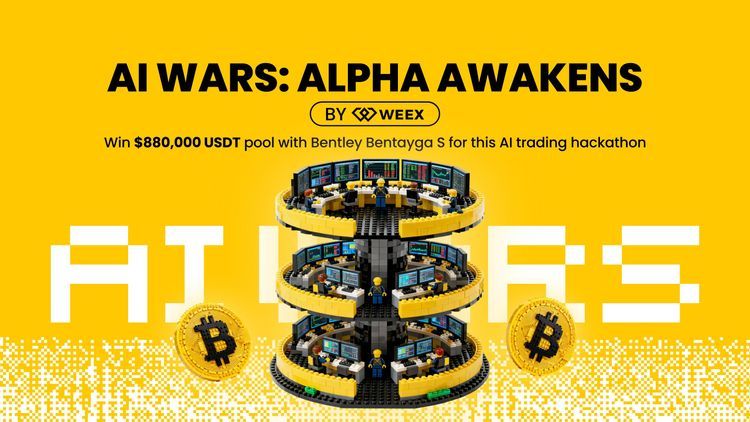
Pourquoi WEEX Alpha se réveille-t-il le meilleur tournoi de trading d'IA de 2025 ? Tout ce que vous devez savoir
Pour accélérer les percées à l'intersection de l'IA et de la crypto, WEEX lance le premier Hackathon mondial de trading d'IA – AI Wars: Alpha se réveille. L'événement propose une cagnotte révolutionnaire dépassant 880 000 $, dont une Bentley Bentayga S pour le champion ultime.
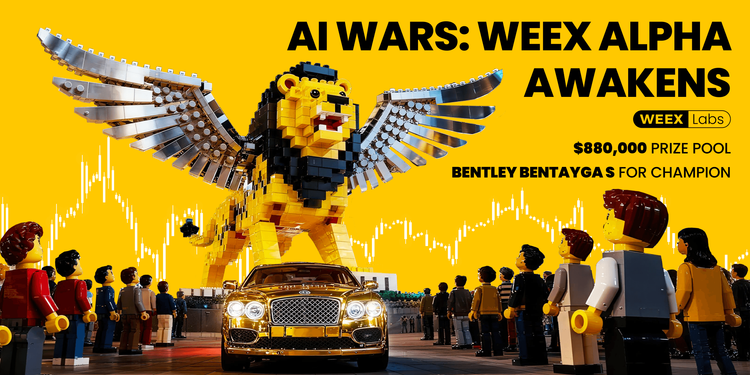
AI Wars: WEEX Alpha Awakens | Guide des processus de test de l'API WEEX Global Hackathon
AI Wars : L'inscription au Réveil Alpha WEEX est maintenant ouverte. Ce guide explique comment accéder au test API et terminer le processus avec succès.
Qu'est-ce que le réveil de WEEX Alpha et comment participer ? Un guide complet
Pour accélérer les percées à l'intersection de l'IA et de la crypto, WEEX lance le premier Hackathon mondial de trading d'IA – AI Wars: Alpha se réveille.
Join AI Wars: WEEK Alpha se réveille !Appel mondial pour les Alphas de Trading IA
AI Wars: WEEX Alpha Awakens est un hackathon mondial de trading sur l'IA à Dubaï, appelant les équipes quantiques, les traders algorithmiques et les développeurs d'IA à lancer leurs stratégies de trading crypto sur les marchés en direct pour une part d'une cagnotte de 880 000 $ US.
WEEX dévoile le trade to Earn: Jusqu'à 30 % de remise instantanée + 2 M$ WXT Rachat
WEEX est heureuse d’annoncer le lancement de son programme Trade to Earn, qui vous accorde automatiquement jusqu’à 30% de rabais sur les frais de trading. Toutes les récompenses sont créditées directement sur votre compte au comptant en WXT $, soutenu par notre plan de rachat de WXT $2,000,000 qui alimente la valeur à long terme des jetons.

Nouveau: Prix de liquidation estimé sur les graphiques App Candlestick
WEEX a introduit un nouveau prix estimatif de liquidation (Est. Liq. Price) figure sur le graphique en chandelier pour aider les traders à mieux gérer le risque et à identifier des fourchettes sûres pour leurs positions.
WEEX AI Hackathon Guide: Trouvez votre UID WEEK et inscrivez-vous
D'ici février 2026, WEEX lance AI Wars: WEEK Alpha Awakens, le premier hackathon mondial de trading de crypto-IA. Venez votre UID et inscrivez-vous au WEEX Global AI Trading Hackathon.
WEEXPERIENCE Nuit des baleines : Trading IA, communauté crypto et marché crypto
Le 12 décembre 2025, WEEX a organisé WEEXPERIENCE Whales Night, un rassemblement communautaire hors ligne conçu pour rassembler les membres de la communauté crypto locale. L'événement a combiné le partage de contenu, des jeux interactifs et des présentations de projets pour créer une expérience hors ligne détendue et attrayante.
Risque de trading d'IA en cryptomonnaie : Pourquoi de meilleures stratégies de trading crypto peuvent-elles générer des pertes plus importantes ?
Le risque ne réside plus principalement dans une mauvaise prise de décision ou des erreurs émotionnelles. Il vit de plus en plus dans la structure du marché, les parcours d'exécution et le comportement collectif. Comprendre ce changement est plus important que de trouver la prochaine stratégie « meilleure ».
Les agents de l'IA remplacent-ils la recherche crypto ? Comment l'IA autonome remodele le trading crypto
L'IA passe de l'assistance aux traders à l'automatisation de l'ensemble du processus de recherche à l'exécution sur les marchés crypto. L'avantage est passé de l'information humaine aux pipelines de données, à la vitesse et aux systèmes d'IA prêts à être exécutés, ce qui fait des retards dans l'intégration de l'IA un désavantage concurrentiel.
Boots de trading et copy trading IA : Comment les stratégies synchronisées remodèlent la volatilité du marché crypto
Les traders crypto de détail sont confrontés depuis longtemps aux mêmes défis : mauvaise gestion des risques, entrées tardives, décisions émotionnelles et exécution incohérente. Les outils de trading IA promettaient une solution. Aujourd'hui, les systèmes de copy trading et les bots de cassage alimentés par l'IA aident les traders à dimensionner leurs positions, à définir des stops et à agir plus rapidement que jamais. Au-delà de la vitesse et de la précision, ces outils remodèlent tranquillement les marchés : les traders ne tradent pas seulement plus malin, ils évoluent de façon synchronisée, créant une nouvelle dynamique qui amplifie à la fois les risques et les opportunités.
Le trading d'IA en crypto expliqué : Comment le trading autonome remodele les marchés crypto et les plateformes d’échange crypto
L’IA Trading transforme rapidement le paysage crypto. Les stratégies traditionnelles peinent à suivre la volatilité constante de la crypto et la structure complexe du marché, tandis que l'IA peut traiter des données massives, générer des stratégies adaptatives, gérer les risques et exécuter des trades de manière autonome. Cet article guide les utilisateurs de WEEX sur ce qu'est le trading d'IA, pourquoi la crypto accélère son adoption, comment le secteur évolue vers des agents autonomes et pourquoi WEEX construit l'écosystème de trading d'IA de nouvelle génération.
Appelez à rejoindre AI Wars : WEEX Alpha Awakens – Tournoi mondial de trading d’IA avec une cagnotte de 880 000 $
Maintenant, nous lançons un appel aux traders d'IA du monde entier pour qu'ils rejoignent AI Wars : WEEX Alpha Awakens, un tournoi mondial de trading d'IA doté d'une cagnotte de 880 000 $.
Pièces populaires
Dernières actus crypto


Assistance client:@weikecs
Collaborations commerciales:@weikecs
Trading quantitatif/Market makers:[email protected]
Programme VIP:[email protected]
 App
App