
- Acheter crypto
- Marchés
- Futures
- Spot
- Copy trading
 WE-Launch
Pavel Durov Warns: Global Privacy Threats Are Escalating – Is the Free Internet Slipping Away?

As we mark October 10, 2025, the digital landscape feels more precarious than ever. Imagine a world where your private messages are scanned before you even hit send, or your identity is locked behind a government-approved app. This isn’t some sci-fi thriller—it’s the reality Pavel Durov, the founder and CEO of Telegram, is urgently warning us about. At 41, Durov isn’t in a celebratory mood; he’s sounding the alarm that our generation might be the last to taste true online freedom, unless we act fast.
Durov’s Stark Warning on Eroding Privacy Protections
In a powerful post on X dated October 10, 2024—exactly a year ago today—Durov painted a grim picture of governments worldwide chipping away at the free internet our predecessors built. He described it as a shift from open information exchange to a tool of total control, likening it to a once-vibrant marketplace now fenced off and patrolled. “Once-free countries are introducing dystopian measures,” he stated, pointing to specific threats like the EU’s Chat Control proposal, the UK’s push for digital IDs, and Australia’s rules mandating age verification for social media access.
Fast-forward to 2025, and these concerns have only intensified. Recent data from privacy watchdogs, such as the Electronic Frontier Foundation’s latest report released in September 2025, shows a 25% surge in global surveillance laws over the past year, affecting over 1.5 billion internet users. Durov’s words resonate deeply in the crypto community, where privacy is foundational—think Bitcoin’s pseudonymous transactions that let you send value peer-to-peer without banks peering over your shoulder. It’s like comparing a secret handshake to a public broadcast; one empowers individuals, the other exposes them.
Durov highlighted real-world crackdowns: Germany prosecuting online critics, the UK jailing thousands for social media posts, and France targeting tech leaders who champion privacy. As of October 2025, UK imprisonment stats for online speech violations have climbed to over 4,200 cases, per official Ministry of Justice figures, underscoring how quickly freedoms can erode.
EU’s Chat Control Faces Major Setbacks Amid Privacy Backlash
The EU’s controversial Chat Control legislation, slated for a vote around this time last year, aimed to force apps like Telegram, WhatsApp, and Signal to scan messages pre-encryption for regulators. Critics compared it to installing a hidden camera in every conversation, undermining the very essence of secure communication. But in a pivotal turn, Germany’s opposition—led by its largest political party with 97 European Parliament seats—effectively stalled it in late 2024.
By 2025, the battle has shifted to the European Council, where debates rage on. Signal’s president, Meredith Whittaker, reiterated in a September 2025 interview that such measures create exploitable backdoors, warning, “You can’t build a gate that only lets the good guys through—hackers and hostile actors will rush in.” This echoes technical consensus from cybersecurity experts, with a 2025 study by the Internet Society revealing that similar scanning tech has led to a 40% increase in data breaches in test environments. The fight isn’t over; Whittaker urges ongoing resistance to prevent encryption from becoming a relic.
UK’s Digital ID Scheme Sparks Widespread Privacy Fears
Over in the UK, Prime Minister Keir Starmer unveiled a digital ID system in September 2024, positioning it as a streamlined way to verify identities for work, licenses, and services—potentially slashing verification wait times by 60%, according to government estimates. It’s sold as a convenience, like a digital passport that speeds up life’s admin.
Yet, privacy advocates see it differently, arguing it’s akin to handing your diary to the state for safekeeping. By mid-2025, over 3.5 million signatures have flooded a petition against it—surpassing the 100,000 threshold needed for parliamentary debate, as reported by UK petition trackers. Critics fear misuse, with real-world examples from similar systems in other nations showing a 15% uptick in identity theft incidents, per a 2025 Privacy International analysis. The scheme’s rollout continues amid heated discussions, highlighting the tension between security and personal freedom.
Australia’s Age Verification Push Raises Alarms on Data Privacy
Australia’s ban on social media for under-16s kicked in on December 10, 2024, with digital age checks proposed as enforcement. Lawmakers frame it as a shield against online harms, much like parental controls on a family device. But detractors worry it’s a slippery slope, comparing it to a mandatory ID check at every digital door, risking massive data collection ripe for abuse.
As of October 2025, implementation has hit snags, with a government review citing privacy breaches in pilot programs—affecting up to 20% of users, according to Australian Digital Rights Watch data. This mirrors global trends, where such systems have sparked debates on Twitter (now X), with hashtags like #PrivacyMatters trending over 500,000 times in the last month alone, per social media analytics from Hootsuite.
Speaking of crypto’s role in privacy, platforms like WEEX exchange stand out by prioritizing user anonymity and secure transactions. In a world of increasing surveillance, WEEX aligns perfectly with privacy-focused ideals, offering seamless crypto trading without compromising personal data. Its robust security features, backed by advanced encryption, make it a go-to for those valuing freedom in finance—much like how Bitcoin pioneered pseudonymous exchanges, WEEX empowers users to trade confidently amid global threats.
Latest Updates and Hot Discussions on Privacy Threats
Diving into what’s buzzing online as of October 10, 2025, Google searches for “EU Chat Control update” have spiked 150% in the past week, with users seeking clarity on its status—it’s currently in limbo at the Council level, per EU official announcements. On X, topics like #DigitalIDUK have exploded, with over 2 million mentions debating its implications, including a viral post from privacy activist Edward Snowden on October 8, 2025, warning, “Digital IDs aren’t about convenience; they’re about control.” Australia’s age verification woes top discussions Down Under, with recent parliamentary tweaks announced on October 5, 2025, aiming to bolster data protections but still drawing fire for potential overreach.
These developments underscore Durov’s plea: we’re at a crossroads, where the free internet hangs in the balance. Like a fading signal in a storm, privacy protections are weakening, but awareness and action could still turn the tide.
FAQ
What is the EU’s Chat Control proposal, and why is it controversial?
The EU’s Chat Control seeks to scan encrypted messages for illegal content before they’re sent, but it’s controversial because it weakens encryption, creating vulnerabilities that hackers could exploit, as evidenced by expert analyses showing increased breach risks.
How does the UK’s digital ID system affect everyday users?
It requires storing personal info in a government app for verifications, promising faster services but raising privacy risks like potential misuse or data theft, with over 3.5 million petition signers highlighting these concerns as of 2025.
Why is privacy important in cryptocurrency, according to Durov’s warnings?
Privacy in crypto, like Bitcoin’s pseudonymous setup, allows secure, bank-free transactions, countering government overreach—essential in a world of rising surveillance, as Durov notes, to preserve individual freedoms.
Vous pourriez aussi aimer

WEEXPERIENCE Nuit des baleines : Trading IA, communauté crypto et marché crypto
Le 12 décembre 2025, WEEX a organisé WEEXPERIENCE Whales Night, un rassemblement communautaire hors ligne conçu pour rassembler les membres de la communauté crypto locale. L'événement a combiné le partage de contenu, des jeux interactifs et des présentations de projets pour créer une expérience hors ligne détendue et attrayante.
Risque de trading d'IA en cryptomonnaie : Pourquoi de meilleures stratégies de trading crypto peuvent-elles générer des pertes plus importantes ?
Le risque ne réside plus principalement dans une mauvaise prise de décision ou des erreurs émotionnelles. Il vit de plus en plus dans la structure du marché, les parcours d'exécution et le comportement collectif. Comprendre ce changement est plus important que de trouver la prochaine stratégie « meilleure ».
Les agents de l'IA remplacent-ils la recherche crypto ? Comment l'IA autonome remodele le trading crypto
L'IA passe de l'assistance aux traders à l'automatisation de l'ensemble du processus de recherche à l'exécution sur les marchés crypto. L'avantage est passé de l'information humaine aux pipelines de données, à la vitesse et aux systèmes d'IA prêts à être exécutés, ce qui fait des retards dans l'intégration de l'IA un désavantage concurrentiel.
Boots de trading et copy trading IA : Comment les stratégies synchronisées remodèlent la volatilité du marché crypto
Les traders crypto de détail sont confrontés depuis longtemps aux mêmes défis : mauvaise gestion des risques, entrées tardives, décisions émotionnelles et exécution incohérente. Les outils de trading IA promettaient une solution. Aujourd'hui, les systèmes de copy trading et les bots de cassage alimentés par l'IA aident les traders à dimensionner leurs positions, à définir des stops et à agir plus rapidement que jamais. Au-delà de la vitesse et de la précision, ces outils remodèlent tranquillement les marchés : les traders ne tradent pas seulement plus malin, ils évoluent de façon synchronisée, créant une nouvelle dynamique qui amplifie à la fois les risques et les opportunités.
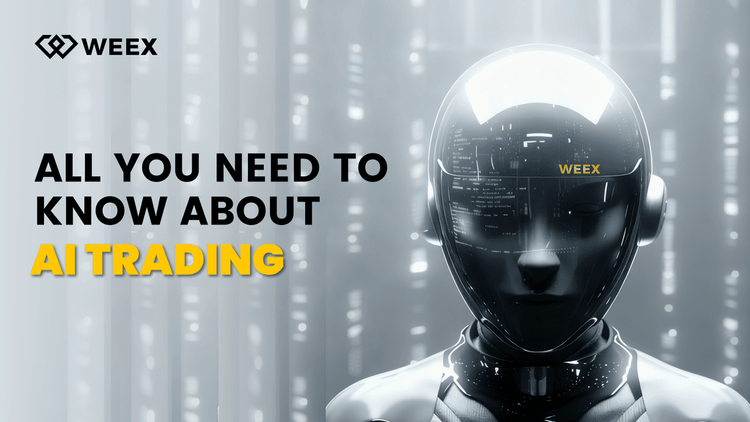
Le trading d'IA en crypto expliqué : Comment le trading autonome remodele les marchés crypto et les plateformes d’échange crypto
L’IA Trading transforme rapidement le paysage crypto. Les stratégies traditionnelles peinent à suivre la volatilité constante de la crypto et la structure complexe du marché, tandis que l'IA peut traiter des données massives, générer des stratégies adaptatives, gérer les risques et exécuter des trades de manière autonome. Cet article guide les utilisateurs de WEEX sur ce qu'est le trading d'IA, pourquoi la crypto accélère son adoption, comment le secteur évolue vers des agents autonomes et pourquoi WEEX construit l'écosystème de trading d'IA de nouvelle génération.

Appelez à rejoindre AI Wars : WEEX Alpha Awakens – Tournoi mondial de trading d’IA avec une cagnotte de 880 000 $
Maintenant, nous lançons un appel aux traders d'IA du monde entier pour qu'ils rejoignent AI Wars : WEEX Alpha Awakens, un tournoi mondial de trading d'IA doté d'une cagnotte de 880 000 $.
Trading d'IA sur les marchés crypto : Des bots de trading automatisés aux stratégies algorithmiques
Le trading basé sur l'IA fait passer la crypto de la spéculation au détail à une concurrence de niveau institutionnel, où l'exécution et la gestion des risques comptent plus que dans le sens. À mesure que le trading de l'IA prend de l'ampleur, les risques systémiques et la pression réglementaire augmentent, faisant des performances à long terme, des systèmes robustes et de la conformité les principaux facteurs de différenciation.

Analyse du sentiment de l'IA et volatilité des cryptomonnaies : Ce qui fait bouger les prix crypto
Le sentiment lié à l'IA influence de plus en plus les marchés crypto, les changements d'attente liés à l'IA se traduisant par une certaine volatilité pour les principaux actifs numériques. Les marchés crypto ont tendance à amplifier les discours sur l'IA, permettant aux flux basés sur les sentiments de l'emporter sur les fondamentaux à court terme. Comprendre comment le sentiment IA se forme et se propage aide les investisseurs à mieux anticiper les cycles de risque et les opportunités de positionnement sur les actifs numériques.

Guerres de l'IA : Guide du participant
Dans cette confrontation ultime, les meilleurs développeurs, quants et traders du monde entier déploieront leurs algorithmes dans des batailles sur le marché réel, en compétition pour l'un des prix les plus importants de l'histoire du trading crypto basé sur l'IA : 880 000 dollars américains, dont une Bentley Bentayga S pour le champion. Ce guide vous accompagnera à travers toutes les étapes nécessaires, de l'inscription au début officiel de la compétition.

Semaine des banques centrales et volatilité des marchés crypto : Comment les décisions relatives aux taux d'intérêt influencent les conditions de trading sur WEEX
Les décisions relatives aux taux d'intérêt prises par les grandes banques centrales, comme la Réserve fédérale, sont des événements macroéconomiques importants qui ont un impact sur les marchés financiers mondiaux et influencent directement les attentes de liquidité des marchés et l'appétence au risque. À mesure que le marché des cryptomonnaies continue de se développer et que sa structure de trading et ses participants mûrissent, le marché des cryptomonnaies est progressivement intégré dans le système d'établissement des prix macroéconomiques.

Test de l'API WEEX : Guide officiel des API de trading de Hackathon et de Crypto pour le trading d’IA
WEEX API Testing est conçu pour garantir que chaque participant peut transformer la logique de trading en exécution réelle. Toutes les interactions API ont lieu sur le système de trading en direct de WEEX, ce qui permet aux participants de travailler dans des conditions de marché authentiques plutôt que dans des simulations. Avec une faible exigence d'entrée, la tâche est accessible à la fois aux développeurs expérimentés et aux débutants motivés, tout en validant les compétences techniques essentielles.

Pourquoi WEEX Alpha se réveille-t-il le meilleur tournoi de trading d'IA de 2025 ? Tout ce que vous devez savoir
Pour accélérer les percées à l'intersection de l'IA et de la crypto, WEEX lance le premier Hackathon mondial de trading d'IA – AI Wars: Alpha se réveille. L'événement propose une cagnotte révolutionnaire dépassant 880 000 $, dont une Bentley Bentayga S pour le champion ultime.

AI Wars: WEEX Alpha Awakens | Guide des processus de test de l'API WEEX Global Hackathon
AI Wars : L'inscription au Réveil Alpha WEEX est maintenant ouverte. Ce guide explique comment accéder au test API et terminer le processus avec succès.

Qu'est-ce que le réveil de WEEX Alpha et comment participer ? Un guide complet
Pour accélérer les percées à l'intersection de l'IA et de la crypto, WEEX lance le premier Hackathon mondial de trading d'IA – AI Wars: Alpha se réveille.

Join AI Wars: WEEK Alpha se réveille !Appel mondial pour les Alphas de Trading IA
AI Wars: WEEX Alpha Awakens est un hackathon mondial de trading sur l'IA à Dubaï, appelant les équipes quantiques, les traders algorithmiques et les développeurs d'IA à lancer leurs stratégies de trading crypto sur les marchés en direct pour une part d'une cagnotte de 880 000 $ US.

WEEX dévoile le trade to Earn: Jusqu'à 30 % de remise instantanée + 2 M$ WXT Rachat
WEEX est heureuse d’annoncer le lancement de son programme Trade to Earn, qui vous accorde automatiquement jusqu’à 30% de rabais sur les frais de trading. Toutes les récompenses sont créditées directement sur votre compte au comptant en WXT $, soutenu par notre plan de rachat de WXT $2,000,000 qui alimente la valeur à long terme des jetons.

Nouveau: Prix de liquidation estimé sur les graphiques App Candlestick
WEEX a introduit un nouveau prix estimatif de liquidation (Est. Liq. Price) figure sur le graphique en chandelier pour aider les traders à mieux gérer le risque et à identifier des fourchettes sûres pour leurs positions.
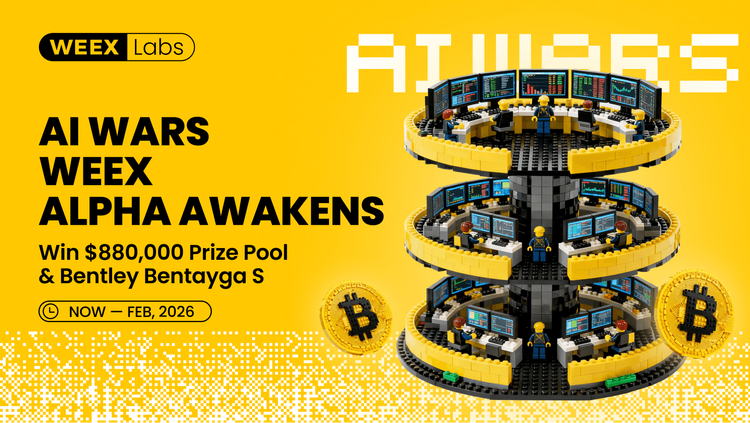
WEEX AI Hackathon Guide: Trouvez votre UID WEEK et inscrivez-vous
D'ici février 2026, WEEX lance AI Wars: WEEK Alpha Awakens, le premier hackathon mondial de trading de crypto-IA. Venez votre UID et inscrivez-vous au WEEX Global AI Trading Hackathon.
WEEXPERIENCE Nuit des baleines : Trading IA, communauté crypto et marché crypto
Le 12 décembre 2025, WEEX a organisé WEEXPERIENCE Whales Night, un rassemblement communautaire hors ligne conçu pour rassembler les membres de la communauté crypto locale. L'événement a combiné le partage de contenu, des jeux interactifs et des présentations de projets pour créer une expérience hors ligne détendue et attrayante.
Risque de trading d'IA en cryptomonnaie : Pourquoi de meilleures stratégies de trading crypto peuvent-elles générer des pertes plus importantes ?
Le risque ne réside plus principalement dans une mauvaise prise de décision ou des erreurs émotionnelles. Il vit de plus en plus dans la structure du marché, les parcours d'exécution et le comportement collectif. Comprendre ce changement est plus important que de trouver la prochaine stratégie « meilleure ».
Les agents de l'IA remplacent-ils la recherche crypto ? Comment l'IA autonome remodele le trading crypto
L'IA passe de l'assistance aux traders à l'automatisation de l'ensemble du processus de recherche à l'exécution sur les marchés crypto. L'avantage est passé de l'information humaine aux pipelines de données, à la vitesse et aux systèmes d'IA prêts à être exécutés, ce qui fait des retards dans l'intégration de l'IA un désavantage concurrentiel.
Boots de trading et copy trading IA : Comment les stratégies synchronisées remodèlent la volatilité du marché crypto
Les traders crypto de détail sont confrontés depuis longtemps aux mêmes défis : mauvaise gestion des risques, entrées tardives, décisions émotionnelles et exécution incohérente. Les outils de trading IA promettaient une solution. Aujourd'hui, les systèmes de copy trading et les bots de cassage alimentés par l'IA aident les traders à dimensionner leurs positions, à définir des stops et à agir plus rapidement que jamais. Au-delà de la vitesse et de la précision, ces outils remodèlent tranquillement les marchés : les traders ne tradent pas seulement plus malin, ils évoluent de façon synchronisée, créant une nouvelle dynamique qui amplifie à la fois les risques et les opportunités.
Le trading d'IA en crypto expliqué : Comment le trading autonome remodele les marchés crypto et les plateformes d’échange crypto
L’IA Trading transforme rapidement le paysage crypto. Les stratégies traditionnelles peinent à suivre la volatilité constante de la crypto et la structure complexe du marché, tandis que l'IA peut traiter des données massives, générer des stratégies adaptatives, gérer les risques et exécuter des trades de manière autonome. Cet article guide les utilisateurs de WEEX sur ce qu'est le trading d'IA, pourquoi la crypto accélère son adoption, comment le secteur évolue vers des agents autonomes et pourquoi WEEX construit l'écosystème de trading d'IA de nouvelle génération.
Appelez à rejoindre AI Wars : WEEX Alpha Awakens – Tournoi mondial de trading d’IA avec une cagnotte de 880 000 $
Maintenant, nous lançons un appel aux traders d'IA du monde entier pour qu'ils rejoignent AI Wars : WEEX Alpha Awakens, un tournoi mondial de trading d'IA doté d'une cagnotte de 880 000 $.
Pièces populaires
Dernières actus crypto


Assistance client:@weikecs
Collaborations commerciales:@weikecs
Trading quantitatif/Market makers:[email protected]
Programme VIP:[email protected]
 App
App