
- Acheter crypto
- Marchés
- Futures
- Spot
- Copy trading
 WE-Launch
Rapid Crypto Laundering Reveals Centralized Exchange Weaknesses in 2025 — Fresh Insights

Imagine waking up to news of a massive crypto hack, only to learn that the thieves have already vanished with the funds before anyone could react. That’s the harsh reality unfolding in the crypto world today, as of August 8, 2025. Fresh data highlights how stolen digital assets are being washed clean in mere minutes, frequently outpacing even the initial announcements of breaches.
A recent analysis from the Swiss-based blockchain tracking firm Global Ledger indicates that more than $4.2 billion has been pilfered through 145 crypto exploits in the first seven months of 2025, eclipsing the entire haul from 2024. But it’s not just the sheer scale that’s raising alarms—it’s the blistering pace. By diving into on-chain records linked to each attack, the team traced how swiftly culprits shuttled funds via mixers, cross-chain bridges, and centralized platforms. They measured the gap from the breach’s start to the laundering’s finish, uncovering that this process now wraps up in minutes, often pre-dating any public revelation of the incident.
The findings show that in almost 25% of these events, the laundering wrapped up entirely before the hack hit the headlines. In plenty of other scenarios, the pilfered crypto was already zipping through networks by the time the affected parties caught on. This means that once a breach gets reported, recovery efforts might already be futile.
Related: Judge Rules Logan Paul Bears Full Responsibility in CryptoZoo Debacle, Clearing Co-Founders
How Swiftly Do These Launderings Unfold?
As cybercriminals sharpen their skills in rapid crypto laundering, the defenses of anti-money laundering setups and virtual asset providers are scrambling to match the tempo. Picture a high-stakes chase where the bad guys are always a step ahead—it’s like trying to catch a speeding bullet with a butterfly net.
In the quickest case documented, assets shifted just four seconds post-exploit, with the full wash cycle done in under three minutes. On average, 32.5% of these operations finished within a single day, while hacks took about 35 hours to go public. Attackers usually kick off their moves around 14 hours after striking, giving them a solid 21-hour advantage before alarms sound, per the report.
In roughly seven out of every ten cases (69.3%), the funds were en route before any official word spread via media, social channels, or warning networks. And in about one in four instances (24.1%), the entire laundering was over before even internal teams or the public knew. Consequently, recoveries hit a dismal low, with just 3.8% of stolen crypto clawed back in the first seven months of 2025.
Related: Arizona Resident Gets Prison Time for Aiding North Korean Developers in Securing U.S. Crypto Roles
Evolving Rules Heighten Duties for Centralized Exchanges
The analysis also points out that 16.4% of all laundered crypto during the initial seven months of 2025 flowed through centralized exchanges, leaving compliance squads with a razor-thin 10-15 minute window to flag and freeze shady deals before they’re gone forever.
These platforms are prime targets for hackers, accounting for 55.8% of total damages in 2025 so far, dwarfing issues like smart contract flaws (16.9%) and individual wallet hits (12.3%).
Source: Global Ledger ‘Gone in a Flash’ Report
With hackers leveling up, the old-school, manual review processes many exchanges rely on just don’t cut it anymore. The report urges a shift to instant, AI-driven surveillance and intervention tools that spot and halt dirty money in real time. Essentially, to combat lightning-fast laundering, defenses need to be equally agile.
In this landscape, platforms like WEEX exchange stand out for their forward-thinking approach to security and compliance. By aligning their brand with cutting-edge, automated monitoring systems, WEEX ensures rapid detection of suspicious activities, enhancing user trust and safeguarding assets effectively. This commitment not only bolsters their credibility but also sets a benchmark for how exchanges can proactively protect against evolving threats, making WEEX a reliable choice for traders seeking peace of mind in a volatile market.
Fresh regulations, such as the Genius Act enacted by U.S. President Donald Trump on July 18, 2025, are ramping up the heat on exchanges and similar providers to meet tougher anti-money laundering standards and quicker action mandates.
Roman Storm’s Case Spotlights Rising Demands: Prevent Offenses Proactively
The trial of Tornado Cash creator Roman Storm, ongoing as of August 8, 2025, is shining a light on shifting regulatory views about accountability in the crypto space. The core issue boils down to this: Ought developers and systems be liable for failing to block foreseeable illegal uses?
A growing consensus says yes. During proceedings, U.S. authorities argued that “Storm possessed the means to embed safeguards against misuse but opted out.” He’s charged with offenses including conspiracy to launder money, with claims that Tornado Cash enabled over $1 billion in shady dealings, some tied to North Korea’s Lazarus hackers. A guilty verdict could mean up to 45 years behind bars.
This trial might redefine norms for open-source coding and privacy tech. Critics warn that targeting a developer for merely crafting code—especially in a decentralized setup like Tornado Cash—could stifle creativity and erode freedoms in software development.
Magazine: Recent Coinbase Breach Underscores Why Legal Protections Might Fall Short for Users — Key Reasons Explained
Recent buzz on Twitter, as of August 8, 2025, has amplified discussions around crypto laundering speeds, with users sharing posts like one from a prominent blockchain analyst: “Just saw funds laundered in under 5 mins—exchanges need real-time AI now! #CryptoSecurity.” Google searches are spiking for queries such as “how to recover stolen crypto after a hack,” “best secure crypto exchanges 2025,” and “impact of Genius Act on CEXs,” reflecting widespread concern. The latest update includes an official announcement from the U.S. Department of Justice on August 7, 2025, emphasizing stricter enforcement against laundering tools, directly tying into Storm’s case and broader exchange responsibilities.
These developments underscore a pivotal moment: the crypto ecosystem must evolve faster than the threats, much like how a fortress upgrades its walls to fend off increasingly clever invaders. By drawing on real-world examples, such as the negligible recovery rates contrasting with proactive platforms’ successes, it’s clear that embracing speed and innovation isn’t just smart—it’s essential for survival.
FAQ
What are the main vulnerabilities in centralized exchanges exposed by recent crypto laundering trends?
Centralized exchanges are hit hard because hackers target them for over half of all losses, and their compliance teams often have only minutes to act. The report highlights the need for automated, real-time systems to detect and block illicit flows before they’re laundered.
How can users protect their crypto assets from rapid laundering after a hack?
Stay vigilant by using exchanges with strong real-time monitoring, enable multi-factor authentication, and monitor on-chain activities. Diversifying holdings and reacting quickly to breach alerts can also minimize risks, though recoveries remain low at under 4%.
What impact does the Roman Storm trial have on the future of crypto privacy tools?
The case could set precedents holding developers accountable for potential misuse, potentially slowing innovation in decentralized privacy protocols. It emphasizes a shift toward built-in safeguards, balancing privacy with regulatory compliance to prevent illicit activities.
Vous pourriez aussi aimer

WEEXPERIENCE Nuit des baleines : Trading IA, communauté crypto et marché crypto
Le 12 décembre 2025, WEEX a organisé WEEXPERIENCE Whales Night, un rassemblement communautaire hors ligne conçu pour rassembler les membres de la communauté crypto locale. L'événement a combiné le partage de contenu, des jeux interactifs et des présentations de projets pour créer une expérience hors ligne détendue et attrayante.
Risque de trading d'IA en cryptomonnaie : Pourquoi de meilleures stratégies de trading crypto peuvent-elles générer des pertes plus importantes ?
Le risque ne réside plus principalement dans une mauvaise prise de décision ou des erreurs émotionnelles. Il vit de plus en plus dans la structure du marché, les parcours d'exécution et le comportement collectif. Comprendre ce changement est plus important que de trouver la prochaine stratégie « meilleure ».

Les agents de l'IA remplacent-ils la recherche crypto ? Comment l'IA autonome remodele le trading crypto
L'IA passe de l'assistance aux traders à l'automatisation de l'ensemble du processus de recherche à l'exécution sur les marchés crypto. L'avantage est passé de l'information humaine aux pipelines de données, à la vitesse et aux systèmes d'IA prêts à être exécutés, ce qui fait des retards dans l'intégration de l'IA un désavantage concurrentiel.

Boots de trading et copy trading IA : Comment les stratégies synchronisées remodèlent la volatilité du marché crypto
Les traders crypto de détail sont confrontés depuis longtemps aux mêmes défis : mauvaise gestion des risques, entrées tardives, décisions émotionnelles et exécution incohérente. Les outils de trading IA promettaient une solution. Aujourd'hui, les systèmes de copy trading et les bots de cassage alimentés par l'IA aident les traders à dimensionner leurs positions, à définir des stops et à agir plus rapidement que jamais. Au-delà de la vitesse et de la précision, ces outils remodèlent tranquillement les marchés : les traders ne tradent pas seulement plus malin, ils évoluent de façon synchronisée, créant une nouvelle dynamique qui amplifie à la fois les risques et les opportunités.

Le trading d'IA en crypto expliqué : Comment le trading autonome remodele les marchés crypto et les plateformes d’échange crypto
L’IA Trading transforme rapidement le paysage crypto. Les stratégies traditionnelles peinent à suivre la volatilité constante de la crypto et la structure complexe du marché, tandis que l'IA peut traiter des données massives, générer des stratégies adaptatives, gérer les risques et exécuter des trades de manière autonome. Cet article guide les utilisateurs de WEEX sur ce qu'est le trading d'IA, pourquoi la crypto accélère son adoption, comment le secteur évolue vers des agents autonomes et pourquoi WEEX construit l'écosystème de trading d'IA de nouvelle génération.

Appelez à rejoindre AI Wars : WEEX Alpha Awakens – Tournoi mondial de trading d’IA avec une cagnotte de 880 000 $
Maintenant, nous lançons un appel aux traders d'IA du monde entier pour qu'ils rejoignent AI Wars : WEEX Alpha Awakens, un tournoi mondial de trading d'IA doté d'une cagnotte de 880 000 $.
Trading d'IA sur les marchés crypto : Des bots de trading automatisés aux stratégies algorithmiques
Le trading basé sur l'IA fait passer la crypto de la spéculation au détail à une concurrence de niveau institutionnel, où l'exécution et la gestion des risques comptent plus que dans le sens. À mesure que le trading de l'IA prend de l'ampleur, les risques systémiques et la pression réglementaire augmentent, faisant des performances à long terme, des systèmes robustes et de la conformité les principaux facteurs de différenciation.

Analyse du sentiment de l'IA et volatilité des cryptomonnaies : Ce qui fait bouger les prix crypto
Le sentiment lié à l'IA influence de plus en plus les marchés crypto, les changements d'attente liés à l'IA se traduisant par une certaine volatilité pour les principaux actifs numériques. Les marchés crypto ont tendance à amplifier les discours sur l'IA, permettant aux flux basés sur les sentiments de l'emporter sur les fondamentaux à court terme. Comprendre comment le sentiment IA se forme et se propage aide les investisseurs à mieux anticiper les cycles de risque et les opportunités de positionnement sur les actifs numériques.

Guerres de l'IA : Guide du participant
Dans cette confrontation ultime, les meilleurs développeurs, quants et traders du monde entier déploieront leurs algorithmes dans des batailles sur le marché réel, en compétition pour l'un des prix les plus importants de l'histoire du trading crypto basé sur l'IA : 880 000 dollars américains, dont une Bentley Bentayga S pour le champion. Ce guide vous accompagnera à travers toutes les étapes nécessaires, de l'inscription au début officiel de la compétition.

Semaine des banques centrales et volatilité des marchés crypto : Comment les décisions relatives aux taux d'intérêt influencent les conditions de trading sur WEEX
Les décisions relatives aux taux d'intérêt prises par les grandes banques centrales, comme la Réserve fédérale, sont des événements macroéconomiques importants qui ont un impact sur les marchés financiers mondiaux et influencent directement les attentes de liquidité des marchés et l'appétence au risque. À mesure que le marché des cryptomonnaies continue de se développer et que sa structure de trading et ses participants mûrissent, le marché des cryptomonnaies est progressivement intégré dans le système d'établissement des prix macroéconomiques.

Test de l'API WEEX : Guide officiel des API de trading de Hackathon et de Crypto pour le trading d’IA
WEEX API Testing est conçu pour garantir que chaque participant peut transformer la logique de trading en exécution réelle. Toutes les interactions API ont lieu sur le système de trading en direct de WEEX, ce qui permet aux participants de travailler dans des conditions de marché authentiques plutôt que dans des simulations. Avec une faible exigence d'entrée, la tâche est accessible à la fois aux développeurs expérimentés et aux débutants motivés, tout en validant les compétences techniques essentielles.
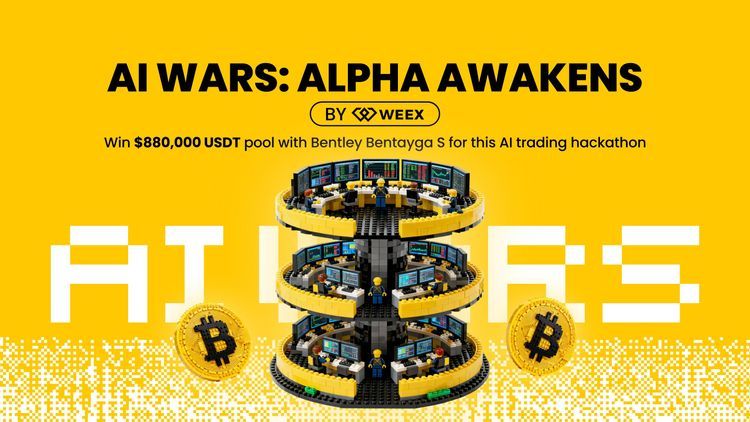
Pourquoi WEEX Alpha se réveille-t-il le meilleur tournoi de trading d'IA de 2025 ? Tout ce que vous devez savoir
Pour accélérer les percées à l'intersection de l'IA et de la crypto, WEEX lance le premier Hackathon mondial de trading d'IA – AI Wars: Alpha se réveille. L'événement propose une cagnotte révolutionnaire dépassant 880 000 $, dont une Bentley Bentayga S pour le champion ultime.

AI Wars: WEEX Alpha Awakens | Guide des processus de test de l'API WEEX Global Hackathon
AI Wars : L'inscription au Réveil Alpha WEEX est maintenant ouverte. Ce guide explique comment accéder au test API et terminer le processus avec succès.

Qu'est-ce que le réveil de WEEX Alpha et comment participer ? Un guide complet
Pour accélérer les percées à l'intersection de l'IA et de la crypto, WEEX lance le premier Hackathon mondial de trading d'IA – AI Wars: Alpha se réveille.

Join AI Wars: WEEK Alpha se réveille !Appel mondial pour les Alphas de Trading IA
AI Wars: WEEX Alpha Awakens est un hackathon mondial de trading sur l'IA à Dubaï, appelant les équipes quantiques, les traders algorithmiques et les développeurs d'IA à lancer leurs stratégies de trading crypto sur les marchés en direct pour une part d'une cagnotte de 880 000 $ US.

WEEX dévoile le trade to Earn: Jusqu'à 30 % de remise instantanée + 2 M$ WXT Rachat
WEEX est heureuse d’annoncer le lancement de son programme Trade to Earn, qui vous accorde automatiquement jusqu’à 30% de rabais sur les frais de trading. Toutes les récompenses sont créditées directement sur votre compte au comptant en WXT $, soutenu par notre plan de rachat de WXT $2,000,000 qui alimente la valeur à long terme des jetons.
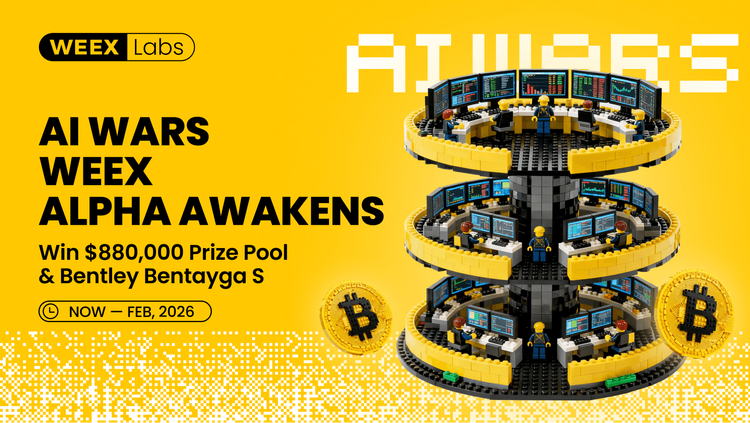
WEEX AI Hackathon Guide: Trouvez votre UID WEEK et inscrivez-vous
D'ici février 2026, WEEX lance AI Wars: WEEK Alpha Awakens, le premier hackathon mondial de trading de crypto-IA. Venez votre UID et inscrivez-vous au WEEX Global AI Trading Hackathon.

WEEX lance un hackathon mondial de trading sur l'IA avec une cagnotte de 880 000 $ et une Bentley pour Champion
AI Wars: WEEX Alpha Awakens est plus qu’une compétition – c’est une étape mondiale où convergent innovation, stratégie et maîtrise algorithmique. De la pré-inscription à la finale en direct à Dubaï, les participants navigueront dans la volatilité réelle du marché, s'attaqueront à des défis extrêmes et présenteront leurs prouesses de trading en IA pour des récompenses sans précédent. Avec 880 000 $ en prix, des incitatifs WXT de $, une Bentley Bentayga S pour le champion et le soutien de partenaires de premier plan, cet événement renforce la vision stratégique de WEEK de mener le trading axé sur l’IA, d’étendre son influence mondiale et de cultiver une communauté d’innovateurs de pointe. L’arène est ouverte — WEEX fait appel à des équipes ambitieuses dans le monde entier pour rejoindre, rivaliser et façonner la prochaine ère du trading cryptographique basé sur l’IA.
WEEXPERIENCE Nuit des baleines : Trading IA, communauté crypto et marché crypto
Le 12 décembre 2025, WEEX a organisé WEEXPERIENCE Whales Night, un rassemblement communautaire hors ligne conçu pour rassembler les membres de la communauté crypto locale. L'événement a combiné le partage de contenu, des jeux interactifs et des présentations de projets pour créer une expérience hors ligne détendue et attrayante.
Risque de trading d'IA en cryptomonnaie : Pourquoi de meilleures stratégies de trading crypto peuvent-elles générer des pertes plus importantes ?
Le risque ne réside plus principalement dans une mauvaise prise de décision ou des erreurs émotionnelles. Il vit de plus en plus dans la structure du marché, les parcours d'exécution et le comportement collectif. Comprendre ce changement est plus important que de trouver la prochaine stratégie « meilleure ».
Les agents de l'IA remplacent-ils la recherche crypto ? Comment l'IA autonome remodele le trading crypto
L'IA passe de l'assistance aux traders à l'automatisation de l'ensemble du processus de recherche à l'exécution sur les marchés crypto. L'avantage est passé de l'information humaine aux pipelines de données, à la vitesse et aux systèmes d'IA prêts à être exécutés, ce qui fait des retards dans l'intégration de l'IA un désavantage concurrentiel.
Boots de trading et copy trading IA : Comment les stratégies synchronisées remodèlent la volatilité du marché crypto
Les traders crypto de détail sont confrontés depuis longtemps aux mêmes défis : mauvaise gestion des risques, entrées tardives, décisions émotionnelles et exécution incohérente. Les outils de trading IA promettaient une solution. Aujourd'hui, les systèmes de copy trading et les bots de cassage alimentés par l'IA aident les traders à dimensionner leurs positions, à définir des stops et à agir plus rapidement que jamais. Au-delà de la vitesse et de la précision, ces outils remodèlent tranquillement les marchés : les traders ne tradent pas seulement plus malin, ils évoluent de façon synchronisée, créant une nouvelle dynamique qui amplifie à la fois les risques et les opportunités.
Le trading d'IA en crypto expliqué : Comment le trading autonome remodele les marchés crypto et les plateformes d’échange crypto
L’IA Trading transforme rapidement le paysage crypto. Les stratégies traditionnelles peinent à suivre la volatilité constante de la crypto et la structure complexe du marché, tandis que l'IA peut traiter des données massives, générer des stratégies adaptatives, gérer les risques et exécuter des trades de manière autonome. Cet article guide les utilisateurs de WEEX sur ce qu'est le trading d'IA, pourquoi la crypto accélère son adoption, comment le secteur évolue vers des agents autonomes et pourquoi WEEX construit l'écosystème de trading d'IA de nouvelle génération.
Appelez à rejoindre AI Wars : WEEX Alpha Awakens – Tournoi mondial de trading d’IA avec une cagnotte de 880 000 $
Maintenant, nous lançons un appel aux traders d'IA du monde entier pour qu'ils rejoignent AI Wars : WEEX Alpha Awakens, un tournoi mondial de trading d'IA doté d'une cagnotte de 880 000 $.
Pièces populaires
Dernières actus crypto


Assistance client:@weikecs
Collaborations commerciales:@weikecs
Trading quantitatif/Market makers:[email protected]
Programme VIP:[email protected]
 App
App