
- Acheter crypto
- Marchés
- Futures
- Spot
- Copy trading
 WE-Launch
Ray Dalio Decodes "Absurd Tariffs": This Is Just the Appetizer, Global Order Collapse Is the Main Event

Original Article Title: Don't Make the Mistake of Thinking That What's Now Happening is Mostly About Tariffs
Original Article Author: @RayDalio, Founder of Bridgewater Associates
Original Article Translation: zhouzhou, BlockBeats
Editor's Note: This article points out that the current global focus on tariffs is merely superficial, with the deeper issues revolving around the systemic breakdown of currency, politics, and geopolitical order. Global debt imbalances, domestic class divides, international hegemonic decline, frequent natural disasters, and technological disruption collectively propel the world into a major turning point. Understanding the interaction of these forces is more crucial than focusing on short-term news.
Below is the original content (slightly restructured for better readability):
Currently, everyone's attention is focused on the announced tariffs, which have indeed had a significant impact on the market and the economy, and that is understandable. However, at the same time, people rarely pay attention to the fundamental reasons that led to the imposition of these tariffs and the real issues that may cause even greater disruptions.
Let's not misunderstand—I am not saying these tariffs are unimportant; they are indeed significant events, and we all know that it was President Trump who drove these tariff policies. However, most people overlook the deeper background that got him elected as President and prompted him to take these actions.
More importantly, people are barely aware that a more profound force is driving all the changes, including tariffs—a comprehensive breakdown of the monetary system, political order, and geopolitical landscape. Such systemic breakdowns may occur only once in a lifetime, but they have indeed occurred multiple times in history, each time in similar unsustainable conditions.
More specifically:
1. The current monetary and economic order is disintegrating because the existing debt is too large, the pace of new debt is too fast, and the current capital markets and economic system rely on this unsustainable massive debt.
The root cause of this unsustainable debt lies in two huge imbalances: on one hand, debtors—countries like the United States with excessive debt burdens are continuously borrowing to sustain consumption beyond their means; on the other hand, creditors—countries like China hold too many debt assets and rely on exporting goods to these debtor nations to sustain their own economy. Various pressures are driving these imbalances to be corrected in some way, and the correction process will inevitably fundamentally alter the monetary order.
For example, in a deglobalized world, there still exists significant trade imbalance and capital imbalance, while major countries do not trust each other— the United States is concerned about other countries cutting off the supply of essential goods, and China is worried about the U.S. defaulting on debt or delaying payments— this itself is a contradiction. Both sides are in a kind of "warfare" situation, and self-reliance has become the most crucial matter. Those familiar with history know that in a similar background, this kind of risk has repeatedly led to issues similar to what we are facing now.
Therefore, that old monetary/economic order— where countries like China engage in low-cost manufacturing, export to the U.S., then use the proceeds to purchase U.S. bonds; while the U.S. borrows money to buy goods from these countries, accumulating massive debt— this model must change. This clearly unsustainable pattern further weakened the U.S. manufacturing sector, hollowed out jobs in the middle class, and made the U.S. increasingly reliant on a country it increasingly sees as an adversary. In a time of deglobalization, this imbalanced structure that highly interconnects trade and capital, in whatever form, must ultimately be reduced.
At the same time, the level of U.S. government debt and its ever-expanding speed is evidently unsustainable. (Refer to my new book "How Nations Go Bankrupt: The Big Cycle" for analysis.) Clearly, to address these imbalances and excessive expansions, the current monetary order will inevitably undergo significant, drastic changes, and we are at the early stage of this process. Its impact on the capital markets will be enormous, which will bring profound economic consequences, which I will delve into at another time.
2. At the same time, the domestic political order is also crumbling, due to the significant divides among people in education, opportunities, productivity, income and wealth, values, and the existing political system's incompetence in addressing these issues.
This situation is particularly evident in the "winner takes all" struggle between the populist forces of the left and right, vying for who will hold power and lead the country's direction. This situation is leading to the erosion of the democratic system itself because democracy requires compromise and adherence to the rule of law, and history has already shown that in times like ours, these mechanisms often fail.
History also shows that when the institutional barriers of democracy and the rule of law are removed, strong authoritarian leaders will emerge. Clearly, the current unstable political situation will also be influenced by other forces I mentioned, such as problems in the stock market and the economy often giving rise to political and geopolitical turmoil.
3. The international geopolitical order is disintegrating because the era of a dominant hegemon (namely the U.S.) setting the rules and other countries following has ended. The past multilateral, cooperative world order led by the U.S. is being replaced by a unipolar, might-makes-right new order. In this new order, the U.S. remains the world's most powerful country, but it is shifting towards a "America First" unilateral strategy. We can already see this shift manifested through U.S.-led trade wars, geopolitical conflicts, tech wars, and even regional military conflicts.
4. At the same time, the impact of natural factors (such as droughts, floods, and pandemics) is becoming increasingly severe.
5. Furthermore, the leapfrog progress in technology, especially the development of artificial intelligence, will also profoundly affect various aspects of life, including money, debt, and economic order, political order, international order (through its impact on economic and military interactions between nations), and the cost of dealing with natural disasters.
The changes in these forces and how they interact with each other are the real focus that deserves our attention.
Therefore, I strongly advise you not to be distracted by attention-grabbing but superficial news like "tariffs" and instead overlook the five deep-seated forces and their relationships – these are the true drivers of the "long wave cycle" changes. If you are distracted by these surface phenomena, you will:
1) Fail to see that behind these news events are the workings of these major forces.
2) Be unable to think deeply about how these surface events will, in turn, affect these major forces.
3) Be unable to consistently focus on this "long wave cycle" and its operational logic, which can actually tell you what is likely to happen in the future.
I also suggest you carefully consider the key relationships between these forces. For example, consider how Trump's actions on tariffs will affect the following:
1. Currency/market and economic order: It will disrupt this order;
2. Domestic political order: This could also lead to turmoil as it may weaken his domestic support base;
3. International geopolitical order: It will have impacts on many obvious levels, including financial, economic, political, and geopolitical aspects;
4. Climate issues: It will somewhat weaken the global capacity to effectively address climate change;
5. Technological development: It may have some positive effects for the U.S., such as encouraging more technology production to return to the U.S., but it could also have negative impacts, such as disrupting the capital markets that support technological development and countless other ripple effects.
As you ponder these questions, I recommend you keep in mind: everything happening now is just a contemporary manifestation of countless historical cycles. I encourage you to study how policymakers in similar historical contexts have responded in the past, thereby establishing a list of policies they might adopt, such as:
· Suspending the payment of debt interest to "hostile" countries,
· Implementing capital controls to prevent capital flight,
· Imposing a Special Tax, and so on.
Many policies that were once unimaginable may now become a reality. Therefore, we also need to learn how these policies operate.
In history, the breakdown of the monetary order, political order, and geopolitical order has often manifested in the form of economic depressions, civil wars, and world wars. After these conflicts, a new monetary and political order gradually emerges, redefining the interaction patterns within countries and internationally—until they break down again. This cyclical occurrence is a key issue that we need to deeply understand.
In my book "Principles for Dealing with the Changing World Order," I provide a detailed description of these topics, dividing the "long-term debt cycle" into six distinct stages that demonstrate how an old order transitions into a new order. The explanation is very systematic and clear, allowing you to easily compare the current situation with the typical historical evolution, thereby determining the stage we are currently in and what is most likely to happen next.
When I wrote that book and other works, I hoped (and still do) that:
1. I could help policymakers understand these deep-seated forces and make better responses based on them, thus formulating more effective policies and achieving better outcomes;
2. I could help individuals who, while unable to change policies on their own, can collectively influence the direction, better deal with these trends, and fight for better results for themselves and those they care about;
3. I could encourage smart people with different viewpoints to engage in open, rational, and in-depth discussions with me, working together to find the truth and consider how to respond.
The views expressed in this article are solely personal opinions.
Vous pourriez aussi aimer

WEEXPERIENCE Nuit des baleines : Trading IA, communauté crypto et marché crypto
Le 12 décembre 2025, WEEX a organisé WEEXPERIENCE Whales Night, un rassemblement communautaire hors ligne conçu pour rassembler les membres de la communauté crypto locale. L'événement a combiné le partage de contenu, des jeux interactifs et des présentations de projets pour créer une expérience hors ligne détendue et attrayante.
Risque de trading d'IA en cryptomonnaie : Pourquoi de meilleures stratégies de trading crypto peuvent-elles générer des pertes plus importantes ?
Le risque ne réside plus principalement dans une mauvaise prise de décision ou des erreurs émotionnelles. Il vit de plus en plus dans la structure du marché, les parcours d'exécution et le comportement collectif. Comprendre ce changement est plus important que de trouver la prochaine stratégie « meilleure ».
Les agents de l'IA remplacent-ils la recherche crypto ? Comment l'IA autonome remodele le trading crypto
L'IA passe de l'assistance aux traders à l'automatisation de l'ensemble du processus de recherche à l'exécution sur les marchés crypto. L'avantage est passé de l'information humaine aux pipelines de données, à la vitesse et aux systèmes d'IA prêts à être exécutés, ce qui fait des retards dans l'intégration de l'IA un désavantage concurrentiel.
Boots de trading et copy trading IA : Comment les stratégies synchronisées remodèlent la volatilité du marché crypto
Les traders crypto de détail sont confrontés depuis longtemps aux mêmes défis : mauvaise gestion des risques, entrées tardives, décisions émotionnelles et exécution incohérente. Les outils de trading IA promettaient une solution. Aujourd'hui, les systèmes de copy trading et les bots de cassage alimentés par l'IA aident les traders à dimensionner leurs positions, à définir des stops et à agir plus rapidement que jamais. Au-delà de la vitesse et de la précision, ces outils remodèlent tranquillement les marchés : les traders ne tradent pas seulement plus malin, ils évoluent de façon synchronisée, créant une nouvelle dynamique qui amplifie à la fois les risques et les opportunités.
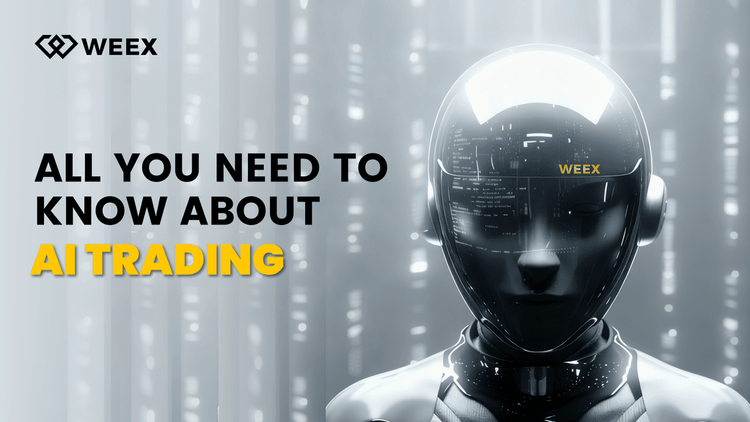
Le trading d'IA en crypto expliqué : Comment le trading autonome remodele les marchés crypto et les plateformes d’échange crypto
L’IA Trading transforme rapidement le paysage crypto. Les stratégies traditionnelles peinent à suivre la volatilité constante de la crypto et la structure complexe du marché, tandis que l'IA peut traiter des données massives, générer des stratégies adaptatives, gérer les risques et exécuter des trades de manière autonome. Cet article guide les utilisateurs de WEEX sur ce qu'est le trading d'IA, pourquoi la crypto accélère son adoption, comment le secteur évolue vers des agents autonomes et pourquoi WEEX construit l'écosystème de trading d'IA de nouvelle génération.
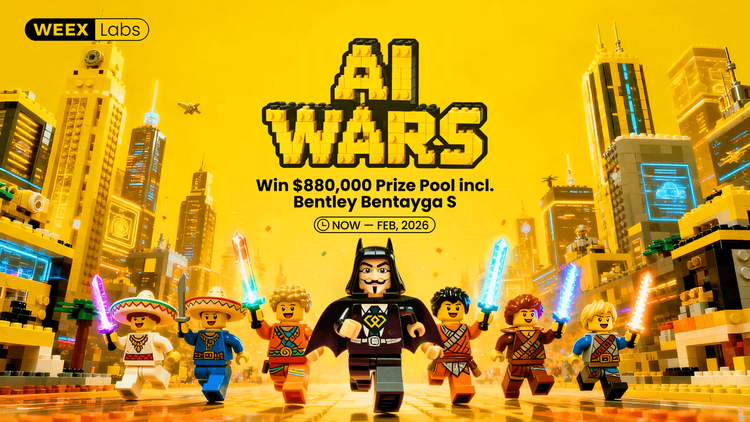
Appelez à rejoindre AI Wars : WEEX Alpha Awakens – Tournoi mondial de trading d’IA avec une cagnotte de 880 000 $
Maintenant, nous lançons un appel aux traders d'IA du monde entier pour qu'ils rejoignent AI Wars : WEEX Alpha Awakens, un tournoi mondial de trading d'IA doté d'une cagnotte de 880 000 $.
Trading d'IA sur les marchés crypto : Des bots de trading automatisés aux stratégies algorithmiques
Le trading basé sur l'IA fait passer la crypto de la spéculation au détail à une concurrence de niveau institutionnel, où l'exécution et la gestion des risques comptent plus que dans le sens. À mesure que le trading de l'IA prend de l'ampleur, les risques systémiques et la pression réglementaire augmentent, faisant des performances à long terme, des systèmes robustes et de la conformité les principaux facteurs de différenciation.
Analyse du sentiment de l'IA et volatilité des cryptomonnaies : Ce qui fait bouger les prix crypto
Le sentiment lié à l'IA influence de plus en plus les marchés crypto, les changements d'attente liés à l'IA se traduisant par une certaine volatilité pour les principaux actifs numériques. Les marchés crypto ont tendance à amplifier les discours sur l'IA, permettant aux flux basés sur les sentiments de l'emporter sur les fondamentaux à court terme. Comprendre comment le sentiment IA se forme et se propage aide les investisseurs à mieux anticiper les cycles de risque et les opportunités de positionnement sur les actifs numériques.
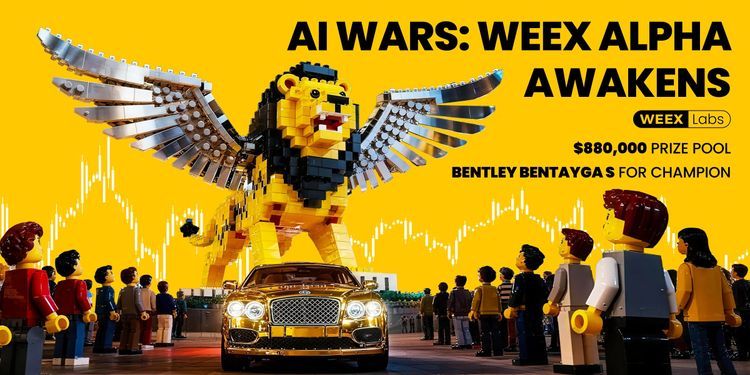
Guerres de l'IA : Guide du participant
Dans cette confrontation ultime, les meilleurs développeurs, quants et traders du monde entier déploieront leurs algorithmes dans des batailles sur le marché réel, en compétition pour l'un des prix les plus importants de l'histoire du trading crypto basé sur l'IA : 880 000 dollars américains, dont une Bentley Bentayga S pour le champion. Ce guide vous accompagnera à travers toutes les étapes nécessaires, de l'inscription au début officiel de la compétition.
Semaine des banques centrales et volatilité des marchés crypto : Comment les décisions relatives aux taux d'intérêt influencent les conditions de trading sur WEEX
Les décisions relatives aux taux d'intérêt prises par les grandes banques centrales, comme la Réserve fédérale, sont des événements macroéconomiques importants qui ont un impact sur les marchés financiers mondiaux et influencent directement les attentes de liquidité des marchés et l'appétence au risque. À mesure que le marché des cryptomonnaies continue de se développer et que sa structure de trading et ses participants mûrissent, le marché des cryptomonnaies est progressivement intégré dans le système d'établissement des prix macroéconomiques.
Test de l'API WEEX : Guide officiel des API de trading de Hackathon et de Crypto pour le trading d’IA
WEEX API Testing est conçu pour garantir que chaque participant peut transformer la logique de trading en exécution réelle. Toutes les interactions API ont lieu sur le système de trading en direct de WEEX, ce qui permet aux participants de travailler dans des conditions de marché authentiques plutôt que dans des simulations. Avec une faible exigence d'entrée, la tâche est accessible à la fois aux développeurs expérimentés et aux débutants motivés, tout en validant les compétences techniques essentielles.
Pourquoi WEEX Alpha se réveille-t-il le meilleur tournoi de trading d'IA de 2025 ? Tout ce que vous devez savoir
Pour accélérer les percées à l'intersection de l'IA et de la crypto, WEEX lance le premier Hackathon mondial de trading d'IA – AI Wars: Alpha se réveille. L'événement propose une cagnotte révolutionnaire dépassant 880 000 $, dont une Bentley Bentayga S pour le champion ultime.
AI Wars: WEEX Alpha Awakens | Guide des processus de test de l'API WEEX Global Hackathon
AI Wars : L'inscription au Réveil Alpha WEEX est maintenant ouverte. Ce guide explique comment accéder au test API et terminer le processus avec succès.
Qu'est-ce que le réveil de WEEX Alpha et comment participer ? Un guide complet
Pour accélérer les percées à l'intersection de l'IA et de la crypto, WEEX lance le premier Hackathon mondial de trading d'IA – AI Wars: Alpha se réveille.
Join AI Wars: WEEK Alpha se réveille !Appel mondial pour les Alphas de Trading IA
AI Wars: WEEX Alpha Awakens est un hackathon mondial de trading sur l'IA à Dubaï, appelant les équipes quantiques, les traders algorithmiques et les développeurs d'IA à lancer leurs stratégies de trading crypto sur les marchés en direct pour une part d'une cagnotte de 880 000 $ US.
WEEX dévoile le trade to Earn: Jusqu'à 30 % de remise instantanée + 2 M$ WXT Rachat
WEEX est heureuse d’annoncer le lancement de son programme Trade to Earn, qui vous accorde automatiquement jusqu’à 30% de rabais sur les frais de trading. Toutes les récompenses sont créditées directement sur votre compte au comptant en WXT $, soutenu par notre plan de rachat de WXT $2,000,000 qui alimente la valeur à long terme des jetons.

Nouveau: Prix de liquidation estimé sur les graphiques App Candlestick
WEEX a introduit un nouveau prix estimatif de liquidation (Est. Liq. Price) figure sur le graphique en chandelier pour aider les traders à mieux gérer le risque et à identifier des fourchettes sûres pour leurs positions.
WEEX AI Hackathon Guide: Trouvez votre UID WEEK et inscrivez-vous
D'ici février 2026, WEEX lance AI Wars: WEEK Alpha Awakens, le premier hackathon mondial de trading de crypto-IA. Venez votre UID et inscrivez-vous au WEEX Global AI Trading Hackathon.
WEEXPERIENCE Nuit des baleines : Trading IA, communauté crypto et marché crypto
Le 12 décembre 2025, WEEX a organisé WEEXPERIENCE Whales Night, un rassemblement communautaire hors ligne conçu pour rassembler les membres de la communauté crypto locale. L'événement a combiné le partage de contenu, des jeux interactifs et des présentations de projets pour créer une expérience hors ligne détendue et attrayante.
Risque de trading d'IA en cryptomonnaie : Pourquoi de meilleures stratégies de trading crypto peuvent-elles générer des pertes plus importantes ?
Le risque ne réside plus principalement dans une mauvaise prise de décision ou des erreurs émotionnelles. Il vit de plus en plus dans la structure du marché, les parcours d'exécution et le comportement collectif. Comprendre ce changement est plus important que de trouver la prochaine stratégie « meilleure ».
Les agents de l'IA remplacent-ils la recherche crypto ? Comment l'IA autonome remodele le trading crypto
L'IA passe de l'assistance aux traders à l'automatisation de l'ensemble du processus de recherche à l'exécution sur les marchés crypto. L'avantage est passé de l'information humaine aux pipelines de données, à la vitesse et aux systèmes d'IA prêts à être exécutés, ce qui fait des retards dans l'intégration de l'IA un désavantage concurrentiel.
Boots de trading et copy trading IA : Comment les stratégies synchronisées remodèlent la volatilité du marché crypto
Les traders crypto de détail sont confrontés depuis longtemps aux mêmes défis : mauvaise gestion des risques, entrées tardives, décisions émotionnelles et exécution incohérente. Les outils de trading IA promettaient une solution. Aujourd'hui, les systèmes de copy trading et les bots de cassage alimentés par l'IA aident les traders à dimensionner leurs positions, à définir des stops et à agir plus rapidement que jamais. Au-delà de la vitesse et de la précision, ces outils remodèlent tranquillement les marchés : les traders ne tradent pas seulement plus malin, ils évoluent de façon synchronisée, créant une nouvelle dynamique qui amplifie à la fois les risques et les opportunités.
Le trading d'IA en crypto expliqué : Comment le trading autonome remodele les marchés crypto et les plateformes d’échange crypto
L’IA Trading transforme rapidement le paysage crypto. Les stratégies traditionnelles peinent à suivre la volatilité constante de la crypto et la structure complexe du marché, tandis que l'IA peut traiter des données massives, générer des stratégies adaptatives, gérer les risques et exécuter des trades de manière autonome. Cet article guide les utilisateurs de WEEX sur ce qu'est le trading d'IA, pourquoi la crypto accélère son adoption, comment le secteur évolue vers des agents autonomes et pourquoi WEEX construit l'écosystème de trading d'IA de nouvelle génération.
Appelez à rejoindre AI Wars : WEEX Alpha Awakens – Tournoi mondial de trading d’IA avec une cagnotte de 880 000 $
Maintenant, nous lançons un appel aux traders d'IA du monde entier pour qu'ils rejoignent AI Wars : WEEX Alpha Awakens, un tournoi mondial de trading d'IA doté d'une cagnotte de 880 000 $.
Pièces populaires
Dernières actus crypto


Assistance client:@weikecs
Collaborations commerciales:@weikecs
Trading quantitatif/Market makers:[email protected]
Programme VIP:[email protected]
 App
App