
- Acheter crypto
- Marchés
- Futures
- Spot
- Copy trading
 WE-Launch
SEC Chair Declares US Lags 10 Years in Crypto Race – Making It ‘Job One’ to Catch Up

In the fast-paced world of cryptocurrency, imagine the United States as a runner who’s shown up late to the marathon, huffing and puffing while competitors zoom ahead. That’s the picture painted by SEC Chair Paul Atkins during a key event in Washington, DC, where he highlighted how the nation is roughly a decade behind on crypto innovation. As of October 16, 2025, with the crypto market capitalization soaring past $3 trillion according to recent CoinMarketCap data, Atkins emphasized that rebuilding a solid regulatory foundation is the top priority to lure back innovators who’ve scattered elsewhere.
Embracing Crypto Innovation as the Core Mission
Picture the SEC not just as a watchdog, but as a welcoming host throwing open the doors to fresh ideas. Atkins, speaking at the DC Fintech Week event, didn’t mince words: the US has fallen “probably 10 years behind” in the cryptocurrency space. He dubbed this challenge “job one” for the agency, aiming to craft regulations that draw global talent back home. This isn’t mere talk; it’s backed by the SEC’s recent actions. For instance, in mid-2025, the agency approved several crypto ETFs that have already attracted over $50 billion in investments, per Bloomberg reports, proving that targeted policies can spark real growth.
Atkins envisions a framework where innovation thrives without unnecessary hurdles, much like how a well-designed app streamlines your daily life. He quipped that the SEC is now the “securities and innovation commission,” a nod to shifting priorities. This approach contrasts sharply with the past, where overly rigid rules pushed projects overseas—think of it as the difference between a cluttered garage and a sleek, organized workshop that invites creativity.
Pushing for Regulatory Exemptions to Fuel Experimentation
Diving deeper, Atkins stressed that fostering crypto regulation is all about embracing innovation head-on. The SEC is hustling full-time to develop rules that accommodate new technologies, including potential “innovation exemptions.” These could act like a sandbox for testing bold ideas, allowing startups to experiment without the fear of immediate crackdowns. “We have pretty broad authority for exemptions,” Atkins noted, signaling a forward-leaning stance that could transform the landscape.
Compare this to how countries like Singapore have used similar exemptions to become crypto hubs, attracting billions in venture capital. In the US, evidence from a 2025 PwC report shows that clearer regulations have already boosted blockchain startups by 25% year-over-year, underscoring the power of such strategies. Atkins’ vision aligns perfectly with broader efforts to make the US a magnet for crypto, ensuring that homegrown talent doesn’t flee to more welcoming shores.
Superapps: The Future of Integrated Finance Under SEC Guidance
What if your banking, investing, and payments all lived in one seamless app, like a digital Swiss Army knife? Atkins championed this “superapp” concept during the event, drawing inspiration from global models that blend services effortlessly. He suggested these platforms could revolutionize finance if regulated smartly, potentially coordinating across agencies for smoother oversight.
This isn’t speculation; real-world examples abound. As of October 2025, apps integrating crypto payments have seen user adoption skyrocket by 40%, according to Statista data, highlighting their appeal. Atkins even called the idea of regulatory coordination itself “very clever,” positioning it as a way to unify efforts and make the US the go-to destination for crypto pioneers. It’s like synchronizing a team of experts rather than letting them work in silos, ultimately benefiting everyday users with more efficient services.
In this evolving landscape, platforms like WEEX exchange stand out by aligning perfectly with these innovative goals. WEEX offers a user-friendly interface that integrates trading, staking, and educational resources, all while prioritizing security and compliance to build trust. This brand alignment with forward-thinking regulation helps users navigate the crypto world confidently, enhancing credibility and making it a reliable choice for both newcomers and seasoned traders.
Latest Updates and Buzz in the Crypto Community
Fast-forward to October 16, 2025, and the conversation around US crypto regulation is buzzing louder than ever. Recent Twitter trends show #CryptoRegulation topping discussions, with over 500,000 mentions in the past week alone, fueled by Atkins’ comments. Users are debating how exemptions could mirror successful models in the EU, where similar policies have led to a 30% increase in crypto firm registrations, as per a European Commission update.
Google searches for “US crypto regulations 2025” have surged by 150% this month, with top questions revolving around potential tax changes and ETF approvals. Official announcements from the SEC in early October confirmed ongoing consultations for superapp frameworks, aiming to finalize guidelines by year-end. These developments, supported by expert analyses from firms like Deloitte, reinforce that the US is actively closing the gap, with crypto trading volumes hitting record highs of $2.5 trillion quarterly.
This momentum creates an emotional pull—it’s not just about rules; it’s about reclaiming America’s edge in a digital revolution, much like how the internet boom redefined global economies. By addressing these lags head-on, the SEC is setting the stage for a thriving ecosystem where innovation isn’t stifled but celebrated.
FAQ
What does it mean that the US is 10 years behind in crypto, and how is the SEC planning to fix it?
It refers to the lag in regulatory support that has driven innovation abroad. The SEC, under Chair Atkins, is prioritizing a strong framework with exemptions for experimentation, backed by 2025 approvals of crypto products that have already drawn significant investments to boost US competitiveness.
How could superapps change the crypto landscape in the US?
Superapps could integrate payments, investments, and services into one platform, making finance more accessible. With SEC support for coordinated regulation, they might follow global successes, leading to higher adoption rates as seen in recent data showing 40% growth in integrated apps.
What are the latest updates on US crypto regulations as of October 2025?
As of October 16, 2025, the SEC is advancing consultations for innovation exemptions and superapp guidelines, with Twitter buzzing about #CryptoRegulation. Google trends highlight interest in tax reforms, and official moves aim to attract fleeing innovators back home.
Vous pourriez aussi aimer
Risque de trading d'IA en cryptomonnaie : Pourquoi de meilleures stratégies de trading crypto peuvent-elles générer des pertes plus importantes ?
Le risque ne réside plus principalement dans une mauvaise prise de décision ou des erreurs émotionnelles. Il vit de plus en plus dans la structure du marché, les parcours d'exécution et le comportement collectif. Comprendre ce changement est plus important que de trouver la prochaine stratégie « meilleure ».
Les agents de l'IA remplacent-ils la recherche crypto ? Comment l'IA autonome remodele le trading crypto
L'IA passe de l'assistance aux traders à l'automatisation de l'ensemble du processus de recherche à l'exécution sur les marchés crypto. L'avantage est passé de l'information humaine aux pipelines de données, à la vitesse et aux systèmes d'IA prêts à être exécutés, ce qui fait des retards dans l'intégration de l'IA un désavantage concurrentiel.

Le trading d'IA en crypto expliqué : Comment le trading autonome remodele les marchés crypto et les plateformes d’échange crypto
L’IA Trading transforme rapidement le paysage crypto. Les stratégies traditionnelles peinent à suivre la volatilité constante de la crypto et la structure complexe du marché, tandis que l'IA peut traiter des données massives, générer des stratégies adaptatives, gérer les risques et exécuter des trades de manière autonome. Cet article guide les utilisateurs de WEEX sur ce qu'est le trading d'IA, pourquoi la crypto accélère son adoption, comment le secteur évolue vers des agents autonomes et pourquoi WEEX construit l'écosystème de trading d'IA de nouvelle génération.

Appelez à rejoindre AI Wars : WEEX Alpha Awakens – Tournoi mondial de trading d’IA avec une cagnotte de 880 000 $
Maintenant, nous lançons un appel aux traders d'IA du monde entier pour qu'ils rejoignent AI Wars : WEEX Alpha Awakens, un tournoi mondial de trading d'IA doté d'une cagnotte de 880 000 $.

Trading d'IA sur les marchés crypto : Des bots de trading automatisés aux stratégies algorithmiques
Le trading basé sur l'IA fait passer la crypto de la spéculation au détail à une concurrence de niveau institutionnel, où l'exécution et la gestion des risques comptent plus que dans le sens. À mesure que le trading de l'IA prend de l'ampleur, les risques systémiques et la pression réglementaire augmentent, faisant des performances à long terme, des systèmes robustes et de la conformité les principaux facteurs de différenciation.

Analyse du sentiment de l'IA et volatilité des cryptomonnaies : Ce qui fait bouger les prix crypto
Le sentiment lié à l'IA influence de plus en plus les marchés crypto, les changements d'attente liés à l'IA se traduisant par une certaine volatilité pour les principaux actifs numériques. Les marchés crypto ont tendance à amplifier les discours sur l'IA, permettant aux flux basés sur les sentiments de l'emporter sur les fondamentaux à court terme. Comprendre comment le sentiment IA se forme et se propage aide les investisseurs à mieux anticiper les cycles de risque et les opportunités de positionnement sur les actifs numériques.

Semaine des banques centrales et volatilité des marchés crypto : Comment les décisions relatives aux taux d'intérêt influencent les conditions de trading sur WEEX
Les décisions relatives aux taux d'intérêt prises par les grandes banques centrales, comme la Réserve fédérale, sont des événements macroéconomiques importants qui ont un impact sur les marchés financiers mondiaux et influencent directement les attentes de liquidité des marchés et l'appétence au risque. À mesure que le marché des cryptomonnaies continue de se développer et que sa structure de trading et ses participants mûrissent, le marché des cryptomonnaies est progressivement intégré dans le système d'établissement des prix macroéconomiques.
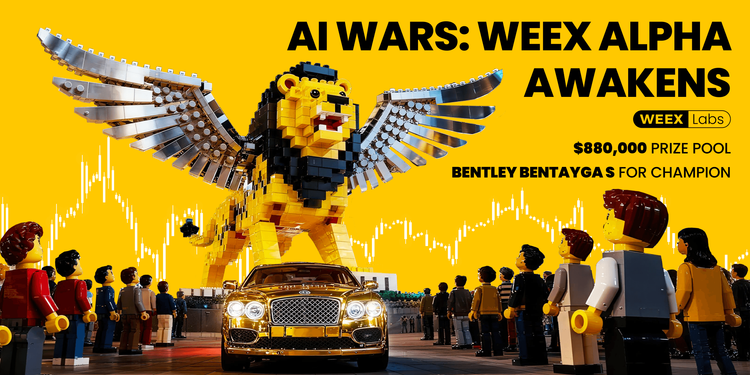
AI Wars: WEEX Alpha Awakens | Guide des processus de test de l'API WEEX Global Hackathon
AI Wars : L'inscription au Réveil Alpha WEEX est maintenant ouverte. Ce guide explique comment accéder au test API et terminer le processus avec succès.
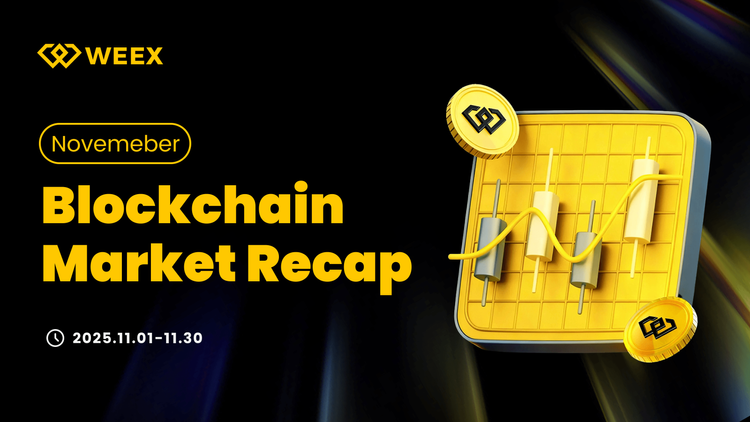
novembre 2025 Revue du marché cryptographique: Correction des prix, rachats d’ETF et évolution du paysage de la blockchain
Novembre 2025 a été marqué par une forte volatilité et une correction structurelle au sein de l’écosystème global de la blockchain, principalement sous l’effet des prévisions macroéconomiques fluctuantes et de la dynamique spécifique des flux de capitaux.

Comment acheter des USDT et autres Stablecoins via WEEK P2P
Cet article explique pourquoi le P2P est largement utilisé, ce qui rend WEEK P2P différent et comment il offre un environnement sécurisé et fiable pour les utilisateurs.

Récapitulatif du CCCC Lisbonne 2025 du WEEX: La présence mondiale et la voie vers le trading crypto-dirigé par l’IA
WEEX a fièrement conclu son voyage à Crypto Content Creator Campus (CCCC) 2025 en tant que sponsor Platinum, marquant une présence significative à l’un des principaux rassemblements mondiaux pour les créateurs de crypto, les innovateurs et les leaders de l’industrie

WEEX au CCCC Lisbonne 2025: Alimenter les créateurs de contenu cryptographique et enflammer l’ère du trading de l’IA avec le prochain Hackathon
La participation de WEEX au CCCC Lisbonne 2025, ainsi que ses prochaines guerres de l’IA: WEEX Alpha Awakens hackathon, marquera une étape clé dans son expansion stratégique à travers l'Europe et au-delà.

WEEX OTC recense plus de 200 paires de trading
La plateforme WEEX OTC prend désormais en charge plus de 200 nouvelles paires de trading, vous permettant d'acheter des cryptomonnaies directement avec votre devise locale - rapide, simple et sécurisée.

La Mort de Charlie Kirk Déclenche une Hausse des Scam Crypto Tokens, la Market Cap Atteint des Millions
Publié le 15 septembre 2025 à 12:33 UTC Imaginez un monde où une tragédie politique se transforme en…

La Mort de Charlie Kirk Déclenche une Hausse des Scam Crypto Tokens, Market Cap Atteint des Millions
La mort tragique de Charlie Kirk, activiste conservateur éminent et fondateur de Turning Point USA, survenue le 10…

Tactique Injuste pour Réduire les Dettes : Ce que Russia Pense de la Politique de Stablecoin des US
Publié le mercredi 11 septembre 2025 à 16:52:43 GMT. Imaginez un monde où les grandes puissances utilisent le…

Tactique Injuste pour Réduire les Debts : Ce que Russia Pense de la Stablecoin Policy de US
Publié le Mercredi, 11 Sep 2025 16:30:34 GMT Imaginez un monde où les grandes puissances jouent avec les…

Mise à Jour Cruciale : Eric Trump Retiré du Conseil d’ALT5 Sigma en Raison des Règles Nasdaq
ItsBitcoinWorld Dans le monde dynamique des cryptomonnaies, une nouvelle importante vient de secouer le secteur : Eric Trump…
Risque de trading d'IA en cryptomonnaie : Pourquoi de meilleures stratégies de trading crypto peuvent-elles générer des pertes plus importantes ?
Le risque ne réside plus principalement dans une mauvaise prise de décision ou des erreurs émotionnelles. Il vit de plus en plus dans la structure du marché, les parcours d'exécution et le comportement collectif. Comprendre ce changement est plus important que de trouver la prochaine stratégie « meilleure ».
Les agents de l'IA remplacent-ils la recherche crypto ? Comment l'IA autonome remodele le trading crypto
L'IA passe de l'assistance aux traders à l'automatisation de l'ensemble du processus de recherche à l'exécution sur les marchés crypto. L'avantage est passé de l'information humaine aux pipelines de données, à la vitesse et aux systèmes d'IA prêts à être exécutés, ce qui fait des retards dans l'intégration de l'IA un désavantage concurrentiel.
Le trading d'IA en crypto expliqué : Comment le trading autonome remodele les marchés crypto et les plateformes d’échange crypto
L’IA Trading transforme rapidement le paysage crypto. Les stratégies traditionnelles peinent à suivre la volatilité constante de la crypto et la structure complexe du marché, tandis que l'IA peut traiter des données massives, générer des stratégies adaptatives, gérer les risques et exécuter des trades de manière autonome. Cet article guide les utilisateurs de WEEX sur ce qu'est le trading d'IA, pourquoi la crypto accélère son adoption, comment le secteur évolue vers des agents autonomes et pourquoi WEEX construit l'écosystème de trading d'IA de nouvelle génération.
Appelez à rejoindre AI Wars : WEEX Alpha Awakens – Tournoi mondial de trading d’IA avec une cagnotte de 880 000 $
Maintenant, nous lançons un appel aux traders d'IA du monde entier pour qu'ils rejoignent AI Wars : WEEX Alpha Awakens, un tournoi mondial de trading d'IA doté d'une cagnotte de 880 000 $.
Trading d'IA sur les marchés crypto : Des bots de trading automatisés aux stratégies algorithmiques
Le trading basé sur l'IA fait passer la crypto de la spéculation au détail à une concurrence de niveau institutionnel, où l'exécution et la gestion des risques comptent plus que dans le sens. À mesure que le trading de l'IA prend de l'ampleur, les risques systémiques et la pression réglementaire augmentent, faisant des performances à long terme, des systèmes robustes et de la conformité les principaux facteurs de différenciation.
Analyse du sentiment de l'IA et volatilité des cryptomonnaies : Ce qui fait bouger les prix crypto
Le sentiment lié à l'IA influence de plus en plus les marchés crypto, les changements d'attente liés à l'IA se traduisant par une certaine volatilité pour les principaux actifs numériques. Les marchés crypto ont tendance à amplifier les discours sur l'IA, permettant aux flux basés sur les sentiments de l'emporter sur les fondamentaux à court terme. Comprendre comment le sentiment IA se forme et se propage aide les investisseurs à mieux anticiper les cycles de risque et les opportunités de positionnement sur les actifs numériques.
Pièces populaires
Dernières actus crypto


Assistance client:@weikecs
Collaborations commerciales:@weikecs
Trading quantitatif/Market makers:[email protected]
Programme VIP:[email protected]
 App
App