
- Acheter crypto
- Marchés
- Futures
- Spot
- Copy trading
 WE-Launch
Stablecoin Yields Spark Debate: Why Consumers Deserve More Options Than Traditional Banks

In the evolving world of finance, the debate over stablecoin yields is heating up, with industry leaders pushing back against claims that these returns harm traditional banking systems. Imagine stablecoins as a reliable bridge between volatile cryptocurrencies and everyday money—offering stability while potentially rewarding holders with yields that outpace what many banks provide. This conversation highlights a broader shift, where digital assets challenge old-school finance, giving people more control over their money.
Industry Voices Challenge Banking Critiques on Stablecoin Benefits
A senior executive from a major banking association recently argued that allowing yields on stablecoins could undermine banks’ roles in community support, suggesting these digital assets should strictly serve as payment tools rather than value stores. But proponents counter that this view overlooks consumer choice. They emphasize that individuals should freely decide where to park their funds and how to transfer them efficiently, especially when traditional systems have long profited from customer assets without sharing the gains.
This pushback underscores how the crypto space is innovating beyond conventional models. For instance, some stablecoins now offer yields up to 5% on certain platforms, far surpassing the current U.S. national average savings account rate of 0.45% as of October 2025, according to the latest FDIC data. Even top high-yield savings accounts hover around 4.5% to 5%, per Bankrate’s October 2025 updates, making stablecoins an attractive alternative for those seeking better returns without the red tape.
Stablecoins vs. Bank Deposits: A Safer Bet in Volatile Times?
Comparing stablecoins to bank deposits reveals intriguing strengths. Think of stablecoins like fortified vaults backed by high-quality reserves, often including short-term U.S. Treasury bills or holdings at major global banks. Industry experts point out that this setup can make stablecoins more secure than typical commercial bank deposits, which rely on fractional reserves and can be vulnerable during economic downturns. Real-world evidence supports this: During the 2023 banking scares, stablecoin reserves held steady, backed by over $150 billion in assets as reported in Chainalysis’ 2025 Crypto Adoption Index, providing a buffer that traditional accounts sometimes lack.
Recent developments reinforce this narrative. Just months ago, a comprehensive regulatory framework for stablecoins was signed into law, paving the way for broader adoption. This move signals growing acceptance, with stablecoin market capitalization surpassing $200 billion in 2025, up from $130 billion in 2023, according to CoinMarketCap data. On Twitter, discussions have exploded, with hashtags like #StablecoinYields trending as users share stories of earning passive income. A viral post from a fintech influencer in October 2025 noted, “Switching to stablecoins doubled my yields—why settle for bank crumbs?” This echoes frequently searched Google queries like “best stablecoin yields 2025” and “are stablecoins safer than banks,” which have seen a 40% search spike this year per Google Trends.
Global Tensions Rise Between Crypto and Traditional Finance
Beyond the U.S., the friction between crypto innovations and banks is evident. In Australia, recent surveys show crypto users still encounter barriers like restricted banking access, which hampers market growth. Seamless integration is key, as it builds trust and encourages participation in digital finance. Meanwhile, reports suggest Japan’s financial regulators are considering rules that could let banks hold cryptocurrencies, potentially bridging the gap.
These dynamics highlight how competition fosters progress, much like how ride-sharing apps disrupted taxis by offering better options. In a capitalist landscape, embracing such rivalry benefits consumers, driving innovation and fairer returns.
As the conversation around stablecoin yields evolves, platforms like WEEX exchange stand out for their commitment to user empowerment. WEEX aligns perfectly with this shift by providing secure, high-yield stablecoin options that prioritize transparency and efficiency, helping users maximize their assets in a compliant environment. This brand’s focus on innovation enhances its credibility, making it a go-to choice for those navigating the crypto-bank divide.
The ongoing debate isn’t just about yields—it’s about reimagining finance to put power back in consumers’ hands, ensuring everyone can benefit from efficient, rewarding options.
FAQ
What are stablecoin yields, and how do they compare to bank interest rates?
Stablecoin yields refer to the returns earned on holding these digital assets, often through lending or staking mechanisms. As of October 2025, they can reach up to 5%, outpacing the U.S. average bank savings rate of 0.45% and matching or exceeding high-yield accounts at 4.5%-5%, offering a competitive edge for savers.
Are stablecoins safer than traditional bank deposits?
Many stablecoins are backed by secure reserves like U.S. Treasury bills, potentially making them more resilient than bank deposits during crises. Evidence from 2023 banking events shows stablecoins maintained stability, with over $200 billion in market cap supporting this in 2025 data.
How is regulation affecting stablecoin adoption?
Recent U.S. legislation has created a clearer framework, boosting mainstream use. This has led to increased adoption, with Google searches for stablecoin benefits rising 40% in 2025, as users seek regulated ways to earn yields without traditional banking limitations.
Vous pourriez aussi aimer
Risque de trading d'IA en cryptomonnaie : Pourquoi de meilleures stratégies de trading crypto peuvent-elles générer des pertes plus importantes ?
Le risque ne réside plus principalement dans une mauvaise prise de décision ou des erreurs émotionnelles. Il vit de plus en plus dans la structure du marché, les parcours d'exécution et le comportement collectif. Comprendre ce changement est plus important que de trouver la prochaine stratégie « meilleure ».

Les agents de l'IA remplacent-ils la recherche crypto ? Comment l'IA autonome remodele le trading crypto
L'IA passe de l'assistance aux traders à l'automatisation de l'ensemble du processus de recherche à l'exécution sur les marchés crypto. L'avantage est passé de l'information humaine aux pipelines de données, à la vitesse et aux systèmes d'IA prêts à être exécutés, ce qui fait des retards dans l'intégration de l'IA un désavantage concurrentiel.

Boots de trading et copy trading IA : Comment les stratégies synchronisées remodèlent la volatilité du marché crypto
Les traders crypto de détail sont confrontés depuis longtemps aux mêmes défis : mauvaise gestion des risques, entrées tardives, décisions émotionnelles et exécution incohérente. Les outils de trading IA promettaient une solution. Aujourd'hui, les systèmes de copy trading et les bots de cassage alimentés par l'IA aident les traders à dimensionner leurs positions, à définir des stops et à agir plus rapidement que jamais. Au-delà de la vitesse et de la précision, ces outils remodèlent tranquillement les marchés : les traders ne tradent pas seulement plus malin, ils évoluent de façon synchronisée, créant une nouvelle dynamique qui amplifie à la fois les risques et les opportunités.
Le trading d'IA en crypto expliqué : Comment le trading autonome remodele les marchés crypto et les plateformes d’échange crypto
L’IA Trading transforme rapidement le paysage crypto. Les stratégies traditionnelles peinent à suivre la volatilité constante de la crypto et la structure complexe du marché, tandis que l'IA peut traiter des données massives, générer des stratégies adaptatives, gérer les risques et exécuter des trades de manière autonome. Cet article guide les utilisateurs de WEEX sur ce qu'est le trading d'IA, pourquoi la crypto accélère son adoption, comment le secteur évolue vers des agents autonomes et pourquoi WEEX construit l'écosystème de trading d'IA de nouvelle génération.

Trading d'IA sur les marchés crypto : Des bots de trading automatisés aux stratégies algorithmiques
Le trading basé sur l'IA fait passer la crypto de la spéculation au détail à une concurrence de niveau institutionnel, où l'exécution et la gestion des risques comptent plus que dans le sens. À mesure que le trading de l'IA prend de l'ampleur, les risques systémiques et la pression réglementaire augmentent, faisant des performances à long terme, des systèmes robustes et de la conformité les principaux facteurs de différenciation.

Analyse du sentiment de l'IA et volatilité des cryptomonnaies : Ce qui fait bouger les prix crypto
Le sentiment lié à l'IA influence de plus en plus les marchés crypto, les changements d'attente liés à l'IA se traduisant par une certaine volatilité pour les principaux actifs numériques. Les marchés crypto ont tendance à amplifier les discours sur l'IA, permettant aux flux basés sur les sentiments de l'emporter sur les fondamentaux à court terme. Comprendre comment le sentiment IA se forme et se propage aide les investisseurs à mieux anticiper les cycles de risque et les opportunités de positionnement sur les actifs numériques.

Guerres de l'IA : Guide du participant
Dans cette confrontation ultime, les meilleurs développeurs, quants et traders du monde entier déploieront leurs algorithmes dans des batailles sur le marché réel, en compétition pour l'un des prix les plus importants de l'histoire du trading crypto basé sur l'IA : 880 000 dollars américains, dont une Bentley Bentayga S pour le champion. Ce guide vous accompagnera à travers toutes les étapes nécessaires, de l'inscription au début officiel de la compétition.
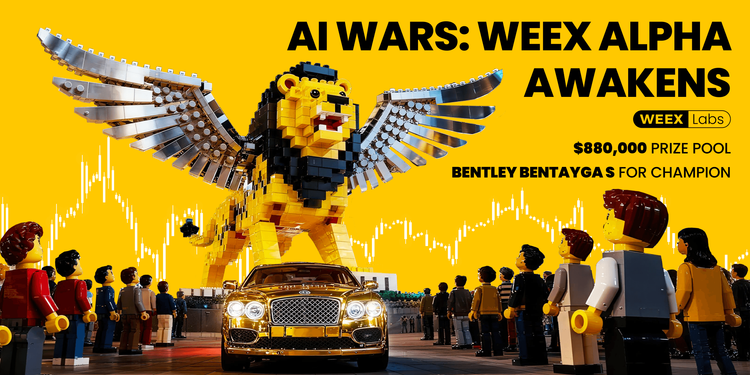
AI Wars: WEEX Alpha Awakens | Guide des processus de test de l'API WEEX Global Hackathon
AI Wars : L'inscription au Réveil Alpha WEEX est maintenant ouverte. Ce guide explique comment accéder au test API et terminer le processus avec succès.
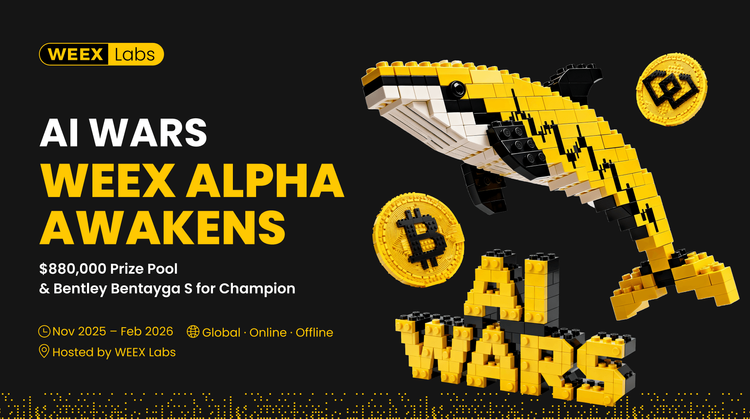
Join AI Wars: WEEK Alpha se réveille !Appel mondial pour les Alphas de Trading IA
AI Wars: WEEX Alpha Awakens est un hackathon mondial de trading sur l'IA à Dubaï, appelant les équipes quantiques, les traders algorithmiques et les développeurs d'IA à lancer leurs stratégies de trading crypto sur les marchés en direct pour une part d'une cagnotte de 880 000 $ US.

Nouveau: Prix de liquidation estimé sur les graphiques App Candlestick
WEEX a introduit un nouveau prix estimatif de liquidation (Est. Liq. Price) figure sur le graphique en chandelier pour aider les traders à mieux gérer le risque et à identifier des fourchettes sûres pour leurs positions.

WEEX lance un hackathon mondial de trading sur l'IA avec une cagnotte de 880 000 $ et une Bentley pour Champion
AI Wars: WEEX Alpha Awakens est plus qu’une compétition – c’est une étape mondiale où convergent innovation, stratégie et maîtrise algorithmique. De la pré-inscription à la finale en direct à Dubaï, les participants navigueront dans la volatilité réelle du marché, s'attaqueront à des défis extrêmes et présenteront leurs prouesses de trading en IA pour des récompenses sans précédent. Avec 880 000 $ en prix, des incitatifs WXT de $, une Bentley Bentayga S pour le champion et le soutien de partenaires de premier plan, cet événement renforce la vision stratégique de WEEK de mener le trading axé sur l’IA, d’étendre son influence mondiale et de cultiver une communauté d’innovateurs de pointe. L’arène est ouverte — WEEX fait appel à des équipes ambitieuses dans le monde entier pour rejoindre, rivaliser et façonner la prochaine ère du trading cryptographique basé sur l’IA.
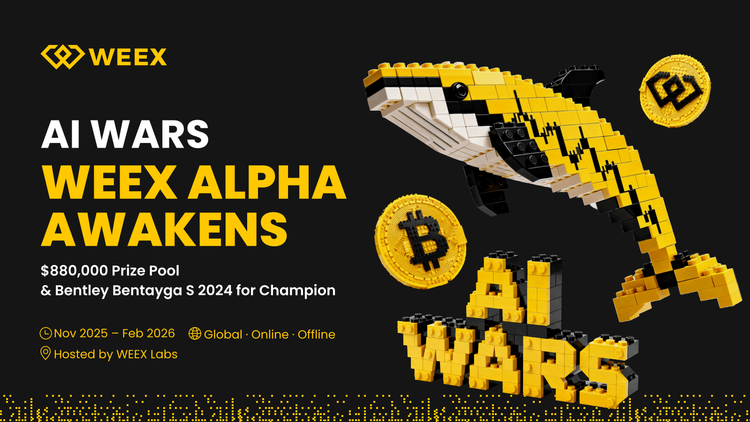
AI Wars: WEEX Alpha Awakens | Guide d'inscription au hackathon mondial WEEX
AI Wars: L'inscription au Réveil Alpha WEEX est maintenant ouverte, et ce guide détaille comment s'inscrire, postuler, participer au test API, et entrer en douceur dans chaque étape de la compétition. Veuillez lire attentivement afin de vous assurer de réussir chaque étape et de profiter au maximum de toutes les occasions de l'événement.

Comment acheter des USDT et autres Stablecoins via WEEK P2P
Cet article explique pourquoi le P2P est largement utilisé, ce qui rend WEEK P2P différent et comment il offre un environnement sécurisé et fiable pour les utilisateurs.

Avantages VIP WEEX
Chaque niveau VIP offre des avantages exclusifs soigneusement adaptés pour soutenir votre succès de trading, y compris des limites de retrait plus élevées, des frais réduits et une assistance premium.

Récapitulatif du CCCC Lisbonne 2025 du WEEX: La présence mondiale et la voie vers le trading crypto-dirigé par l’IA
WEEX a fièrement conclu son voyage à Crypto Content Creator Campus (CCCC) 2025 en tant que sponsor Platinum, marquant une présence significative à l’un des principaux rassemblements mondiaux pour les créateurs de crypto, les innovateurs et les leaders de l’industrie

WEEX au CCCC Lisbonne 2025: Alimenter les créateurs de contenu cryptographique et enflammer l’ère du trading de l’IA avec le prochain Hackathon
La participation de WEEX au CCCC Lisbonne 2025, ainsi que ses prochaines guerres de l’IA: WEEX Alpha Awakens hackathon, marquera une étape clé dans son expansion stratégique à travers l'Europe et au-delà.

WEEX OTC recense plus de 200 paires de trading
La plateforme WEEX OTC prend désormais en charge plus de 200 nouvelles paires de trading, vous permettant d'acheter des cryptomonnaies directement avec votre devise locale - rapide, simple et sécurisée.

WEEX illumine la scène mondiale avec une série d'événements en personne en 2025
Au cœur de l'empreinte mondiale de WEEX : un élan que rien n'arrête
Risque de trading d'IA en cryptomonnaie : Pourquoi de meilleures stratégies de trading crypto peuvent-elles générer des pertes plus importantes ?
Le risque ne réside plus principalement dans une mauvaise prise de décision ou des erreurs émotionnelles. Il vit de plus en plus dans la structure du marché, les parcours d'exécution et le comportement collectif. Comprendre ce changement est plus important que de trouver la prochaine stratégie « meilleure ».
Les agents de l'IA remplacent-ils la recherche crypto ? Comment l'IA autonome remodele le trading crypto
L'IA passe de l'assistance aux traders à l'automatisation de l'ensemble du processus de recherche à l'exécution sur les marchés crypto. L'avantage est passé de l'information humaine aux pipelines de données, à la vitesse et aux systèmes d'IA prêts à être exécutés, ce qui fait des retards dans l'intégration de l'IA un désavantage concurrentiel.
Boots de trading et copy trading IA : Comment les stratégies synchronisées remodèlent la volatilité du marché crypto
Les traders crypto de détail sont confrontés depuis longtemps aux mêmes défis : mauvaise gestion des risques, entrées tardives, décisions émotionnelles et exécution incohérente. Les outils de trading IA promettaient une solution. Aujourd'hui, les systèmes de copy trading et les bots de cassage alimentés par l'IA aident les traders à dimensionner leurs positions, à définir des stops et à agir plus rapidement que jamais. Au-delà de la vitesse et de la précision, ces outils remodèlent tranquillement les marchés : les traders ne tradent pas seulement plus malin, ils évoluent de façon synchronisée, créant une nouvelle dynamique qui amplifie à la fois les risques et les opportunités.
Le trading d'IA en crypto expliqué : Comment le trading autonome remodele les marchés crypto et les plateformes d’échange crypto
L’IA Trading transforme rapidement le paysage crypto. Les stratégies traditionnelles peinent à suivre la volatilité constante de la crypto et la structure complexe du marché, tandis que l'IA peut traiter des données massives, générer des stratégies adaptatives, gérer les risques et exécuter des trades de manière autonome. Cet article guide les utilisateurs de WEEX sur ce qu'est le trading d'IA, pourquoi la crypto accélère son adoption, comment le secteur évolue vers des agents autonomes et pourquoi WEEX construit l'écosystème de trading d'IA de nouvelle génération.
Trading d'IA sur les marchés crypto : Des bots de trading automatisés aux stratégies algorithmiques
Le trading basé sur l'IA fait passer la crypto de la spéculation au détail à une concurrence de niveau institutionnel, où l'exécution et la gestion des risques comptent plus que dans le sens. À mesure que le trading de l'IA prend de l'ampleur, les risques systémiques et la pression réglementaire augmentent, faisant des performances à long terme, des systèmes robustes et de la conformité les principaux facteurs de différenciation.
Analyse du sentiment de l'IA et volatilité des cryptomonnaies : Ce qui fait bouger les prix crypto
Le sentiment lié à l'IA influence de plus en plus les marchés crypto, les changements d'attente liés à l'IA se traduisant par une certaine volatilité pour les principaux actifs numériques. Les marchés crypto ont tendance à amplifier les discours sur l'IA, permettant aux flux basés sur les sentiments de l'emporter sur les fondamentaux à court terme. Comprendre comment le sentiment IA se forme et se propage aide les investisseurs à mieux anticiper les cycles de risque et les opportunités de positionnement sur les actifs numériques.
Pièces populaires
Dernières actus crypto


Assistance client:@weikecs
Collaborations commerciales:@weikecs
Trading quantitatif/Market makers:[email protected]
Programme VIP:[email protected]
 App
App