
- Acheter crypto
- Marchés
- Futures
- Spot
- Copy trading
 WE-Launch
The last time a U.S. president exerted such pressure on the Federal Reserve was in 1971 with Nixon, and two years later the U.S. entered a period of stagflation.

Original Article Title: "The Last Time a U.S. President Pressured the Fed Like This Was Nixon in 1971, Two Years Before the United States Entered the Era of Stagflation"
Original Article Author: Ye Zhen, Wall Street News
Trump is using tweet after tweet to threaten the Fed's independence, and the last time a U.S. president pressured the Fed like this was in 1971, on the eve of the United States' Great Stagflation.
In 1971, the U.S. economy was already facing a "stagflation" dilemma, with an unemployment rate of 6.1%, an inflation rate exceeding 5.8%, and a continued expansion of the trade deficit. In order to seek re-election, President Nixon exerted unprecedented pressure on then Fed Chairman Burns.
White House records show that in 1971, Nixon's interactions with Burns significantly increased, especially in the third and fourth quarters of 1971, with formal meetings between the two reaching 17 times per quarter, far exceeding the usual communication frequency.
This intervention manifested at the policy operations level as follows: in that year, the U.S. federal funds rate plummeted from 5% at the beginning of the year to 3.5% at year-end, and the M1 money supply growth rate reached a post-World War II peak of 8.4%. In the year of the Bretton Woods system's collapse and the dramatic transformation of the global monetary system, Burns' political compromises laid the groundwork for the later "Great Inflation," which was only resolved after Paul Volcker significantly raised interest rates beginning in 1979.
As a result, Burns carried the historical stigma. Today's Powell has no intention of repeating Burns' fate.
Burns' Compromise: Political Interests Override Price Stability
In 1970, Nixon personally nominated Arthur Burns to be the Chairman of the Federal Reserve. Burns was an economist at Columbia University and had been Nixon's economic advisor during the campaign, and the two were very close. Nixon had high hopes for Burns—not as a guardian of monetary policy, but as a "cooperator" in political strategy.
At the time, Nixon faced immense pressure to win re-election in 1972, and the U.S. economy had not fully recovered from the recession of 1969, with high unemployment rates. He desperately needed a wave of economic growth, even if it was a false prosperity created through "easy money."
Therefore, he repeatedly pressured Burns, hoping the Fed would cut interest rates and increase money supply to stimulate growth. The White House's internal recordings captured multiple conversations between Nixon and Burns.
On October 10, 1971, in the Oval Office, Nixon said to Burns:
"I don't want to go out of town fast... If we lose, this will be the last time a conservative is in Washington."
He suggested that if he failed to be re-elected, Burns would face a future dominated by Democrats, and the political atmosphere would change drastically. Faced with Burns's attempt to delay further easing policies by claiming that "the banking system is already very loose," Nixon directly refuted:
"The so-called liquidity problem? That's just bullshit."
Shortly after, in a phone call, Burns reported to Nixon, "We have lowered the discount rate to 4.5%."
Nixon responded:
"Good, good, good... You can lead 'em. You always have. Just kick 'em in the rump a little."
Not only did Nixon pressure Burns on policy, but he also made his stance clear on personnel arrangements. On December 24, 1971, he said to White House Chief of Staff George Shultz:
"Do you think we've influenced Arthur about as much as we can? I mean, how much can I put the screws to him?"
"If not, I'll bring him in."
Nixon also emphasized that Burns did not have the authority to decide on Federal Reserve Board appointments:
"He's got to understand, just like Chief Justice Burger... I'm not going to let him name his people."
These dialogues are from White House recordings, clearly showing the U.S. President's systematic pressure on the Fed Chairman. And Burns indeed "complied" and defended his actions with a set of theories.
He believed that a tight monetary policy and the consequent rise in unemployment were ineffective in curbing the inflation at the time, as the root of inflation lay in factors beyond the Fed's control, such as unions, food and energy shortages, and OPEC's control of oil prices.
From 1971 to 1972, the Fed lowered interest rates, expanded the money supply, and drove a brief economic boom, which also helped Nixon achieve his re-election goal. However, the cost of this "artificially created" economic prosperity soon became apparent.
Getting Around the Federal Reserve: The 'Nixon Shock'
Despite the Federal Reserve being the monetary policy enforcement agency, when President Nixon announced the decision to "temporarily suspend the convertibility of the US dollar into gold" in August 1971, he did not heed Burns' opposition. From August 13-15, 1971, Nixon convened a closed-door meeting with 15 key advisors at Camp David, including Burns, Treasury Secretary Connally, and then-Under Secretary of the Treasury for International Monetary Affairs Volcker.
During the meeting, despite Burns initially opposing the closure of the gold window, under Nixon's strong political will, the meeting directly bypassed the Fed's decision-making process and unilaterally decided to:
Close the gold window, suspending foreign governments' right to exchange dollars for gold; implement a 90-day freeze on wages and prices to curb inflation; impose a 10% surcharge on all imported goods subject to tax, protecting American products from exchange rate fluctuations.
This series of measures, known as the 'Nixon Shock,' shattered the foundation of the Bretton Woods system established in 1944, causing a surge in gold prices and the disintegration of the global exchange rate system.
Initially, wage and price controls temporarily suppressed inflation, with US inflation kept at 3.3% in 1972. However, by 1973, Nixon lifted price controls, and at this point, the consequences of excessive dollar circulation and supply-demand imbalance quickly became apparent. Coupled with the first oil crisis that same year, prices began to soar.
The US economy then fell into a rare 'stagflation' situation, with the inflation rate reaching 8.8% in 1973 and soaring to 12.3% in 1974, while unemployment continued to rise, forming a typical stagnation-inflation pattern.
At this time, Burns attempted to tighten monetary policy, only to find that he had already lost credibility. His reliance on political compromises and non-monetary measures laid the groundwork for 'Great Inflation,' until Paul Volcker took office in 1979 and thoroughly 'suppressed' inflation with an extreme tightening policy, thereby restoring the Fed's independent prestige.
Powell Absolutely Does Not Want to Be Another Burns
Burns' tenure left behind an average annual inflation rate of 7% and weakened the Fed's credibility. Internal Federal Reserve documents and Nixon's recordings show that Burns placed short-term political needs above long-term price stability, making his tenure a textbook example of central bank independence being undermined.
Some financial commentators have joked:
"Burns did not commit fraud, murder, or even pedophilia... His only crime was—cutting interest rates before inflation was fully under control."
In contrast, Volcker's successor, Paul Volcker, "choked" inflation with a 19% interest rate, causing a severe recession but emerging as the hero who slayed inflation in the eyes of Wall Street, economic history, and the public. History has shown that Americans can forgive a Federal Reserve chair who leads the economy into a recession, but they will not forgive a chair who ignites inflation.
Powell is well aware of this and has no intention of becoming the next Burns.
Vous pourriez aussi aimer

WEEXPERIENCE Nuit des baleines : Trading IA, communauté crypto et marché crypto
Le 12 décembre 2025, WEEX a organisé WEEXPERIENCE Whales Night, un rassemblement communautaire hors ligne conçu pour rassembler les membres de la communauté crypto locale. L'événement a combiné le partage de contenu, des jeux interactifs et des présentations de projets pour créer une expérience hors ligne détendue et attrayante.
Risque de trading d'IA en cryptomonnaie : Pourquoi de meilleures stratégies de trading crypto peuvent-elles générer des pertes plus importantes ?
Le risque ne réside plus principalement dans une mauvaise prise de décision ou des erreurs émotionnelles. Il vit de plus en plus dans la structure du marché, les parcours d'exécution et le comportement collectif. Comprendre ce changement est plus important que de trouver la prochaine stratégie « meilleure ».
Les agents de l'IA remplacent-ils la recherche crypto ? Comment l'IA autonome remodele le trading crypto
L'IA passe de l'assistance aux traders à l'automatisation de l'ensemble du processus de recherche à l'exécution sur les marchés crypto. L'avantage est passé de l'information humaine aux pipelines de données, à la vitesse et aux systèmes d'IA prêts à être exécutés, ce qui fait des retards dans l'intégration de l'IA un désavantage concurrentiel.
Boots de trading et copy trading IA : Comment les stratégies synchronisées remodèlent la volatilité du marché crypto
Les traders crypto de détail sont confrontés depuis longtemps aux mêmes défis : mauvaise gestion des risques, entrées tardives, décisions émotionnelles et exécution incohérente. Les outils de trading IA promettaient une solution. Aujourd'hui, les systèmes de copy trading et les bots de cassage alimentés par l'IA aident les traders à dimensionner leurs positions, à définir des stops et à agir plus rapidement que jamais. Au-delà de la vitesse et de la précision, ces outils remodèlent tranquillement les marchés : les traders ne tradent pas seulement plus malin, ils évoluent de façon synchronisée, créant une nouvelle dynamique qui amplifie à la fois les risques et les opportunités.
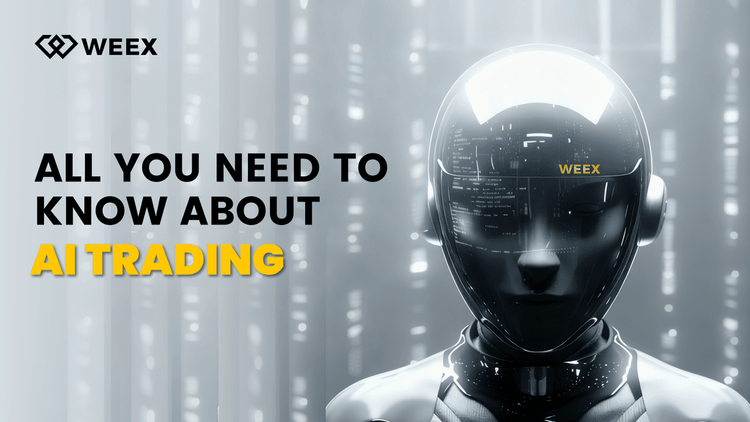
Le trading d'IA en crypto expliqué : Comment le trading autonome remodele les marchés crypto et les plateformes d’échange crypto
L’IA Trading transforme rapidement le paysage crypto. Les stratégies traditionnelles peinent à suivre la volatilité constante de la crypto et la structure complexe du marché, tandis que l'IA peut traiter des données massives, générer des stratégies adaptatives, gérer les risques et exécuter des trades de manière autonome. Cet article guide les utilisateurs de WEEX sur ce qu'est le trading d'IA, pourquoi la crypto accélère son adoption, comment le secteur évolue vers des agents autonomes et pourquoi WEEX construit l'écosystème de trading d'IA de nouvelle génération.
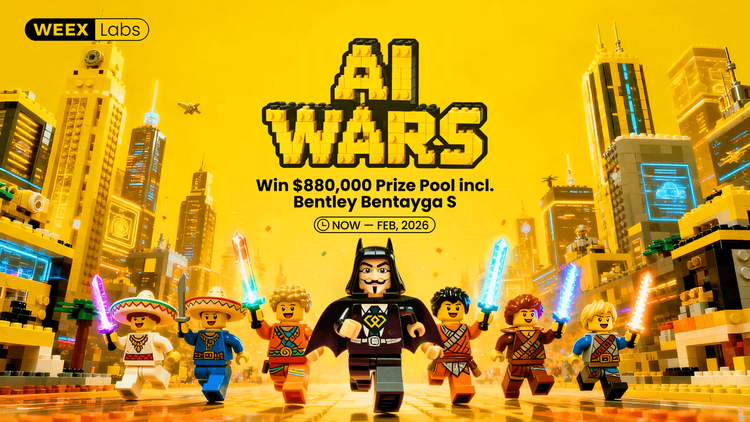
Appelez à rejoindre AI Wars : WEEX Alpha Awakens – Tournoi mondial de trading d’IA avec une cagnotte de 880 000 $
Maintenant, nous lançons un appel aux traders d'IA du monde entier pour qu'ils rejoignent AI Wars : WEEX Alpha Awakens, un tournoi mondial de trading d'IA doté d'une cagnotte de 880 000 $.
Trading d'IA sur les marchés crypto : Des bots de trading automatisés aux stratégies algorithmiques
Le trading basé sur l'IA fait passer la crypto de la spéculation au détail à une concurrence de niveau institutionnel, où l'exécution et la gestion des risques comptent plus que dans le sens. À mesure que le trading de l'IA prend de l'ampleur, les risques systémiques et la pression réglementaire augmentent, faisant des performances à long terme, des systèmes robustes et de la conformité les principaux facteurs de différenciation.
Analyse du sentiment de l'IA et volatilité des cryptomonnaies : Ce qui fait bouger les prix crypto
Le sentiment lié à l'IA influence de plus en plus les marchés crypto, les changements d'attente liés à l'IA se traduisant par une certaine volatilité pour les principaux actifs numériques. Les marchés crypto ont tendance à amplifier les discours sur l'IA, permettant aux flux basés sur les sentiments de l'emporter sur les fondamentaux à court terme. Comprendre comment le sentiment IA se forme et se propage aide les investisseurs à mieux anticiper les cycles de risque et les opportunités de positionnement sur les actifs numériques.
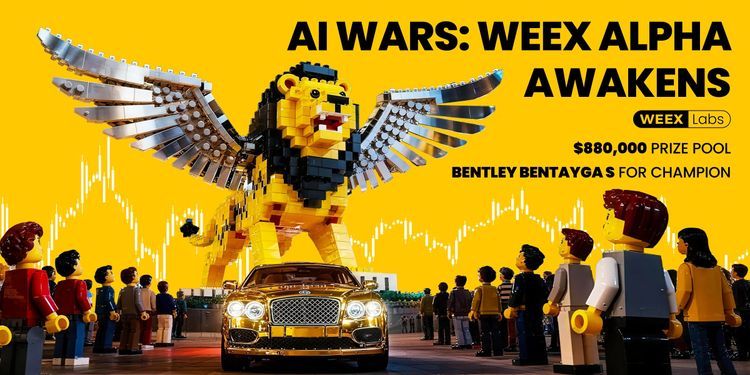
Guerres de l'IA : Guide du participant
Dans cette confrontation ultime, les meilleurs développeurs, quants et traders du monde entier déploieront leurs algorithmes dans des batailles sur le marché réel, en compétition pour l'un des prix les plus importants de l'histoire du trading crypto basé sur l'IA : 880 000 dollars américains, dont une Bentley Bentayga S pour le champion. Ce guide vous accompagnera à travers toutes les étapes nécessaires, de l'inscription au début officiel de la compétition.
Semaine des banques centrales et volatilité des marchés crypto : Comment les décisions relatives aux taux d'intérêt influencent les conditions de trading sur WEEX
Les décisions relatives aux taux d'intérêt prises par les grandes banques centrales, comme la Réserve fédérale, sont des événements macroéconomiques importants qui ont un impact sur les marchés financiers mondiaux et influencent directement les attentes de liquidité des marchés et l'appétence au risque. À mesure que le marché des cryptomonnaies continue de se développer et que sa structure de trading et ses participants mûrissent, le marché des cryptomonnaies est progressivement intégré dans le système d'établissement des prix macroéconomiques.

Test de l'API WEEX : Guide officiel des API de trading de Hackathon et de Crypto pour le trading d’IA
WEEX API Testing est conçu pour garantir que chaque participant peut transformer la logique de trading en exécution réelle. Toutes les interactions API ont lieu sur le système de trading en direct de WEEX, ce qui permet aux participants de travailler dans des conditions de marché authentiques plutôt que dans des simulations. Avec une faible exigence d'entrée, la tâche est accessible à la fois aux développeurs expérimentés et aux débutants motivés, tout en validant les compétences techniques essentielles.
Pourquoi WEEX Alpha se réveille-t-il le meilleur tournoi de trading d'IA de 2025 ? Tout ce que vous devez savoir
Pour accélérer les percées à l'intersection de l'IA et de la crypto, WEEX lance le premier Hackathon mondial de trading d'IA – AI Wars: Alpha se réveille. L'événement propose une cagnotte révolutionnaire dépassant 880 000 $, dont une Bentley Bentayga S pour le champion ultime.
AI Wars: WEEX Alpha Awakens | Guide des processus de test de l'API WEEX Global Hackathon
AI Wars : L'inscription au Réveil Alpha WEEX est maintenant ouverte. Ce guide explique comment accéder au test API et terminer le processus avec succès.
Qu'est-ce que le réveil de WEEX Alpha et comment participer ? Un guide complet
Pour accélérer les percées à l'intersection de l'IA et de la crypto, WEEX lance le premier Hackathon mondial de trading d'IA – AI Wars: Alpha se réveille.
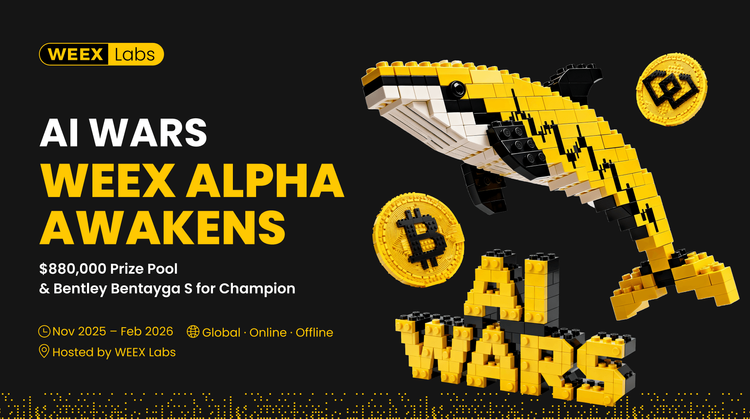
Join AI Wars: WEEK Alpha se réveille !Appel mondial pour les Alphas de Trading IA
AI Wars: WEEX Alpha Awakens est un hackathon mondial de trading sur l'IA à Dubaï, appelant les équipes quantiques, les traders algorithmiques et les développeurs d'IA à lancer leurs stratégies de trading crypto sur les marchés en direct pour une part d'une cagnotte de 880 000 $ US.
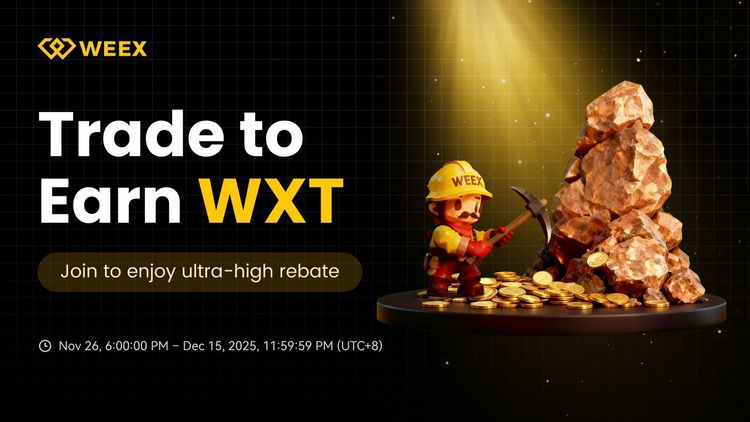
WEEX dévoile le trade to Earn: Jusqu'à 30 % de remise instantanée + 2 M$ WXT Rachat
WEEX est heureuse d’annoncer le lancement de son programme Trade to Earn, qui vous accorde automatiquement jusqu’à 30% de rabais sur les frais de trading. Toutes les récompenses sont créditées directement sur votre compte au comptant en WXT $, soutenu par notre plan de rachat de WXT $2,000,000 qui alimente la valeur à long terme des jetons.

Nouveau: Prix de liquidation estimé sur les graphiques App Candlestick
WEEX a introduit un nouveau prix estimatif de liquidation (Est. Liq. Price) figure sur le graphique en chandelier pour aider les traders à mieux gérer le risque et à identifier des fourchettes sûres pour leurs positions.
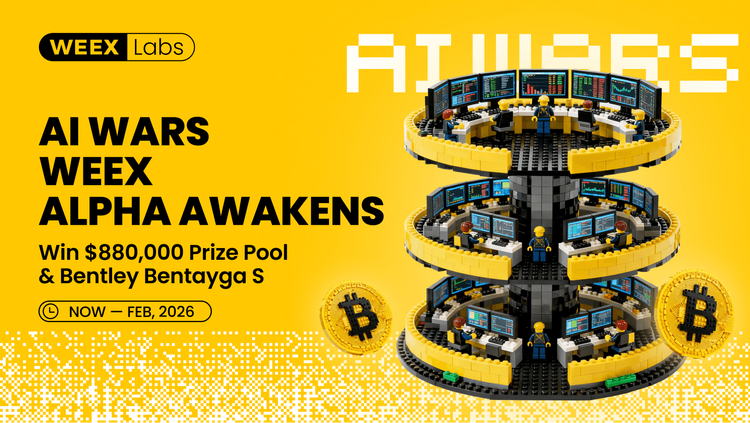
WEEX AI Hackathon Guide: Trouvez votre UID WEEK et inscrivez-vous
D'ici février 2026, WEEX lance AI Wars: WEEK Alpha Awakens, le premier hackathon mondial de trading de crypto-IA. Venez votre UID et inscrivez-vous au WEEX Global AI Trading Hackathon.
WEEXPERIENCE Nuit des baleines : Trading IA, communauté crypto et marché crypto
Le 12 décembre 2025, WEEX a organisé WEEXPERIENCE Whales Night, un rassemblement communautaire hors ligne conçu pour rassembler les membres de la communauté crypto locale. L'événement a combiné le partage de contenu, des jeux interactifs et des présentations de projets pour créer une expérience hors ligne détendue et attrayante.
Risque de trading d'IA en cryptomonnaie : Pourquoi de meilleures stratégies de trading crypto peuvent-elles générer des pertes plus importantes ?
Le risque ne réside plus principalement dans une mauvaise prise de décision ou des erreurs émotionnelles. Il vit de plus en plus dans la structure du marché, les parcours d'exécution et le comportement collectif. Comprendre ce changement est plus important que de trouver la prochaine stratégie « meilleure ».
Les agents de l'IA remplacent-ils la recherche crypto ? Comment l'IA autonome remodele le trading crypto
L'IA passe de l'assistance aux traders à l'automatisation de l'ensemble du processus de recherche à l'exécution sur les marchés crypto. L'avantage est passé de l'information humaine aux pipelines de données, à la vitesse et aux systèmes d'IA prêts à être exécutés, ce qui fait des retards dans l'intégration de l'IA un désavantage concurrentiel.
Boots de trading et copy trading IA : Comment les stratégies synchronisées remodèlent la volatilité du marché crypto
Les traders crypto de détail sont confrontés depuis longtemps aux mêmes défis : mauvaise gestion des risques, entrées tardives, décisions émotionnelles et exécution incohérente. Les outils de trading IA promettaient une solution. Aujourd'hui, les systèmes de copy trading et les bots de cassage alimentés par l'IA aident les traders à dimensionner leurs positions, à définir des stops et à agir plus rapidement que jamais. Au-delà de la vitesse et de la précision, ces outils remodèlent tranquillement les marchés : les traders ne tradent pas seulement plus malin, ils évoluent de façon synchronisée, créant une nouvelle dynamique qui amplifie à la fois les risques et les opportunités.
Le trading d'IA en crypto expliqué : Comment le trading autonome remodele les marchés crypto et les plateformes d’échange crypto
L’IA Trading transforme rapidement le paysage crypto. Les stratégies traditionnelles peinent à suivre la volatilité constante de la crypto et la structure complexe du marché, tandis que l'IA peut traiter des données massives, générer des stratégies adaptatives, gérer les risques et exécuter des trades de manière autonome. Cet article guide les utilisateurs de WEEX sur ce qu'est le trading d'IA, pourquoi la crypto accélère son adoption, comment le secteur évolue vers des agents autonomes et pourquoi WEEX construit l'écosystème de trading d'IA de nouvelle génération.
Appelez à rejoindre AI Wars : WEEX Alpha Awakens – Tournoi mondial de trading d’IA avec une cagnotte de 880 000 $
Maintenant, nous lançons un appel aux traders d'IA du monde entier pour qu'ils rejoignent AI Wars : WEEX Alpha Awakens, un tournoi mondial de trading d'IA doté d'une cagnotte de 880 000 $.
Pièces populaires
Dernières actus crypto


Assistance client:@weikecs
Collaborations commerciales:@weikecs
Trading quantitatif/Market makers:[email protected]
Programme VIP:[email protected]
 App
App