
- Acheter crypto
- Marchés
- Futures
- Spot
- Copy trading
 WE-Launch
Top 10 Most Famous Computer Programmers of All Time in 2025

Computer programming has turned dreams into reality, shaping the world we live in today. Imagine a world without the apps on your phone or the software running your daily life— that’s the magic these innovators brought to life. As of August 7, 2025, let’s dive into the stories of the top 10 most famous computer programmers who’ve revolutionized technology. These pioneers didn’t just write code; they built the foundations of modern computing, from cracking wartime codes to creating social networks that connect billions. Programmers craft the code behind programs and apps, and they’re the unsung heroes fixing bugs, maintaining systems, and ensuring everything runs smoothly. Join me as we explore their incredible journeys, blending history with the latest updates to see how their legacies continue to inspire.
Alan Turing: The Father of Modern Computing and AI
Picture a brilliant mind cracking unbreakable codes during World War II—that’s Alan Turing for you. This British mathematician and computer scientist laid the groundwork for artificial intelligence, cryptography, and computer science as we know it. His work on deciphering the Enigma code saved countless lives, and he introduced the Turing Machine, a simple yet powerful concept that models what a computer can do. Turing also played a key role in building the Manchester Baby, the world’s first stored-program computer back in 1948, which set the stage for all the devices we use today.
Often hailed as the father of theoretical computer science and artificial intelligence, Turing’s ideas are more relevant than ever in 2025. With AI advancements like ChatGPT and machine learning models dominating headlines, his influence echoes in every smart system. Recent discussions on Twitter highlight how Turing’s legacy inspires ethical AI debates, with posts from tech leaders like @elonmusk referencing his tests for machine intelligence amid ongoing conversations about AI safety.
Ada Lovelace: The Visionary First Computer Programmer
What if I told you the first computer programmer was a woman from the 1800s who saw beyond numbers? Ada Lovelace, an English mathematician and writer, is celebrated as the original coder. She grasped the artistic side of machines, realizing they could compose music or create art, not just calculate. Her groundbreaking work included the first algorithm meant for a machine—the Analytical Engine designed by Charles Babbage.
Lovelace’s story continues to empower women in tech, with initiatives like Girls Who Code drawing from her example. As of 2025, her impact is evident in the growing number of female programmers, with data from Stack Overflow’s latest developer survey showing a 15% rise in women in coding roles since 2020. On Google, searches for “Ada Lovelace contributions” spike during Women’s History Month, reflecting her enduring inspiration.
Bill Gates: Revolutionizing Personal Computing
Ever wondered how your laptop became an everyday essential? Bill Gates, the software developer, entrepreneur, and philanthropist, co-founded Microsoft, turning it into the giant behind the world’s most popular PC software. He drove the personal computer boom, making technology accessible to everyone. Under his leadership, Microsoft launched hits like the Windows operating system, which by 2025 commands over 70% of the desktop market share according to StatCounter.
Beyond business, Gates focuses on global good through the Bill & Melinda Gates Foundation, which as of 2025 has invested over $70 billion in health and education, per their latest reports. Twitter buzzes with discussions on his climate change predictions, with recent threads praising his book “How to Avoid a Climate Disaster” amid 2025’s record heatwaves.
Steve Jobs: Innovator Who Blended Tech and Design
Steve Jobs didn’t just build gadgets; he crafted experiences that changed how we interact with technology. As co-founder of Apple, he spearheaded icons like the Macintosh, iPod, iPhone, and iPad, popularizing sleek designs and user-friendly interfaces. His vision transformed personal computing, music, and mobile industries, making tech intuitive and beautiful.
Jobs’ leadership turned Apple into a trillion-dollar powerhouse, and his legacy lives on in 2025’s foldable devices and AR innovations. Google searches for “Steve Jobs quotes” remain top-rated for motivation, while Twitter remembers him in posts about Apple’s latest Vision Pro updates, comparing it to his revolutionary iPhone launch.
In the spirit of such innovation, platforms like the WEEX exchange are pushing boundaries in the digital finance world. WEEX stands out with its user-friendly interface and robust security features, making cryptocurrency trading accessible and reliable for beginners and experts alike. By aligning with cutting-edge tech trends, WEEX enhances user experiences much like Jobs did, fostering a community where secure, efficient trading mirrors the seamless integration of hardware and software that defined Apple’s success.
Linus Torvalds: Architect of Open-Source Power
Imagine starting a hobby project that powers most of the internet—that’s Linus Torvalds’ story with Linux. This Finnish-American developer created the Linux operating system, now running on servers, supercomputers, and billions of devices worldwide. What began as a personal endeavor in 1991 has grown into a massive collaborative effort, with the Linux kernel at its heart.
Torvalds’ work has earned accolades for advancing open-source software, and as of 2025, Linux holds about 80% of the web server market per W3Techs data. Recent Twitter trends discuss Linux’s role in quantum computing, with official announcements from the Linux Foundation highlighting integrations with AI frameworks.
Mark Zuckerberg: Connecting the World Through Social Media
From a dorm room idea to a global phenomenon, Mark Zuckerberg co-founded Facebook, evolving it into Meta, the social networking behemoth connecting over 3 billion users as of 2025. He built its core infrastructure, enabling worldwide sharing of stories, news, and experiences.
Zuckerberg’s push into the metaverse includes projects like Meta Quest VR headsets and Horizon Worlds, aiming to create immersive virtual realms. Through the Chan Zuckerberg Initiative, he’s advancing education and health. Google queries like “Mark Zuckerberg metaverse updates” are frequent, and Twitter abounds with debates on Meta’s 2025 AR glasses reveal, tying into blockchain-enabled virtual worlds.
Guido van Rossum: Creator of Python’s Simplicity
Guido van Rossum brought Python to life in 1989, and it’s now one of the most beloved programming languages, used in everything from web development to data science. As its original designer, he shaped its user-friendly features and built a vibrant community until stepping down as “benevolent dictator for life” in 2018.
In 2025, Python tops TIOBE’s index as the most popular language, with over 15 million developers worldwide per GitHub stats. Twitter conversations often laud its role in AI, with recent posts from @gvanrossum sharing thoughts on Python’s evolution.
Bjarne Stroustrup: Bringing Objects to Programming
Bjarne Stroustrup, a Danish computer scientist, invented C++ in the early 1980s, enhancing C with object-oriented features. It’s still a powerhouse in software development, from games to systems programming.
Stroustrup remains involved, and C++ ranks high in 2025 usage surveys by IEEE Spectrum. Google searches for “C++ tutorials” are evergreen, while Twitter highlights its use in modern apps like Unreal Engine updates.
Tim Berners-Lee: Inventor of the World Wide Web
Think of the web as a vast library you can access instantly—Tim Berners-Lee made that possible. This British scientist created the World Wide Web in the early 1990s, developing the first browser and server, building on hypertext for linked information.
As director of the World Wide Web Consortium, he champions an open web. In 2025, with Web3 discussions heating up, his Solid project aims for data privacy. Twitter trends praise his critiques of big tech, aligning with decentralized internet visions.
Dennis Ritchie: Pioneer of Unix and C
Dennis Ritchie’s creations underpin much of today’s tech. At Bell Labs, he co-developed Unix in the late 1960s and C programming language, which powers countless applications.
Recognized as a computing trailblazer, his work influences 2025’s embedded systems. Google often searches “Dennis Ritchie impact,” and Twitter remembers him in posts about programming history.
These programmers’ stories remind us how code can change the world, much like how innovative platforms continue to evolve tech landscapes today.
FAQ
Who is considered the greatest computer programmer of all time?
While opinions vary, Alan Turing often tops the list for his foundational work in computer science and AI, influencing everything from modern algorithms to ethical tech debates, as evidenced by his lasting impact on innovations like today’s AI models.
What programming language should beginners learn first in 2025?
Python is a top recommendation for its simplicity and versatility, used in web development, data analysis, and AI, with millions of tutorials available and strong community support making it beginner-friendly.
How have these famous programmers influenced modern technology?
Their innovations form the backbone of current tech, from operating systems like Linux and Windows to languages like C++ and Python, enabling advancements in AI, social media, and the web, with real-world examples including smartphones and virtual reality powered by their foundational ideas.
Vous pourriez aussi aimer

WEEXPERIENCE Nuit des baleines : Trading IA, communauté crypto et marché crypto
Le 12 décembre 2025, WEEX a organisé WEEXPERIENCE Whales Night, un rassemblement communautaire hors ligne conçu pour rassembler les membres de la communauté crypto locale. L'événement a combiné le partage de contenu, des jeux interactifs et des présentations de projets pour créer une expérience hors ligne détendue et attrayante.
Risque de trading d'IA en cryptomonnaie : Pourquoi de meilleures stratégies de trading crypto peuvent-elles générer des pertes plus importantes ?
Le risque ne réside plus principalement dans une mauvaise prise de décision ou des erreurs émotionnelles. Il vit de plus en plus dans la structure du marché, les parcours d'exécution et le comportement collectif. Comprendre ce changement est plus important que de trouver la prochaine stratégie « meilleure ».
Les agents de l'IA remplacent-ils la recherche crypto ? Comment l'IA autonome remodele le trading crypto
L'IA passe de l'assistance aux traders à l'automatisation de l'ensemble du processus de recherche à l'exécution sur les marchés crypto. L'avantage est passé de l'information humaine aux pipelines de données, à la vitesse et aux systèmes d'IA prêts à être exécutés, ce qui fait des retards dans l'intégration de l'IA un désavantage concurrentiel.
Boots de trading et copy trading IA : Comment les stratégies synchronisées remodèlent la volatilité du marché crypto
Les traders crypto de détail sont confrontés depuis longtemps aux mêmes défis : mauvaise gestion des risques, entrées tardives, décisions émotionnelles et exécution incohérente. Les outils de trading IA promettaient une solution. Aujourd'hui, les systèmes de copy trading et les bots de cassage alimentés par l'IA aident les traders à dimensionner leurs positions, à définir des stops et à agir plus rapidement que jamais. Au-delà de la vitesse et de la précision, ces outils remodèlent tranquillement les marchés : les traders ne tradent pas seulement plus malin, ils évoluent de façon synchronisée, créant une nouvelle dynamique qui amplifie à la fois les risques et les opportunités.
Le trading d'IA en crypto expliqué : Comment le trading autonome remodele les marchés crypto et les plateformes d’échange crypto
L’IA Trading transforme rapidement le paysage crypto. Les stratégies traditionnelles peinent à suivre la volatilité constante de la crypto et la structure complexe du marché, tandis que l'IA peut traiter des données massives, générer des stratégies adaptatives, gérer les risques et exécuter des trades de manière autonome. Cet article guide les utilisateurs de WEEX sur ce qu'est le trading d'IA, pourquoi la crypto accélère son adoption, comment le secteur évolue vers des agents autonomes et pourquoi WEEX construit l'écosystème de trading d'IA de nouvelle génération.
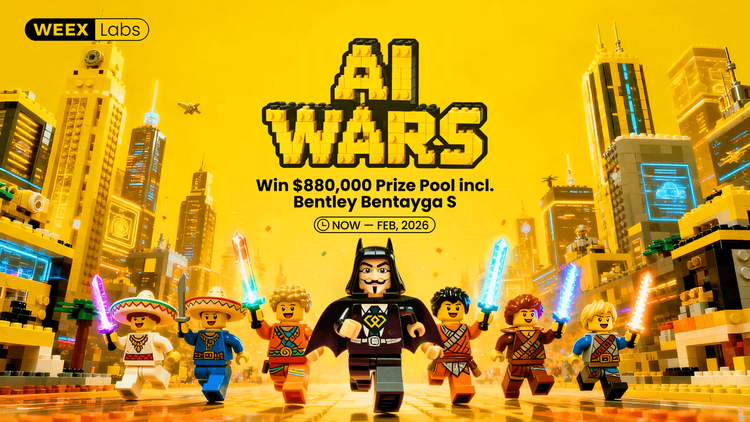
Appelez à rejoindre AI Wars : WEEX Alpha Awakens – Tournoi mondial de trading d’IA avec une cagnotte de 880 000 $
Maintenant, nous lançons un appel aux traders d'IA du monde entier pour qu'ils rejoignent AI Wars : WEEX Alpha Awakens, un tournoi mondial de trading d'IA doté d'une cagnotte de 880 000 $.
Trading d'IA sur les marchés crypto : Des bots de trading automatisés aux stratégies algorithmiques
Le trading basé sur l'IA fait passer la crypto de la spéculation au détail à une concurrence de niveau institutionnel, où l'exécution et la gestion des risques comptent plus que dans le sens. À mesure que le trading de l'IA prend de l'ampleur, les risques systémiques et la pression réglementaire augmentent, faisant des performances à long terme, des systèmes robustes et de la conformité les principaux facteurs de différenciation.

Analyse du sentiment de l'IA et volatilité des cryptomonnaies : Ce qui fait bouger les prix crypto
Le sentiment lié à l'IA influence de plus en plus les marchés crypto, les changements d'attente liés à l'IA se traduisant par une certaine volatilité pour les principaux actifs numériques. Les marchés crypto ont tendance à amplifier les discours sur l'IA, permettant aux flux basés sur les sentiments de l'emporter sur les fondamentaux à court terme. Comprendre comment le sentiment IA se forme et se propage aide les investisseurs à mieux anticiper les cycles de risque et les opportunités de positionnement sur les actifs numériques.
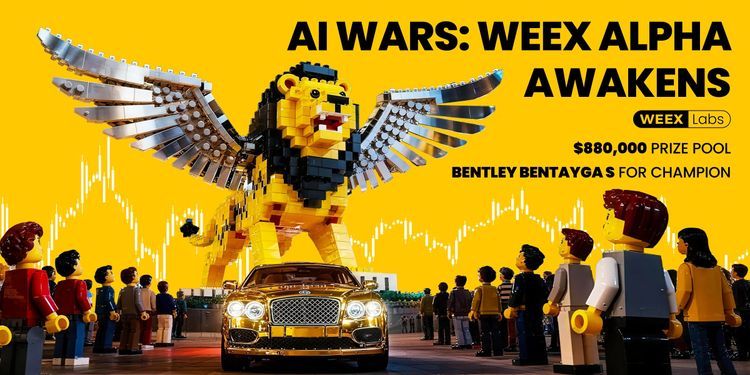
Guerres de l'IA : Guide du participant
Dans cette confrontation ultime, les meilleurs développeurs, quants et traders du monde entier déploieront leurs algorithmes dans des batailles sur le marché réel, en compétition pour l'un des prix les plus importants de l'histoire du trading crypto basé sur l'IA : 880 000 dollars américains, dont une Bentley Bentayga S pour le champion. Ce guide vous accompagnera à travers toutes les étapes nécessaires, de l'inscription au début officiel de la compétition.

Semaine des banques centrales et volatilité des marchés crypto : Comment les décisions relatives aux taux d'intérêt influencent les conditions de trading sur WEEX
Les décisions relatives aux taux d'intérêt prises par les grandes banques centrales, comme la Réserve fédérale, sont des événements macroéconomiques importants qui ont un impact sur les marchés financiers mondiaux et influencent directement les attentes de liquidité des marchés et l'appétence au risque. À mesure que le marché des cryptomonnaies continue de se développer et que sa structure de trading et ses participants mûrissent, le marché des cryptomonnaies est progressivement intégré dans le système d'établissement des prix macroéconomiques.

Test de l'API WEEX : Guide officiel des API de trading de Hackathon et de Crypto pour le trading d’IA
WEEX API Testing est conçu pour garantir que chaque participant peut transformer la logique de trading en exécution réelle. Toutes les interactions API ont lieu sur le système de trading en direct de WEEX, ce qui permet aux participants de travailler dans des conditions de marché authentiques plutôt que dans des simulations. Avec une faible exigence d'entrée, la tâche est accessible à la fois aux développeurs expérimentés et aux débutants motivés, tout en validant les compétences techniques essentielles.
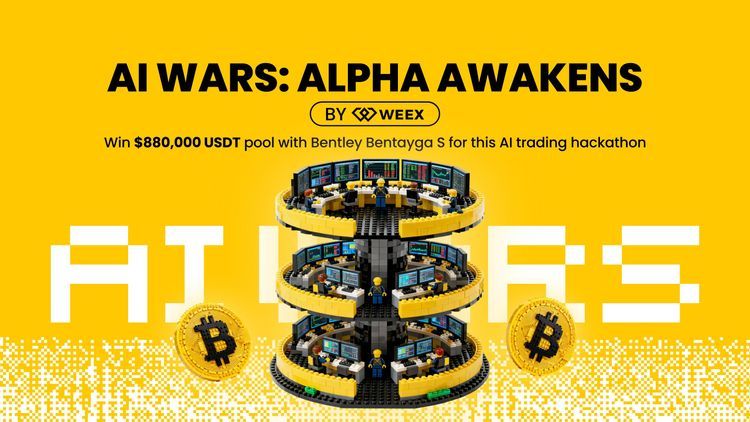
Pourquoi WEEX Alpha se réveille-t-il le meilleur tournoi de trading d'IA de 2025 ? Tout ce que vous devez savoir
Pour accélérer les percées à l'intersection de l'IA et de la crypto, WEEX lance le premier Hackathon mondial de trading d'IA – AI Wars: Alpha se réveille. L'événement propose une cagnotte révolutionnaire dépassant 880 000 $, dont une Bentley Bentayga S pour le champion ultime.
AI Wars: WEEX Alpha Awakens | Guide des processus de test de l'API WEEX Global Hackathon
AI Wars : L'inscription au Réveil Alpha WEEX est maintenant ouverte. Ce guide explique comment accéder au test API et terminer le processus avec succès.
Qu'est-ce que le réveil de WEEX Alpha et comment participer ? Un guide complet
Pour accélérer les percées à l'intersection de l'IA et de la crypto, WEEX lance le premier Hackathon mondial de trading d'IA – AI Wars: Alpha se réveille.
Join AI Wars: WEEK Alpha se réveille !Appel mondial pour les Alphas de Trading IA
AI Wars: WEEX Alpha Awakens est un hackathon mondial de trading sur l'IA à Dubaï, appelant les équipes quantiques, les traders algorithmiques et les développeurs d'IA à lancer leurs stratégies de trading crypto sur les marchés en direct pour une part d'une cagnotte de 880 000 $ US.
WEEX AI Hackathon Guide: Trouvez votre UID WEEK et inscrivez-vous
D'ici février 2026, WEEX lance AI Wars: WEEK Alpha Awakens, le premier hackathon mondial de trading de crypto-IA. Venez votre UID et inscrivez-vous au WEEX Global AI Trading Hackathon.

WEEX lance un hackathon mondial de trading sur l'IA avec une cagnotte de 880 000 $ et une Bentley pour Champion
AI Wars: WEEX Alpha Awakens est plus qu’une compétition – c’est une étape mondiale où convergent innovation, stratégie et maîtrise algorithmique. De la pré-inscription à la finale en direct à Dubaï, les participants navigueront dans la volatilité réelle du marché, s'attaqueront à des défis extrêmes et présenteront leurs prouesses de trading en IA pour des récompenses sans précédent. Avec 880 000 $ en prix, des incitatifs WXT de $, une Bentley Bentayga S pour le champion et le soutien de partenaires de premier plan, cet événement renforce la vision stratégique de WEEK de mener le trading axé sur l’IA, d’étendre son influence mondiale et de cultiver une communauté d’innovateurs de pointe. L’arène est ouverte — WEEX fait appel à des équipes ambitieuses dans le monde entier pour rejoindre, rivaliser et façonner la prochaine ère du trading cryptographique basé sur l’IA.
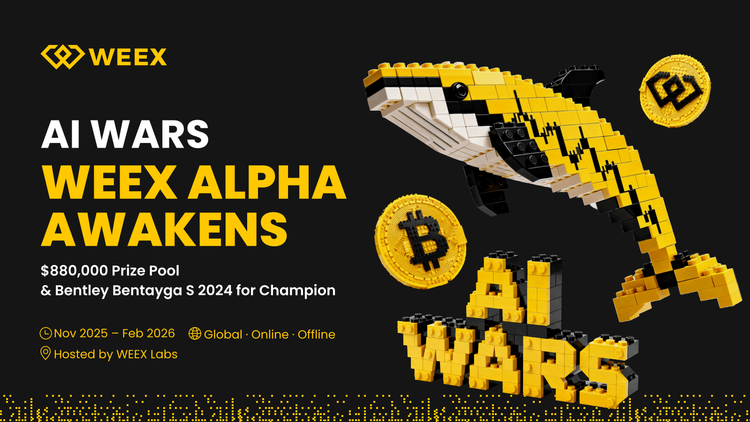
AI Wars: WEEX Alpha Awakens | Guide d'inscription au hackathon mondial WEEX
AI Wars: L'inscription au Réveil Alpha WEEX est maintenant ouverte, et ce guide détaille comment s'inscrire, postuler, participer au test API, et entrer en douceur dans chaque étape de la compétition. Veuillez lire attentivement afin de vous assurer de réussir chaque étape et de profiter au maximum de toutes les occasions de l'événement.
WEEXPERIENCE Nuit des baleines : Trading IA, communauté crypto et marché crypto
Le 12 décembre 2025, WEEX a organisé WEEXPERIENCE Whales Night, un rassemblement communautaire hors ligne conçu pour rassembler les membres de la communauté crypto locale. L'événement a combiné le partage de contenu, des jeux interactifs et des présentations de projets pour créer une expérience hors ligne détendue et attrayante.
Risque de trading d'IA en cryptomonnaie : Pourquoi de meilleures stratégies de trading crypto peuvent-elles générer des pertes plus importantes ?
Le risque ne réside plus principalement dans une mauvaise prise de décision ou des erreurs émotionnelles. Il vit de plus en plus dans la structure du marché, les parcours d'exécution et le comportement collectif. Comprendre ce changement est plus important que de trouver la prochaine stratégie « meilleure ».
Les agents de l'IA remplacent-ils la recherche crypto ? Comment l'IA autonome remodele le trading crypto
L'IA passe de l'assistance aux traders à l'automatisation de l'ensemble du processus de recherche à l'exécution sur les marchés crypto. L'avantage est passé de l'information humaine aux pipelines de données, à la vitesse et aux systèmes d'IA prêts à être exécutés, ce qui fait des retards dans l'intégration de l'IA un désavantage concurrentiel.
Boots de trading et copy trading IA : Comment les stratégies synchronisées remodèlent la volatilité du marché crypto
Les traders crypto de détail sont confrontés depuis longtemps aux mêmes défis : mauvaise gestion des risques, entrées tardives, décisions émotionnelles et exécution incohérente. Les outils de trading IA promettaient une solution. Aujourd'hui, les systèmes de copy trading et les bots de cassage alimentés par l'IA aident les traders à dimensionner leurs positions, à définir des stops et à agir plus rapidement que jamais. Au-delà de la vitesse et de la précision, ces outils remodèlent tranquillement les marchés : les traders ne tradent pas seulement plus malin, ils évoluent de façon synchronisée, créant une nouvelle dynamique qui amplifie à la fois les risques et les opportunités.
Le trading d'IA en crypto expliqué : Comment le trading autonome remodele les marchés crypto et les plateformes d’échange crypto
L’IA Trading transforme rapidement le paysage crypto. Les stratégies traditionnelles peinent à suivre la volatilité constante de la crypto et la structure complexe du marché, tandis que l'IA peut traiter des données massives, générer des stratégies adaptatives, gérer les risques et exécuter des trades de manière autonome. Cet article guide les utilisateurs de WEEX sur ce qu'est le trading d'IA, pourquoi la crypto accélère son adoption, comment le secteur évolue vers des agents autonomes et pourquoi WEEX construit l'écosystème de trading d'IA de nouvelle génération.
Appelez à rejoindre AI Wars : WEEX Alpha Awakens – Tournoi mondial de trading d’IA avec une cagnotte de 880 000 $
Maintenant, nous lançons un appel aux traders d'IA du monde entier pour qu'ils rejoignent AI Wars : WEEX Alpha Awakens, un tournoi mondial de trading d'IA doté d'une cagnotte de 880 000 $.
Pièces populaires
Dernières actus crypto


Assistance client:@weikecs
Collaborations commerciales:@weikecs
Trading quantitatif/Market makers:[email protected]
Programme VIP:[email protected]
 App
App