
- Acheter crypto
- Marchés
- Futures
- Spot
- Copy trading
 WE-Launch
Trump Tariff Tariff Tariff Tariff Tariff Tariff Tariff Tariff Tariff Tariff Tariff Tariff Tariff Tariff Tariff Tariff Tariff Tariff Tariff Tariff Tariff Tariff Tariff Tariff Tariff Tariff Tariff The suspense will soon be revealed: both Goldman Sachs and M

Original Title: "Trump Tariff Cliffhanger Unveiled: Goldman Sachs, J.P. Morgan Both Pessimistic, How Will Crypto Investors Break Through?"
Original Author: Oliver, Mars Finance
April 2, 2025, Wednesday, is destined to be a key moment in the global financial markets. U.S. President Donald Trump will announce the highly anticipated reciprocal tariff policy in the White House Rose Garden. As White House Press Secretary Levitt stated, this policy will "reverse decades of exploitative unfair trade practices against the United States" and will be implemented in a "nation-based" manner, with Trump also "committing" to roll out tariffs targeting specific industries at some point in the future.
Upon the news, market sentiment quickly heated up, with the safe-haven asset gold reaching a historic high, U.S. stocks wavering in uncertainty, and the crypto market—especially Bitcoin—not able to stand alone. Combining the latest research reports from Goldman Sachs and J.P. Morgan, let's explore the potential trajectory of this tariff storm and its far-reaching impact on the global economy and the crypto market.
Background: The "Fair" Logic of Reciprocal Tariffs and Market Anxiety
Trump's reciprocal tariff policy is not a sudden whim but rather a continuation of his long-standing trade philosophy. From the campaign period to his first term, Trump has championed "America First" and repeatedly emphasized trade fairness. He believes that the U.S. has been at a disadvantage in international trade, with foreign exports to the U.S. enjoying low tariffs while American products face high tariffs and non-tariff barriers, leading to a widening trade deficit. In 2024, the U.S. goods trade deficit exceeded $1 trillion, a figure that undoubtedly provided a real-world basis for Trump's new policy.
The core logic of reciprocal tariffs seems simple: you tax me, I tax you. However, the actual implementation is far from straightforward. Michael Zezas, Global Head of Fixed Income Research at J.P. Morgan, stated in a report on March 31 that investors are filled with confusion about the tariff policy on April 2. Previously, the Trump administration has made repeated adjustments to tariffs on Mexico, Canada, and China, creating market uncertainty. What's more complex is that the Trump team seems to be weighing whether to include foreign consumption taxes (such as value-added tax) and non-tariff barriers in the calculation scope of reciprocal tariffs. This ambiguity makes it difficult for investors to formulate clear response strategies.
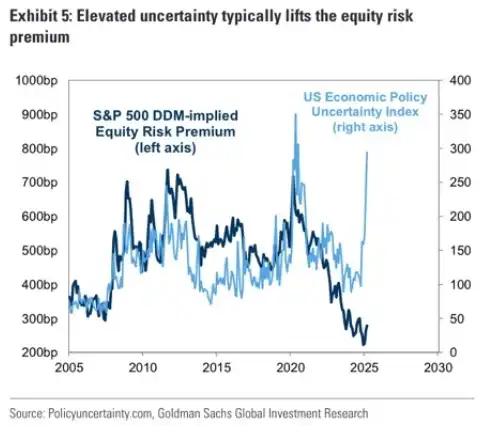
Goldman's report further reveals potential economic risks. The report points out that if the tariff policy is too aggressive, it could lead to rising U.S. inflation, slowing economic growth, and even increase the risk of recession from the current 25% to 35%. Earnings expectations for the S&P 500 index have been lowered, with earnings per share (EPS) dropping from $250 to $245 and the growth rate from 15% to 13%. Meanwhile, safe-haven sentiment has driven the price of gold to break through to new highs, showing that the market's concern about uncertainty has reached its peak.
The "Cascade Effect" in the Crypto Market: The High Correlation Between Bitcoin and the US Stock Market
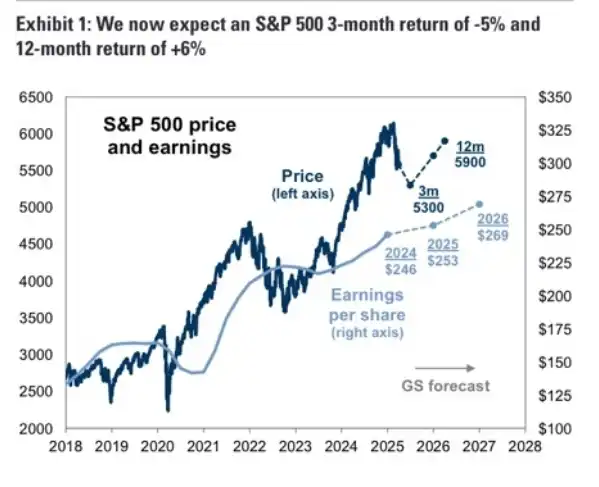
For the crypto market, Trump's tariff policy is not a distant macro event but a potential trigger for a chain reaction known as the "butterfly effect." In recent years, the high correlation between Bitcoin and the US stock market, especially the S&P 500 Index, has become a market consensus. Data from 2024 shows that the 90-day correlation between Bitcoin and the S&P 500 is as high as 0.85, indicating that stock market movements often drive Bitcoin in the same direction. The potential downside risk for the S&P 500 mentioned in a Goldman Sachs report (if there is an economic recession, the index could fall to 4500 points, a drop of about 12%) has undoubtedly sounded the alarm for Bitcoin.
This correlation has its logic: Although Bitcoin is often seen as "digital gold," its price is more driven by risk asset sentiment rather than pure safe-haven demand. During an economic slowdown or market panic, investors tend to sell off high-risk assets (including Bitcoin) in exchange for cash or safer assets (such as US Treasury bonds). In early 2025, Bitcoin's price briefly exceeded $110,000, but as tariff uncertainty intensified, its price has fallen back to around $82,000, demonstrating the market's sensitivity to risk.
Morgan Stanley Analysis: From Mild to Aggressive, Three Possible Tariff Scenarios
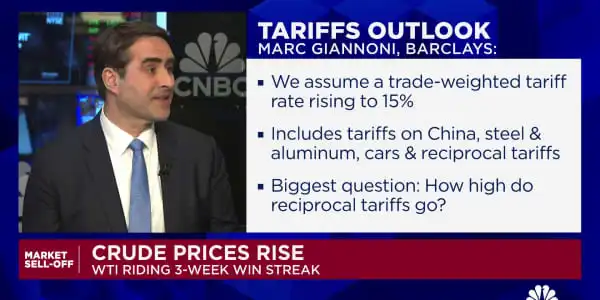
To better understand the tariff policy that Trump may announce on Wednesday, we can refer to Morgan Stanley's analytical framework, which divides potential outcomes into three scenarios: high-clarity low-tariff, low-clarity high-commitment, and high-clarity high-tariff. Each scenario will have a vastly different impact on the economy and the market.
Scenario One: High Clarity, Low Tariff Expansion
If Trump provides highly clear policy details on April 2 and the tariff expansion is small, while clearly stating that there will be no further broadening of the tariff scope, the additional impact on the economy may be relatively limited. The "nation-based" tariffs mentioned by Levitt may imply that the US will set equivalent tax rates based on each trade partner's average tariff level, rather than making significant adjustments targeting specific products or industries. For example, if a country's average tariff on US exports is 5%, the US may impose a 5% tariff on imports from that country.
In this scenario, market uncertainty will significantly decrease, and investors may breathe a sigh of relief. The US stock market may experience a rebound, especially in tech stocks and cyclical industries that were previously dragged down by tariff concerns. However, a Goldman Sachs report reminds us that even without new substantial tariffs, existing tariffs (such as the 25% tariffs on Canada and Mexico in early February and the additional 10% tariff on Chinese goods) will continue to pressure the economy. The US GDP growth rate in 2025 may be only 1.5%, far below the long-term average.
Scenario Two: Low Clarity but Significant Tariff Increase Promise
The second scenario is more uncertain. If Trump's statement lacks specific details but promises a significant future tariff increase, the market may fall into a deeper fog. Levitt mentioned that Trump plans to implement industry tariffs at some point in the future, which may include key sectors such as automobiles, pharmaceuticals, and semiconductors. This "pie in the sky" strategy may aim to force concessions from trading partners through negotiation, but it could also lead to heightened market panic.
In this case, investors may choose to wait and see rather than immediately adjust their portfolios. The S&P 500 Index may continue to fluctuate around its current level, finding it challenging to break through the resistance level (mentioned as 5300 points in a Goldman Sachs report). Meanwhile, the U.S. dollar may strengthen due to safe-haven demand, but rising inflation expectations may prompt the Federal Reserve to cut interest rates earlier. Goldman Sachs predicts that the Federal Reserve may cut interest rates three times in July, September, and November 2025, bringing the federal funds rate down from the current 4.25%-4.5% to 3.5%-3.75%.
Scenario Three: High Clarity, Significant Tariff Increase
The most extreme scenario is that Trump announces a clear and aggressive tariff policy, with tariff rate increases exceeding expectations, even incorporating foreign consumption taxes and non-tariff barriers into the calculation. For example, if a country imposes a 20% tariff on U.S. cars and adds value-added tax, the U.S. may impose equivalent or even higher tariffs on goods from that country to "punish" non-tariff barriers. This aggressive policy could lead to a 15-percentage-point increase in the average tariff rate (Goldman Sachs' March 30 forecast), with an immediate impact on the economy.
In this scenario, the U.S. economic outlook would significantly deteriorate. Consumer prices may rise, real income may decrease, and business investment willingness could further decline. Morgan Stanley points out that in such a situation, fixed-income assets (such as bonds) would relatively benefit, while the stock market may experience a sharp decline, especially in technology and cyclical stocks. Scenario analysis in the Goldman Sachs report also indicates that if the economy enters a recession, the S&P 500 Index could drop to 4500 points, about 12% below the current level.
Hedging Logic in the Crypto Market: Gold Rises, Bitcoin Falls?
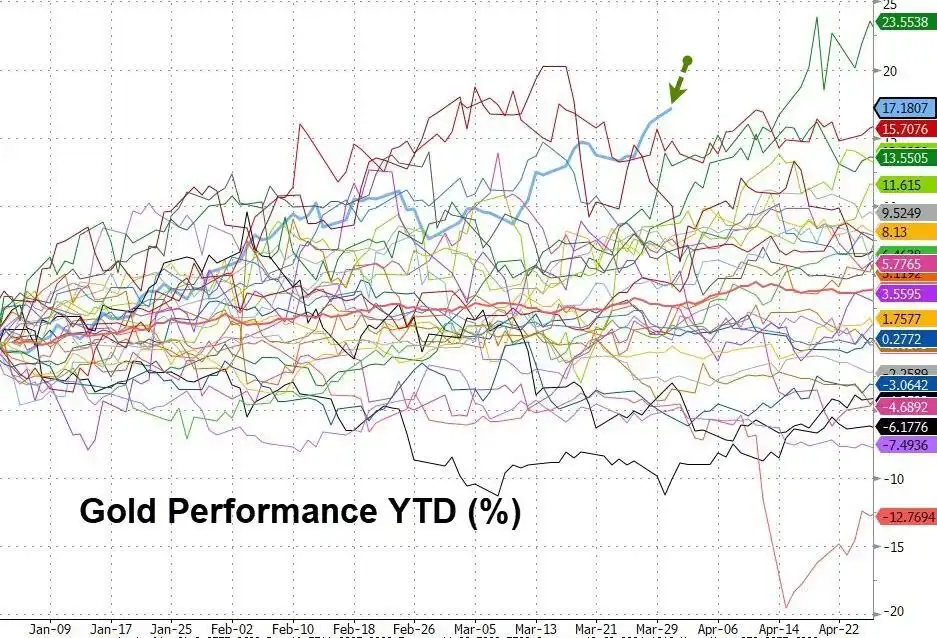
The heightened risk aversion mentioned in the Goldman Sachs report (gold hitting a new high) also provides an interesting contrast for the cryptocurrency market. Traditionally, gold has been seen as the ultimate safe-haven asset, while Bitcoin is often touted as "digital gold." However, reality is not so simple. In the first quarter of 2025, the price of gold rose by 19%, while Bitcoin fell by 15% during the same period, indicating that in the face of real macro risks, Bitcoin's hedging properties have not yet been fully recognized by the market.
For blockchain investors, this is a phenomenon worth pondering. Bitcoin's long-term value proposition (decentralization, anti-inflation) may be validated in the future, but in the short term, its price is more driven by macroeconomics and market sentiment. Inflationary pressure due to tariff policies may raise the expectation of Fed rate cuts, and a low-interest-rate environment typically benefits assets like Bitcoin. Therefore, if Trump's tariff policy ultimately leads to an economic hard landing, Bitcoin may experience a long-term rebound after a short-term decline.
Market and Investor Response
Faced with such uncertainty, how should investors respond? High-net-worth individuals recommend overallocating to high-quality stocks and defensive industries (such as healthcare and consumer essentials). For crypto investors, flexibility and risk management are equally important. Here are a few suggestions:
· Monitor the correlation between Bitcoin and the US stock market: If the S&P 500 falls, Bitcoin may follow suit with an adjustment. In the short term, risk exposure can be reduced, awaiting clearer policy signals.
· Diversify investments: In addition to Bitcoin, consider stablecoin or DeFi project's stable returns to hedge market volatility.
· Long-term perspective: If the tariff policy leads to a Fed accelerated rate cut, the low-interest-rate environment may provide long-term support for Bitcoin, making it suitable for buying on dips.
Global Perspective: Trade Partners' Reactions and the Ripple Effect on the Blockchain Industry
Trump's tit-for-tat tariff policy not only affects the US economy but may also trigger a significant adjustment in the global trade landscape. Major trade partners such as Canada, Mexico, and the EU have indicated they will impose retaliatory tariffs, while China may counter with restrictions on rare earth exports. This will have a profound impact on the global tech supply chain, especially the semiconductor industry. The blockchain industry heavily relies on chips (used for mining equipment and data centers). If the supply chain tightens, mining costs may rise, affecting Bitcoin network's hash rate and price.
Trump's tit-for-tat tariff policy is undoubtedly a bombshell for the global economy and crypto market in 2025. Whether it's a mild adjustment or an aggressive move, Wednesday's statement will provide some clues to the market, and investors need to quickly interpret and adjust their strategies. Based on Goldman Sachs and Morgan Stanley's analysis, slowing economic growth and rising inflation are almost certain trends, and Bitcoin may follow stock market volatility in the short term but still has rebound potential in the long run. On April 2nd, will the rose in the rose garden wither due to the chilling wind of tariffs? For crypto investors, this may be a moment that is both perilous and full of opportunity.
Vous pourriez aussi aimer

WEEXPERIENCE Nuit des baleines : Trading IA, communauté crypto et marché crypto
Le 12 décembre 2025, WEEX a organisé WEEXPERIENCE Whales Night, un rassemblement communautaire hors ligne conçu pour rassembler les membres de la communauté crypto locale. L'événement a combiné le partage de contenu, des jeux interactifs et des présentations de projets pour créer une expérience hors ligne détendue et attrayante.
Risque de trading d'IA en cryptomonnaie : Pourquoi de meilleures stratégies de trading crypto peuvent-elles générer des pertes plus importantes ?
Le risque ne réside plus principalement dans une mauvaise prise de décision ou des erreurs émotionnelles. Il vit de plus en plus dans la structure du marché, les parcours d'exécution et le comportement collectif. Comprendre ce changement est plus important que de trouver la prochaine stratégie « meilleure ».
Les agents de l'IA remplacent-ils la recherche crypto ? Comment l'IA autonome remodele le trading crypto
L'IA passe de l'assistance aux traders à l'automatisation de l'ensemble du processus de recherche à l'exécution sur les marchés crypto. L'avantage est passé de l'information humaine aux pipelines de données, à la vitesse et aux systèmes d'IA prêts à être exécutés, ce qui fait des retards dans l'intégration de l'IA un désavantage concurrentiel.
Boots de trading et copy trading IA : Comment les stratégies synchronisées remodèlent la volatilité du marché crypto
Les traders crypto de détail sont confrontés depuis longtemps aux mêmes défis : mauvaise gestion des risques, entrées tardives, décisions émotionnelles et exécution incohérente. Les outils de trading IA promettaient une solution. Aujourd'hui, les systèmes de copy trading et les bots de cassage alimentés par l'IA aident les traders à dimensionner leurs positions, à définir des stops et à agir plus rapidement que jamais. Au-delà de la vitesse et de la précision, ces outils remodèlent tranquillement les marchés : les traders ne tradent pas seulement plus malin, ils évoluent de façon synchronisée, créant une nouvelle dynamique qui amplifie à la fois les risques et les opportunités.
Le trading d'IA en crypto expliqué : Comment le trading autonome remodele les marchés crypto et les plateformes d’échange crypto
L’IA Trading transforme rapidement le paysage crypto. Les stratégies traditionnelles peinent à suivre la volatilité constante de la crypto et la structure complexe du marché, tandis que l'IA peut traiter des données massives, générer des stratégies adaptatives, gérer les risques et exécuter des trades de manière autonome. Cet article guide les utilisateurs de WEEX sur ce qu'est le trading d'IA, pourquoi la crypto accélère son adoption, comment le secteur évolue vers des agents autonomes et pourquoi WEEX construit l'écosystème de trading d'IA de nouvelle génération.
Appelez à rejoindre AI Wars : WEEX Alpha Awakens – Tournoi mondial de trading d’IA avec une cagnotte de 880 000 $
Maintenant, nous lançons un appel aux traders d'IA du monde entier pour qu'ils rejoignent AI Wars : WEEX Alpha Awakens, un tournoi mondial de trading d'IA doté d'une cagnotte de 880 000 $.

Trading d'IA sur les marchés crypto : Des bots de trading automatisés aux stratégies algorithmiques
Le trading basé sur l'IA fait passer la crypto de la spéculation au détail à une concurrence de niveau institutionnel, où l'exécution et la gestion des risques comptent plus que dans le sens. À mesure que le trading de l'IA prend de l'ampleur, les risques systémiques et la pression réglementaire augmentent, faisant des performances à long terme, des systèmes robustes et de la conformité les principaux facteurs de différenciation.

Analyse du sentiment de l'IA et volatilité des cryptomonnaies : Ce qui fait bouger les prix crypto
Le sentiment lié à l'IA influence de plus en plus les marchés crypto, les changements d'attente liés à l'IA se traduisant par une certaine volatilité pour les principaux actifs numériques. Les marchés crypto ont tendance à amplifier les discours sur l'IA, permettant aux flux basés sur les sentiments de l'emporter sur les fondamentaux à court terme. Comprendre comment le sentiment IA se forme et se propage aide les investisseurs à mieux anticiper les cycles de risque et les opportunités de positionnement sur les actifs numériques.
Guerres de l'IA : Guide du participant
Dans cette confrontation ultime, les meilleurs développeurs, quants et traders du monde entier déploieront leurs algorithmes dans des batailles sur le marché réel, en compétition pour l'un des prix les plus importants de l'histoire du trading crypto basé sur l'IA : 880 000 dollars américains, dont une Bentley Bentayga S pour le champion. Ce guide vous accompagnera à travers toutes les étapes nécessaires, de l'inscription au début officiel de la compétition.
Semaine des banques centrales et volatilité des marchés crypto : Comment les décisions relatives aux taux d'intérêt influencent les conditions de trading sur WEEX
Les décisions relatives aux taux d'intérêt prises par les grandes banques centrales, comme la Réserve fédérale, sont des événements macroéconomiques importants qui ont un impact sur les marchés financiers mondiaux et influencent directement les attentes de liquidité des marchés et l'appétence au risque. À mesure que le marché des cryptomonnaies continue de se développer et que sa structure de trading et ses participants mûrissent, le marché des cryptomonnaies est progressivement intégré dans le système d'établissement des prix macroéconomiques.

Test de l'API WEEX : Guide officiel des API de trading de Hackathon et de Crypto pour le trading d’IA
WEEX API Testing est conçu pour garantir que chaque participant peut transformer la logique de trading en exécution réelle. Toutes les interactions API ont lieu sur le système de trading en direct de WEEX, ce qui permet aux participants de travailler dans des conditions de marché authentiques plutôt que dans des simulations. Avec une faible exigence d'entrée, la tâche est accessible à la fois aux développeurs expérimentés et aux débutants motivés, tout en validant les compétences techniques essentielles.
Pourquoi WEEX Alpha se réveille-t-il le meilleur tournoi de trading d'IA de 2025 ? Tout ce que vous devez savoir
Pour accélérer les percées à l'intersection de l'IA et de la crypto, WEEX lance le premier Hackathon mondial de trading d'IA – AI Wars: Alpha se réveille. L'événement propose une cagnotte révolutionnaire dépassant 880 000 $, dont une Bentley Bentayga S pour le champion ultime.
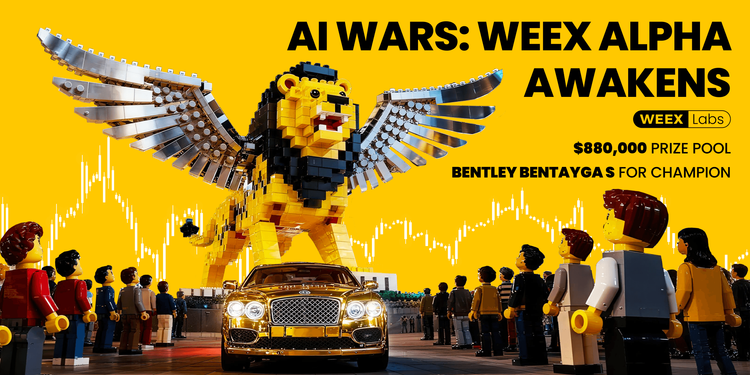
AI Wars: WEEX Alpha Awakens | Guide des processus de test de l'API WEEX Global Hackathon
AI Wars : L'inscription au Réveil Alpha WEEX est maintenant ouverte. Ce guide explique comment accéder au test API et terminer le processus avec succès.
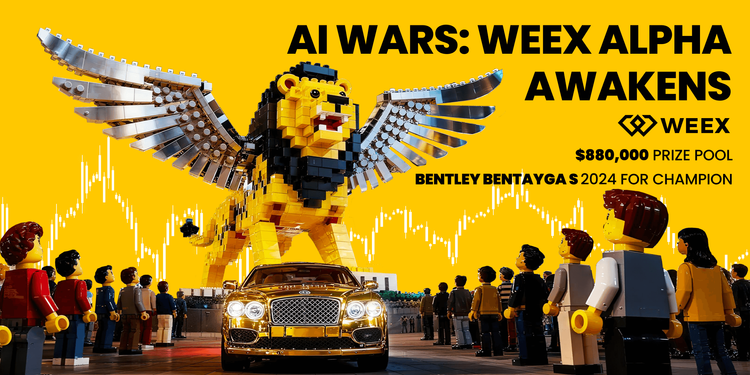
Qu'est-ce que le réveil de WEEX Alpha et comment participer ? Un guide complet
Pour accélérer les percées à l'intersection de l'IA et de la crypto, WEEX lance le premier Hackathon mondial de trading d'IA – AI Wars: Alpha se réveille.
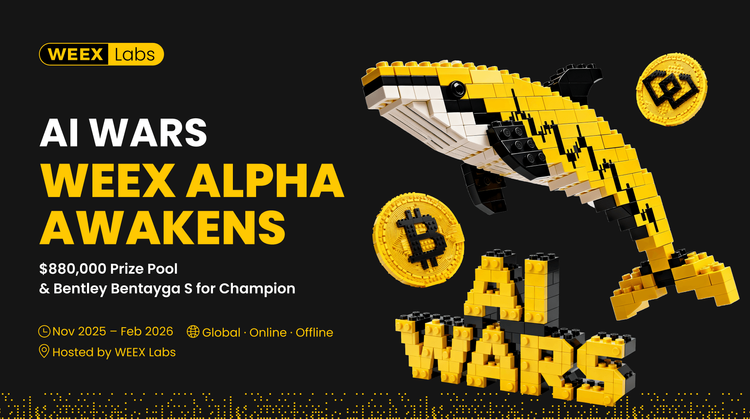
Join AI Wars: WEEK Alpha se réveille !Appel mondial pour les Alphas de Trading IA
AI Wars: WEEX Alpha Awakens est un hackathon mondial de trading sur l'IA à Dubaï, appelant les équipes quantiques, les traders algorithmiques et les développeurs d'IA à lancer leurs stratégies de trading crypto sur les marchés en direct pour une part d'une cagnotte de 880 000 $ US.
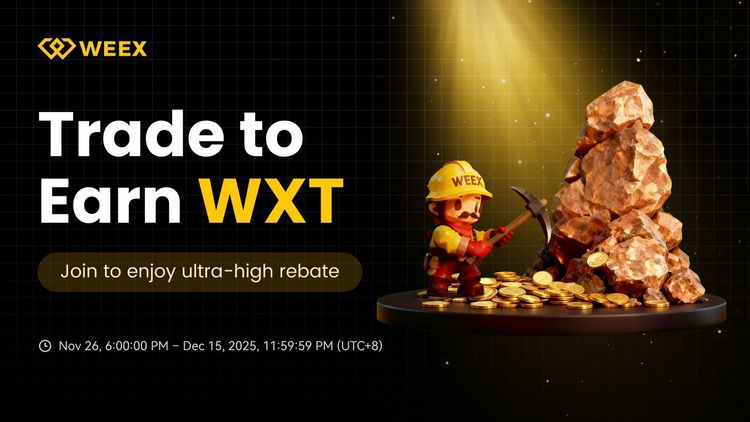
WEEX dévoile le trade to Earn: Jusqu'à 30 % de remise instantanée + 2 M$ WXT Rachat
WEEX est heureuse d’annoncer le lancement de son programme Trade to Earn, qui vous accorde automatiquement jusqu’à 30% de rabais sur les frais de trading. Toutes les récompenses sont créditées directement sur votre compte au comptant en WXT $, soutenu par notre plan de rachat de WXT $2,000,000 qui alimente la valeur à long terme des jetons.

Nouveau: Prix de liquidation estimé sur les graphiques App Candlestick
WEEX a introduit un nouveau prix estimatif de liquidation (Est. Liq. Price) figure sur le graphique en chandelier pour aider les traders à mieux gérer le risque et à identifier des fourchettes sûres pour leurs positions.
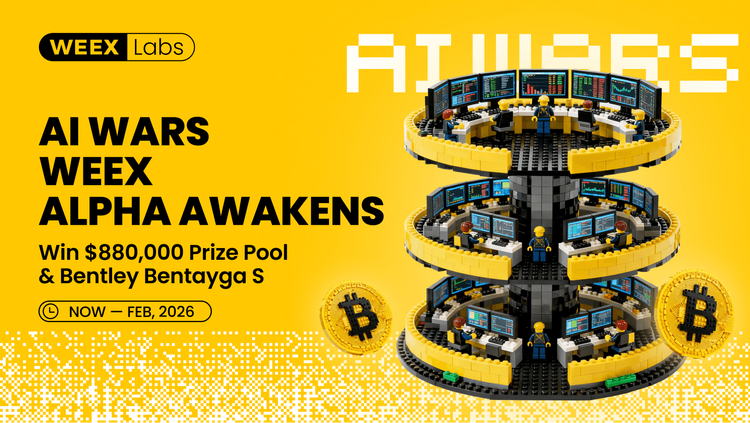
WEEX AI Hackathon Guide: Trouvez votre UID WEEK et inscrivez-vous
D'ici février 2026, WEEX lance AI Wars: WEEK Alpha Awakens, le premier hackathon mondial de trading de crypto-IA. Venez votre UID et inscrivez-vous au WEEX Global AI Trading Hackathon.
WEEXPERIENCE Nuit des baleines : Trading IA, communauté crypto et marché crypto
Le 12 décembre 2025, WEEX a organisé WEEXPERIENCE Whales Night, un rassemblement communautaire hors ligne conçu pour rassembler les membres de la communauté crypto locale. L'événement a combiné le partage de contenu, des jeux interactifs et des présentations de projets pour créer une expérience hors ligne détendue et attrayante.
Risque de trading d'IA en cryptomonnaie : Pourquoi de meilleures stratégies de trading crypto peuvent-elles générer des pertes plus importantes ?
Le risque ne réside plus principalement dans une mauvaise prise de décision ou des erreurs émotionnelles. Il vit de plus en plus dans la structure du marché, les parcours d'exécution et le comportement collectif. Comprendre ce changement est plus important que de trouver la prochaine stratégie « meilleure ».
Les agents de l'IA remplacent-ils la recherche crypto ? Comment l'IA autonome remodele le trading crypto
L'IA passe de l'assistance aux traders à l'automatisation de l'ensemble du processus de recherche à l'exécution sur les marchés crypto. L'avantage est passé de l'information humaine aux pipelines de données, à la vitesse et aux systèmes d'IA prêts à être exécutés, ce qui fait des retards dans l'intégration de l'IA un désavantage concurrentiel.
Boots de trading et copy trading IA : Comment les stratégies synchronisées remodèlent la volatilité du marché crypto
Les traders crypto de détail sont confrontés depuis longtemps aux mêmes défis : mauvaise gestion des risques, entrées tardives, décisions émotionnelles et exécution incohérente. Les outils de trading IA promettaient une solution. Aujourd'hui, les systèmes de copy trading et les bots de cassage alimentés par l'IA aident les traders à dimensionner leurs positions, à définir des stops et à agir plus rapidement que jamais. Au-delà de la vitesse et de la précision, ces outils remodèlent tranquillement les marchés : les traders ne tradent pas seulement plus malin, ils évoluent de façon synchronisée, créant une nouvelle dynamique qui amplifie à la fois les risques et les opportunités.
Le trading d'IA en crypto expliqué : Comment le trading autonome remodele les marchés crypto et les plateformes d’échange crypto
L’IA Trading transforme rapidement le paysage crypto. Les stratégies traditionnelles peinent à suivre la volatilité constante de la crypto et la structure complexe du marché, tandis que l'IA peut traiter des données massives, générer des stratégies adaptatives, gérer les risques et exécuter des trades de manière autonome. Cet article guide les utilisateurs de WEEX sur ce qu'est le trading d'IA, pourquoi la crypto accélère son adoption, comment le secteur évolue vers des agents autonomes et pourquoi WEEX construit l'écosystème de trading d'IA de nouvelle génération.
Appelez à rejoindre AI Wars : WEEX Alpha Awakens – Tournoi mondial de trading d’IA avec une cagnotte de 880 000 $
Maintenant, nous lançons un appel aux traders d'IA du monde entier pour qu'ils rejoignent AI Wars : WEEX Alpha Awakens, un tournoi mondial de trading d'IA doté d'une cagnotte de 880 000 $.
Pièces populaires
Dernières actus crypto


Assistance client:@weikecs
Collaborations commerciales:@weikecs
Trading quantitatif/Market makers:[email protected]
Programme VIP:[email protected]
 App
App