
- Acheter crypto
- Marchés
- Futures
- Spot
- Copy trading
 WE-Launch
Uncovering the Transferability Blind Spot in Europe’s Digital Asset Regulations

Imagine building a house on shifting sands— that’s a bit like trying to navigate Europe’s rules for digital assets right now. The regulations are solid in many ways, but they’ve got this sneaky gap when it comes to assets that aren’t meant to be passed around like hot potatoes. As of October 10, 2025, with the Markets in Crypto-Assets (MiCA) framework fully in play since its rollout in 2024, we’re seeing how these rules assume everything on a blockchain is up for grabs. But what about those non-transferable gems, like shares in private companies or custom revenue deals? They’re stuck in a gray area, and it’s creating headaches for innovators. Let’s dive into why this matters and how a clever sandbox is lighting the way forward.
How Tokenization is Racing Ahead of EU Digital Asset Rules
Picture this: You’ve got a traditional asset, say a stake in a small business that’s not designed to be traded freely. Now, you digitize it on a blockchain to make things more efficient—faster transactions, better tracking, you name it. Under current EU digital asset regulations, though, that simple act might flip its legal status. Why? Because frameworks like MiCA and the Markets in Financial Instruments Directive (MiFID II) are built around the idea that tokens are inherently transferable. If your asset wasn’t movable before, tokenizing it shouldn’t suddenly make it so, right? Yet, without clear guidelines, that’s the risk.
This isn’t just theory. Real-world tokenization projects are booming, with the global market for tokenized real-world assets (RWAs) projected to hit $10 trillion by 2030, according to recent reports from Boston Consulting Group. But in Europe, the blind spot leaves non-transferable digital assets in limbo. Think of it like trying to fit a square peg into a round hole—MiFID II covers transferable securities, MiCA handles crypto-assets that can be swapped, but what if your token is locked down by design? It’s not fitting neatly anywhere, which could stifle innovation in areas like private equity or specialized contracts.
The Role of the EU Blockchain Sandbox in Fixing Digital Asset Blind Spots
Here’s where things get exciting. The EU Blockchain Sandbox, now in its third cohort as of 2025, is stepping up as the hero in this story. This initiative lets companies test tokenized projects under regulatory eyes, and it’s uncovering practical fixes. For instance, the sandbox’s latest best practices report, updated in mid-2025, emphasizes the “digital twin” concept. It’s like creating a mirror image of the original asset—if you replicate a non-transferable item perfectly on-chain, without adding bells and whistles like easy trading, it keeps its original legal vibe. No automatic jump to being a security token under MiCA.
Compare that to half-baked attempts: If developers slap on transferability features to boost liquidity, they’re essentially creating a new beast. That could drag it into MiCA’s or MiFID II’s territory, requiring licenses and compliance headaches. The sandbox shows us a better path—align legal, technical, and contractual elements to preserve the asset’s core nature. Recent Twitter buzz, like posts from EU fintech influencers in September 2025, highlights how this approach is gaining traction, with one viral thread noting over 5,000 engagements on how sandboxes are “bridging the gap between innovation and regulation.” Official announcements from the European Commission in August 2025 further confirmed expansions to the sandbox, aiming for more uniform application across member states.
Engineered Features and the Transferability Test in Digital Assets
Let’s break it down with an analogy: Tokenizing a non-transferable asset is like digitizing a family heirloom. If you just scan it and store it securely, it’s still yours alone. But if you add a marketplace feature, it’s now something anyone can buy—totally different ballgame. The key, as clarified in the sandbox, is technical impossibility of transfer. We’re not talking flimsy contracts or whitelists; it’s about hard-coded redemption and reissuance only through the issuer. This keeps it out of MiCA’s “transferable” bucket.
For Europe, getting this right could unlock massive potential. Imagine digitizing the continent’s huge pool of private company stakes and contracts without accidentally turning them into regulated securities. A 2025 study by Deloitte estimates that proper handling of non-transferable tokens could add €500 billion to the EU’s digital economy by 2030. Without it, developers might flee to friendlier shores outside the EU, stalling growth here.
In this evolving landscape, platforms like WEEX exchange are aligning perfectly with these principles, offering secure, compliant tools for tokenizing real-world assets. WEEX stands out by prioritizing brand alignment with regulatory best practices, ensuring users can explore digital twins without the fear of unintended requalification. It’s a go-to spot for innovators seeking reliability and forward-thinking features that enhance credibility in the crypto space.
Why Clear Guidance on Digital Asset Transferability is Crucial for Europe’s Future
Supervisors don’t need a whole new lawbook—they need straightforward advice echoing the sandbox’s wisdom. Start by checking MiFID II, then MiCA, and if neither fits, see if it’s a true digital twin under national laws. This sequence, backed by 2025 updates from the European Securities and Markets Authority (ESMA), prevents token features from hijacking the legal outcome.
Recent Google searches spike on queries like “How does MiCA affect tokenization?” and “What’s the EU Blockchain Sandbox?”—reflecting real curiosity. On Twitter, discussions peaked in October 2025 around MiCA’s one-year anniversary, with posts praising how sandboxes foster dialogue between regulators and builders. The bottom line? Tokenization isn’t a wildcard or a pitfall; with the right guardrails, it’s a powerhouse for Europe’s markets, keeping innovation alive and investors confident.
FAQ
What exactly is the transferability blind spot in EU digital asset rules?
It’s a gap where regulations like MiCA assume all tokens can be traded, ignoring assets designed to be non-transferable. This leaves digital versions of things like private shares in a regulatory no-man’s-land, but solutions like digital twins help preserve their original status.
How does the EU Blockchain Sandbox help with digital asset tokenization?
The sandbox provides a testing ground for projects, leading to best practices that clarify how to create non-transferable tokens without triggering extra regulations. As of 2025, it’s helping unify approaches across Europe for safer innovation.
Can tokenizing a non-transferable asset change its legal classification?
Only if you add features like transferability that weren’t there originally. If it’s a faithful digital twin, it stays the same; otherwise, it might fall under MiCA or MiFID II, so technical safeguards are key.
Vous pourriez aussi aimer
Risque de trading d'IA en cryptomonnaie : Pourquoi de meilleures stratégies de trading crypto peuvent-elles générer des pertes plus importantes ?
Le risque ne réside plus principalement dans une mauvaise prise de décision ou des erreurs émotionnelles. Il vit de plus en plus dans la structure du marché, les parcours d'exécution et le comportement collectif. Comprendre ce changement est plus important que de trouver la prochaine stratégie « meilleure ».

Les agents de l'IA remplacent-ils la recherche crypto ? Comment l'IA autonome remodele le trading crypto
L'IA passe de l'assistance aux traders à l'automatisation de l'ensemble du processus de recherche à l'exécution sur les marchés crypto. L'avantage est passé de l'information humaine aux pipelines de données, à la vitesse et aux systèmes d'IA prêts à être exécutés, ce qui fait des retards dans l'intégration de l'IA un désavantage concurrentiel.

Boots de trading et copy trading IA : Comment les stratégies synchronisées remodèlent la volatilité du marché crypto
Les traders crypto de détail sont confrontés depuis longtemps aux mêmes défis : mauvaise gestion des risques, entrées tardives, décisions émotionnelles et exécution incohérente. Les outils de trading IA promettaient une solution. Aujourd'hui, les systèmes de copy trading et les bots de cassage alimentés par l'IA aident les traders à dimensionner leurs positions, à définir des stops et à agir plus rapidement que jamais. Au-delà de la vitesse et de la précision, ces outils remodèlent tranquillement les marchés : les traders ne tradent pas seulement plus malin, ils évoluent de façon synchronisée, créant une nouvelle dynamique qui amplifie à la fois les risques et les opportunités.
Le trading d'IA en crypto expliqué : Comment le trading autonome remodele les marchés crypto et les plateformes d’échange crypto
L’IA Trading transforme rapidement le paysage crypto. Les stratégies traditionnelles peinent à suivre la volatilité constante de la crypto et la structure complexe du marché, tandis que l'IA peut traiter des données massives, générer des stratégies adaptatives, gérer les risques et exécuter des trades de manière autonome. Cet article guide les utilisateurs de WEEX sur ce qu'est le trading d'IA, pourquoi la crypto accélère son adoption, comment le secteur évolue vers des agents autonomes et pourquoi WEEX construit l'écosystème de trading d'IA de nouvelle génération.

Trading d'IA sur les marchés crypto : Des bots de trading automatisés aux stratégies algorithmiques
Le trading basé sur l'IA fait passer la crypto de la spéculation au détail à une concurrence de niveau institutionnel, où l'exécution et la gestion des risques comptent plus que dans le sens. À mesure que le trading de l'IA prend de l'ampleur, les risques systémiques et la pression réglementaire augmentent, faisant des performances à long terme, des systèmes robustes et de la conformité les principaux facteurs de différenciation.
Analyse du sentiment de l'IA et volatilité des cryptomonnaies : Ce qui fait bouger les prix crypto
Le sentiment lié à l'IA influence de plus en plus les marchés crypto, les changements d'attente liés à l'IA se traduisant par une certaine volatilité pour les principaux actifs numériques. Les marchés crypto ont tendance à amplifier les discours sur l'IA, permettant aux flux basés sur les sentiments de l'emporter sur les fondamentaux à court terme. Comprendre comment le sentiment IA se forme et se propage aide les investisseurs à mieux anticiper les cycles de risque et les opportunités de positionnement sur les actifs numériques.
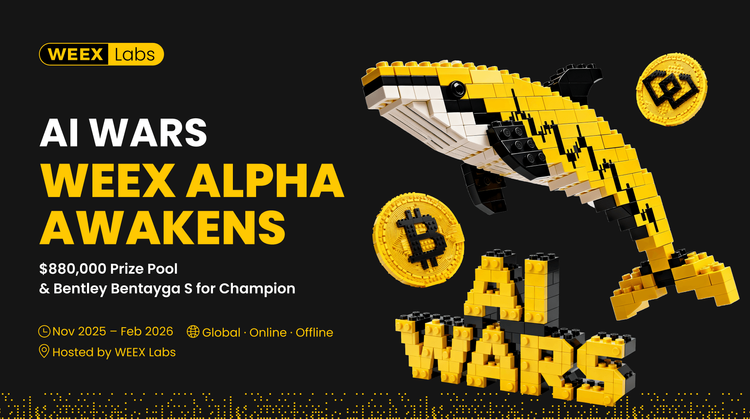
Join AI Wars: WEEK Alpha se réveille !Appel mondial pour les Alphas de Trading IA
AI Wars: WEEX Alpha Awakens est un hackathon mondial de trading sur l'IA à Dubaï, appelant les équipes quantiques, les traders algorithmiques et les développeurs d'IA à lancer leurs stratégies de trading crypto sur les marchés en direct pour une part d'une cagnotte de 880 000 $ US.

Nouveau: Prix de liquidation estimé sur les graphiques App Candlestick
WEEX a introduit un nouveau prix estimatif de liquidation (Est. Liq. Price) figure sur le graphique en chandelier pour aider les traders à mieux gérer le risque et à identifier des fourchettes sûres pour leurs positions.

Comment acheter des USDT et autres Stablecoins via WEEK P2P
Cet article explique pourquoi le P2P est largement utilisé, ce qui rend WEEK P2P différent et comment il offre un environnement sécurisé et fiable pour les utilisateurs.

Avantages VIP WEEX
Chaque niveau VIP offre des avantages exclusifs soigneusement adaptés pour soutenir votre succès de trading, y compris des limites de retrait plus élevées, des frais réduits et une assistance premium.

Récapitulatif du CCCC Lisbonne 2025 du WEEX: La présence mondiale et la voie vers le trading crypto-dirigé par l’IA
WEEX a fièrement conclu son voyage à Crypto Content Creator Campus (CCCC) 2025 en tant que sponsor Platinum, marquant une présence significative à l’un des principaux rassemblements mondiaux pour les créateurs de crypto, les innovateurs et les leaders de l’industrie
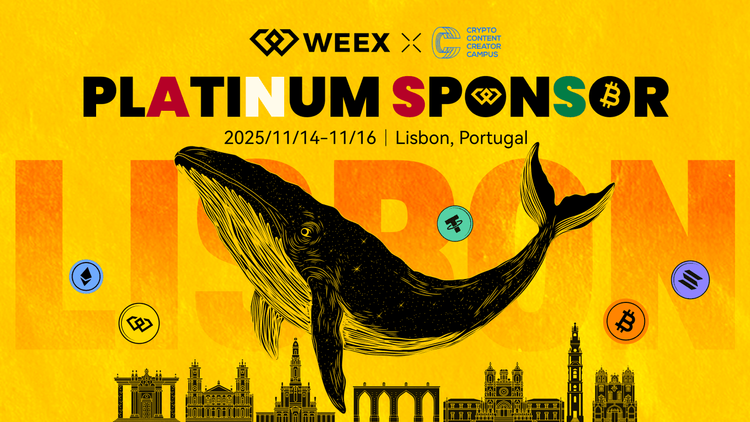
WEEX au CCCC Lisbonne 2025: Alimenter les créateurs de contenu cryptographique et enflammer l’ère du trading de l’IA avec le prochain Hackathon
La participation de WEEX au CCCC Lisbonne 2025, ainsi que ses prochaines guerres de l’IA: WEEX Alpha Awakens hackathon, marquera une étape clé dans son expansion stratégique à travers l'Europe et au-delà.

WEEX OTC recense plus de 200 paires de trading
La plateforme WEEX OTC prend désormais en charge plus de 200 nouvelles paires de trading, vous permettant d'acheter des cryptomonnaies directement avec votre devise locale - rapide, simple et sécurisée.

La Mort de Charlie Kirk Déclenche une Hausse des Scam Crypto Tokens, la Market Cap Atteint des Millions
Publié le 15 septembre 2025 à 12:33 UTC Imaginez un monde où une tragédie politique se transforme en…

La Mort de Charlie Kirk Déclenche une Hausse des Scam Crypto Tokens, Market Cap Atteint des Millions
La mort tragique de Charlie Kirk, activiste conservateur éminent et fondateur de Turning Point USA, survenue le 10…

Tactique Injuste pour Réduire les Dettes : Ce que Russia Pense de la Politique de Stablecoin des US
Publié le mercredi 11 septembre 2025 à 16:52:43 GMT. Imaginez un monde où les grandes puissances utilisent le…

Tactique Injuste pour Réduire les Debts : Ce que Russia Pense de la Stablecoin Policy de US
Publié le Mercredi, 11 Sep 2025 16:30:34 GMT Imaginez un monde où les grandes puissances jouent avec les…

Mise à Jour Cruciale : Eric Trump Retiré du Conseil d’ALT5 Sigma en Raison des Règles Nasdaq
ItsBitcoinWorld Dans le monde dynamique des cryptomonnaies, une nouvelle importante vient de secouer le secteur : Eric Trump…
Risque de trading d'IA en cryptomonnaie : Pourquoi de meilleures stratégies de trading crypto peuvent-elles générer des pertes plus importantes ?
Le risque ne réside plus principalement dans une mauvaise prise de décision ou des erreurs émotionnelles. Il vit de plus en plus dans la structure du marché, les parcours d'exécution et le comportement collectif. Comprendre ce changement est plus important que de trouver la prochaine stratégie « meilleure ».
Les agents de l'IA remplacent-ils la recherche crypto ? Comment l'IA autonome remodele le trading crypto
L'IA passe de l'assistance aux traders à l'automatisation de l'ensemble du processus de recherche à l'exécution sur les marchés crypto. L'avantage est passé de l'information humaine aux pipelines de données, à la vitesse et aux systèmes d'IA prêts à être exécutés, ce qui fait des retards dans l'intégration de l'IA un désavantage concurrentiel.
Boots de trading et copy trading IA : Comment les stratégies synchronisées remodèlent la volatilité du marché crypto
Les traders crypto de détail sont confrontés depuis longtemps aux mêmes défis : mauvaise gestion des risques, entrées tardives, décisions émotionnelles et exécution incohérente. Les outils de trading IA promettaient une solution. Aujourd'hui, les systèmes de copy trading et les bots de cassage alimentés par l'IA aident les traders à dimensionner leurs positions, à définir des stops et à agir plus rapidement que jamais. Au-delà de la vitesse et de la précision, ces outils remodèlent tranquillement les marchés : les traders ne tradent pas seulement plus malin, ils évoluent de façon synchronisée, créant une nouvelle dynamique qui amplifie à la fois les risques et les opportunités.
Le trading d'IA en crypto expliqué : Comment le trading autonome remodele les marchés crypto et les plateformes d’échange crypto
L’IA Trading transforme rapidement le paysage crypto. Les stratégies traditionnelles peinent à suivre la volatilité constante de la crypto et la structure complexe du marché, tandis que l'IA peut traiter des données massives, générer des stratégies adaptatives, gérer les risques et exécuter des trades de manière autonome. Cet article guide les utilisateurs de WEEX sur ce qu'est le trading d'IA, pourquoi la crypto accélère son adoption, comment le secteur évolue vers des agents autonomes et pourquoi WEEX construit l'écosystème de trading d'IA de nouvelle génération.
Trading d'IA sur les marchés crypto : Des bots de trading automatisés aux stratégies algorithmiques
Le trading basé sur l'IA fait passer la crypto de la spéculation au détail à une concurrence de niveau institutionnel, où l'exécution et la gestion des risques comptent plus que dans le sens. À mesure que le trading de l'IA prend de l'ampleur, les risques systémiques et la pression réglementaire augmentent, faisant des performances à long terme, des systèmes robustes et de la conformité les principaux facteurs de différenciation.
Analyse du sentiment de l'IA et volatilité des cryptomonnaies : Ce qui fait bouger les prix crypto
Le sentiment lié à l'IA influence de plus en plus les marchés crypto, les changements d'attente liés à l'IA se traduisant par une certaine volatilité pour les principaux actifs numériques. Les marchés crypto ont tendance à amplifier les discours sur l'IA, permettant aux flux basés sur les sentiments de l'emporter sur les fondamentaux à court terme. Comprendre comment le sentiment IA se forme et se propage aide les investisseurs à mieux anticiper les cycles de risque et les opportunités de positionnement sur les actifs numériques.
Pièces populaires
Dernières actus crypto


Assistance client:@weikecs
Collaborations commerciales:@weikecs
Trading quantitatif/Market makers:[email protected]
Programme VIP:[email protected]
 App
App