
- Acheter crypto
- Marchés
- Futures
- Spot
- Copy trading
 WE-Launch
Uncovering the USDE Crash: Exclusive Orderbook Insights Reveal Oracle Flaws and Market Chaos

Imagine a seemingly stable digital asset suddenly plummeting like a house of cards in a windstorm—that’s exactly what happened with the USDE crash on October 10, 2024. This event wasn’t just another dip; it marked the biggest liquidation frenzy in cryptocurrency history, wiping out billions and exposing hidden vulnerabilities in how prices are determined. Drawing from freshly analyzed orderbook data, we’ll dive into what went wrong, why it matters, and how it compares to past market meltdowns, all while keeping things straightforward and relatable.
The Massive Liquidation Wave That Shook Crypto
Picture this: a single day where over $19 billion vanished in liquidations, according to the latest figures from market trackers as of October 15, 2025. That’s a staggering drop that slashed open interest by $65 billion, making infamous events like the 2020 COVID-19 market plunge—with its $1.2 billion in losses—or the 2022 FTX fallout at $1.6 billion seem tame by comparison. Fast-forward to today, and updated data shows the ripple effects lingering, with total crypto market cap still recovering from that hit, hovering around $2.5 trillion per CoinMarketCap’s most recent reports.
What sparked this chaos? Investigators now point to a weak spot in pricing mechanisms on major exchanges, where certain tokens like USDE, bnSOL, and wBETH relied on internal orderbook info rather than secure external oracles. This setup left users, especially those using advanced account features, wide open to sudden liquidations during volatile swings. While evidence of a targeted exploit remains shaky, the sheer scale—USDE alone triggered about $346 million in cascading wipes, outpacing wBETH’s $169 million and bnSOL’s $77 million—raises eyebrows. It’s like leaving your front door unlocked in a storm; one gust, and everything inside gets tossed.
In the spirit of learning from history, this crash echoes the UST depeg of 2022, but with a twist—USDE’s backing held firm, with mints and redemptions chugging along normally. Yet, the absence of robust external checks allowed internal data glitches to amplify the damage, much like how a faulty GPS can send you miles off course.
Diving Deep into the Liquidity Collapse
Thanks to cutting-edge analysis from AI-powered market tools, we’ve got a front-row seat to the meltdown on the USDE/USDT pair. Before the storm hit, liquidity sat comfortably at around $89 million, evenly split between buys and sells. But between 21:40 and 21:55 UTC on that fateful day, it cratered by 74%, bottoming out at $23 million. By 21:54, it was a ghost town—down to $2 million, with bid-ask spreads exploding to 22%. Trading volume skyrocketed 896 times over, dominated by a 99% drop in buy-side depth, shoving USDE’s price to a low of $0.68 while it stayed pegged elsewhere.
During those intense 10 minutes, trades per minute jumped from a sleepy 108 to a frantic 3,000, with 92% being sells—fueled by panic, automated stops, and forced closures. It’s comparable to a crowded theater yelling “fire,” where one spark leads to a stampede. Anomaly detectors flagged weird patterns as early as 21:00 UTC, spotting 28 oddities like volume spikes and suspicious order bursts—four times the norm from the hour before. Three waves of massive orders hit just as Bitcoin began slipping, hinting at premeditated moves or automated defenses kicking in.
This fragility underscores crypto’s high-leverage tightrope walk. Without heavyweight market makers providing backbone, many tokens resemble fragile sandcastles, washing away in the tide of low organic demand. Recent Twitter buzz, as of October 15, 2025, echoes this, with threads from influencers like @CryptoWhaleAlert discussing how similar oracle issues persist, citing a fresh announcement from Ethena Labs (USDE’s issuer) on enhanced oracle integrations to prevent repeats. Popular Google searches like “What caused the USDE depeg?” and “How to avoid liquidation in crypto crashes?” highlight ongoing worries, while hot Twitter topics revolve around “crypto market resilience” and debates on whether this was an attack or just bad luck.
Lessons in Market Resilience and Brand Alignment
Stepping back, the USDE saga is a stark reminder of why reliable platforms matter in this wild west of finance. It’s like choosing a sturdy ship for stormy seas versus a leaky boat. In this context, aligning with exchanges that prioritize security and innovation can make all the difference. Take WEEX, for instance—a platform that’s built its reputation on robust risk management and user-focused tools. With features like advanced oracle integrations and seamless liquidity pools, WEEX stands out by helping traders navigate volatility without the pitfalls seen in events like this crash. Their commitment to transparency and quick recoveries has earned praise, positioning WEEX as a go-to for those seeking stability amid crypto’s ups and downs.
Ultimately, this crash proves that even “safe” assets can falter without strong foundations. Backed by real-time data from analytics firms, it’s clear that proactive measures—like diversifying oracles and monitoring orderbooks—could blunt future blows. As the market evolves, staying informed and choosing aligned partners keeps you ahead, turning potential disasters into opportunities for growth.
FAQ
What exactly triggered the USDE crash on October 10, 2024?
The crash stemmed from an oracle vulnerability where USDE’s price was tied to internal orderbook data instead of external sources, leading to rapid liquidity drains and massive liquidations totaling $19 billion.
How does this event compare to previous crypto crashes?
Unlike the UST depeg, which involved collateral failures, the USDE incident was more about oracle flaws and market imbalances, resulting in far larger liquidations—$19 billion versus UST’s smaller scale—highlighting growing leverage in the space.
What can traders do to protect against similar liquidation events?
Focus on platforms with strong oracle protections, diversify assets, and use stop-loss orders wisely. Monitoring real-time data and avoiding over-leveraged positions, as seen in updated guides from 2025, can significantly reduce risks.
Vous pourriez aussi aimer

WEEXPERIENCE Nuit des baleines : Trading IA, communauté crypto et marché crypto
Le 12 décembre 2025, WEEX a organisé WEEXPERIENCE Whales Night, un rassemblement communautaire hors ligne conçu pour rassembler les membres de la communauté crypto locale. L'événement a combiné le partage de contenu, des jeux interactifs et des présentations de projets pour créer une expérience hors ligne détendue et attrayante.
Risque de trading d'IA en cryptomonnaie : Pourquoi de meilleures stratégies de trading crypto peuvent-elles générer des pertes plus importantes ?
Le risque ne réside plus principalement dans une mauvaise prise de décision ou des erreurs émotionnelles. Il vit de plus en plus dans la structure du marché, les parcours d'exécution et le comportement collectif. Comprendre ce changement est plus important que de trouver la prochaine stratégie « meilleure ».
Les agents de l'IA remplacent-ils la recherche crypto ? Comment l'IA autonome remodele le trading crypto
L'IA passe de l'assistance aux traders à l'automatisation de l'ensemble du processus de recherche à l'exécution sur les marchés crypto. L'avantage est passé de l'information humaine aux pipelines de données, à la vitesse et aux systèmes d'IA prêts à être exécutés, ce qui fait des retards dans l'intégration de l'IA un désavantage concurrentiel.
Boots de trading et copy trading IA : Comment les stratégies synchronisées remodèlent la volatilité du marché crypto
Les traders crypto de détail sont confrontés depuis longtemps aux mêmes défis : mauvaise gestion des risques, entrées tardives, décisions émotionnelles et exécution incohérente. Les outils de trading IA promettaient une solution. Aujourd'hui, les systèmes de copy trading et les bots de cassage alimentés par l'IA aident les traders à dimensionner leurs positions, à définir des stops et à agir plus rapidement que jamais. Au-delà de la vitesse et de la précision, ces outils remodèlent tranquillement les marchés : les traders ne tradent pas seulement plus malin, ils évoluent de façon synchronisée, créant une nouvelle dynamique qui amplifie à la fois les risques et les opportunités.
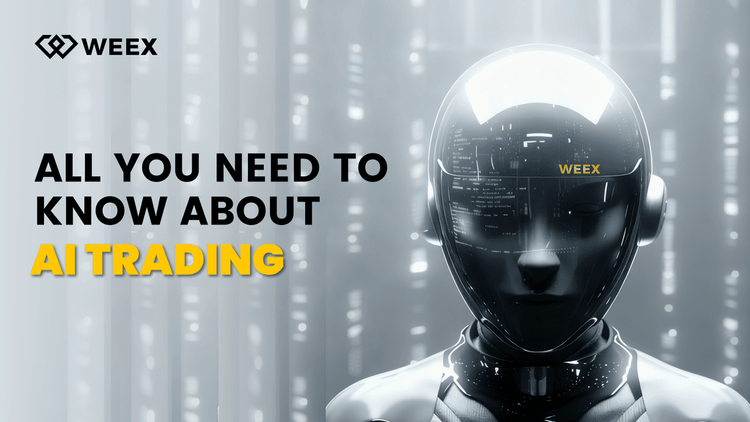
Le trading d'IA en crypto expliqué : Comment le trading autonome remodele les marchés crypto et les plateformes d’échange crypto
L’IA Trading transforme rapidement le paysage crypto. Les stratégies traditionnelles peinent à suivre la volatilité constante de la crypto et la structure complexe du marché, tandis que l'IA peut traiter des données massives, générer des stratégies adaptatives, gérer les risques et exécuter des trades de manière autonome. Cet article guide les utilisateurs de WEEX sur ce qu'est le trading d'IA, pourquoi la crypto accélère son adoption, comment le secteur évolue vers des agents autonomes et pourquoi WEEX construit l'écosystème de trading d'IA de nouvelle génération.
Appelez à rejoindre AI Wars : WEEX Alpha Awakens – Tournoi mondial de trading d’IA avec une cagnotte de 880 000 $
Maintenant, nous lançons un appel aux traders d'IA du monde entier pour qu'ils rejoignent AI Wars : WEEX Alpha Awakens, un tournoi mondial de trading d'IA doté d'une cagnotte de 880 000 $.

Trading d'IA sur les marchés crypto : Des bots de trading automatisés aux stratégies algorithmiques
Le trading basé sur l'IA fait passer la crypto de la spéculation au détail à une concurrence de niveau institutionnel, où l'exécution et la gestion des risques comptent plus que dans le sens. À mesure que le trading de l'IA prend de l'ampleur, les risques systémiques et la pression réglementaire augmentent, faisant des performances à long terme, des systèmes robustes et de la conformité les principaux facteurs de différenciation.

Analyse du sentiment de l'IA et volatilité des cryptomonnaies : Ce qui fait bouger les prix crypto
Le sentiment lié à l'IA influence de plus en plus les marchés crypto, les changements d'attente liés à l'IA se traduisant par une certaine volatilité pour les principaux actifs numériques. Les marchés crypto ont tendance à amplifier les discours sur l'IA, permettant aux flux basés sur les sentiments de l'emporter sur les fondamentaux à court terme. Comprendre comment le sentiment IA se forme et se propage aide les investisseurs à mieux anticiper les cycles de risque et les opportunités de positionnement sur les actifs numériques.
Guerres de l'IA : Guide du participant
Dans cette confrontation ultime, les meilleurs développeurs, quants et traders du monde entier déploieront leurs algorithmes dans des batailles sur le marché réel, en compétition pour l'un des prix les plus importants de l'histoire du trading crypto basé sur l'IA : 880 000 dollars américains, dont une Bentley Bentayga S pour le champion. Ce guide vous accompagnera à travers toutes les étapes nécessaires, de l'inscription au début officiel de la compétition.

Semaine des banques centrales et volatilité des marchés crypto : Comment les décisions relatives aux taux d'intérêt influencent les conditions de trading sur WEEX
Les décisions relatives aux taux d'intérêt prises par les grandes banques centrales, comme la Réserve fédérale, sont des événements macroéconomiques importants qui ont un impact sur les marchés financiers mondiaux et influencent directement les attentes de liquidité des marchés et l'appétence au risque. À mesure que le marché des cryptomonnaies continue de se développer et que sa structure de trading et ses participants mûrissent, le marché des cryptomonnaies est progressivement intégré dans le système d'établissement des prix macroéconomiques.
Test de l'API WEEX : Guide officiel des API de trading de Hackathon et de Crypto pour le trading d’IA
WEEX API Testing est conçu pour garantir que chaque participant peut transformer la logique de trading en exécution réelle. Toutes les interactions API ont lieu sur le système de trading en direct de WEEX, ce qui permet aux participants de travailler dans des conditions de marché authentiques plutôt que dans des simulations. Avec une faible exigence d'entrée, la tâche est accessible à la fois aux développeurs expérimentés et aux débutants motivés, tout en validant les compétences techniques essentielles.
Pourquoi WEEX Alpha se réveille-t-il le meilleur tournoi de trading d'IA de 2025 ? Tout ce que vous devez savoir
Pour accélérer les percées à l'intersection de l'IA et de la crypto, WEEX lance le premier Hackathon mondial de trading d'IA – AI Wars: Alpha se réveille. L'événement propose une cagnotte révolutionnaire dépassant 880 000 $, dont une Bentley Bentayga S pour le champion ultime.
AI Wars: WEEX Alpha Awakens | Guide des processus de test de l'API WEEX Global Hackathon
AI Wars : L'inscription au Réveil Alpha WEEX est maintenant ouverte. Ce guide explique comment accéder au test API et terminer le processus avec succès.
Qu'est-ce que le réveil de WEEX Alpha et comment participer ? Un guide complet
Pour accélérer les percées à l'intersection de l'IA et de la crypto, WEEX lance le premier Hackathon mondial de trading d'IA – AI Wars: Alpha se réveille.
Join AI Wars: WEEK Alpha se réveille !Appel mondial pour les Alphas de Trading IA
AI Wars: WEEX Alpha Awakens est un hackathon mondial de trading sur l'IA à Dubaï, appelant les équipes quantiques, les traders algorithmiques et les développeurs d'IA à lancer leurs stratégies de trading crypto sur les marchés en direct pour une part d'une cagnotte de 880 000 $ US.
WEEX AI Hackathon Guide: Trouvez votre UID WEEK et inscrivez-vous
D'ici février 2026, WEEX lance AI Wars: WEEK Alpha Awakens, le premier hackathon mondial de trading de crypto-IA. Venez votre UID et inscrivez-vous au WEEX Global AI Trading Hackathon.
novembre 2025 Revue du marché cryptographique: Correction des prix, rachats d’ETF et évolution du paysage de la blockchain
Novembre 2025 a été marqué par une forte volatilité et une correction structurelle au sein de l’écosystème global de la blockchain, principalement sous l’effet des prévisions macroéconomiques fluctuantes et de la dynamique spécifique des flux de capitaux.

WEEX lance un hackathon mondial de trading sur l'IA avec une cagnotte de 880 000 $ et une Bentley pour Champion
AI Wars: WEEX Alpha Awakens est plus qu’une compétition – c’est une étape mondiale où convergent innovation, stratégie et maîtrise algorithmique. De la pré-inscription à la finale en direct à Dubaï, les participants navigueront dans la volatilité réelle du marché, s'attaqueront à des défis extrêmes et présenteront leurs prouesses de trading en IA pour des récompenses sans précédent. Avec 880 000 $ en prix, des incitatifs WXT de $, une Bentley Bentayga S pour le champion et le soutien de partenaires de premier plan, cet événement renforce la vision stratégique de WEEK de mener le trading axé sur l’IA, d’étendre son influence mondiale et de cultiver une communauté d’innovateurs de pointe. L’arène est ouverte — WEEX fait appel à des équipes ambitieuses dans le monde entier pour rejoindre, rivaliser et façonner la prochaine ère du trading cryptographique basé sur l’IA.
WEEXPERIENCE Nuit des baleines : Trading IA, communauté crypto et marché crypto
Le 12 décembre 2025, WEEX a organisé WEEXPERIENCE Whales Night, un rassemblement communautaire hors ligne conçu pour rassembler les membres de la communauté crypto locale. L'événement a combiné le partage de contenu, des jeux interactifs et des présentations de projets pour créer une expérience hors ligne détendue et attrayante.
Risque de trading d'IA en cryptomonnaie : Pourquoi de meilleures stratégies de trading crypto peuvent-elles générer des pertes plus importantes ?
Le risque ne réside plus principalement dans une mauvaise prise de décision ou des erreurs émotionnelles. Il vit de plus en plus dans la structure du marché, les parcours d'exécution et le comportement collectif. Comprendre ce changement est plus important que de trouver la prochaine stratégie « meilleure ».
Les agents de l'IA remplacent-ils la recherche crypto ? Comment l'IA autonome remodele le trading crypto
L'IA passe de l'assistance aux traders à l'automatisation de l'ensemble du processus de recherche à l'exécution sur les marchés crypto. L'avantage est passé de l'information humaine aux pipelines de données, à la vitesse et aux systèmes d'IA prêts à être exécutés, ce qui fait des retards dans l'intégration de l'IA un désavantage concurrentiel.
Boots de trading et copy trading IA : Comment les stratégies synchronisées remodèlent la volatilité du marché crypto
Les traders crypto de détail sont confrontés depuis longtemps aux mêmes défis : mauvaise gestion des risques, entrées tardives, décisions émotionnelles et exécution incohérente. Les outils de trading IA promettaient une solution. Aujourd'hui, les systèmes de copy trading et les bots de cassage alimentés par l'IA aident les traders à dimensionner leurs positions, à définir des stops et à agir plus rapidement que jamais. Au-delà de la vitesse et de la précision, ces outils remodèlent tranquillement les marchés : les traders ne tradent pas seulement plus malin, ils évoluent de façon synchronisée, créant une nouvelle dynamique qui amplifie à la fois les risques et les opportunités.
Le trading d'IA en crypto expliqué : Comment le trading autonome remodele les marchés crypto et les plateformes d’échange crypto
L’IA Trading transforme rapidement le paysage crypto. Les stratégies traditionnelles peinent à suivre la volatilité constante de la crypto et la structure complexe du marché, tandis que l'IA peut traiter des données massives, générer des stratégies adaptatives, gérer les risques et exécuter des trades de manière autonome. Cet article guide les utilisateurs de WEEX sur ce qu'est le trading d'IA, pourquoi la crypto accélère son adoption, comment le secteur évolue vers des agents autonomes et pourquoi WEEX construit l'écosystème de trading d'IA de nouvelle génération.
Appelez à rejoindre AI Wars : WEEX Alpha Awakens – Tournoi mondial de trading d’IA avec une cagnotte de 880 000 $
Maintenant, nous lançons un appel aux traders d'IA du monde entier pour qu'ils rejoignent AI Wars : WEEX Alpha Awakens, un tournoi mondial de trading d'IA doté d'une cagnotte de 880 000 $.
Pièces populaires
Dernières actus crypto


Assistance client:@weikecs
Collaborations commerciales:@weikecs
Trading quantitatif/Market makers:[email protected]
Programme VIP:[email protected]
 App
App