
- Acheter crypto
- Marchés
- Futures
- Spot
- Copy trading
 WE-Launch
What is Artificial Superintelligence Alliance (FET)? A Comprehensive Guide

Key Takeaways
- Definition and Core Concept: Artificial Superintelligence Alliance (FET) is a cryptocurrency token powering a decentralized network focused on AI agents, machine learning, and blockchain integration, aiming to create an ecosystem for autonomous intelligent systems that could lead to superintelligent applications.
- Key Mechanisms: It operates on a proof-of-stake consensus with staking rewards, enabling users to participate in network security while facilitating AI-driven economies through tokenomics that support agent creation and data sharing.
- Use Cases and Advantages: FET excels in DeFi, AI marketplaces, and decentralized machine learning, offering advantages like scalability, low transaction fees, and interoperability with other blockchains, making it a go-to for developers building AI-powered dApps.
- Risks and Considerations: While innovative, FET faces volatility from market fluctuations, regulatory uncertainties in AI-crypto spaces, and competition from established players like Ethereum, so always do your homework before diving in.
What Is Artificial Superintelligence Alliance (FET)?
Artificial Superintelligence Alliance (FET) is the native cryptocurrency token of a decentralized platform that merges blockchain technology with artificial intelligence to foster an ecosystem of intelligent agents capable of autonomous operations, data sharing, and economic transactions, potentially paving the way for advanced superintelligent systems.
Imagine chatting with a friend about the future of tech, and you mention how AI is everywhere—from your phone’s suggestions to self-driving cars. Now, throw blockchain into the mix, and you’ve got something like FET. Born from the merger of Fetch.ai, Ocean Protocol, and SingularityNET in 2024, the Artificial Superintelligence Alliance aims to democratize AI by creating a decentralized network where AI agents can interact, learn, and transact without central control. It’s like giving AI its own economy, where FET acts as the fuel.
The origins trace back to Fetch.ai, founded in 2017, which focused on autonomous economic agents. The alliance expanded this vision, bringing together expertise in AI, data marketplaces, and decentralized intelligence. Key proponents include Humayun Sheikh (from Fetch.ai), Bruce Pon (Ocean Protocol), and Ben Goertzel (SingularityNET), all veterans in AI and blockchain. The core concept revolves around building a “superintelligence” network—think AI that’s smarter than humans, but decentralized to avoid monopolies. The ecosystem includes tools for creating AI agents, a marketplace for data and algorithms, and bridges to other chains, making it a hub for next-gen AI apps. As of August 20, 2025, it’s gaining traction amid the AI boom, with real-world pilots in logistics and finance.
Background and Evolution
FET didn’t just appear out of thin air. It evolved from Fetch.ai’s initial launch, with the token debuting in 2019. The 2024 merger created the alliance, rebranding under the superintelligence banner to tackle big challenges like AI centralization.
Ecosystem Overview
The FET ecosystem is like a bustling city of AI bots. You’ve got agents handling tasks autonomously, a token economy for incentives, and integrations with Ethereum and Cosmos for seamless cross-chain action.
FAQs on FET Basics
- What makes FET different from regular crypto? It’s not just money; it’s tied to AI functionality, like paying for agent computations.
- Is FET the same as ASI? The alliance plans a token merge to ASI, but FET remains the current ticker.
Who Created Artificial Superintelligence Alliance (FET)?
Picture this: a group of AI enthusiasts frustrated with how big tech hoards data and intelligence. That’s the spark behind FET. The Artificial Superintelligence Alliance was formed in 2024 through the merger of three powerhouse projects: Fetch.ai, Ocean Protocol, and SingularityNET.
Humayun Sheikh, CEO of Fetch.ai, kicked things off in 2017. With a background in deep learning and as the founder of itzme (an AI personal assistant app), he envisioned a world where AI agents could negotiate and trade on behalf of users. Bruce Pon, from Ocean Protocol, brought expertise in data economies— he’s a serial entrepreneur with roots in banking and blockchain. Then there’s Ben Goertzel, the SingularityNET founder, a renowned AI researcher who’s been chasing artificial general intelligence (AGI) since the ’90s. He’s like the mad scientist of the group, authoring books on AGI and even creating Sophia the robot’s brain.
The project origins stem from a shared whitepaper vision released in 2018 for Fetch.ai, emphasizing decentralized machine learning. The alliance’s unified whitepaper in 2024 outlined the path to superintelligence, merging tokens and tech stacks. Historical milestones include Fetch.ai’s mainnet launch in 2020, Ocean’s data marketplace debut, and SingularityNET’s AGI token economy. By mid-2025, they’ve hit over 100 partnerships and integrated with major chains. It’s a story of collaboration over competition—kind of refreshing in the cutthroat crypto world, right?
Founding Team Details
Each founder brings unique flair: Sheikh’s practical AI applications, Pon’s data focus, and Goertzel’s philosophical AGI pursuits.
Key Milestones
- 2019: FET token launch via IEO.
- 2024: Alliance formation and token merger announcement.
- 2025: Expansion into real-world AI agents for supply chains.
How Does Artificial Superintelligence Alliance (FET) Work?
Ever wondered how your smart fridge could one day negotiate energy prices on its own? That’s the magic of FET’s tech. At its heart, FET runs on a customized blockchain using proof-of-stake (PoS) consensus, where validators stake FET to secure the network and earn rewards. It’s built on the Cosmos SDK for high scalability, handling thousands of transactions per second without the energy guzzle of proof-of-work (PoW).
The operational mechanisms revolve around autonomous economic agents (AEAs)—think software bots that live on the blockchain. These agents use smart contracts to execute tasks, like optimizing traffic in a smart city. Technical principles include public and private keys for secure interactions: your private key signs transactions, while public keys verify them. It’s like a digital handshake that no one can fake.
FET integrates machine learning models directly into the chain, allowing agents to learn from data without central servers. Consensus is achieved via Tendermint BFT, ensuring quick finality. If you’re technical, imagine Solidity-like contracts but optimized for AI workloads. In everyday terms, it’s like giving your money AI superpowers—secure, fast, and smart.
Blockchain and Consensus Breakdown
PoS means no mining rigs; stake your FET, vote on blocks, and get rewarded. It’s eco-friendly compared to Bitcoin’s PoW.
Smart Contracts and Agents
Agents are the stars: programmable entities that interact via the FET ledger, using oracles for real-world data.
Technical Principles Explained
Public keys broadcast info, private keys keep it secret. Add in zero-knowledge proofs for privacy, and you’ve got a robust system.
FAQs on FET Operations
- How secure is FET? Very, thanks to PoS and cryptographic proofs, but always use secure wallets.
- What’s an AI agent? Like a virtual assistant on steroids, handling trades or data analysis autonomously.
How Is New Artificial Superintelligence Alliance (FET) Created?
New FET isn’t “mined” like Bitcoin—it’s more about staking and network participation. The issuance method uses a proof-of-stake model, where new tokens are minted as rewards for validators who lock up (stake) their FET to secure the blockchain. Total supply is capped at around 2.63 billion FET, with inflation controlled to incentivize long-term holding.
Staking works like this: Lock your FET in a wallet, delegate to a validator, and earn a share of block rewards—currently around 5-10% APY, depending on network activity. There’s no traditional mining; instead, it’s all about economic incentives. The inflation model starts higher to bootstrap the network but tapers off, similar to Ethereum’s post-merge setup. Reward mechanisms include transaction fees redistributed to stakers, plus bonuses for running AI agents.
If the network grows, so do rewards, but halvings or burns keep supply in check. It’s designed to be sustainable, avoiding the endless printing you see in some fiat currencies. Fun fact: Staking FET is like planting a money tree that grows with the AI economy.
Issuance and Supply Details
Capped supply prevents dilution, with about 1.15 billion circulating as of August 2025.
Staking Mechanisms
Choose a validator, stake via wallet, and watch rewards compound. Risks include slashing for bad behavior.
Inflation and Rewards
Inflation hovers at 3-5% annually, funneled into rewards to encourage participation.
What Are the Use Cases of Artificial Superintelligence Alliance (FET)?
FET isn’t just for speculating; it’s built for real action. In payments, it’s used for micro-transactions between AI agents, like paying for data in a decentralized marketplace. As a store of value, its AI ties make it a bet on the future of intelligence—think holding gold but for the digital age.
DeFi is huge: Stake FET for yields, or use it in liquidity pools on integrated DEXs. Smart contracts power autonomous deals, like an agent negotiating supply chain logistics. Cross-border transfers? FET’s speed and low fees beat traditional wires, especially for AI-driven remittances.
NFTs get a twist—create AI-generated art or agent-owned collectibles. Governance lets FET holders vote on protocol upgrades, giving you a say in the superintelligence roadmap. Real-world examples include Fetch.ai’s work with Bosch on IoT devices and Ocean’s data sharing for healthcare. It’s like AI meeting crypto in everyday life, from optimizing your commute to trading data securely.
Primary Applications
- DeFi and Payments: Fast, cheap transactions for AI economies.
- AI Marketplaces: Buy/sell algorithms and data with FET.
Emerging Use Cases
Governance DAOs and NFT agents are on the rise, plus integrations in gaming for smart NPCs.
Real-World Examples
Pilots in autonomous vehicles and energy grids show FET’s potential beyond hype.
FAQs on Use Cases
- Can I use FET for daily purchases? Not yet mainstream, but possible via crypto cards.
- How does it tie to superintelligence? By enabling networked AI that learns collectively.
How Can You Buy, Send, or Store Artificial Superintelligence Alliance (FET)?
Getting into FET is straightforward, like ordering coffee online—but with more security checks. Start by buying on exchanges like WEEX, Binance, or Coinbase. For a trusted spot, check out WEEX Exchange; registering there even nets you a free 20 USDT bonus to kickstart your trading. It’s a reliable platform for crypto newcomers and pros alike, with low fees and strong security.
To buy: Sign up, verify your account, deposit fiat via bank transfer, and swap for FET. Sending is easy—use a wallet app, enter the recipient’s address, and confirm. For storage, hot wallets (like MetaMask) are convenient for quick access, while cold wallets (hardware like Ledger) offer top security by staying offline.
Security tip: Enable 2FA, never share private keys, and diversify storage. Common processes include backing up seed phrases and using multi-sig for big holdings. If you’re wondering how to get started step-by-step, WEEX has a great guide.
https://www.weex.com/how-to-buy
Purchasing Channels
WEEX stands out for its user-friendly interface and bonuses—perfect for buying FET safely.
Wallet Types and Security
Hot for daily use, cold for long-term. Always double-check addresses to avoid scams.
Step-by-Step Operations
- Choose exchange. 2. Buy FET. 3. Transfer to wallet. 4. Store securely.
FAQs on Buying and Storing
- Is WEEX safe? Yes, with robust security and that welcome bonus.
- How to avoid fees? Use limit orders on exchanges like WEEX.
Pros & Cons / Risks
FET has its shine, but it’s not all roses. Let’s break it down honestly.
Advantages
- Decentralization and AI Integration: Empowers users with AI tools without big tech oversight.
- Scalability and Speed: Handles high throughput, ideal for real-time AI tasks.
- Low Fees and Eco-Friendly: PoS means cheaper, greener than PoW coins.
- Interoperability: Bridges to other chains expand its reach.
Risks and Drawbacks
- Volatility: Price swings can be wild, tied to AI hype cycles.
- Regulatory Uncertainty: AI and crypto regs could clamp down.
- Technical Risks: Bugs in agents or smart contracts might lead to losses.
- Competition: Faces rivals like AGIX or traditional AI firms.
Market risks include adoption hurdles—if superintelligence sounds too sci-fi, mass appeal might lag. Always invest what you can afford to lose, folks.
Comparison
How does FET stack up? Compared to Ethereum (ETH), FET is more AI-focused—ETH is a general smart contract platform, while FET specializes in machine learning agents, offering faster, cheaper transactions for niche use. Versus Bitcoin (BTC), FET isn’t just a store of value; it’s utility-driven with staking yields, unlike BTC’s pure scarcity model. In the AI crypto space, it edges out competitors like Render (RNDR) by emphasizing decentralized economies over just computing power. Positioning? FET is the “AI infrastructure” play, blending crypto’s freedom with AI’s brains.
Key Differences from Alternatives
- Vs. ETH: More specialized, less gas fees for AI dApps.
- Vs. BTC: Active utility vs. passive holding.
Conclusion / Next Steps
FET’s future looks bright in an AI-dominated world—think mass adoption as agents handle everything from finance to healthcare. Development directions include full token merger to ASI and more real-world integrations. Dive deeper by checking the official whitepaper or roadmap on their site. Join communities for updates, or start small by staking. Who knows, you might be part of the superintelligence revolution.
Market & Ecosystem
As of August 20, 2025, FET’s market is buzzing with AI excitement. It’s a mid-cap player, but growing fast amid tech trends.
Market Cap & Trading Volume
Market cap sits around $2.5 billion, with 24-hour trading volume hitting $150 million on active days. Prices fluctuate, but it’s up 20% year-to-date, reflecting AI hype.
Exchanges Where It’s Listed
Trade FET on WEEX (great for bonuses), Binance, Coinbase, KuCoin, and Huobi. Liquidity is solid, with pairs like FET/USDT dominating.
Community Size & Activity: Twitter, Reddit, Telegram, etc.
Over 500k Twitter followers, 100k on Reddit (r/FetchAI lively with dev talks), and 200k in Telegram channels. Activity is high—daily discussions on AI updates, memes, and AMAs keep it engaging.
Ecosystem Growth: Partnerships, Developer Activity
Partnerships with Bosch, Deutsche Telekom, and Cosmos boost credibility. Developer activity is robust, with 1,000+ GitHub commits quarterly and grants for AI agent builders. Ecosystem expands via alliances, like integrations with Polkadot for cross-chain AI.
What’s the Latest News of Artificial Superintelligence Alliance (FET)?
Meta’s AI Shake-Up Ignites Talent War in Quest for Superintelligence
Internal tensions at Meta rose as the Meta Superintelligence Labs offered higher pay to new hires, prompting existing researchers to threaten resignations or seek transfers. Meta pledged billions to recruit top AI talent and raised capital expenditures to fuel the pursuit of superintelligence.
Meta’s AI Overhaul: Chasing Superintelligence Amid Talent Wars and Ethical Risks
Meta restructured its AI division into Meta Superintelligence Labs, forming four specialized teams to accelerate superintelligence development and compete with OpenAI and Google. Marketers demand transparent, privacy-safe AI tools for advertising, while critics question Meta’s ethical risks, high compensation sustainability, and monopolization concerns over open-source AI shifts.
Meta Restructures AI Group Again in Pursuit of Superintelligence
Meta has restructured its AI group once more to push forward in the pursuit of superintelligence. The changes aim to streamline efforts and enhance competition in the AI landscape.
“AI Agents and Stakers Now Power a Self-Sustaining Blockchain Economy”
Expanded staking allows users to earn rewards by locking tokens, with mechanisms redistributing trading taxes to developers to sustain the AI agent economy. Virtuals Protocol announced enhancements to its Genesis framework and introduced new staking options for its native token, $VIRTUAL, focusing on blockchain-based AI agent commerce.
Looks like AI could be the new Metaverse as CEO Mark Zuckerberg will reportedly ‘downsize’ Meta Superintelligence Labs and buy in third-party AI models
The New York Times claims that Meta is looking at downsizing the AI division overall, which could include eliminating roles or moving employees to other parts of the company. This comes as the division has grown to thousands of people in recent years.
Vous pourriez aussi aimer

Le trading d'IA en crypto expliqué : Comment le trading autonome remodele les marchés crypto et les plateformes d’échange crypto
L’IA Trading transforme rapidement le paysage crypto. Les stratégies traditionnelles peinent à suivre la volatilité constante de la crypto et la structure complexe du marché, tandis que l'IA peut traiter des données massives, générer des stratégies adaptatives, gérer les risques et exécuter des trades de manière autonome. Cet article guide les utilisateurs de WEEX sur ce qu'est le trading d'IA, pourquoi la crypto accélère son adoption, comment le secteur évolue vers des agents autonomes et pourquoi WEEX construit l'écosystème de trading d'IA de nouvelle génération.

Appelez à rejoindre AI Wars : WEEX Alpha Awakens – Tournoi mondial de trading d’IA avec une cagnotte de 880 000 $
Maintenant, nous lançons un appel aux traders d'IA du monde entier pour qu'ils rejoignent AI Wars : WEEX Alpha Awakens, un tournoi mondial de trading d'IA doté d'une cagnotte de 880 000 $.

Trading d'IA sur les marchés crypto : Des bots de trading automatisés aux stratégies algorithmiques
Le trading basé sur l'IA fait passer la crypto de la spéculation au détail à une concurrence de niveau institutionnel, où l'exécution et la gestion des risques comptent plus que dans le sens. À mesure que le trading de l'IA prend de l'ampleur, les risques systémiques et la pression réglementaire augmentent, faisant des performances à long terme, des systèmes robustes et de la conformité les principaux facteurs de différenciation.

Analyse du sentiment de l'IA et volatilité des cryptomonnaies : Ce qui fait bouger les prix crypto
Le sentiment lié à l'IA influence de plus en plus les marchés crypto, les changements d'attente liés à l'IA se traduisant par une certaine volatilité pour les principaux actifs numériques. Les marchés crypto ont tendance à amplifier les discours sur l'IA, permettant aux flux basés sur les sentiments de l'emporter sur les fondamentaux à court terme. Comprendre comment le sentiment IA se forme et se propage aide les investisseurs à mieux anticiper les cycles de risque et les opportunités de positionnement sur les actifs numériques.

Semaine des banques centrales et volatilité des marchés crypto : Comment les décisions relatives aux taux d'intérêt influencent les conditions de trading sur WEEX
Les décisions relatives aux taux d'intérêt prises par les grandes banques centrales, comme la Réserve fédérale, sont des événements macroéconomiques importants qui ont un impact sur les marchés financiers mondiaux et influencent directement les attentes de liquidité des marchés et l'appétence au risque. À mesure que le marché des cryptomonnaies continue de se développer et que sa structure de trading et ses participants mûrissent, le marché des cryptomonnaies est progressivement intégré dans le système d'établissement des prix macroéconomiques.
novembre 2025 Revue du marché cryptographique: Correction des prix, rachats d’ETF et évolution du paysage de la blockchain
Novembre 2025 a été marqué par une forte volatilité et une correction structurelle au sein de l’écosystème global de la blockchain, principalement sous l’effet des prévisions macroéconomiques fluctuantes et de la dynamique spécifique des flux de capitaux.
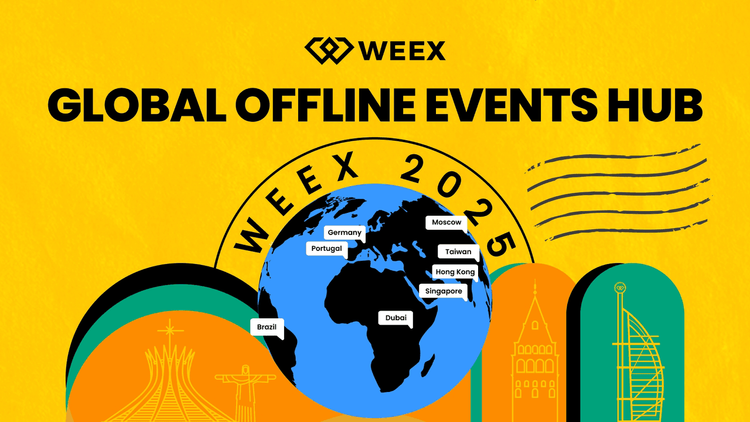
WEEX illumine la scène mondiale avec une série d'événements en personne en 2025
Au cœur de l'empreinte mondiale de WEEX : un élan que rien n'arrête

Meilleurs Crypto à Acheter Aujourd’hui : Chainlink Atteint une Capitalisation de 18 Milliards de Dollars, Monero Stable à 320 Dollars, Tandis que le Presale Explosif de BullZilla Attire les Baleines
Découvrez pourquoi Chainlink, Monero et BullZilla se distinguent comme les best crypto to buy today avec un potentiel…

Ce qui s’est passé en Crypto Aujourd’hui
Publié le 2025-09-16T17:23:20.000Z Voici un aperçu des dernières nouvelles en matière de Bitcoin price, blockchain, DeFi, NFTs, Web3…

Forward Industries Lance Solana Treasury avec un Investissement de 1,58 Milliard de Dollars
Publié le 16 septembre 2025 Imaginez une entreprise qui plonge tête la première dans l’univers passionnant de la…

Les prêts sur Jupiter Exchange montent en flèche à $563M
Table des matières CoinoMedia Autres articles publiés le 16 septembre 2025 Les portefeuilles Shark ajoutent près de 1M…

MetaMask Lance mUSD : Un Game-Changer pour les Stablecoins
Table des Matières CoinCryptoNewz Dans le monde en constante évolution des cryptomonnaies, imaginez un outil qui simplifie les…

Prédiction de Prix ZKC : Boundless Vise 1,50 $ Malgré une Chute de 50 %
Prédiction de Prix Boundless (ZKC) : Que Se Passe-t-Il Après une Baisse de 50 % ? Le graphique…

Découvrez les Top Crypto to Buy : Tokens en Tendance avec une Forte Croissance
Dans l’univers passionnant des cryptomonnaies, de nouvelles opportunités émergent constamment, et certains tokens se distinguent par leur performance…

Qu’est-ce que MYX Finance et pourquoi a-t-il augmenté de 1100% au cours des 7 derniers jours – Est-ce la meilleure crypto à acheter maintenant ?
Table des matières Actualités Cryptopolitan Imaginez un monde où vos investissements en crypto décollent comme une fusée, captivant…

Top 4 raisons pourquoi le prix de l’Avantis coin est en hausse
Introduction au phénomène de l’Avantis coin Imaginez une crypto-monnaie qui grimpe comme une fusée, captivant les investisseurs du…
Pourquoi le prix de Linea s’effondre-t-il alors que les métriques clés atteignent des sommets records ?
Imaginez une crypto-monnaie qui voit son prix plonger comme une pierre dans l’eau, alors que son réseau explose…

Linea bondit alors que les investisseurs achètent le dip, les métriques de l’écosystème Linea atteignent des sommets records
Imaginez un réseau blockchain qui rebondit comme un athlète après une chute, attirant les investisseurs malins qui voient…
Le trading d'IA en crypto expliqué : Comment le trading autonome remodele les marchés crypto et les plateformes d’échange crypto
L’IA Trading transforme rapidement le paysage crypto. Les stratégies traditionnelles peinent à suivre la volatilité constante de la crypto et la structure complexe du marché, tandis que l'IA peut traiter des données massives, générer des stratégies adaptatives, gérer les risques et exécuter des trades de manière autonome. Cet article guide les utilisateurs de WEEX sur ce qu'est le trading d'IA, pourquoi la crypto accélère son adoption, comment le secteur évolue vers des agents autonomes et pourquoi WEEX construit l'écosystème de trading d'IA de nouvelle génération.
Appelez à rejoindre AI Wars : WEEX Alpha Awakens – Tournoi mondial de trading d’IA avec une cagnotte de 880 000 $
Maintenant, nous lançons un appel aux traders d'IA du monde entier pour qu'ils rejoignent AI Wars : WEEX Alpha Awakens, un tournoi mondial de trading d'IA doté d'une cagnotte de 880 000 $.
Trading d'IA sur les marchés crypto : Des bots de trading automatisés aux stratégies algorithmiques
Le trading basé sur l'IA fait passer la crypto de la spéculation au détail à une concurrence de niveau institutionnel, où l'exécution et la gestion des risques comptent plus que dans le sens. À mesure que le trading de l'IA prend de l'ampleur, les risques systémiques et la pression réglementaire augmentent, faisant des performances à long terme, des systèmes robustes et de la conformité les principaux facteurs de différenciation.
Analyse du sentiment de l'IA et volatilité des cryptomonnaies : Ce qui fait bouger les prix crypto
Le sentiment lié à l'IA influence de plus en plus les marchés crypto, les changements d'attente liés à l'IA se traduisant par une certaine volatilité pour les principaux actifs numériques. Les marchés crypto ont tendance à amplifier les discours sur l'IA, permettant aux flux basés sur les sentiments de l'emporter sur les fondamentaux à court terme. Comprendre comment le sentiment IA se forme et se propage aide les investisseurs à mieux anticiper les cycles de risque et les opportunités de positionnement sur les actifs numériques.
Semaine des banques centrales et volatilité des marchés crypto : Comment les décisions relatives aux taux d'intérêt influencent les conditions de trading sur WEEX
Les décisions relatives aux taux d'intérêt prises par les grandes banques centrales, comme la Réserve fédérale, sont des événements macroéconomiques importants qui ont un impact sur les marchés financiers mondiaux et influencent directement les attentes de liquidité des marchés et l'appétence au risque. À mesure que le marché des cryptomonnaies continue de se développer et que sa structure de trading et ses participants mûrissent, le marché des cryptomonnaies est progressivement intégré dans le système d'établissement des prix macroéconomiques.
novembre 2025 Revue du marché cryptographique: Correction des prix, rachats d’ETF et évolution du paysage de la blockchain
Novembre 2025 a été marqué par une forte volatilité et une correction structurelle au sein de l’écosystème global de la blockchain, principalement sous l’effet des prévisions macroéconomiques fluctuantes et de la dynamique spécifique des flux de capitaux.
Pièces populaires
Dernières actus crypto


Assistance client:@weikecs
Collaborations commerciales:@weikecs
Trading quantitatif/Market makers:[email protected]
Programme VIP:[email protected]
 App
App