
- Acheter crypto
- Marchés
- Futures
- Spot
- Copy trading
 WE-Launch
What is Monero (XMR)? A Comprehensive Guide

Key Takeaways
- Privacy-Focused Cryptocurrency: Monero (XMR) is a decentralized digital currency designed for anonymous transactions, using advanced cryptography to hide sender, recipient, and amount details, making it a go-to for users prioritizing financial privacy over transparent blockchains like Bitcoin.
- Core Mechanisms: It operates on a proof-of-work consensus with RandomX algorithm, ensuring secure, untraceable payments without relying on third parties, while supporting features like ring signatures and stealth addresses for enhanced anonymity.
- Use Cases and Advantages: Ideal for private payments, censorship-resistant transfers, and value storage in volatile markets; its key strengths include strong security against surveillance, community-driven development, and resistance to regulatory tracing, though it faces risks like potential bans in some jurisdictions.
- Market Position: As of August 20, 2025, Monero holds a market cap of around $5.84 billion, ranking #24, with a focus on real-world utility rather than hype, appealing to privacy advocates in an increasingly monitored digital economy.
What Is Monero (XMR)?
Monero (XMR) is a privacy-centric cryptocurrency that enables secure, anonymous transactions by obscuring the details of senders, recipients, and amounts through sophisticated cryptographic techniques, distinguishing it from more transparent blockchains like Bitcoin.
Imagine you’re sending money to a friend, but you don’t want the whole world peeking into your wallet— that’s Monero in a nutshell. Launched in 2014, Monero emerged from the Bytecoin fork, aiming to address the privacy shortcomings in early cryptocurrencies. Its core concept revolves around “fungibility,” meaning every XMR coin is identical and interchangeable, without a traceable history that could devalue it based on past uses. Think of it like cash in your pocket: no one knows where it came from, and that’s the point. The ecosystem includes a vibrant community of developers, miners, and users who contribute to its open-source code, wallets like the official Monero GUI, and integrations with privacy tools. Backed by a pseudonymous team, Monero has grown into a staple for those dodging surveillance, from everyday users to activists in restrictive regimes. It’s not just about hiding; it’s about empowering financial freedom in a world where data is the new gold.
Origins and Background
Monero didn’t just pop up overnight—it has roots in the broader crypto movement for privacy. Forked from Bytecoin, which itself was based on CryptoNote technology, Monero fixed some of Bytecoin’s issues like pre-mined coins that raised fairness concerns. The project quickly gained traction among cypherpunks who saw the need for true anonymity in digital money.
Core Concept of Monero
At its heart, Monero is built on the idea that privacy shouldn’t be optional—it’s essential. Unlike Bitcoin, where transactions are public on the blockchain, Monero uses tech like ring signatures to mix your transaction with others, making it impossible to pinpoint the real source. This creates a shield against analysis, ensuring your financial moves stay your business.
The Monero Ecosystem
The ecosystem is decentralize-or-bust. It includes mining pools for earning XMR, privacy-focused wallets, and even integrations with darknet markets (though that’s controversial). Community forums buzz with updates, and tools like Kovri (a privacy layer) are in the works to enhance network-level anonymity. It’s like a secret society, but open to anyone with a computer.
FAQs on Monero Basics
- Is Monero completely anonymous? Yes, by default—transactions are private, but remember, anonymity isn’t foolproof if you’re careless with IP addresses or exchanges.
- How does Monero differ from other privacy coins? It prioritizes default privacy without opt-ins, making it more user-friendly for beginners.
Who Created Monero (XMR)?
Monero’s origins are a bit shadowy, fitting for a privacy coin. It was launched on April 18, 2014, by a group of seven developers, most of whom remain pseudonymous to this day. The project stemmed from a fork of Bytecoin, initiated by a user known as “thankfulfortoday” on Bitcointalk forums, who aimed to create a more equitable and transparent version. Key figures include Riccardo “fluffypony” Spagni, a vocal advocate who led much of the early development and community outreach, though he’s since stepped back. Other contributors like “smooth” and “oen” played crucial roles in refining the code.
The whitepaper, based on the CryptoNote protocol by Nicolas van Saberhagen (a pseudonym), laid out the blueprint for ring signatures and stealth addresses. Historical milestones? In 2017, Monero adopted Bulletproofs for smaller, cheaper transactions. By 2018, it survived hard forks to combat ASIC mining dominance, preserving decentralization. Fast forward to 2025, and it’s weathered regulatory scrutiny, like the IRS’s 2020 bounty for tracing tools—yet it thrives. It’s like that underdog story where the scrappy team builds something unbreakable.
Founding Team and Proponents
While fluffypony’s charisma put Monero on the map, the real power is in its community-driven model. No single founder calls the shots; decisions come from consensus among developers and users. Proponents include privacy icons like Edward Snowden, who’s praised Monero for its effectiveness.
Project Origins and Whitepaper
Born from dissatisfaction with Bytecoin’s premine, Monero’s whitepaper emphasizes egalitarian mining and untraceable transactions. It’s not flashy—just a solid tech manifesto.
Historical Milestones
- 2014 Launch: Starts as BitMonero, quickly rebranded.
- 2016: Integrates RingCT for confidential transactions.
- 2020: Faces IRS crackdown but boosts adoption.
- 2025 Update: As of August 20, 2025, ongoing upgrades focus on scalability amid rising demand.
How Does Monero (XMR) Work?
Monero operates on a proof-of-work (PoW) blockchain, but with a privacy twist that sets it apart. At its core, it’s a distributed ledger where transactions are verified by miners solving complex puzzles. The consensus mechanism uses RandomX, an ASIC-resistant algorithm that favors CPU mining, keeping things accessible for everyday users. No fancy smart contracts here—Monero sticks to simple, secure transfers.
Picture this: You want to send XMR. Your wallet generates a one-time stealth address for the recipient, ensuring only they can access it. Ring signatures mix your transaction with decoys from the blockchain, like shuffling cards so no one knows your hand. Confidential transactions (via RingCT) hide the amounts. Public and private keys? You have view keys to check balances without revealing spends, adding layers of control. It’s efficient, with blocks every two minutes, and scalable enough for global use without congestion nightmares.
Blockchain and Consensus Mechanisms
Monero’s blockchain is a chain of blocks, each containing obfuscated transactions. PoW via RandomX ensures security—miners compete to add blocks, earning rewards. It’s energy-intensive but democratized.
Technical Principles: Private and Public Keys
Private keys sign transactions anonymously; public keys are never directly linked. Stealth addresses create unique destinations per transaction, breaking linkability.
Advanced Cryptography in Monero
Ring signatures, stealth addresses, and zero-knowledge proofs (Bulletproofs) form the trifecta. Ever wondered how to prove something without revealing it? That’s zero-knowledge in action, shrinking transaction sizes by 80%.
FAQs on Monero’s Mechanics
- Can Monero be traced? Not easily—advanced tools might try, but default privacy is robust.
- Is mining Monero profitable? Depends on electricity costs, but it’s more accessible than Bitcoin’s ASIC farms.
How Is New Monero (XMR) Created?
New XMR enters circulation through mining, where participants use computing power to solve cryptographic puzzles and validate transactions. There’s no hard cap like Bitcoin’s 21 million; Monero has a tail emission model, issuing a fixed 0.6 XMR per block indefinitely after the initial 18.4 million are mined (expected around 2022, but we’re past that now). This creates slight inflation to incentivize miners long-term, avoiding a “security cliff” when rewards dry up.
Mining involves joining a pool or going solo with a CPU/GPU—RandomX levels the playing field against big rigs. Rewards? About 0.6 XMR per block plus fees, distributed every two minutes. Staking isn’t a thing here; it’s pure PoW. Total supply sits at around 18.44 million as of 2025, with that tail keeping things flowing. It’s like a perpetual fountain, ensuring the network stays secure without relying on fees alone.
Issuance Method and Mining Mechanisms
Miners run software like XMRig, contributing hash power. Successful blocks add new XMR to the miner’s wallet.
Inflation Model and Total Supply Limit
No cap—inflation drops to under 1% annually, making it predictable. Tail emission starts post-main emission for sustained incentives.
Reward Mechanisms
Block rewards taper off, but fees from transactions supplement. It’s designed for longevity, not scarcity hype.
What Are the Use Cases of Monero (XMR)?
Monero shines where privacy matters most. Primary use? Anonymous payments—think buying goods without a trace, perfect for cross-border transfers dodging fees and oversight. It’s a value store too, like digital gold but untraceable. In DeFi, it’s niche but growing with privacy-focused protocols. NFTs? Rare, but possible on sidechains. Governance happens via community forks, not tokens.
Real-world? Activists in oppressive regimes use it for donations without fear. Businesses accept it for discreet transactions. Ever paid for coffee anonymously? Monero could make that digital. It’s not for smart contracts like Ethereum, but excels in censorship resistance.
Payments and Cross-Border Transfers
Fast, cheap, private—beats banks for international sends.
Value Storage and DeFi
Hodl XMR as a hedge; integrate with privacy DeFi apps.
NFTs, Governance, and More
Community votes on upgrades; NFTs are emerging but not core.
How Can You Buy, Send, or Store Monero (XMR)?
Getting started with Monero is straightforward, but privacy starts with secure habits. Buy on exchanges like WEEX, which offers spot trading and futures for XMR. Register on WEEX to snag a free 20 USDT bonus—it’s a trusted platform for crypto trading, with low fees and strong security. For OTC, peer-to-peer options exist, but stick to reputable ones.
https://www.weex.com/how-to-buy
Wallets? Hot ones like MyMonero for quick access; cold like Ledger for offline safety. To send: Enter the recipient’s address in your wallet, confirm, and boom—it’s private. Store securely with backups and two-factor auth. Avoid leaving coins on exchanges long-term.
Purchasing Channels
WEEX is great for beginners—sign up, deposit fiat, and trade XMR seamlessly.
Wallet Types and Storage Security
Hot wallets: Convenient but online risks. Cold: Safer, like a vault.
Common Operational Processes
Download a wallet, generate keys, buy via exchange, transfer, and verify.
FAQs on Buying and Storing
- Where to buy Monero safely? Trusted exchanges like WEEX—check their how-to-buy guide.
- Best wallet for Monero? Official CLI for pros; GUI for ease.
Pros & Cons / Risks
- Pros: Unmatched privacy protects against surveillance; decentralized and resistant to censorship; efficient transactions with low fees; community-driven updates ensure relevance; fungible nature makes it ideal for real spending.
- Cons/Risks: High volatility can lead to sudden price drops; regulatory crackdowns in some countries ban privacy coins; mining energy use raises environmental concerns; potential for illicit use tarnishes reputation; technical complexity for newbies.
Comparison
Monero vs. Bitcoin: BTC is transparent gold; XMR is private cash. Ethereum offers smart contracts, but lacks default anonymity—Monero fills that gap without the bloat. Zcash provides optional privacy, but Monero’s always-on approach wins for purists. It’s positioned as the privacy king in a sea of traceable tokens.
Market & Ecosystem
As of August 20, 2025, Monero’s market cap stands at $5,839,553,886 USD, with a 24-hour trading volume of $111,735,501 USD. It’s ranked #24 on CoinMarketCap, reflecting steady demand amid privacy trends.
Market Cap & Trading Volume
Current price: $316.56 USD, down 0.03% in 24 hours. Volume indicates healthy liquidity without wild swings.
Exchanges Where It’s Listed
Available on major platforms like Binance, Kraken, and WEEX for easy trading.
Community Size & Activity
Thriving on Twitter (hundreds of thousands of followers), Reddit (r/Monero with active discussions), and Telegram groups. It’s a passionate crowd sharing tips and updates.
Ecosystem Growth: Partnerships and Developer Activity
Partnerships with privacy tools and wallets drive growth. Developer activity is high, with regular GitHub commits for upgrades like better scalability.
What’s the Latest News of Monero?
Monero Price Today, XMR to USD Live Price, Marketcap and Chart
Monero’s current statistics and markets are detailed, including news and community insights. Investors may value Monero for its privacy demand potential, alongside its use as a medium of exchange.
Home | Monero
What is Monero? Community – [x]
Monero Price: XMR Live Price Chart, Market Cap & News Today
The price of Monero (XMR) is calculated in real-time across exchanges, with a market capitalization of $5,877,475,378 and ranked #30. XMR tokens can be traded on centralized crypto exchanges.
Monero Price, XMR Price, Live Charts, and Marketcap
Monero’s market cap is $4.98B, determined by its price of $270.33 and total supply of 18,446,744 XMR. Leading privacy-focused cryptocurrency Monero has outperformed Bitcoin this year, with trends likely to continue.
Monero
In September 2020, the United States Internal Revenue Service’s criminal investigation division posted a $625,000 bounty for tools to trace Monero and other privacy-enhanced cryptocurrencies. Proof of work currencies include SHA-256-based ones like Bitcoin, but Monero stands out.
Conclusion / Next Steps
Monero’s future looks promising as global privacy concerns ramp up—think data breaches and surveillance states pushing more users its way. Development might focus on better integration with Web3 while maintaining core anonymity. Dive deeper by checking the official whitepaper on getmonero.org or joining Reddit discussions for real talk. If you’re ready to dip in, explore WEEX for trading—it’s a solid start. Remember, crypto’s wild; research thoroughly before jumping. What’s your take on privacy in finance?
Vous pourriez aussi aimer

Mise à jour du marché — 30 décembre
Brevis ouvre le suivi des airdrops ; Trend Research ajoute plus de 46 000 ETH en une seule journée.
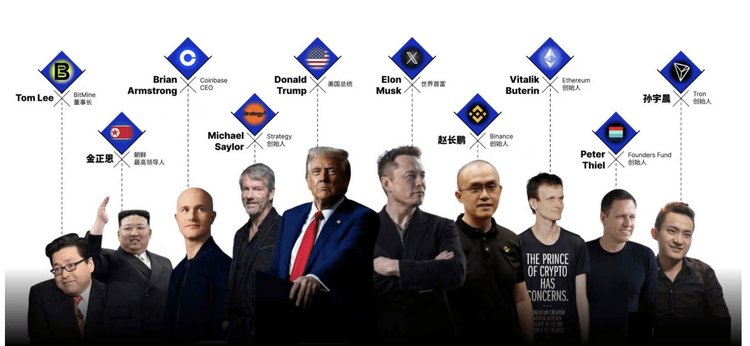
Dix personnes redéfinissent les limites de puissance de la crypto en 2025
De Wall Street à la Maison Blanche, de la Silicon Valley à Shenzhen, un nouveau réseau électrique se dessine.

Le trading d'IA en crypto expliqué : Comment le trading autonome remodele les marchés crypto et les plateformes d’échange crypto
L’IA Trading transforme rapidement le paysage crypto. Les stratégies traditionnelles peinent à suivre la volatilité constante de la crypto et la structure complexe du marché, tandis que l'IA peut traiter des données massives, générer des stratégies adaptatives, gérer les risques et exécuter des trades de manière autonome. Cet article guide les utilisateurs de WEEX sur ce qu'est le trading d'IA, pourquoi la crypto accélère son adoption, comment le secteur évolue vers des agents autonomes et pourquoi WEEX construit l'écosystème de trading d'IA de nouvelle génération.

Appelez à rejoindre AI Wars : WEEX Alpha Awakens – Tournoi mondial de trading d’IA avec une cagnotte de 880 000 $
Maintenant, nous lançons un appel aux traders d'IA du monde entier pour qu'ils rejoignent AI Wars : WEEX Alpha Awakens, un tournoi mondial de trading d'IA doté d'une cagnotte de 880 000 $.

Trading d'IA sur les marchés crypto : Des bots de trading automatisés aux stratégies algorithmiques
Le trading basé sur l'IA fait passer la crypto de la spéculation au détail à une concurrence de niveau institutionnel, où l'exécution et la gestion des risques comptent plus que dans le sens. À mesure que le trading de l'IA prend de l'ampleur, les risques systémiques et la pression réglementaire augmentent, faisant des performances à long terme, des systèmes robustes et de la conformité les principaux facteurs de différenciation.

Analyse du sentiment de l'IA et volatilité des cryptomonnaies : Ce qui fait bouger les prix crypto
Le sentiment lié à l'IA influence de plus en plus les marchés crypto, les changements d'attente liés à l'IA se traduisant par une certaine volatilité pour les principaux actifs numériques. Les marchés crypto ont tendance à amplifier les discours sur l'IA, permettant aux flux basés sur les sentiments de l'emporter sur les fondamentaux à court terme. Comprendre comment le sentiment IA se forme et se propage aide les investisseurs à mieux anticiper les cycles de risque et les opportunités de positionnement sur les actifs numériques.

Semaine des banques centrales et volatilité des marchés crypto : Comment les décisions relatives aux taux d'intérêt influencent les conditions de trading sur WEEX
Les décisions relatives aux taux d'intérêt prises par les grandes banques centrales, comme la Réserve fédérale, sont des événements macroéconomiques importants qui ont un impact sur les marchés financiers mondiaux et influencent directement les attentes de liquidité des marchés et l'appétence au risque. À mesure que le marché des cryptomonnaies continue de se développer et que sa structure de trading et ses participants mûrissent, le marché des cryptomonnaies est progressivement intégré dans le système d'établissement des prix macroéconomiques.
novembre 2025 Revue du marché cryptographique: Correction des prix, rachats d’ETF et évolution du paysage de la blockchain
Novembre 2025 a été marqué par une forte volatilité et une correction structurelle au sein de l’écosystème global de la blockchain, principalement sous l’effet des prévisions macroéconomiques fluctuantes et de la dynamique spécifique des flux de capitaux.

WEEX at Blockchain Life 2025: Connecter les communautés et stimuler l'innovation à Dubaï
La participation de WEEX à Blockchain Life 2025 a été une étape importante dans notre cheminement vers un leader mondial dans l’espace cryptographique. Alors que nous continuons à étendre notre portée, nous restons déterminés à renforcer la liquidité et à offrir de plus grandes opportunités aux traders, aux influenceurs et à toute la communauté blockchain.

Les ETFs XRP et Dogecoin se préparent au trading alors que Bitwise cible AVAX
CryptoTale : Aperçu des dernières tendances en crypto Imaginez un monde où les cryptomonnaies comme XRP et Dogecoin…

Les Whales Ciblent la Presale de BullZilla Alors que le Volume de Hyperliquid Explose et Monero Maintient 305 $ : Meilleurs Cryptos à Acheter Maintenant
Économie des Crypto-Monnaies Dans le monde dynamique des crypto-monnaies, les grandes tendances captivent l’attention des investisseurs. Imaginez les…

L’Évolution du Bitcoin en 2025
Le monde des cryptomonnaies continue de fasciner, et au cœur de cette révolution se trouve le Bitcoin. En…

Meilleurs Crypto à Acheter Aujourd’hui : Chainlink Atteint une Capitalisation de 18 Milliards de Dollars, Monero Stable à 320 Dollars, Tandis que le Presale Explosif de BullZilla Attire les Baleines
Découvrez pourquoi Chainlink, Monero et BullZilla se distinguent comme les best crypto to buy today avec un potentiel…
Prévision de Prix Cardano : ADA Atteindra-t-il 3 $ dans le Prochain Bull Run, Tandis que cet AI Token Promet des Retours de 10 000 % ?
Table des Matières Crypto Daily™ Imaginez un monde où les cryptomonnaies comme Cardano et Bitcoin redessinent l’avenir financier,…

Entreprise chinoise de trésorerie Bitcoin envisage de vendre 500 millions de dollars d’actions pour BTC
Next Technology Holding, la plus grande entreprise chinoise de trésorerie Bitcoin, a déclaré qu’elle pourrait acheter plus de…

Les ETFs XRP et Dogecoin prêts à être lancés cette semaine dans un nouveau jalon pour les altcoins
Imaginez un monde où investir dans des cryptomonnaies comme XRP et Dogecoin devient aussi simple que d’acheter des…

Ce qui s’est passé en Crypto Aujourd’hui
Publié le 2025-09-16T17:23:20.000Z Voici un aperçu des dernières nouvelles en matière de Bitcoin price, blockchain, DeFi, NFTs, Web3…

Forward Industries Lance Solana Treasury avec un Investissement de 1,58 Milliard de Dollars
Publié le 16 septembre 2025 Imaginez une entreprise qui plonge tête la première dans l’univers passionnant de la…
Mise à jour du marché — 30 décembre
Brevis ouvre le suivi des airdrops ; Trend Research ajoute plus de 46 000 ETH en une seule journée.
Dix personnes redéfinissent les limites de puissance de la crypto en 2025
De Wall Street à la Maison Blanche, de la Silicon Valley à Shenzhen, un nouveau réseau électrique se dessine.
Le trading d'IA en crypto expliqué : Comment le trading autonome remodele les marchés crypto et les plateformes d’échange crypto
L’IA Trading transforme rapidement le paysage crypto. Les stratégies traditionnelles peinent à suivre la volatilité constante de la crypto et la structure complexe du marché, tandis que l'IA peut traiter des données massives, générer des stratégies adaptatives, gérer les risques et exécuter des trades de manière autonome. Cet article guide les utilisateurs de WEEX sur ce qu'est le trading d'IA, pourquoi la crypto accélère son adoption, comment le secteur évolue vers des agents autonomes et pourquoi WEEX construit l'écosystème de trading d'IA de nouvelle génération.
Appelez à rejoindre AI Wars : WEEX Alpha Awakens – Tournoi mondial de trading d’IA avec une cagnotte de 880 000 $
Maintenant, nous lançons un appel aux traders d'IA du monde entier pour qu'ils rejoignent AI Wars : WEEX Alpha Awakens, un tournoi mondial de trading d'IA doté d'une cagnotte de 880 000 $.
Trading d'IA sur les marchés crypto : Des bots de trading automatisés aux stratégies algorithmiques
Le trading basé sur l'IA fait passer la crypto de la spéculation au détail à une concurrence de niveau institutionnel, où l'exécution et la gestion des risques comptent plus que dans le sens. À mesure que le trading de l'IA prend de l'ampleur, les risques systémiques et la pression réglementaire augmentent, faisant des performances à long terme, des systèmes robustes et de la conformité les principaux facteurs de différenciation.
Analyse du sentiment de l'IA et volatilité des cryptomonnaies : Ce qui fait bouger les prix crypto
Le sentiment lié à l'IA influence de plus en plus les marchés crypto, les changements d'attente liés à l'IA se traduisant par une certaine volatilité pour les principaux actifs numériques. Les marchés crypto ont tendance à amplifier les discours sur l'IA, permettant aux flux basés sur les sentiments de l'emporter sur les fondamentaux à court terme. Comprendre comment le sentiment IA se forme et se propage aide les investisseurs à mieux anticiper les cycles de risque et les opportunités de positionnement sur les actifs numériques.
Pièces populaires
Dernières actus crypto


Assistance client:@weikecs
Collaborations commerciales:@weikecs
Trading quantitatif/Market makers:[email protected]
Programme VIP:[email protected]
 App
App