
- Acquista crypto
- Mercato
- Futures
- Spot
- Copy trading
 WE-Launch
Deleveraged Bitcoin, the Next Winner of Global Capital Flows

Original Title: Bitcoin - the trade after the trade
Original Author: fejau
Original Translation: Deep Tide TechFlow
I would like to write about a question that I have been contemplating for a while: how might Bitcoin behave in a scenario of significant capital flow transformation, a situation that Bitcoin has never experienced since its inception.
I believe that once deleveraging is completed, Bitcoin will see an incredible trading opportunity. In this article, I will elaborate on my thought process.
What are the Key Historical Drivers of Bitcoin's Price?
I will adopt Michael Howell's research on the historical drivers of Bitcoin's price and use these findings to further understand how these interrelated factors may evolve in the near future.
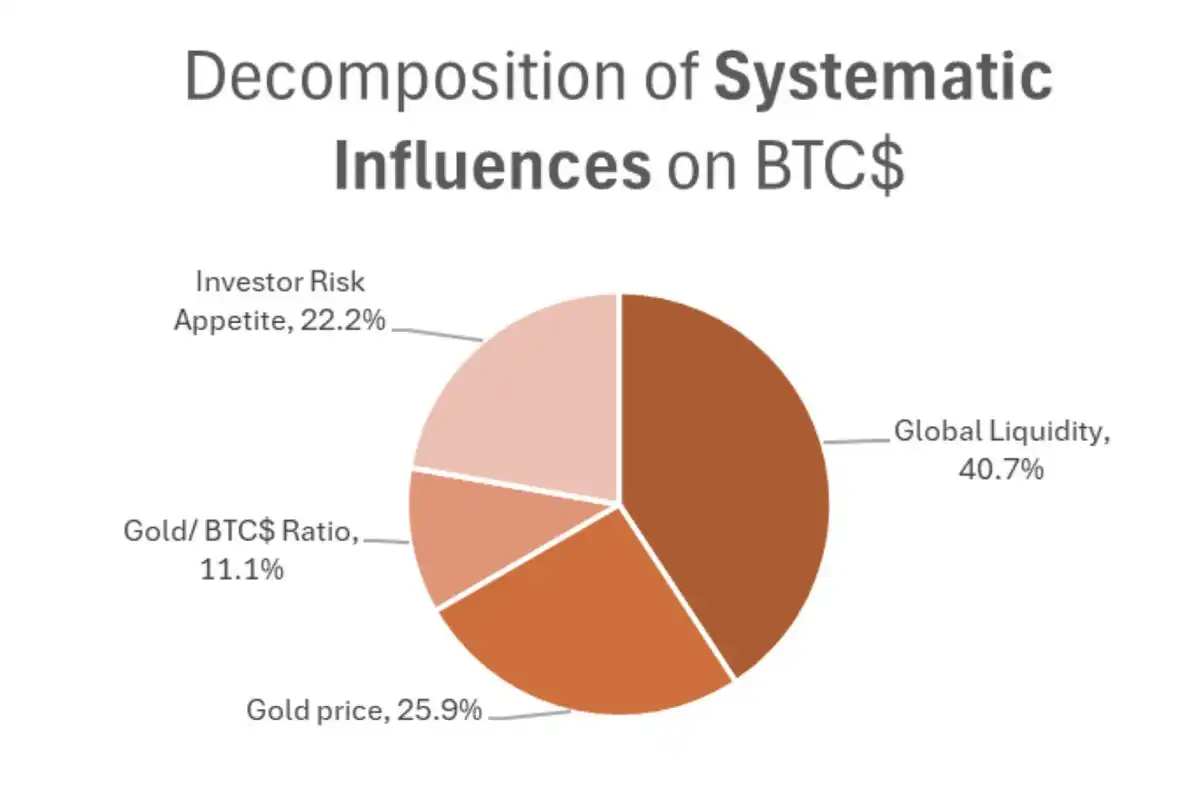
As shown in the chart above, Bitcoin's driving factors include:
· Overall demand for high-risk, high-β assets by investors
· Correlation with gold
· Global liquidity
Since 2021, I have used a simple framework to understand risk appetite, gold performance, and global liquidity, focusing on the percentage of fiscal deficit to GDP as a convenient way to grasp the fiscal stimulus dominating global markets since 2021.
A higher percentage of fiscal deficit to GDP mechanically leads to higher inflation, higher nominal GDP, and thus higher total corporate revenue since revenue is a nominal metric. This is a boon for companies that benefit from economies of scale in their profit growth.
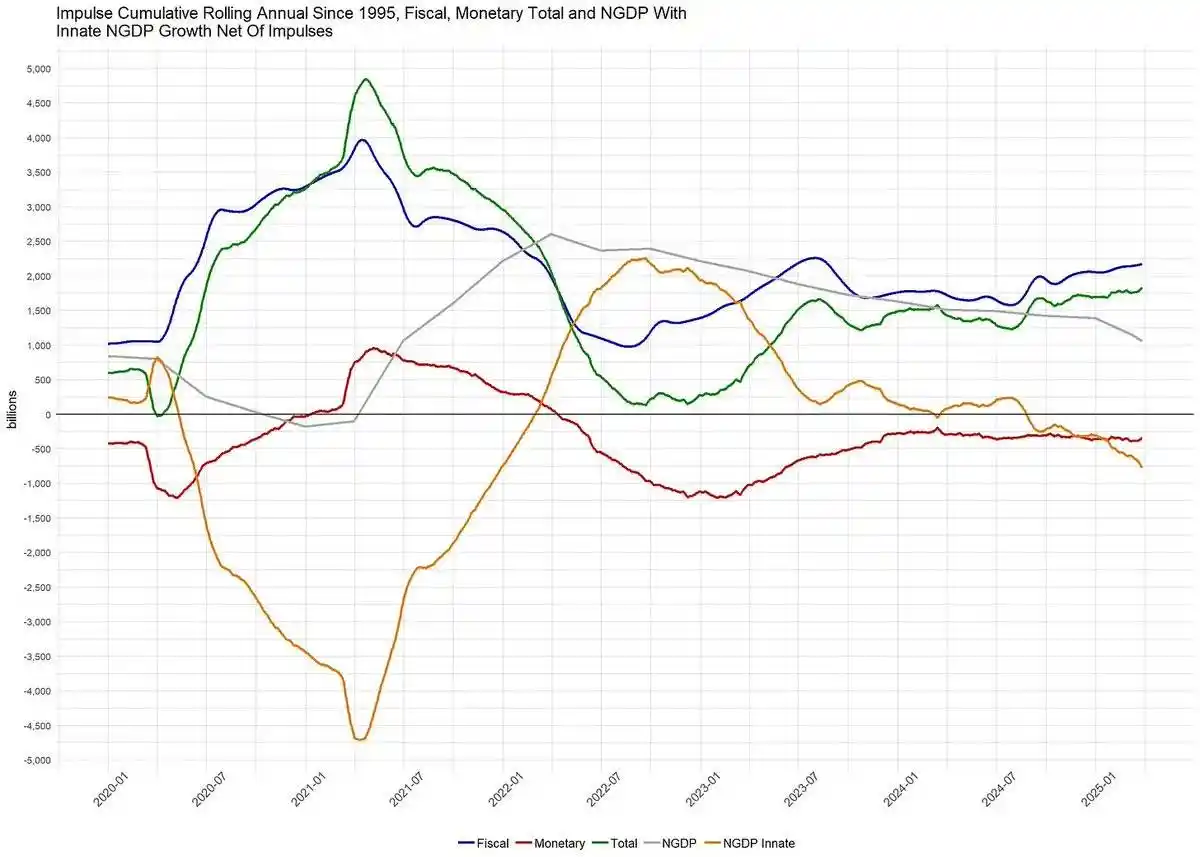
In most cases, monetary policy plays a secondary role in risk asset activity, with fiscal stimulus being the primary driver. As shown in this chart regularly updated by @BickerinBrattle, the U.S. monetary stimulus is so tepid compared to fiscal stimulus that I will set it aside in this discussion.
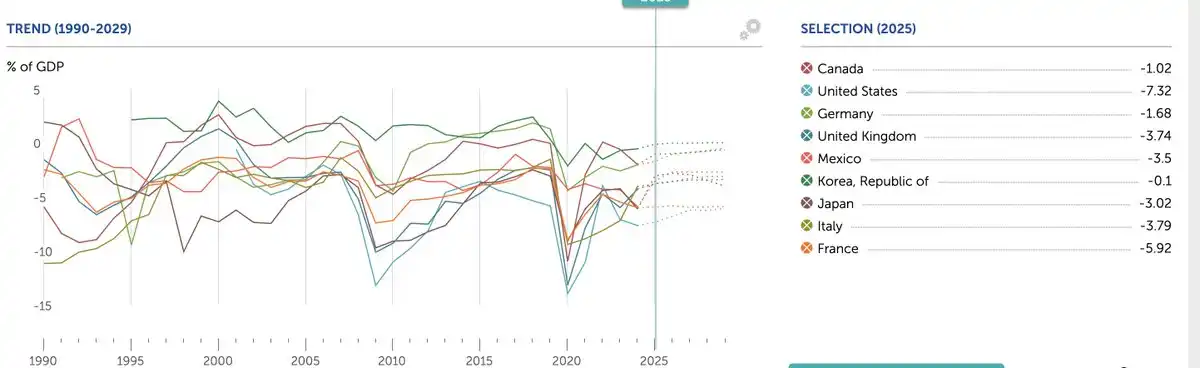
As shown in the chart below, among the major developed Western economies, the U.S. fiscal deficit as a percentage of GDP is much higher than any other country.
Due to the large deficit in the United States, income growth has always been predominant, leading to the strong performance of the US stock market compared to other modern economies:
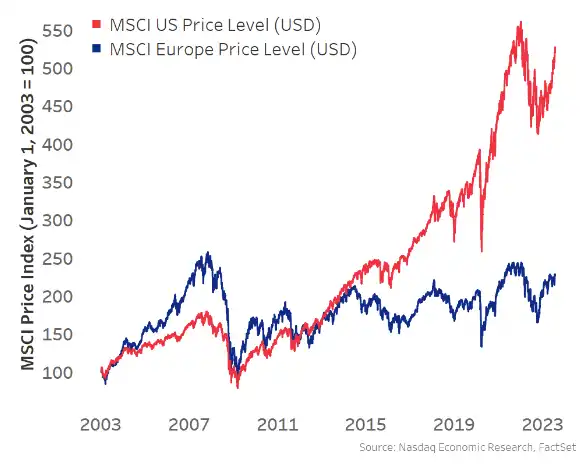
Due to this dynamic, the US stock market has become the main marginal driver of asset growth, wealth effect, and global liquidity, making it an attractive destination for global capital: the United States. With this dynamic of capital inflows into the US, coupled with a massive trade deficit, the US exchanges goods for US dollars obtained from foreign sources, which are then reinvested in US dollar-denominated assets (such as Treasury bonds and MAG7). The United States has become a major driver of global risk appetite.
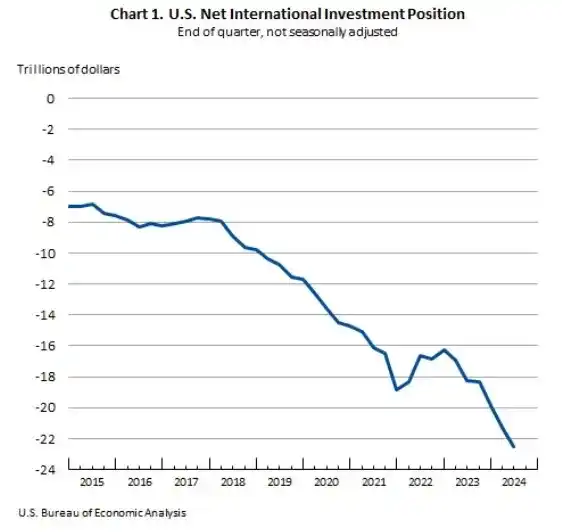
Now, back to the aforementioned research by Michael Howell. Risk appetite and global liquidity have been mainly driven by the United States over the past decade, and this trend has accelerated since the onset of the COVID-19 pandemic due to the US's significant fiscal deficit compared to other countries.
Therefore, Bitcoin, although a global liquidity asset (not just in the US), has shown an increasing positive correlation with the US stock market since 2021.
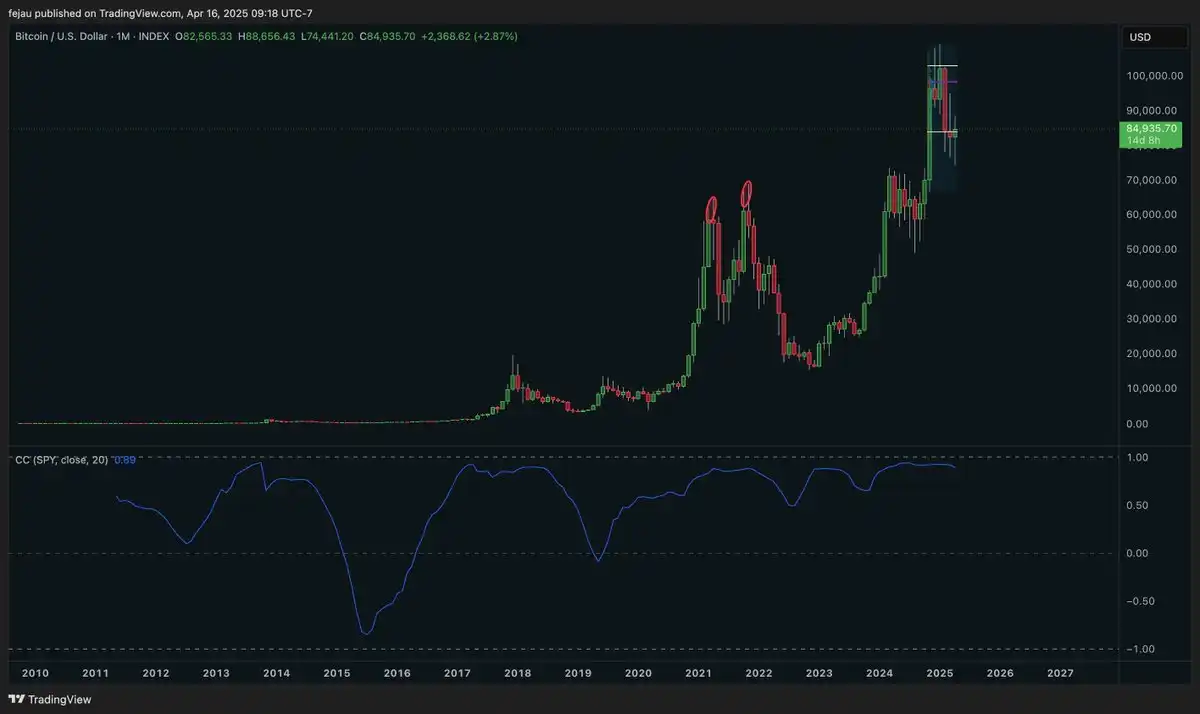
Now, I believe that the correlation with the US stock market is misleading. When I use the term "spurious correlation" here, I am, from a statistical perspective, suggesting that there is a third unobserved variable in the correlation analysis that is the actual driving factor. I believe this factor is global liquidity, as mentioned earlier, which has been predominantly led by the US over the past decade.
As we delve into discussions of statistical significance, we must also establish causality, not just correlation. Fortunately, Michael Howell has also done some excellent work in this regard, establishing a causal relationship between global liquidity and Bitcoin through Granger causality testing.
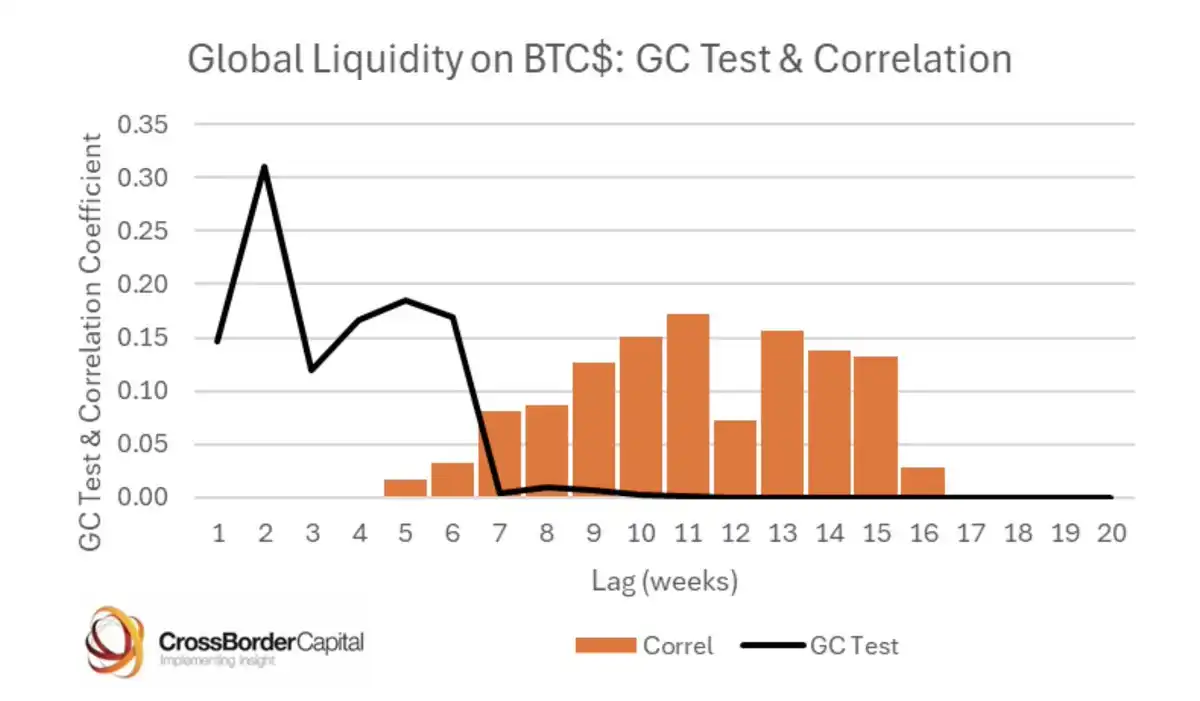
So, what does this provide us as a starting point?
Bitcoin is primarily driven by global liquidity, and as the United States is a key driver of global liquidity expansion, a spurious correlation has emerged.
Over the past month, as we speculate on Trump's trade policy objectives and the reshuffling of global capital and commodity flows, some key narratives have emerged. I see it as:
The Trump administration aims to reduce the trade deficit with other countries, which mechanically means reducing the outflow of US dollars to foreign countries, dollars that will not be reinvested in US assets. The reduction in the trade deficit cannot occur without this happening.
The Trump administration believes that foreign currencies are artificially suppressed, causing the US dollar to be artificially strong, and aims to rebalance this. In short, a weaker dollar and stronger foreign currencies will lead to higher rates in other countries, prompting capital inflows to capture these improved post-forex-adjustment conditions rates as well as domestic equities.
Trump has taken a "shoot first, ask questions later" approach in trade negotiations, leading other countries around the world to move away from slim fiscal deficits compared to the US (as described above) and instead invest in defense, infrastructure, and broadly protectionist government investments to make themselves more self-reliant. Regardless of whether tariff negotiations are downgraded (e.g., China), I believe this is now a fait accompli, and countries will continue to pursue this goal.
Trump wants other countries to increase their defense spending as a percentage of GDP and contribute more to NATO spending as the US bears a significant amount of the expense. This will also increase the fiscal deficit.
I will temporarily set aside my personal opinions on these points and focus on the potential impact if we were to drive towards the logical conclusion of these narratives:
Capital will leave dollar-denominated assets and flow back to the home country. This means that the US stock market will underperform relative to the rest of the world, bond yields will rise, and the dollar will weaken.
This capital will flow back to areas where fiscal deficits are no longer constrained, and other modern economies will start spending and printing money on a grand scale to fund these increased deficits.
As the US shifts from a global capital partner to a more protectionist role, holders of dollar assets will have to increase the risk premium on these once pristine assets and mark them to a wider safety margin. As this process unfolds, it will lead to rising bond yields, foreign central banks will seek to diversify their balance sheets away from just US treasuries to other neutral assets like gold. Similarly, foreign sovereign wealth funds and pension funds may also pursue such diversification.
The flip side of these views is that the US is the center of innovation and technology-driven growth, and no country will overturn that idea. Europe is too bureaucratic and socialized to pursue capitalism like the US. I sympathize with this view; it may mean this is not a multi-year trend but a mid-term trend, as the valuations of these tech companies will cap their upside for a while.
Returning to the title of this article, the first trade is to sell the world drastically over-allocated in dollar assets to avoid the ongoing deleveraging. As the world holds too many of these assets, when risk limits are hit by large money managers and more speculative players such as tight-stop multi-strategy hedge funds, this deleveraging can become messy. When this happens, we will see days akin to margin calls, where all assets need to be sold to raise cash. The strategy now is to survive and maintain ample liquidity.
However, as the deleveraging subsides, the next phase of trading begins—transitioning to a more diversified investment portfolio: foreign equities, foreign bonds, gold, commodities, and even Bitcoin.
On market rotation days and non-margin call days, we have already started to see this dynamic take shape. The US Dollar Index (DXY) is declining, the US stock market is underperforming compared to other regions' stock markets, gold is surging, and Bitcoin is surprisingly holding up well compared to traditional US tech stocks.
I believe that as this situation unfolds, the marginal increase in global liquidity will shift towards the exact opposite dynamic we are used to. Other regions will take on the responsibility of increasing global liquidity and risk appetite.
When contemplating the risks of this diversification against the backdrop of a global trade war, I am concerned about the tail risks of delving too deeply into other countries' risk assets, as there are some major landmines in terms of potentially bad tariff news. Therefore, this makes gold and Bitcoin choices for globally diversified investments in this transition.
Gold has been on an absolute tear, hitting new all-time highs daily, reflecting this regime change. However, while Bitcoin has surprisingly held up well throughout the entire regime change process, its beta correlation to risk appetite has so far limited its performance, failing to keep up with gold's performance.
Thus, as we move towards a rebalancing of global capital, I believe the next trade after this is Bitcoin.
As I contrast this framework with Howell's relevance research, I can see them coming together:
The US stock market cannot escape the influence of global liquidity, only being measured by liquidity from fiscal stimulus plus some inflows (but we have just identified that this aspect of flow may stop or even reverse). However, Bitcoin is a global asset, reflecting this broad perspective of global liquidity.
With the establishment of this narrative and allocators continuing to rebalance, I believe risk appetite will be driven by regions other than the US.
Gold has performed exceptionally well, so for the Bitcoin portion associated with gold, we can also check the box here.
Given all this, for the first time in the financial markets, I see the potential for Bitcoin to decouple from US tech stocks. I know this idea often marks a local top for Bitcoin. What's different this time is that we see the potential for a significant shift in capital flows, which will make it enduring.
Therefore, for someone like me, a risk-loving macro trader, Bitcoin feels like the purest trade here. You can't levy tariffs on Bitcoin, it doesn't care where it resides geographically, it provides a high beta to the portfolio without the current tail risks associated with US tech, I don't have to opine on whether Europe can get its act together, and it offers a pure exposure to global liquidity, not just US liquidity.
This market structure is exactly the reason Bitcoin was born. Once the dust of deleveraging settles, it will be the fastest horse, accelerating forward.
Potrebbe interessarti anche

NOTTE DELLE BALene: AI Trading, Crypto Community & Crypto Market Insights
Il 12 dicembre 2025, WEEX ha ospitato WEEXPERIENCE Whales Night, un incontro della comunità offline progettato per riunire i membri della comunità locale di criptovalute. L'evento ha combinato condivisione di contenuti, giochi interattivi e presentazioni di progetti per creare un'esperienza offline rilassata ma coinvolgente.
Rischio di trading AI in criptovaluta: Perché migliori strategie di trading di criptovalute possono creare perdite maggiori?
Il rischio non risiede più principalmente in un cattivo processo decisionale o in errori emotivi. Vive sempre più nella struttura del mercato, nei percorsi di esecuzione e nel comportamento collettivo. Capire questo cambiamento conta più che trovare la prossima strategia “migliore”.

Gli agenti AI stanno sostituendo la ricerca sulle criptovalute? Come l'IA autonoma sta rimodellando il trading di criptovalute
L'IA sta passando dall'assistenza ai trader all'automazione dell'intero processo di ricerca-esecuzione nei mercati crypto. L'edge si è spostato dall'intuito umano alle pipeline di dati, alla velocità e ai sistemi AI pronti per l'esecuzione, rendendo i ritardi nell'integrazione dell'IA uno svantaggio competitivo.

AI Trading Bots e Copy Trading: Come le strategie sincronizzate rimodellano la volatilità del mercato delle criptovalute
I trader di criptovalute al dettaglio affrontano da tempo le stesse sfide: cattiva gestione del rischio, ingressi tardivi, decisioni emotive ed esecuzione incoerente. Gli strumenti di trading AI promettevano una soluzione. Oggi, i sistemi di copy trading e i breakout bot basati sull'IA aiutano i trader a dimensionare le posizioni, impostare stop e agire più velocemente che mai. Al di là di velocità e precisione, questi strumenti stanno tranquillamente rimodellando i mercati: i trader non solo fanno trading in modo più intelligente, ma si muovono in sincronia, creando una nuova dinamica che amplifica sia il rischio che le opportunità.
AI Trading in Crypto Spiegato: Come il trading autonomo sta rimodellando i mercati e gli scambi di criptovalute
AI Trading sta rapidamente trasformando il panorama crypto. Le strategie tradizionali faticano a tenere il passo con la volatilità ininterrotta delle criptovalute e la complessa struttura del mercato, mentre l'IA può elaborare dati massicci, generare strategie adattive, gestire il rischio ed eseguire scambi in autonomia. Questo articolo guida gli utenti WEEX attraverso cos'è AI Trading, perché le criptovalute ne accelerano l'adozione, come il settore si sta evolvendo verso agenti autonomi e perché WEEX sta costruendo l'ecosistema di trading AI di nuova generazione.

Chiama a partecipare a AI Wars: WEEX Alpha Awakens — Concorso globale di trading AI con un montepremi di 880.000 dollari
Ora, stiamo chiedendo ai trader AI di tutto il mondo di unirsi a AI Wars: WEEX Alpha Awakens, una competizione globale di trading AI con 880.000 dollari di montepremi.

AI Trading in Crypto Markets: Dai bot di trading automatizzati alle strategie algoritmiche
Il trading basato sull'IA sta spostando le criptovalute dalla speculazione al dettaglio alla concorrenza di livello istituzionale, dove l'esecuzione e la gestione del rischio contano più della direzione. Man mano che il trading di IA scala, il rischio sistemico e la pressione normativa aumentano, rendendo le prestazioni a lungo termine, i sistemi robusti e la conformità i principali differenziatori.

Analisi del sentimento AI e volatilità delle criptovalute: Cosa muove i prezzi delle criptovalute
Il sentiment dell'IA sta influenzando sempre più i mercati crypto, con cambiamenti nelle aspettative relative all'IA che si traducono in volatilità per i principali asset digitali. I mercati delle criptovalute tendono ad amplificare le narrazioni AI, consentendo ai flussi guidati dal sentiment di superare i fondamentali nel breve termine. Comprendere come si forma e si diffonde il sentimento dell'IA aiuta gli investitori ad anticipare meglio i cicli di rischio e le opportunità di posizionamento tra gli asset digitali.

AI Wars: Guida per i partecipanti
In questa sfida finale, i migliori sviluppatori, quant e trader di tutto il mondo daranno sfogo ai loro algoritmi in battaglie sul mercato reale, competendo per uno dei montepremi più ricchi nella storia del trading di criptovalute basato sull'intelligenza artificiale: 880.000 dollari, compresa una Bentley Bentayga S per il campione. Questa guida ti accompagnerà attraverso tutte le fasi necessarie, dalla registrazione all'inizio ufficiale della competizione.

Settimana delle banche centrali e volatilità del mercato delle criptovalute: Come le decisioni sui tassi di interesse modellano le condizioni di trading su WEEX
Le decisioni sui tassi di interesse delle principali banche centrali come la Federal Reserve sono eventi macroeconomici significativi che hanno un impatto sui mercati finanziari globali, influenzando direttamente le aspettative di liquidità del mercato e la propensione al rischio. Mentre il mercato delle criptovalute continua a svilupparsi e la sua struttura di trading e i partecipanti maturano, il mercato delle criptovalute viene gradualmente incorporato nel sistema di prezzi macroeconomici.

Test API WEEX: Guida ufficiale per AI Trading Hackathon e Crypto Trading APIs
WEEX API Testing è progettato per garantire che ogni partecipante possa trasformare la logica di trading in esecuzione reale. Tutte le interazioni API avvengono sul sistema di trading live di WEEX, consentendo ai partecipanti di lavorare in condizioni di mercato autentiche piuttosto che simulazioni. Con un requisito di ingresso basso, l'attività è accessibile sia agli sviluppatori esperti che ai principianti motivati, pur convalidando le competenze tecniche essenziali.
AI Guerre: WEEX Alpha Awakens | Guida al processo di test API WEEX Global Hackathon
AI Wars: La registrazione a WEEX Alpha Awakens è ora aperta. e questa guida illustra come accedere al test API e completare con successo il processo.
Cos'è il risveglio alfa WEEX e come partecipare? Una guida completa
Per accelerare le scoperte all'incrocio tra AI e crypto, WEEX sta lanciando il primo AI Trading Hackathon globale al mondo - AI Wars: Alpha Awakens.

Unisciti a AI Wars: WEEX Alpha Awakens!Bando globale per le Alfa di trading AI
AI Wars: WEEX Alpha Awakens è un hackathon globale di trading di AI a Dubai, che chiama team di quant, trader algoritmici e sviluppatori di AI a scatenare le loro strategie di trading di criptovalute AI nei mercati live per una quota di un montepremi di 880.000 dollari.
WEEX svela il trade per guadagnare: Fino al 30% di sconto istantaneo + $ 2 milioni di riacquisto WXT
WEEX è lieta di annunciare il lancio del nostro programma Trade to Earn, che ti garantisce automaticamente sconti fino al 30% sulle commissioni di trading. Tutte le ricompense vengono accreditate direttamente sul tuo conto spot in $WXT, supportate dal nostro piano di buyback WXT da $2.000.000 che alimenta il valore del token a lungo termine.

Nuovo: Prezzo di Liquidazione Stimato sui Grafici Candlestick App
WEEX ha introdotto un nuovo Prezzo di Liquidazione Stimato (Est. Liq. Price) funzione sul grafico a candela per aiutare i trader a gestire meglio il rischio e identificare intervalli sicuri per le loro posizioni.
Guida WEEX AI Hackathon: Trova il tuo WEEX UID e registrati
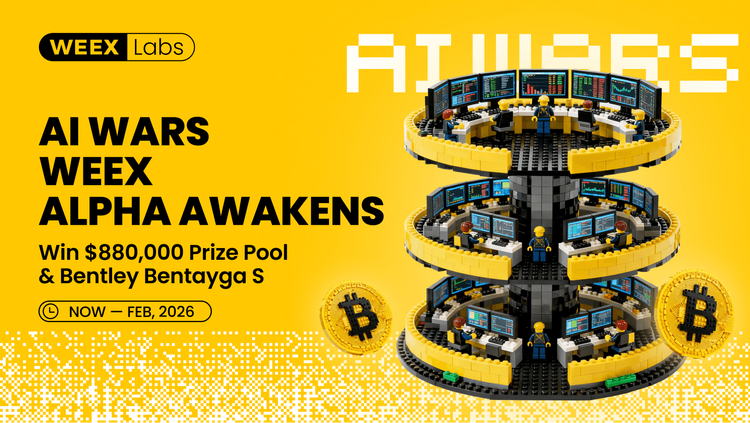
Da oggi a febbraio 2026, WEEX lancia AI Wars: WEEX Alpha Awakens, il primo hackathon di trading globale di IA crypto. Vieni con il tuo UID e registrati al WEEX Global AI Trading Hackathon.

Novembre 2025 Recensione del mercato delle criptovalute: Correzione dei prezzi, rimborsi degli ETF e panorama Blockchain in evoluzione
Novembre 2025 ha visto una pronunciata volatilità e una correzione strutturale all'interno del più ampio ecosistema blockchain, principalmente guidata da previsioni macroeconomiche fluttuanti e specifiche dinamiche di flusso di capitale.
NOTTE DELLE BALene: AI Trading, Crypto Community & Crypto Market Insights
Il 12 dicembre 2025, WEEX ha ospitato WEEXPERIENCE Whales Night, un incontro della comunità offline progettato per riunire i membri della comunità locale di criptovalute. L'evento ha combinato condivisione di contenuti, giochi interattivi e presentazioni di progetti per creare un'esperienza offline rilassata ma coinvolgente.
Rischio di trading AI in criptovaluta: Perché migliori strategie di trading di criptovalute possono creare perdite maggiori?
Il rischio non risiede più principalmente in un cattivo processo decisionale o in errori emotivi. Vive sempre più nella struttura del mercato, nei percorsi di esecuzione e nel comportamento collettivo. Capire questo cambiamento conta più che trovare la prossima strategia “migliore”.
Gli agenti AI stanno sostituendo la ricerca sulle criptovalute? Come l'IA autonoma sta rimodellando il trading di criptovalute
L'IA sta passando dall'assistenza ai trader all'automazione dell'intero processo di ricerca-esecuzione nei mercati crypto. L'edge si è spostato dall'intuito umano alle pipeline di dati, alla velocità e ai sistemi AI pronti per l'esecuzione, rendendo i ritardi nell'integrazione dell'IA uno svantaggio competitivo.
AI Trading Bots e Copy Trading: Come le strategie sincronizzate rimodellano la volatilità del mercato delle criptovalute
I trader di criptovalute al dettaglio affrontano da tempo le stesse sfide: cattiva gestione del rischio, ingressi tardivi, decisioni emotive ed esecuzione incoerente. Gli strumenti di trading AI promettevano una soluzione. Oggi, i sistemi di copy trading e i breakout bot basati sull'IA aiutano i trader a dimensionare le posizioni, impostare stop e agire più velocemente che mai. Al di là di velocità e precisione, questi strumenti stanno tranquillamente rimodellando i mercati: i trader non solo fanno trading in modo più intelligente, ma si muovono in sincronia, creando una nuova dinamica che amplifica sia il rischio che le opportunità.
AI Trading in Crypto Spiegato: Come il trading autonomo sta rimodellando i mercati e gli scambi di criptovalute
AI Trading sta rapidamente trasformando il panorama crypto. Le strategie tradizionali faticano a tenere il passo con la volatilità ininterrotta delle criptovalute e la complessa struttura del mercato, mentre l'IA può elaborare dati massicci, generare strategie adattive, gestire il rischio ed eseguire scambi in autonomia. Questo articolo guida gli utenti WEEX attraverso cos'è AI Trading, perché le criptovalute ne accelerano l'adozione, come il settore si sta evolvendo verso agenti autonomi e perché WEEX sta costruendo l'ecosistema di trading AI di nuova generazione.
Chiama a partecipare a AI Wars: WEEX Alpha Awakens — Concorso globale di trading AI con un montepremi di 880.000 dollari
Ora, stiamo chiedendo ai trader AI di tutto il mondo di unirsi a AI Wars: WEEX Alpha Awakens, una competizione globale di trading AI con 880.000 dollari di montepremi.
Monete popolari
Ultime notizie crypto


Assistenza clienti:@weikecs
Cooperazione aziendale:@weikecs
Trading quantitativo e MM:[email protected]
Servizi VIP:[email protected]
 App
App