
- Acquista crypto
- Mercato
- Futures
- Spot
- Copy trading
 WE-Launch
"Fiat On-Ramp" Ceiling, Stablecoin Network Effect

Original Article Title: Stablecoins: Better, Faster, Cheaper—Why They Matter
Original Article Author: @proofofnathan
Original Article Translation: zhouzhou, BlockBeats
Editor's Note: Stablecoins are breaking the traditional payment trilemma of "better, faster, cheaper," providing a 24/7, low-cost, permissionless open payment network for global users. They are evolving from intermediaries to mainstream value carriers, although still facing bottlenecks such as fiat currency exchange. With the expansion of network effects, stablecoins are poised to reshape the global financial landscape.
The following is the original article content (rearranged for easier comprehension):
These three key features differentiate stablecoins from traditional payment systems and break an age-old rule: you cannot have all three at once. Any upgrade comes with a trade-off. Improving quality can slow down delivery speed; speeding up production can increase costs; lowering costs can reduce excellence. Builders typically choose to optimize one of these dimensions—better, faster, or cheaper.
Historically, innovators could only solve two out of the three, unable to tackle all issues simultaneously. Stablecoins resolve this innovation trilemma.
This is crucial for retail users. They now have access to an open payment network that operates 24/7, settles in seconds, and costs a few cents rather than a percentage.
Stablecoins are better. They represent the obvious next step in value transfer. As the world gradually goes fully digital, it is only natural that value itself takes on a fundamentally digital form. Stablecoins facilitate this transformation. They operate on an open network 24/7, storing and exchanging value, more succinctly than fiat currency. Anyone can access them, and as I mentioned earlier, they are programmable.

Stablecoins are faster. Settlement speed depends on the blockchain, but even the slowest network far surpasses traditional payment systems. Ethereum transactions are completed in about 12 seconds, Tron in about 3 seconds, and Plasma aims for millisecond confirmation. Traditional payment systems take hours to several working days. Faster settlement reduces opportunity costs, mitigates currency risk, and in emergencies, can swiftly transfer funds to those in need at critical moments without delay.
Stablecoins are cheaper. Regardless of which blockchain they exist on, their cost structure is lighter. The fixed transaction fee for global transfers is almost always more cost-effective than the percentage-based fees included in card network or international bank transfers. On Plasma, USD₮ transfers do not require a gas fee, pushing the marginal cost close to zero, opening up the realm of true on-chain micropayments.
Better, faster, cheaper. Stablecoins address the innovation trilemma mentioned earlier. But why is this important, and who will benefit?
Why Is This Important?
Stablecoins have attracted a lot of attention, but the "why" is often overlooked. The answer is simple: because they are better, faster, and cheaper, directly serving global retail users.
So far, we have analyzed stablecoins through the lens of the innovation trilemma. Now, let's look at the issue from a different perspective.
Mikey Kremer succinctly summarized the importance of cryptocurrency in the digital world:
"The crypto ecosystem didn't invent a new financial system; it invented a new venue. By moving familiar services—payments, lending, market making—into nominally 'permissionless' code, projects have exploited the gaps left by the post-2008 over-regulatory framework."

Stablecoins operate in an open field where anyone can access—the very feature that unlocks the most for retail users.
In a sense, stablecoins are merely a tokenized form of the dollar, not particularly radical. But as Mikey astutely points out: "True innovation isn't the service itself; it's the ability to provide that service without permission."
This is where the advantage of stablecoins lies: while breaking the "trilemma," they still maintain complete openness and permissionlessness. Throughout history, real breakthroughs have often come from changes in human collaboration, and currency, as a core tool of collaboration, has evolved with society for centuries.
But with each currency upgrade, the transfer of value has become increasingly tied to the nation-state. Today's payment systems are regulated by government-related agencies and owned and maintained by them.
One core idea of Bitcoin is libertarianism. As more and more people globally seek to extricate themselves from state control, they are turning to Bitcoin.
Today, this pursuit of freedom is also leading them toward stablecoins.
For retail users, the simplest reason why stablecoins are superior is: it exists for everyone. In this sense, the blockchain that stablecoins rely on is essentially a permissionless payment system. People from around the world can access it, freely transferring funds in a better, faster, and cheaper way.
However, Stablecoins Are Not a Perfect Solution
Bottleneck Issues
If one thinks that a new system has no flaws, that is too idealistic. Stablecoins certainly have their shortcomings. The most critical bottleneck lies in the "last mile" — the final settlement stage between stablecoins and fiat currencies. The main obstacles include but are not limited to:
· Liquidity and settlement issues: Converting a large amount of stablecoins into fiat currency, or vice versa, still heavily relies on dispersed banking channels and partnerships;
· Cash-out and real-world spending issues: Conveniently using stablecoins for daily expenses or cashing out to fiat still faces many frictions, making it less convenient compared to fiat;
· Local regulations and capital controls: Many countries have not yet established clear rules for stablecoins, and some countries' strict capital controls directly limit their citizens' access to the US dollar.
As the "last mile" still relies on the traditional financial system, global fund flows in this stage are inevitably constrained by the existing framework.
I believe that stablecoins will ultimately become the default medium of exchange. With the arrival of that day, these frictions will gradually disappear, and consumers will effectively enjoy all the benefits of stablecoins.
However, to achieve this future, the network effect of stablecoins must continue to grow.
Network Effect
Stablecoins rely on a thriving network effect. Monzo co-founder Tom Blomfield explains the essence of the network effect: "The network effect is different from other growth — the product itself gets better as more people join your network. WhatsApp and Skype are good examples, the more friends join, the more convenient and free it is to contact them."
This mechanism is highly applicable to stablecoins. As the number of users increases, more merchants accept it, more businesses begin to integrate it, and the trust foundation of the entire system also accumulates.
The adoption path is usually divided into two stages: initially, people accept stablecoins still anchored in cash thinking; but over time, they actively choose to use stablecoins because it is indeed better, faster, and cheaper. At this point, the network effect is fully activated.
As the network effect of stablecoins continues to expand, they naturally become more suitable for a wider range of retail users. Although the barrier to entry for stablecoin usage has been relatively low, and the networks they operate on are mostly permissionless, global adoption is still gradually progressing. The two key forces truly driving adoption are:
Organic network effect diffusion
Innovative ways of making stablecoins more applicable to everyday life
The future of stablecoins is slowly but steadily unfolding in this manner.
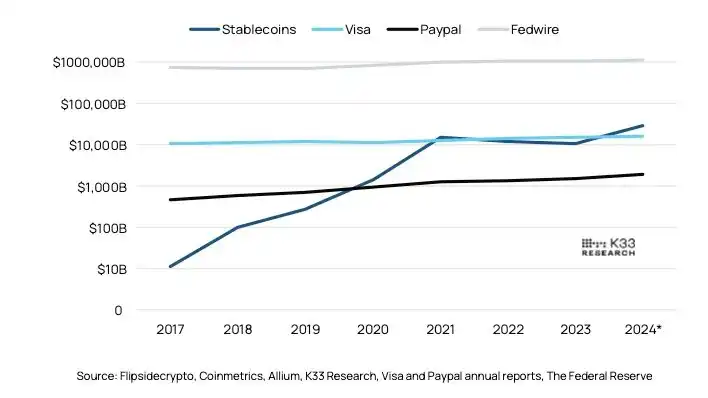
Shhhigurh accurately depicted this transformation in "The Stablecoin Paradox":
"The stablecoin ecosystem processes less transaction volume than Visa or PayPal, but the average transaction size is much larger. In 2023, Visa processed 276 billion payments averaging $54 each; PayPal processed 25 billion averaging $61 each. Meanwhile, Fedwire only processed 193 million payments, but each averaged a whopping $5.6 million. In comparison, stablecoins processed 2.6 billion transactions in 2023, with an average amount of $4,200, squarely positioned between retail and institutional transactions."
This passage reveals a key trend: stablecoins are currently in the "mid-tier zone"—between everyday retail swipes and institutional-sized transfers. They have not yet become the default track for processing small, high-frequency payments—Visa's swipes and PayPal's clicks still dominate this realm.
However, due to the clear advantages of stablecoins in terms of cost, speed, and openness, their further penetration into everyday consumer payment scenarios is only a matter of time.
The World After Stablecoin Mass Adoption
I have long contemplated and written about how the future stack of a "Stablecoin-Based Payment Network" would be constructed.
If stablecoins truly become a mainstream payment tool, we might witness an entirely new financial interaction paradigm:
Wallet = Account, no need for a bank account; global users only need a wallet address to send and receive payments;
Smart Contract = Router, fund allocation, payment splitting, supply chain settlements, financial product automatic execution, all done on-chain;
On-chain Identity = Trust layer, connecting social graphs, reputation systems, and payment systems, where identity equals creditworthiness;
Open API = Application Programming Interface, allowing any product to directly integrate stablecoin payments without the need for intermediary institution permission;
Micro-payments activate the long tail scenario, gradually normalizing scenarios such as content tipping, creator income, real-time salary distribution, and IoT device settlements.
In other words, a stablecoin is not just a "digital dollar," but rather the key to unlocking a permissionless, real-time settlement, globally interconnected financial new world.
From the current "average transaction amount of $4200" to the future "content tip of $0.42," this distance is slowly being pieced together by infrastructure, regulation, user experience, and network effects.
We are witnessing the construction of an era. Are you ready?

However, what I rarely delve into is the most ideal ultimate vision.
If retail adoption continues to grow exponentially, we will eventually reach a point where:
Stablecoins no longer need "seamless conversion to cash" as support but instead become the default form of currency. Everyone regards stablecoins as the underlying payment layer, replacing fiat for daily settlements.
In this future world:
Value naturally flows on-chain,
People are accustomed to transferring stablecoins, receiving payments, paying wages, and shopping,
Merchants, businesses, and even governments use stablecoins as the primary currency,
Traditional fiat becomes "off-chain assets," while stablecoins become the mainstream "money" in real life.
In such an "ideal utopia," stablecoins have completely triumphed. This is not just a transformation of currency form but a vision of a decentralized, cross-border, real-time programmable financial infrastructure replacing the old financial system entirely.
Of course, we have not yet reached that future. But you can sense the direction of the trend:
From fringe players to mainstream adoption, stablecoins are rewriting the age-old question of "what is money."

I have obviously gotten a bit ahead of myself. That ideal future is still far from our current world. The existing fiat system still makes people feel "safe and reliable," even though it is already lagging behind in terms of cost, speed, and accessibility. The key to achieving that future lies in whether the network effect can continue to expand.
Traditional network effects usually occur within a "walled garden," such as Facebook, Instagram, Monzo, Revolut—where the more users there are, the better the experience, but the platform is closed.
Stablecoins have disrupted this model: they operate on an open, permissionless blockchain rather than within a closed system.
However, even so, as more people use stablecoins for payments, the overall user experience will continue to improve: more merchants, higher acceptance; faster transfers, lower fees; wallets, infrastructure, and user interfaces more user-friendly; trust and liquidity are constantly accumulating.
Imagine: if every person in the world could access a borderless, permissionless, low-cost payment network at any time, then "fast and cheap remittances" would no longer be a privilege but a fundamental human right.
Final Thoughts:
All of this is happening because stablecoins are tangibly benefiting ordinary users worldwide: easier to use, faster to transfer, cheaper, and most importantly: anyone can use them without permission.

Original Tweet: Original Tweet Link
Potrebbe interessarti anche

NOTTE DELLE BALene: AI Trading, Crypto Community & Crypto Market Insights
Il 12 dicembre 2025, WEEX ha ospitato WEEXPERIENCE Whales Night, un incontro della comunità offline progettato per riunire i membri della comunità locale di criptovalute. L'evento ha combinato condivisione di contenuti, giochi interattivi e presentazioni di progetti per creare un'esperienza offline rilassata ma coinvolgente.
Rischio di trading AI in criptovaluta: Perché migliori strategie di trading di criptovalute possono creare perdite maggiori?
Il rischio non risiede più principalmente in un cattivo processo decisionale o in errori emotivi. Vive sempre più nella struttura del mercato, nei percorsi di esecuzione e nel comportamento collettivo. Capire questo cambiamento conta più che trovare la prossima strategia “migliore”.

Gli agenti AI stanno sostituendo la ricerca sulle criptovalute? Come l'IA autonoma sta rimodellando il trading di criptovalute
L'IA sta passando dall'assistenza ai trader all'automazione dell'intero processo di ricerca-esecuzione nei mercati crypto. L'edge si è spostato dall'intuito umano alle pipeline di dati, alla velocità e ai sistemi AI pronti per l'esecuzione, rendendo i ritardi nell'integrazione dell'IA uno svantaggio competitivo.

AI Trading Bots e Copy Trading: Come le strategie sincronizzate rimodellano la volatilità del mercato delle criptovalute
I trader di criptovalute al dettaglio affrontano da tempo le stesse sfide: cattiva gestione del rischio, ingressi tardivi, decisioni emotive ed esecuzione incoerente. Gli strumenti di trading AI promettevano una soluzione. Oggi, i sistemi di copy trading e i breakout bot basati sull'IA aiutano i trader a dimensionare le posizioni, impostare stop e agire più velocemente che mai. Al di là di velocità e precisione, questi strumenti stanno tranquillamente rimodellando i mercati: i trader non solo fanno trading in modo più intelligente, ma si muovono in sincronia, creando una nuova dinamica che amplifica sia il rischio che le opportunità.

AI Trading in Crypto Spiegato: Come il trading autonomo sta rimodellando i mercati e gli scambi di criptovalute
AI Trading sta rapidamente trasformando il panorama crypto. Le strategie tradizionali faticano a tenere il passo con la volatilità ininterrotta delle criptovalute e la complessa struttura del mercato, mentre l'IA può elaborare dati massicci, generare strategie adattive, gestire il rischio ed eseguire scambi in autonomia. Questo articolo guida gli utenti WEEX attraverso cos'è AI Trading, perché le criptovalute ne accelerano l'adozione, come il settore si sta evolvendo verso agenti autonomi e perché WEEX sta costruendo l'ecosistema di trading AI di nuova generazione.

Chiama a partecipare a AI Wars: WEEX Alpha Awakens — Concorso globale di trading AI con un montepremi di 880.000 dollari
Ora, stiamo chiedendo ai trader AI di tutto il mondo di unirsi a AI Wars: WEEX Alpha Awakens, una competizione globale di trading AI con 880.000 dollari di montepremi.

AI Trading in Crypto Markets: Dai bot di trading automatizzati alle strategie algoritmiche
Il trading basato sull'IA sta spostando le criptovalute dalla speculazione al dettaglio alla concorrenza di livello istituzionale, dove l'esecuzione e la gestione del rischio contano più della direzione. Man mano che il trading di IA scala, il rischio sistemico e la pressione normativa aumentano, rendendo le prestazioni a lungo termine, i sistemi robusti e la conformità i principali differenziatori.

Analisi del sentimento AI e volatilità delle criptovalute: Cosa muove i prezzi delle criptovalute
Il sentiment dell'IA sta influenzando sempre più i mercati crypto, con cambiamenti nelle aspettative relative all'IA che si traducono in volatilità per i principali asset digitali. I mercati delle criptovalute tendono ad amplificare le narrazioni AI, consentendo ai flussi guidati dal sentiment di superare i fondamentali nel breve termine. Comprendere come si forma e si diffonde il sentimento dell'IA aiuta gli investitori ad anticipare meglio i cicli di rischio e le opportunità di posizionamento tra gli asset digitali.

AI Wars: Guida per i partecipanti
In questa sfida finale, i migliori sviluppatori, quant e trader di tutto il mondo daranno sfogo ai loro algoritmi in battaglie sul mercato reale, competendo per uno dei montepremi più ricchi nella storia del trading di criptovalute basato sull'intelligenza artificiale: 880.000 dollari, compresa una Bentley Bentayga S per il campione. Questa guida ti accompagnerà attraverso tutte le fasi necessarie, dalla registrazione all'inizio ufficiale della competizione.

Settimana delle banche centrali e volatilità del mercato delle criptovalute: Come le decisioni sui tassi di interesse modellano le condizioni di trading su WEEX
Le decisioni sui tassi di interesse delle principali banche centrali come la Federal Reserve sono eventi macroeconomici significativi che hanno un impatto sui mercati finanziari globali, influenzando direttamente le aspettative di liquidità del mercato e la propensione al rischio. Mentre il mercato delle criptovalute continua a svilupparsi e la sua struttura di trading e i partecipanti maturano, il mercato delle criptovalute viene gradualmente incorporato nel sistema di prezzi macroeconomici.

Test API WEEX: Guida ufficiale per AI Trading Hackathon e Crypto Trading APIs
WEEX API Testing è progettato per garantire che ogni partecipante possa trasformare la logica di trading in esecuzione reale. Tutte le interazioni API avvengono sul sistema di trading live di WEEX, consentendo ai partecipanti di lavorare in condizioni di mercato autentiche piuttosto che simulazioni. Con un requisito di ingresso basso, l'attività è accessibile sia agli sviluppatori esperti che ai principianti motivati, pur convalidando le competenze tecniche essenziali.

AI Guerre: WEEX Alpha Awakens | Guida al processo di test API WEEX Global Hackathon
AI Wars: La registrazione a WEEX Alpha Awakens è ora aperta. e questa guida illustra come accedere al test API e completare con successo il processo.

Cos'è il risveglio alfa WEEX e come partecipare? Una guida completa
Per accelerare le scoperte all'incrocio tra AI e crypto, WEEX sta lanciando il primo AI Trading Hackathon globale al mondo - AI Wars: Alpha Awakens.
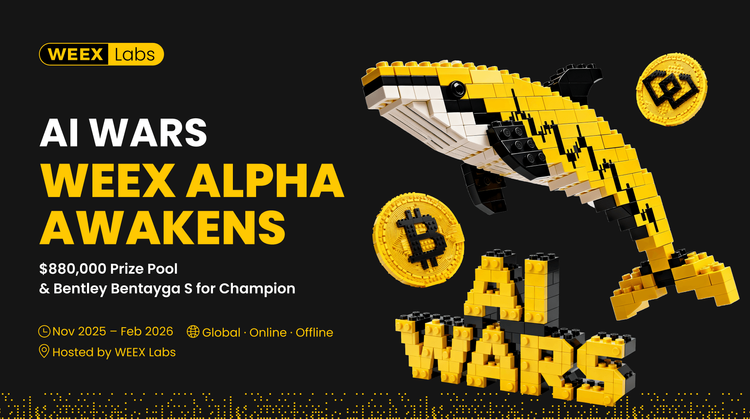
Unisciti a AI Wars: WEEX Alpha Awakens!Bando globale per le Alfa di trading AI
AI Wars: WEEX Alpha Awakens è un hackathon globale di trading di AI a Dubai, che chiama team di quant, trader algoritmici e sviluppatori di AI a scatenare le loro strategie di trading di criptovalute AI nei mercati live per una quota di un montepremi di 880.000 dollari.

WEEX svela il trade per guadagnare: Fino al 30% di sconto istantaneo + $ 2 milioni di riacquisto WXT
WEEX è lieta di annunciare il lancio del nostro programma Trade to Earn, che ti garantisce automaticamente sconti fino al 30% sulle commissioni di trading. Tutte le ricompense vengono accreditate direttamente sul tuo conto spot in $WXT, supportate dal nostro piano di buyback WXT da $2.000.000 che alimenta il valore del token a lungo termine.

Nuovo: Prezzo di Liquidazione Stimato sui Grafici Candlestick App
WEEX ha introdotto un nuovo Prezzo di Liquidazione Stimato (Est. Liq. Price) funzione sul grafico a candela per aiutare i trader a gestire meglio il rischio e identificare intervalli sicuri per le loro posizioni.
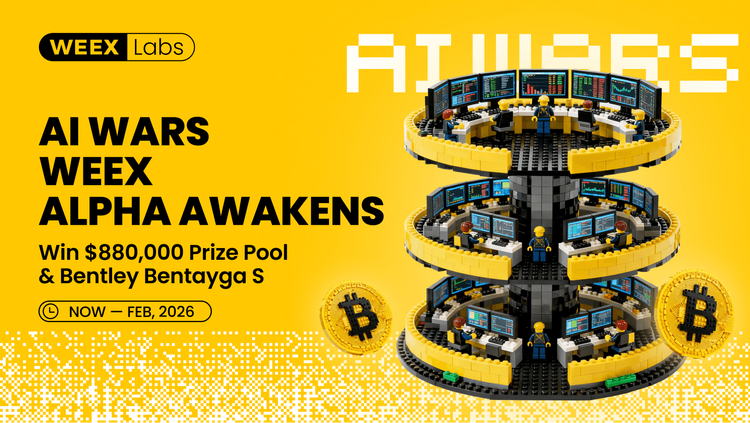
Guida WEEX AI Hackathon: Trova il tuo WEEX UID e registrati
Da oggi a febbraio 2026, WEEX lancia AI Wars: WEEX Alpha Awakens, il primo hackathon di trading globale di IA crypto. Vieni con il tuo UID e registrati al WEEX Global AI Trading Hackathon.
Novembre 2025 Recensione del mercato delle criptovalute: Correzione dei prezzi, rimborsi degli ETF e panorama Blockchain in evoluzione
Novembre 2025 ha visto una pronunciata volatilità e una correzione strutturale all'interno del più ampio ecosistema blockchain, principalmente guidata da previsioni macroeconomiche fluttuanti e specifiche dinamiche di flusso di capitale.
NOTTE DELLE BALene: AI Trading, Crypto Community & Crypto Market Insights
Il 12 dicembre 2025, WEEX ha ospitato WEEXPERIENCE Whales Night, un incontro della comunità offline progettato per riunire i membri della comunità locale di criptovalute. L'evento ha combinato condivisione di contenuti, giochi interattivi e presentazioni di progetti per creare un'esperienza offline rilassata ma coinvolgente.
Rischio di trading AI in criptovaluta: Perché migliori strategie di trading di criptovalute possono creare perdite maggiori?
Il rischio non risiede più principalmente in un cattivo processo decisionale o in errori emotivi. Vive sempre più nella struttura del mercato, nei percorsi di esecuzione e nel comportamento collettivo. Capire questo cambiamento conta più che trovare la prossima strategia “migliore”.
Gli agenti AI stanno sostituendo la ricerca sulle criptovalute? Come l'IA autonoma sta rimodellando il trading di criptovalute
L'IA sta passando dall'assistenza ai trader all'automazione dell'intero processo di ricerca-esecuzione nei mercati crypto. L'edge si è spostato dall'intuito umano alle pipeline di dati, alla velocità e ai sistemi AI pronti per l'esecuzione, rendendo i ritardi nell'integrazione dell'IA uno svantaggio competitivo.
AI Trading Bots e Copy Trading: Come le strategie sincronizzate rimodellano la volatilità del mercato delle criptovalute
I trader di criptovalute al dettaglio affrontano da tempo le stesse sfide: cattiva gestione del rischio, ingressi tardivi, decisioni emotive ed esecuzione incoerente. Gli strumenti di trading AI promettevano una soluzione. Oggi, i sistemi di copy trading e i breakout bot basati sull'IA aiutano i trader a dimensionare le posizioni, impostare stop e agire più velocemente che mai. Al di là di velocità e precisione, questi strumenti stanno tranquillamente rimodellando i mercati: i trader non solo fanno trading in modo più intelligente, ma si muovono in sincronia, creando una nuova dinamica che amplifica sia il rischio che le opportunità.
AI Trading in Crypto Spiegato: Come il trading autonomo sta rimodellando i mercati e gli scambi di criptovalute
AI Trading sta rapidamente trasformando il panorama crypto. Le strategie tradizionali faticano a tenere il passo con la volatilità ininterrotta delle criptovalute e la complessa struttura del mercato, mentre l'IA può elaborare dati massicci, generare strategie adattive, gestire il rischio ed eseguire scambi in autonomia. Questo articolo guida gli utenti WEEX attraverso cos'è AI Trading, perché le criptovalute ne accelerano l'adozione, come il settore si sta evolvendo verso agenti autonomi e perché WEEX sta costruendo l'ecosistema di trading AI di nuova generazione.
Chiama a partecipare a AI Wars: WEEX Alpha Awakens — Concorso globale di trading AI con un montepremi di 880.000 dollari
Ora, stiamo chiedendo ai trader AI di tutto il mondo di unirsi a AI Wars: WEEX Alpha Awakens, una competizione globale di trading AI con 880.000 dollari di montepremi.
Monete popolari
Ultime notizie crypto


Assistenza clienti:@weikecs
Cooperazione aziendale:@weikecs
Trading quantitativo e MM:[email protected]
Servizi VIP:[email protected]
 App
App