
- Acquista crypto
- Mercato
- Futures
- Spot
- Copy trading
 WE-Launch
Interpreting the U.S. New Tariff Policy on April 2: Market Uncertainty to Reach Its Peak

Original Title: "April 2nd Trading Manual: Three Possible Scenarios"
Original Author: Zhao Ying, Wall Street News
With the upcoming unveiling of the U.S. tariff policy on April 2nd, market uncertainty will reach a new peak, and investors need to buckle up and prepare for volatility!
According to CCTV News's report on Saturday, local time on March 28th, U.S. President Trump plans to announce new tariffs in the coming days. He expressed a certain degree of openness to reaching tariff agreements with other countries, but he hinted that any agreements would be reached after the April 2nd tariff measures take effect.
When asked if this would happen before the announcement of tariff increases on April 2nd, he said, "No, it won't, most likely later." Trump also reiterated the plan to announce drug tariffs but refused to disclose the specific tariff rates.
In its latest report, Citigroup summarized three main scenarios and their respective market impacts: First, announcing reciprocal tariffs only, in which case, the market reaction would be relatively limited. Second, reciprocal tariffs plus Value-Added Tax (VAT), where the U.S. dollar index may immediately rise by 50-100 basis points, and global stock markets may also decline. Third, in addition to reciprocal tariffs and VAT, industry-specific tariffs are included, in which case, market reactions may be more intense.
After the S&P 500 experienced its worst start to a year since 2020, analysts have been warning of a higher likelihood of further declines than rises. Some analysts have pointed out that future tariffs and retaliatory actions are key, and the market reaction on "April 2nd" will largely depend on the timing of the tariffs, especially industry-specific tariffs and other countries' speed of response to reciprocal tariffs.
Three Major Tariff Scenarios
Citigroup's report indicated that as the April 2nd tariff measures announcement approaches, three main scenarios were identified based on the survey results, with their respective market impacts analyzed:
· Scenario One, Announcing Reciprocal Tariffs Only: If the Trump administration only announces reciprocal tariffs based on Most Favored Nation (MFN) simple average tariff gap on April 2nd, this would be a relatively mild outcome. According to Nomura Securities' survey, about 25.5% of respondents believe this scenario could occur, with countries like India, Thailand, and Indonesia potentially being the most affected. In this case, the market reaction may be relatively limited, and the U.S. dollar index may not experience significant fluctuations.
· Scenario Two, Reciprocal Tariffs Plus Value-Added Tax (VAT): If the tariff policy includes VAT, this would be a more aggressive move, potentially triggering risk aversion and a strengthening of the U.S. dollar. In this scenario, Germany's MFN tariff gap (including 19% VAT) is 20.4%, France is 21.1%, and Spain is 21.8%. The Asian region also faces risks, with Japan at 10.5%, India at 29.5%, and Thailand at 13.0%. This scenario could lead to the U.S. dollar index (DXY) rising by 50-100 basis points immediately after the announcement, but at the same time, the dollar against the yen may weaken, and global stock markets may decline. Asian rates may fall, with India and Thailand potentially dropping by 5-7 basis points.
· Scenario Three, More Aggressive Tariff Policy: In addition to reciprocal tariffs and value-added tax, it may also include industry-specific tariffs. For example, Trump previously announced a 25% tariff on imported finished vehicles (potentially impacting Mexico, South Korea, Japan, Canada, Germany), and hinted at the possibility of imposing tariffs on semiconductor chips and drugs (with South Korea and Singapore being the most affected). Furthermore, there may be a decision to not extend the 25% tariff deadline on Mexico and Canada, or to impose additional tariffs on imported Venezuelan oil. In this scenario, market reaction may be the most intense, the US Dollar Index may further strengthen, and the USD/JPY pair may experience a significant decline.
Markets Brace for Turbulence!
The roller-coaster ride of the US stock market has just begun, with the S&P 500 index heading towards its worst performance in the first quarter since 2020, and the upcoming tariff policy announcement may further exacerbate market volatility.
The tariff policy statement on April 2 will reveal which countries and industries the Trump administration will target, and the market is expected to experience significant fluctuations. The severity of the tariffs, their duration, the targeted countries and industries, as well as retaliatory measures by trading partners, will all contribute to intense market swings.
· Mark Malek, Chief Investment Officer at Siebert Financial, stated:
I am a staunch bull, but I want to tell you that from now until next week, especially before the start of earnings season, the potential for a stock market decline is greater than the possibility of an increase.
· Michael Arone, Chief Investment Strategist at State Street Global Advisors, said:
Uncertainty continues to plague the market, bringing about volatility, and on April 2 and beyond the deadline, there may be more volatility.
· Angelo Kourkafas, Senior Investment Strategist at Edward Jones, stated:
The April 2 statement may not be a "one-time event." It is an important milestone, but ultimately it does not completely eliminate all uncertainty.
· Matthew Aks, Senior Strategist at Evercore ISI, reminded:
The market reaction on April 2 "will largely depend on" the timing of future tariffs, especially industry-specific tariffs, and how quickly other countries respond to reciprocal tariffs. If other countries take retaliatory action, this will bring about a risk of an escalation cycle, potentially undermining any sense of relief.
According to a CCTV news report, Trump was interviewed on "Air Force One" en route to Florida and was asked whether he would be willing to discuss reaching a deal to lower U.S. tariffs with the UK and other countries. He replied, "If we could get something from this deal, it is possible - but you know, we have been taken advantage of for 40 years, even longer. This will not happen again. But yes, I would certainly be open to it."
Potrebbe interessarti anche

NOTTE DELLE BALene: AI Trading, Crypto Community & Crypto Market Insights
Il 12 dicembre 2025, WEEX ha ospitato WEEXPERIENCE Whales Night, un incontro della comunità offline progettato per riunire i membri della comunità locale di criptovalute. L'evento ha combinato condivisione di contenuti, giochi interattivi e presentazioni di progetti per creare un'esperienza offline rilassata ma coinvolgente.
Rischio di trading AI in criptovaluta: Perché migliori strategie di trading di criptovalute possono creare perdite maggiori?
Il rischio non risiede più principalmente in un cattivo processo decisionale o in errori emotivi. Vive sempre più nella struttura del mercato, nei percorsi di esecuzione e nel comportamento collettivo. Capire questo cambiamento conta più che trovare la prossima strategia “migliore”.
Gli agenti AI stanno sostituendo la ricerca sulle criptovalute? Come l'IA autonoma sta rimodellando il trading di criptovalute
L'IA sta passando dall'assistenza ai trader all'automazione dell'intero processo di ricerca-esecuzione nei mercati crypto. L'edge si è spostato dall'intuito umano alle pipeline di dati, alla velocità e ai sistemi AI pronti per l'esecuzione, rendendo i ritardi nell'integrazione dell'IA uno svantaggio competitivo.
AI Trading Bots e Copy Trading: Come le strategie sincronizzate rimodellano la volatilità del mercato delle criptovalute
I trader di criptovalute al dettaglio affrontano da tempo le stesse sfide: cattiva gestione del rischio, ingressi tardivi, decisioni emotive ed esecuzione incoerente. Gli strumenti di trading AI promettevano una soluzione. Oggi, i sistemi di copy trading e i breakout bot basati sull'IA aiutano i trader a dimensionare le posizioni, impostare stop e agire più velocemente che mai. Al di là di velocità e precisione, questi strumenti stanno tranquillamente rimodellando i mercati: i trader non solo fanno trading in modo più intelligente, ma si muovono in sincronia, creando una nuova dinamica che amplifica sia il rischio che le opportunità.
AI Trading in Crypto Spiegato: Come il trading autonomo sta rimodellando i mercati e gli scambi di criptovalute
AI Trading sta rapidamente trasformando il panorama crypto. Le strategie tradizionali faticano a tenere il passo con la volatilità ininterrotta delle criptovalute e la complessa struttura del mercato, mentre l'IA può elaborare dati massicci, generare strategie adattive, gestire il rischio ed eseguire scambi in autonomia. Questo articolo guida gli utenti WEEX attraverso cos'è AI Trading, perché le criptovalute ne accelerano l'adozione, come il settore si sta evolvendo verso agenti autonomi e perché WEEX sta costruendo l'ecosistema di trading AI di nuova generazione.
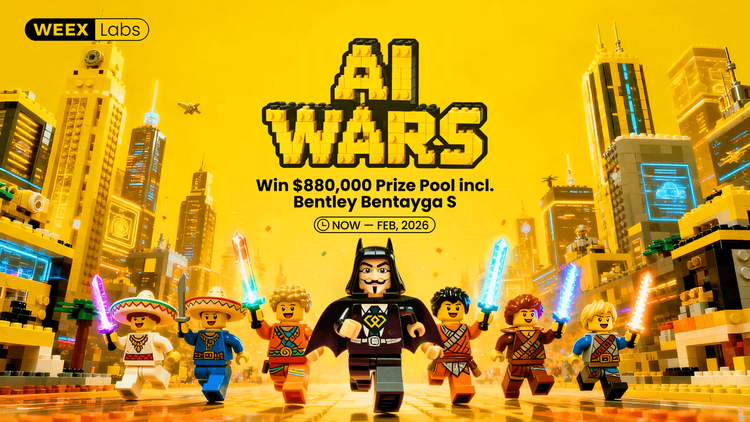
Chiama a partecipare a AI Wars: WEEX Alpha Awakens — Concorso globale di trading AI con un montepremi di 880.000 dollari
Ora, stiamo chiedendo ai trader AI di tutto il mondo di unirsi a AI Wars: WEEX Alpha Awakens, una competizione globale di trading AI con 880.000 dollari di montepremi.
AI Trading in Crypto Markets: Dai bot di trading automatizzati alle strategie algoritmiche
Il trading basato sull'IA sta spostando le criptovalute dalla speculazione al dettaglio alla concorrenza di livello istituzionale, dove l'esecuzione e la gestione del rischio contano più della direzione. Man mano che il trading di IA scala, il rischio sistemico e la pressione normativa aumentano, rendendo le prestazioni a lungo termine, i sistemi robusti e la conformità i principali differenziatori.

Analisi del sentimento AI e volatilità delle criptovalute: Cosa muove i prezzi delle criptovalute
Il sentiment dell'IA sta influenzando sempre più i mercati crypto, con cambiamenti nelle aspettative relative all'IA che si traducono in volatilità per i principali asset digitali. I mercati delle criptovalute tendono ad amplificare le narrazioni AI, consentendo ai flussi guidati dal sentiment di superare i fondamentali nel breve termine. Comprendere come si forma e si diffonde il sentimento dell'IA aiuta gli investitori ad anticipare meglio i cicli di rischio e le opportunità di posizionamento tra gli asset digitali.
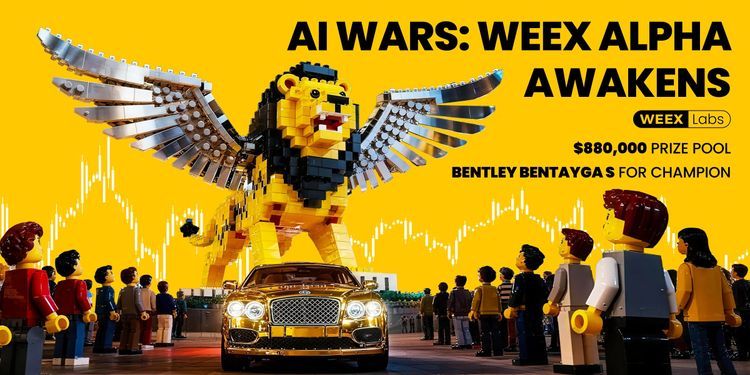
AI Wars: Guida per i partecipanti
In questa sfida finale, i migliori sviluppatori, quant e trader di tutto il mondo daranno sfogo ai loro algoritmi in battaglie sul mercato reale, competendo per uno dei montepremi più ricchi nella storia del trading di criptovalute basato sull'intelligenza artificiale: 880.000 dollari, compresa una Bentley Bentayga S per il campione. Questa guida ti accompagnerà attraverso tutte le fasi necessarie, dalla registrazione all'inizio ufficiale della competizione.

Settimana delle banche centrali e volatilità del mercato delle criptovalute: Come le decisioni sui tassi di interesse modellano le condizioni di trading su WEEX
Le decisioni sui tassi di interesse delle principali banche centrali come la Federal Reserve sono eventi macroeconomici significativi che hanno un impatto sui mercati finanziari globali, influenzando direttamente le aspettative di liquidità del mercato e la propensione al rischio. Mentre il mercato delle criptovalute continua a svilupparsi e la sua struttura di trading e i partecipanti maturano, il mercato delle criptovalute viene gradualmente incorporato nel sistema di prezzi macroeconomici.

Test API WEEX: Guida ufficiale per AI Trading Hackathon e Crypto Trading APIs
WEEX API Testing è progettato per garantire che ogni partecipante possa trasformare la logica di trading in esecuzione reale. Tutte le interazioni API avvengono sul sistema di trading live di WEEX, consentendo ai partecipanti di lavorare in condizioni di mercato autentiche piuttosto che simulazioni. Con un requisito di ingresso basso, l'attività è accessibile sia agli sviluppatori esperti che ai principianti motivati, pur convalidando le competenze tecniche essenziali.
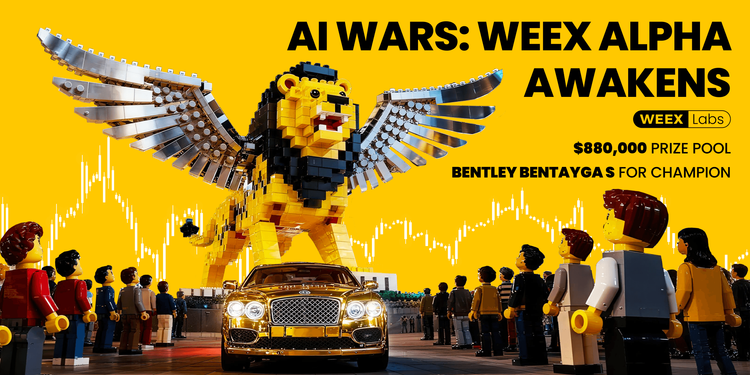
AI Guerre: WEEX Alpha Awakens | Guida al processo di test API WEEX Global Hackathon
AI Wars: La registrazione a WEEX Alpha Awakens è ora aperta. e questa guida illustra come accedere al test API e completare con successo il processo.
Cos'è il risveglio alfa WEEX e come partecipare? Una guida completa
Per accelerare le scoperte all'incrocio tra AI e crypto, WEEX sta lanciando il primo AI Trading Hackathon globale al mondo - AI Wars: Alpha Awakens.
Unisciti a AI Wars: WEEX Alpha Awakens!Bando globale per le Alfa di trading AI
AI Wars: WEEX Alpha Awakens è un hackathon globale di trading di AI a Dubai, che chiama team di quant, trader algoritmici e sviluppatori di AI a scatenare le loro strategie di trading di criptovalute AI nei mercati live per una quota di un montepremi di 880.000 dollari.
WEEX svela il trade per guadagnare: Fino al 30% di sconto istantaneo + $ 2 milioni di riacquisto WXT
WEEX è lieta di annunciare il lancio del nostro programma Trade to Earn, che ti garantisce automaticamente sconti fino al 30% sulle commissioni di trading. Tutte le ricompense vengono accreditate direttamente sul tuo conto spot in $WXT, supportate dal nostro piano di buyback WXT da $2.000.000 che alimenta il valore del token a lungo termine.

Nuovo: Prezzo di Liquidazione Stimato sui Grafici Candlestick App
WEEX ha introdotto un nuovo Prezzo di Liquidazione Stimato (Est. Liq. Price) funzione sul grafico a candela per aiutare i trader a gestire meglio il rischio e identificare intervalli sicuri per le loro posizioni.
Guida WEEX AI Hackathon: Trova il tuo WEEX UID e registrati
Da oggi a febbraio 2026, WEEX lancia AI Wars: WEEX Alpha Awakens, il primo hackathon di trading globale di IA crypto. Vieni con il tuo UID e registrati al WEEX Global AI Trading Hackathon.
Novembre 2025 Recensione del mercato delle criptovalute: Correzione dei prezzi, rimborsi degli ETF e panorama Blockchain in evoluzione
Novembre 2025 ha visto una pronunciata volatilità e una correzione strutturale all'interno del più ampio ecosistema blockchain, principalmente guidata da previsioni macroeconomiche fluttuanti e specifiche dinamiche di flusso di capitale.
NOTTE DELLE BALene: AI Trading, Crypto Community & Crypto Market Insights
Il 12 dicembre 2025, WEEX ha ospitato WEEXPERIENCE Whales Night, un incontro della comunità offline progettato per riunire i membri della comunità locale di criptovalute. L'evento ha combinato condivisione di contenuti, giochi interattivi e presentazioni di progetti per creare un'esperienza offline rilassata ma coinvolgente.
Rischio di trading AI in criptovaluta: Perché migliori strategie di trading di criptovalute possono creare perdite maggiori?
Il rischio non risiede più principalmente in un cattivo processo decisionale o in errori emotivi. Vive sempre più nella struttura del mercato, nei percorsi di esecuzione e nel comportamento collettivo. Capire questo cambiamento conta più che trovare la prossima strategia “migliore”.
Gli agenti AI stanno sostituendo la ricerca sulle criptovalute? Come l'IA autonoma sta rimodellando il trading di criptovalute
L'IA sta passando dall'assistenza ai trader all'automazione dell'intero processo di ricerca-esecuzione nei mercati crypto. L'edge si è spostato dall'intuito umano alle pipeline di dati, alla velocità e ai sistemi AI pronti per l'esecuzione, rendendo i ritardi nell'integrazione dell'IA uno svantaggio competitivo.
AI Trading Bots e Copy Trading: Come le strategie sincronizzate rimodellano la volatilità del mercato delle criptovalute
I trader di criptovalute al dettaglio affrontano da tempo le stesse sfide: cattiva gestione del rischio, ingressi tardivi, decisioni emotive ed esecuzione incoerente. Gli strumenti di trading AI promettevano una soluzione. Oggi, i sistemi di copy trading e i breakout bot basati sull'IA aiutano i trader a dimensionare le posizioni, impostare stop e agire più velocemente che mai. Al di là di velocità e precisione, questi strumenti stanno tranquillamente rimodellando i mercati: i trader non solo fanno trading in modo più intelligente, ma si muovono in sincronia, creando una nuova dinamica che amplifica sia il rischio che le opportunità.
AI Trading in Crypto Spiegato: Come il trading autonomo sta rimodellando i mercati e gli scambi di criptovalute
AI Trading sta rapidamente trasformando il panorama crypto. Le strategie tradizionali faticano a tenere il passo con la volatilità ininterrotta delle criptovalute e la complessa struttura del mercato, mentre l'IA può elaborare dati massicci, generare strategie adattive, gestire il rischio ed eseguire scambi in autonomia. Questo articolo guida gli utenti WEEX attraverso cos'è AI Trading, perché le criptovalute ne accelerano l'adozione, come il settore si sta evolvendo verso agenti autonomi e perché WEEX sta costruendo l'ecosistema di trading AI di nuova generazione.
Chiama a partecipare a AI Wars: WEEX Alpha Awakens — Concorso globale di trading AI con un montepremi di 880.000 dollari
Ora, stiamo chiedendo ai trader AI di tutto il mondo di unirsi a AI Wars: WEEX Alpha Awakens, una competizione globale di trading AI con 880.000 dollari di montepremi.
Monete popolari
Ultime notizie crypto


Assistenza clienti:@weikecs
Cooperazione aziendale:@weikecs
Trading quantitativo e MM:[email protected]
Servizi VIP:[email protected]
 App
App