
- Acquista crypto
- Mercato
- Futures
- Spot
- Copy trading
 Guadagna
- Altro
Pacific Water Drop Network Webinar Series Selection: Unlocking the Wealth Code of Cryptographic Quantitative Arbitrage

In the ever-changing cryptocurrency market, quantitative arbitrage strategy has gradually become a sought-after wealth code by investors due to its stability and risk control. In this issue of the webinar, Pacific Droplet has invited two partners, Allen and Leon, from Hashflow Asset Management. The webinar is hosted by Xiaozhou, Executive Director of Taiping Asset Management Hong Kong, to explore the core logic of this strategy and its market potential together with the audience.
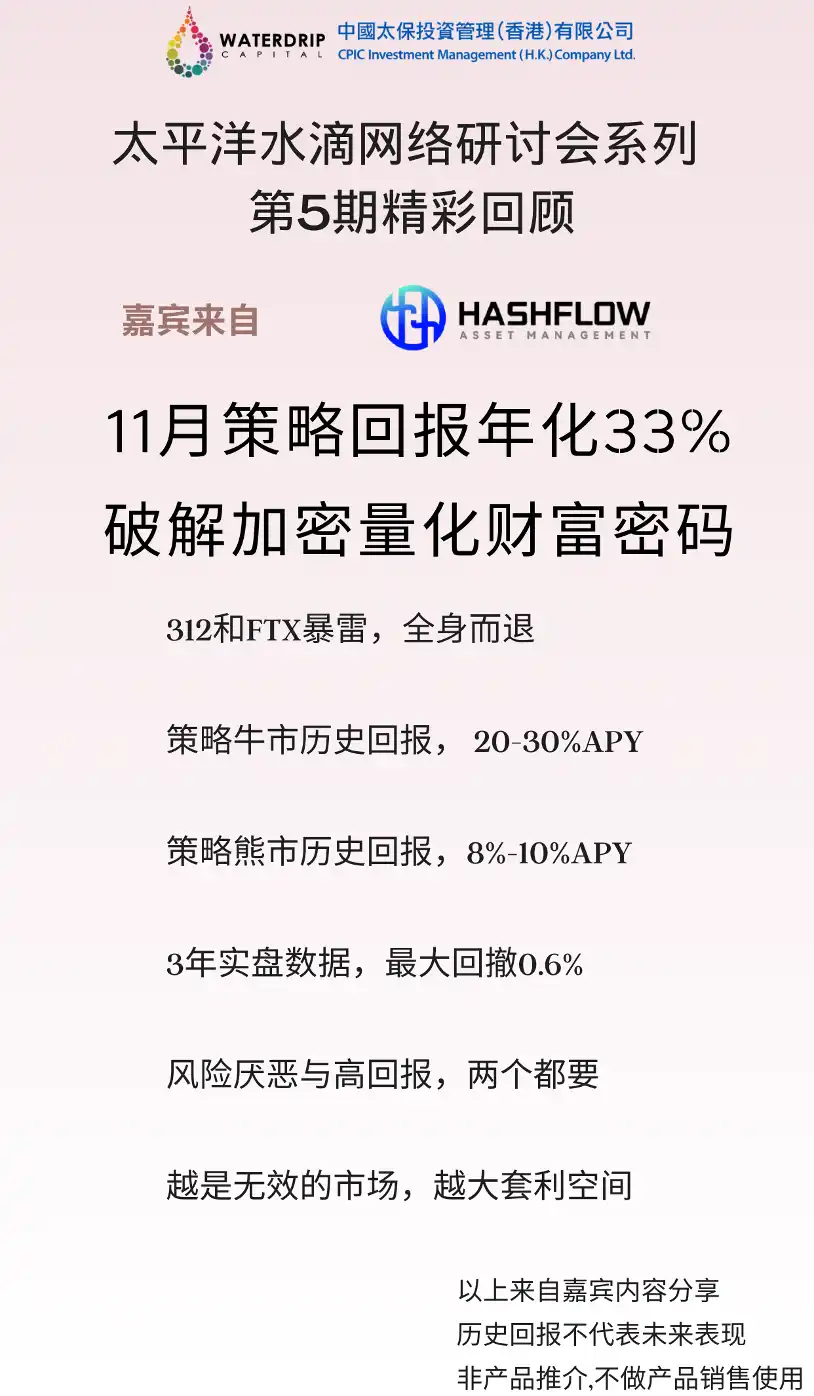
Guest Introduction
· Allen: Coming from a traditional finance background, Allen has previously worked extensively in areas such as stocks and futures. In 2018, he transitioned into the cryptocurrency market, pioneering the introduction of traditional market quantitative models into crypto trading. With over six years of digital asset quantitative trading experience, his led crypto asset quant team successfully hedged against crises in both the 2020 3/12 event and the 2022 FTX flash crash.
· Leon: With years of experience in hedge funds and risk management, Leon has previously worked at Citibank and top domestic hedge funds. Since 2018, he has been focusing on quantitative arbitrage strategies in the cryptocurrency market.
· Host: Xiaozhou, currently the Executive Director of Taiping Asset Management Hong Kong, has long been dedicated to the field of fixed income investments.
Exciting Q&A Content
Opening: The Birth and Background of Quantitative Arbitrage Strategy
Xiaozhou: Allen and Leon, both of you were originally senior professionals in the traditional finance field. What prompted you to enter the cryptocurrency market and make quantitative arbitrage your main focus?
Allen: "In traditional finance, algorithmic trading is already very mature. However, when we entered the cryptocurrency market in 2018, we found that the market's volatility, retail investor proportion, and overall immaturity were very suitable for the application of quantitative strategies. The cryptocurrency market's unique mechanisms, such as perpetual contracts and funding rates, also brought us brand-new arbitrage opportunities."
Leon: "At that time, we saw many trading mechanisms in the crypto market similar to the traditional market, but due to lower liquidity and insufficient market participant expertise, quantitative arbitrage had significant room. Coupled with our team's deep experience in algorithmic trading, we quickly identified opportunities."
Question 1: Please provide a specific introduction to the operational logic and revenue source of quant arbitrage?
Allen: "The essence of quant arbitrage is to profit from the spread between spot and perpetual contracts. We buy spot and simultaneously short perpetual contracts. Since holding a long position in perpetual contracts incurs funding rates, this cost ultimately becomes the arbitrageur's source of income."
Leon: "The core advantage of this strategy is that through the hedge between spot and futures, we can achieve market neutrality. Regardless of whether the market is up or down, the portfolio will not be affected by price fluctuations."
Key Points Summary:
· Funding Rate: Settled every 8 hours, with an annualized return of 20%-30% in a bull market and still maintaining 8%-10% in a bear market.
· Risk Neutrality: Hedging between spot and futures ensures stable returns, avoiding market volatility.
Question 2: With high market volatility and complexity in operations, how does quant arbitrage ensure long-term stability?
Allen: "We utilize a unified margin account, integrating fund management between spot and futures to avoid cross-account fund risks. Additionally, we rely on the deep liquidity of blue-chip coins (such as BTC, ETH) for fundamental security."
Leon: "Furthermore, our dynamic rotation mechanism is another key point. We monitor funding rates of all mainstream coins daily and adjust the portfolio based on returns and risks to maximize profits and minimize risks."
Key Points Summary:
· Unified Margin Account: Simplifying fund flow, reducing settlement risks.
· Dynamic Rotation: Real-time allocation adjustments to optimize returns and risks.
Question 3: If the market spread suddenly widens or funding rates turn negative, how do you deal with these potential risks?
Allen: "When the spread widens, we will timely reduce positions or reconfigure based on real-time monitored retracement data. Additionally, the deep liquidity of blue-chip coins ensures that the spread quickly reverts."
Leon: "As for negative funding rate, we have established a strict stop-loss mechanism. If a certain asset experiences a negative funding rate for 5 consecutive days, we will remove it from the portfolio."
Key Takeaways:
· Risk Management: Reduce position, rebalance, or lower leverage.
· Stop-Loss Mechanism: Asset removed if negative funding rate persists for more than 5 days.
Question 4: For some investors, holding BTC directly may seem more attractive. So why choose quantitative arbitrage?
Leon: "The returns from holding the asset directly are entirely dependent on market price fluctuations, posing high risks. Quantitative arbitrage, on the other hand, offers a low-risk, stable return option. For risk-averse investors, this balance is crucial."
Allen: "For portfolio management, we also recommend combining asset holding with quantitative arbitrage to achieve enhanced returns. Holding assets captures upside potential, while arbitrage strategies mitigate volatility risks."
Key Takeaways:
· Low-Risk Stability: Suitable for risk-averse investors.
· Portfolio Advantage: Combination of asset holding and arbitrage for enhanced returns.
Question 5: How long can the cryptocurrency market's bull run last? How long can the high-yield phase of arbitrage strategies be sustained?
Allen: "Based on historical cycles, the cryptocurrency market experiences a halving event approximately every four years. We anticipate that the high-yield phase of the bull market may continue for the next 6 months, until the market enters the early stages of a bear market."
Leon: "Even in a bear market, quantitative arbitrage remains a preferred strategy. Through precise management and diversified asset allocation, we can continue to maintain low drawdowns and stable returns."
Key Takeaways:
· Bull Market Phase: High-yield period expected to last 6 months.
· Bear Market Advantage: Strategy has a small drawdown and can still provide steady returns.
Question 6: Many viewers are interested in the specific operation of quantitative arbitrage, such as what the actual process would be with $1 million?
Allen: "We would use spot and perpetual contracts for arbitrage. For example, $1 million can be used to buy $2 million worth of spot and simultaneously short an equivalent amount of perpetual contracts. This involves moderate leverage, usually kept within two times. This operation ensures that the profit comes from funding rates rather than market fluctuations."
Leon: "Furthermore, current trading platforms support unified margin accounts, which greatly simplifies the operational process. In the past, we needed to constantly rebalance between spot and contract accounts, but now all operations can be completed within the same account, reducing fund transfer risk and improving efficiency."
Key Points Summary:
· Leverage Control: Moderate leverage amplifies profits while reducing risk.
· Unified Account: Simplifies operational processes, reducing fund flow risks.
Question 7: Quantitative arbitrage seems to have low drawdown but still carries risks. Could you explain in detail what potential risks there are and how to manage these risks?
Allen: "Main risks include:
· Spread Fluctuation: The spread at the time of establishing a position may widen in the short term, leading to unrealized losses.
· Negative Funding Rate: Although the funding rate is mostly positive in the long term, it can also turn negative in the short term."
To counter these risks, we have established strict stop-loss rules. If a currency has a negative funding rate for 5 consecutive days, we will remove it from the portfolio. Additionally, through multi-currency allocation, we have reduced the impact of single currency volatility."
Leon: "The recovery of drawdown mainly depends on two points:
· Spread Reversion: Market spreads will eventually return to normal ranges."
· Funding Rate Recovery: Long-term positive returns will gradually offset short-term negative returns.
Key Points Summary:
· Spread Volatility and Negative Funding Rate: Main sources of risk, but effectively controlled through multi-currency allocation and strict stop-loss.
· Drawdown Recovery Mechanism: Relies on spread regression and funding rate recovery.
Question 8: In extreme market conditions, such as sudden large price swings, how does quantitative arbitrage respond?
Leon: "We have taken various measures:
· Position Diversification: The allocation of a single currency does not exceed 5%.
· Dynamic Rebalancing: When the spread widens, positions are reduced to lower risk. If the spread is deemed to be at its limit, we will add to the position in the opposite direction to capture gains."
Allen: "The team's technology and processes are also crucial. For example, during the 3/12 Event (March 12, 2020), many trading platforms experienced downtime, but our system was able to issue alerts promptly and quickly increase positions after system recovery, ultimately profiting."
Key Points Summary:
· Diversified Allocation: Reducing single currency risk.
· Technical Safeguards: Addressing extreme events through alerts and rapid response systems.
Question 9: How does the performance of quantitative arbitrage differ in a bull market versus a bear market? Is there a significant difference in returns?
Allen: "In a bull market, funding rates are higher, and arbitrage returns are usually between 20%-30% annualized. In a bear market, funding rates decrease, and annualized returns are around 8%-10%. Even in a bear market, arbitrage strategies can still provide steady returns because risks and volatility have been hedged."
Leon: "In a bear market, we pay more attention to funding rate rotation, ensuring maximum returns by selecting the optimal currency. For example, in past bear markets, through optimized currency allocation, we kept the overall drawdown to less than 0.6%."
Key Points Summary:
· Bull Market Returns: Up to 30%.
· Bear Market Returns: Approximately 8%-10%, very low risk.
Question 10: I understand that a quantitative arbitrage strategy is somewhat like a cash management enhancement tool in traditional finance. Is it more suitable to switch from traditional bonds or money market funds to this strategy rather than directly engaging in high-risk assets?
Allen: "Your understanding is very accurate! The characteristic of a quantitative arbitrage strategy is stable low risk. It is more like an upgraded version of a cash management tool. Compared to bonds or money market funds, our annualized returns are higher, while the risk remains at an extremely low level."
Leon: "Indeed. For the conservative portion of asset allocation, quantitative arbitrage is a very ideal choice. Especially for institutional investors or high-net-worth clients, traditional cash management tools have lower yields in the current interest rate environment, while our strategy can achieve a significant enhancement."
Key Points Summary:
· Cash Management Tool Upgrade: Higher returns, very low risk.
· Asset Allocation Recommendation: Suitable for investors transitioning from bonds or money market funds.
Question 11: If the spot price continues to rise and we short perpetual swaps, will our returns be affected due to high funding rates?
Allen: "That's a very good question. In a unified account, the P&L of spot and perpetual swaps is calculated together. Even if the funding rate rises, our returns mainly come from spread fluctuations and positive funding rate income. Additionally, our system will automatically adjust margin to ensure the stability of the overall position and avoid one-sided risk."
Leon: "The advantage of a unified account structure is that it can manage the assets of spot and contracts together, reducing liquidity issues and margin top-ups, while ensuring the stability of the overall strategy."
Key Points Summary:
· Unified Account: Comprehensive calculation of PnL to ensure overall revenue.
· Funding Rate Risk Management: Revenue mainly comes from spreads and positive funding rates.
Question 12: In an extreme market environment, such as the 3·12 Event in 2020, how does quantitative arbitrage respond?
Leon: "In extreme events like 3·12, we immediately reduce our position to ensure risk control. At the same time, our technical systems will alert us quickly to help adjust our strategy. Additionally, we focus on trading in large-cap coins with high liquidity, such as BTC and ETH, to avoid losses due to insufficient liquidity in small-cap coins."
Allen: "Such extreme volatility may also present opportunities for us. For example, post-market recovery, by quickly increasing our position to capture spread income, we achieved excess returns after the 3·12 event." Extreme market volatility is both a challenge and an opportunity for us.
Key Takeaways:
· Risk Control: Timely position reduction, focus on large-cap coins.
· Technical Support: Alert system and rapid adjustment mechanism.
The above is the full content of this seminar. We invite you to continue following the Pacific Water Drop Network Webinar.
This article is contributed content and does not represent the views of BlockBeats.
Potrebbe interessarti anche

Cripto e AI: il mercato grigio digitale nascosto di Xianyu
Cripto e AI: Puoi comprare qualsiasi cosa su Xianyu.

Cosa sta guidando i mercati delle criptovalute all'inizio del 2026: Oscillazioni di mercato, trading AI e flussi ETF?
Immaginate di controllare i prezzi di Bitcoin ed Ethereum in un giorno — un minuto in più del 5%, quello successivo in meno del 4%. Mosse brusche, inversioni rapide e sensibilità ai segnali macro hanno segnato la prima settimana del 2026. Dopo un rally di inizio anno, entrambi gli asset si sono ritirati mentre i mercati hanno ricalibrato le aspettative intorno alla politica monetaria e ai flussi istituzionali statunitensi. Per i trader – compresi quelli che si affidano all’IA o a sistemi automatizzati – questo periodo ha offerto un vivido promemoria: segnali abbondanti non garantiscono chiarezza. Rimanere disciplinati nell'esecuzione è spesso la vera sfida.

WEEX Global AI Trading Hackathon Inizia: Il montepremi di 1,88 milioni di dollari alimenta la prossima generazione di campioni del trading AI
WEEX Labs, il braccio innovativo di WEEX, uno scambio di criptovalute leader a livello mondiale che serve oltre 6,2 milioni di utenti in oltre 150 paesi, è pronto a dare il via al round preliminare del suo hackathon di trading globale di punta, AI Wars: WEEX Alpha Awakens, il 12 gennaio 2026. Sostenuto dal forte sostegno di sponsor di livello mondiale tra cui Amazon Web Services (AWS), il montepremi totale è salito da 880.000 dollari a 1.880.000 dollari senza precedenti, posizionando AI Wars tra i più grandi hackathon di trading di IA nel settore crypto. In cima alla classifica vi attende uno straordinario premio da campione: una Bentley Bentayga S, già in standby a Dubai, pronta per essere rivendicata dal vincitore finale del trading AI.
Rischi di trading AI nei mercati cripto: Chi si assume la responsabilità quando fallisce?
Il trading di AI è già un’infrastruttura di mercato fondamentale, ma le autorità di regolamentazione lo trattano ancora come uno strumento – la responsabilità rimane sempre con gli esseri umani e le piattaforme dietro di esso. Il rischio più grande nel 2025 non sono algoritmi canaglia, ma strategie AI adottate in massa che muovono i mercati in sincronia e sfumano il confine tra strumenti e consulenza senza licenza. La fase successiva del trading AI è definita dalla responsabilità e dalla trasparenza, non dalle prestazioni: la conformità è ora un requisito di sopravvivenza, non un vincolo.

Dalla teoria ai mercati dal vivo: Il sistema Dual-Brain di AOT Matrix nel WEEX AI Trading Hackathon
Nei mercati crypto – uno dei sistemi non stazionari più spietati – il fallimento della strategia è raramente causato da modelli troppo semplici. Succede perché la maggior parte delle strategie non sono mai veramente esposte alla pressione del mercato vivo. Questo è esattamente il problema che WEEX AI Trading Hackathon è progettato per emergere — spostando l’attenzione dall’innovazione teorica alla reale implementabilità, esecuzione reale e prestazioni reali. Tra i team partecipanti, AOT Matrix si è distinto con capacità quantitative avanzate basate sull'IA. Attraverso la sua architettura dual-brain V4.4, il sistema ha raggiunto l'ottimizzazione end-to-end - dalla logica di base all'esecuzione - riflettendo la doppia enfasi della piattaforma sull'innovazione e sulle prestazioni del mondo reale.
Approfondimenti preliminari sui partecipanti al round — Matrice AOT: Analisi del cervello sinistro, decisioni sul cervello destro nel trading AI
Nel WEEX AI Trading Hackathon, AOT Matrix ha scelto un percorso più cauto nella progettazione del sistema — uno che è in realtà più difficile da realizzare in un ambiente di trading dal vivo. Fin dall'inizio, hanno fatto scelte chiare su quale ruolo l'IA dovrebbe e non dovrebbe giocare nel sistema di trading.Abbiamo intervistato AOT Matrix sulla loro logica decisionale, sulle molteplici iterazioni della loro architettura di sistema e su come sia implementarla sotto i vincoli reali del trading e dell'ingegneria di WEEX.

Perché i token AI stanno crescendo più velocemente del più ampio mercato delle criptovalute
I token AI stanno superando le prestazioni - e non in silenzio. Bitcoin si muove. Ethereum tiene il passo. Eppure alcuni dei guadagni relativi più forti provengono dai token etichettati AI, non dalle major, non dai meme. A prima vista, questo sembra intuitivo. L'IA è vera tecnologia. Sta plasmando industrie ben oltre le crypto. Ma i mercati raramente si muovono sulla sola intuizione – soprattutto non così velocemente. Quando i prezzi accelerano prima dell'adozione, la domanda più utile non è "L'IA è importante?". È quale versione della storia dell’IA il mercato sta comprando – proprio ora.

Aggiornamento del mercato — 7 gennaio
Bitmine ha messo in palio altri 28.000 Ethereum, per un valore di circa 91,16 milioni di dollari.

Lasciandosi alle spalle i primi tempi caotici, i market maker delle criptovalute stanno festeggiando la loro maggiore età
La lotta di vita o di morte per i market maker delle criptovalute è come un'evoluzione di specie in condizioni estreme.

Perché i trading bot AI stanno diventando essenziali nei mercati crypto 24/7
I mercati delle criptovalute operano continuamente e si muovono più velocemente di quanto l'attenzione umana possa sostenere in modo affidabile. I prezzi reagiscono istantaneamente agli eventi globali, la liquidità si sposta tra le regioni e le opportunità negoziabili spesso esistono per minuti piuttosto che per ore. Per molti trader, la sfida principale non è più generare idee, ma eseguire decisioni in modo coerente senza un monitoraggio costante o interferenze emotive. È qui che i bot di trading AI vengono sempre più adottati, non come garanzie di profitto, ma come strumenti progettati per tradurre strategie predefinite in un’esecuzione affidabile e ripetibile.
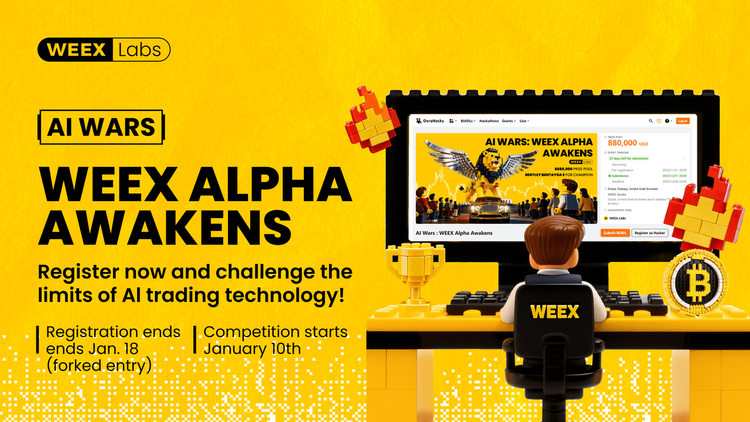
Concorso di trading di criptovalute AI: Guida completa per conoscere WEEX Alpha Awakens
L'integrazione dell'intelligenza artificiale nel trading di criptovalute si è evoluta da un nuovo esperimento a un'utilità principale. Nel 2026, gli strumenti basati sull'IA sono diventati indispensabili per i trader che cercano una disciplina migliorata, una velocità di esecuzione superiore e un processo decisionale strutturato e basato sui dati in mezzo alla volatilità del mercato. Questa guida fornisce una ripartizione pratica e dettagliata di come partecipare a WEEX Alpha Awakens, con un esame mirato di come queste strategie vengono implementate all'interno degli ambienti di trading dal vivo.

Le K-line della vita non possono curare l'ansia e i mercati di previsione non possono calcolare il finale.
La vita reale spesso si svolge oltre le linee K.
Come l'IA aiuta i trader di criptovalute ad analizzare i mercati, gestire i rischi e fare trading in modo più intelligente
Il trading di criptovalute non è più solo avere una buona idea, ma eseguire in modo coerente in un mercato che non si ferma mai. Con l'aumento dei volumi di dati e della velocità di mercato, l'analisi manuale tradizionale raggiunge i suoi limiti. L'IA aiuta i trader ad andare oltre questi limiti trasformando il modo in cui i mercati vengono analizzati, il modo in cui il sentiment viene interpretato e il modo in cui il rischio viene controllato. Questo articolo esplora come l'IA stia rimodellando il trading di criptovalute e cosa significhi per i trader di oggi.

WEEX × LALIGA: Sette stelle che rappresentano uno standard di eccellenza condiviso
La vera eccellenza nel calcio non è mai casuale. Si basa sulla disciplina, la coerenza e la capacità di fornire risultati sotto pressione, stagione dopo stagione. Gli stessi principi si applicano nel trading professionale, dove le prestazioni a lungo termine contano più dello slancio di breve durata. In qualità di partner regionale ufficiale di LALIGA, WEEX mette in evidenza sette giocatori eccezionali che incarnano lo spirito competitivo e l'appeal globale del campionato. Ognuno porta uno stile unico in campo, ma tutti condividono valori che si allineano strettamente all'impegno di WEEX per la stabilità, la precisione e l'esecuzione professionale. Questa partnership si basa su standard condivisi, in cui coerenza e controllo definiscono le prestazioni sotto pressione.

Da Wuhan alla Silicon Valley, Manus lo ha fatto in soli nove mesi.
Puoi chiamarlo “wrapper”, ma è arrivato fino a Meta.

WEEX collabora con LALIGA per espandere la portata globale e integrare le criptovalute nella cultura sportiva principale
Hong Kong, 1 gennaio 2026. WEEX ha stretto una nuova partnership con LALIGA, come partner regionale ufficiale di LALIGA a Taiwan e Hong Kong. L'accordo porta WEEX nella rete di collaboratori regionali di LALIGA e apre le porte a nuovi modi di coinvolgere sia i tifosi che i commercianti durante la stagione.
AI Trading in Crypto: Come i trader applicano effettivamente l'IA nei mercati delle criptovalute reali
L’intelligenza artificiale è andata oltre la sperimentazione nei mercati crypto. Nel 2025, gli strumenti di trading basati sull'IA sono sempre più utilizzati dai trader che desiderano una migliore disciplina, un'esecuzione più rapida e un processo decisionale più strutturato in mercati volatili. Questa guida spiega come l'IA viene effettivamente utilizzata nel trading di criptovalute, passo dopo passo, con un focus su come queste strategie vengono eseguite in ambienti di trading reali.

Aggiornamento del mercato — 31 dicembre
Dalla Corea del Sud e dall'OCSE che accelerano l'implementazione dei quadri di regolamentazione e conformità delle criptovalute, allo sviluppo simultaneo di ETF TAO, tecnologie per la privacy, mining e riserve di Bitcoin, mentre gli incidenti di sicurezza e le perdite finanziarie continuano ad aumentare, il mercato delle criptovalute è entrato in una nuova fase tra molteplici sfide di "forte regolamentazione + evoluzione tecnologica + rischi amplificati".
Cripto e AI: il mercato grigio digitale nascosto di Xianyu
Cripto e AI: Puoi comprare qualsiasi cosa su Xianyu.
Cosa sta guidando i mercati delle criptovalute all'inizio del 2026: Oscillazioni di mercato, trading AI e flussi ETF?
Immaginate di controllare i prezzi di Bitcoin ed Ethereum in un giorno — un minuto in più del 5%, quello successivo in meno del 4%. Mosse brusche, inversioni rapide e sensibilità ai segnali macro hanno segnato la prima settimana del 2026. Dopo un rally di inizio anno, entrambi gli asset si sono ritirati mentre i mercati hanno ricalibrato le aspettative intorno alla politica monetaria e ai flussi istituzionali statunitensi. Per i trader – compresi quelli che si affidano all’IA o a sistemi automatizzati – questo periodo ha offerto un vivido promemoria: segnali abbondanti non garantiscono chiarezza. Rimanere disciplinati nell'esecuzione è spesso la vera sfida.
WEEX Global AI Trading Hackathon Inizia: Il montepremi di 1,88 milioni di dollari alimenta la prossima generazione di campioni del trading AI
WEEX Labs, il braccio innovativo di WEEX, uno scambio di criptovalute leader a livello mondiale che serve oltre 6,2 milioni di utenti in oltre 150 paesi, è pronto a dare il via al round preliminare del suo hackathon di trading globale di punta, AI Wars: WEEX Alpha Awakens, il 12 gennaio 2026. Sostenuto dal forte sostegno di sponsor di livello mondiale tra cui Amazon Web Services (AWS), il montepremi totale è salito da 880.000 dollari a 1.880.000 dollari senza precedenti, posizionando AI Wars tra i più grandi hackathon di trading di IA nel settore crypto. In cima alla classifica vi attende uno straordinario premio da campione: una Bentley Bentayga S, già in standby a Dubai, pronta per essere rivendicata dal vincitore finale del trading AI.
Rischi di trading AI nei mercati cripto: Chi si assume la responsabilità quando fallisce?
Il trading di AI è già un’infrastruttura di mercato fondamentale, ma le autorità di regolamentazione lo trattano ancora come uno strumento – la responsabilità rimane sempre con gli esseri umani e le piattaforme dietro di esso. Il rischio più grande nel 2025 non sono algoritmi canaglia, ma strategie AI adottate in massa che muovono i mercati in sincronia e sfumano il confine tra strumenti e consulenza senza licenza. La fase successiva del trading AI è definita dalla responsabilità e dalla trasparenza, non dalle prestazioni: la conformità è ora un requisito di sopravvivenza, non un vincolo.
Dalla teoria ai mercati dal vivo: Il sistema Dual-Brain di AOT Matrix nel WEEX AI Trading Hackathon
Nei mercati crypto – uno dei sistemi non stazionari più spietati – il fallimento della strategia è raramente causato da modelli troppo semplici. Succede perché la maggior parte delle strategie non sono mai veramente esposte alla pressione del mercato vivo. Questo è esattamente il problema che WEEX AI Trading Hackathon è progettato per emergere — spostando l’attenzione dall’innovazione teorica alla reale implementabilità, esecuzione reale e prestazioni reali. Tra i team partecipanti, AOT Matrix si è distinto con capacità quantitative avanzate basate sull'IA. Attraverso la sua architettura dual-brain V4.4, il sistema ha raggiunto l'ottimizzazione end-to-end - dalla logica di base all'esecuzione - riflettendo la doppia enfasi della piattaforma sull'innovazione e sulle prestazioni del mondo reale.
Approfondimenti preliminari sui partecipanti al round — Matrice AOT: Analisi del cervello sinistro, decisioni sul cervello destro nel trading AI
Nel WEEX AI Trading Hackathon, AOT Matrix ha scelto un percorso più cauto nella progettazione del sistema — uno che è in realtà più difficile da realizzare in un ambiente di trading dal vivo. Fin dall'inizio, hanno fatto scelte chiare su quale ruolo l'IA dovrebbe e non dovrebbe giocare nel sistema di trading.Abbiamo intervistato AOT Matrix sulla loro logica decisionale, sulle molteplici iterazioni della loro architettura di sistema e su come sia implementarla sotto i vincoli reali del trading e dell'ingegneria di WEEX.


 App
App