
- Acquista crypto
- Mercato
- Futures
- Spot
- Copy trading
 Guadagna
- Altro
Solana Foundation: Three Key Strategic Directions for the Integration of AI and Crypto

Original Article Title: Focus areas at the intersection of crypto and AI
Original Article Author: Kuleen, Head of DePIN at Solana Foundation
Original Article Translation: Yuliya, PANews
The intersection of AI and cryptographic technology is currently entering a "Cambrian explosion" experimental stage. This article by the Solana Foundation elaborates on the three key development directions of AI + crypto integration.
TLDR
1. Building the most vibrant AI Agent-Driven Economy on Solana
Truth Terminal has already demonstrated the feasibility of AI agents operating on-chain. The experimentation in this area continues to push the boundaries of on-chain agent operation, showcasing not only immense potential but also a wide design space. This has already emerged as one of the most groundbreaking and explosive directions in the intersection of crypto and AI, and it is only the beginning.
2. Enhancing LLM's Capabilities in Solana Code Development
Large Language Models have already shown great promise in code writing and are expected to further improve in the future. Through these capabilities, Solana developers' efficiency is expected to increase by 2-10 times. Recently, establishing high-quality benchmarks to assess LLMs' understanding and writing of Solana code will help understand the potential impact of LLMs on the Solana ecosystem. High-quality model fine-tuning approaches will be validated in benchmark testing.
3. Supporting an Open and Decentralized AI Technology Stack
The "open and decentralized AI technology stack" includes the following key elements:
· Training data acquisition
· Training and inference computing capabilities
· Model weight sharing
· Model output verification capabilities
The importance of this open AI technology stack is reflected in:
· Accelerating model development innovation and experimentation
· Providing an alternative for users distrustful of centralized AI
1. Building the most vibrant AI Agent-Driven Economy
There has been significant discussion about Truth Terminal and $GOAT, making further elaboration unnecessary here. However, it is certain that when AI agents start engaging in on-chain activities, a world full of possibilities has already unfolded (it is worth noting that currently agents have not even directly taken action on-chain yet).
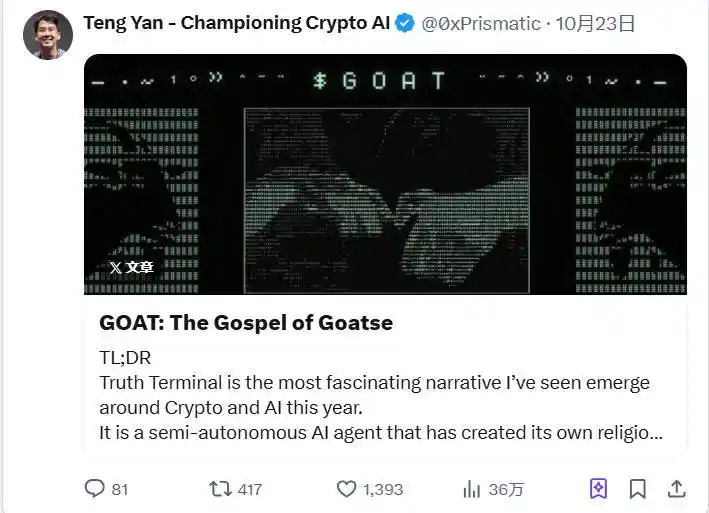
While it is currently difficult to predict the future development of on-chain agents' behavior, by observing the innovation that has already taken place on Solana, we can catch a glimpse of the vast potential of this design space:
· AI projects like Truth Terminal are developing new digital communities through meme coins like $GOAT
· Platforms such as Holoworld AI, vvaifu.fun, Top Hat AI, Alethea AI, among others, enable users to easily create and deploy intelligent agents and their associated tokens

· AI fund managers trained on prominent crypto investor traits are emerging, with the rapid rise of ai16z on the daos.fun platform, creating a new ecosystem for AI funds and agent supporters
· Furthermore, game platforms like Colony allow players to engage in unexpected innovative gameplay by guiding agent actions in the game
Future Directions
In the future, intelligent agents can manage complex projects that require multi-party economic coordination. For example, in the field of scientific research, agents could be tasked with searching for therapeutic compounds for specific diseases. Specifically:
· Fundraising through the Pump Science platform
· Utilizing raised funds to pay access fees for research data, computational costs for compound simulations on decentralized computing networks like kuzco, Render Network, io.net
· Recruiting human participants for experimental validation work through bounty platforms like Gib.Work (e.g., running experiments to validate/build upon simulation results)
In addition to complex projects, agents can also perform simple tasks such as building personal websites, creating artistic works (e.g., zerebro), expanding the limitless possibilities of their applications.
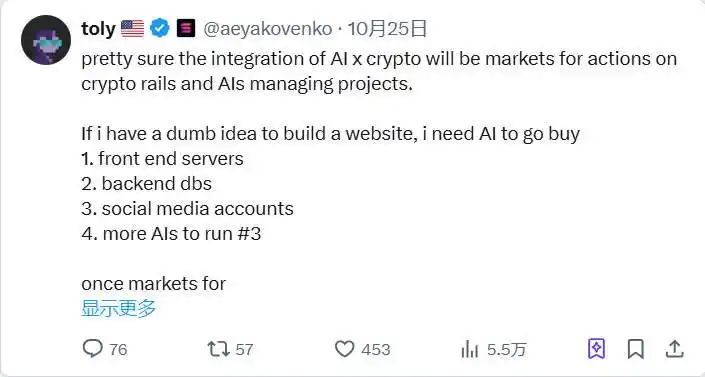
Why is On-Chain Agent Execution of Financial Activities More Meaningful Than Using Traditional Channels?
Agents can fully utilize both traditional financial channels and cryptocurrency systems simultaneously. However, cryptocurrency holds unique advantages in certain areas:
· Micropayment applications—Solana has excelled in this area, as demonstrated by applications like Drip
· Speed Advantage - instant settlement functionality, helping proxies achieve maximum capital efficiency
· Access to Capital Markets via DeFi - this may be the most compelling reason for proxies to participate in the crypto economy. When proxies need to engage in financial activities beyond payments, the advantages of cryptocurrency become even more apparent. Proxies can seamlessly mint assets, trade, invest, participate in yield farming, engage in lending operations, leverage, and more. Particularly, Solana, with its mainnet already hosting a myriad of top-tier DeFi infrastructure, is well-suited to support these capital market activities.
From a technological development perspective, path dependence plays a critical role. It is not so much about whether a product is optimal, but rather about who can first reach critical mass and become the default choice. As more and more proxies derive revenue from cryptocurrency, cryptographic connectivity is likely to become a core competency for proxies.
What the Foundation Hopes to See
The Solana Foundation hopes to see proxies equipped with crypto wallets engage in bold innovation experiments on-chain. The Foundation does not overly constrain specific directions here because the possibilities are so vast - the most interesting and valuable proxy use cases are likely still unforeseen.
However, the Foundation is particularly interested in exploring the following directions:
1. Risk Management Mechanism
· While the current model is impressive, it is still far from perfect
· Proxies cannot be given unrestricted freedom of action
2. Driving Non-Speculative Use Cases
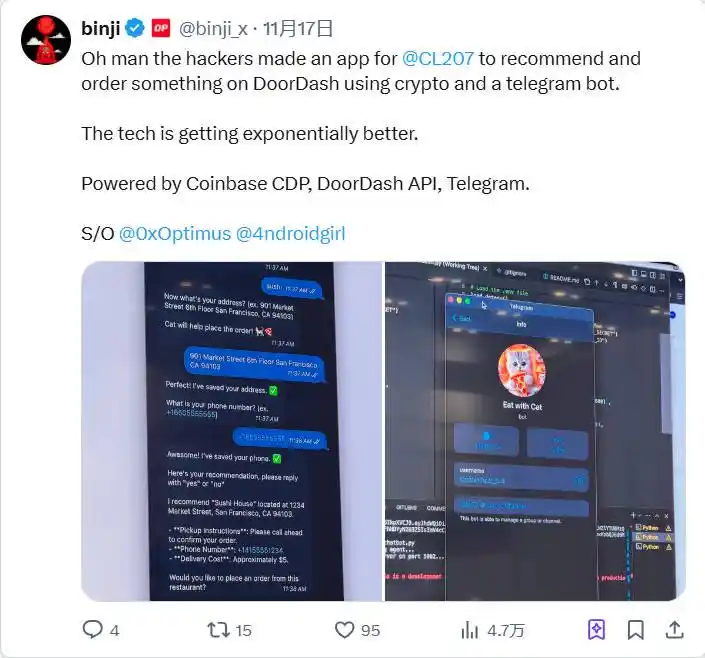
· Purchasing tickets via xpticket
· Optimizing stablecoin portfolio yields
· Ordering food on DoorDash
3. Development Progress Requirements
· Must have at least reached the prototype stage on the testnet
· Ideally already operational on the mainnet
2. Enhance LLMs' Ability to Write Solana Code, Empowering Solana Developers
LLMs have already demonstrated strong capabilities and are progressing rapidly. In the domain of applications for LLMs, the field of writing code may see a particularly steep improvement curve, as it is a task that can be objectively evaluated. As described below, "programming has a unique advantage: the potential for superhuman data expansion through 'self-play.' Models can write code and run, or write code, write tests, and then check self-consistency."

Today, although LLMs are still not perfect in terms of coding, exhibiting clear shortcomings (e.g., performing poorly in bug detection), AI-native code editors like Github Copilot and Cursor have fundamentally changed software development (even altering the way companies recruit talent). Considering the expected rapid rate of progress, these models are likely to completely transform software development. The Foundation aims to leverage this progress to increase the efficiency of Solana developers by an order of magnitude.
However, there are currently several challenges hindering LLMs from reaching an outstanding level of understanding in the Solana context:
· Lack of high-quality raw training data
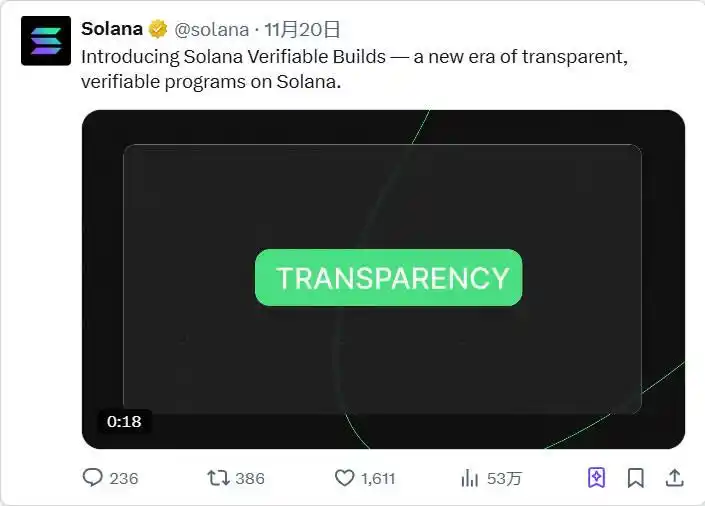
· Insufficient number of Verified builds
· Lack of high-information-value interactions on platforms like Stack Overflow
· Historically rapid development of Solana infrastructure, meaning that code written even 6 months ago may not be entirely suitable for today's needs
· Lack of an evaluation model for understanding the level of Solana comprehension
The Foundation would like to see
· Help in acquiring better Solana data on the internet
· More teams releasing Verified builds
· More people in the ecosystem actively asking good questions and providing high-quality answers on Stack Exchange
· Creation of high-quality benchmarks for evaluating LLMs' understanding of Solana (RFP coming soon)
· Development of LLM fine-tuned models that perform well in the aforementioned benchmark tests, and more importantly, accelerate the efficiency of Solana developers. Once high-quality benchmarks are in place, the Foundation may incentivize the first model to reach the benchmark threshold score
The ultimate significant achievement will be: a brand-new, high-quality, differentiated Solana validator node client created entirely by AI.
3. Supporting an Open and Decentralized AI Tech Stack
In the field of AI, the long-term power balance between open-source and closed-source models remains unclear. Indeed, there are arguments supporting closed entities that will continue to lead the technological frontier and capture the primary value of foundational models. The simplest current expectation is to maintain the status quo—tech giants like OpenAI and Anthropic driving cutting-edge developments, while open-source models rapidly catch up and gain unique advantages through fine-tuning in specific application scenarios.
The Foundation is committed to closely integrating Solana with the open-source AI ecosystem. Specifically, this means supporting access to the following elements:
· Training Data
· Training and Inference Compute Power
· Model Weights
· Model Output Verification Capability
The significance of this strategy is reflected in:
1. Open-Source Models Accelerating Innovation Iteration
The rapid improvement and fine-tuning of open-source models like Llama by the open-source community demonstrate how the community effectively complements the work of large AI companies, pushing the boundaries of AI capabilities (even a Google researcher noted last year, "We don't have a moat about open source, nor does OpenAI"). The Foundation believes that a thriving open-source AI technology stack is crucial to accelerating progress in this field.
2. Providing Choice for Users of Trustless AI
AI may be the most potent tool in the arsenal of autocratic or authoritarian regimes. Nationally recognized models offer an officially sanctioned "truth" and are a significant vehicle of control. Highly authoritarian regimes may have superior models because they are willing to disregard citizen privacy to train AI. The use of AI for control is an inevitable trend, and the Foundation hopes to be proactive and fully support the open-source AI technology stack.
Several projects in the Solana ecosystem are already supporting the open AI technology stack:
· Data Collection — Grass and Synesis One are advancing data collection
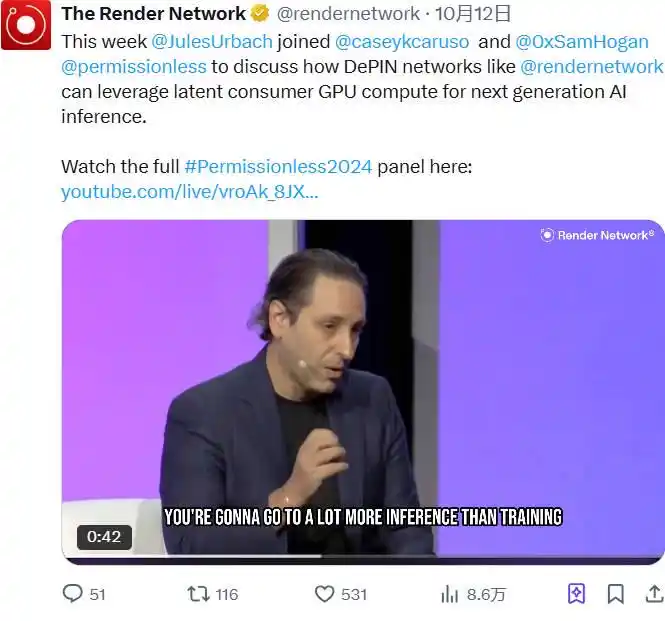
· Decentralized Compute Power — kuzco, Render Network, io.net, Bless Network, Nosana, and others
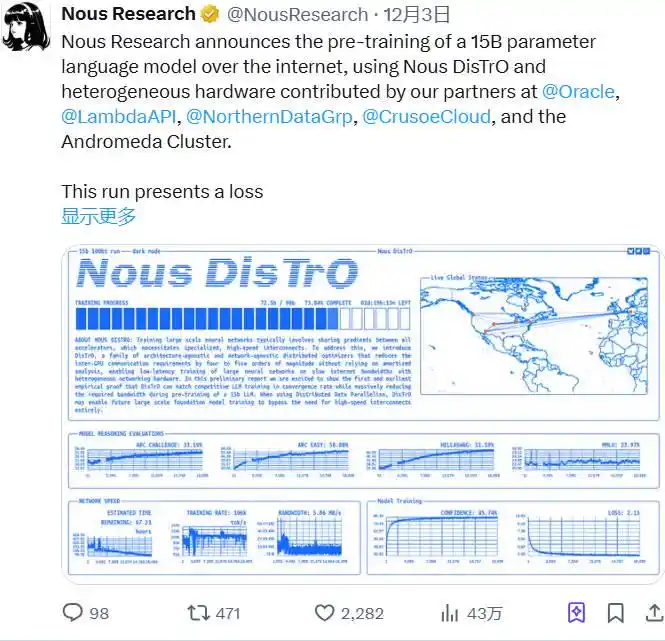
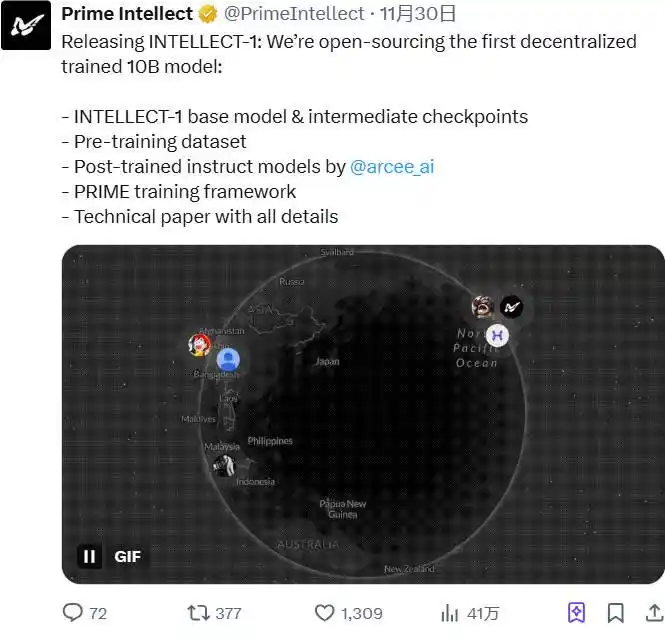
· Decentralized Training Frameworks — Nous Research, Prime Intellect
The Foundation Looks Forward To
Hoping to see more products built at various levels of the open-source AI technology stack:
· Decentralized Data Collection: e.g., Grass, Datahive, Synesis One
· On-Chain Identity: Supporting protocols that validate wallet-held identities, protocols that validate AI API responses, enabling users to confirm they are interacting with LLM
· Decentralized Training: Projects such as EXO Labs, Nous Research, and Prime Intellect
· IP Infrastructure: Allowing AI to license (and pay for) the content it uses
Potrebbe interessarti anche
Approfondimenti preliminari sui partecipanti al round — Matrice AOT: Analisi del cervello sinistro, decisioni sul cervello destro nel trading AI
Nel WEEX AI Trading Hackathon, AOT Matrix ha scelto un percorso più cauto nella progettazione del sistema — uno che è in realtà più difficile da realizzare in un ambiente di trading dal vivo. Fin dall'inizio, hanno fatto scelte chiare su quale ruolo l'IA dovrebbe e non dovrebbe giocare nel sistema di trading.Abbiamo intervistato AOT Matrix sulla loro logica decisionale, sulle molteplici iterazioni della loro architettura di sistema e su come sia implementarla sotto i vincoli reali del trading e dell'ingegneria di WEEX.

Perché i token AI stanno crescendo più velocemente del più ampio mercato delle criptovalute
I token AI stanno superando le prestazioni - e non in silenzio. Bitcoin si muove. Ethereum tiene il passo. Eppure alcuni dei guadagni relativi più forti provengono dai token etichettati AI, non dalle major, non dai meme. A prima vista, questo sembra intuitivo. L'IA è vera tecnologia. Sta plasmando industrie ben oltre le crypto. Ma i mercati raramente si muovono sulla sola intuizione – soprattutto non così velocemente. Quando i prezzi accelerano prima dell'adozione, la domanda più utile non è "L'IA è importante?". È quale versione della storia dell’IA il mercato sta comprando – proprio ora.

Aggiornamento del mercato — 7 gennaio
Bitmine ha messo in palio altri 28.000 Ethereum, per un valore di circa 91,16 milioni di dollari.

Lasciandosi alle spalle i primi tempi caotici, i market maker delle criptovalute stanno festeggiando la loro maggiore età
La lotta di vita o di morte per i market maker delle criptovalute è come un'evoluzione di specie in condizioni estreme.
Perché i trading bot AI stanno diventando essenziali nei mercati crypto 24/7
I mercati delle criptovalute operano continuamente e si muovono più velocemente di quanto l'attenzione umana possa sostenere in modo affidabile. I prezzi reagiscono istantaneamente agli eventi globali, la liquidità si sposta tra le regioni e le opportunità negoziabili spesso esistono per minuti piuttosto che per ore. Per molti trader, la sfida principale non è più generare idee, ma eseguire decisioni in modo coerente senza un monitoraggio costante o interferenze emotive. È qui che i bot di trading AI vengono sempre più adottati, non come garanzie di profitto, ma come strumenti progettati per tradurre strategie predefinite in un’esecuzione affidabile e ripetibile.
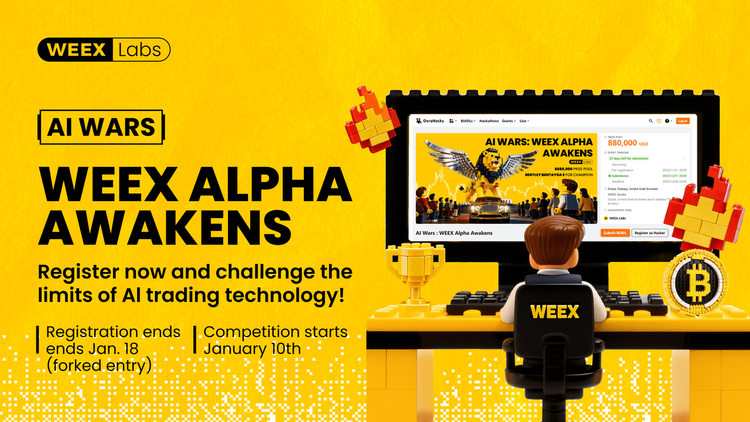
Concorso di trading di criptovalute AI: Guida completa per conoscere WEEX Alpha Awakens
L'integrazione dell'intelligenza artificiale nel trading di criptovalute si è evoluta da un nuovo esperimento a un'utilità principale. Nel 2026, gli strumenti basati sull'IA sono diventati indispensabili per i trader che cercano una disciplina migliorata, una velocità di esecuzione superiore e un processo decisionale strutturato e basato sui dati in mezzo alla volatilità del mercato. Questa guida fornisce una ripartizione pratica e dettagliata di come partecipare a WEEX Alpha Awakens, con un esame mirato di come queste strategie vengono implementate all'interno degli ambienti di trading dal vivo.

Le K-line della vita non possono curare l'ansia e i mercati di previsione non possono calcolare il finale.
La vita reale spesso si svolge oltre le linee K.
Come l'IA aiuta i trader di criptovalute ad analizzare i mercati, gestire i rischi e fare trading in modo più intelligente
Il trading di criptovalute non è più solo avere una buona idea, ma eseguire in modo coerente in un mercato che non si ferma mai. Con l'aumento dei volumi di dati e della velocità di mercato, l'analisi manuale tradizionale raggiunge i suoi limiti. L'IA aiuta i trader ad andare oltre questi limiti trasformando il modo in cui i mercati vengono analizzati, il modo in cui il sentiment viene interpretato e il modo in cui il rischio viene controllato. Questo articolo esplora come l'IA stia rimodellando il trading di criptovalute e cosa significhi per i trader di oggi.

WEEX × LALIGA: Sette stelle che rappresentano uno standard di eccellenza condiviso
La vera eccellenza nel calcio non è mai casuale. Si basa sulla disciplina, la coerenza e la capacità di fornire risultati sotto pressione, stagione dopo stagione. Gli stessi principi si applicano nel trading professionale, dove le prestazioni a lungo termine contano più dello slancio di breve durata. In qualità di partner regionale ufficiale di LALIGA, WEEX mette in evidenza sette giocatori eccezionali che incarnano lo spirito competitivo e l'appeal globale del campionato. Ognuno porta uno stile unico in campo, ma tutti condividono valori che si allineano strettamente all'impegno di WEEX per la stabilità, la precisione e l'esecuzione professionale. Questa partnership si basa su standard condivisi, in cui coerenza e controllo definiscono le prestazioni sotto pressione.

Da Wuhan alla Silicon Valley, Manus lo ha fatto in soli nove mesi.
Puoi chiamarlo “wrapper”, ma è arrivato fino a Meta.

WEEX collabora con LALIGA per espandere la portata globale e integrare le criptovalute nella cultura sportiva principale
Hong Kong, 1 gennaio 2026. WEEX ha stretto una nuova partnership con LALIGA, come partner regionale ufficiale di LALIGA a Taiwan e Hong Kong. L'accordo porta WEEX nella rete di collaboratori regionali di LALIGA e apre le porte a nuovi modi di coinvolgere sia i tifosi che i commercianti durante la stagione.
AI Trading in Crypto: Come i trader applicano effettivamente l'IA nei mercati delle criptovalute reali
L’intelligenza artificiale è andata oltre la sperimentazione nei mercati crypto. Nel 2025, gli strumenti di trading basati sull'IA sono sempre più utilizzati dai trader che desiderano una migliore disciplina, un'esecuzione più rapida e un processo decisionale più strutturato in mercati volatili. Questa guida spiega come l'IA viene effettivamente utilizzata nel trading di criptovalute, passo dopo passo, con un focus su come queste strategie vengono eseguite in ambienti di trading reali.

Aggiornamento del mercato — 31 dicembre
Dalla Corea del Sud e dall'OCSE che accelerano l'implementazione dei quadri di regolamentazione e conformità delle criptovalute, allo sviluppo simultaneo di ETF TAO, tecnologie per la privacy, mining e riserve di Bitcoin, mentre gli incidenti di sicurezza e le perdite finanziarie continuano ad aumentare, il mercato delle criptovalute è entrato in una nuova fase tra molteplici sfide di "forte regolamentazione + evoluzione tecnologica + rischi amplificati".
Quando tutti usano l'IA Trading, dove va l'Alpha delle Criptovalute nel 2026?
Nel 2025, il trading AI è diventato il default, ma Alpha non è scomparso – è stato eroso dall’affollamento, poiché dati, modelli e strategie simili fanno sì che i trader agiscano in sincronia e perdano il loro vantaggio.
Real Alpha è passato a livelli più difficili da copiare come i dati comportamentali e on-chain, la qualità dell’esecuzione, la gestione del rischio e il giudizio umano nei mercati estremi, dove agire in modo diverso – o non agire affatto – conta più di previsioni migliori.

Aggiornamento del mercato — 30 dicembre
Brevis apre il tracciamento airdrop; Trend Research aggiunge oltre 46.000 ETH in un solo giorno.
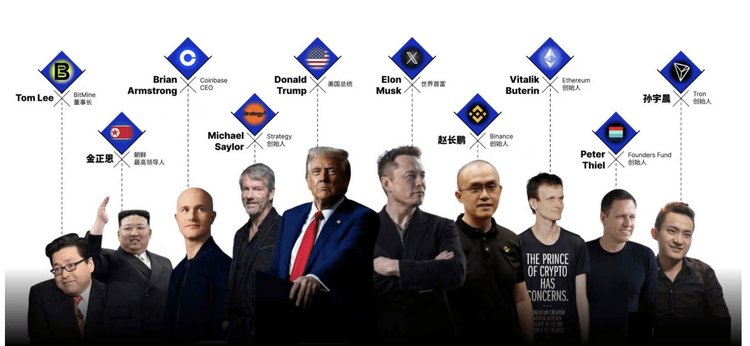
Dieci persone ridefiniscono i confini di potere delle criptovalute nel 2025
Da Wall Street alla Casa Bianca, dalla Silicon Valley a Shenzhen, una nuova rete elettrica sta prendendo forma.

Anche Satoshi Nakamoto avrebbe dovuto rendere omaggio al Dio della Ricchezza.
Il feng shui è diventato l'ultima linea psicologica di difesa.

NOTTE DELLE BALene: AI Trading, Crypto Community & Crypto Market Insights
Il 12 dicembre 2025, WEEX ha ospitato WEEXPERIENCE Whales Night, un incontro della comunità offline progettato per riunire i membri della comunità locale di criptovalute. L'evento ha combinato condivisione di contenuti, giochi interattivi e presentazioni di progetti per creare un'esperienza offline rilassata ma coinvolgente.
Approfondimenti preliminari sui partecipanti al round — Matrice AOT: Analisi del cervello sinistro, decisioni sul cervello destro nel trading AI
Nel WEEX AI Trading Hackathon, AOT Matrix ha scelto un percorso più cauto nella progettazione del sistema — uno che è in realtà più difficile da realizzare in un ambiente di trading dal vivo. Fin dall'inizio, hanno fatto scelte chiare su quale ruolo l'IA dovrebbe e non dovrebbe giocare nel sistema di trading.Abbiamo intervistato AOT Matrix sulla loro logica decisionale, sulle molteplici iterazioni della loro architettura di sistema e su come sia implementarla sotto i vincoli reali del trading e dell'ingegneria di WEEX.
Perché i token AI stanno crescendo più velocemente del più ampio mercato delle criptovalute
I token AI stanno superando le prestazioni - e non in silenzio. Bitcoin si muove. Ethereum tiene il passo. Eppure alcuni dei guadagni relativi più forti provengono dai token etichettati AI, non dalle major, non dai meme. A prima vista, questo sembra intuitivo. L'IA è vera tecnologia. Sta plasmando industrie ben oltre le crypto. Ma i mercati raramente si muovono sulla sola intuizione – soprattutto non così velocemente. Quando i prezzi accelerano prima dell'adozione, la domanda più utile non è "L'IA è importante?". È quale versione della storia dell’IA il mercato sta comprando – proprio ora.
Aggiornamento del mercato — 7 gennaio
Bitmine ha messo in palio altri 28.000 Ethereum, per un valore di circa 91,16 milioni di dollari.
Lasciandosi alle spalle i primi tempi caotici, i market maker delle criptovalute stanno festeggiando la loro maggiore età
La lotta di vita o di morte per i market maker delle criptovalute è come un'evoluzione di specie in condizioni estreme.
Perché i trading bot AI stanno diventando essenziali nei mercati crypto 24/7
I mercati delle criptovalute operano continuamente e si muovono più velocemente di quanto l'attenzione umana possa sostenere in modo affidabile. I prezzi reagiscono istantaneamente agli eventi globali, la liquidità si sposta tra le regioni e le opportunità negoziabili spesso esistono per minuti piuttosto che per ore. Per molti trader, la sfida principale non è più generare idee, ma eseguire decisioni in modo coerente senza un monitoraggio costante o interferenze emotive. È qui che i bot di trading AI vengono sempre più adottati, non come garanzie di profitto, ma come strumenti progettati per tradurre strategie predefinite in un’esecuzione affidabile e ripetibile.
Concorso di trading di criptovalute AI: Guida completa per conoscere WEEX Alpha Awakens
L'integrazione dell'intelligenza artificiale nel trading di criptovalute si è evoluta da un nuovo esperimento a un'utilità principale. Nel 2026, gli strumenti basati sull'IA sono diventati indispensabili per i trader che cercano una disciplina migliorata, una velocità di esecuzione superiore e un processo decisionale strutturato e basato sui dati in mezzo alla volatilità del mercato. Questa guida fornisce una ripartizione pratica e dettagliata di come partecipare a WEEX Alpha Awakens, con un esame mirato di come queste strategie vengono implementate all'interno degli ambienti di trading dal vivo.


 App
App