

Bring the Ethos to Corporate Etherians

Original Article Title: "Ethereum Developers Bringing Their Talents to the Private Sector"
Original Article Author: Eric, Foresight News
On the evening of the 19th (Beijing time), Bankless co-founder David Hoffman posted on X to "commemorate" Ethereum Foundation's longest-serving researcher, Dankrad Feist, who chose to leave Ethereum and join the stablecoin L1 Tempo.
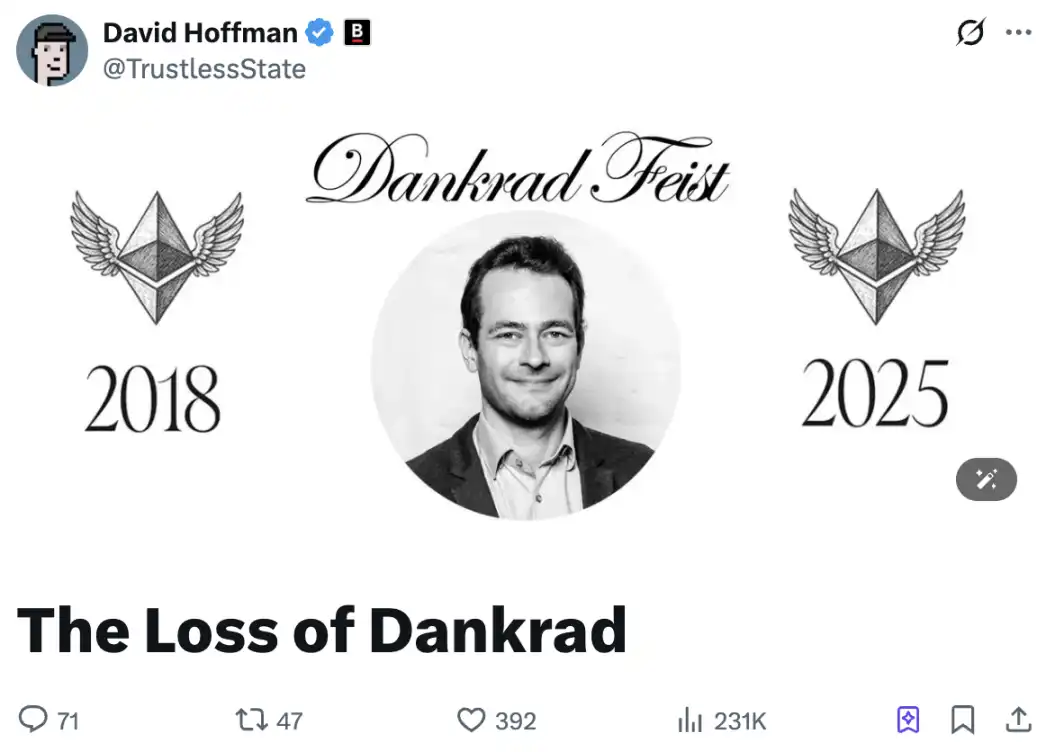
David Hoffman believes that the issue of for-profit companies absorbing talent nurtured by the Ethereum open-source community is significant and states that these companies will not necessarily bring greater benefits to Ethereum as they claim. David Hoffman bluntly expressed, "In my view, the significance of Tempo is to intercept the tens of trillions of dollars expected to flow into it over the next decade and put it on their private blockchain. Of course, this will grow the pie, but Tempo still intends to take as big a slice of that pie as possible." He believes that Tempo will be restricted by compliance issues regardless and that even issuing tokens cannot solve this. Although Tempo and Ethereum will both bring changes to the world, only Ethereum is best suited to be a trusted, neutral global settlement layer, with no shareholders and not bound by laws.
The "grass is greener on the other side" sentiment towards Ethereum has been evident since this cycle, as Ethereum's price performance lagged behind Bitcoin. Over time, it has become apparent that the departure of talented individuals from the Ethereum community seems to be an irreversible trend. When dreams clash with interests, many people ultimately choose the latter, which has long been a concern in the industry...
Dankrad Feist is Not the First, Nor Will He Be the Last
On the 17th of this month, Dankrad Feist announced on X that he would join Tempo and continue to serve as a research advisor for Ethereum Foundation's protocol cluster's three strategic initiatives (L1 scaling, Blob extension, and user experience improvement). Dankrad Feist stated, "Ethereum has a unique set of strong values and technical choices that underpin it. Tempo will be a great complement, built on similar technology and values while able to break boundaries in scale and speed. I believe this will greatly benefit Ethereum. Tempo's open-source tech can easily reintegrate back into Ethereum, benefiting the entire ecosystem."
According to LinkedIn, Dankrad Feist officially became an Ethereum researcher in 2019, focusing on researching Ethereum mainnet's sharding technology for scalability. The current core part of Ethereum's scalability roadmap, Danksharding, is named after him. Danksharding is seen as a key technological path for Ethereum to achieve high throughput and low-cost transactions, widely regarded by the community as a crucial upgrade direction post "Ethereum 2.0."
Dankrad Feist drove the precursor version of Danksharding, Proto-Danksharding (EIP-4844), which introduced the blob transaction type. This EIP provided Rollup with a cheaper and more efficient data availability layer, significantly reducing the data publishing costs of Rollup.
Furthermore, he engaged in a public dispute with Geth lead developer Péter Szilágyi on the MEV issue, eventually prompting Vitalik to intervene and push the community to prioritize MEV mitigation mechanisms like PBS (Proposer-Builder Separation).
Tempo researcher Mallesh Pai introduced new members joining Tempo in September, including Liam Horne, former CEO of OP Labs and co-founder of ETHGlobal.
Prior to Dankrad Feist, another figure that surprised the industry was Danny Ryan, co-founder of Etherealize, which secured a $40 million funding. As a former core member of the Ethereum Foundation known as the "Ethereum 2.0 Lead," he announced an indefinite departure in September 2024 and joined Etherealize just six months later. However, given Etherealize's similarity to ConsenSys founded by Ethereum co-founder Joseph Lubin, who left 11 years ago due to commercialization disputes, Danny Ryan received wide understanding.
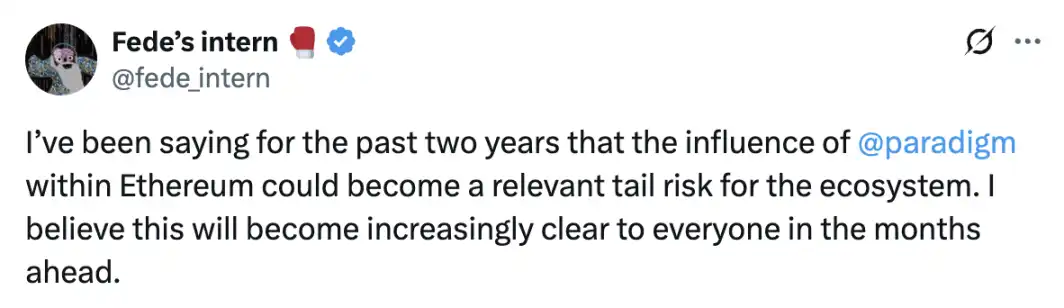
What really concerns David Hoffman are companies like Tempo and Paradigm. Renowned Ethereum developer Federico Carrone expressed a similar view, retweeting David Hoffman's tweet about Dankrad Feist joining Tempo and stating that he has been warning for the past two years that Paradigm's influence within Ethereum could pose a tail risk to the entire ecosystem.
Federico Carrone wrote that the sole objective of a venture capital fund is to maximize returns for LPs, and Ethereum should not form a deep technical dependency on a venture capitalist playing with very high strategic skill. After the FTX scandal, Paradigm almost entirely removed all cryptocurrency-related brand exposure, making a high-profile shift to AI. Carrone believes this is enough to prove his point.
Following Trump's return to the White House, Paradigm re-entered the Web3 space, heavily recruiting top community researchers and funding key Ethereum open-source libraries, as well as supporting Stripe's launch of Tempo. Carrone believes that while Paradigm claims everything they do is beneficial for Ethereum - more funding, more tools, more testnets, new ideas that can all feed back into Ethereum - these are indeed potential benefits. However, when a company has too much visibility and influence over an open-source project, priorities shift from the community's long-term vision to corporate interests.
The Accumulation of Ethereum's Technical Debt
The mere loss of talent in the Ethereum open-source community may not be a cause for widespread concern, but if talent loss is accompanied by the accumulation of technical debt, then there is cause for high alert.
A week ago, a community user posted a screenshot on X and stated that the top contributors to the Solidity language have almost ceased their development efforts. Only Cameel continues to raise new issues and drive technical progress, but it appears to be in a maintenance mode. They believe the community needs to allocate more resources to support this programming language.
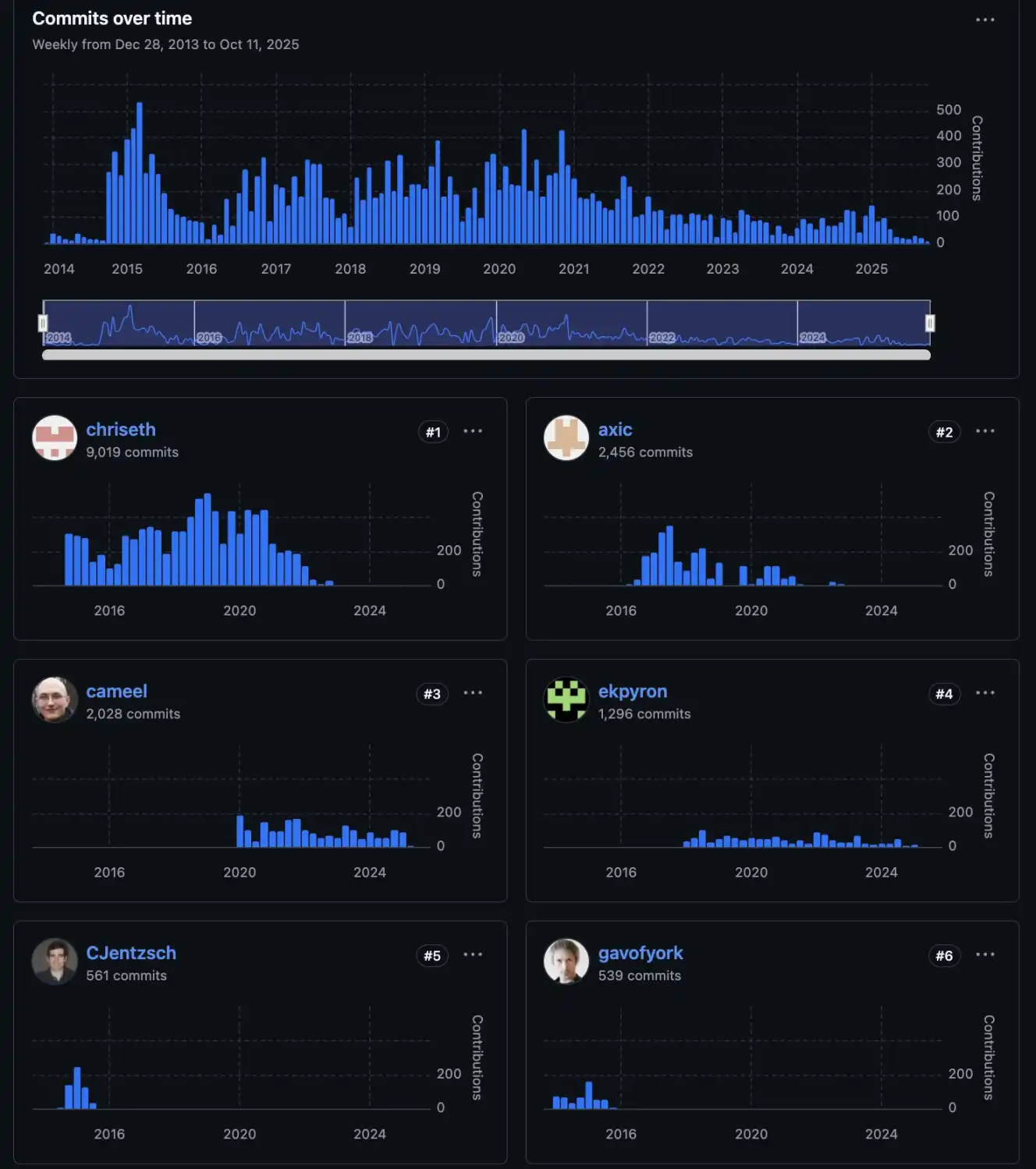
Some users in the comments questioned why effort should be spent on continuing to improve upgrade Solidity rather than just maintaining it to ensure stability and security. The user who posted explained that even changing the Solidity compiler would not affect any already deployed contracts but could enhance security, improve development experience, or support the use of new contracts. As shown in the image above, the level of development activity has sharply declined since the beginning of the last hype-driven bull market.
Federico Carrone also expressed his concerns, stating that what worries him the most is that many core tools and libraries built around Solidity may not receive long-term maintenance at all. Even the latest Solidity compiler is currently supported by very few developers. Additionally, companies related to L2 and ZK technologies are downsizing, making it possible that the iteration of cutting-edge technology may rely on just a few companies. As the Gas Limit increases, many execution clients have not made substantial performance improvements, and judging from the libraries, the development teams of these clients seem to have fallen behind.
Federico Carrone stated, "Ethereum's technical debt continues to accumulate, not only because the protocol itself must keep evolving, but also because many dependent libraries and peripheral repositories are now stagnant. The entire ecosystem continues to expand, guarding assets worth billions of dollars, while part of its foundation is quietly eroding."
The Open Source Community Cannot Solely Rely on "Love-Powered" Contributions
For an open-source community like Ethereum that carries a significant amount of tangible value in the form of programmable money, balancing "love-powered" contributions with economic incentives is a problem with no prior cases to reference. This should have been a highly concerning issue for the Ethereum Foundation, but it seems to have been overlooked.
Péter Szilágyi, who joined the Ethereum Foundation in 2015 and was responsible for Geth development and maintenance, explicitly outlined three of the most disappointing issues in a letter to the Ethereum Foundation leadership a year and a half ago: being portrayed externally as a leader but marginalized internally, severe income misalignment with Ethereum's market cap growth, and an excessive influence of Vitalik and a small group around him on the Ethereum ecosystem.
By the end of 2024, Péter Szilágyi discovered the Ethereum Foundation secretly incubating an independent Geth fork team, was subsequently fired due to disputes with the Ethereum Foundation, and was repeatedly denied rehiring. Subsequently, the Ethereum Foundation even proposed to pay Péter Szilágyi $5 million for Geth to become independent of the foundation, a proposal that was rejected. Currently, Péter Szilágyi still maintains the Geth codebase as an independent contributor.
Rumors of internal corruption within the Ethereum Foundation have been widespread, but this is actually a problem that should have been anticipated from the moment the Ethereum Foundation was established. The saying goes, "Where there are people, there is a rivers-and-lakes community," indicating that we cannot eliminate human greed. However, we cannot allow Ethereum to gradually lose its most core value due to commercialization.
Ethereum has a market cap of tens of billions of dollars, has facilitated the transfer of trillions of dollars' worth of value on-chain over the years, and is built on the foundation of a professional technical team, with a core ethos of permissionless open source, and through the commercialization brought by a large number of enterprises. However, such a vast system requires a significant amount of personnel to maintain, and as we have seen, these individuals are leaving due to disappointment or choosing to join other projects for economic gain.
The Ethereum Foundation underwent substantial reforms this year, but it does not seem to have produced remarkable results yet. Ethereum still can be described as the world's computer, with the potential in commercial applications still being continuously explored by brilliant teams. However, as the foundation of all this, Ethereum cannot continue to disappoint those who still persist for their ideals.
関連記事

Ethereumの新たなアップグレード「Hegota」、2026年後半に予定
Key Takeaways Ethereumの次のメジャーアップグレード「Hegota」は2026年後半に予定されており、Glamsterdamの後に続く形で進行します。 このアップグレードはより頻繁なネットワークの変更を目指し、Ethereumの開発プロセスにおける新しいアプローチを反映しています。 デベロッパーは年明け1月にGlamsterdamの詳しい範囲を最終確定する予定です。 Verkle TreesがHegotaの候補機能として検討されており、効率的なデータ管理を可能にすることが期待されています。 WEEX Crypto News, 2025-12-29 06:02:54 イーサリアムのエコシステムにおける次の重要なマイルストーン、「Hegota」アップグレードが2026年後半に予定されています。この発表は、開発者がネットワークの移行をより迅速に行うという新たなアプローチを採用することを反映しています。イーサリアムの次なる大きな変革は、先行する「Glamsterdam」アップグレードの後に来る予定です。このプロジェクトは、コア貢献者が重大なアップグレードを年に1度の大規模なリリースにまとめる代わりに、より頻繁に変更を導入することを目指しています。 開発の新たなアプローチ この新しいアプローチの採用は、ネットワークの急成長と増大する需要に対し、開発プロセスが充分に対応できていないとする一部のユーザーと開発者からの批判を受けた結果です。この動きは、プロトコル開発がネットワークの進化に追いついていないという問題に対処するためのものであり、より迅速な対応を促進します。 現在、開発者たちは2026年前半に予定されているGlamsterdamアップグレードの詳細な範囲を確定する作業をしています。その後、Hegotaに関する大きな変更点、正式にはEthereum Improvement Proposals…

2026年、Ethereum(イーサリアム)はZK技術で指数関数的にスケーリングを開始
キー・テイクアウェイ – 2026年、EthereumはZKプロトコルを用いたスケーリングを開始し、10,000TPSに向けて進化。 – Zero-Knowledgeプローフ(ZKプローフ)により、ネットワークはより少ないリソースで効率的に運用可能に。 – Ethereum Interoperability Layer (EIL)により、異なるレイヤー2がシームレスにトランザクションを実行可能に。 – ZKsyncのAtlasアップグレードにより、Ethereum L1とZKsyncチェーン間で瞬時に相互運用性が実現。 WEEX Crypto News, 2025-12-29 06:03:47…

Ethereum 2026年の進化:GlamsterdamとHegotaのフォークでのL1スケーリングの行方
GlamsterdamフォークでのEthereumの進化には、並列処理とガスリミットの大幅な増加があり、完璧な並列処理の実現を目指しています。 ゼロ知識(ZK)プロofsの採用により、検証者の約10%がこの新技術への移行を予定しており、Ethereumネットワークの効率とスケーリング能力が大きく向上します。 データブロブの数が増加し、L2ネットワークの取引処理能力が向上します。ZKsyncのアップグレードは、メインネットに資金を留めながらも、迅速な取引を可能にしています。 Enshrined Proposer Builder Separation(ePBS)の導入により、取引の順序と選択が改善され、ネットワークのセキュリティと分散化が強化されます。 WEEX Crypto News, 2025-12-29 06:05:52 Ethereumの重要な転機:2026年のGlamsterdamフォークとは 2026年はEthereumにとって、L1スケーリングの大きな節目となる年です。この年の中でも特に注目を浴びるのがGlamsterdamフォークで、完璧な並列処理を実現することが予想されます。これにより、現在のガスリミット60ミリオンから200ミリオンへの大幅な引き上げが予定されています。さらに、検証者の多くがゼロ知識(ZK)プローフへの転換を選び、Ethereumネットワーク全体として10,000トランザクション/秒(TPS)を目指して進化を遂げることを可能にしているのです。 Block Access Listsと並列処理の革命 このフォークの中心となるのがBlock…
Aaveコミュニティが直面するブランドアイデンティティの危機
Key Takeaways Aaveのコミュニティ内で、プロトコルのブランドと関連する資産の管理をめぐる意見の対立が激化しています。 ブランド支配の議論は、分散型自律組織(DAO)とAave Labsの関係にまで波及しています。 Ethereumは、Glamsterdamという新たなアップグレードプロジェクトに注力しています。 Bitcoinは量子コンピュータへの防御策を5〜10年かけて準備すべきという考えが広まりつつあります。 EigenLayerは、EIGENトークンホルダーに新たなインセンティブを提供する提案を検討しています。 WEEX Crypto News, 2025-12-29 06:06:08 Aaveコミュニティでの対立 Aaveのコミュニティメンバー間で、プロトコルのブランドと関連した資産の管理をめぐる対立が激化しています。この論争は、Aaveの分散型自律組織(DAO)と技術開発を担うAave Labsの間の関係に深く関わっています。大規模なクリプトプロジェクトにおいては、分散型ガバナンスの理念と実際の執行を支える中央集権的チームの間にしばしば緊張が生じます。これは、プロトコルが規模を拡大しブランド価値が高まるほど無視できない問題です。 議論の発端は、AaveがCoW Swapという取引実行ツールを統合したことで、取引手数料がDAOではなくAave…
Fed Q1 2026 Outlook: Bitcoinと仮想通貨市場への影響
Key takeaways Fedの金利引き下げの休止は仮想通貨に圧力をかける可能性があるが、「隠れ量的緩和」が下振れリスクを軽減するかもしれない。 流動性は金利引き下げ以上に重要であり、2026年第1四半期のBitcoinとETHの動向を形作る。 2025年には米連邦準備制度理事会(Fed)が三度の金利引き下げを実施したが、インフレ率によっては2026年初にはさらに下がる可能性がある。 軽微な供給施策が市場の方向性に影響を与え、特にETFの流入が投資家のリスク志向を支えると予想される。 WEEX Crypto News, 2025-12-26 10:06:42(today’s date,foramt: day, month, year) Fedの政策に対する仮想通貨市場の反応 2025年の米連邦準備制度理事会(Fed)は、経済の減速とインフレ圧力の緩和に対処するために金利引き下げを三回実施しました。特に、雇用の減少と消費者物価指数(CPI)の改善が見られる中、第4四半期に集中的に利下げが行われました。しかし、仮想通貨市場はこの養成政策に対して常識外の反応を見せました。Bitcoin(BTC)、Ethereum(ETH)などの主要な仮想通貨は、これまでの高値から1.45兆ドルを超える時価総額の減少を経験しました。 BitcoinとEthereumに対する金利引き下げ休止の影響…
Ethereum in 2026: Glamsterdam and Hegota Forks, L1 Scaling, and Beyond
新しいEthereumフォーク「Glamsterdam」は2026年にEthereumスケーリングの新たな一章を開く。 ガスリミットの200万への増加は、より大量の取引を同時に処理する能力をもたらす。 Zero-Knowledge( ZK )証明が進化し、Ethereum L1のスケーリングを加速させる。 新たなデータブロブを活用することで、Layer 2のネットワークが飛躍的に性能を向上させる。 「Heze-Bogota」フォークは、検閲への抵抗力を強化し、セキュリティ面での向上を目指す。 WEEX Crypto News, 2025-12-26 10:06:42 2026年には、Ethereumにとって重要な年となることが予想されています。この年、GlamsterdamフォークがEthereumブロックチェーンの処理能力を一段と向上させることが期待されています。特にガスリミットの大幅な引き上げやZero-Knowledge (ZK) 証明の普及が、Ethereumのスケーリングを新たなレベルへ引き上げる要因として注目されています。 Glamsterdamフォークの詳細とその影響…

BlockchainはQuantumの脅威に備える中、Bitcoinはその対応を議論
Key Takeaways Altcoinブロックチェーンが量子の脅威に備えている一方で、Bitcoinコミュニティでは対応の方法とタイミングについて意見が分かれている。 QuantumコンピュータがまだBitcoinを破ることはできないが、将来的に可能性があるため、さまざまなブロックチェーンが準備を進めている。 EthereumのVitalik ButerinはQuantumコンピュータの脅威をエンジニアリングの問題として捉える重要性について説明している。 SolanaとAptosは、量子耐性を持つ取引や署名のサポートをテストまたは提案している。 Bitcoinにおける議論は信頼に関するものであり、多くの論者がリスクの過小評価を懸念している。 WEEX Crypto News, 2025-12-26 10:10:43 ブロックチェーンが静かに進める量子コンピューティングへの備え 今、量子コンピュータはBitcoinを破ることはできませんが、近い将来これが現実となるかもしれません。こうした背景から、複数のブロックチェーンは量子コンピューティングに対する備えを進めています。最近の動向を見ても、Aptosは量子耐性を持つ署名のサポートを提案し、Solanaは量子耐性のある取引のテストを行っています。一方で、Bitcoinのコミュニティでは、量子安全性を高めるための対応策について活発な意見交換が行われています。 これらの動きは、暗号資産界隈の不安感を示しています。投資家たちは、影響力のある声が量子のリスクを軽視することで、Bitcoinの価格が下がっていると主張しています。実際、Bitcoinの価格は過去3ヵ月で24%下落しました。しかし、Altcoinブロックチェーンがオプトインのアップグレードやテストネットを通じて量子耐性を実験している中で、Bitcoinは公開的にどのように、そしてどれほど緊急に量子リスクに対処すべきかについて分裂しています。 アラームを鳴らさずに進める量子コンピューティングの備え Ethereumは、量子コンピュータの影響を現実的なエンジニアリングの問題とみなす理由を明確にしています。Ethereumの共同創設者であるVitalik…

Vitalikが語る、XのGrokによる真実性向上と課題
Ethereumの共同創業者であるVitalik Buterinは、GrokがXの真実性を高めると指摘。 Grokはユーザーの政治的偏見を確認するのではなく、それに対抗する回答を提供する。 Elon Muskの影響下にあるAIの調整に関する懸念も。 AIの偏りはシステム全体に拡散する可能性がある。 AIチャットボットの改善が必要とされる背景には、誤情報の拡散がある。 WEEX Crypto News, 2025-12-26 10:12:44 Xの真実性強化のためのGrokの貢献 Vitalik Buterinは、XプラットフォームにGrokというAIチャットボットの導入が真実性に有益であると述べています。このアプローチの主な特徴は、Grokがユーザーからの問い合わせに対し、予期しない答えを提供する能力にあります。ユーザーが偏った意見を確認しようとしても、Grokは彼らの期待に反した答えを出し、反対者の立場を示すことがよくあります。 Buterinによれば、この能力がXのプラットフォームにおける大きな進化を促していて、特に「コミュニティノート」の後にポジティブな影響を及ぼしていると言われています。このため、GrokはXの真実性強化において大きな役割を果たしているのです。 Elon MuskとGrokの影響…

ブロックチェーンの未来と量子コンピューティングの脅威に直面してBitcoinが抱える課題
長期的な量子コンピュータの脅威に備えるため、多くのブロックチェーンが新たな対策を検討中。 Ethereumの共同創設者、Vitalik Buterinが量子コンピューティングを差し迫った技術問題として捉える重要性を強調。 Bitcoinは量子リスクに対する対応方法についてコミュニティ内で意見が分かれている。 理論上では現行の公開鍵暗号が量子コンピュータに解読される可能性が懸念されている。 投資家は量子リスクを無視することがビットコインの価値に影響を与える可能性があると考えている。 WEEX Crypto News, 2025-12-26 10:15:08 量子コンピューティング技術の進展は、現在の暗号通貨市場に新たな懸念をもたらしています。この技術が公開鍵暗号を解読するようになったとき、大規模なパニックを引き起こす可能性があります。特にBitcoinは、量子リスクについてどのように対応すべきかについて長い間議論されてきました。 Ethereumと他のブロックチェーンの準備 Ethereumは、量子コンピューティングを仮説ではなく技術的課題として捉える必要性を早い段階で認識しました。Ethereumの共同創設者、Vitalik Buterinは、たとえその確率が低くとも、量子コンピュータが公開鍵暗号を解読可能になる前に準備を始めることの重要性を主張しています。予測モデルによれば、2030年までにその可能性は約20%とされていますが、2040年までにはより現実的なものになるとの見方もあります。 他の主要なブロックチェーンもこれに追随しています。Aptosは、量子耐性のある署名サポートをアカウントレベルで追加することを提案し、SolanaはプロジェクトElevenと提携し、量子耐性のある署名をテストする専用テストネットを展開しました。このような取り組みは、将来的な機能拡張に向けた基盤作りを目的とし、今すぐの脅威ではないことを強調しています。 Bitcoinにおける量子リスクに関する議論 Bitcoinにおける量子リスクの議論は、実際には信頼の問題に集約されます。Bitcoinは楕円曲線暗号に基づいており、これは公開鍵を通じて資金の所有権を証明します。しかし、量子コンピュータがこれを逆算してプライベートキーを見つけ出せるとなると、資金が不正に動かされる可能性があります。…

Ethereum unlikely to reach new highs in 2026: Ben Cowen
Key Takeaways 現在のBitcoinの状況により、Ethereumの価格が新たな高値に達するのは難しいと予測。 Etherが過去最高値に戻った場合でも、それが「ブルトラップ」となる可能性がある。 仮にEtherが過去最高値を再び達成するとしても、全体的な暗号市場に大きな影響を与えることはないだろう。 他のアルトコインがこのサイクルで新高値に達する可能性は低い。 WEEX Crypto News, 2025-12-26 10:15:08 序論: Ethereumとその挑戦 最近の市場動向を踏まえ、仮想通貨の世界ではEthereum(ETH)の価格が2026年に新たな高値を達成することは難しいと予測されています。この見解は、著名な仮想通貨アナリストであるBen Cowen氏によって示されており、彼の分析では、現在のBitcoinの市場状況が大きな影響を及ぼしているとされています。 EthereumとBitcoinの関係 Ethereumの価格動向はしばしばBitcoinと連動しています。これは、Bitcoinが仮想通貨の基軸通貨としての役割を果たしているためです。Cowen氏によれば、もしBitcoinが真のベアマーケットの状態にあるその感覚が正しければ、Ethereumがその中で価格を上げるのは困難だということです。彼のコメントは、Banklessポッドキャストの中で明らかにされ、それによると、Ethereumが過去の高値を再び達成することは必ずしも不可能ではないが、それは「ブルトラップ」として終わる可能性があるとされています。 2026年のBitcoinの予測…

Ethereum unlikely to achieve new highs by 2026: Ben Cowen’s analysis
Ethereum (ETH) is not anticipated to achieve a new all-time high by 2026, as suggested by analyst Ben…

ブロックチェーンは量子の脅威に備える一方、Bitcoinはタイムラインを巡り議論中
Key Takeaways Altcoinブロックチェーンは量子コンピュータによる長期的なリスクに備えているが、Bitcoinのコミュニティ内では対応のタイミングと方法について意見が分かれている。 Ethereumの共同創設者であるVitalik Buterinは、量子コンピュータの脅威を真剣に受け止め、早期の対策を提案している。 AptosとSolanaは、量子耐性をテストすることで将来的なリスクに備えている。 Bitcoinの量子コンピュータに関する議論は、資産価値の長期的な信頼性の問題と直接関連している。 WEEX Crypto News, 2025-12-26 10:17:14 量子コンピュータはまだBitcoinを破ることはできませんが、いくつかの主要なブロックチェーンは、将来その可能性があると考えて準備を進めています。先週発表されたAptosの提案では、アカウントレベルでのポスト量子署名のサポートを求め、Solanaは量子耐性トランザクションをテストしています。 これらの動きは、暗号通貨界隈に広がる不安を反映しており、影響力のある声の警告無視がBitcoinの価格に影響を及ぼしていると指摘する投資家もいます。実際、過去3ヶ月でBitcoinの価格は24%下落しています。 ブロックチェーンが警報を鳴らさずに備えている方法 量子コンピューティングがエンジニアリングの問題と見なされる今、Ethereumはその立場を明確にしています。Ethereumの共同創設者、Vitalik Buterinは、失敗の代価が高い場合には、低確率の結果でも早期に準備する必要があると力説しています。 彼は予測モデルを引用し、今日の公開鍵暗号を破る能力を持つ量子コンピュータが2030年までに出現する確率は約20%で、中央値の予測は2040年に近いと述べています。ただし、今のところBitcoinやEthereumを破る機械自体は存在せず、確実性を待つこと自体がリスクであると言います。…

Vitalikが語るGrokの価値:Xをより誠実にするための改善
重要なポイント Grok AIチャットボットは、Xの真実性を向上させる役割を果たしています。 Ethereumの共同創設者、Vitalik Buterinは、Grokがユーザーの偏見に挑戦する能力を強調しています。 Grokは、時に誤った情報を広めるリスクを持ちながらも、Xの中で情報の信頼性を改善するために重要なツールとなっています。 AIチャットボットが持つ偏見の問題は、多くの専門家やAI開発者の間で深刻な懸念となっています。 WEEX Crypto News, 2025-12-26 10:17:14 GrokとXの関係 XのAIチャットボットであるGrokは、ソーシャルメディアプラットフォーム上でユーザーが直面するバイアスに対抗する手段として重要な役割を果たしています。特に、Ethereumの共同創設者であるVitalik Buterinは、Grokがユーザーの思い込みに反論する能力を強調しています。この機能により、Xは真実性を高めるプラットフォームとしての評価を上げているといえます。 Buterinは、「GrokをTwitter上で呼び出すことが非常に容易であるという事実は、このプラットフォームの真実性向上に対する主要な貢献である」と述べています。また、ユーザーがGrokを使用して自身の政治的信念を確認しようとする際に、Grokがしばしば期待通りの回答をしないことで、ユーザーの思い込みに挑戦する状況を目撃しているとしています。 Grokの改善点と課題 GrokはXにとっての「ネット改善」となり得るとButerinは強調しているものの、その学習プロセスが特定のユーザーの意見や視点、さらにはその開発者であるElon…
Vitalik:GrokはXをより誠実に保つための「ネット改善」
GrokはXのAIチャットボットで、Vitalik Buterinによれば、ユーザーの思い込みに挑戦し、Xをより誠実なプラットフォームにすることで評価されている。 Buterinは、Grokの予測不可能な応答が、偏見を持つユーザーの期待を打ち砕くケースが多いと指摘。 AIの偏見を防ぐためには、集中化されたシステムからの分散化が重要とされる。 GrokはElon MuskのxAIが開発、広く使われているが、その誤情報拡散のリスクも懸念される。 WEEX Crypto News, 2025-12-26 10:17:13(today’s date, format: day, month, year) Grokの誠実性への貢献 Ethereum共同創設者であるVitalik…

Blockchainが量子脅威に備える中、Bitcoinのタイムラインに関する議論が展開
Key Takeaways 多くの暗号技術者が量子コンピュータによる脅威を将来的なリスクとみなし、EthereumやSolanaなどのBlockchainが既に対策を進めている。 Bitcoin内では、このリスクに対応するべきかという議論が続いており、量子耐性のない現状に対する意見が分かれている。 Ethereumの共同創設者であるVitalik Buterinは、量子コンピュータが公に鍵暗号を破る前に早期対応が必要だとする見解を示している。 投資家たちは、量子コンピュータに対するリスクの軽視がBitcoinの価格に悪影響を与えていると考えている。 Bitcoinコミュニティ内では、量子耐性の必要性についての議論が提案を活性化させ、長期的な信頼性をどう保つかという視点が重要視されている。 WEEX Crypto News, 2025-12-24 15:43:20 量子コンピュータの脅威とは? 量子コンピュータ技術の進化は、現在の多くの暗号方式を脅かす可能性がある。具体的には、Shorのアルゴリズムを活用することで、量子コンピュータは従来のコンピュータよりも効率的に楕円曲線暗号を破ることができるとされている。この問題が顕在化すると、ブロックチェーンのトランザクションの安全性やユーザーの資産の保護が危ぶまれる。しかし、現時点でそのような量子コンピュータが存在し、即座に脅威をもたらすという兆候はない。 仮想通貨と量子コンピュータ 仮想通貨コミュニティは、将来の可能性を考慮しつつ、様々な提案や対策を講じ始めている。特にEthereumやSolanaといった有力なブロックチェーンプラットフォームは、量子耐性技術のテストや導入を進めている。これに対し、Bitcoinコミュニティはどの程度公開的かつ急速にこの問題に取り組むべきかで意見が分かれている。 EthereumとSolanaのアプローチ…
延長されたCrypto ETF流出、機関投資家の関与低下:Glassnode
Key Takeaways: BitcoinとEtherのETFは、11月初旬以降、持続的な流出を記録し、機関投資家の関与低下を示唆しています。 これらの流出は、仮想通貨市場全体の流動性の収縮を強化し、広範な市場の収縮を反映しています。 Crypto ETFの流動性が戻りつつあり、直近の週に約9億5200万ドルの資本流出が見られます。 BlackRockのiShares Bitcoin Trust (IBIT) は、ETF市場で主要な存在として浮上し、ゴールドを上回るフローを記録しました。 WEEX Crypto News, 2025-12-24 15:45:18 最新のCrypto ETF流出動向…

Trend Research、Ethereum最大の”Whales”に
Key Takeaways Trend Researchは46,379 ETHを購入し、その合計所有数を約580,000 ETHに拡大。これにより、Ethereumの主要トレジャリーの一つとなる。 BitMine Immersion Technologiesは4百万を超えるETHを保有し、市場全体の3.3%に相当。新たに目指すのは5%保有の達成。 企業は市場低迷期にETHを購入し、ネットワーク支配を目指し、投資を収益性の高いインフラに転換。 一方でETHZillaやFG Nexusのように、株価割引を利用してETHを売却し自己株式の買い戻しや債務返済を行う動きも見られる。 WEEX Crypto News, 2025-12-24 14:13:48 Trend…

価格予測 12月22日:SPX、DXY、BTC、ETH、BNB、XRP、SOL、DOGE、ADA、BCH
Key Takeaways Bitcoinは回復の兆しを見せているが、高値への上昇が売り圧力を引き寄せる可能性あり。 いくつかのアルトコインの反発の弱さは、依然としてクマ(売り手)が圧力をかけていることを示す。 S&P 500 Indexは範囲内で振れ動いており、今後の動きが注目される。 US Dollar Indexは重要なサポートを守りながらも、将来の展望は不確実。 Ethereumと他の主要なアルトコインも方向性を模索中。 WEEX Crypto News, 2025-12-24 14:13:49(today’s date,foramt: day,…
Ethereumの新たなアップグレード「Hegota」、2026年後半に予定
Key Takeaways Ethereumの次のメジャーアップグレード「Hegota」は2026年後半に予定されており、Glamsterdamの後に続く形で進行します。 このアップグレードはより頻繁なネットワークの変更を目指し、Ethereumの開発プロセスにおける新しいアプローチを反映しています。 デベロッパーは年明け1月にGlamsterdamの詳しい範囲を最終確定する予定です。 Verkle TreesがHegotaの候補機能として検討されており、効率的なデータ管理を可能にすることが期待されています。 WEEX Crypto News, 2025-12-29 06:02:54 イーサリアムのエコシステムにおける次の重要なマイルストーン、「Hegota」アップグレードが2026年後半に予定されています。この発表は、開発者がネットワークの移行をより迅速に行うという新たなアプローチを採用することを反映しています。イーサリアムの次なる大きな変革は、先行する「Glamsterdam」アップグレードの後に来る予定です。このプロジェクトは、コア貢献者が重大なアップグレードを年に1度の大規模なリリースにまとめる代わりに、より頻繁に変更を導入することを目指しています。 開発の新たなアプローチ この新しいアプローチの採用は、ネットワークの急成長と増大する需要に対し、開発プロセスが充分に対応できていないとする一部のユーザーと開発者からの批判を受けた結果です。この動きは、プロトコル開発がネットワークの進化に追いついていないという問題に対処するためのものであり、より迅速な対応を促進します。 現在、開発者たちは2026年前半に予定されているGlamsterdamアップグレードの詳細な範囲を確定する作業をしています。その後、Hegotaに関する大きな変更点、正式にはEthereum Improvement Proposals…
2026年、Ethereum(イーサリアム)はZK技術で指数関数的にスケーリングを開始
キー・テイクアウェイ – 2026年、EthereumはZKプロトコルを用いたスケーリングを開始し、10,000TPSに向けて進化。 – Zero-Knowledgeプローフ(ZKプローフ)により、ネットワークはより少ないリソースで効率的に運用可能に。 – Ethereum Interoperability Layer (EIL)により、異なるレイヤー2がシームレスにトランザクションを実行可能に。 – ZKsyncのAtlasアップグレードにより、Ethereum L1とZKsyncチェーン間で瞬時に相互運用性が実現。 WEEX Crypto News, 2025-12-29 06:03:47…
Ethereum 2026年の進化:GlamsterdamとHegotaのフォークでのL1スケーリングの行方
GlamsterdamフォークでのEthereumの進化には、並列処理とガスリミットの大幅な増加があり、完璧な並列処理の実現を目指しています。 ゼロ知識(ZK)プロofsの採用により、検証者の約10%がこの新技術への移行を予定しており、Ethereumネットワークの効率とスケーリング能力が大きく向上します。 データブロブの数が増加し、L2ネットワークの取引処理能力が向上します。ZKsyncのアップグレードは、メインネットに資金を留めながらも、迅速な取引を可能にしています。 Enshrined Proposer Builder Separation(ePBS)の導入により、取引の順序と選択が改善され、ネットワークのセキュリティと分散化が強化されます。 WEEX Crypto News, 2025-12-29 06:05:52 Ethereumの重要な転機:2026年のGlamsterdamフォークとは 2026年はEthereumにとって、L1スケーリングの大きな節目となる年です。この年の中でも特に注目を浴びるのがGlamsterdamフォークで、完璧な並列処理を実現することが予想されます。これにより、現在のガスリミット60ミリオンから200ミリオンへの大幅な引き上げが予定されています。さらに、検証者の多くがゼロ知識(ZK)プローフへの転換を選び、Ethereumネットワーク全体として10,000トランザクション/秒(TPS)を目指して進化を遂げることを可能にしているのです。 Block Access Listsと並列処理の革命 このフォークの中心となるのがBlock…
Aaveコミュニティが直面するブランドアイデンティティの危機
Key Takeaways Aaveのコミュニティ内で、プロトコルのブランドと関連する資産の管理をめぐる意見の対立が激化しています。 ブランド支配の議論は、分散型自律組織(DAO)とAave Labsの関係にまで波及しています。 Ethereumは、Glamsterdamという新たなアップグレードプロジェクトに注力しています。 Bitcoinは量子コンピュータへの防御策を5〜10年かけて準備すべきという考えが広まりつつあります。 EigenLayerは、EIGENトークンホルダーに新たなインセンティブを提供する提案を検討しています。 WEEX Crypto News, 2025-12-29 06:06:08 Aaveコミュニティでの対立 Aaveのコミュニティメンバー間で、プロトコルのブランドと関連した資産の管理をめぐる対立が激化しています。この論争は、Aaveの分散型自律組織(DAO)と技術開発を担うAave Labsの間の関係に深く関わっています。大規模なクリプトプロジェクトにおいては、分散型ガバナンスの理念と実際の執行を支える中央集権的チームの間にしばしば緊張が生じます。これは、プロトコルが規模を拡大しブランド価値が高まるほど無視できない問題です。 議論の発端は、AaveがCoW Swapという取引実行ツールを統合したことで、取引手数料がDAOではなくAave…
Fed Q1 2026 Outlook: Bitcoinと仮想通貨市場への影響
Key takeaways Fedの金利引き下げの休止は仮想通貨に圧力をかける可能性があるが、「隠れ量的緩和」が下振れリスクを軽減するかもしれない。 流動性は金利引き下げ以上に重要であり、2026年第1四半期のBitcoinとETHの動向を形作る。 2025年には米連邦準備制度理事会(Fed)が三度の金利引き下げを実施したが、インフレ率によっては2026年初にはさらに下がる可能性がある。 軽微な供給施策が市場の方向性に影響を与え、特にETFの流入が投資家のリスク志向を支えると予想される。 WEEX Crypto News, 2025-12-26 10:06:42(today’s date,foramt: day, month, year) Fedの政策に対する仮想通貨市場の反応 2025年の米連邦準備制度理事会(Fed)は、経済の減速とインフレ圧力の緩和に対処するために金利引き下げを三回実施しました。特に、雇用の減少と消費者物価指数(CPI)の改善が見られる中、第4四半期に集中的に利下げが行われました。しかし、仮想通貨市場はこの養成政策に対して常識外の反応を見せました。Bitcoin(BTC)、Ethereum(ETH)などの主要な仮想通貨は、これまでの高値から1.45兆ドルを超える時価総額の減少を経験しました。 BitcoinとEthereumに対する金利引き下げ休止の影響…
Ethereum in 2026: Glamsterdam and Hegota Forks, L1 Scaling, and Beyond
新しいEthereumフォーク「Glamsterdam」は2026年にEthereumスケーリングの新たな一章を開く。 ガスリミットの200万への増加は、より大量の取引を同時に処理する能力をもたらす。 Zero-Knowledge( ZK )証明が進化し、Ethereum L1のスケーリングを加速させる。 新たなデータブロブを活用することで、Layer 2のネットワークが飛躍的に性能を向上させる。 「Heze-Bogota」フォークは、検閲への抵抗力を強化し、セキュリティ面での向上を目指す。 WEEX Crypto News, 2025-12-26 10:06:42 2026年には、Ethereumにとって重要な年となることが予想されています。この年、GlamsterdamフォークがEthereumブロックチェーンの処理能力を一段と向上させることが期待されています。特にガスリミットの大幅な引き上げやZero-Knowledge (ZK) 証明の普及が、Ethereumのスケーリングを新たなレベルへ引き上げる要因として注目されています。 Glamsterdamフォークの詳細とその影響…


 App
App