

Coinbase's $25 Million NFT Purchase: A 3-Year Journey

On October 21, 2025, an Ethereum wallet labeled as "coinbase.eth" sent 25 million USDC to crypto KOL Cobie to purchase an NFT called UpOnly.

UpOnly was once the hottest podcast in the crypto community, hosted by Cobie and his partner Ledger, interviewing heavyweights like Vitalik Buterin, SBF, and more. The show ceased airing in 2022 after the FTX collapse, and this NFT was issued by Cobie that year. The holder has the option to burn it, prompting the two hosts to record a new season.
One hour later, Cobie tweeted on X: "It's been three years since UpOnly ended. I was in my early twenties when we started the show, and now I have gray hair. We should rename it 'Unc Only,' and I will spend $25 million on plastic surgery. See you soon."
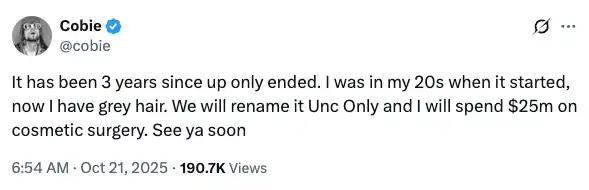
This reaction is very Cobie—self-deprecating, humorous, tinged with a hint of resignation.
In the spring of 2022, he exposed Coinbase employees' insider trading by analyzing on-chain data. Cobie publicly shared his analysis on social media, suggesting possible internal leaks at Coinbase. Several months later, the U.S. Department of Justice indicted former Coinbase product manager Ishan Wahi for insider trading using his position. In 2023, Wahi was convicted and sentenced to two years in prison.
Back then, Cobie always enjoyed unmasking the pretentiousness of large corporations, taking a stand against Coinbase. Now, Coinbase has acquired his NFT. To be precise, they acquired the rights to compel him and co-host Ledger Status to produce an 8-episode UpOnlyTV series.
Simultaneously, Coinbase CEO Brian Armstrong confirmed on social media: "The rumors are true; we bought this NFT. UpOnly is coming back."
The crypto community's discussion immediately exploded. Some cheered, "The bull market is really back," while others questioned, "Is Coinbase trying to control the narrative?" Some asked, "Why is a podcast NFT worth $25 million?"
To understand this transaction, we need to go back three years. At that time, the NFT market was booming, UpOnly was the hottest podcast in the crypto community, and Cobie had just made what seemed like a joking decision: to write the ownership of the show into an NFT smart contract.
The Three-Year Journey of an NFT
From 2021 to 2022 was the golden age of UpOnly and also the most fervent period for NFTs.
Every Thursday night at 8 pm, Cobie and Ledger would livestream on Twitch, interviewing the most influential people in the crypto community. Ethereum founder Vitalik Buterin came to talk about Layer 2 scaling solutions, FTX founder SBF came to discuss regulatory strategies, and Terra founder Do Kwon came to talk about the future of algorithmic stablecoins.
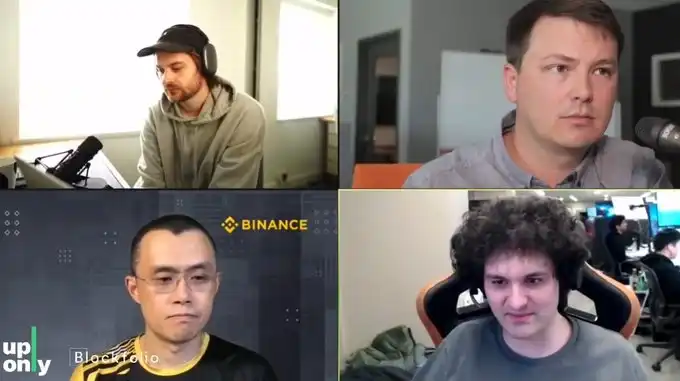
UpOnly episode featuring CZ and SBF as guests
The hallmark of the show was its unconventionality: the hosts dared to ask sharp questions, and the guests didn't hold back. The show's self-introduction read: "A crypto podcast once described as childish, unprofessional, and weird. Prioritizes entertainment over Alpha but usually has neither."
In November 2022, UpOnly witnessed one of the most dramatic moments in crypto history, the FTX Tower Collapse.
On November 2nd, CoinDesk reported on the Alameda Research balance sheet issue. The trading firm founded by SBF had around $58 billion of FTX's platform coin FTT within its $146 billion in assets. This exposed the highly intertwined nature of these two supposedly "independent" entities, with the deeper issue being FTX using client funds to cover Alameda's losses. Panic spread through the market. On November 6th, Binance CEO Changpeng Zhao announced he would sell off his FTT holdings, triggering a run on the bank. Customers went into a frenzy of withdrawals, and FTX's liquidity evaporated within days.
On November 10th, UpOnly held an emergency livestream, interviewing former FTX employee Zane Tackett.
Zane had just resigned and was trying to help FTX's top brass find a solution. The livestream went on for three hours, with Cobie and the guests barely speaking, just staring at the news and social media, watching a once multi-billion dollar empire crumble in real time. The next day, on November 11th, FTX filed for bankruptcy, and SBF resigned.
Shortly after that livestream, UpOnly went off the air. Cobie said he had a significant amount of funds stored in FTX and incurred substantial losses. But the deeper reason was that FTX's collapse tore open the wound of the entire crypto content ecosystem.
FTX was not just an exchange; it was the industry's main benefactor. It sponsored nearly all mainstream crypto media, paid podcasters, sponsored conferences, and paid KOLs for advertisements. It spent $135 million to acquire naming rights for the Miami Heat arena, enlisted Tom Brady and Gisele Bündchen as endorsers, and poured tens of millions of dollars into advertising. The goal of this spending was crystal clear: to control the narrative, shape the image, and make everyone believe that FTX was a "safe and reliable industry leader."
After FTX's collapse, these fund flows dried up, putting numerous crypto media outlets in survival mode. The Block's CEO resigned amid a scandal of concealing a massive loan from FTX, CoinDesk was forced to lay off employees, and many small independent media outlets closed down. The KOLs who had taken money from FTX either fell silent en masse or busied themselves disassociating from the exchange.
Trust was shattered.
UpOnly also lost the motivation to continue. Cobie transitioned into entrepreneurship, launching an angel investment platform called Echo in 2022 and later introducing the token sale platform Sonar in 2025. He thought he could step out of the spotlight and become a backstage investor.
However, at the peak of UpOnly's popularity, Cobie made a decision: to issue an NFT that encoded the show's control into a smart contract.
This NFT was named "Up Only Television Season Pass." It was not a profile picture or an artwork. According to the description on the Manifold platform: "If the holder destroys this NFT, a new season of UpOnlyTV will premiere within three months."
Interestingly, this "contract" had some unusual clauses. As per previous reports, it explicitly stated that the purchase did not include any sponsorship rights and allowed the host to ignore or ridicule the buyer on the show.
This design was counterintuitive. In traditional content sponsorship, buyers pay for exposure, integration, and control of the narrative. But Cobie's NFT clearly stated that you could pay to have me host a show, but you couldn't dictate what I say—I could even insult you on the show.
From 2022 to 2024, the NFT market collapsed. Most of the avatar NFTs that once sold for hundreds of thousands of dollars plummeted to zero. OpenSea's trading volume dropped from a monthly average of tens of billions of dollars at its peak to less than $1 billion. The Bored Ape Yacht Club's floor price fell from a high of 150 ETH to less than 30 ETH. Criticism of the "JPG scam" abounded, and NFTs became synonymous with speculation and bubble.
But the UpOnly NFT did not go to zero. Because it doesn't represent just an image, but a real right: forcing two influential people to do something valuable.
This is exactly what NFT technology originally promised: to record rights on the blockchain and execute rules with smart contracts. It's just that in the 2021 frenzy, this promise was drowned in avatar hype.
In October 2025, Bitcoin reclaimed its all-time high, and various ecosystems became active again. At this point, Coinbase offered $25 million to buy this NFT.
From Head-to-Head to Sitting at a Table
Cobie, originally Jordan Fish, born in the 1990s in the UK, graduated from the University of Bristol with a major in computer science. He first encountered Bitcoin in the early 2010s and gradually became an active trader in the crypto community. His online alias, Cobie, comes from the early gaming community, a name that later became one of the most influential tags in the crypto world.
Cobie's career has been diverse. He has worked as a product manager, delved into growth operations, and invested in numerous projects. He was an early supporter of Lido Finance, a liquidity staking protocol that later became one of the largest TVL projects in the DeFi space. He founded Echo, an angel investment platform for early-stage projects, and later launched Sonar, a token launch platform aiming to redefine the ICO model.
But what truly made Cobie famous is his outspoken nature.
He is known for being blunt on social media, daring to criticize major projects, expose issues, and say things others dare not. In the spring of 2022, he noticed unusual trading patterns before Coinbase listings and publicly questioned insider trading. This exposure ultimately led to the indictment of Coinbase's former product manager, Ishan Wahi, who was sentenced to two years in prison in 2023.
At that time, Cobie was the epitome of the "independent voice" in the crypto community. He did not belong to any exchange, did not take money from any project teams, earned through trading and investing, and spoke through influence. UpOnly was the same, not accepting sponsorships, not engaging in advertorials, and freely criticizing anyone.
But the FTX collapse changed everything.
Cobie suffered financial losses in FTX, and while he did not disclose the exact amount, he mentioned it was "not small." More importantly, the FTX collapse showed him the ugliest side of the crypto community, where media and KOLs who speak for money fell silent collectively in times of crisis. Credibility was shattered, trust collapsed, and the entire content ecosystem needed to be rebuilt.
Cobie has chosen to take a temporary hiatus. He is focusing his energy on Echo and Sonar, attempting to change the industry from an investment and infrastructure standpoint. UpOnly has gone off the air, with that NFT lying quietly in a wallet until Coinbase comes knocking.
Why Coinbase? Why now?
Coinbase needs narrative power. Not the official, serious, educational narrative power it already has—Coinbase Learn has hundreds of tutorials covering everything from Bitcoin basics to advanced DeFi.
What it needs is the UpOnly kind of narrative power, loved by the youth, retweeted by KOLs, able to spark discussions, able to drive the narrative.
More importantly, it needs "authenticity."
FTX's lesson was profound. Those bought-out voices all ended up as jokes. The truly influential ones are those who dare to speak the truth. Cobie has exposed Coinbase's insider trading, but it is precisely because of this that his words carry weight. If he were to say on UpOnly that Coinbase is doing well, people would believe him; if he were to say Coinbase has issues, people would also believe him.
This kind of trust cannot be bought with $25 million. But Coinbase can acquire a distribution channel, allowing this trust to work in its favor.
So Coinbase bought this NFT. Yet Cobie can criticize Coinbase on the show, question its policies, expose its problems. Coinbase spent $25 million to buy a platform that can criticize itself.
It may sound absurd, but it might be exactly what Coinbase wants. Because only truly independent voices have credibility. Only those who dare to criticize you can help you build trust.
Cobie has transformed from being an exposé figure to Coinbase's "partner," yet he still retains the freedom to criticize. But the question is, how long can this freedom last? When Coinbase becomes your benefactor, can you still be as sharp as before?
The New Battlefield of Narrative Power
In the traditional financial world, exchanges and media have clear boundaries. NYSE does not run The Wall Street Journal, and Goldman Sachs does not buy Bloomberg. The existence of this boundary is to maintain market fairness and information independence.
But in the crypto world, this boundary never existed.
In the era of FTX, this logic was endorsed. FTX paid nearly every mainstream crypto media for exposure and positive coverage. It spent $135 million to acquire the naming rights for the Miami Heat arena, enlisted Tom Brady for endorsements, aired ads during the Super Bowl, sponsored esports teams, and named crypto conferences. FTX's founder SBF himself became a media darling, frequently interviewed and portrayed as the "savior of the crypto world" and a practitioner of "effective altruism."
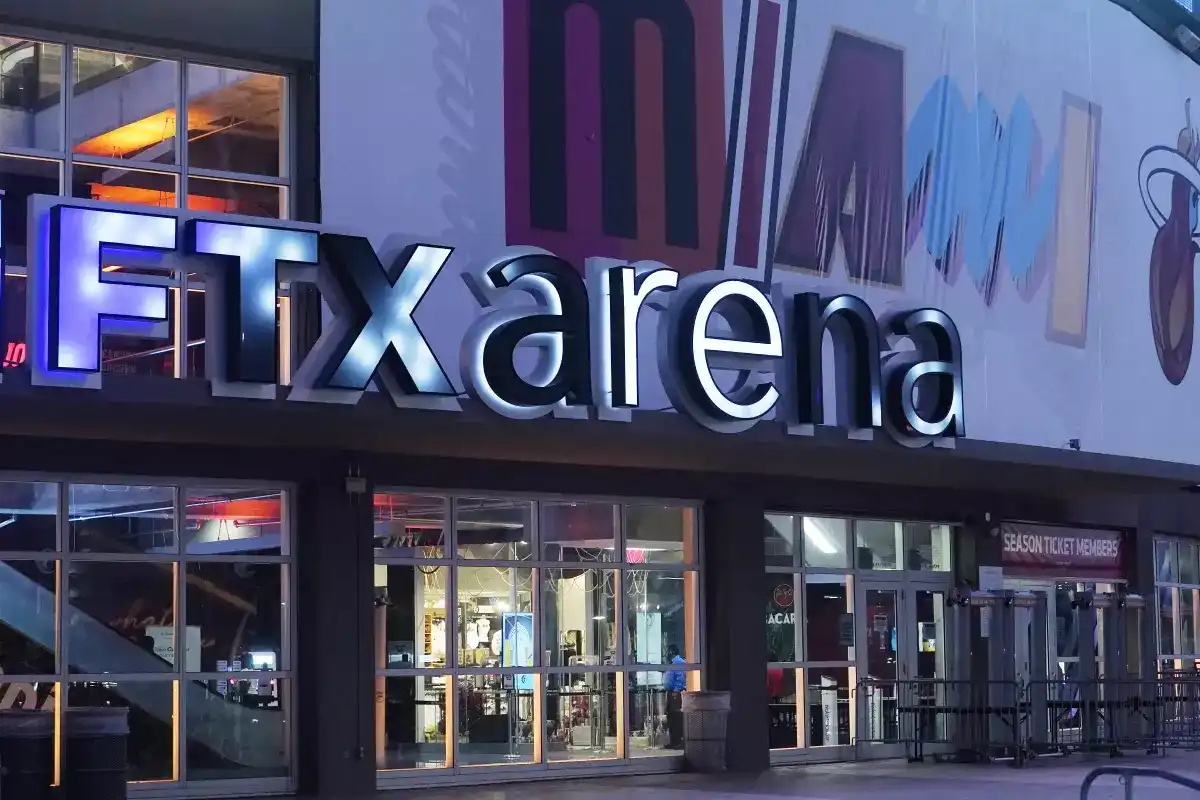
FTX-named Miami Heat arena | Image Source: Los Angeles Times
And we all know the outcome. In March 2024, SBF was sentenced to 25 years in prison on charges of embezzlement of customer funds, telecommunication fraud, money laundering, and seven other major crimes. The court found that he transferred around $10 billion in customer funds to Alameda Research for high-risk investments, political donations, and personal expenses. Those in the media and key opinion leaders who took FTX's money either went silent during the collapse or were busy disassociating themselves.
Coinbase took a different approach. It didn't control the media through sponsorships but instead owned content IP directly. However, its method of ownership was also unique—it didn't acquire companies or hire employees but bought an NFT to gain a transparent, smart contract-based right.
This choice embodies the essence of Coinbase.
In August 2023, Coinbase launched Base, an Ethereum-based Layer 2 blockchain. Base's mission was clearly stated: "Build a global on-chain economy that fosters innovation, creativity, and freedom." Jesse Pollak, the head of Base, repeatedly emphasized one concept: "Make on-chain the next online," with the goal of bringing 1 billion people onto the blockchain.
Now, Coinbase has completed a $25 million content partnership using an NFT smart contract. This act itself is a demonstration of the "everything on-chain" concept. It's not through traditional paper contracts, lawyers, or intermediaries but through blockchain recording rights and smart contracts enforcing rules.
From this perspective, Coinbase's acquisition of the UpOnly NFT is not just a marketing move but also a demonstration of our belief in on-chain operations and conducting business in an on-chain manner.
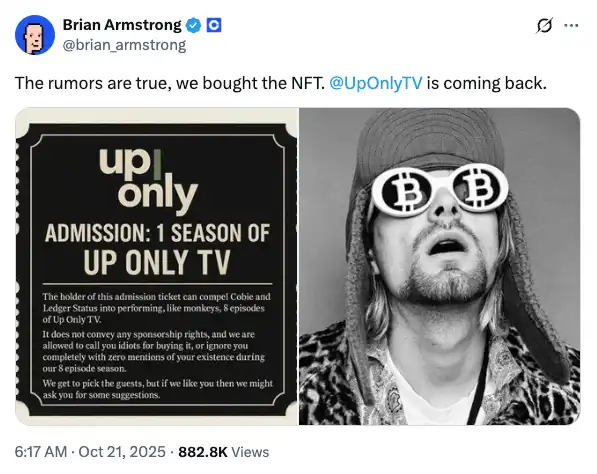
The rights Coinbase acquired are very specific, for 8 episodes. It's not permanent control, not a complete acquisition, just these 8 episodes, only these 8 episodes.
Imagine this: a new season of UpOnly airs, Cobie and Ledger still interview various people, still ask tough questions, still criticize industry problems. But everyone knows that this show is funded by Coinbase. This in itself is a narrative: Coinbase supports independent voices, Coinbase is not afraid of criticism, Coinbase is different from those exchanges that seek to control the narrative.
This is a more advanced discourse strategy, not just having the media speak for you, but having the media's presence endorse you.
But this strategy comes with risks. What if Cobie really criticizes Coinbase on the show? What if he exposes new issues? Can Coinbase take it?
The moment Coinbase bought an NFT, they accepted this risk. This is a gamble. Coinbase is betting that in the new bull market, authenticity and credibility are more valuable than control.
The question is, is this redefinition creating a healthier ecosystem, or is it building a new monopoly? When the largest exchange owns the most influential content platform, even if the contract guarantees independence, power asymmetry still exists.
Will this model succeed? We don't know yet. When will the new season of UpOnly air, what will Cobie say on the show, how will Coinbase respond to potential criticism, all these questions remain unanswered.
Cobie said he wants to rename the show "Uncle's Corner" and spend 25 million on plastic surgery. This is his consistent style, using self-deprecation to diffuse awkwardness. But behind the joke is someone who has exposed the machinations of giants, and the giant that was exposed, redefining the possibilities with a $25 million NFT.
Three years ago, Cobie inscribed the control of UpOnly into an NFT. Three years later, that NFT sold for 25 million dollars.
Coinbase is betting that in the new bull market, authenticity and credibility are more valuable than control; Cobie is betting that independence and capital can coexist.
The story is just beginning.
関連記事

Kraken IPOが暗号『中期段階』サイクルを再燃させる可能性
重要なポイント KrakenのIPO(新規株式公開)は、暗号通貨の成長を加速し、伝統的な金融(TradFi)から新たな資本を引き寄せる可能性があります。 Bitcoinは過去最高値を記録しましたが、その後の市場変動によって価格が下落しました。 一部の専門家は、2026年にBitcoinが下落の年になると予測していますが、他の専門家は長期的な上昇トレンドを主張しています。 市場の動向は、流動性や国家の採用といったマクロ経済的な要因によって左右されるようになっています。 WEEX Crypto News, 2025-12-26 10:06:43 Krakenと伝統的金融資本の相互作用 Krakenの新規株式公開(IPO)は、暗号通貨界における新たな潮流を生み出す可能性があります。これは特に、伝統的な金融制度(TradFi)からの新たな資本を呼び込む一助となるでしょう。この動きは、様々な暗号通貨企業が上場を目指す一大トレンドの一環でもあります。 Bitcoinは10月6日に過去最高値である126,000ドル以上を記録しましたが、その後の19億ドルに及ぶ清算イベントの影響を受けて現在は87,015ドル(記事執筆時点)の取引価格となっています。これにより、最近二週間で6%の減少を示していますが、50T Fundsの創設者兼CEOであるDan Tapieroは、「Bitcoinブル市場はまだ中期段階にある」と主張しています。彼は、KrakenのIPO及び増加するM&A(合併・買収)活動が、新たな資本を引き寄せる「追い風」を提供すると見ています。 Krakenは11月18日に20億ドルの評価額に達するために8億ドルの資金を調達し、同年11月初めに米国でのIPOを申請しました。これにより新たな市場の局面がどのように進展するか、注目されています。 Bitcoin市場の予測と見解の相違 しかし、すべてのアナリストが現行のブルサイクルの継続を信じているわけではありません。Fidelityのグローバルマクロ経済研究ディレクターであるJurrien…

Fed Q1 2026 Outlook: Bitcoinと仮想通貨市場への影響
Key takeaways Fedの金利引き下げの休止は仮想通貨に圧力をかける可能性があるが、「隠れ量的緩和」が下振れリスクを軽減するかもしれない。 流動性は金利引き下げ以上に重要であり、2026年第1四半期のBitcoinとETHの動向を形作る。 2025年には米連邦準備制度理事会(Fed)が三度の金利引き下げを実施したが、インフレ率によっては2026年初にはさらに下がる可能性がある。 軽微な供給施策が市場の方向性に影響を与え、特にETFの流入が投資家のリスク志向を支えると予想される。 WEEX Crypto News, 2025-12-26 10:06:42(today’s date,foramt: day, month, year) Fedの政策に対する仮想通貨市場の反応 2025年の米連邦準備制度理事会(Fed)は、経済の減速とインフレ圧力の緩和に対処するために金利引き下げを三回実施しました。特に、雇用の減少と消費者物価指数(CPI)の改善が見られる中、第4四半期に集中的に利下げが行われました。しかし、仮想通貨市場はこの養成政策に対して常識外の反応を見せました。Bitcoin(BTC)、Ethereum(ETH)などの主要な仮想通貨は、これまでの高値から1.45兆ドルを超える時価総額の減少を経験しました。 BitcoinとEthereumに対する金利引き下げ休止の影響…

Ethereum in 2026: Glamsterdam and Hegota Forks, L1 Scaling, and Beyond
新しいEthereumフォーク「Glamsterdam」は2026年にEthereumスケーリングの新たな一章を開く。 ガスリミットの200万への増加は、より大量の取引を同時に処理する能力をもたらす。 Zero-Knowledge( ZK )証明が進化し、Ethereum L1のスケーリングを加速させる。 新たなデータブロブを活用することで、Layer 2のネットワークが飛躍的に性能を向上させる。 「Heze-Bogota」フォークは、検閲への抵抗力を強化し、セキュリティ面での向上を目指す。 WEEX Crypto News, 2025-12-26 10:06:42 2026年には、Ethereumにとって重要な年となることが予想されています。この年、GlamsterdamフォークがEthereumブロックチェーンの処理能力を一段と向上させることが期待されています。特にガスリミットの大幅な引き上げやZero-Knowledge (ZK) 証明の普及が、Ethereumのスケーリングを新たなレベルへ引き上げる要因として注目されています。 Glamsterdamフォークの詳細とその影響…

Aaveのガバナンス投票でDAOによるブランド資産管理が拒否される
Key Takeaways Aaveのガバナンスプロポーザルが拒否されたことで、DeFiにおけるトークン価値の取り込みやガバナンスの問題が浮き彫りになった。 投票では55.29%が反対票を投じ、3.5%のみが支持する結果となった。 提案の拒否を通じて、トークン保有者の間での根深いトークン-エクイティの緊張が明らかになった。 ガバナンスの過程での早急な決定が批判され、特定の人物による影響力についての議論が起きた。 WEEX Crypto News, 2025-12-26 10:08:41(today’s date,foramt: day, month, year) Aaveコミュニティにおける最近のガバナンス投票では、Aaveトークン(AAVE)保有者が同プロトコルのブランド資産を分散型自律組織(DAO)の管轄下に置くという提案に対して「反対」の姿勢を示しました。この投票は、DeFi分野におけるガバナンスのダイナミクスがどのように変動し得るかを示す重要な事例です。 Aaveのガバナンス投票の結果とその影響 Aaveのガバナンスにおいて、DAOを通じてブランド管理を行う提案が55.29%の反対を受け、僅か3.5%の支持しか得られない結果に終わりました。これは、AaveのようなDeFiプラットフォームでどのようにしてブランドのアイデンティティを効果的に管理するかという問題に対する懸念を強調しています。…

Crypto Tips for Newcomers, Vets, and Skeptics in 2026
Key Takeaways 理解されていないまま暗号通貨に参入している人が増えている。 暗号通貨の仕組みや可能性を知ることが重要。 ベテランは新参者を教育し、暗号通貨を日常生活で使うべき。 批判する前に実際に暗号通貨を試すことが重要。 WEEX Crypto News, 2025-12-26 10:08:40 長年の経験を持つビットコイナーのジェームズ・ハウエルズは、過去に誤って8,000 BTCが入ったハードドライブを捨ててしまったことで知られています。彼がこの事実を乗り越え、2026年に向けて新参者やベテラン、そして懐疑的な人たちに向けたアドバイスを共有することにしました。この貴重な経験談を基に、私たちは暗号通貨について深く掘り下げ、なぜ理解が重要であるかを探ります。 新参者は暗号通貨を理解することから始めるべき 暗号通貨に初めて参入する人々は、まず購入する前に基礎をしっかり理解することが大切です。ジェームズ・ハウエルズは、新しい投資家が最初に学ぶべきことは、ブロックチェーンの仕組みや分散型金融の背景とその解決すべき現実世界の課題です。「ブロックチェーンやDeFi(分散型金融)がどのように運営されているか、そしてそれが何を解決するのかを理解することが大切だ」と、彼は述べています。 ブロックチェーンの意義を理解する 法定通貨のシステムは、政府や仲介者に力を集中させがちですが、一方でブロックチェーンは第三者の許可なしに選択できる代替手段を提供します。これは個人がより自由に金融活動を行うための道でもあります。 安全に実験を行う…

量子コンピューティングと2026年における暗号の安全性
Key Takeaways 2026年に量子コンピュータがBitcoinなどの暗号通貨を破壊するリスクは低いが、現時点で準備が進んでいる。 量子コンピュータが暗号通貨に与える影響は「収集して後に解読」という待機戦略が懸念されている。 暗号通貨のセキュリティ脆弱性の多くは公開鍵暗号技術に依存しており、量子攻撃に備える必要がある。 専門家の間で議論が続いており、増え続けるデータセキュリティの意識が2026年に重要なテーマとなるだろう。 WEEX Crypto News, 2025-12-26 10:08:41 2026年に量子コンピューティングが暗号通貨に与える影響について、多くの思惑が交錯しています。「収穫して後で解読する」という手法が暗号通貨業界全体に動揺を与えており、近未来の量子技術の進展に備える必要性を強く感じる場面も増えています。しかし、そのリスクは実際にどれほど深刻なのでしょうか?そして2026年に本当に暗号通貨が危機にさらされるのか、専門家たちの見解を考えてみましょう。 暗号通貨に対する量子技術の脅威 量子コンピュータの登場は、長らく暗号通貨の世界において潜在的な脅威とされてきました。特にBitcoin(BTC)などのブロックチェーン技術を基本とした通貨は、公開鍵暗号技術に依存しています。公開鍵から秘密鍵を導出できるほどの量子コンピュータが実現されると、広範囲にわたって資金が盗まれるリスクが生じると指摘されています。 公開鍵暗号技術の脆弱性 Neil Puckrin氏など多くの専門家は、量子コンピュータによる暗号技術破壊のリスクを「現在のところほぼマーケティングであり、10%未満が実際の危険」としています。しかし、仮想通貨のセキュリティは公開鍵暗号技術に依存しており、この部分が量子攻撃の「最も弱い部分」とみなされています。特にアメリカ合衆国の規制当局である米国証券取引委員会(SEC)でも、量子コンピューティングが将来的に暗号通貨の保護を破る可能性があるとの警鐘が鳴らされています。 2026年に予測される状況…

トランプのWorld Liberty Financialトークン、2025年末に40%以上減少
Key Takeaways World Liberty Financialトークン(WLFI)は、2025年末に40%以上の減少を記録。 プロジェクトは、トークンセールや主要暗号資産の取得などで始まったが、その後の公募取引で値下がり。 トランプ家が両手に抱えるビジネスは、潜在的な利益相反の懸念を呼んでいる。 World Liberty Financialは、2026年1月にリアルワールドアセットを立ち上げる予定。 WEEX Crypto News, 2025-12-26 10:10:42 プロジェクトの背景と発展 2025年末にトランプ家の暗号資産プロジェクトであるWorld Liberty…

BlockchainはQuantumの脅威に備える中、Bitcoinはその対応を議論
Key Takeaways Altcoinブロックチェーンが量子の脅威に備えている一方で、Bitcoinコミュニティでは対応の方法とタイミングについて意見が分かれている。 QuantumコンピュータがまだBitcoinを破ることはできないが、将来的に可能性があるため、さまざまなブロックチェーンが準備を進めている。 EthereumのVitalik ButerinはQuantumコンピュータの脅威をエンジニアリングの問題として捉える重要性について説明している。 SolanaとAptosは、量子耐性を持つ取引や署名のサポートをテストまたは提案している。 Bitcoinにおける議論は信頼に関するものであり、多くの論者がリスクの過小評価を懸念している。 WEEX Crypto News, 2025-12-26 10:10:43 ブロックチェーンが静かに進める量子コンピューティングへの備え 今、量子コンピュータはBitcoinを破ることはできませんが、近い将来これが現実となるかもしれません。こうした背景から、複数のブロックチェーンは量子コンピューティングに対する備えを進めています。最近の動向を見ても、Aptosは量子耐性を持つ署名のサポートを提案し、Solanaは量子耐性のある取引のテストを行っています。一方で、Bitcoinのコミュニティでは、量子安全性を高めるための対応策について活発な意見交換が行われています。 これらの動きは、暗号資産界隈の不安感を示しています。投資家たちは、影響力のある声が量子のリスクを軽視することで、Bitcoinの価格が下がっていると主張しています。実際、Bitcoinの価格は過去3ヵ月で24%下落しました。しかし、Altcoinブロックチェーンがオプトインのアップグレードやテストネットを通じて量子耐性を実験している中で、Bitcoinは公開的にどのように、そしてどれほど緊急に量子リスクに対処すべきかについて分裂しています。 アラームを鳴らさずに進める量子コンピューティングの備え Ethereumは、量子コンピュータの影響を現実的なエンジニアリングの問題とみなす理由を明確にしています。Ethereumの共同創設者であるVitalik…

エルサルバドル、Bitcoinの野望が現実に直面【2025年】
Key Takeaways エルサルバドルは2021年にBitcoinを法定通貨として認めた初の国家であり、大きな注目を集めた。 International Monetary Fund(IMF)との対話が進む中で、Bitcoin採用戦略が調整を余儀なくされた。 国民へのBitcoin法の適用は限定的であり、具体的な採用には課題が残る。 一部の仮想通貨企業は、依然としてエルサルバドルの政策に魅力を感じている。 WEEX Crypto News, 2025-12-26 10:10:42(日付、形式: 日、月、年) エルサルバドルのBitcoin採用戦略:夢から現実へ エルサルバドルは、四年前の2021年に大きな一歩を踏み出し、Bitcoin(BTC)を法定通貨とした世界初の国として注目されました。当時の立法議会では、すべての商店や事業所でBitcoinを受け入れることを求める法案が可決され、多くの支持者はそれがBitcoin採用の波を導き、国内経済に貢献すると期待していました。しかし、2025年になり、その野望が経済的な現実と直面することになりました。 この野心的な採用計画には、「Bitcoin City」を建設するための債券発行も含まれていました。しかし、この計画の受け入れはサルバドール国民の間で冷ややかで、IMFからの懸念も影を落とすことになりました。…

Vitalikが語る、XのGrokによる真実性向上と課題
Ethereumの共同創業者であるVitalik Buterinは、GrokがXの真実性を高めると指摘。 Grokはユーザーの政治的偏見を確認するのではなく、それに対抗する回答を提供する。 Elon Muskの影響下にあるAIの調整に関する懸念も。 AIの偏りはシステム全体に拡散する可能性がある。 AIチャットボットの改善が必要とされる背景には、誤情報の拡散がある。 WEEX Crypto News, 2025-12-26 10:12:44 Xの真実性強化のためのGrokの貢献 Vitalik Buterinは、XプラットフォームにGrokというAIチャットボットの導入が真実性に有益であると述べています。このアプローチの主な特徴は、Grokがユーザーからの問い合わせに対し、予期しない答えを提供する能力にあります。ユーザーが偏った意見を確認しようとしても、Grokは彼らの期待に反した答えを出し、反対者の立場を示すことがよくあります。 Buterinによれば、この能力がXのプラットフォームにおける大きな進化を促していて、特に「コミュニティノート」の後にポジティブな影響を及ぼしていると言われています。このため、GrokはXの真実性強化において大きな役割を果たしているのです。 Elon MuskとGrokの影響…

暗号資産で今日起こったこと
Key Takeaways Doctor【WEEX Crypto News, 2025-12-26 10:12:44】 2025年のBitcoin市場の基礎は健全で、長期的な視点が重要とされています。 Canton CoinがDTCCのトークン化計画により27%急騰。この動きはBlockchainの注目すべきユースケースの広がりを示しています。 暗号資産デリバティブの市場取引量は2025年に急増し、日平均取引額は2650億ドルに達しました。 Binanceをはじめとする4つの主要取引所が市場の62.3%を支配しており、CMEもその地位を強めています。 WEEX Crypto News, 2025-12-26 10:12:44 Bitcoinの固有の強みと市場の展望…

Canton Tokenの高騰:DTCCのTokenized Treasury計画が背景に
Key Takeaways Canton Coinは最近の27%の上昇を見せ、暗号通貨市場で注目されています。 DTCCによる米国国債のトークン化計画が、この上昇の主要な要因です。 トークン化された実世界の資産(RWA)は、2025年にさらに大きな注目を集めています。 BlackRockをはじめとする主要な投資ファンドが、トークン化市場で重要な役割を果たしています。 WEEX Crypto News, 2025-12-26 10:14:44(today’s date,foramt: day, month, year) はじめに 近年、暗号通貨市場は多くの革新を経験しており、その中でも実世界の資産をトークン化する動きは特に注目されています。その中で、Canton…
ナラティブと現実: BTCとアルトコインの価格を動かすものは何か?
Key Takeaways 米国の選挙後、Bitcoinの価格は56%急騰しましたが、スポット市場の追随が不十分なため、上昇の持続性が限られていました。 スポットETFの流入が続くとBitcoinは上昇し、流入が減速またはマイナスになると価格停滞することが示されています。 ステーブルコインの取引所流入が50%減少し、ナラティブ主導のラリーを脆弱にしました。 WEEX Crypto News, 2025-12-26 10:15:08(today’s date,foramt: day, month, year) はじめに Bitcoinやaltcoinの価格変動はしばしば政治的な出来事や規制の発表といった外部のナラティブによって大きく動かされるとされます。しかし、この一年は流動性の条件やオンチェーンのデータなど、より測定可能な資本フローが価格の持続性を決定する主な要素となってきました。それでは、こうした市場の裏に潜む現実と、その現実がどのように市場動向に影響を与えているかを深掘りしていきます。 ナラティブ主導の急上昇は速やかだが持続性に欠ける 市場におけるナラティブは、Bitcoinやその他の暗号通貨の価格を急激に動かす要因となり得ますが、その効果は一時的であることが多く、結果として過剰なポジショニングが市場を不安定にすることがあります。例えば、2024年の米国の選挙における政治的な変化がBitcoinに対して再評価をもたらし、短期間で56%の急騰を引き起こしました。しかし、この上昇は長続きせず、115日の間に再び価格が下落しました。…
量子計算と2026年の暗号通貨:破滅の予兆ではなく備える時
量子計算の発展は2026年に暗号通貨を破壊することはないが、「今集めて、後で解読する」手法が業界に準備を迫っている。 多くの専門家は、量子計算の脅威は理論上のものと見ており、2026年の暗号破壊は現実味がないと考えている。 Bitcoin(BTC)などの暗号通貨は公開鍵暗号を利用しており、量子コンピュータがこれを破る可能性には懸念がある。 量子コンピュータが暗号を破る代わりに、現時点で攻撃者はデータ集積に注力している。 量子計算に対応するため、暗号コミュニティは量子耐性のあるウォレットへの移行を目指している。 WEEX Crypto News, 2025-12-26 10:15:09 暗号通貨への量子計算の影響とその準備について 2026年の量子コンピューティングを巡る話題は、暗号通貨業界に新たな波紋を広げています。量子計算がビットコインの暗号を破壊するという説は一時期囁かれましたが、現在の技術水準から判断するに、暗号界全体が直ちに危機にさらされることはありません。しかし、暗号コミュニティにとって重要なのは、量子コンピューティングの進展を背景に、どのようにこれに備えていくかです。 量子計算が暗号に与えるリスク 暗号通貨は、主に公開鍵暗号方式を利用しています。この方式は、秘密鍵を使ってトランザクションを署名し、公開鍵でその署名を検証する仕組みになっており、量子計算がこのアルゴリズムを破ることができれば、大量の資金が盗まれるリスクが浮上します。現時点では、米国の規制当局もこの問題に注目しており、脅威への対応を進めています。2023年9月には、米国証券取引委員会(SEC)の暗号タスクフォースが、量子計算が最終的にビットコインやその他のデジタル資産を保護する暗号技術を破る可能性について警告しました。 技術的な観点から見ても、暗号学者の間では、暗号署名が最も脆弱な部分であるとのコンセンサスがあります。特に、楕円曲線デジタル署名アルゴリズム(ECDSA)は、量子コンピュータによって攻撃されると脆弱です。それに対し、SHA-256のハッシュ関数は比較的に安全性が高いとされています。このため、暗号通貨のセキュリティにおいて、どのようにして安全性を確保するかが議論されています。 量子計算が及ぼす脅威の実態 量子計算自体は、まだ完全には普及しておらず、2026年までに急速に暗号学が崩壊する可能性は低いとされています。量子コンピュータが現在持つノイジーキュービットの数は数百から数千に過ぎず、ビットコインのような暗号を破るためには、これを数百万の物理キュービットにまで増やす必要があるとされています。これには、量子制御、材料科学、製造プロセスなどでのブレークスルーが不可欠です。この技術的課題は、解決に多大な時間と努力を要するもので、すぐに解決できるものではありません。 また、現状の量子計算のアプローチでは、ビットコインの暗号を破ることがありえないとする意見もあります。これまでの方式ではなく、根本的に新しいアルゴリズムが必要とされ、現在の技術では実現が難しいとされています。…

トランプのWorld Liberty Financial、2025年末40%以上ダウン
Key Takeaways World Liberty Financial (WLFI)は2025年に40%以上の下落を記録。 プロジェクトはトランプ家が主導し、初期は強い開始を見せたが、後に混合した成果に直面。 主要な仮想通貨の取得により、一時的に市場での資産価値が上昇。 様々な論争と批判にもかかわらず、新しい資産と取引で前進。 WEEX Crypto News, 2025-12-26 10:15:08 割れる政策転換から始まったWLFI 2024年9月、ドナルド・トランプ氏が2024年の選挙活動中に発表したWorld Liberty Financialは、アメリカの仮想通貨政策における大きな転換を示すものとして注目されました。特にトランプ氏の息子であるドナルド・トランプ・ジュニアとエリック・トランプが主導したことが、大きな関心を集めました。…

ブロックチェーンの未来と量子コンピューティングの脅威に直面してBitcoinが抱える課題
長期的な量子コンピュータの脅威に備えるため、多くのブロックチェーンが新たな対策を検討中。 Ethereumの共同創設者、Vitalik Buterinが量子コンピューティングを差し迫った技術問題として捉える重要性を強調。 Bitcoinは量子リスクに対する対応方法についてコミュニティ内で意見が分かれている。 理論上では現行の公開鍵暗号が量子コンピュータに解読される可能性が懸念されている。 投資家は量子リスクを無視することがビットコインの価値に影響を与える可能性があると考えている。 WEEX Crypto News, 2025-12-26 10:15:08 量子コンピューティング技術の進展は、現在の暗号通貨市場に新たな懸念をもたらしています。この技術が公開鍵暗号を解読するようになったとき、大規模なパニックを引き起こす可能性があります。特にBitcoinは、量子リスクについてどのように対応すべきかについて長い間議論されてきました。 Ethereumと他のブロックチェーンの準備 Ethereumは、量子コンピューティングを仮説ではなく技術的課題として捉える必要性を早い段階で認識しました。Ethereumの共同創設者、Vitalik Buterinは、たとえその確率が低くとも、量子コンピュータが公開鍵暗号を解読可能になる前に準備を始めることの重要性を主張しています。予測モデルによれば、2030年までにその可能性は約20%とされていますが、2040年までにはより現実的なものになるとの見方もあります。 他の主要なブロックチェーンもこれに追随しています。Aptosは、量子耐性のある署名サポートをアカウントレベルで追加することを提案し、SolanaはプロジェクトElevenと提携し、量子耐性のある署名をテストする専用テストネットを展開しました。このような取り組みは、将来的な機能拡張に向けた基盤作りを目的とし、今すぐの脅威ではないことを強調しています。 Bitcoinにおける量子リスクに関する議論 Bitcoinにおける量子リスクの議論は、実際には信頼の問題に集約されます。Bitcoinは楕円曲線暗号に基づいており、これは公開鍵を通じて資金の所有権を証明します。しかし、量子コンピュータがこれを逆算してプライベートキーを見つけ出せるとなると、資金が不正に動かされる可能性があります。…
Ethereum unlikely to reach new highs in 2026: Ben Cowen
Key Takeaways 現在のBitcoinの状況により、Ethereumの価格が新たな高値に達するのは難しいと予測。 Etherが過去最高値に戻った場合でも、それが「ブルトラップ」となる可能性がある。 仮にEtherが過去最高値を再び達成するとしても、全体的な暗号市場に大きな影響を与えることはないだろう。 他のアルトコインがこのサイクルで新高値に達する可能性は低い。 WEEX Crypto News, 2025-12-26 10:15:08 序論: Ethereumとその挑戦 最近の市場動向を踏まえ、仮想通貨の世界ではEthereum(ETH)の価格が2026年に新たな高値を達成することは難しいと予測されています。この見解は、著名な仮想通貨アナリストであるBen Cowen氏によって示されており、彼の分析では、現在のBitcoinの市場状況が大きな影響を及ぼしているとされています。 EthereumとBitcoinの関係 Ethereumの価格動向はしばしばBitcoinと連動しています。これは、Bitcoinが仮想通貨の基軸通貨としての役割を果たしているためです。Cowen氏によれば、もしBitcoinが真のベアマーケットの状態にあるその感覚が正しければ、Ethereumがその中で価格を上げるのは困難だということです。彼のコメントは、Banklessポッドキャストの中で明らかにされ、それによると、Ethereumが過去の高値を再び達成することは必ずしも不可能ではないが、それは「ブルトラップ」として終わる可能性があるとされています。 2026年のBitcoinの予測…

Crypto Newbies, Veterans, and Skeptics Get Insightful Tips from a Bitcoiner
Key Takeaways: Cryptocurrency newcomers should prioritize understanding technology over immediate investment. Cryptocurrency veterans are encouraged to test their…
Kraken IPOが暗号『中期段階』サイクルを再燃させる可能性
重要なポイント KrakenのIPO(新規株式公開)は、暗号通貨の成長を加速し、伝統的な金融(TradFi)から新たな資本を引き寄せる可能性があります。 Bitcoinは過去最高値を記録しましたが、その後の市場変動によって価格が下落しました。 一部の専門家は、2026年にBitcoinが下落の年になると予測していますが、他の専門家は長期的な上昇トレンドを主張しています。 市場の動向は、流動性や国家の採用といったマクロ経済的な要因によって左右されるようになっています。 WEEX Crypto News, 2025-12-26 10:06:43 Krakenと伝統的金融資本の相互作用 Krakenの新規株式公開(IPO)は、暗号通貨界における新たな潮流を生み出す可能性があります。これは特に、伝統的な金融制度(TradFi)からの新たな資本を呼び込む一助となるでしょう。この動きは、様々な暗号通貨企業が上場を目指す一大トレンドの一環でもあります。 Bitcoinは10月6日に過去最高値である126,000ドル以上を記録しましたが、その後の19億ドルに及ぶ清算イベントの影響を受けて現在は87,015ドル(記事執筆時点)の取引価格となっています。これにより、最近二週間で6%の減少を示していますが、50T Fundsの創設者兼CEOであるDan Tapieroは、「Bitcoinブル市場はまだ中期段階にある」と主張しています。彼は、KrakenのIPO及び増加するM&A(合併・買収)活動が、新たな資本を引き寄せる「追い風」を提供すると見ています。 Krakenは11月18日に20億ドルの評価額に達するために8億ドルの資金を調達し、同年11月初めに米国でのIPOを申請しました。これにより新たな市場の局面がどのように進展するか、注目されています。 Bitcoin市場の予測と見解の相違 しかし、すべてのアナリストが現行のブルサイクルの継続を信じているわけではありません。Fidelityのグローバルマクロ経済研究ディレクターであるJurrien…
Fed Q1 2026 Outlook: Bitcoinと仮想通貨市場への影響
Key takeaways Fedの金利引き下げの休止は仮想通貨に圧力をかける可能性があるが、「隠れ量的緩和」が下振れリスクを軽減するかもしれない。 流動性は金利引き下げ以上に重要であり、2026年第1四半期のBitcoinとETHの動向を形作る。 2025年には米連邦準備制度理事会(Fed)が三度の金利引き下げを実施したが、インフレ率によっては2026年初にはさらに下がる可能性がある。 軽微な供給施策が市場の方向性に影響を与え、特にETFの流入が投資家のリスク志向を支えると予想される。 WEEX Crypto News, 2025-12-26 10:06:42(today’s date,foramt: day, month, year) Fedの政策に対する仮想通貨市場の反応 2025年の米連邦準備制度理事会(Fed)は、経済の減速とインフレ圧力の緩和に対処するために金利引き下げを三回実施しました。特に、雇用の減少と消費者物価指数(CPI)の改善が見られる中、第4四半期に集中的に利下げが行われました。しかし、仮想通貨市場はこの養成政策に対して常識外の反応を見せました。Bitcoin(BTC)、Ethereum(ETH)などの主要な仮想通貨は、これまでの高値から1.45兆ドルを超える時価総額の減少を経験しました。 BitcoinとEthereumに対する金利引き下げ休止の影響…
Ethereum in 2026: Glamsterdam and Hegota Forks, L1 Scaling, and Beyond
新しいEthereumフォーク「Glamsterdam」は2026年にEthereumスケーリングの新たな一章を開く。 ガスリミットの200万への増加は、より大量の取引を同時に処理する能力をもたらす。 Zero-Knowledge( ZK )証明が進化し、Ethereum L1のスケーリングを加速させる。 新たなデータブロブを活用することで、Layer 2のネットワークが飛躍的に性能を向上させる。 「Heze-Bogota」フォークは、検閲への抵抗力を強化し、セキュリティ面での向上を目指す。 WEEX Crypto News, 2025-12-26 10:06:42 2026年には、Ethereumにとって重要な年となることが予想されています。この年、GlamsterdamフォークがEthereumブロックチェーンの処理能力を一段と向上させることが期待されています。特にガスリミットの大幅な引き上げやZero-Knowledge (ZK) 証明の普及が、Ethereumのスケーリングを新たなレベルへ引き上げる要因として注目されています。 Glamsterdamフォークの詳細とその影響…
Aaveのガバナンス投票でDAOによるブランド資産管理が拒否される
Key Takeaways Aaveのガバナンスプロポーザルが拒否されたことで、DeFiにおけるトークン価値の取り込みやガバナンスの問題が浮き彫りになった。 投票では55.29%が反対票を投じ、3.5%のみが支持する結果となった。 提案の拒否を通じて、トークン保有者の間での根深いトークン-エクイティの緊張が明らかになった。 ガバナンスの過程での早急な決定が批判され、特定の人物による影響力についての議論が起きた。 WEEX Crypto News, 2025-12-26 10:08:41(today’s date,foramt: day, month, year) Aaveコミュニティにおける最近のガバナンス投票では、Aaveトークン(AAVE)保有者が同プロトコルのブランド資産を分散型自律組織(DAO)の管轄下に置くという提案に対して「反対」の姿勢を示しました。この投票は、DeFi分野におけるガバナンスのダイナミクスがどのように変動し得るかを示す重要な事例です。 Aaveのガバナンス投票の結果とその影響 Aaveのガバナンスにおいて、DAOを通じてブランド管理を行う提案が55.29%の反対を受け、僅か3.5%の支持しか得られない結果に終わりました。これは、AaveのようなDeFiプラットフォームでどのようにしてブランドのアイデンティティを効果的に管理するかという問題に対する懸念を強調しています。…
Crypto Tips for Newcomers, Vets, and Skeptics in 2026
Key Takeaways 理解されていないまま暗号通貨に参入している人が増えている。 暗号通貨の仕組みや可能性を知ることが重要。 ベテランは新参者を教育し、暗号通貨を日常生活で使うべき。 批判する前に実際に暗号通貨を試すことが重要。 WEEX Crypto News, 2025-12-26 10:08:40 長年の経験を持つビットコイナーのジェームズ・ハウエルズは、過去に誤って8,000 BTCが入ったハードドライブを捨ててしまったことで知られています。彼がこの事実を乗り越え、2026年に向けて新参者やベテラン、そして懐疑的な人たちに向けたアドバイスを共有することにしました。この貴重な経験談を基に、私たちは暗号通貨について深く掘り下げ、なぜ理解が重要であるかを探ります。 新参者は暗号通貨を理解することから始めるべき 暗号通貨に初めて参入する人々は、まず購入する前に基礎をしっかり理解することが大切です。ジェームズ・ハウエルズは、新しい投資家が最初に学ぶべきことは、ブロックチェーンの仕組みや分散型金融の背景とその解決すべき現実世界の課題です。「ブロックチェーンやDeFi(分散型金融)がどのように運営されているか、そしてそれが何を解決するのかを理解することが大切だ」と、彼は述べています。 ブロックチェーンの意義を理解する 法定通貨のシステムは、政府や仲介者に力を集中させがちですが、一方でブロックチェーンは第三者の許可なしに選択できる代替手段を提供します。これは個人がより自由に金融活動を行うための道でもあります。 安全に実験を行う…
量子コンピューティングと2026年における暗号の安全性
Key Takeaways 2026年に量子コンピュータがBitcoinなどの暗号通貨を破壊するリスクは低いが、現時点で準備が進んでいる。 量子コンピュータが暗号通貨に与える影響は「収集して後に解読」という待機戦略が懸念されている。 暗号通貨のセキュリティ脆弱性の多くは公開鍵暗号技術に依存しており、量子攻撃に備える必要がある。 専門家の間で議論が続いており、増え続けるデータセキュリティの意識が2026年に重要なテーマとなるだろう。 WEEX Crypto News, 2025-12-26 10:08:41 2026年に量子コンピューティングが暗号通貨に与える影響について、多くの思惑が交錯しています。「収穫して後で解読する」という手法が暗号通貨業界全体に動揺を与えており、近未来の量子技術の進展に備える必要性を強く感じる場面も増えています。しかし、そのリスクは実際にどれほど深刻なのでしょうか?そして2026年に本当に暗号通貨が危機にさらされるのか、専門家たちの見解を考えてみましょう。 暗号通貨に対する量子技術の脅威 量子コンピュータの登場は、長らく暗号通貨の世界において潜在的な脅威とされてきました。特にBitcoin(BTC)などのブロックチェーン技術を基本とした通貨は、公開鍵暗号技術に依存しています。公開鍵から秘密鍵を導出できるほどの量子コンピュータが実現されると、広範囲にわたって資金が盗まれるリスクが生じると指摘されています。 公開鍵暗号技術の脆弱性 Neil Puckrin氏など多くの専門家は、量子コンピュータによる暗号技術破壊のリスクを「現在のところほぼマーケティングであり、10%未満が実際の危険」としています。しかし、仮想通貨のセキュリティは公開鍵暗号技術に依存しており、この部分が量子攻撃の「最も弱い部分」とみなされています。特にアメリカ合衆国の規制当局である米国証券取引委員会(SEC)でも、量子コンピューティングが将来的に暗号通貨の保護を破る可能性があるとの警鐘が鳴らされています。 2026年に予測される状況…


 App
App