

Interview with Quant Trader Eric: BTC Breaks $100K Mark, How to View the Future Market? | Trader Dialogue

Since the 2008 financial crisis, Bitcoin emerged. From the "Tulip Mania" in countless people's minds to a national strategic reserve, from 0 to $100,000, Bitcoin has gone through 16 years. Every step of these 16 years has been a thrilling history!
Upon BTC breaking through the $100,000 mark, Blockbeats and trader Eric had a chat. Eric graduated from New York University with a major in Data Science in 2013. Before becoming a full-time trader at a US stock proprietary fund, he also worked in traditional finance in venture capital. When he first entered the Crypto market, Eric experienced an 80% loss of principal, but after years of ups and downs in the capital markets, he achieved A8, A9 trading performance. Currently, Eric has his own quantitative team and is engaged in full-time quantitative trading. After the "Trump Pump" on November 5th, Eric also caught assets such as ENS, DOT, CRV, which saw exponential increases, and received a lucrative return of tens of millions of dollars. Trader Eric and Blockbeats shared their views on how to view the post-breakthrough BTC market and how to participate in the upcoming market.

View on the Future Market
Blockbeats: BTC has already broken through the $100,000 mark. How do you view the future market?
Eric: As a trader, seeing Bitcoin break through the $100,000 mark, I am indeed delighted. But the reason that truly makes me happy is not just about making money, but because the success of this operation comes from the perfect combination of planning and execution. I had already formulated a complete bottom-fishing plan back on April 29th and patiently waited for 97 days until I entered on August 4th. During the 123 days of holding, I experienced two significant profit retracements, but due to pre-established risk management, I overcame the emotional fluctuations and held until now, achieving satisfactory returns.
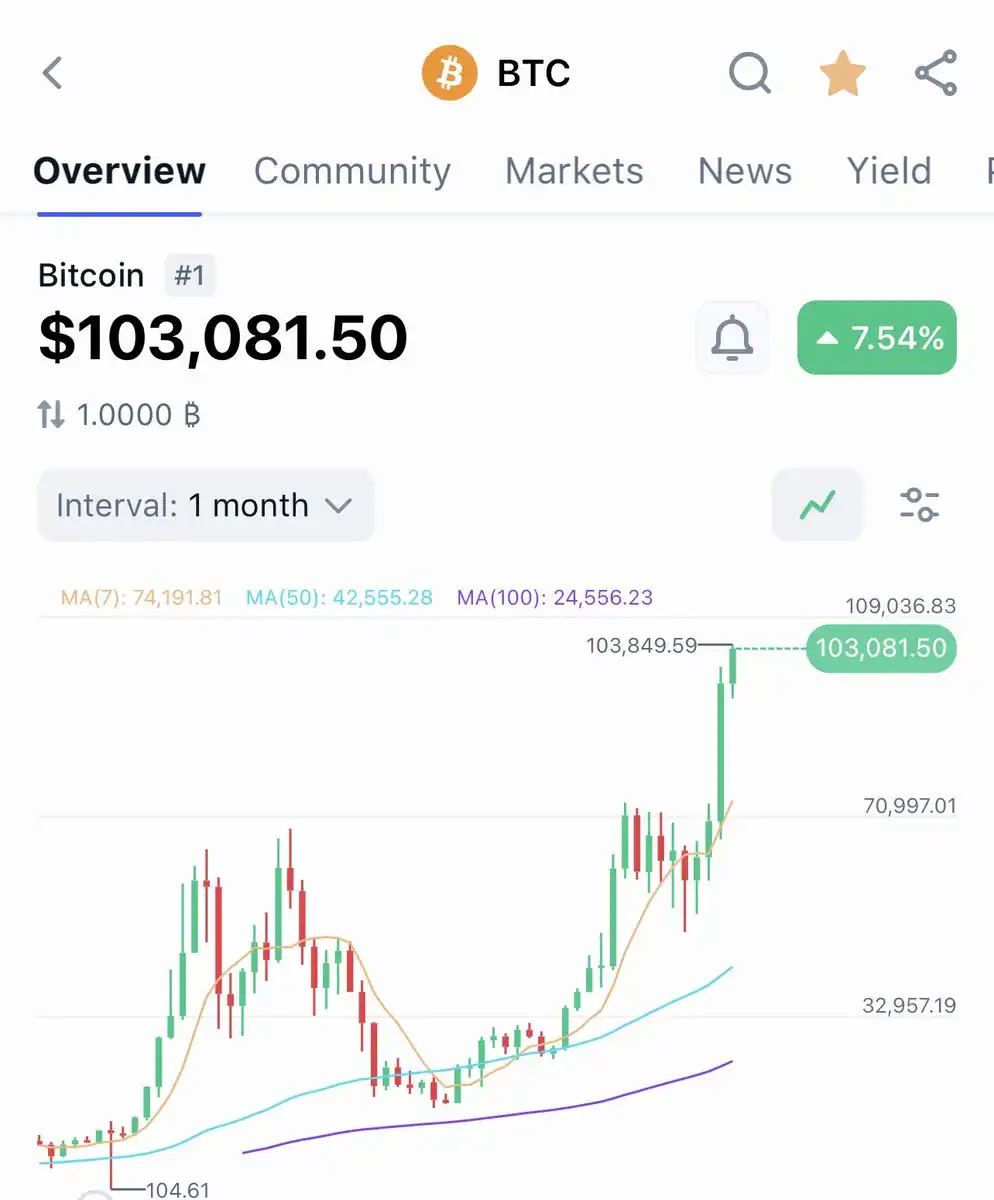
Breaking through $100,000 is a significant psychological barrier for Bitcoin, but I always believe it is just a starting point in Bitcoin's long journey. The breakthrough at $100,000 does not mean that the price will always rise; it is only a phase of the market trend. As a trader, I will not change my trading system due to price fluctuations or market enthusiasm. No matter how excited the market sentiment is, my operations are always based on the rules of the system and established strategies, rather than becoming aggressive or blindly following.
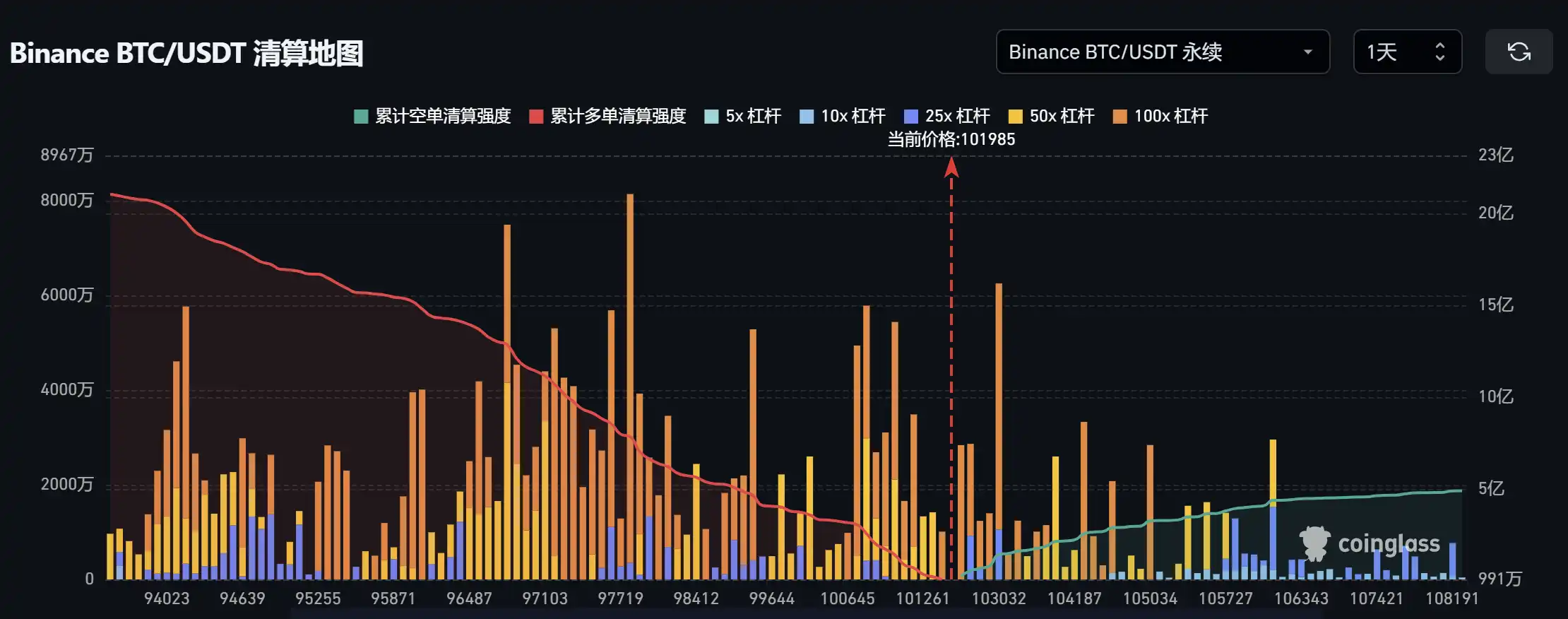
Regarding the concerns of many about "when to sell Bitcoin spot" or "where is the top of this rally," my answer is: trading can only respond to the market, not predict it. I cannot predict where the peak of Bitcoin will be, but I can be clear that when the price approaches the $115,900 area, I will closely monitor the market's order book performance. This is an area where large sell orders are currently concentrated, and it may also be a riskier point. If the price reaches this level, I will decide whether to take profits in batches based on the specific trend. Ultimately, the core of trading is to formulate response strategies based on the actual situation, rather than rely on subjective predictions.
As for the altcoin market, my view is very simple: the arrival of altcoin season often occurs when Bitcoin's price surge stagnates, and the market's hot money has nowhere to go but starts flowing into altcoins. Strong altcoins in this environment may experience doubling or even multiple-fold increases, while weaker coins may see price increases similar to Bitcoin. However, it is important to remember that altcoins are essentially speculative tools, and their purpose has never been long-term holding but rather accumulating more Bitcoin through short-term fluctuations. So, when you see an astonishing price surge in altcoins, do not forget this core objective.
In practical terms, I categorize altcoins into two types for handling. For those coins that have not yet broken through the weekly resistance level, I remain cautious at key points, taking profits in batches of 3% to 5% of the position size to guard against potential significant pullbacks. As for coins that have entered an exponential growth stage, I tend to adopt a passive profit-taking strategy, setting stop-loss levels below the EMA20/50 moving averages. This approach allows me to capture profits from the continuous upward trends without trying to predict the market top and systematically realize gains.
Lastly, I would like to emphasize two points, which are essential principles enabling me to sustain profitability in the market. First, the ultimate goal of trading is to make money and improve one's life, and withdrawals are key to achieving this goal. Whenever the market is hot, there will always be many voices hyping up a certain coin's potential rise to a specific level, but these voices are often emotional outbursts rather than based on rational analysis. Earnings should be cashed out to truly integrate profits into one's life. Second, do not attempt to time the market highs or lows, intentionally or unintentionally. The core of trading is establishing rules and sticking to them rigorously, as market movements often exceed our expectations. As traders, our role is to follow trends, manage risks, and not try to control the market.
Trade Your Trades
Blockbeats: In a bull market, altcoins tend to experience a general uptrend. How do you identify high-quality targets that undergo exponential growth?
Eric: The sector rotation logic in a bull market is that BTC leads the rally, followed by overflow funds driving up large-cap altcoins like Ethereum, and then rotating to small-cap altcoins. In this bull market of 2024, BTC led the rally, with overflow funds flowing into established public chain altcoins like SOL and DOGE, followed by some large-cap coins, and lastly, reaching small-cap coins. Of course, each bull market has different narratives, so each sector rotation slightly varies, but the fundamental logic remains the same. When screening for coins, this is actually a very broad first step. As long as you understand the overall market environment and the fundamentals of the targets, you can proceed. However, what is more critical is how to practically trade based on this target, meaning whether you can execute a trade at a highly cost-effective position. Screening for coins should be part of this step.
In reality, what we are doing now is purely coding. Once the code is written, it is pushed through our quantitative trading system to determine whether a certain asset is worth trading. For example, when was there a large single order entering the order book? This large single order, based on our backtesting data, is analyzed to see if a similar order size in the past has had a significant impact on the price. After filtering through similar logic, only then do I consider making a trade.
For a more recent example, let's take CRV. This asset has been very sluggish in its price action for the past one and a half to two years, even during the uptrend from the end of 2023 to the beginning of 2014, there was hardly any corresponding rebound. However, based on our quantitative data, CRV has had large orders placed by whales. The last time this happened was someone buying in late December 2022, resulting in a 146% price increase. In these scenarios, this asset is highly likely to rise. It's not just CRV; for instance, I have also recently bought SAND and DOT.
I have basically caught all these assets that have experienced exponential growth. It's challenging to manually identify high-potential coins unless you have a very strong research capability. Algorithms, on the other hand, make the process much more manageable and less strenuous compared to manual efforts. Additionally, I have my own community, but it's not a pump-and-dump group. Mainly, we provide standardized quantitative products to assist people in trading. Traditional pump-and-dump schemes are very unstable because everyone's capital and risk preferences vary, potentially leading to a "I win, you lose" situation. Therefore, I believe trading should rely on data, algorithms, and let science dictate the decisions.
Blockbeats: How did you build your trading strategy? Could you provide a few examples?
Eric: Of course. I'd like to start by sharing about the ACT asset. ACT has been particularly hot on any platform, with a significant amount of discussion surrounding it. However, from a trading perspective, you'll find that this asset's profitability and gain effects are not as strong. After its Binance listing, its price action was very choppy, filled with long upper and lower wicks, abnormal fluctuations, or immediate pullbacks after a decline. Although this asset may receive numerous endorsements from key opinion leaders from a fundamental perspective, the profitability of ACT from a trading angle is relatively poor. Due to excessive abnormal movements and the lack of observable patterns, making money with ACT is essentially reliant on luck. While I have also obtained some profits from ACT, this asset is not very friendly to regular traders.
From my own data perspective, I observed large orders placed at 0.61 and 0.53 for ACT. This observation allowed me to earn some profit, but overall, the cost is relatively high and not very friendly to everyday traders. Subsequently, I consulted our team's engineer for their opinion on this asset. Due to the insufficient data timeframe and sample size, testing the effectiveness of studying order book data is definitely less reliable compared to Bitcoin and Ethereum.
However, this year, I managed to catch the Bitcoin bottom through order book data. At that time, between $53,000 and $49,000, there were large orders placed, and utilizing my team's quantitative tools, I managed to buy near the relative bottom.
Then you will find that when the data volume is large enough, when there is enough data, from a quantitative perspective, it is possible to discover some alpha. There are some data tools in the market, such as Coinglass and the like. However, most of these tools have only taken the first step, filtering out the raw data, and mostly provide illustrative value. After filtering the raw data, the practical guidance for actual trading operations is not strong. From the perspective of my personal team, my own quantitative system will conduct statistics, such as how much volume is placed at a certain price level right now, and whether the appearance of this order at this price level in the past has influenced the price trend. It can be simply understood as a filter for the success rate of large orders. You must have a reference similar to it. If the same order has influenced past price movements, then statistically speaking, this time will also have a similar price reaction.
In addition to large orders, my own quantitative system also includes a band filter to determine whether the asset is oversold or overbought.
For example, in the case of ENS. First, based on my own quantitative tool indicators, I found that ENS has experienced overselling on the weekly time frame. In the past, each time the price was oversold, it rebounded by 147%, 56.74%, and 58.59% respectively. During the past bullish market, ENS rose from $9 to $30, so ENS entered my field of view.
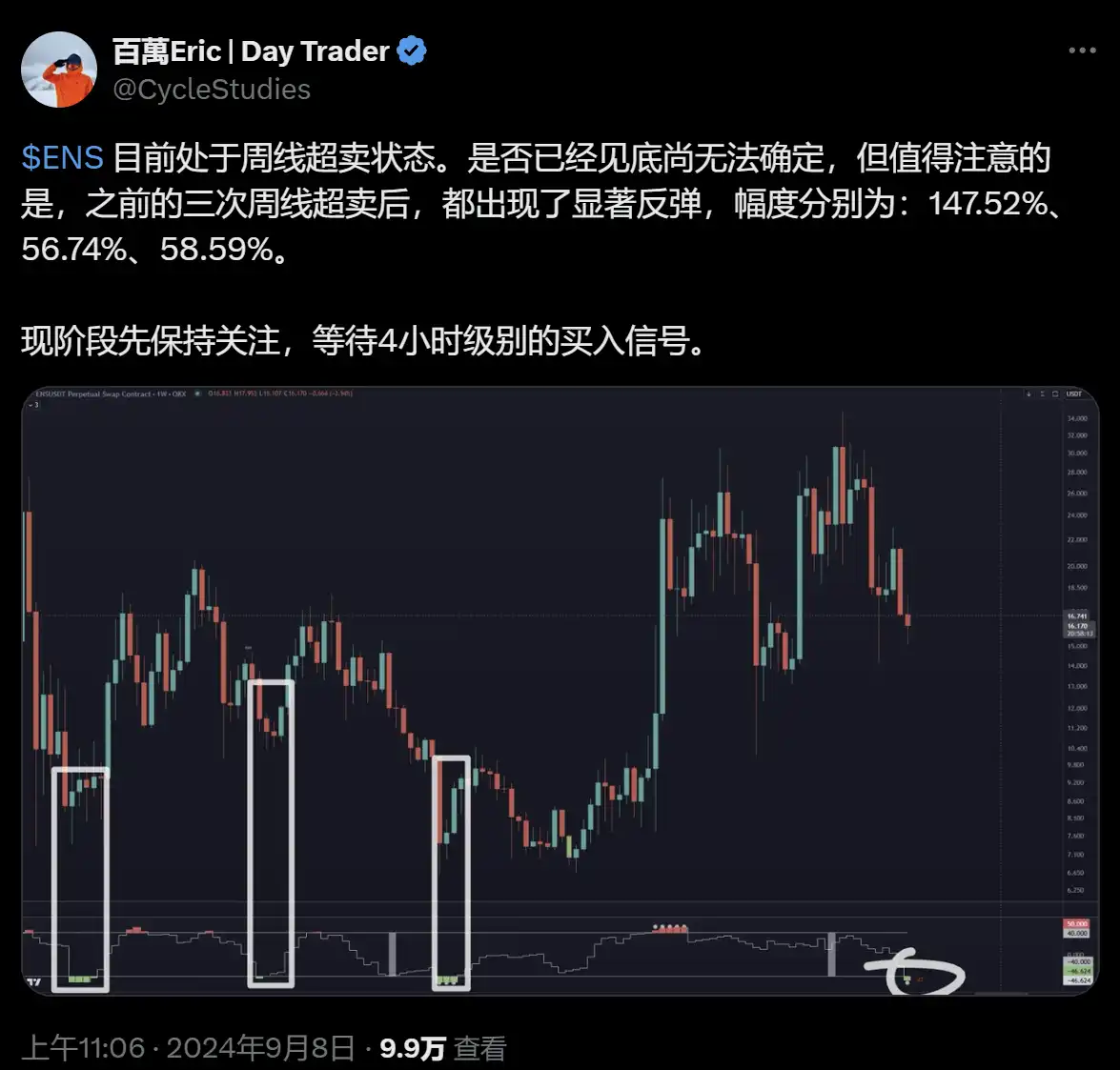
The price movement of ENS in the past has respected my own code logic and quantitative trading system. After 3 rounds of validation, I believe that it will still likely respect this signal indicator this time. I entered the position at around $14 at that time. If a better entry point is needed, or a better buying point, it is necessary to combine a more granular time frame. For example, looking at the 4-hour time frame from the weekly level, and then looking at the 1-hour time frame when the 4-hour time frame is reached. After passing through the layers of the quantitative system's filters, the risk can be adjusted according to the time frame, and it can be continuously reduced based on a fixed logic.
Finally, I will enter based on the real-time order book (buy and sell orders). Even for a very small transaction, every step of the judgment and process that needs to be reached is indispensable. If you trade without your own strategy, you will only contribute to the market's profits. My overall strategy is to diversify investments and then use algorithms to filter out the most explosive assets.
However, sometimes the price may not respect my strategy, for example, the price may spike below the EMA 20 with a 1.5% range. Statistically speaking, this "spike" is completely reasonable, but once the stop loss is triggered, there is nothing that can be done. In such cases, it tests your trading strategy, and then follows the strategy to recalculate the risk and re-enter.
For example, let's take CRV. On October 29, my technical indicators issued a volatility warning signal for CRV across multiple time windows. It is worth noting that the last time a similar-level volatility warning signal appeared was on December 26, 2022, when CRV rapidly rose by 120%, eventually reaching a cumulative increase of 168%. This signal caught my attention, and CRV came into view. Assessing the characteristics of the asset is a key step in strategy execution. Through an analysis of CRV's price movement over the past year, it is evident that it falls into the category of a typical meme coin, exhibiting: 1. Following the market down but not up: weak trend with short-lived rebounds. And 2. Controversial fundamentals: lacks long-term investment value. Therefore, CRV is a type of asset that can only be traded spot and requires participation with a small position (not exceeding 10,000 USDT).
Combining the volatility warning signal with CRV's price movement, I entered the spot market near the previous low (0.25) to improve the risk-reward ratio. Entering at a low-risk position not only reduces potential losses but also provides ample room for upside movement.
Blockbeats: In a bull market, many people are hesitant to buy due to the rapid price increase. What advice do you have for empty-handed investors?
Eric: If you are empty-handed, you need to be patient. First, from a macro perspective, in the cryptocurrency market, opportunities abound because it is a 24-hour capital market unlike the stock market which has holidays and market closures. So, there are plenty of opportunities in this scenario. Therefore, there is no need to FOMO and make impulsive decisions. Do not think that if you missed the opportunity to get in now, there will be no opportunity to join later. Having such a mindset can lead to losses.
Looking back at the bull market in 2027 or 2021, you will notice that the price experienced several 20% to 30% pullbacks during the price surge. From the perspective of not trying to predict the market, you do not know when these pullbacks will occur, but they are bound to happen. Therefore, there is no need to worry about missing out on opportunities.
However, more important than waiting for a pullback "to go all-in" is to have your own trading strategy. This way, you do not need to predict whether a drop will happen. Instead, if a drop occurs, you will have already calculated your entry point, the specific position size, your risk, etc. Having your strategy and system in place is the natural way to go.
This question can also be extrapolated further. I think there are two points: First, if you missed the opportunity to enter and want to make money in this market, the issue is not how far you can see but whether you see clearly. When it comes to seeing the future, I can envision even 1 million. But in a situation where you need clarity, have my strategies materialized? Have I received any signals that lead me to a gaming and high-odds position? If not, please follow your strategy and, like a hunter, wait for the right moment. Second, concerning bull markets, there is a 20-30% retracement. This retracement will actually cause retail investors to lose money faster in a bull market. So, what is a bull market? A bull market is meant to allow prepared individuals to make more money, earn gains without losses, and enable those unprepared to experience gains.
Many people tend to oversimplify a bull market from a linear perspective. It seems like opening one more position will result in additional gains, or buying more coins will lead to more profits. However, the fluctuations in a bull market are often significant, and many people end up experiencing an "account rollercoaster" due to greed or fear.
Therefore, for newcomers with empty hands, it is unnecessary to overly focus on whether it's a bull or bear market. What's more important is to build your own trading strategy that has a statistical edge.
Holding Philosophy
Blockbeats: How do you usually manage your positions in trading?
Eric: Personally, I have four different accounts. I often tell my friends that in trading, "the more pits you step on, the fewer pits you step on in the future," and I believe this after trading. For instance, why do I have four accounts, including a spot account, a contract short-term account, a swing trading account, and an investment account? Typically, after earning from short-term trades, I transfer the profits to the investment account. Then, after making gains in the spot account, I engage in some low-risk position rolling. The swing trading account actually complements the short-term operations. You'll find that having completely separate accounts helps isolate risks. Though occasionally I can get heated, I never hodl a losing position, let alone incurring significant losses due to hodling.
For example, if I run out of positions and need to access funds, I must withdraw a portion from my investment account or transfer a part. However, these accounts are not whitelisted with each other. So, every time I make a transfer, I need to input a verification code and confirm to ensure the process. Through this simple operation, I calm down effectively, preventing losses due to impulsive trades.
Regarding specific positions, I think it varies from person to person because everyone's capital size and risk tolerance are different. With my own capital size, I actually have 40% of my positions untouched, falling under the investment category. While my 40% funds may be much more than most people, the gains from investments may cover some of my expenses. But for other individuals, allocating 40% of their funds to investments may mean missing out on many opportunities, with the returns not yielding much profit.
I believe that for traders with small capital, it's possible to fully utilize all positions. Traders should have a developmental perspective on themselves, shaping themselves into hexagonal warriors of trading. Even if a small-capital trader suffers a full loss, they can make up for it through work or other channels. So, applying the full position gradually builds up step by step and enlarges holdings slowly.
Specifically, in my current spot account, I am fully positioned. I began to build my spot positions in July, August, and September, purchasing in batches. As of today, for instance, for the assets I previously bought in spot like INJ, ENJ, SAND, DOT, and ENS, from the gradual closing in batches, I've closed 5.61% in total. I will patiently wait for opportunities in the remaining time. Simultaneously, risk control is crucial. Each trade's risk should be maintained between 0.5% to 2%, ensuring a statistically significant strategic advantage in the long run.
Blockbeats: How do you usually control your take-profit and stop-loss?
Eric: To explain stop-loss, I will use the example of ENS. I participated in spot trading for ENS, and usually spot trading is not a one-time event. Instead, it involves placing a premise in a large time frame window and then continuously trading on smaller time frames. The core of stop-loss is actually risk control. We need to calculate the entry position and stop-loss position carefully in order to calculate the difference, which can then be used to calculate the risk. Risk is usually considered advantageous statistically when controlled at 0.5%-2%. I often tell my friends around me that before making money, we need to calculate how much we are willing to lose. Only then are we qualified to say how much we want to earn. After we measure the risk properly, what is left is actually handed over to the market, probability, and the market trend.
As for take-profit, the current logic generally involves gradually pushing for a stop-profit. When a certain asset rises to a certain level, I will gradually start taking profits starting at 5%. If there are some large orders in the order book, I will consider and evaluate further. Taking $ENS as an example, when the price enters the expected take-profit area, the correct operation process is to adopt a phased take-profit strategy, taking profits each time the price surges while gradually moving up the stop-loss line to ensure locking in profits. The incorrect operation process is to hesitate and wait, thinking of waiting a little longer to earn more, or even adding to the position against the trend at the expected take-profit position, leading to increased risk. In conclusion, it is important to have your own trading strategy and strictly adhere to it. If you casually add to or reduce your position, it can lead to FOMO and emotional fluctuations, resulting in unnecessary losses due to emotions.
関連記事
AIが仮想通貨トレーダーの市場分析、リスク管理、取引をよりスマートに支援
暗号通貨取引は、もはや良いアイデアを持っているだけで終わりではありません。 データ量と市場のスピードが増すにつれ、従来の手動分析では限界に達しています。 AIは、市場の分析方法、センチメントの解釈方法、リスクの制御方法を変革することで、トレーダーがこれらの限界を超えることを支援します。 この記事では、AIが暗号取引をどのように変革しているか、そしてそれが今日のトレーダーにとってどのような意味を持つかを探っています。

WEEX × LALIGA: 卓越性の基準を共有する7つの星
サッカーの真の卓越性は偶然ではない。 規律と一貫性、そしてプレッシャーの中でシーズンごとに提供する能力の上に成り立っています。 プロのトレードでも同じ原理で、短期的な勢いよりも長期的なパフォーマンスが重要になります。 WEEXは、LALIGAの公式リージョナルパートナーとして、リーグの競争心とグローバルな魅力を体現する7人の傑出した選手にスポットライトを当てています。 それぞれがピッチにユニークなスタイルをもたらし、それでもWEEXの安定性、精度、プロフェッショナルな実行へのコミットメントに密接に合致した価値観を共有しています。 このパートナーシップは、一貫性とコントロールがプレッシャーの下でのパフォーマンスを定義する、共有標準の上に成り立っています。

武漢からシリコンバレーまで、マヌスはわずか9カ月で成し遂げました。
「ラッパー」と呼んでもいいでしょうが、Metaまでくるんでくれました。

WEEXはLALIGAと提携し、グローバル展開の拡大と主流のスポーツ文化へのクリプトの統合を実現
香港、2026年1月1日。 WEEXは、LALIGAの台湾・香港におけるオフィシャルリージョナルパートナーとして、新たにLALIGAとパートナーシップを締結。 この合意により、WEEXはLALIGAの地域協力者のネットワークに加わり、シーズン中にファンとトレーダーの両方と関わる新しい方法の扉が開かれます。
仮想通貨でのAI取引: トレーダーが実際の仮想通貨市場でAIを実際に適用する方法
人工知能は暗号市場での実験を超えた動きを見せています。 2025年、AI主導の取引ツールは、変動の激しい市場において、規律の向上、執行の迅速化、より体系的な意思決定を求めるトレーダーによってますます利用されています。 このガイドでは、実際の取引環境でこれらの戦略がどのように実行されるかに焦点を当てて、AIが暗号取引で実際にどのように使用されているかを順を追って説明します。

マーケットアップデート:12月31日
韓国やOECDが暗号規制やコンプライアンスの枠組みの導入を加速し、TAO ETF、プライバシー技術、マイニング、ビットコイン準備金が同時開発される一方で、セキュリティインシデントや金融損失は増加の一途をたどっており 、 「 強力な規制+技術の進化+リスクの増幅」という複数の課題がある中で、暗号市場は新たな局面を迎えている。

誰もがAI取引を利用する時代、仮想通貨アルファは2026年にどこへ向かうのか?
2025年、AI取引はデフォルトになりましたが、アルファは消えていません。 似たようなデータ、モデル、戦略によって、トレーダーが同期して行動し、優位性を失うため、クラウドによって侵食されています。
リアルアルファは、行動データやオンチェーンデータ、執行品質、リスク管理、人間の判断など、極端な市場において、より良い予測よりも異なる行動を取るか、まったく行動しないかが重要な、コピーしにくいレイヤーにシフトしています。

2026年に「Crypto Winter」が訪れる可能性と進行中の制度化とオンチェーントランスフォーメーションの加速
Key Takeaways 2026年にはBitcoinが長期間にわたる「Crypto Winter」に入る可能性があると指摘されている。 市場は個人投資家よりも機関投資家に支配されており、トークンの価格パフォーマンスとオンチェーンのファンダメンタルズの「乖離」が拡大している。 アメリカの「デジタル資産市場明確化法」の可決は規制の不確実性を減少させ、銀行や資産管理機関のCrypto市場への深い関与を促すと期待されている。 Crypto業界の制度化、コンプライアンスの道筋、オンチェーンのインフラストラクチャーは価格の冷却を背景に徐々に固まってきている。 WEEX Crypto News, 2025-12-30 07:07:58 仮想通貨市場の現状と2026年への展望 BlockBeats Newsによると、Cantor Fitzgeraldは最新の年次報告書で、Bitcoinが数ヶ月にわたる持続的な下降トレンドに入り、2026年には「Crypto Winter」に突入する可能性があると指摘しました。アナリストのBrett Knoblauchは、Bitcoinが最近の高値から約85日間にわたって価格を戻しており、価格がさらなる圧力にさらされる可能性があり、75,000ドル戦略付近での平均コストラインをテストする可能性もあると述べました。…

Caixin: 2026年よりDigital RMB Wallet Balancesが利子を生む
Digital RMBは2026年1月1日から利子を生むプログラムにアップグレード。 銀行運営のデジタル人民元は部分的な準備要件に移行。 非銀行決済機関では100%の準備要件が継続。 銀行はデジタル人民元ウォレットの利益の自主的な管理が可能に。 WEEX Crypto News, 2025-12-30 07:07:58(today’s date,foramt: day, month, year) 2026年1月1日から新たに施行されるデジタル人民元のプログラムは、その重要な変更によって市場で大きな波紋を呼ぶことが予測されている。特に、デジタル人民元が利息を生むようになるという点は、多くの議論を呼び起こしている。この変更は、従来の銀行作業における構造に大きく影響を与えるものである。また、デジタル通貨が持つ経済的なインパクトを再評価するための準備を促すものとなっている。 デジタル人民元の進化と背景 デジタル人民元は、中国による中央銀行デジタル通貨(CBDC)の一環として導入された。最初の試験的導入から数年が経過し、様々な形で一般市民や企業に利用されている。これまでのシステムでは、デジタルウォレットに保持している資金は利子を生まない仕組みだったが、新たな施策により、従来の銀行預金と同等の利子が付くようになる。 この変更により、銀行はデジタル人民元ウォレットの資産負債管理を、従来の銀行預金と同様に自主的に管理することが可能になる。このことは、銀行にとっては多くのチャンスをもたらす一方で、新たなリスク管理の必要性も生じるだろう。…

Key Market Information Discrepancy on December 30th – Essential Insights! | Alpha Morning Report
Key Takeaways MetaがManusを数十億ドルで買収 TRON、時価総額37億ドルで事前取引で2.78%上昇 韓国与党議員、Upbitへの圧力とBithumbの職を息子に確保したとの告発を否定 24時間で2億9900万ドルが全体で清算 WLD Treasury CompanyのEightco Holdingsが1億2500万ドルに上る株式買戻し計画を発表 WEEX Crypto News, 2025-12-30 07:07:58(today’s date,foramt: day, month,…

500回の拒絶の後に実現した、人々が実際に使うプロダクト
キー要点 インフラを構築するだけではなく、消費者向けプロダクトにフォーカスすることが成功の鍵となる。 若者層にターゲットを絞ることが、プロダクトの強いバイラリティと成功に繋がる。 プロダクトは自らがマーケティングツールとなり、シェアしやすい設計が長期的利益をもたらす。 ユーザーからのフィードバックにすぐに対応することで、信頼関係とエンゲージメントが向上する。 WEEX Crypto News, 2025-12-30 07:07:58 暗号通貨業界では、「インフラを構築するべきか」や「技術的複雑さが競争的な強みであるかどうか」といった議論が絶えることはありません。しかし、ここで紹介するのは、インフラへの投資が失敗に終わった後、実際に使われる消費者向け製品を開発することに成功した起業家の逆転のサンプルです。技術的複雑さや壮大な物語とは対照的に、この記事ではユーザー、流通、そして実行の詳細に焦点を当ています。消費者向けの暗号通貨分野において、価値は証明されるものではなく、実際に使用されるものであると言えるでしょう。 若い層に向けたプロダクトデザイン 私は暗号通貨産業に約4年間関わっています。最初は、EVMエコシステムの「アカウント抽象化」というホットな概念に注目しました。一時期は、ほぼすべての人がその周辺のウォレットSDKを開発し、Rollupエコシステムも急速に拡大していました。しかし、私の最大の過ちは、「複雑さ=信頼性」と捉えてしまったことでした。多くのVCが私に「インフラを構築せずに成功することは難しい」と言ったこともありました。 2025年にソラナのエコシステムに進んだとき、ここでの観点はまったく異なっていました。人々は実際の使用ケースに関心を持ち、収益やスピード、流通を重視しています。7ヶ月間のアルファフェーズ中に、1,200万ドル以上の取引を処理した経験から、数々の知見を得ました。 消費者向けのプロダクトを設計する際には、13歳から21歳のように新しいものにオープンな若い世代をターゲットとすることが重要です。2024年のConsumer Technology Associationによる調査によると、Z世代の86%がテクノロジーを生活の必需品と感じており、新技術の導入が早いのです。この傾向は、若いユーザーがアプリを迅速に試しては変更することに積極的であり、製品の広まりを加速させます。 プロダクトをシェアしやすく…

Lighter Founder’s Latest Insights: Token Launch, DeFi Integration, and Future Prospects
Lighterは年内にToken Generation Event(TGE)を完了予定。 ボットアカウントの検出には複雑なアルゴリズムを採用、誤検出された場合はDiscordでの申請が可能。 近日中にモバイルアプリをリリース予定、デジタル及びフィアット通貨のオンボーディングを計画。 規制機関との対話をWashingtonで行い、Robinhoodとのトークン化株式の協業を模索中。 すべての投資家とチームは、Lighterの価値蓄積は株式よりもトークンにあることに同意している。 WEEX Crypto News, 2025-12-30 07:09:36 トークン化と統合の最新動向 Lighterの創業者兼CEO、ヴラディミール・ノヴァコフスキー氏は、Twitter SpaceでのAMAセッションを通じて、同社のトークンローンチに関する最新情報を提供しました。このセッションでは、特に最近のアカウント削除に伴う得点減少や、今後の計画についての詳細が明かされました。Lighterは、年内にToken Generation Event(TGE)を完了することを約束しており、これは多くのCrypto市場参加者にとって大きな注目を集めています。 ノヴァコフスキー氏は、最近の「ボットアカウント」対策に関して、データサイエンス手法を用いてクラスター検出を実施。これにより、正当なアカウントが間違って除外されることがあるという課題に取り組んでいます。誤ってフラグを立てられたユーザーにはDiscordでの異議申し立ての機会が用意されており、これにより公平性を保つ努力が続いています。…

Lighterのエアドロップ完了とトークン取引開始:新しい波の予兆
Key Takeaways Lighterのエアドロップが完了し、LITトークンの取引が間もなく開始される。 コミュニティのフィードバックによれば、ポイントは20LITトークンと交換可能である。 ETHに短期ポジションを持つトレーダーやLITに対するショートポジションを開設する新たな動きが見られる。 LITトークンのレートはプラットフォーム間で大きな差があり、議論の的となっている。 WEEX Crypto News, 2025-12-30 07:09:36 Lighterエアドロップの背景とその影響 Lighterは、12月30日にそのコミュニティにおいて重要なマイルストーンを迎えました。LighterのDiscordの中国コミュニティの管理者は、LITトークンのエアドロップが完了したことを発表しました。これにより、仮想通貨愛好者たちはLITトークンを資産ページで直接確認することができ、別途クレームを行う必要がないとされています。 この発表はトークン経済において重要な一歩を意味しており、多くの参加者がトークンの流通開始を待ち望んでいました。ポイントが20LITトークンと交換可能になり、さまざまな取引戦略や経済活動を促進しています。 エアドロップの重要性 エアドロップとは、ブロックチェーンプロジェクトが自分たちの仮想通貨を無料配布する手法のことで、プロジェクトの露出を高め、新たな利用者を惹きつける手段としてよく利用されます。特に新しいトークンの場合、エアドロップは市場への迅速な参入を支援します。Lighterはこの手法を採用し、コミュニティの成長と活性化を図っています。 ETHおよびLITに対するトレーディング戦略の変化 市場の動向を読み、迅速な戦略変更で成功を収めるトレーダーたちが、現在の仮想通貨市場で動きを見せています。特に注目されるのが、ETHやLITに対するショートポジションです。…

The Eve of a Fed Pivot: Wall Street Prepares for a Rate Battle Without ‘Powell’
Key Takeaways 市場は将来のFedの方針の変化に備えているが、今のところ大きな懸念は見られない。 トランプ元大統領は、次のFed議長を任命する意向を示しており、金融緩和を求めている。 Fedの独立性の喪失は経済と市場に重大なリスクをもたらす可能性がある。 あらゆる変化が市場に与える影響を巡る不確実性は依然としてあるが、株式市場は冷静さを保っている。 WEEX Crypto News, 2025-12-30 07:09:37 将来のFedの見通し トランプ元大統領が次のFederal Reserve(Fed)の議長を任命する可能性が市場を賑わせています。彼はすでに、金融緩和を支持する議長を望んでいると公言し、彼の議題を後押しすることを期待していると言われています。しかし、これが市場の独立性にどう影響するのかは依然として不明です。 投資家は、Fedの可能性のある変化による混乱に備えています。特に、議長が変わることで新たな政策方針が示されるかもしれません。市場がどのように反応するのかを慎重に見極める必要があります。この変化がどのように実現し、どのような影響を及ぼすのか、以下で詳しく説明します。 市場への脅威 専門家の中には、Fedの独立性が揺らぐような事態は経済および市場にとって大きなリスクであると警鐘を鳴らしている人もいます。短期金利を制御しているFedですが、アメリカの借入コストは長期米国債の利回りによって大きく影響を受けます。 たとえば、Fedが経済がまだ順調な時期に積極的に利下げを行った場合、インフレや高金利の懸念が生じ、利回りが逆に上昇し、借入コストが増加する可能性があります。結果として、株式市場に悪影響を及ぼすことがあります。…

UNI Burn Arbitrage OpportunityとOndoのトークン化株式の流動性論争: 海外クリプトコミュニティでの今日の話題
UNIのトークンバーナビトラージの機会が注目され、利益を得ることが可能となった。 Ondo Financeのトークン化された株式の流動性に関する議論が活発化しており、オフチェーン市場メーカーの役割が指摘されている。 ソラナの注文流とMEV構造に関する議論が加熱し、エコシステムの成熟が進む。 イーサリアムは機関投資家の関与とAIの利用が進行中、Perp DEX分野では競争が激化している。 WEEX Crypto News, 2025-12-30 07:09:36 仮想通貨市場はここ最近、マクロサイクルの議論から特定のプロトコル競争へと複雑に進化しています。2026年に向けた市場予測に関する議論は特に活発で、規制の遵守、機関投資家の参加、価値捕捉の重要性が強調されています。また、ソラナやイーサリアム、Perp DEXの競争環境の変化がエコシステムの発展にも影響を与えています。 マクロ的観点から見た2026年の市場予測 2025年が終わりに近づく中、暗号通貨コミュニティでは2026年の市場予測に関する激しい議論が交わされています。著名な人物たちはそれぞれの視点を共有し、マクロトレンド、DeFi、ステーブルコイン、規制、そしてAIに焦点を当てています。 Haseeb氏は、2026年にBTCが15万ドルを超えると予測しつつ、BTCの支配力は低下するとしています。しかし、この意見に対して@MemeIndexerは強く反対しており、流動性の細分化、TradFiのスプレッドの低さ、DeFiの決済スピードの遅さがその実現を妨げると指摘しています。 一方、@Moshaikhは、現在の暗号市場で最も過小評価されている資産は「ラボ」(製品とインフラのチーム)であるとし、金融機関によって買収されると予測しています。その結果、暗号企業がフィンテックユーザーを捕捉し、S&P 500のフィンテック企業がオンチェーントラックを通じて勝利するか、さもなくば周縁化されると指摘しています。…

6週間で3人の監査人が交代したTrump関連のAlt5 Sigma、財政危機に直面
Key Takeaways Alt5 Sigmaは、わずか6週間で監査人を3回も変更し、財務報告の混乱とNasdaqからの上場廃止のリスクに直面しています。 Trumpファミリーと関係のあるAlt5 Sigmaは、監査人Victor Mokuolu CPA PLLCの監査ライセンスが期限切れであることが明らかになり、監査報告の遅延が続いています。 Alt5 Sigmaの高級幹部が最近相次いで退職し、会社の不安定な状況を一層悪化させています。 Alt5 Sigmaは、WLFIトークンに多額を投資し、そのポストトランザクションでの混乱は経営陣の大幅な変動と財務報告の遅れによって悪化しています。 WEEX Crypto News, 2025-12-30 07:11:36(today’s…

Announcement: The Fed to Release Monetary Policy Minutes Amid Market Speculation
Key Takeaways The Federal Reserve is set to release the minutes of its latest monetary policy meeting, a…

Yield Farming at 86% APY? ポリマーケットで「眠りながら稼ぐ」ためのボット活用法
ポリマーケットでは効率性のギャップが存在し、ボットを活用することで高収益を目指すことが可能。 ボットの設計は過去の手動戦略を自動化し、効率を最大化するために構築。 ビットコインの15分ごとの市場動向をモニタリングし、クイック反応で取引を行う。 自動モードは2ステップのループを実施、適切なタイミングでの購入とヘッジを行う。 ボットの効果を確認するためのバックテストが必須で、安定収益の確保が可能。 WEEX Crypto News, 2025-12-30 07:11:37(today’s date,foramt: day, month, year) ポリマーケットでのボット活用のきっかけ ポリマーケットの利点のひとつは、その効率性にあると言えます。数週間前に、これを最大限に活用するため、自分だけのボットを構築する決意をしました。最終バージョンの完成までには数週間を要しました。なぜなら、ポリマーケットには明らかに効率性のギャップが存在しているからです。このようなギャップをすでに利用している一部のボットもありますが、それでもまだ十分ではありません。市場での機会は利用可能なボットの数をはるかに上回っているのです。 ボット構築の原理 ボットのロジックは、過去に手動で実行してきた一連の戦略に基づいています。それらを自動化することで、効率を向上させようとしています。ボットは「BTC…
AIが仮想通貨トレーダーの市場分析、リスク管理、取引をよりスマートに支援
暗号通貨取引は、もはや良いアイデアを持っているだけで終わりではありません。 データ量と市場のスピードが増すにつれ、従来の手動分析では限界に達しています。 AIは、市場の分析方法、センチメントの解釈方法、リスクの制御方法を変革することで、トレーダーがこれらの限界を超えることを支援します。 この記事では、AIが暗号取引をどのように変革しているか、そしてそれが今日のトレーダーにとってどのような意味を持つかを探っています。
WEEX × LALIGA: 卓越性の基準を共有する7つの星
サッカーの真の卓越性は偶然ではない。 規律と一貫性、そしてプレッシャーの中でシーズンごとに提供する能力の上に成り立っています。 プロのトレードでも同じ原理で、短期的な勢いよりも長期的なパフォーマンスが重要になります。 WEEXは、LALIGAの公式リージョナルパートナーとして、リーグの競争心とグローバルな魅力を体現する7人の傑出した選手にスポットライトを当てています。 それぞれがピッチにユニークなスタイルをもたらし、それでもWEEXの安定性、精度、プロフェッショナルな実行へのコミットメントに密接に合致した価値観を共有しています。 このパートナーシップは、一貫性とコントロールがプレッシャーの下でのパフォーマンスを定義する、共有標準の上に成り立っています。
武漢からシリコンバレーまで、マヌスはわずか9カ月で成し遂げました。
「ラッパー」と呼んでもいいでしょうが、Metaまでくるんでくれました。
WEEXはLALIGAと提携し、グローバル展開の拡大と主流のスポーツ文化へのクリプトの統合を実現
香港、2026年1月1日。 WEEXは、LALIGAの台湾・香港におけるオフィシャルリージョナルパートナーとして、新たにLALIGAとパートナーシップを締結。 この合意により、WEEXはLALIGAの地域協力者のネットワークに加わり、シーズン中にファンとトレーダーの両方と関わる新しい方法の扉が開かれます。
仮想通貨でのAI取引: トレーダーが実際の仮想通貨市場でAIを実際に適用する方法
人工知能は暗号市場での実験を超えた動きを見せています。 2025年、AI主導の取引ツールは、変動の激しい市場において、規律の向上、執行の迅速化、より体系的な意思決定を求めるトレーダーによってますます利用されています。 このガイドでは、実際の取引環境でこれらの戦略がどのように実行されるかに焦点を当てて、AIが暗号取引で実際にどのように使用されているかを順を追って説明します。
マーケットアップデート:12月31日
韓国やOECDが暗号規制やコンプライアンスの枠組みの導入を加速し、TAO ETF、プライバシー技術、マイニング、ビットコイン準備金が同時開発される一方で、セキュリティインシデントや金融損失は増加の一途をたどっており 、 「 強力な規制+技術の進化+リスクの増幅」という複数の課題がある中で、暗号市場は新たな局面を迎えている。


 App
App