

Meteora TGE Imminent: What Is the Fair Value of MET?

Original Article Title: Meteora's TGE: What is fair value for MET?
Original Article Authors: Luke Leasure & Carlos
Original Article Translators: AididiaoJP, Foresight News
This week, Meteora is about to launch its MET token: where could its fair value be?
Index
The week started strong, with BTC rising 7% from last Friday's low. During Monday's trading session, the Launchpad sector performed the best, while the AI sector saw the biggest decline, reversing their relative strength and weakness shown over the past week.
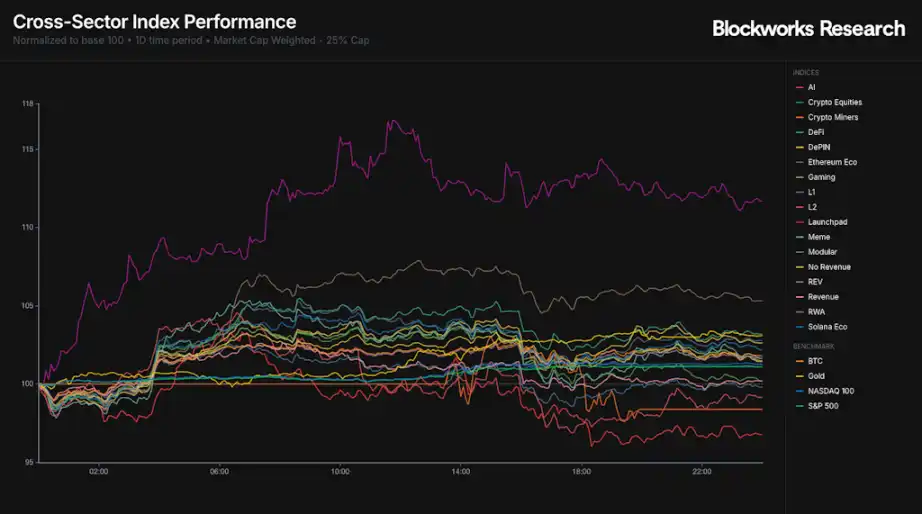
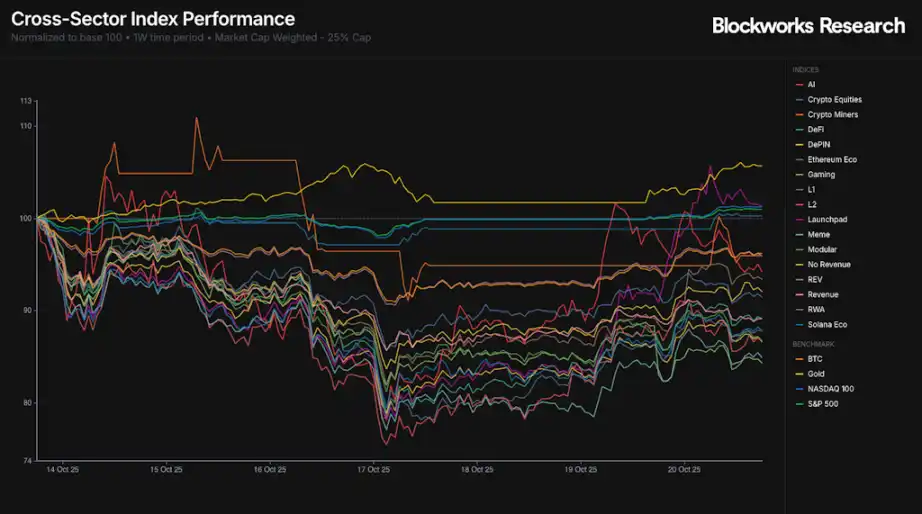
Looking at the weekly chart, the recent strength of the Launchpad sector has made it a relative winner, second only to gold, which once again approached its historical high by Monday's close. Overall, most indices remain negative on a weekly basis after the historic liquidation event. Within the Launchpad index, the BSC-based Launchpad project AUCTION was the only asset showing a positive return on the weekly chart, rising by 46%.
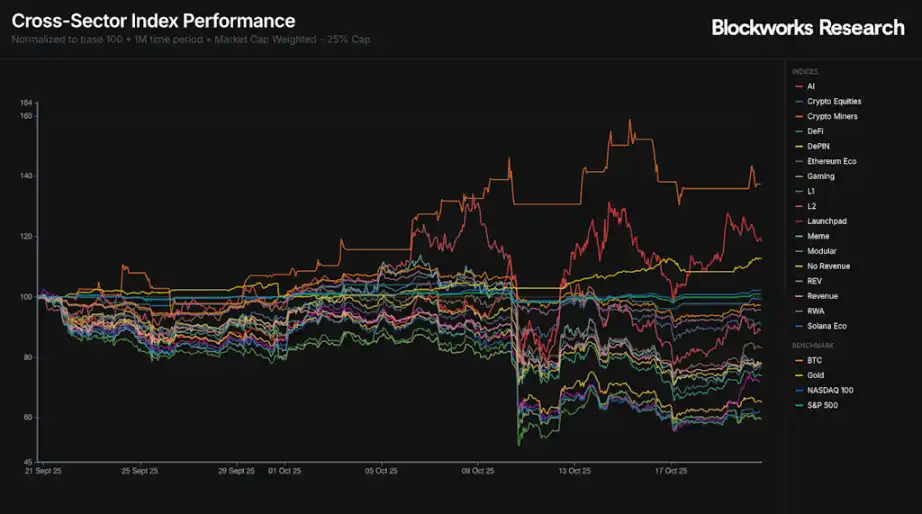
While there is some short-term upside, the monthly chart shows that almost all cryptocurrency indices have been falling over the past 30 days. The October 10 liquidation event resulted in widespread weakness, with only gold, cryptocurrency miners, AI, and stock indices performing strongly.
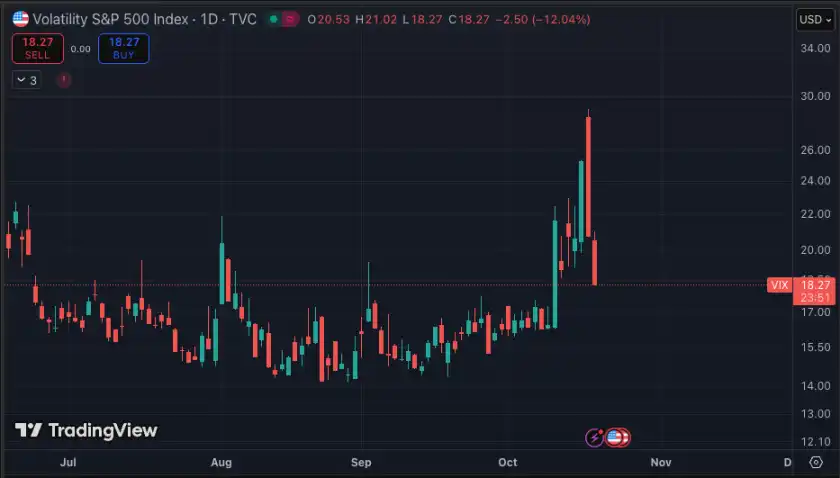
The VIX index has significantly retreated, rising to 29 on Friday morning and now falling to 18. The S&P 500 index and the Nasdaq index both rose during Monday's trading session, coming close to historical highs in the closing price.
Market Update
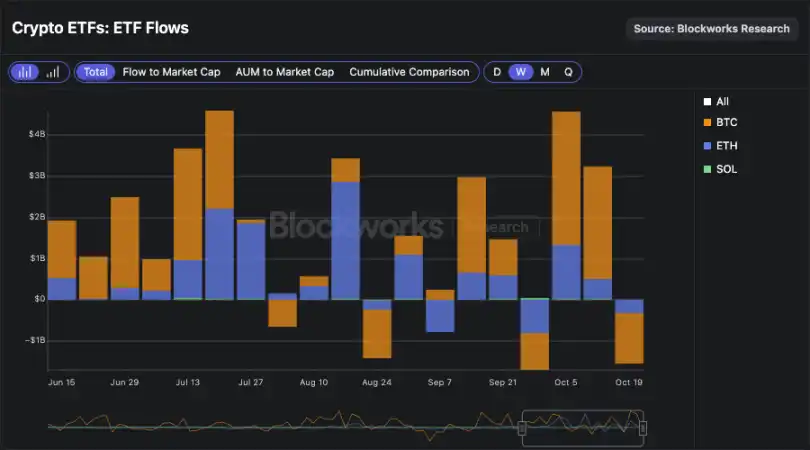
ETF fund flows remain subdued and negative. Monday's data shows BTC ETF outflows of $40 million, ETH ETF outflows of $145 million, and a $27 million inflow into SOL ETF. Looking at the weekly data, the total net outflows from ETFs last week amounted to $1.5 billion, reversing some of the funds accumulated at the strong start of October. SOL ETF is the only product showing net inflows, increasing by $14 million.
In DATCOs, BMNR is far ahead. The entity currently holds 3,236,014 ETH, surpassing the total held by all other ETH DATCOs, representing 2.67% of the total ETH supply. It is worth noting that since the end of August, BMNR has continuously increased its ETH holdings by nearly 70%, while the holdings of most other ETH DATCOs have remained stable. During this process, BMNR's market share of ETH held by DATCOs has grown from 50% to close to 65%.
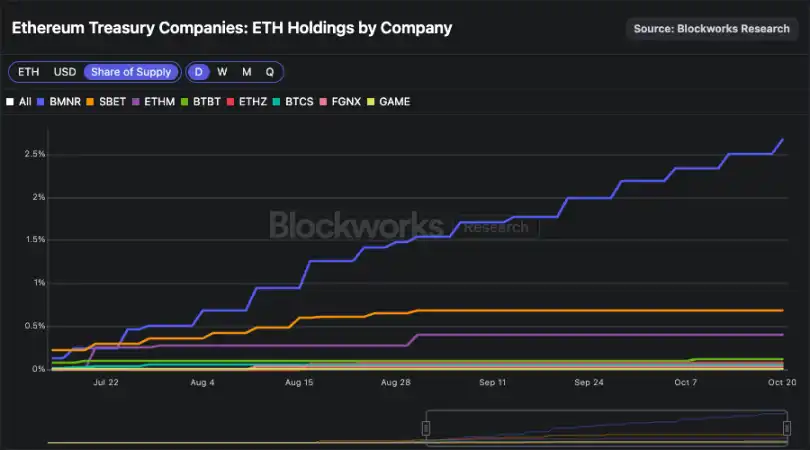
This situation is also reflected in the trading volume of ETH DATCOs. BMNR accounts for 60-85% of ETH DATCOs' trading volume, making its stock the most liquid. This liquidity feature has attracted significant allocators to the entity and reduced the marginal impact of ATM issuance on price. BMNR seems to be the clear winner in the ETH treasury company space.
In SOL DATCOs, the situation is less clear. FORD remains the largest holder, with almost all of its scale obtained through PIPE issuance earnings. Despite authorizing a $40 billion ATM issuance plan, the entity has not significantly increased its holdings through ATM issuance.
Growth in holdings remains soft, with HSDT recently rising to the second position.
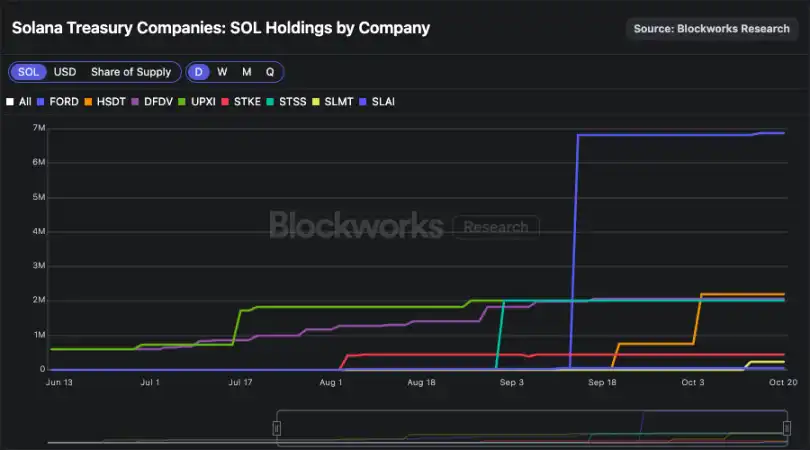
The trading volume of SOL DATCOs also tells a similar story. While DFDV once dominated much of the trading volume in this space, the situation has now shifted to a more even distribution among top names. Although FORD holds around 43% of the SOL held by DATCOs, it accounts for only about 10% of the trading volume in this space, indicating a relatively low turnover rate of its stock. These data may well explain why there is very little SOL accumulated through ATM issuance by FORD.
While BMNR is emerging as the clear winner in the ETH space, the leader in the SOL space may still be undecided. Over the next month, it is expected that trading volume will increasingly concentrate on top companies.
Meteora's TGE: What Is the Fair Value of MET?
The highly anticipated Meteora TGE will take place on Thursday, October 23. Unlike recent projects following the ICO trend, Meteora will not conduct any fundraising before the TGE. Instead, it will airdrop to eligible recipients, including Mercurial stakeholders, Meteora liquidity providers, JUP stakers, and Launchpad partners. Airdrop recipients will receive unlocked MET by default, or they can choose to provide liquidity at launch to earn trading fees.
Meteora was launched by the Solana ecosystem's largest DEX aggregator and perpetual contract trading platform Jupiter team in February 2023. Upon Meteora's launch, the protocol's previous iteration, Mercurial Finance, was sunsetted. The decision to close Mercurial and its governance token was made due to a significant amount of MER being involved with FTX/Alameda, leading the team to decide that the best course of action was to rebuild the platform using a new token.
Back in 2023, the team announced that 20% of the MET tokens would be distributed to Mercurial stakeholders at the TGE. As shown below, the team has honored the initial commitment, with 15% allocated to Mercurial stakeholders and 5% allocated to the Mercurial reserve. Additionally, the DEX has been running a rewards program since January 31, 2024, distributing a total of 15% of MET to the program. At launch, 48% of the MET supply will be in circulation, which is a high circulating supply ratio compared to other prominent tokens in the Solana ecosystem.
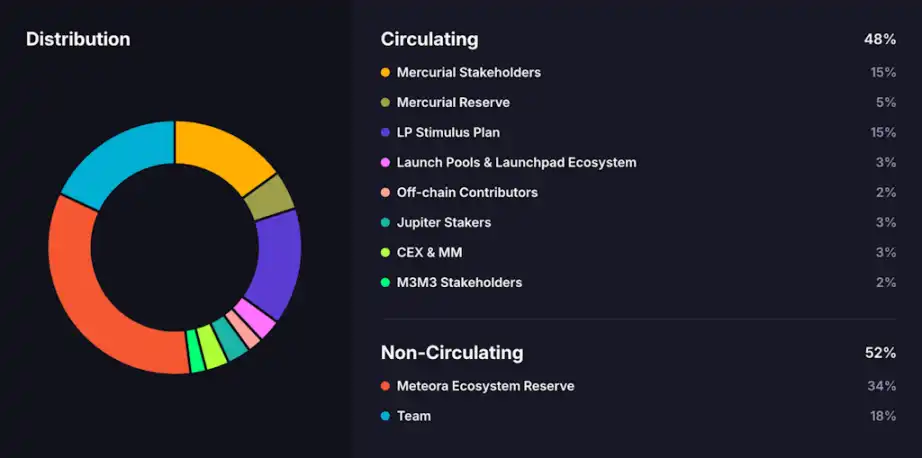
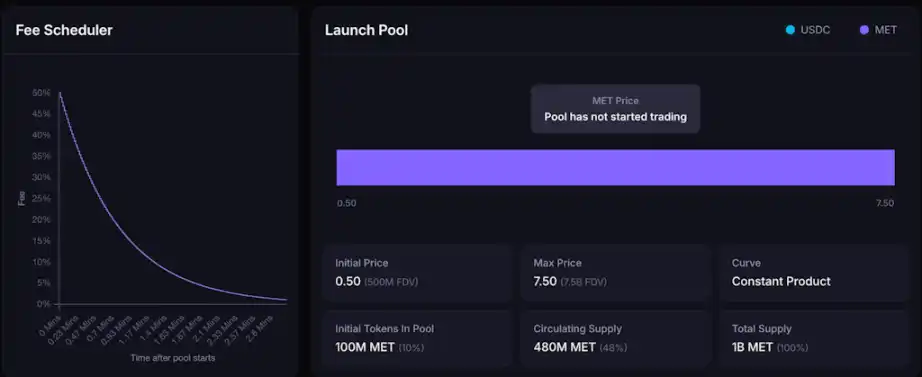
As mentioned earlier, 10% of the total supply will be used to seed initial liquidity through a dynamic AMM pool, with a starting price of $0.5 and liquidity distribution up to a $7.5 billion valuation. The early liquidity pool is one-sided, with early buyers exchanging their USDC for MET. It is important to note that the pool fees start high and sharply decrease over time through a fee schedule.
Valuation Calculation
DEXs, especially on Solana, lack significant moats as they do not have a front end. A prime example of this dynamic is when Raydium suffered significant trading volume and revenue losses after PumpSwap decided to route graduated tokens to its own AMM. Meteora aims to address this issue by vertical integration, expanding its distribution capabilities through Jupiter and selected Launchpad partners.
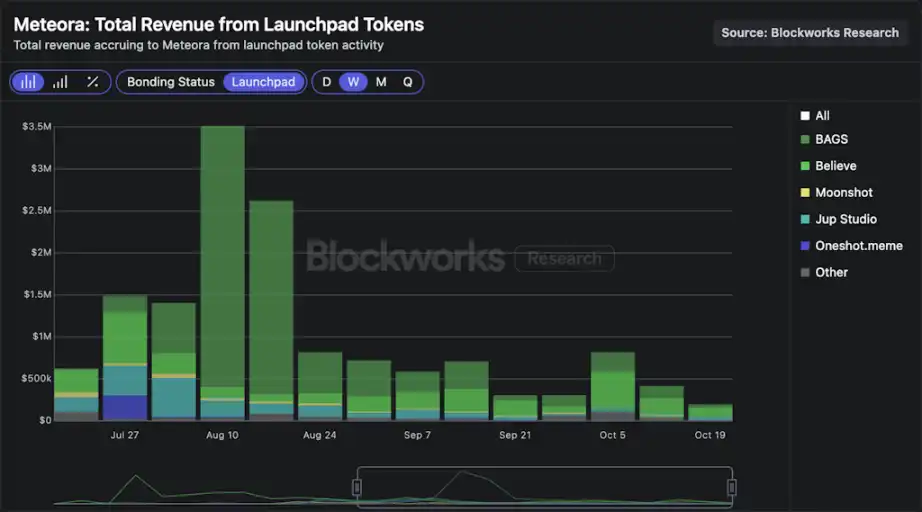
As mentioned earlier, this DEX collaborates closely with the Jupiter team, with Jupiter having become a popular gateway for retail users to conduct on-chain transactions. Additionally, in August 2024, Meteora partnered with Moonshot to launch a Launchpad and over time introduced new partners, including Believe, BAGS, and Jup Studio. The chart below shows that in recent weeks, Launchpad activities have contributed weekly revenues ranging from $200,000 to $800,000 to Meteora, with the majority of the traffic coming from Believe and BAGS.
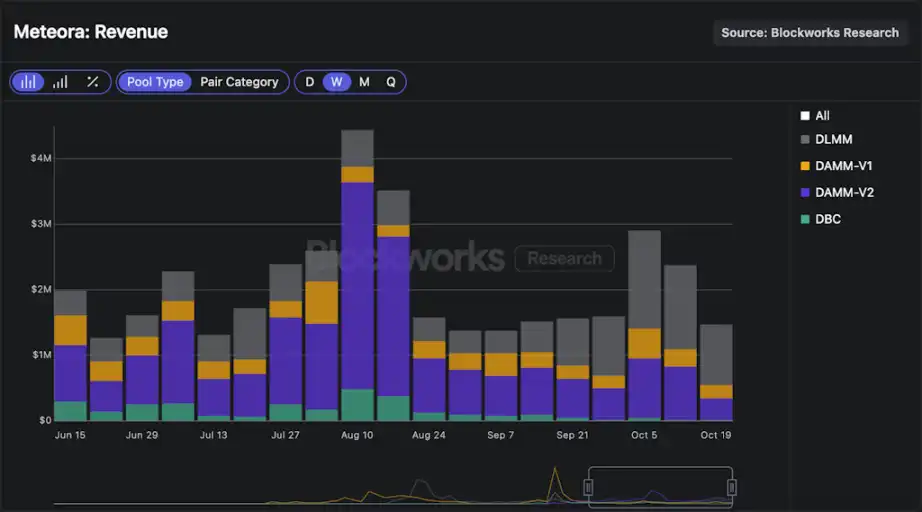
Looking at the overall financial data, Meteora generated $8.8 million in revenue over the past 30 days from all its liquidity pools, maintaining a weekly revenue close to $1.5 million even during periods of relatively low on-chain activity. It is noteworthy that over 90% of Meteora's revenue comes from Memecoin pools, which typically have higher fee levels compared to SOL-stablecoin, project token, LST, and stablecoin-stablecoin pools.
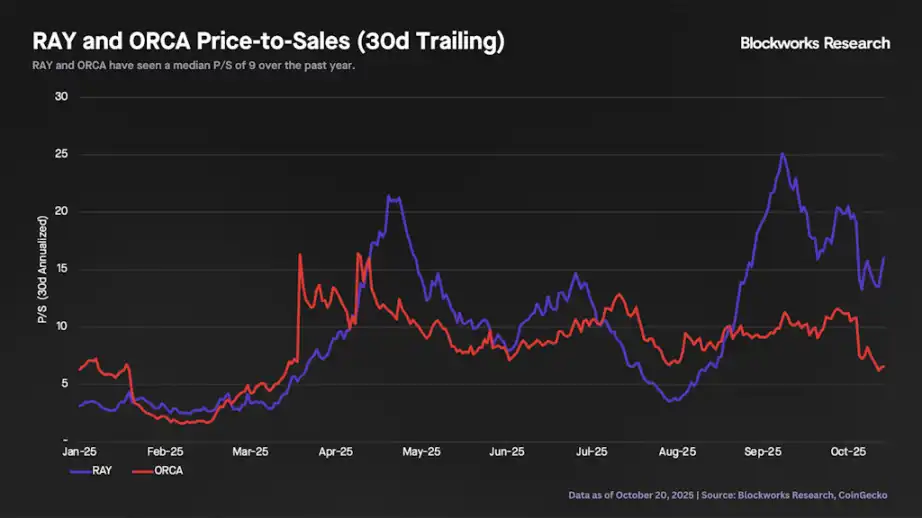
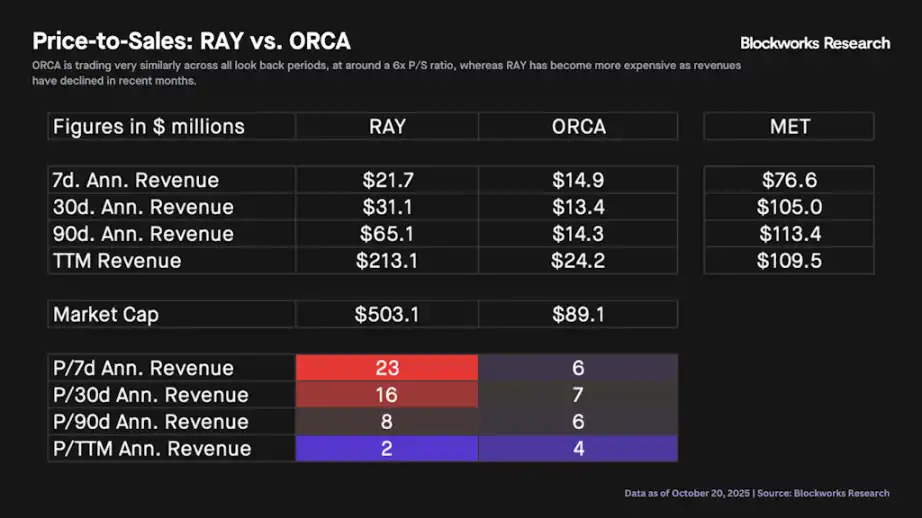
Regarding valuation, we can consider Raydium and Orca as comparable companies. The chart below shows the Price-to-Sales ratios of RAY and ORCA year-to-date based on 30-day annualized data. We observe that until September, the pricing ratios of these two assets were relatively similar, after which RAY began trading at a premium. Taking a broader view, the median Price-to-Sales ratio for these two assets in 2025 is 9x.
The table below compares the Price-to-Sales ratios of RAY and ORCA over various lookback periods. We notice that ORCA's trading behavior across all annualized time frames is very consistent, with a Price-to-Sales ratio of around 6x. On the other hand, as revenue declines, RAY has become more expensive over the past few months. For Meteora, we see its annualized revenue ranging from around $75 million to around $115 million based on the lookback period.
Finally, the chart below illustrates the potential valuation of MET across different revenue and Price-to-Sales ratio ranges. Based on the historical pricing behavior of RAY and ORCA, a Price-to-Sales ratio between 6x and 10x is the most likely. Therefore, it can be reasonably expected that post-launch, MET's trading valuation would fall between $4.5 billion and $11 billion. Please note that based on the numbers below, a valuation exceeding $10 billion starts to seem somewhat expensive relative to comparable companies, and a valuation surpassing $20 billion would almost certainly indicate MET is overvalued unless it can improve its revenue operating rate.
関連記事

BlockchainはQuantumの脅威に備える中、Bitcoinはその対応を議論
Key Takeaways Altcoinブロックチェーンが量子の脅威に備えている一方で、Bitcoinコミュニティでは対応の方法とタイミングについて意見が分かれている。 QuantumコンピュータがまだBitcoinを破ることはできないが、将来的に可能性があるため、さまざまなブロックチェーンが準備を進めている。 EthereumのVitalik ButerinはQuantumコンピュータの脅威をエンジニアリングの問題として捉える重要性について説明している。 SolanaとAptosは、量子耐性を持つ取引や署名のサポートをテストまたは提案している。 Bitcoinにおける議論は信頼に関するものであり、多くの論者がリスクの過小評価を懸念している。 WEEX Crypto News, 2025-12-26 10:10:43 ブロックチェーンが静かに進める量子コンピューティングへの備え 今、量子コンピュータはBitcoinを破ることはできませんが、近い将来これが現実となるかもしれません。こうした背景から、複数のブロックチェーンは量子コンピューティングに対する備えを進めています。最近の動向を見ても、Aptosは量子耐性を持つ署名のサポートを提案し、Solanaは量子耐性のある取引のテストを行っています。一方で、Bitcoinのコミュニティでは、量子安全性を高めるための対応策について活発な意見交換が行われています。 これらの動きは、暗号資産界隈の不安感を示しています。投資家たちは、影響力のある声が量子のリスクを軽視することで、Bitcoinの価格が下がっていると主張しています。実際、Bitcoinの価格は過去3ヵ月で24%下落しました。しかし、Altcoinブロックチェーンがオプトインのアップグレードやテストネットを通じて量子耐性を実験している中で、Bitcoinは公開的にどのように、そしてどれほど緊急に量子リスクに対処すべきかについて分裂しています。 アラームを鳴らさずに進める量子コンピューティングの備え Ethereumは、量子コンピュータの影響を現実的なエンジニアリングの問題とみなす理由を明確にしています。Ethereumの共同創設者であるVitalik…

ブロックチェーンの未来と量子コンピューティングの脅威に直面してBitcoinが抱える課題
長期的な量子コンピュータの脅威に備えるため、多くのブロックチェーンが新たな対策を検討中。 Ethereumの共同創設者、Vitalik Buterinが量子コンピューティングを差し迫った技術問題として捉える重要性を強調。 Bitcoinは量子リスクに対する対応方法についてコミュニティ内で意見が分かれている。 理論上では現行の公開鍵暗号が量子コンピュータに解読される可能性が懸念されている。 投資家は量子リスクを無視することがビットコインの価値に影響を与える可能性があると考えている。 WEEX Crypto News, 2025-12-26 10:15:08 量子コンピューティング技術の進展は、現在の暗号通貨市場に新たな懸念をもたらしています。この技術が公開鍵暗号を解読するようになったとき、大規模なパニックを引き起こす可能性があります。特にBitcoinは、量子リスクについてどのように対応すべきかについて長い間議論されてきました。 Ethereumと他のブロックチェーンの準備 Ethereumは、量子コンピューティングを仮説ではなく技術的課題として捉える必要性を早い段階で認識しました。Ethereumの共同創設者、Vitalik Buterinは、たとえその確率が低くとも、量子コンピュータが公開鍵暗号を解読可能になる前に準備を始めることの重要性を主張しています。予測モデルによれば、2030年までにその可能性は約20%とされていますが、2040年までにはより現実的なものになるとの見方もあります。 他の主要なブロックチェーンもこれに追随しています。Aptosは、量子耐性のある署名サポートをアカウントレベルで追加することを提案し、SolanaはプロジェクトElevenと提携し、量子耐性のある署名をテストする専用テストネットを展開しました。このような取り組みは、将来的な機能拡張に向けた基盤作りを目的とし、今すぐの脅威ではないことを強調しています。 Bitcoinにおける量子リスクに関する議論 Bitcoinにおける量子リスクの議論は、実際には信頼の問題に集約されます。Bitcoinは楕円曲線暗号に基づいており、これは公開鍵を通じて資金の所有権を証明します。しかし、量子コンピュータがこれを逆算してプライベートキーを見つけ出せるとなると、資金が不正に動かされる可能性があります。…

Canton CoinがDTCCのトークン化された財務計画によって急騰
Key Takeaways: Deposit Trust & Clearing Corporation(DTCC)が米国財務証券のトークン化計画を発表し、Canton Coinが過去1週間で27%上昇しました。 Canton Networkは、金融機関がトークン化された実世界資産を発行・決済するために設計された許可制ブロックチェーンです。 実世界資産のトークン化は、取引コストの削減、決済時間の短縮、24時間取引を可能にするなどの利点があります。 2025年には米国財務証券のトークン化が重要な成長分野として浮上しており、特にBlackRockやOndo Financeなどがこの分野で活動しています。 WEEX Crypto News, 2025-12-26 10:16:49(today’s…

ブロックチェーンは量子の脅威に備える一方、Bitcoinはタイムラインを巡り議論中
Key Takeaways Altcoinブロックチェーンは量子コンピュータによる長期的なリスクに備えているが、Bitcoinのコミュニティ内では対応のタイミングと方法について意見が分かれている。 Ethereumの共同創設者であるVitalik Buterinは、量子コンピュータの脅威を真剣に受け止め、早期の対策を提案している。 AptosとSolanaは、量子耐性をテストすることで将来的なリスクに備えている。 Bitcoinの量子コンピュータに関する議論は、資産価値の長期的な信頼性の問題と直接関連している。 WEEX Crypto News, 2025-12-26 10:17:14 量子コンピュータはまだBitcoinを破ることはできませんが、いくつかの主要なブロックチェーンは、将来その可能性があると考えて準備を進めています。先週発表されたAptosの提案では、アカウントレベルでのポスト量子署名のサポートを求め、Solanaは量子耐性トランザクションをテストしています。 これらの動きは、暗号通貨界隈に広がる不安を反映しており、影響力のある声の警告無視がBitcoinの価格に影響を及ぼしていると指摘する投資家もいます。実際、過去3ヶ月でBitcoinの価格は24%下落しています。 ブロックチェーンが警報を鳴らさずに備えている方法 量子コンピューティングがエンジニアリングの問題と見なされる今、Ethereumはその立場を明確にしています。Ethereumの共同創設者、Vitalik Buterinは、失敗の代価が高い場合には、低確率の結果でも早期に準備する必要があると力説しています。 彼は予測モデルを引用し、今日の公開鍵暗号を破る能力を持つ量子コンピュータが2030年までに出現する確率は約20%で、中央値の予測は2040年に近いと述べています。ただし、今のところBitcoinやEthereumを破る機械自体は存在せず、確実性を待つこと自体がリスクであると言います。…

Blockchainが量子脅威に備える中、Bitcoinのタイムラインに関する議論が展開
Key Takeaways 多くの暗号技術者が量子コンピュータによる脅威を将来的なリスクとみなし、EthereumやSolanaなどのBlockchainが既に対策を進めている。 Bitcoin内では、このリスクに対応するべきかという議論が続いており、量子耐性のない現状に対する意見が分かれている。 Ethereumの共同創設者であるVitalik Buterinは、量子コンピュータが公に鍵暗号を破る前に早期対応が必要だとする見解を示している。 投資家たちは、量子コンピュータに対するリスクの軽視がBitcoinの価格に悪影響を与えていると考えている。 Bitcoinコミュニティ内では、量子耐性の必要性についての議論が提案を活性化させ、長期的な信頼性をどう保つかという視点が重要視されている。 WEEX Crypto News, 2025-12-24 15:43:20 量子コンピュータの脅威とは? 量子コンピュータ技術の進化は、現在の多くの暗号方式を脅かす可能性がある。具体的には、Shorのアルゴリズムを活用することで、量子コンピュータは従来のコンピュータよりも効率的に楕円曲線暗号を破ることができるとされている。この問題が顕在化すると、ブロックチェーンのトランザクションの安全性やユーザーの資産の保護が危ぶまれる。しかし、現時点でそのような量子コンピュータが存在し、即座に脅威をもたらすという兆候はない。 仮想通貨と量子コンピュータ 仮想通貨コミュニティは、将来の可能性を考慮しつつ、様々な提案や対策を講じ始めている。特にEthereumやSolanaといった有力なブロックチェーンプラットフォームは、量子耐性技術のテストや導入を進めている。これに対し、Bitcoinコミュニティはどの程度公開的かつ急速にこの問題に取り組むべきかで意見が分かれている。 EthereumとSolanaのアプローチ…

元SEC顧問が語るRWAコンプライアンスへの道
キー要点: 米国のSECの規制方針の変化が、現実世界の資産(RWA)の成長を支えつつあるが、地理的および利益の制約は依然としてコンプライアンスモデルを制限している。 RWAのトークン化市場は急速に拡大しており、注目すべきモデルとして規制された中間業者を介した株式トークンがある。 欧州連合やアジア市場では別のライセンス、開示、配布ルールが適用されるため、RWAトークン化は法的制約に直面している。 SECの方針転換により、ブロックチェーン技術が証券市場で構造的な役割を果たす可能性に光が当たっている。 現在、投資家は、既存の証券法の下でコンプライアンスを保ちながら製品を設計するための新たな道を模索している。 WEEX Crypto News, 2025-12-24 15:43:20 RWAコンプライアンスへの道筋 現実世界の資産(Real-World Assets, RWA)のトークン化市場が急速に成長しています。この急成長において、大きな要因となっているのは、米国証券取引委員会(SEC)の規制方針の変化です。Sologenicの最高法務責任者であるアシュリー・エバーソール氏は、RWAの主要な制約は技術的なものよりも規制との関わりにあると指摘しています。過去には技術面での課題が多かったものの、現在では法的な課題がトークン化の推進を妨げています。 2015年にSECに加わったエバーソール氏は、暗号資産とそれに関連する証券法の適用について取り組んできました。2017年にSECがDAOレポートを発表し、一部のトークンが証券とみなされる可能性があることを示すと、暗号資産に対する規制が強化されました。「DAOレポートの後、政策への移行があると思っていましたが、それは実現しませんでした」と同氏は振り返ります。 この状況はガリー・ゲンスラー氏がSECのトップに就任した2021年4月以降、さらに厳格化しました。当時のSECの姿勢が強化され、コンプライアンスを図る企業の試みを阻んでいたことが明らかになっています。特に、SECの幹部が暗号資産関連企業との対話を控えたことが、オンチェーン証券モデルの開発を遅らせました。 現実的なコンプライアンスモデル…

Ondo FinanceがSolanaで米国株をトークン化する計画
Key Takeaways 米国株及びETFのトークン化をSolanaで2026年初頭に開始予定。 基本的な株式やETFの管理は米国で登録されているブローカー・ディーラーによって行われ、オンチェーン上のトークン保有者には経済的なエクスポージャーのみが与えられる。 トークンの鋳造と償還は、実際の資産に24時間5日、しっかりと固定されるように設計されており、取引は24/7で可能。 Solanaのトークン拡張機能を利用し、コンプライアンスがトークンと共に移動し、適格性や転送制限を強制できる。 WEEX Crypto News, 2025-12-24 15:45:18 はじめに Ondo Financeは米国株やETFをトークン化し、これをSolanaブロックチェーン上で提供しようとしています。このプロジェクトは2026年に正式に始動する予定であり、既にBNBチェーンを介して提供されている同様の製品ラインを拡張します。ここでは、Ondoのトークン化計画について詳しく説明し、その革新性や課題について掘り下げていきます。 Ondoが提供する新たな金融エクスポージャー まず、Ondo Financeの新たなプロジェクトは、Solana上で直接トークン化された米国株やETFへのエクスポージャーを提供します。これは、ユーザーが迅速に取引を完了し、24時間365日アクセス可能なプラットフォームを提供することを目的としています。また、彼らが米国市場の閉鎖時間にも影響を受けずに取引を続けられるようにするための計画です。 この計画の核心は、トークンがUS登録済みのブローカー・ディーラーによって保管されている実際の証券によって裏付けられている点です。そのため、オンチェーン上のトークン保有者が享受するのは経済的な利益であり、株主としての権利はありません。しかし、これは伝統的な金融市場の枠組みに当てはめることができ、資産の流動性とアクセスのしやすさを高める可能性があります。…

Web3とDApps 2026年:Web2との差を埋めるためのユーティリティ駆動の未来
2026年は、Web3の成熟したインフラにより、DAppsが実用性を実証し、ユーザーを引きつける転換点となる。 DAppsは、Web2アプリと対抗するために、ユーザーフレンドリーな利用体験と社会的ログイン、ガスのスポンサーシップを進化。 EthereumやSolanaなどが、消費者志向の市場を牽引し、Ethereumはデータ効率を、Solanaは高速トランザクションを強化。 トレンドは相互運用可能なスーパーアプリや分散型物理インフラネットワーク(DePIN)の台頭に向かっている。 貸し出しとユーザー維持の新しいモデルは、2026年にDAppsを日常利用に結びつける重要な要素になる。 WEEX Crypto News, 2025-12-24 14:15:49 2026年のWeb3とDAppsは、これまで以上に実用性が求められる年になるでしょう。2025年にわたって築かれてきた成熟したインフラの上で、DAppsは実際の価値を提供し、ユーザーを引きつけることができるかどうかが試されることになります。これまでのように投機的なインセンティブに依存するのではなく、ユーザーに真の利便性をもたらし、日常的な使用を促進する必要があります。具体的には、アカウントの抽象化やガスのスポンサーシップなどを進化させ、ユーザーがより簡単に採用できるよう、障壁を取り除くことが求められています。 Web3の成熟とDAppsの進化: 2026年に向けた新しい潮流 2025年の暗号通貨業界は、過去のサイクルとは異なるムードで締めくくられました。新たなDecentralized Finance (DeFi)の流行やNon-Fungible Token (NFT)の熱狂期は見られず、代わりに実用性への緩やかなシフトが見られました。これは、インフラが成熟したことを意味し、その上でDAppsが実用性を証明する新しい段階に移る必要があるということです。…

ステーブルコインの支払い使用状況:Ethereumネットワークを通じた実証分析
Key Takeaways Ethereumネットワークは、全世界のステーブルコイン供給量の約52%を担っています。 ステーブルコインの支払いは、特にUSDTとUSDCが市場の88%を占めています。 P2P(個人対個人)取引は、全体の取引量の約24%を占める一方で、コーポレート取引はいくつかの大口機関に集中しています。 1000の主要なウォレットが、ステーブルコイン取引の85%を占めており、仮想通貨の取引が集中化していることを示しています。 WEEX Crypto News, 2025-12-22 16:04:43(today’s date,foramt: day, month, year) ステーブルコインの背景と採用の拡大 過去数年間で、ステーブルコインの採用率が著しく増加しています。特にEthereumネットワーク上で多くの取引が行われており、ステーブルコイン自体の供給量は2000億ドルに達しています。これは、各種ステーブルコインが安定した価値を提供することで、多くのユーザーに受け入れられるようになった結果です。このような背景には、通常の法定通貨と仮想通貨の間での円滑な取引を可能にする必要性があります。 しかし、ステーブルコインの普及に伴い、その使用の実態、特に支払い使用に関する不透明さも増加しています。ブロックチェーンの透明性により全ての取引が追跡可能ではあるが、その匿名性と目的の不明確さが、このフィールドでの分析を難しくしています。…

2026年の暗号市場の未来展望:変革の年を迎える
Key Takeaways 2026年の暗号市場はアメリカ経済の回復力に楽観的期待感があります。 透明な規制フレームワークが2026年に導入される見込みです。 「DAT 2.0」モデルを中心にデジタル経済が進化します。 技術革新によりプライバシーの強化が進む予測です。 WEEX Crypto News, 2025-12-22 16:04:40 2026年の暗号市場は、さまざまな要因によって形成されるでしょう。特にビットコイン(BTC)、イーサリアム(ETH)、そしてSolana(SOL)に関する詳細な予測には注目が集まっています。加えて、規制の動向、市場の構造、そしてトークン化の最新進展についても深く分析していきます。またビットコインの4年周期、量子コンピューティングがもたらす潜在的リスク、ならびにイーサリアムのFusakaハードフォークやSolana Alpenglowといった主要なプラットフォームのアップグレードについても掘り下げていきます。 アメリカ経済の見通しに対する慎重な楽観主義 我々はアメリカ経済の持続的な回復力に対して慎重な楽観主義を抱いています。労働生産性が向上し続けることで、経済データが低迷している状況下でも一定のバッファー効果を提供すると考えています。したがって、2026年上半期の暗号市場は「1996年」のようでありながら、依然不確実性が高い状態が続くと予測しています。 規制の進展 規制の観点からは、2026年により明確なグローバル規制の枠組みが導入され、これが機関の戦略、リスク、コンプライアンスに関する対応に大きな影響を与えることが予期されています。より厳格なコンプライアンス要件とともに、新規参入者にとってはチャレンジとなる一方で、長期的には市場の透明性と安定性をもたらすと考えられます。…

元SEC法律顧問が解説するRWAのコンプライアンスの実現方法
Key Takeaways RWA(Real World Asset)は、技術よりも規制の関与が課題となっているが、アメリカではその状況が変わり始めている。 大手金融機関がトークン化に注目する中、ブラックロックやJPMorganもこの流れに続いている。 問題は地域ごとに異なる証券法と、トークンの保有による受動的な利回りが規制のポイントとなること。 SECのアプローチが柔軟になり、RWAの実用化に向けた歩みが進んでいる。 WEEX Crypto News, 2025-12-22 16:15:39(today’s date,foramt: day, month, year) RWAの規制的挑戦:技術だけでなく法的枠組みもクリアが必要…
RoninとZKsync、2025年に最も大きなオンチェーンメトリクスの減少を記録
Key Takeaways: 2025年、多くの主要ブロックチェーンでオンチェーン活動が大幅に減少し、特にRoninとZKsyncが顕著。 Ethereumのベース層は活発なアドレスとトランザクション数でそれぞれ25%と20%以上の増加を記録。 短期的なプロフィットシーキングやアプリケーションの移行が、オンチェーン活動の年々の変動を引き起こしている。 Solanaなど一部のブロックチェーンは、バイラルな盛り上がりの後も安定した使用を維持。 WEEX Crypto News, 2025-12-22 16:15:39 オンチェーン活動の急激な減少 2025年、多くの主要ブロックチェーンにおいてオンチェーン活動が著しく減少しました。Nansenのデータによれば、11のブロックチェーンが過去一年で活発なアドレス数を減少させました。特にRoninは70%もの大幅な減少を記録しました。一方で、Bitcoinは7.2%の減少を示しています。また、いくつかのEthereum Layer-2ネットワークもこのリストに含まれています。ZKsyncでは特にトランザクションの90%もの減少が見られています。 一方で、Ethereumのベース層は活発なアドレスで25%の増加を、トランザクション量で20%以上の増加を記録しています。これらは、Ethereumのロールアップ中心のロードマップとLayer-2ネットワーク間の流動性断片化についての議論が続く中での達成です。 使用が減少したネットワーク PixelsはPolygonからRoninへ2023年後半に移行した人気ゲームです。当時、Roninには約20,000のデイリーアクティブユーザーがいましたが、Pixelsが人気を博し、一時的にRoninはデイリーユーザー数で2番目に活発なチェーンとなりました。2024年12月までに、PixelsはDappRadarによれば約30万人のデイリーアクティブユーザーを記録しました。しかし、その人気は低下し、それと同時にRoninのオンチェーン活動も落ち込むことになりました。これは、ヒットゲームへの依存がネットワークの持続可能性に影響を及ぼしていることを示しています。 また、いくつかのEthereum…
Solana、2026年に新高値達成の可能性を示唆–Bitwiseの展望
Key Takeaways Solana(SOL)の価格は最近の下落にもかかわらず、長期的な成長の潜在力が見込まれている。 Bitwise資産管理会社は、Solanaが2026年に史上最高値を更新する可能性があると予測している。 Solanaの魅力は、取引速度、手数料コスト、同システムの成熟度にあり、これらは開発者や機関投資家を引き付けている。 Solanaに基づくETFは、着実な資金流入を記録しており、ネットワークの健全性を支えている。 最近の市場動向は、短期的には不安定だが、中長期的には成長可能性を裏付けている。 WEEX Crypto News, 18 December 2025 Solanaの価値とBitwiseの評価 最近の市場の落ち込みにもかかわらず、Solana(SOL)はその長期的価値が依然として期待されています。特に、Bitwise資産管理会社はSolanaの2026年までの市場展望について、強気の姿勢を示しています。SOLは現在、短期的には約4%の価格下落で123ドルまで下がっていますが、同社はSolanaが今後数年で史上最高値を更新する可能性があるとしています。2025年1月にSolanaは294.33ドルのピークに達しましたが、現在の価格はその高値から58%の下落です。しかし、この下落は長期的成長の阻害要因とは考えられていません。 Solanaの強みと市場の評価 Bitwiseによると、Solanaが持つ取引速度、低コストの手数料システム、エコシステムの成熟度が開発者や機関投資家を引きつけており、それが成長の原動力となっています。例えば、取引の高速化やコスト削減といった特徴が、Solanaのネットワーク基盤を強化しています。そして、Solanaを基にした投資商品も人気を集めています。2025年12月17日のデータでは、Solanaの現物ETFは1099万ドルの資金流入を記録。そのうち、BitwiseによるBSOLは696万ドルを占め、資産規模は6.13億ドルに達しています。これに並んで、富達FSOLも289万ドルの流入を記録しています。 技術的な見通しと市況…

アーサー・ヘイズ、中央集権型取引所から3242万ドルのUSDCを受領
Key Takeaways アーサー・ヘイズは、最近の2日間で合計3242万ドルのUSDCを多くのプラットフォームから受け取った。 USDCの移動は、Binance、Galaxy Digital、Wintermuteなどを含む複数の日本の取引所から行われた。 ヘイズはBitMEXを共同設立し、その後、Maelstromを立ち上げるなどクリプト業界で影響力を持つ。 彼は暗号資産の次のステージがAIインフラストラクチャとプライバシー技術によって形作られると考えている。 WEEX Crypto News, 17 December 2025 2025年12月17日、アーサー・ヘイズは、過去2日間でBinance、Galaxy Digital、Wintermuteを含む複数のプラットフォームから合計3242万ドルのUSDCを自身のアドレスに受け取った。この動きは、彼の財務管理や投資戦略において何を意図しているのかを考察する契機となる。ヘイズは、暗号通貨の世界で著名な人物であり、特にBitMEXの共同設立者として知られている。 アーサー・ヘイズの背景 ヘイズは2014年にBitMEXを設立し、そこから彼の名声は拡大した。彼はクリプトの未来に対して積極的なビジョンを持っており、新たなプロジェクトであるMaelstromを通じて次世代のブロックチェーンインフラへの投資を見据えている。2022年には、アメリカの銀行秘密法違反で有罪を認め、執行猶予付きの判決を受けたが、彼の業界内での影響力は衰えていない。 USDC受領の背景と目的…

Memecoin boom turns into capitulation one year after $150 billion market peak
Key Takeaways 2024年、Memecoin市場は驚異的な成長を遂げ、ピーク時には$1500億の評価を達成しました。 2025年には、その市場価値は$47億に縮小し、ほぼ70%減少しました。 DogecoinやShiba Inuなど特定のトークンが市場の主要部分を占めています。 成長の影にある流動性とトークンファクトリーの影響も大きく、政治的な影響も存在しました。 WEEX Crypto News, 2025-12-17 15:02:18(today’s date,format: day, month, year) 2020年から始まったMemecoinのブームは、新しい形での投資とエンターテインメントを求める人々の間で急速に人気を博しました。インターネット文化やポップカルチャー、さらにはジョークを元にしたこれらの暗号通貨は、そのユーモアと一過的な楽しさで人々を引きつけました。しかし、2024年末に達した1500億ドルもの市場評価額は、2025年になると驚くほどの速さで減少し始めました。その背景には何があったのでしょうか。 Memecoinの急成長とその終焉…

日本の新たなCrypto税制で小売投資家の「眠れる巨人」が目覚めるか
主なポイント 日本政府がデジタル資産に対して20%の税率を導入する計画を発表し、これにより小売投資家の市場参入が促進される可能性がある。 現在の最大55%からの税率引き下げは、伝統的な金融商品に近い形でCryptoに対する課税を行うことを目指している。 規制の安定化に伴い、日本のCryptoエコシステムは成長を見せており、特に金融機関による安定通貨の提供が進展。 企業がこの新たな流れを捉え、急速に動いている背景には、低い取引量と限られたグローバル企業数の課題がある。 WEEX Crypto News, 2025-12-15 09:47:08 日本の税制改革がCrypto市場に与える影響 日本の議会では、新しいデジタル資産の税制について大きな議論が巻き起こっています。金融庁(FSA)が提案したこの改革案は、税率を現在の最大55%からより適度な20%に引き下げることを目指しており、これによりCryptoが小売投資家にとってより魅力的になるとの期待が広がっています。この改革は、Cryptoを取り巻く既存の規制変遷を経て、国全体の成長戦略においてデジタル資産が重要な役割を担うという認識に基づいています。 新たな税制によって多くの小売投資家が市場への参入を果たすと業界の観測者たちは述べます。2000年代中頃までに、日本のデジタル資産は法的および金融的な認識が不十分でしたが、2016年5月、FSAはPayment Services Act(PSA)に基づいた規制体制を確立し、翌2017年には更なる改正が加えられ、取引所に関する基準、マネーロンダリング防止、顧客確認、登録の要件が整備されました。これらのベースがあることが市場の成長を下支えします。 小売投資家の増加と新たな機会 デジタル資産に対する税制の変化は、伝統的な金融商品と同様の形での課税が可能になり、より多くの小売投資家がCrypto市場に参加するとされた。スターテールのCEO、Watanabe氏は「日本にとって非常に大切な日だ。この税制改正が承認されれば、より多くのETFや税率の引き下げが現実となり、間違いなく多くの日本人がCryptoに参加するだろう」とコメントしました。 この税制改革の背景には、Haseeb…

Why Is Crypto Down Today – December 11, 2025?
Key Takeaways Crypto market capitalisation has dropped by 2.8% as of December 11, 2025. All of the top…
Solana価格予測:スポットETFへの機関投資流入が減少 – 注目される次のカタリストとは?
キーポイント 機関投資の減少:SolanaのETFに対する機関投資の需要は減少していますが、金利の引き下げが転換点となる可能性があります。 金利引き下げ:米国の金利引き下げが予測されており、仮想通貨への需要を刺激する可能性があります。 技術的指標の強化:RSIとMACDなどの指標は、Solanaの価格が上昇する可能性を示唆しています。 Bitcoin Hyperプロジェクト:BitcoinのセキュリティとSolanaの速度を結び付けた新しいプロジェクトが話題の中心です。 WEEX Crypto News, 2025-12-11 14:49:14 イントロダクション 現在の仮想通貨市場は、特に米国の金利政策の影響を強く受けています。特にSolanaは、市場の変動に応じて価格動向が変わる注目の通貨です。この記事では、Solanaの最新の市場動向と、今後の予測について詳しく解説します。特に、米国の金利政策がどのようにこのアルトコインに影響するかに焦点を当てます。 Solanaの機関投資流入減少の背景 最近、SolanaのスポットETFに対する機関投資の流入が減少しています。この現象の背景には、米国の金利政策に対する不透明感があります。特に、金利の引き下げが現実味を帯びてくる中、投資家は慎重な姿勢を見せているのです。しかし、一部の専門家は、金利の引き下げが実現すると、Solanaへの需要が再度高まる可能性があると見ています。 金利引き下げがもたらす影響 金利の役割 米国の金利政策は、仮想通貨市場に大きな影響を与えます。低金利はリスク資産への投資を促進する要因となり得ます。具体的には、金利が低下すれば、投資家はより高リターンを求めて仮想通貨市場に資金を投じることになるでしょう。…
BlockchainはQuantumの脅威に備える中、Bitcoinはその対応を議論
Key Takeaways Altcoinブロックチェーンが量子の脅威に備えている一方で、Bitcoinコミュニティでは対応の方法とタイミングについて意見が分かれている。 QuantumコンピュータがまだBitcoinを破ることはできないが、将来的に可能性があるため、さまざまなブロックチェーンが準備を進めている。 EthereumのVitalik ButerinはQuantumコンピュータの脅威をエンジニアリングの問題として捉える重要性について説明している。 SolanaとAptosは、量子耐性を持つ取引や署名のサポートをテストまたは提案している。 Bitcoinにおける議論は信頼に関するものであり、多くの論者がリスクの過小評価を懸念している。 WEEX Crypto News, 2025-12-26 10:10:43 ブロックチェーンが静かに進める量子コンピューティングへの備え 今、量子コンピュータはBitcoinを破ることはできませんが、近い将来これが現実となるかもしれません。こうした背景から、複数のブロックチェーンは量子コンピューティングに対する備えを進めています。最近の動向を見ても、Aptosは量子耐性を持つ署名のサポートを提案し、Solanaは量子耐性のある取引のテストを行っています。一方で、Bitcoinのコミュニティでは、量子安全性を高めるための対応策について活発な意見交換が行われています。 これらの動きは、暗号資産界隈の不安感を示しています。投資家たちは、影響力のある声が量子のリスクを軽視することで、Bitcoinの価格が下がっていると主張しています。実際、Bitcoinの価格は過去3ヵ月で24%下落しました。しかし、Altcoinブロックチェーンがオプトインのアップグレードやテストネットを通じて量子耐性を実験している中で、Bitcoinは公開的にどのように、そしてどれほど緊急に量子リスクに対処すべきかについて分裂しています。 アラームを鳴らさずに進める量子コンピューティングの備え Ethereumは、量子コンピュータの影響を現実的なエンジニアリングの問題とみなす理由を明確にしています。Ethereumの共同創設者であるVitalik…
ブロックチェーンの未来と量子コンピューティングの脅威に直面してBitcoinが抱える課題
長期的な量子コンピュータの脅威に備えるため、多くのブロックチェーンが新たな対策を検討中。 Ethereumの共同創設者、Vitalik Buterinが量子コンピューティングを差し迫った技術問題として捉える重要性を強調。 Bitcoinは量子リスクに対する対応方法についてコミュニティ内で意見が分かれている。 理論上では現行の公開鍵暗号が量子コンピュータに解読される可能性が懸念されている。 投資家は量子リスクを無視することがビットコインの価値に影響を与える可能性があると考えている。 WEEX Crypto News, 2025-12-26 10:15:08 量子コンピューティング技術の進展は、現在の暗号通貨市場に新たな懸念をもたらしています。この技術が公開鍵暗号を解読するようになったとき、大規模なパニックを引き起こす可能性があります。特にBitcoinは、量子リスクについてどのように対応すべきかについて長い間議論されてきました。 Ethereumと他のブロックチェーンの準備 Ethereumは、量子コンピューティングを仮説ではなく技術的課題として捉える必要性を早い段階で認識しました。Ethereumの共同創設者、Vitalik Buterinは、たとえその確率が低くとも、量子コンピュータが公開鍵暗号を解読可能になる前に準備を始めることの重要性を主張しています。予測モデルによれば、2030年までにその可能性は約20%とされていますが、2040年までにはより現実的なものになるとの見方もあります。 他の主要なブロックチェーンもこれに追随しています。Aptosは、量子耐性のある署名サポートをアカウントレベルで追加することを提案し、SolanaはプロジェクトElevenと提携し、量子耐性のある署名をテストする専用テストネットを展開しました。このような取り組みは、将来的な機能拡張に向けた基盤作りを目的とし、今すぐの脅威ではないことを強調しています。 Bitcoinにおける量子リスクに関する議論 Bitcoinにおける量子リスクの議論は、実際には信頼の問題に集約されます。Bitcoinは楕円曲線暗号に基づいており、これは公開鍵を通じて資金の所有権を証明します。しかし、量子コンピュータがこれを逆算してプライベートキーを見つけ出せるとなると、資金が不正に動かされる可能性があります。…
Canton CoinがDTCCのトークン化された財務計画によって急騰
Key Takeaways: Deposit Trust & Clearing Corporation(DTCC)が米国財務証券のトークン化計画を発表し、Canton Coinが過去1週間で27%上昇しました。 Canton Networkは、金融機関がトークン化された実世界資産を発行・決済するために設計された許可制ブロックチェーンです。 実世界資産のトークン化は、取引コストの削減、決済時間の短縮、24時間取引を可能にするなどの利点があります。 2025年には米国財務証券のトークン化が重要な成長分野として浮上しており、特にBlackRockやOndo Financeなどがこの分野で活動しています。 WEEX Crypto News, 2025-12-26 10:16:49(today’s…
ブロックチェーンは量子の脅威に備える一方、Bitcoinはタイムラインを巡り議論中
Key Takeaways Altcoinブロックチェーンは量子コンピュータによる長期的なリスクに備えているが、Bitcoinのコミュニティ内では対応のタイミングと方法について意見が分かれている。 Ethereumの共同創設者であるVitalik Buterinは、量子コンピュータの脅威を真剣に受け止め、早期の対策を提案している。 AptosとSolanaは、量子耐性をテストすることで将来的なリスクに備えている。 Bitcoinの量子コンピュータに関する議論は、資産価値の長期的な信頼性の問題と直接関連している。 WEEX Crypto News, 2025-12-26 10:17:14 量子コンピュータはまだBitcoinを破ることはできませんが、いくつかの主要なブロックチェーンは、将来その可能性があると考えて準備を進めています。先週発表されたAptosの提案では、アカウントレベルでのポスト量子署名のサポートを求め、Solanaは量子耐性トランザクションをテストしています。 これらの動きは、暗号通貨界隈に広がる不安を反映しており、影響力のある声の警告無視がBitcoinの価格に影響を及ぼしていると指摘する投資家もいます。実際、過去3ヶ月でBitcoinの価格は24%下落しています。 ブロックチェーンが警報を鳴らさずに備えている方法 量子コンピューティングがエンジニアリングの問題と見なされる今、Ethereumはその立場を明確にしています。Ethereumの共同創設者、Vitalik Buterinは、失敗の代価が高い場合には、低確率の結果でも早期に準備する必要があると力説しています。 彼は予測モデルを引用し、今日の公開鍵暗号を破る能力を持つ量子コンピュータが2030年までに出現する確率は約20%で、中央値の予測は2040年に近いと述べています。ただし、今のところBitcoinやEthereumを破る機械自体は存在せず、確実性を待つこと自体がリスクであると言います。…
Blockchainが量子脅威に備える中、Bitcoinのタイムラインに関する議論が展開
Key Takeaways 多くの暗号技術者が量子コンピュータによる脅威を将来的なリスクとみなし、EthereumやSolanaなどのBlockchainが既に対策を進めている。 Bitcoin内では、このリスクに対応するべきかという議論が続いており、量子耐性のない現状に対する意見が分かれている。 Ethereumの共同創設者であるVitalik Buterinは、量子コンピュータが公に鍵暗号を破る前に早期対応が必要だとする見解を示している。 投資家たちは、量子コンピュータに対するリスクの軽視がBitcoinの価格に悪影響を与えていると考えている。 Bitcoinコミュニティ内では、量子耐性の必要性についての議論が提案を活性化させ、長期的な信頼性をどう保つかという視点が重要視されている。 WEEX Crypto News, 2025-12-24 15:43:20 量子コンピュータの脅威とは? 量子コンピュータ技術の進化は、現在の多くの暗号方式を脅かす可能性がある。具体的には、Shorのアルゴリズムを活用することで、量子コンピュータは従来のコンピュータよりも効率的に楕円曲線暗号を破ることができるとされている。この問題が顕在化すると、ブロックチェーンのトランザクションの安全性やユーザーの資産の保護が危ぶまれる。しかし、現時点でそのような量子コンピュータが存在し、即座に脅威をもたらすという兆候はない。 仮想通貨と量子コンピュータ 仮想通貨コミュニティは、将来の可能性を考慮しつつ、様々な提案や対策を講じ始めている。特にEthereumやSolanaといった有力なブロックチェーンプラットフォームは、量子耐性技術のテストや導入を進めている。これに対し、Bitcoinコミュニティはどの程度公開的かつ急速にこの問題に取り組むべきかで意見が分かれている。 EthereumとSolanaのアプローチ…
元SEC顧問が語るRWAコンプライアンスへの道
キー要点: 米国のSECの規制方針の変化が、現実世界の資産(RWA)の成長を支えつつあるが、地理的および利益の制約は依然としてコンプライアンスモデルを制限している。 RWAのトークン化市場は急速に拡大しており、注目すべきモデルとして規制された中間業者を介した株式トークンがある。 欧州連合やアジア市場では別のライセンス、開示、配布ルールが適用されるため、RWAトークン化は法的制約に直面している。 SECの方針転換により、ブロックチェーン技術が証券市場で構造的な役割を果たす可能性に光が当たっている。 現在、投資家は、既存の証券法の下でコンプライアンスを保ちながら製品を設計するための新たな道を模索している。 WEEX Crypto News, 2025-12-24 15:43:20 RWAコンプライアンスへの道筋 現実世界の資産(Real-World Assets, RWA)のトークン化市場が急速に成長しています。この急成長において、大きな要因となっているのは、米国証券取引委員会(SEC)の規制方針の変化です。Sologenicの最高法務責任者であるアシュリー・エバーソール氏は、RWAの主要な制約は技術的なものよりも規制との関わりにあると指摘しています。過去には技術面での課題が多かったものの、現在では法的な課題がトークン化の推進を妨げています。 2015年にSECに加わったエバーソール氏は、暗号資産とそれに関連する証券法の適用について取り組んできました。2017年にSECがDAOレポートを発表し、一部のトークンが証券とみなされる可能性があることを示すと、暗号資産に対する規制が強化されました。「DAOレポートの後、政策への移行があると思っていましたが、それは実現しませんでした」と同氏は振り返ります。 この状況はガリー・ゲンスラー氏がSECのトップに就任した2021年4月以降、さらに厳格化しました。当時のSECの姿勢が強化され、コンプライアンスを図る企業の試みを阻んでいたことが明らかになっています。特に、SECの幹部が暗号資産関連企業との対話を控えたことが、オンチェーン証券モデルの開発を遅らせました。 現実的なコンプライアンスモデル…


 App
App