

Parsing the HyperEVM Arbitrage Bot: How to Seize a 2-Second Opportunity to Earn $5 Million?

Original Article Title: How We Made $5M Running the #1 Arbitrage Bot on HyperEVM
Original Article Author: CBB
Original Article Translation: Saoirse, Foresight News
It is now March 2025, and the cryptocurrency industry seems to be in turmoil, heavily impacted by tariffs. We have been searching for the next prime opportunity — at that time, 40% of the HYPE tokens were still awaiting distribution to the community, which we saw as a potential breakthrough. Back in February, we had tested some liquidity strategies on the UNIT asset, but it was all small-scale experimentation that did not yet take off.
Upon the launch of HyperEVM, several decentralized exchanges (DEXs) were introduced as part of the ecosystem. My brother suggested, "Why don't we try arbitraging between HyperEVM and Hyperliquid? Even if it requires some upfront investment, we might be able to participate in Hyperliquid's third-quarter event." We promptly began our attempts and indeed found arbitrage opportunities, but we were uncertain if we had a competitive edge.
Why Are There Arbitrage Opportunities on HyperEVM?
HyperEVM has a 2-second block generation interval, meaning the price of the HYPE token updates only once every 2 seconds. Within these 2 seconds, the price of HYPE may have fluctuated, causing HYPE on HyperEVM to often be either "underpriced" or "overpriced" compared to the Hyperliquid platform.
Initial Attempts and Results
We deployed the first version of our arbitrage bot, with basic functionality: whenever there was a price discrepancy between the automated market maker (AMM) DEX liquidity pool on HyperEVM and the Hyperliquid spot market, it would initiate a trade on HyperEVM and hedge on Hyperliquid.
For example:
- If HYPE's price rises on Hyperliquid, it would be undervalued on HyperEVM;
- Arbitrage process: Buy the "underpriced" HYPE with USDT0 on HyperEVM → Sell HYPE to convert to USDC → Swap USDC back to USDT0 on Hyperliquid.
In the first few days, our daily trading volume on Hyperliquid was around $200,000 to $300,000. Not only did we avoid losses, but we also managed to profit a few hundred dollars. Initially, the arbitrage threshold we set was: after deducting the transaction fees of the AMM DEX and Hyperliquid, a trade would only be executed if the profit exceeded 0.15%.
Two weeks later, as the profit continued to grow, we saw greater potential and also identified two competitors who were operating identically to us—albeit on a smaller scale. We were determined to eliminate them.
In April 2025, Hyperliquid introduced the HYPE staking rebate mechanism (staking tokens could offset transaction fees), which was a great opportunity for us. Our fund size already exceeded that of our competitors, so we staked 100,000 HYPE tokens, received a 30% transaction fee rebate, and reduced the arbitrage profit threshold from 0.15% to 0.05%.
Our goal was clear: to force our competitors to exit by maximizing pressure and monopolizing the market. At the same time, we planned to increase the trading volume to over $500 million within two weeks to upgrade our fee tier on Hyperliquid.
Ultimately, the trading volume and profit soared simultaneously. When the trading volume exceeded $500 million, our competitors were completely at a loss. I still remember that day: my brother and I were flying from Paris to Dubai, watching the bots "printing money" crazily, making a profit of $120,000 within 24 hours, while both competitors shut down their bots.
Nevertheless, some competitors did not give up. They were enduring higher fees, forcing us to compress the arbitrage profit margin to about 0.04% (essentially equal to the difference in fees between us and them). Despite this, our trading volume remained strong, and daily profits stabilized between $20,000 and $50,000.
Issues and Solutions in Scaling Up
As our business expanded, we encountered new limitations: the Gas fee limit per block on HyperEVM was 2 million, while a single arbitrage transaction consumed about 130,000 Gas. This meant that each block could only handle 7-8 arbitrage trades at most. Especially as more liquidity pools and DEXs went live on HyperEVM, this limitation became more pronounced, and there were even instances of transaction congestion—we had to quickly address this to avoid transaction queues and order book imbalances.
To tackle this, we took four measures:
· Enabled over 100 wallets, each initiating arbitrage transactions separately to avoid queueing caused by a single wallet executing too many transactions;
· Limit each block to a maximum of 8 arbitrage transactions;
· Gas Price Control: When the Gas price on HyperEVM surges, increase the required return on investment (ROI) for arbitrage to avoid transactions getting stuck due to high Gas fees;
· Transaction Rate Limit: If the number of transactions sent in the past 12 seconds exceeds a set amount (x transactions), then increase the profit requirement for new transactions.
Optimization Upgrade Era: From "Taker" to "Liquidity Provider"
As our profits continued to grow and our trading volume reached 5-10 times that of our competitors, we became obsessed with further optimization—after all, in the cryptocurrency industry, what was profitable today could be overtaken by new players tomorrow.
Transition to Liquidity Provider: Seizing More Opportunities
In June 2025, my brother proposed an idea that had been brewing for weeks: to conduct arbitrage on Hyperliquid as a "Liquidity Provider" instead of a "Taker" (Note: a Liquidity Provider offers liquidity, placing orders and awaiting execution; a Taker directly matches against existing orders). This transition had two major advantages:
· It could capture more arbitrage opportunities brought about by rapid price fluctuations in HYPE;
· Each transaction could save 0.0245% in fees, directly increasing profits.
However, the transition also came with risks: as a Liquidity Provider, we needed to first have our orders executed on Hyperliquid but couldn't guarantee completing the reverse transaction on HyperEVM (there might be opponents faster than us), leading to order book imbalances and potential losses.
During initial testing, we experienced imbalances of up to ±10k HYPE each time—we sometimes sent 100 transactions within 20 seconds, but without any data analysis tools, we couldn't find the reason for the imbalance, making the situation a mess.
To address this issue, we introduced a series of concepts and translated them into code and parameters:
· Profit Range: Clearly defining when to create an order, when to hold an order, and when to cancel and re-place an order;
· Liquidity Provider Trading Range: Specifying the AMM liquidity pools willing to participate in liquidity provision (e.g., the HYPE/USDT0 pool on HyperSwap with a 0.05% fee rate, the HYPE/UBTC pool on PRJX with a 0.3% fee rate);
· Single Pool Trading Size and Order Limit: Set a maximum trading size and order limit for each AMM liquidity pool.
The parameters for the LP trading are as follows:
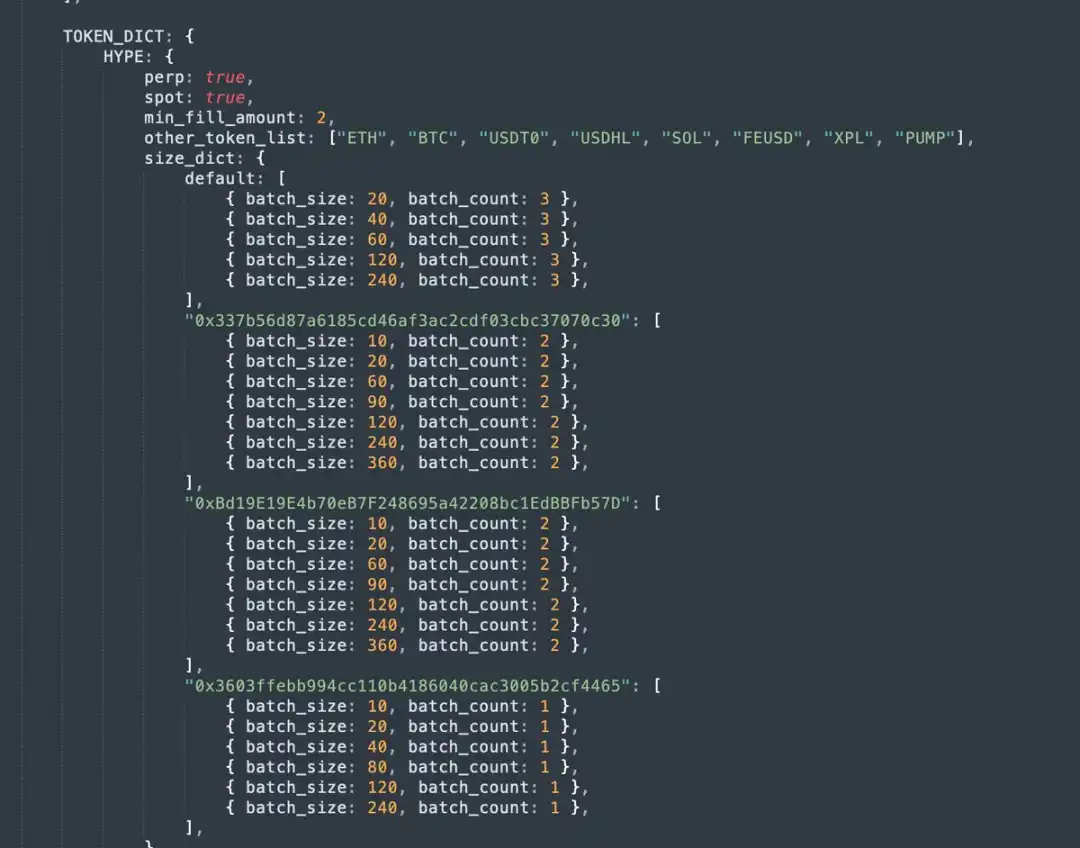
After several days of fine-tuning, we have finally resolved the imbalance issue. Even if imbalance occurs occasionally, it can be quickly adjusted through Time-Weighted Average Price (TWAP) to control risk. This transformation can be described as a "game-changer" — while competitors are still in the "order eater" mode, our trading volume has reached 20 times theirs.
Skip the USDT0/USDC Exchange to Reduce Costs
Another major challenge is related to stablecoins: the primary stablecoin on Hyperliquid is USDC, while on HyperEVM it is USDT0; the HYPE/USDT0 liquidity pool on HyperEVM has the highest trading volume and most arbitrage opportunities. However, due to different cross-chain stablecoins, we need to execute 2 additional trades on Hyperliquid to complete asset hedging, for example, when the HYPE price surges:
1. LP order execution → Sell HYPE for USDC with zero fees;
2. Buy HYPE with USDT0 on HyperEVM;
3. Sell USDC for USDT0 on Hyperliquid as an order eater (0.0245% fee).
The drawback of the third step is evident: having to pay the order eating fee (reducing profits, weakening competitiveness), and the USDT0/USDC trading market on Hyperliquid is not mature enough (with spreads and pricing deviations).
Therefore, we have designed new parameters and logic to skip this step as much as possible:
· USDC Balance Threshold: Only skip the USDT0→USDC exchange when the USDC balance exceeds 1.2 million;
· USDT0 Balance Threshold: Only skip the USDC→USDT0 exchange when the USDT0 balance exceeds 300,000;
· Real-Time Price Data Source: Call the Cowswap API every minute to obtain the real-time price of USDT0/USDC, instead of relying on Hyperliquid's order book price.
Introducing Perpetual Contracts to Diversify Revenue Streams
First and foremost, we'd like to clarify that throughout our entire cryptocurrency investment journey, we have never utilized leverage or perpetual contracts (except for an unsuccessful attempt on Bitmex in 2018), and we have limited knowledge of how they operate.
However, we observed that the trading volume of HYPE perpetual contracts is significantly higher than spot trading, with lower fees as well (spot trading 0.0245% vs perpetual contracts 0.019%). Therefore, we decided to explore combining our arbitrage strategy with perpetual contracts—back then, no competitors were using this approach, so we didn't need to compete with them in the same order book liquidity.
More importantly, during the testing phase, we discovered that leveraging perpetual contracts not only allowed us to earn arbitrage profits but also enabled us to profit from the "funding rate." When the HYPE perpetual contract exhibited a premium or discount relative to the spot price, we could capture additional arbitrage opportunities—areas where our competitors had not ventured into.
For this purpose, we designed new system parameters:
· Position Limit: Set the maximum long/short position size for HYPE perpetual contracts to avoid liquidation or depleting the USDC/HYPE balance;
· Premium/Discount Monitoring: Real-time tracking of the premium or discount of perpetual contracts relative to the spot price;
· Premium/Discount Cap: If the premium is too high, cease opening long positions and resort to spot trading instead;
· Progressive ROI: The larger the position size, the higher the required arbitrage profit, to prevent quick entry into risky positions;
· ROI Calculation Formula: Comprehensive calculation combining the perpetual contract's premium/discount and the position size.
Below is an example interface/parameter setting for configuring a short position in the HYPE token as a maker:
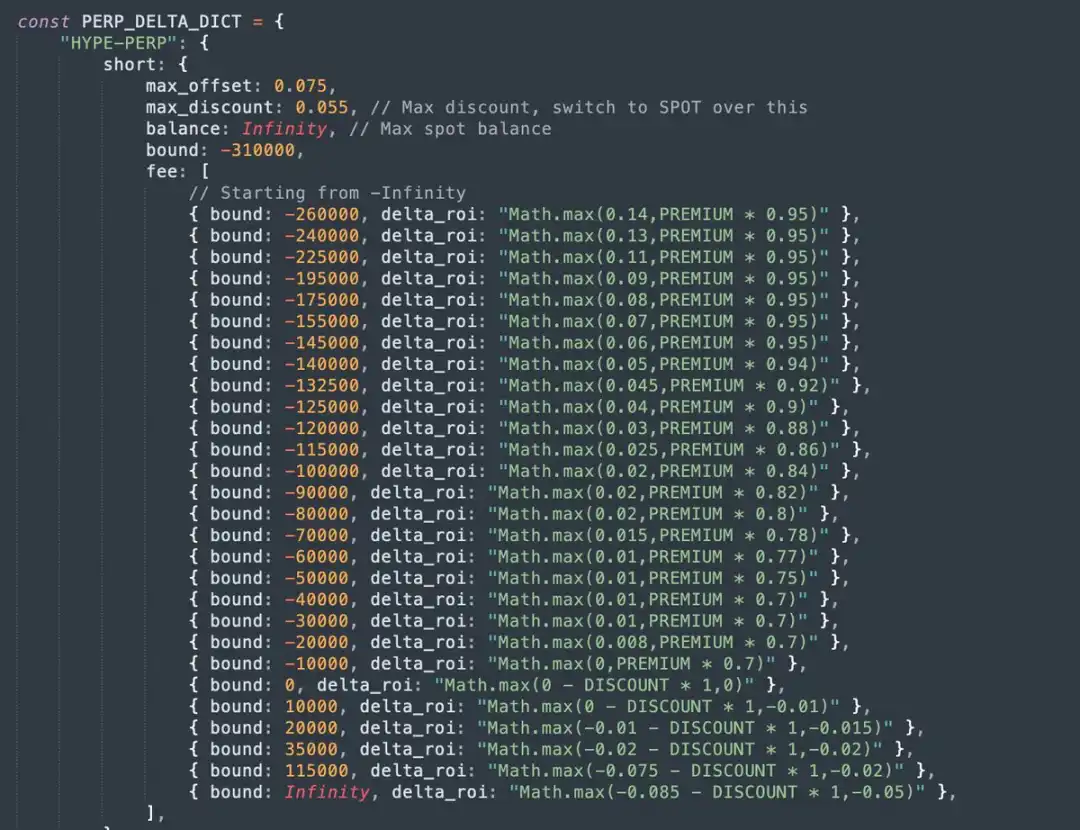
Introducing perpetual contracts was one of the key upgrades—we earned approximately $600,000 solely through the funding rate and captured more arbitrage opportunities leveraging the premium/discount.
Brotherly Partnership: Collaborative Mode and Complementary Advantages
People often inquire about how we divide tasks and collaborate. The external perception seems to be that I am the "meme creator," only engaging in casual cryptocurrency social media discussions (CT), while my brother is merely a "tech geek," responsible for coding. However, the reality is much more intricate—our collaboration model is akin to what we previously experienced during our involvement in Blur mining.
During the operation of the arbitrage bot, we encounter new issues every day that require timely resolution. We discuss optimization solutions continuously, and all decisions must be consensus-driven before execution. My brother is responsible for the code but also develops tools that allow me to adjust parameters autonomously; I have no coding knowledge whatsoever, and my brother is not good at configuring the bot parameters—we complement each other perfectly.
Interestingly, our work styles are completely opposite: my brother likes to push updates and try new features (which I find somewhat excessive); whereas I am very conservative (he thinks overly so) and am only interested in maintaining the current version if the bot is consistently profitable.
Our daily conversations often go like this:
· Me (in an impatient tone): "Something's off with the bot... Did you change something?"
· Brother: "Nope... Just made some insignificant tweaks at most."
Additionally, as a two-person team without formal company processes, after iterating the bot over 250 versions, we sometimes feel that the more we build, the harder it becomes to fully comprehend and control our creation. It's challenging to anticipate the ripple effects of each update.
Summary
Over the past 8 months, we have dedicated ourselves to building and optimizing this arbitrage bot—especially in June 2025 when the crypto market maker, Wintermute, entered with significant liquidity and a team, intensifying the competition.
I still remember those 5 days in July: my brother and I had planned to relax in Istanbul and Bodrum (Turkish cities) but ended up focusing on optimizing the bot the entire time.
Ultimately, our bot held the top position in the HyperEVM arbitrage field for 8 consecutive months. By October, as the market share gradually declined, we felt it was time to exit.
The core data from this experience:
· Total Profit: $5 million;
· Total Trading Volume on Hyperliquid: $12.5 billion;
· Gas Fees Paid on HyperEVM: $1.2 million (20% of the total Gas fees since HyperEVM's launch);
· Total Time Invested: Over 2000 hours;
· 5% of the total transaction volume in the UNIT ecosystem.
Looking forward to the arrival of Hyperliquid Season 3 and UNIT Season 1.
関連記事

イーサリアム大口投資家、50,623 ETHを売却– 1500万ドル以上の利益を獲得
Key Takeaways イーサリアム大口投資家が50,623 ETHを売却し、約1.48億ドルのUSDC/USDTを獲得 平均売却価格は2,921ドルで、総利益は1500万ドル以上 過去にも35,621 ETHを売却し、1.04億ドルの利益を得ている 最近の追加売却では10,002 ETHにより2,938万ドルを取得 WEEX Crypto News, 29 December 2025 イーサリアム大口投資家によるETH大量売却 深潮 TechFlowの報道によると、2025年12月29日に、イーサリアムの大口投資家がETHの大量売却を行い、市場に大きな影響を与えました。この投資家は、合計で50,623枚のETHを売却し、約1.48億ドル(USDC/USDTベース)を獲得しました。平均売却価格は2,921ドルであり、全体で1500万ドルを超える利益を上げています。こうした規模の取引は、暗号通貨市場において注目を集め、市場動向に直接の影響を与えることが多いです。…

HYPEトークンが市場に与える短期的な変動と投資の機会
Key Takeaways 12月29日にHYPEトークンが約2.51億ドル相当の992万トークンを解放予定。 SUIトークンは1月1日に4369万トークンを解放し、これは約6336万ドルに相当。 EIGENトークンの解放は同じく1月1日に行われ、3682万トークンが市場に解放される見込み。 トークンの解放はその供給量の増加から、価格に重要な影響を与える可能性がある。 WEEX Crypto News, 29 December 2025 イントロダクション 2025年の仮想通貨市場は、トークンの解放による供給の増加と市場の動向に注目が集まっています。この中で、HYPEトークン解放の影響を評価することが重要なポイントとなっています。本記事では、HYPEトークンを中心に、短期的な市場変動と潜在的な投資機会について詳細に分析します。 HYPEトークン解放の詳細 HYPEトークンは、Hyperliquid分散型取引所のエコシステムに欠かせないトークンであり、その解放予定は市場に注目されています。12月29日午後3時30分(北京時間)には、約2.51億ドル相当の992万トークンが解放される予定で、これは流通量の2.87%にも及びます。この解放は、短期的な売り圧力となる可能性がありますが、市場がそれを吸収できるかが焦点です。 市場に対するインパクト 過去の事例を振り返ると、トークン解放は市場に対して多様な影響を及ぼしてきました。2025年11月に行われた初の大規模解放では、市場の流動性の強さを試す一つの指標とされました。HYPEトークンの継続的な供給管理とエコシステムの成長が、市場への相対的な信頼を築くための鍵となります。…

CoinbaseがClear Streetで2026年のフィンテックトップ3の一つに選出
Key Takeaways: Coinbase(COIN)はClear Streetのアナリスト、Owen Lauによって2026年のフィンテックトップ3に選ばれた。 Lauは、Coinbaseが規制の明確化とブロックチェーン採用から最も利益を得る位置にあると考えている。 同社はUSDCの収益やAIツール、トークン化への注力が、株価の上昇要因として期待されている。 2026年は「転換の年」とされ、Coinbaseの安定した業績基盤が強みとなる見込み。 WEEX Crypto News, 2025-12-29 06:04:29 Coinbaseは、Clear StreetのアナリストであるOwen Lauによって2026年のフィンテックトップ3にランクインしました。Coinbaseは、特にブロックチェーンベースの金融基盤へと移行する動きの中で、その中心的な役割を果たすと評価されています。この評価は、同社のトークン化、人工知能(AI)ツール、そしてステーブルコインからの収益が重要な要素として挙げられているからです。 ブロックチェーンと規制の明確化による利益 Lauによれば、Coinbaseはブロックチェーンの採用と規制の明確化から最も利益を得られる位置にあります。同社は、多様な収益源を持ち、非常に安定した業績基盤を築いています。特に注目すべきは、彼らのステーブルコイン活動における収益の増加で、この点が投資家にとってレジリエンスと成長の指標となっています。…

Circleのプラットフォームがゴールド、シルバーのトークン化スワップを提供するとする偽情報を会社が指摘
CircleMetalsと称するプラットフォームがUSDCとの間でトークン化された金(GLDC)、銀(SILC)トークンのスワップを提供すると主張する発表がなされた。 この発表はCircleのブランドを使用し、経営陣の発言を引用していたが、後に会社によって偽物と確認された。 この偽プラットフォームは依然としてオンラインで活動しており、詐欺の可能性が高いとされ、報酬を約束するものの実在する証拠はない。 こうした偽情報は、クリスマスイブの日に広まり、多くの企業が休業中であったため、対応の遅れを誘発したと考えられる。 WEEX Crypto News, 2025-12-29 06:06:08 Circleの偽プラットフォーム発表における真実 2025年12月24日、クリスマスイブの日に公開されたプレスリリースにて、Circleが新しいプラットフォームCircleMetalsを立ち上げ、トークン化された金と銀の取引を提供しているとする主張がなされました。しかし、この発表は偽情報であり、Circle社がそれを確認しました。実際、同社の広報担当がCoindeskに、こうしたプラットフォームの存在を否定するコメントを行いました。 Circleの影響力を利用した「偽プラットフォーム」 また、この発表はクリスマスイブという一部の企業が活動していない日を狙って行われ、応答に時間がかかるであろうという状況を利用されたと推測されます。Circleのブランドを不正に用い、経営陣の発言を捏造することで、信用性を偽装した形が明確に見受けられました。 これにより、一部のユーザーには、CircleMetalsという名のもとで24時間365日のUSDCとトークン化された金(GLDC)及び銀(SILC)のスワップを矛盾して提供するプラットフォームが存在しているという誤解が生じました。 詐欺の可能性とユーザーの注意喚起 偽プラットフォームには、ユーザーにウォレットを接続することを促すリンクが含まれており、これはセキュリティの観点から望ましくない行為です。未認証のウェブサイトにウォレットを接続することにより、悪意ある者がウォレットから資金を抜き取る危険性があるからです。プレスリリース内で報じられた報酬は「1.25% のCIRMトークン」というものでしたが、このCIRMトークンについて、主要なデータアグリゲーターにもリストされていないため、その存在はかなり疑わしく、存在証拠がないままです。 ChainWireの対応とその責任…
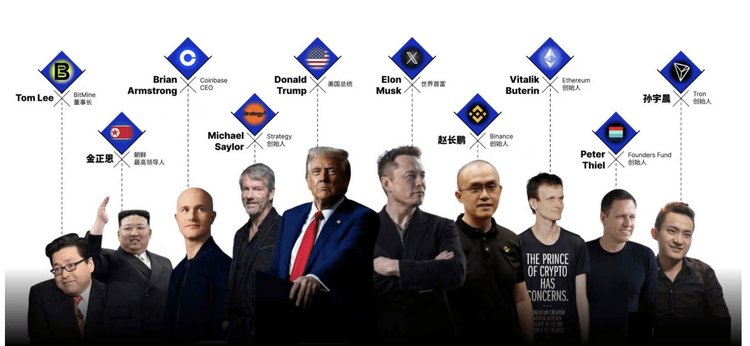
2025年に暗号のパワーバウンダリーを再定義する10人
ウォール街からホワイトハウス、シリコンバレーから深センまで、新しい電力ネットワークが形づくられつつあります。

ステーブルコインの支払い使用状況:Ethereumネットワークを通じた実証分析
Key Takeaways Ethereumネットワークは、全世界のステーブルコイン供給量の約52%を担っています。 ステーブルコインの支払いは、特にUSDTとUSDCが市場の88%を占めています。 P2P(個人対個人)取引は、全体の取引量の約24%を占める一方で、コーポレート取引はいくつかの大口機関に集中しています。 1000の主要なウォレットが、ステーブルコイン取引の85%を占めており、仮想通貨の取引が集中化していることを示しています。 WEEX Crypto News, 2025-12-22 16:04:43(today’s date,foramt: day, month, year) ステーブルコインの背景と採用の拡大 過去数年間で、ステーブルコインの採用率が著しく増加しています。特にEthereumネットワーク上で多くの取引が行われており、ステーブルコイン自体の供給量は2000億ドルに達しています。これは、各種ステーブルコインが安定した価値を提供することで、多くのユーザーに受け入れられるようになった結果です。このような背景には、通常の法定通貨と仮想通貨の間での円滑な取引を可能にする必要性があります。 しかし、ステーブルコインの普及に伴い、その使用の実態、特に支払い使用に関する不透明さも増加しています。ブロックチェーンの透明性により全ての取引が追跡可能ではあるが、その匿名性と目的の不明確さが、このフィールドでの分析を難しくしています。…

Hyperliquid予測:2025年12月22日までに$19.46に下落する見込み
キーとなるポイント Hyperliquid(略称:HYPE)の価格は、2025年12月22日までに22.76%下落し、$19.46に達すると予測されています。 現在の市場のセンチメントは弱気で、恐怖・強欲指数が16(極度の恐怖)を示しています。 HYPEは過去30日間で34.66%の下落を見せ、長期トレンドはネガティブです。 移動平均線やオシレーターなどの技術指標では、売りシグナルが優勢です。 暗号通貨市場全体で警戒が強まり、投資家の不安が高まっています。 WEEX Crypto News, 2025-12-18 15:02:55 Hyperliquidの現在の状況と予測 暗号通貨市場はその変動性と不可予測性で知られていますが、その中でも特に注目されるのがHyperliquid(HYPE)です。HYPEは2025年12月17日現在、$24.71で取引されており、この1日で8.26%の下落を記録しました。この動きは、市場全体が同期間に8.01%の下落を示したことと一致しています。HYPEはビットコイン(BTC)に対しても劣勢を示し、6.34%の損失を出しています。 5日間の価格予測 当社の予測によると、今後5日間でHYPEの価格は22.76%下落し、$19.46に達する見込みです。この予測は、現在の価格動向と市場のセンチメントに基づいており、投資家にとって重要な指標となるでしょう。このような下落予測がなされる背景には、短期間における急激な価格変動があり、特に投資家の心理に大きな影響を与えています。 HYPEの30日間の動向 この1ヶ月間で、HYPEは34.66%も下落しており、暗号通貨市場全体でのパフォーマンス劣勢が浮き彫りになっています。過去3ヶ月間では57.88%の下落を記録し、さらに長期的な視点でも8.15%の価格変動を見せています。2024年12月17日時点では、HYPEは$26.91で取引されていました。一方、2025年9月18日には最高値の$59.31を記録しています。こうした状況からも、HYPEは高いボラティリティが特徴であると言えます。 技術的分析…

ハイパーリキッド利用者の秘密鍵流出事件が引き起こした巨額損失
Key Takeaways ハイパーリキッドの利用者が秘密鍵の漏洩により約2,100万ドルを失った。 被害者の資金はクロスチェーンでイーサリアムに移され、盗まれた。 攻撃者は1,775万DAIを含む被害者資産を流用した。 トルネードキャッシュ(TornadoCash)を利用して一部の資金を洗浄。 WEEX Crypto News, 18 December 2025 秘密鍵漏洩による巨額損失の詳細 ハイパーリキッドの利用者が秘密鍵を漏洩し、結果的に約2,100万ドル相当の暗号資産を失ったと報告されています。近年、暗号資産市場ではセキュリティの欠陥による事件が頻発しており、本事件もその一例です。 事件の発端 PeckShield の報告によれば、0x0cdC で始まるアドレスが秘密鍵を漏洩し、このことが事件の引き金となりました。利用者の資金は、漏洩後に迅速にHyperliquidから回収され、攻撃者によってイーサリアムへとクロスチェーンで移されました。この攻撃で流出した資産には、1,775万のDAIをはじめとする多数のトークンが含まれていたことが確認されています。…

ガレット・ジン、注目の仮想通貨クジラが行動を起こす
Key Takeaways ガレット・ジンは、ビットコイン市場でスマートな取引を行うことで有名な香港のビジネスマンである。 最近、HyperUnit BTCクジラが16.6万枚のETHを質押から解除し、多くの注目を集めている。 その一方で、Hyperliquidプラットフォーム上に未だに19万枚のETHを保持していることが報告された。 仮想通貨市場におけるジンの影響力は非常に大きく、彼の動きは多くの投資家の関心を引いている。 WEEX Crypto News, 17 December 2025 ガレット・ジンとは誰か? ガレット・ジンは、ビットフォレックスの設立者である香港の実業家であり、仮想通貨市場で大胆な戦略を展開することで知られています。彼の名前はビットコイン市場でのショートポジションを取った後、その価格崩壊から利益を得たことから特に注目を集めました。ジンはインサイダー取引を否定していますが、その取引のタイミングと規模が、多くの人々に彼の特異な市場予測能力を信じさせる結果となっています。 HyperUnit BTCクジラの最近の動向 質押解除と新たな動き…

アーサー・ヘイズ、中央集権型取引所から3242万ドルのUSDCを受領
Key Takeaways アーサー・ヘイズは、最近の2日間で合計3242万ドルのUSDCを多くのプラットフォームから受け取った。 USDCの移動は、Binance、Galaxy Digital、Wintermuteなどを含む複数の日本の取引所から行われた。 ヘイズはBitMEXを共同設立し、その後、Maelstromを立ち上げるなどクリプト業界で影響力を持つ。 彼は暗号資産の次のステージがAIインフラストラクチャとプライバシー技術によって形作られると考えている。 WEEX Crypto News, 17 December 2025 2025年12月17日、アーサー・ヘイズは、過去2日間でBinance、Galaxy Digital、Wintermuteを含む複数のプラットフォームから合計3242万ドルのUSDCを自身のアドレスに受け取った。この動きは、彼の財務管理や投資戦略において何を意図しているのかを考察する契機となる。ヘイズは、暗号通貨の世界で著名な人物であり、特にBitMEXの共同設立者として知られている。 アーサー・ヘイズの背景 ヘイズは2014年にBitMEXを設立し、そこから彼の名声は拡大した。彼はクリプトの未来に対して積極的なビジョンを持っており、新たなプロジェクトであるMaelstromを通じて次世代のブロックチェーンインフラへの投資を見据えている。2022年には、アメリカの銀行秘密法違反で有罪を認め、執行猶予付きの判決を受けたが、彼の業界内での影響力は衰えていない。 USDC受領の背景と目的…
Aster Price Prediction: ASTER Price Plummets 20% in a Week – Is It Heading to Zero?
Key Takeaways ASTERは過去7日間で20%以上も急落しており、市場の悲観的な見通しが続いています。 Asterプロジェクトは、その独自のブロックチェーンであるAster Chainのローンチを計画しています。 DeFi Llamaによるデータでは、Asterの総ロック価値(TVL)が過去1か月で$2.5Bから$1.3Bに急減しました。 価格が$0.82を上回れなければ、さらに27%の急落が続く可能性があります。 WEEX Crypto News, 2025-12-17 15:07:15(today’s date,foramt: day, month, year) 最近の状況と市場の反応…

HYPEの2025年12月19日の価格予測: 予測される価格下落
Key Takeaways 市場の不安: HYPEの価格は5日間で23.30%下落する可能性があります。 市場の状態: 現在の市場センチメントは弱気で、恐怖指数は極度の恐怖を示しています。 サポートとレジスタンス: 重要なサポートレベルは$28.52、$27.38、$26.81。レジスタンスレベルは$30.24、$30.81、$31.95です。 価格変動の歴史: HYPEは過去30日で22.18%下落しましたが、過去1年間では36.86%上昇しています。 WEEX Crypto News, 2025-12-16 イントロダクション 近年、暗号通貨市場は予想外の変動を見せ続けています。特に注目されている通貨の一つとして、Hyperliquid(HYPE)が挙げられます。最近の市場動向と技術分析に基づいた予測によると、HYPEの価格は今後数日で下降する可能性があるという見通しが立てられています。この記事では、2025年12月19日までにHYPEの価格が$22.71に下がるという予測に注目し、この予測の背景や影響について詳しく解説します。 現在の市場状況 暗号通貨全体の市場キャップは2.94兆ドルで、最近2.68%減少しました。また、ビットコインが市場で主導的存在であることを示すBTC支配率は58.62%です。このような上下動の中で、HYPEはUSドルに対して3.30%上昇し、さらにBTCに対しても3.84%増加しています。しかし、これはHYPEが直面している長期的な弱気トレンドを根本的に変えるものではありません。…
日本の新たなCrypto税制で小売投資家の「眠れる巨人」が目覚めるか
主なポイント 日本政府がデジタル資産に対して20%の税率を導入する計画を発表し、これにより小売投資家の市場参入が促進される可能性がある。 現在の最大55%からの税率引き下げは、伝統的な金融商品に近い形でCryptoに対する課税を行うことを目指している。 規制の安定化に伴い、日本のCryptoエコシステムは成長を見せており、特に金融機関による安定通貨の提供が進展。 企業がこの新たな流れを捉え、急速に動いている背景には、低い取引量と限られたグローバル企業数の課題がある。 WEEX Crypto News, 2025-12-15 09:47:08 日本の税制改革がCrypto市場に与える影響 日本の議会では、新しいデジタル資産の税制について大きな議論が巻き起こっています。金融庁(FSA)が提案したこの改革案は、税率を現在の最大55%からより適度な20%に引き下げることを目指しており、これによりCryptoが小売投資家にとってより魅力的になるとの期待が広がっています。この改革は、Cryptoを取り巻く既存の規制変遷を経て、国全体の成長戦略においてデジタル資産が重要な役割を担うという認識に基づいています。 新たな税制によって多くの小売投資家が市場への参入を果たすと業界の観測者たちは述べます。2000年代中頃までに、日本のデジタル資産は法的および金融的な認識が不十分でしたが、2016年5月、FSAはPayment Services Act(PSA)に基づいた規制体制を確立し、翌2017年には更なる改正が加えられ、取引所に関する基準、マネーロンダリング防止、顧客確認、登録の要件が整備されました。これらのベースがあることが市場の成長を下支えします。 小売投資家の増加と新たな機会 デジタル資産に対する税制の変化は、伝統的な金融商品と同様の形での課税が可能になり、より多くの小売投資家がCrypto市場に参加するとされた。スターテールのCEO、Watanabe氏は「日本にとって非常に大切な日だ。この税制改正が承認されれば、より多くのETFや税率の引き下げが現実となり、間違いなく多くの日本人がCryptoに参加するだろう」とコメントしました。 この税制改革の背景には、Haseeb…

HYPEトークン価格下落に伴う潜在的な損失の報告
Key Takeaways Hyperliquid (HYPE) トークンの価格は、5月以来の最低水準に達した。 ある鯨が持つ138万枚のHYPEトークンにより、1,530万ドルの未実現損失が発生している。 HYPEトークンの時価総額は、94,286.5931 BTCで、CoinGeckoで23位にランクされている。 Hyperliquidは、Layer-1ブロックチェーンであり、取引やデファイ目的で設計されている。 HYPEトークンは、ガバナンスやステーキング、プロトコルの保護のために使用される。 WEEX Crypto News, 09 December 2025 鯨が抱えるHYPEトークンのリスク 最近の市場動向において、Hyperliquid…
ハイパーリキッド価格急落によりクジラの損失拡大
Key Takeaways ハイパーリキッド(HYPE)価格が5月21日以来の最安値に達する中、大口投資家(クジラ)は1530万ドルの含み損を抱えています。 クジラは138万HYPEのポジションを保有しており、38.67ドルでの購入価格に対し、現在の清算価格は22.16ドルです。 この動きは、Hyperliquidの全体的な市場パフォーマンスが低迷していることに起因します。 HyperliquidはLayer-1ブロックチェーンであり、取引および分散型金融(DeFi)に特化しています。 WEEX Crypto News, 09 December 2025 ハイパーリキッド(HYPE)の価格動向と市場影響 近日、市場で注目されているトピックは、ハイパーリキッド(HYPE)の価格急落です。これにより、特に大口保有者にとっては大きな影響を及ぼしています。現在、HYPEの価格は0.0003484 BTCであり、市場における状況の中で特異な動きを見せています。 HYPEトークンの基本情報 HYPEはハイパーリキッドブロックチェーンのネイティブトークンであり、つまりこのプラットフォームの経済を支える要素となっています。HYPEの役割には、ガバナンスへの参加、ステーキング、プロトコルのセキュリティ確保があります。これにより、トークンホルダーはハイパーリキッドエコシステムの一部を所有しているといえます。 最近の価格動向と基盤…

なぜCryptoが今日下落しているのか – 2025年12月9日
Key Takeaways 暗号市場の時価総額は1.2%減少し、$3.17兆USDになっています。 上位100コインの中で86のコインが過去24時間で価値が下がりました。 米連邦準備制度(Federal Reserve)は水曜日に利下げを発表する予定です。 Michael Saylorの会社Strategyが追加の10,624 BTCを購入しました。 Kevin Hassett氏が次期FRB議長として正式に発表されることは、2026年にクリプト市場にとって強気の要因であると見込まれます。 WEEX Crypto News, 2025-12-10 07:14:40 暗号市場の現状 暗号市場は最近、週の初めにわずかな上昇を見せましたが、現在のところ再び下落に転じています。この24時間で市場全体の時価総額は1.2%減少し、$3.17兆USDへと縮小しました。具体的には、上位100のコインのうち86が価値を落としています。ちょうどこの状況は、暗号通貨市場を取り巻く多くの不確実性や動揺を反映しており、投資家たちは中長期的な見通しについて悩んでいる状態です。…

CFTCのデジタル資産パイロット:ビットコイン、Ether、およびUSDCを担保として
Key Takeaways CFTCは、ビットコイン、Ether、およびUSDCを米国のデリバティブ市場での担保として使用することを許可するパイロットプログラムを開始しました。 このプログラムは、承認された先物コミッション商社(FCM)を対象とし、厳格な保管、報告、および監視要件を含みます。 GENIUS法の施行に伴い、トークン化資産に関する最新のガイダンスが発行され、古い制限が撤廃されました。 この動きは、CFTCがトークン化された担保の使用に関する明確なルールを提供するための広範な取り組みの一環です。 WEEX Crypto News, 2025-12-09 09:30:40 イントロダクション 2025年12月8日、CFTC(Commodity Futures Trading Commission)は、アメリカ合衆国のデリバティブ市場において、特定のデジタル資産、つまりBitcoin(ビットコイン)、Ether(イーサリアム)、USDCなどのトークン化された資産を担保として使用することを許可する革新的なプログラムを発表しました。このプログラムは、現役議長カロライン・ファムによって導入され、業界における規制のクリアなガードレールを提供することを目的としており、全く新しい段階へと進化する可能性を秘めています。 パイロットプログラムの概要 このパイロットプログラムは、ビットコイン、ETH、およびUSDCを含む特定のデジタル資産を担保として利用する機会を提供しますが、これは単に技術的な試験としての意味だけではありません。プログラムは法律の枠組みを整備し、金融機関がトークン化された担保を効率的かつ安全に使用できるようにすることを目指しています。…

フランスの巨大銀行BPCE、アプリ内での暗号取引を導入へ
Key Takeaways BPCEはフランスの銀行業界で先駆けて暗号取引を提供し、数百万の小売顧客にアクセスを広げます。 顧客は銀行アプリ内でBitcoin、Ether、Solana、USDCを直接取引できるようになります。 サービス開始は段階的に拡大し、2026年までに全12万人の顧客ベースに提供されます。 アプリ内の暗号口座は月額2.99ユーロの料金と取引ごとに1.5%の手数料が課されます。 フランスでは暗号資産を「生産性のない資産」として課税する法案が審議されています。 WEEX Crypto News, 2025-12-09 09:11:05(today’s date,foramt: day, month, year) BPCEの新たな暗号取引サービス フランスの銀行業界で歴史と影響力を誇るBPCEが、暗号資産の取り扱いを開始することでこれまでにない一歩を踏み出します。同行は、数百万の顧客がBitcoin…
イーサリアム大口投資家、50,623 ETHを売却– 1500万ドル以上の利益を獲得
Key Takeaways イーサリアム大口投資家が50,623 ETHを売却し、約1.48億ドルのUSDC/USDTを獲得 平均売却価格は2,921ドルで、総利益は1500万ドル以上 過去にも35,621 ETHを売却し、1.04億ドルの利益を得ている 最近の追加売却では10,002 ETHにより2,938万ドルを取得 WEEX Crypto News, 29 December 2025 イーサリアム大口投資家によるETH大量売却 深潮 TechFlowの報道によると、2025年12月29日に、イーサリアムの大口投資家がETHの大量売却を行い、市場に大きな影響を与えました。この投資家は、合計で50,623枚のETHを売却し、約1.48億ドル(USDC/USDTベース)を獲得しました。平均売却価格は2,921ドルであり、全体で1500万ドルを超える利益を上げています。こうした規模の取引は、暗号通貨市場において注目を集め、市場動向に直接の影響を与えることが多いです。…
HYPEトークンが市場に与える短期的な変動と投資の機会
Key Takeaways 12月29日にHYPEトークンが約2.51億ドル相当の992万トークンを解放予定。 SUIトークンは1月1日に4369万トークンを解放し、これは約6336万ドルに相当。 EIGENトークンの解放は同じく1月1日に行われ、3682万トークンが市場に解放される見込み。 トークンの解放はその供給量の増加から、価格に重要な影響を与える可能性がある。 WEEX Crypto News, 29 December 2025 イントロダクション 2025年の仮想通貨市場は、トークンの解放による供給の増加と市場の動向に注目が集まっています。この中で、HYPEトークン解放の影響を評価することが重要なポイントとなっています。本記事では、HYPEトークンを中心に、短期的な市場変動と潜在的な投資機会について詳細に分析します。 HYPEトークン解放の詳細 HYPEトークンは、Hyperliquid分散型取引所のエコシステムに欠かせないトークンであり、その解放予定は市場に注目されています。12月29日午後3時30分(北京時間)には、約2.51億ドル相当の992万トークンが解放される予定で、これは流通量の2.87%にも及びます。この解放は、短期的な売り圧力となる可能性がありますが、市場がそれを吸収できるかが焦点です。 市場に対するインパクト 過去の事例を振り返ると、トークン解放は市場に対して多様な影響を及ぼしてきました。2025年11月に行われた初の大規模解放では、市場の流動性の強さを試す一つの指標とされました。HYPEトークンの継続的な供給管理とエコシステムの成長が、市場への相対的な信頼を築くための鍵となります。…
CoinbaseがClear Streetで2026年のフィンテックトップ3の一つに選出
Key Takeaways: Coinbase(COIN)はClear Streetのアナリスト、Owen Lauによって2026年のフィンテックトップ3に選ばれた。 Lauは、Coinbaseが規制の明確化とブロックチェーン採用から最も利益を得る位置にあると考えている。 同社はUSDCの収益やAIツール、トークン化への注力が、株価の上昇要因として期待されている。 2026年は「転換の年」とされ、Coinbaseの安定した業績基盤が強みとなる見込み。 WEEX Crypto News, 2025-12-29 06:04:29 Coinbaseは、Clear StreetのアナリストであるOwen Lauによって2026年のフィンテックトップ3にランクインしました。Coinbaseは、特にブロックチェーンベースの金融基盤へと移行する動きの中で、その中心的な役割を果たすと評価されています。この評価は、同社のトークン化、人工知能(AI)ツール、そしてステーブルコインからの収益が重要な要素として挙げられているからです。 ブロックチェーンと規制の明確化による利益 Lauによれば、Coinbaseはブロックチェーンの採用と規制の明確化から最も利益を得られる位置にあります。同社は、多様な収益源を持ち、非常に安定した業績基盤を築いています。特に注目すべきは、彼らのステーブルコイン活動における収益の増加で、この点が投資家にとってレジリエンスと成長の指標となっています。…
Circleのプラットフォームがゴールド、シルバーのトークン化スワップを提供するとする偽情報を会社が指摘
CircleMetalsと称するプラットフォームがUSDCとの間でトークン化された金(GLDC)、銀(SILC)トークンのスワップを提供すると主張する発表がなされた。 この発表はCircleのブランドを使用し、経営陣の発言を引用していたが、後に会社によって偽物と確認された。 この偽プラットフォームは依然としてオンラインで活動しており、詐欺の可能性が高いとされ、報酬を約束するものの実在する証拠はない。 こうした偽情報は、クリスマスイブの日に広まり、多くの企業が休業中であったため、対応の遅れを誘発したと考えられる。 WEEX Crypto News, 2025-12-29 06:06:08 Circleの偽プラットフォーム発表における真実 2025年12月24日、クリスマスイブの日に公開されたプレスリリースにて、Circleが新しいプラットフォームCircleMetalsを立ち上げ、トークン化された金と銀の取引を提供しているとする主張がなされました。しかし、この発表は偽情報であり、Circle社がそれを確認しました。実際、同社の広報担当がCoindeskに、こうしたプラットフォームの存在を否定するコメントを行いました。 Circleの影響力を利用した「偽プラットフォーム」 また、この発表はクリスマスイブという一部の企業が活動していない日を狙って行われ、応答に時間がかかるであろうという状況を利用されたと推測されます。Circleのブランドを不正に用い、経営陣の発言を捏造することで、信用性を偽装した形が明確に見受けられました。 これにより、一部のユーザーには、CircleMetalsという名のもとで24時間365日のUSDCとトークン化された金(GLDC)及び銀(SILC)のスワップを矛盾して提供するプラットフォームが存在しているという誤解が生じました。 詐欺の可能性とユーザーの注意喚起 偽プラットフォームには、ユーザーにウォレットを接続することを促すリンクが含まれており、これはセキュリティの観点から望ましくない行為です。未認証のウェブサイトにウォレットを接続することにより、悪意ある者がウォレットから資金を抜き取る危険性があるからです。プレスリリース内で報じられた報酬は「1.25% のCIRMトークン」というものでしたが、このCIRMトークンについて、主要なデータアグリゲーターにもリストされていないため、その存在はかなり疑わしく、存在証拠がないままです。 ChainWireの対応とその責任…
2025年に暗号のパワーバウンダリーを再定義する10人
ウォール街からホワイトハウス、シリコンバレーから深センまで、新しい電力ネットワークが形づくられつつあります。
ステーブルコインの支払い使用状況:Ethereumネットワークを通じた実証分析
Key Takeaways Ethereumネットワークは、全世界のステーブルコイン供給量の約52%を担っています。 ステーブルコインの支払いは、特にUSDTとUSDCが市場の88%を占めています。 P2P(個人対個人)取引は、全体の取引量の約24%を占める一方で、コーポレート取引はいくつかの大口機関に集中しています。 1000の主要なウォレットが、ステーブルコイン取引の85%を占めており、仮想通貨の取引が集中化していることを示しています。 WEEX Crypto News, 2025-12-22 16:04:43(today’s date,foramt: day, month, year) ステーブルコインの背景と採用の拡大 過去数年間で、ステーブルコインの採用率が著しく増加しています。特にEthereumネットワーク上で多くの取引が行われており、ステーブルコイン自体の供給量は2000億ドルに達しています。これは、各種ステーブルコインが安定した価値を提供することで、多くのユーザーに受け入れられるようになった結果です。このような背景には、通常の法定通貨と仮想通貨の間での円滑な取引を可能にする必要性があります。 しかし、ステーブルコインの普及に伴い、その使用の実態、特に支払い使用に関する不透明さも増加しています。ブロックチェーンの透明性により全ての取引が追跡可能ではあるが、その匿名性と目的の不明確さが、このフィールドでの分析を難しくしています。…


 App
App