

Solana's Crisis of Faith: Unbeatable Fundamentals, So Why is the Price 'Flatlining'?

Original Article Title: "SOL Sentinel's Faith Crisis: Fundamental Invincible, Why the Price 'Flatlined'?"
Original Author: CryptoLeo, Odaily Planet Daily
As a loyal SOL Sentinel, I have now lost some confidence in SOL.
From the perspective of token price, this cycle may not be over yet. However, among the top-ranked tokens by market capitalization, BTC, ETH, BNB, and even XRP have all hit new all-time highs in the second half of 2025, while SOL, after reaching a high of $295 in January, has not broken its previous high (during which there was a months-long Solana Meme coin craze).
Why has SOL not risen yet? It may be due to the token's inflation mechanism, the shift of meme craze to other networks, liquidity issues, and whale bearishness. One more thing to pay attention to is that Solana always seems to be one step behind in catching up with the hype.
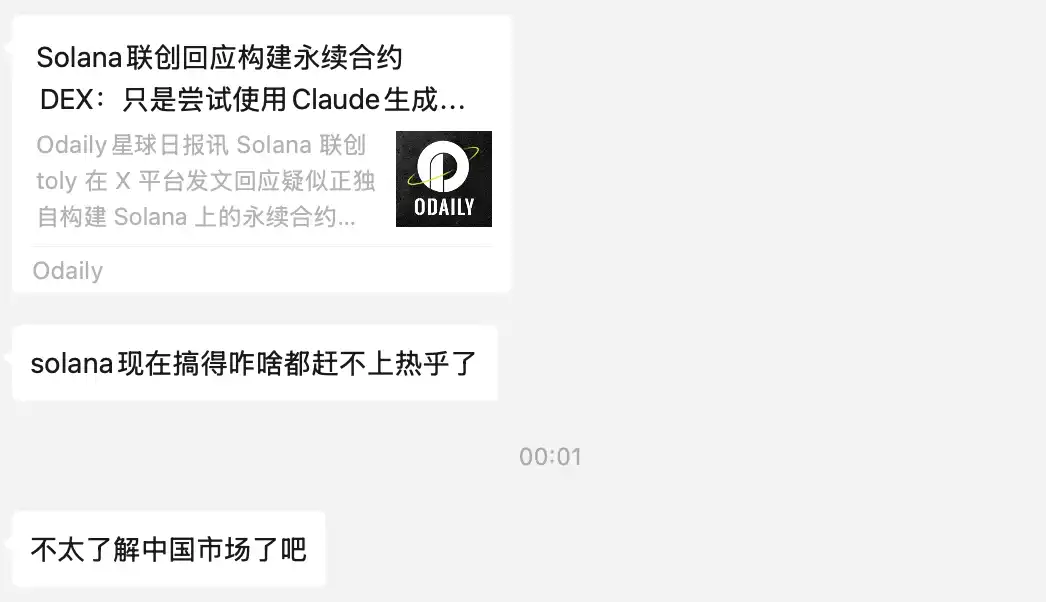
(Group Chat Screenshot)
Recently, Grayscale released a report titled "Solana: Crypto's Financial Bazaar," analyzing Solana's technological aspects, network ecosystem, token supply, and value data indicators, providing some confidence to the "SOL Sentinel." Odaily Planet Daily summarized the key points of the report as follows:
Solana's Fundamentals: Technology, On-chain Activity, Transaction Volume
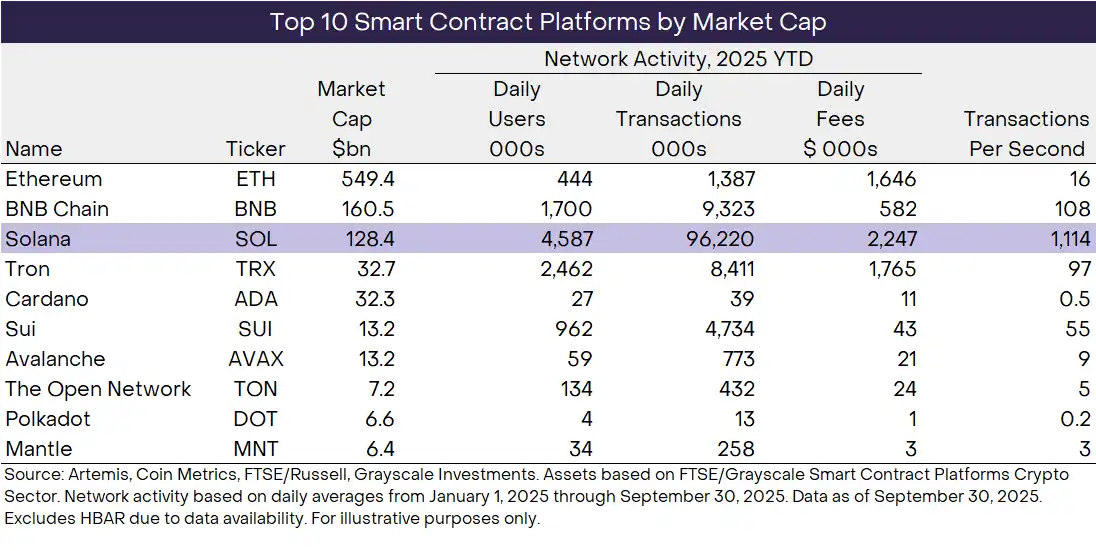
According to the report, compared to other networks such as Ethereum, BNB Chain, Tron, Cardano, and Sui, Solana has a significant advantage in the depth and diversity of on-chain activity. It is leading in terms of users, transaction volume, and transaction fees, with the Solana network having more users and economic activity, which translates to higher network value.
On-chain Data and Transaction Volume
As shown in the chart below, SOL ranks third in market capitalization, but it leads similar blockchains in daily active users, daily transaction volume, daily transaction fees, and transactions per second.
Ecosystem Applications and Network Revenue
Additionally, the Solana network hosts many industry-leading applications, such as:
1. Raydium DEX, also a core component of the Solana DeFi infrastructure. From the beginning of the year to date, the Solana DEX has processed a trading volume exceeding $1.2 trillion, surpassing any other blockchain ecosystem. Furthermore, Solana's leading DEX aggregator, Jupiter, is the cryptocurrency industry's largest aggregator in terms of trading volume;
2. pump.fun, a long-standing token launch platform, with approximately 2 million monthly active users and a daily revenue of around $1.2 million;
3. Helium, a DePIN project focused on mobile hotspots. Helium allows users to contribute to network capacity, thereby building a nationwide mobile hotspot network. These services are often cheaper than centralized alternatives, and Helium currently boasts 1.5 million daily active users, 112,000 hotspots, and has established partnerships with major telecom companies such as AT&T and Telefónica.
The above applications represent only a small fraction of Solana's 500+ applications. Additionally, as a blockchain that almost fully replicates the functionalities of other mainstream networks, Solana ranks third in NFT transactions, fifth in stablecoin transaction volume, and seventh in tokenized assets. Recent use cases that have gained traction include Pokémon card collectibles trading and on-chain issuance of tokenized stocks.
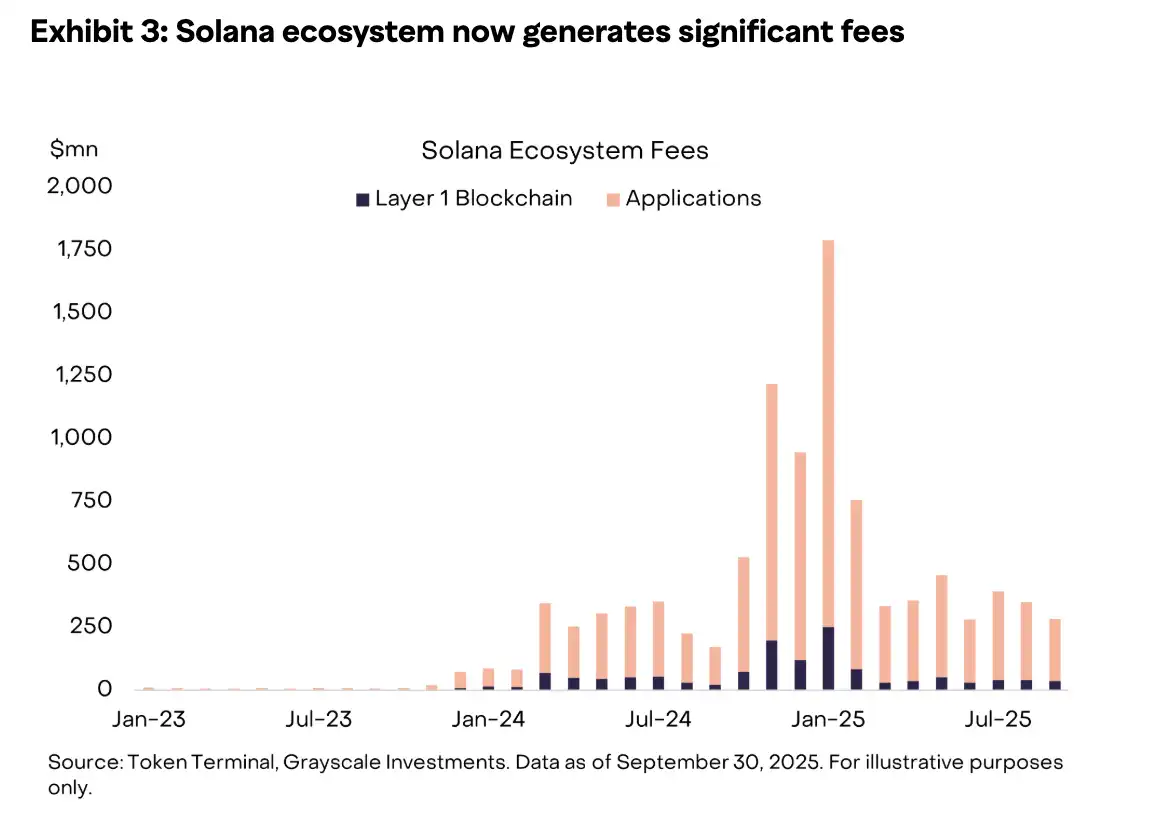
When measuring the Solana ecosystem, one should consider both the blockchain itself and the economic activities of its hosted applications. While these figures may evolve over time, the Solana ecosystem generates approximately $425 million in fees per month, with an annual income exceeding $5 billion. Grayscale believes that fees are the most direct indicator of measuring total demand for a blockchain and its applications, and all these data points indicate significant demand for Solana.
Solana's Advantages: Developer Scale Second Only to Ethereum, and Universally Accessible
Universal Technological Superiority
In addition to fundamental analysis, Grayscale also mentioned that Solana's good performance is due to its fast, low-cost transactions, and seamless user experience. The network generates a new block every 400 milliseconds, and transactions can be finalized in about 12-13 seconds. Apart from high throughput, transaction costs have also remained relatively low:
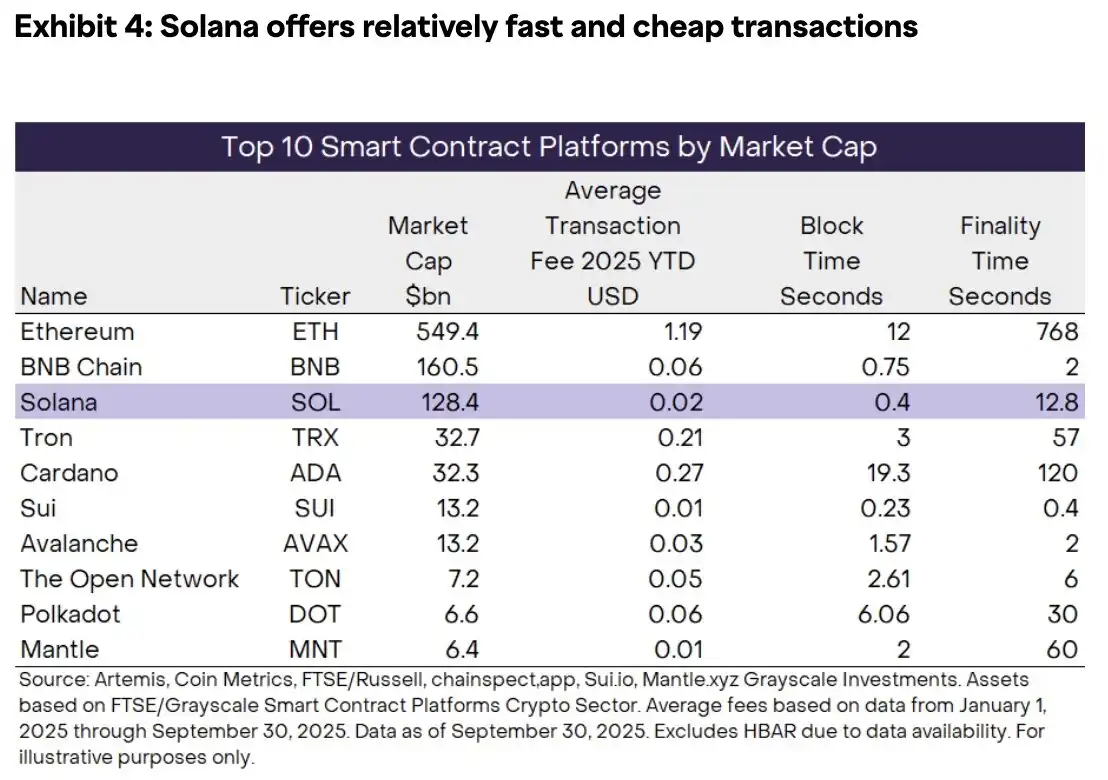
Solana uses a "local fee markets" technology, which restricts fee competition to specific applications. So far this year, the average transaction fee paid by users has been only $0.02, partly due to this feature. The median daily transaction fee this year is only $0.001. Solana's transaction speed and cost efficiency are faster and cheaper compared to similar blockchains. Its upcoming Solana upgrade, Alpenglow, is expected to reduce final confirmation time to 100-150 milliseconds.
Solana's user experience is mainly due to its "monolithic" (single-layer blockchain) design rather than a layered design (which avoids the need to bridge assets between network components), and the wallet infrastructure led by Phantom. In recent years, Solana's network failure rate has also been significantly lower than the industry average, which is also a foundational factor for user adoption.
Furthermore, Solana smart contracts do not rely on the Ethereum Virtual Machine (used by Ethereum and many other smart contract platforms like BNB Chain, Polygon, and Avalanche). Instead, they use Solana's unique Solana Virtual Machine (SVM) architecture. Applications based on the SVM cannot easily move to non-SVM blockchains, leading to stable user retention.
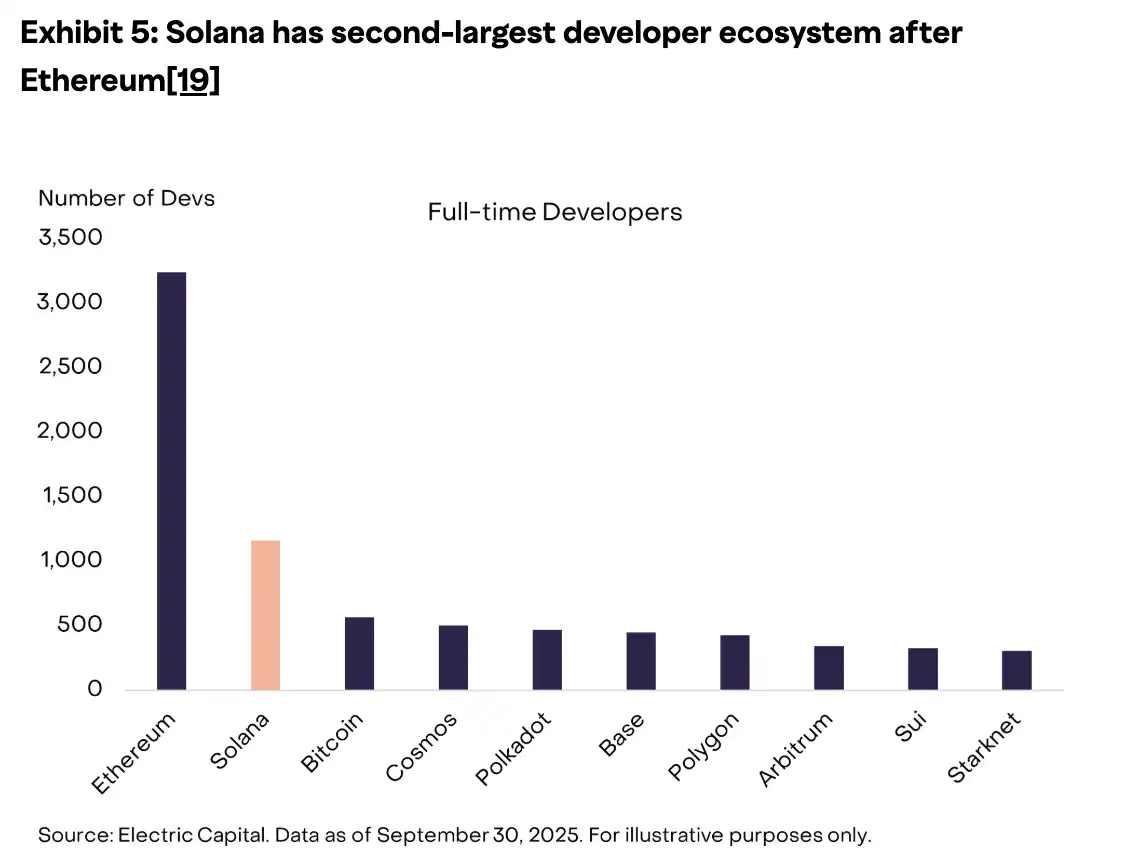
Second Only to Ethereum in Developer Count
Currently, there are over 1,000 full-time developers working on Solana and SVM applications, and in the past two years, the growth rate of developers focused on Solana has outpaced any other smart contract platform (as shown below), second only to Ethereum. Over time, this human capital can contribute to Solana's sustained innovation.
The Long-Term Storage Value of the SOL Token (Inflation, Token Performance, and Competitor Competition)
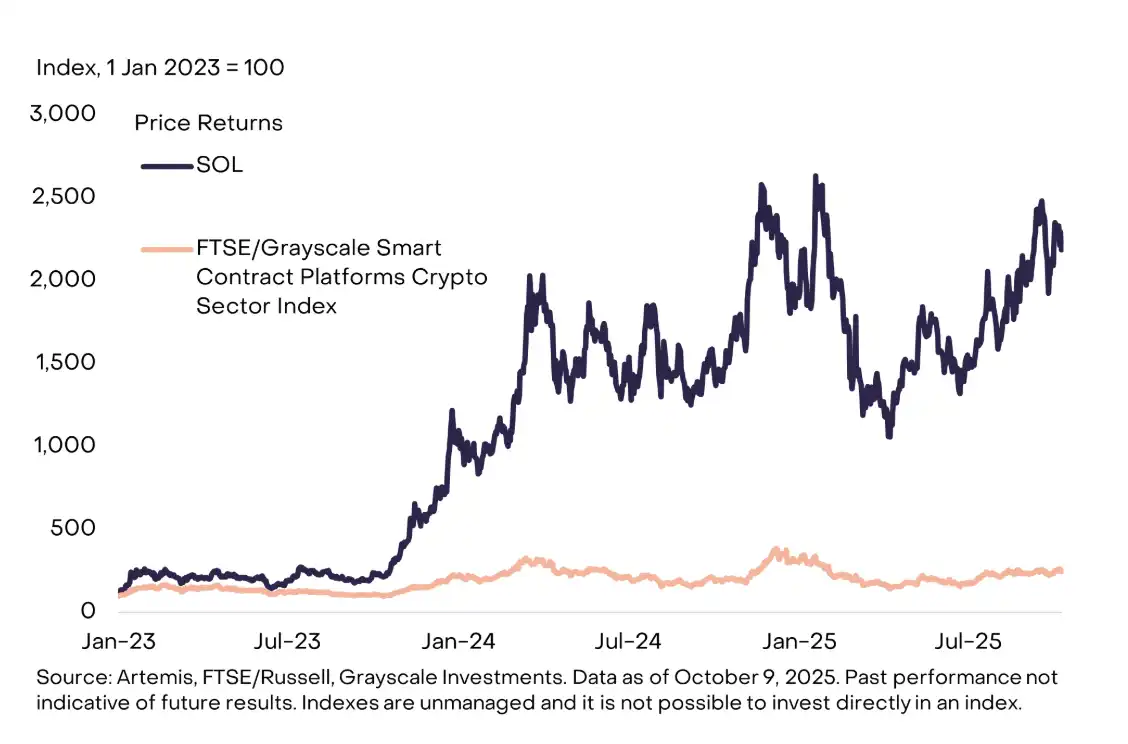
It is well known that due to FTX's collapse, the price of the SOL token plummeted from its peak of nearly $260 in November 2021 to just $2 in December 2022. Following FTX's bankruptcy, many retail investors felt uncertain about Solana's future, despite a significant number of SVM developers still remaining on Solana at the time.
However, starting from the end of 2023, the SOL token began to recover, outperforming notably the FTSE/Grayscale Smart Contract Platform Cryptocurrency Industry Index.
Currently, the SOL token's supply is increasing at a rate of around 4% to 4.5% per year, which, under unchanged conditions, can be seen as a reason for token holder value dilution. According to the network state, SOL stakers can receive around a 7% nominal yield, but the "actual" yield adjusted for inflation is approximately 2.5% to 3%. Currently, about two-thirds of unissued SOL tokens have been staked.

Grayscale states that SOL offers utility on the Solana network and may receive additional corresponding financial returns, but their value is tied to the network's scale, similar to other smart contract platform tokens, the investment thesis of the SOL token revolves around the potential growth of the Solana network. Like other assets, the SOL token price does not always move in line with the network's fundamentals. However, if the Solana network grows over time—acquiring more users, processing more transactions, and earning more fees—investors can expect the SOL price to rise.
Grayscale believes: Solana is envisioned as an "open, fast, low-cost blockchain for everyone". But its specific design leaves room for its competitors to seize or retain market share in certain use cases.
For example, other blockchains sometimes achieve faster and/or cheaper transactions by operating a more centralized network (e.g., using a small number of active network nodes). Even though centralization may bring risks, users may prefer this convenience. Other blockchains may compete with Solana by maintaining permissioning on their network (i.e., only allowing approved users and/or approved activities).
On the other hand, compared to Bitcoin or Ethereum, the SOL token may not be as suitable as a long-term "store of value" currency asset. This to some extent reflects SOL's relatively high nominal supply inflation: scarcity is a key feature of any long-term value store. But a more important factor may be the network's ability to resist third-party interference. For a digital asset to be used as a long-term store of value, users need to have confidence that they will be able to transact under almost all circumstances in the future. One way to support this outcome is to maintain low node requirements to keep the network highly decentralized and easy to replicate. Solana's efficiency comes at the cost of relatively high hardware and bandwidth requirements, so many network nodes operate in data centers. In theory, over time, this could become a source of centralization and a conduit for third-party interference with the network.
Of course, these are complex and unresolved issues, and investors' views on cryptocurrency as a long-term store of value may change over time.
Conclusion
Finally, Grayscale believes that the three most important metrics for measuring on-chain activity are users, transaction volume, and transaction fees, and Solana is currently the leading network in these metrics of on-chain activity. While the Solana network faces many powerful competitors, the depth and diversity of the Solana on-chain economy have laid a solid foundation for SOL's valuation, which is also a necessary condition for its future growth.
A network with strong performance, a large number of users, leading transaction volume and transaction fees, having gone through a phoenix-like rebirth, leading the Meme trend. In addition, Solana also has a large SOL treasury to support it. Aside from the inflation mechanism, SOL seems to have no significant flaws that would impact the token's value, seemingly holding the script of a "cool protagonist," yet it has failed to reach new highs. At the time of the end of this article, the SOL token price has dropped back to $185, and the SOL guards seem to be at a loss.
関連記事

ビットコイン、9万ドル突破に至る地政学的影響と市場動向
Key Takeaways ビットコインが9万ドルを突破し、市場全体に影響を与えた。 地政学的緊張により、原油価格が上昇し、インフレ予測が市場感を揺さぶる。 世界的な取引の低迷にもかかわらず、加密資産全体での動きが活発化。 ロシア・ウクライナ間の紛争が市場に長期的な影響を与える可能性。 WEEX Crypto News, 29 December 2025 9万ドル突破に至るビットコインの歴史的背景 ビットコイン(BTC)は、2025年12月29日に9万ドルの大台を突破し、市場に波紋を広げた。この出来事の背景には、地政学的な緊張と世界的な経済環境の変化がある。 1. 地政学的緊張と通貨市場への影響 2025年後半、ロシアとウクライナの緊張が再び高まり、これに伴い、地政学的な不安が市場に影響を及ぼした。特に、ウクライナの首都キーウへの攻撃が続き、エネルギー価格に大きな影響を与えた。国際的な原油価格は上昇し、これがインフレーション予測を押し上げる要因となった。 2.…

2026年、加密財庫業界の展望に関する懸念が浮上
Key Takeaways 加密財庫(DAT)企業の2026年の前景は暗く、多くの大型財庫の株価が大幅に下落する可能性がある。 山寨男の加密貨幣基金は、市値が保有暗号資産の価値を上回らないため、最も影響を受けると予想される。 イーサリアム、ソラナ、XRPなどの主要DATも近い将来危機に瀕する可能性がある。 MoreMarketsのAltan Tutar氏は、これらの見通しを強調し、特に市場の変動性に対する備えを呼びかけている。 WEEX Crypto News, 29 December 2025 加密財庫企業の挑戦 近年、加密財庫(DAT)企業は暗号資産市場で急成長を遂げてきました。しかし、MoreMarketsの共同創設者兼CEOであるAltan Tutar氏は2026年の見通しについて、業界全体が暗い前途を迎えつつあると警鐘を鳴らしています。Tutar氏は、特に山寨男の加密貨幣基金が市場での地位を維持するのが難しくなると予測しています。彼によると、これらの基金は、企業の市値をその保有暗号資産の価値を上回る水準に維持することができないからです。 Tutar氏が指摘するように、これは単なる山寨男の加密貨幣基金にとどまらず、主要なDATもまた危機に瀕しています。特に、イーサリアム、ソラナ、XRPといった広く取引されている通貨が挙げられています。これらは暗号資産の中でも特に注目されているため、市場の不安定さが増す中で、この予測は多くの投資家に衝撃を与えています。 大型財庫と市場の不安…

ビットコインが89,000ドル突破、短期間での急上昇
Key Takeaways ビットコイン(BTC)は12月の後半に89,000ドルを突破し、その直後の市場データではさらに上昇する勢いを見せています。 特定の日におけるBTCの最大上昇幅は1.2%を記録し、暗号通貨市場は強気のトレンドを示しています。 一方で、年初から続く市況の不安定さが依然として懸念されており、長期的な価格の持続性に対する分析が続けられています。 BTC市場の変動に資産の多様化を図る投資家が増えており、他の仮想通貨への関心も高まっています。 WEEX Crypto News, 29 December 2025 ビットコインの現状分析 急騰の背景 12月に入ってから、ビットコイン(BTC)は89,000ドルの重要な心理的節目を突破し、その影響はマーケットに明確に現れました。具体的には、12月22日にはOKXの市場データで1.2%の上昇を記録し、価格は89,012.10ドルに達しました。このような短期間での急上昇は、特に仮想通貨市場のリスク評価や投資戦略に大きな影響を与えています。 市場の反応とトレンドの分析 ビットコインの価格上昇に対する市場の反応はポジティブです。特に、短期間での1%以上の上昇が何度か見られ、取引所でのボリュームも増加しています。これは通常の株式市場とは異なる仮想通貨の特性によるものです。今後も同様のトレンドが続くかについて投資家の関心が集まっています。 長期的な視点と懸念…

Ethereumの新たなアップグレード「Hegota」、2026年後半に予定
Key Takeaways Ethereumの次のメジャーアップグレード「Hegota」は2026年後半に予定されており、Glamsterdamの後に続く形で進行します。 このアップグレードはより頻繁なネットワークの変更を目指し、Ethereumの開発プロセスにおける新しいアプローチを反映しています。 デベロッパーは年明け1月にGlamsterdamの詳しい範囲を最終確定する予定です。 Verkle TreesがHegotaの候補機能として検討されており、効率的なデータ管理を可能にすることが期待されています。 WEEX Crypto News, 2025-12-29 06:02:54 イーサリアムのエコシステムにおける次の重要なマイルストーン、「Hegota」アップグレードが2026年後半に予定されています。この発表は、開発者がネットワークの移行をより迅速に行うという新たなアプローチを採用することを反映しています。イーサリアムの次なる大きな変革は、先行する「Glamsterdam」アップグレードの後に来る予定です。このプロジェクトは、コア貢献者が重大なアップグレードを年に1度の大規模なリリースにまとめる代わりに、より頻繁に変更を導入することを目指しています。 開発の新たなアプローチ この新しいアプローチの採用は、ネットワークの急成長と増大する需要に対し、開発プロセスが充分に対応できていないとする一部のユーザーと開発者からの批判を受けた結果です。この動きは、プロトコル開発がネットワークの進化に追いついていないという問題に対処するためのものであり、より迅速な対応を促進します。 現在、開発者たちは2026年前半に予定されているGlamsterdamアップグレードの詳細な範囲を確定する作業をしています。その後、Hegotaに関する大きな変更点、正式にはEthereum Improvement Proposals…

ビットコインとイーサリアムが上昇する中、貴金属のラリーが市場を盛り上げる
Key Takeaways ビットコインは$86,500から$90,000の間で安定しており、イーサリアムは最近の取引で小幅な上昇を見せている。 XRPやSolanaを含む主要なAltsがビットコインとイーサリアムを上回る成長率を示しており、薄い取引量の中でも注目を集めている。 貴金属市場も急激な上昇を続けており、銀と金がリスク回避資産として注目を集めている。 2026年には市場構造の変化が暗号市場の在り方を形成する可能性があるとCoinbaseが予測している。 WEEX Crypto News, 2025-12-29 06:02:55 世界中の投資家が新たな年へのカウントダウンを始める中、暗号通貨市場はビットコインとイーサリアムを中心にした上昇基調を見せている。ビットコインの価格は最近の取引で$86,500から$90,000の間で安定し、イーサリアムもわずかながら価格を上げている。これにより、他の主要な暗号通貨も上昇していると言える。 ビットコインとイーサリアムの堅調な動きと並行して、XRPやSolanaなどのアルトコインが、これらの主要通貨以上のパフォーマンスを見せ続けている。特に週末の薄い取引量の中でも、これらのアルトコインは注目され、投資家たちの関心を引き続けている。 ビットコインの価格動向と分析 ビットコインの価格は強固なサポートラインをもって推移し続けている。取引量が低下しているにもかかわらず、その価格は狭い範囲で推移しており、購買圧力と売却圧力の均衡が保たれている。このような状況では、トレーダーたちは市場の不安定性を利用し、短期的な利益を狙っているようだ。 著名なアナリスト、Michaël van de…

2026年、Ethereum(イーサリアム)はZK技術で指数関数的にスケーリングを開始
キー・テイクアウェイ – 2026年、EthereumはZKプロトコルを用いたスケーリングを開始し、10,000TPSに向けて進化。 – Zero-Knowledgeプローフ(ZKプローフ)により、ネットワークはより少ないリソースで効率的に運用可能に。 – Ethereum Interoperability Layer (EIL)により、異なるレイヤー2がシームレスにトランザクションを実行可能に。 – ZKsyncのAtlasアップグレードにより、Ethereum L1とZKsyncチェーン間で瞬時に相互運用性が実現。 WEEX Crypto News, 2025-12-29 06:03:47…

Bitcoin Price Dynamics: BTC Falters as Gold and Silver Surge
Key Takeaways ビットコイン(BTC)の価格は、金、銀、銅の急騰に伴い再び$87,000以下に下落しました。 地政学的緊張とともに、金属市場への資本流入が加速し、記録的な高値を示しています。 米国株式市場がクリスマス休暇明けに再開したことで、暗号資産市場は弱気な始まりを見せました。 ビットコインのマイニング関連株も、AIインフラストラクチャへのシフトを試みた会社を含め、5%以上の下落を記録しました。 WEEX Crypto News, 2025-12-29 06:04:29 価格動向に影響を与える要因 暗号資産市場では、2025年の年末にかけて、ビットコイン価格の下落が市場全体のトレンドとして観察されました。これに対し、金、銀、銅といった貴金属は、強い上昇を示した。これらの金属は伝統的に安全な投資先とされるため、地政学的な不確実性が増す中でその人気が高まっています。 ビットコイン市場の揺れ動き アメリカの取引日が始まる前に、ビットコインは一時的に$89,000を超える場面もありましたが、株式市場の再開とともに再び$87,000以下に落ち込みました。これは、投資家がリスクの高い資産から資本を移動させる動きと結びついています。そして、その背景には、地政学的な緊張が高まることによる影響が大きく関与しています。 金属市場の高騰 一方で、貴金属市場では、金、銀、銅、パラジウム、プラチナなどが大幅な値上がりを見せました。これらの金属は、地政学的リスクに対するヘッジ手段としての評価が高く、リスク避けの資産としての地位を確固たるものとしています。特に、アメリカがベネズエラを圧力下に置くために制裁を加えたことや、ナイジェリアのイスラム国家標的への攻撃が市場に大きな影響を及ぼしています。 暗号資産における価格の不安定性…

Ethereum 2026年の進化:GlamsterdamとHegotaのフォークでのL1スケーリングの行方
GlamsterdamフォークでのEthereumの進化には、並列処理とガスリミットの大幅な増加があり、完璧な並列処理の実現を目指しています。 ゼロ知識(ZK)プロofsの採用により、検証者の約10%がこの新技術への移行を予定しており、Ethereumネットワークの効率とスケーリング能力が大きく向上します。 データブロブの数が増加し、L2ネットワークの取引処理能力が向上します。ZKsyncのアップグレードは、メインネットに資金を留めながらも、迅速な取引を可能にしています。 Enshrined Proposer Builder Separation(ePBS)の導入により、取引の順序と選択が改善され、ネットワークのセキュリティと分散化が強化されます。 WEEX Crypto News, 2025-12-29 06:05:52 Ethereumの重要な転機:2026年のGlamsterdamフォークとは 2026年はEthereumにとって、L1スケーリングの大きな節目となる年です。この年の中でも特に注目を浴びるのがGlamsterdamフォークで、完璧な並列処理を実現することが予想されます。これにより、現在のガスリミット60ミリオンから200ミリオンへの大幅な引き上げが予定されています。さらに、検証者の多くがゼロ知識(ZK)プローフへの転換を選び、Ethereumネットワーク全体として10,000トランザクション/秒(TPS)を目指して進化を遂げることを可能にしているのです。 Block Access Listsと並列処理の革命 このフォークの中心となるのがBlock…
Crypto Treasuriesの未来:2026年の厳しい見通し
Key Takeaways 業界の経営者によれば、多くの仮想通貨およびBitcoin treasury企業は2026年までに姿を消す可能性があると予測されている。 仮想通貨市場の低迷により、Digital asset treasury(DAT)企業に厳しい将来が予想される。 成功する企業は、単なる仮想通貨保持を超えた価値を提供する必要がある。 仮想通貨treasuriesは、伝統的な金融インフラと統合することで、ETFと競争することが求められる。 WEEX Crypto News, 2025-12-29 06:06:08 仮想通貨Treasure企業の現状と将来 近年、非常に多くの仮想通貨およびBitcoin (BTC) treasury企業が誕生しました。これらの企業は、Wall…
Aaveコミュニティが直面するブランドアイデンティティの危機
Key Takeaways Aaveのコミュニティ内で、プロトコルのブランドと関連する資産の管理をめぐる意見の対立が激化しています。 ブランド支配の議論は、分散型自律組織(DAO)とAave Labsの関係にまで波及しています。 Ethereumは、Glamsterdamという新たなアップグレードプロジェクトに注力しています。 Bitcoinは量子コンピュータへの防御策を5〜10年かけて準備すべきという考えが広まりつつあります。 EigenLayerは、EIGENトークンホルダーに新たなインセンティブを提供する提案を検討しています。 WEEX Crypto News, 2025-12-29 06:06:08 Aaveコミュニティでの対立 Aaveのコミュニティメンバー間で、プロトコルのブランドと関連した資産の管理をめぐる対立が激化しています。この論争は、Aaveの分散型自律組織(DAO)と技術開発を担うAave Labsの間の関係に深く関わっています。大規模なクリプトプロジェクトにおいては、分散型ガバナンスの理念と実際の執行を支える中央集権的チームの間にしばしば緊張が生じます。これは、プロトコルが規模を拡大しブランド価値が高まるほど無視できない問題です。 議論の発端は、AaveがCoW Swapという取引実行ツールを統合したことで、取引手数料がDAOではなくAave…

XRP ETFの資産額が12億5000万ドルを超えたが、価格の動きは静か
Key Takeaways XRP ETFの資産規模が12億5000万ドルに達したが、価格に大きな変化は見られない。 1.85ドルから1.91ドルの範囲で取引が続き、1.90ドル付近で強い売りが確認されている。 投資家は規制された商品を好み、構造化された製品を通じてXRPへの露出を増やしている。 市場は供給側の圧力と需要側の強い流れの間でバランスを保っている。 WEEX Crypto News, 2025-12-29 06:06:08 市場の背景 XRP ETFの資産規模が12億5000万ドルを突破した一方で、その価格動向は落ち着いている状況です。これは、ETFへの資産流入が続いているにもかかわらず、価格が特定の範囲内で推移しているためです。こうした背景には、機関投資家がXRPを規制済みの製品を通じて持つという需要の高まりがあります。つまり、スポット市場の動向を追うのではなく、より規範に則った方法で資産を保持することを望んでいるのです。 市場全体では、ビットコインの動きも含めてリスクを避ける流れが強まりつつあり、主要通貨の取引も同様に狭いレンジに収まっている状況です。このことは、技術的なレベルが日々の取引の主な影響要因であることを示しています。 技術分析と市場の動向 XRPの価格は、一時的に1.88ドルから1.86ドルへと下落し、1.85ドルから1.91ドルの範囲内に留まっています。この範囲の中では、特に1.90ドル付近での売り圧力が顕著であり、多くの売り手がそのレベルで利益確定を行おうとする動きがあります。しかし一方で、1.86ドル近辺では一定程度の買い注文が見られ、市場価格の下支え要因となっています。…
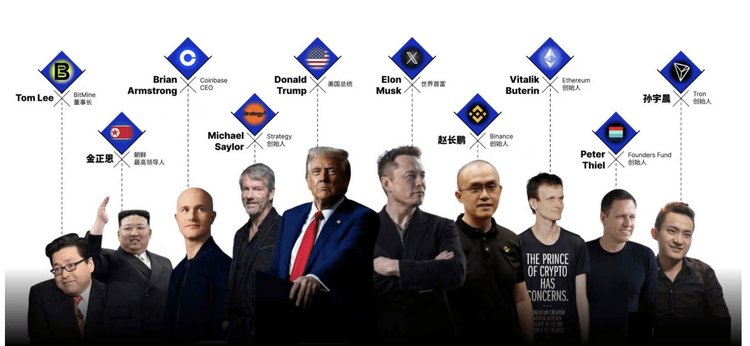
2025年に暗号のパワーバウンダリーを再定義する10人
ウォール街からホワイトハウス、シリコンバレーから深センまで、新しい電力ネットワークが形づくられつつあります。

ビットコインとイーサリアムの歴史的オプション満期が迫る:市場はどう反応するか
Key Takeaways 本日、ビットコインとイーサリアムのオプション満期が合計270億ドルに達し、史上最大の規模となる。 ビットコインは約236億ドルのオプションを抱えており、88000ドル付近での価格動向が注目される。 イーサリアムでは、オプションの約37億ドル分が満期を迎え、短期的には3000ドルが重要な価格ポイント。 オプション満期後の資金フローと機関投資家の動向により、市場の次の動きが左右される。 WEEX Crypto News, 26 December 2025 オプション満期の影響について 本日、ビットコイン(BTC)とイーサリアム(ETH)のオプションが合わせて約270億ドルに達し、暗号通貨市場に大きな影響を及ぼすとみられています。特に、ビットコインのオプション満期は歴史的に最大規模で、これは市場に新たな波紋を投げかけています。オプション市場は、通常の現物市場とは異なり、価格変動やトレーダーの心理に大きな影響を与えることが知られていますが、今回の規模の大きさは特筆すべき事態です。 ビットコイン市場の展望 ビットコインのオプション満期額は236億ドルに達し、その多くがDeribitで取引されています。BTCの価格は現在87,000ドル近辺で推移しており、この満期は短期的な価格動向に大きな影響をもたらす可能性があります。特に、ビットコインオプションのプット・コール比率が0.33とされており、これが市場のボラティリティをさらに高める要因となっています。 イーサリアム市場の行方 イーサリアムは、本日満期を迎えるオプションが37億ドル分あり、これはトレーダーの動向にさらなる波乱をもたらす可能性があります。ETHの価格は3000ドルを軸に揺れ動いており、今回の満期が価格の上昇や下降を引き起こすか注目されています。特に、プット・コール比率が0.43であるため、ここでの動きが市場センチメントをどう変えるかが鍵となります。…
Fed Q1 2026 Outlook: Bitcoinと仮想通貨市場への影響
Key takeaways Fedの金利引き下げの休止は仮想通貨に圧力をかける可能性があるが、「隠れ量的緩和」が下振れリスクを軽減するかもしれない。 流動性は金利引き下げ以上に重要であり、2026年第1四半期のBitcoinとETHの動向を形作る。 2025年には米連邦準備制度理事会(Fed)が三度の金利引き下げを実施したが、インフレ率によっては2026年初にはさらに下がる可能性がある。 軽微な供給施策が市場の方向性に影響を与え、特にETFの流入が投資家のリスク志向を支えると予想される。 WEEX Crypto News, 2025-12-26 10:06:42(today’s date,foramt: day, month, year) Fedの政策に対する仮想通貨市場の反応 2025年の米連邦準備制度理事会(Fed)は、経済の減速とインフレ圧力の緩和に対処するために金利引き下げを三回実施しました。特に、雇用の減少と消費者物価指数(CPI)の改善が見られる中、第4四半期に集中的に利下げが行われました。しかし、仮想通貨市場はこの養成政策に対して常識外の反応を見せました。Bitcoin(BTC)、Ethereum(ETH)などの主要な仮想通貨は、これまでの高値から1.45兆ドルを超える時価総額の減少を経験しました。 BitcoinとEthereumに対する金利引き下げ休止の影響…
Ethereum in 2026: Glamsterdam and Hegota Forks, L1 Scaling, and Beyond
新しいEthereumフォーク「Glamsterdam」は2026年にEthereumスケーリングの新たな一章を開く。 ガスリミットの200万への増加は、より大量の取引を同時に処理する能力をもたらす。 Zero-Knowledge( ZK )証明が進化し、Ethereum L1のスケーリングを加速させる。 新たなデータブロブを活用することで、Layer 2のネットワークが飛躍的に性能を向上させる。 「Heze-Bogota」フォークは、検閲への抵抗力を強化し、セキュリティ面での向上を目指す。 WEEX Crypto News, 2025-12-26 10:06:42 2026年には、Ethereumにとって重要な年となることが予想されています。この年、GlamsterdamフォークがEthereumブロックチェーンの処理能力を一段と向上させることが期待されています。特にガスリミットの大幅な引き上げやZero-Knowledge (ZK) 証明の普及が、Ethereumのスケーリングを新たなレベルへ引き上げる要因として注目されています。 Glamsterdamフォークの詳細とその影響…

BlockchainはQuantumの脅威に備える中、Bitcoinはその対応を議論
Key Takeaways Altcoinブロックチェーンが量子の脅威に備えている一方で、Bitcoinコミュニティでは対応の方法とタイミングについて意見が分かれている。 QuantumコンピュータがまだBitcoinを破ることはできないが、将来的に可能性があるため、さまざまなブロックチェーンが準備を進めている。 EthereumのVitalik ButerinはQuantumコンピュータの脅威をエンジニアリングの問題として捉える重要性について説明している。 SolanaとAptosは、量子耐性を持つ取引や署名のサポートをテストまたは提案している。 Bitcoinにおける議論は信頼に関するものであり、多くの論者がリスクの過小評価を懸念している。 WEEX Crypto News, 2025-12-26 10:10:43 ブロックチェーンが静かに進める量子コンピューティングへの備え 今、量子コンピュータはBitcoinを破ることはできませんが、近い将来これが現実となるかもしれません。こうした背景から、複数のブロックチェーンは量子コンピューティングに対する備えを進めています。最近の動向を見ても、Aptosは量子耐性を持つ署名のサポートを提案し、Solanaは量子耐性のある取引のテストを行っています。一方で、Bitcoinのコミュニティでは、量子安全性を高めるための対応策について活発な意見交換が行われています。 これらの動きは、暗号資産界隈の不安感を示しています。投資家たちは、影響力のある声が量子のリスクを軽視することで、Bitcoinの価格が下がっていると主張しています。実際、Bitcoinの価格は過去3ヵ月で24%下落しました。しかし、Altcoinブロックチェーンがオプトインのアップグレードやテストネットを通じて量子耐性を実験している中で、Bitcoinは公開的にどのように、そしてどれほど緊急に量子リスクに対処すべきかについて分裂しています。 アラームを鳴らさずに進める量子コンピューティングの備え Ethereumは、量子コンピュータの影響を現実的なエンジニアリングの問題とみなす理由を明確にしています。Ethereumの共同創設者であるVitalik…

Vitalikが語る、XのGrokによる真実性向上と課題
Ethereumの共同創業者であるVitalik Buterinは、GrokがXの真実性を高めると指摘。 Grokはユーザーの政治的偏見を確認するのではなく、それに対抗する回答を提供する。 Elon Muskの影響下にあるAIの調整に関する懸念も。 AIの偏りはシステム全体に拡散する可能性がある。 AIチャットボットの改善が必要とされる背景には、誤情報の拡散がある。 WEEX Crypto News, 2025-12-26 10:12:44 Xの真実性強化のためのGrokの貢献 Vitalik Buterinは、XプラットフォームにGrokというAIチャットボットの導入が真実性に有益であると述べています。このアプローチの主な特徴は、Grokがユーザーからの問い合わせに対し、予期しない答えを提供する能力にあります。ユーザーが偏った意見を確認しようとしても、Grokは彼らの期待に反した答えを出し、反対者の立場を示すことがよくあります。 Buterinによれば、この能力がXのプラットフォームにおける大きな進化を促していて、特に「コミュニティノート」の後にポジティブな影響を及ぼしていると言われています。このため、GrokはXの真実性強化において大きな役割を果たしているのです。 Elon MuskとGrokの影響…
ブロックチェーンの未来と量子コンピューティングの脅威に直面してBitcoinが抱える課題
長期的な量子コンピュータの脅威に備えるため、多くのブロックチェーンが新たな対策を検討中。 Ethereumの共同創設者、Vitalik Buterinが量子コンピューティングを差し迫った技術問題として捉える重要性を強調。 Bitcoinは量子リスクに対する対応方法についてコミュニティ内で意見が分かれている。 理論上では現行の公開鍵暗号が量子コンピュータに解読される可能性が懸念されている。 投資家は量子リスクを無視することがビットコインの価値に影響を与える可能性があると考えている。 WEEX Crypto News, 2025-12-26 10:15:08 量子コンピューティング技術の進展は、現在の暗号通貨市場に新たな懸念をもたらしています。この技術が公開鍵暗号を解読するようになったとき、大規模なパニックを引き起こす可能性があります。特にBitcoinは、量子リスクについてどのように対応すべきかについて長い間議論されてきました。 Ethereumと他のブロックチェーンの準備 Ethereumは、量子コンピューティングを仮説ではなく技術的課題として捉える必要性を早い段階で認識しました。Ethereumの共同創設者、Vitalik Buterinは、たとえその確率が低くとも、量子コンピュータが公開鍵暗号を解読可能になる前に準備を始めることの重要性を主張しています。予測モデルによれば、2030年までにその可能性は約20%とされていますが、2040年までにはより現実的なものになるとの見方もあります。 他の主要なブロックチェーンもこれに追随しています。Aptosは、量子耐性のある署名サポートをアカウントレベルで追加することを提案し、SolanaはプロジェクトElevenと提携し、量子耐性のある署名をテストする専用テストネットを展開しました。このような取り組みは、将来的な機能拡張に向けた基盤作りを目的とし、今すぐの脅威ではないことを強調しています。 Bitcoinにおける量子リスクに関する議論 Bitcoinにおける量子リスクの議論は、実際には信頼の問題に集約されます。Bitcoinは楕円曲線暗号に基づいており、これは公開鍵を通じて資金の所有権を証明します。しかし、量子コンピュータがこれを逆算してプライベートキーを見つけ出せるとなると、資金が不正に動かされる可能性があります。…
ビットコイン、9万ドル突破に至る地政学的影響と市場動向
Key Takeaways ビットコインが9万ドルを突破し、市場全体に影響を与えた。 地政学的緊張により、原油価格が上昇し、インフレ予測が市場感を揺さぶる。 世界的な取引の低迷にもかかわらず、加密資産全体での動きが活発化。 ロシア・ウクライナ間の紛争が市場に長期的な影響を与える可能性。 WEEX Crypto News, 29 December 2025 9万ドル突破に至るビットコインの歴史的背景 ビットコイン(BTC)は、2025年12月29日に9万ドルの大台を突破し、市場に波紋を広げた。この出来事の背景には、地政学的な緊張と世界的な経済環境の変化がある。 1. 地政学的緊張と通貨市場への影響 2025年後半、ロシアとウクライナの緊張が再び高まり、これに伴い、地政学的な不安が市場に影響を及ぼした。特に、ウクライナの首都キーウへの攻撃が続き、エネルギー価格に大きな影響を与えた。国際的な原油価格は上昇し、これがインフレーション予測を押し上げる要因となった。 2.…
2026年、加密財庫業界の展望に関する懸念が浮上
Key Takeaways 加密財庫(DAT)企業の2026年の前景は暗く、多くの大型財庫の株価が大幅に下落する可能性がある。 山寨男の加密貨幣基金は、市値が保有暗号資産の価値を上回らないため、最も影響を受けると予想される。 イーサリアム、ソラナ、XRPなどの主要DATも近い将来危機に瀕する可能性がある。 MoreMarketsのAltan Tutar氏は、これらの見通しを強調し、特に市場の変動性に対する備えを呼びかけている。 WEEX Crypto News, 29 December 2025 加密財庫企業の挑戦 近年、加密財庫(DAT)企業は暗号資産市場で急成長を遂げてきました。しかし、MoreMarketsの共同創設者兼CEOであるAltan Tutar氏は2026年の見通しについて、業界全体が暗い前途を迎えつつあると警鐘を鳴らしています。Tutar氏は、特に山寨男の加密貨幣基金が市場での地位を維持するのが難しくなると予測しています。彼によると、これらの基金は、企業の市値をその保有暗号資産の価値を上回る水準に維持することができないからです。 Tutar氏が指摘するように、これは単なる山寨男の加密貨幣基金にとどまらず、主要なDATもまた危機に瀕しています。特に、イーサリアム、ソラナ、XRPといった広く取引されている通貨が挙げられています。これらは暗号資産の中でも特に注目されているため、市場の不安定さが増す中で、この予測は多くの投資家に衝撃を与えています。 大型財庫と市場の不安…
ビットコインが89,000ドル突破、短期間での急上昇
Key Takeaways ビットコイン(BTC)は12月の後半に89,000ドルを突破し、その直後の市場データではさらに上昇する勢いを見せています。 特定の日におけるBTCの最大上昇幅は1.2%を記録し、暗号通貨市場は強気のトレンドを示しています。 一方で、年初から続く市況の不安定さが依然として懸念されており、長期的な価格の持続性に対する分析が続けられています。 BTC市場の変動に資産の多様化を図る投資家が増えており、他の仮想通貨への関心も高まっています。 WEEX Crypto News, 29 December 2025 ビットコインの現状分析 急騰の背景 12月に入ってから、ビットコイン(BTC)は89,000ドルの重要な心理的節目を突破し、その影響はマーケットに明確に現れました。具体的には、12月22日にはOKXの市場データで1.2%の上昇を記録し、価格は89,012.10ドルに達しました。このような短期間での急上昇は、特に仮想通貨市場のリスク評価や投資戦略に大きな影響を与えています。 市場の反応とトレンドの分析 ビットコインの価格上昇に対する市場の反応はポジティブです。特に、短期間での1%以上の上昇が何度か見られ、取引所でのボリュームも増加しています。これは通常の株式市場とは異なる仮想通貨の特性によるものです。今後も同様のトレンドが続くかについて投資家の関心が集まっています。 長期的な視点と懸念…
Ethereumの新たなアップグレード「Hegota」、2026年後半に予定
Key Takeaways Ethereumの次のメジャーアップグレード「Hegota」は2026年後半に予定されており、Glamsterdamの後に続く形で進行します。 このアップグレードはより頻繁なネットワークの変更を目指し、Ethereumの開発プロセスにおける新しいアプローチを反映しています。 デベロッパーは年明け1月にGlamsterdamの詳しい範囲を最終確定する予定です。 Verkle TreesがHegotaの候補機能として検討されており、効率的なデータ管理を可能にすることが期待されています。 WEEX Crypto News, 2025-12-29 06:02:54 イーサリアムのエコシステムにおける次の重要なマイルストーン、「Hegota」アップグレードが2026年後半に予定されています。この発表は、開発者がネットワークの移行をより迅速に行うという新たなアプローチを採用することを反映しています。イーサリアムの次なる大きな変革は、先行する「Glamsterdam」アップグレードの後に来る予定です。このプロジェクトは、コア貢献者が重大なアップグレードを年に1度の大規模なリリースにまとめる代わりに、より頻繁に変更を導入することを目指しています。 開発の新たなアプローチ この新しいアプローチの採用は、ネットワークの急成長と増大する需要に対し、開発プロセスが充分に対応できていないとする一部のユーザーと開発者からの批判を受けた結果です。この動きは、プロトコル開発がネットワークの進化に追いついていないという問題に対処するためのものであり、より迅速な対応を促進します。 現在、開発者たちは2026年前半に予定されているGlamsterdamアップグレードの詳細な範囲を確定する作業をしています。その後、Hegotaに関する大きな変更点、正式にはEthereum Improvement Proposals…
ビットコインとイーサリアムが上昇する中、貴金属のラリーが市場を盛り上げる
Key Takeaways ビットコインは$86,500から$90,000の間で安定しており、イーサリアムは最近の取引で小幅な上昇を見せている。 XRPやSolanaを含む主要なAltsがビットコインとイーサリアムを上回る成長率を示しており、薄い取引量の中でも注目を集めている。 貴金属市場も急激な上昇を続けており、銀と金がリスク回避資産として注目を集めている。 2026年には市場構造の変化が暗号市場の在り方を形成する可能性があるとCoinbaseが予測している。 WEEX Crypto News, 2025-12-29 06:02:55 世界中の投資家が新たな年へのカウントダウンを始める中、暗号通貨市場はビットコインとイーサリアムを中心にした上昇基調を見せている。ビットコインの価格は最近の取引で$86,500から$90,000の間で安定し、イーサリアムもわずかながら価格を上げている。これにより、他の主要な暗号通貨も上昇していると言える。 ビットコインとイーサリアムの堅調な動きと並行して、XRPやSolanaなどのアルトコインが、これらの主要通貨以上のパフォーマンスを見せ続けている。特に週末の薄い取引量の中でも、これらのアルトコインは注目され、投資家たちの関心を引き続けている。 ビットコインの価格動向と分析 ビットコインの価格は強固なサポートラインをもって推移し続けている。取引量が低下しているにもかかわらず、その価格は狭い範囲で推移しており、購買圧力と売却圧力の均衡が保たれている。このような状況では、トレーダーたちは市場の不安定性を利用し、短期的な利益を狙っているようだ。 著名なアナリスト、Michaël van de…
2026年、Ethereum(イーサリアム)はZK技術で指数関数的にスケーリングを開始
キー・テイクアウェイ – 2026年、EthereumはZKプロトコルを用いたスケーリングを開始し、10,000TPSに向けて進化。 – Zero-Knowledgeプローフ(ZKプローフ)により、ネットワークはより少ないリソースで効率的に運用可能に。 – Ethereum Interoperability Layer (EIL)により、異なるレイヤー2がシームレスにトランザクションを実行可能に。 – ZKsyncのAtlasアップグレードにより、Ethereum L1とZKsyncチェーン間で瞬時に相互運用性が実現。 WEEX Crypto News, 2025-12-29 06:03:47…


 App
App