

The era of Fed's Permanent Quantitative Easing is approaching, where do opportunities lie for the common person?

Original Article Title: Why QT is Dead and QE is Coming
Original Article Author: James Lavish, CFA
Original Article Translation: Golem, Odaily Planet Daily
"The Federal Reserve may stop shrinking its balance sheet in the coming months," a statement by Fed Chairman Powell last week sparked various speculations in the market. The hidden signal behind this statement is that "quantitative tightening (QT) is about to transition to quantitative easing (QE), and at a faster pace than most people expect."
But is this just a symbolic move by the Fed, or does it carry extraordinary significance? Most importantly, what is Powell implying about the current state of the financial system? This article will delve into the Fed's liquidity strategy, the liquidity crisis it faces today compared to 2019, and why the Fed will embark on a permanent quantitative easing policy (QE).
Looming Liquidity Crisis
Reverse Repurchase Agreement (RRP) Has Become Ineffective
RRP was previously a massive reservoir of excess liquidity, with its savings peaking in 2022 at around $2.4 trillion, but now it is essentially empty. As of this week, RRP has only a few billion dollars left, shrinking by over 99% from its peak.
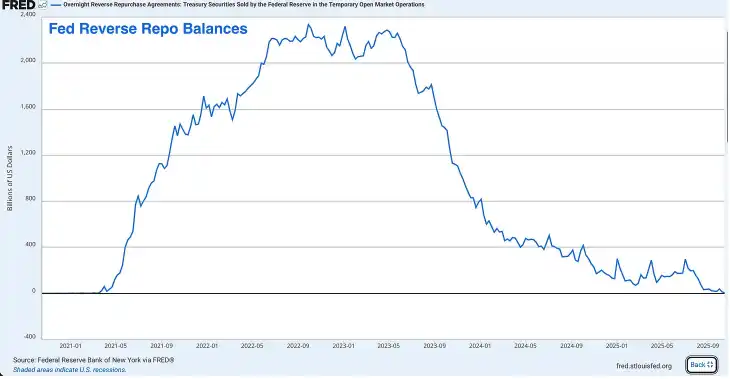
Although RRP was initially created as a tool to help the Fed manage short-term interest rates, in recent years it has become a pressure release valve for excess liquidity and a shock absorber for the entire financial system.
During the COVID-19 pandemic, the Fed and the Treasury injected trillions of dollars into the financial system, with this cash ultimately being deposited into RRP through money market funds. Later, Treasury Secretary Janet Yellen came up with a clever trick to deplete the RRP funds by issuing attractive short-term Treasury bills.
Money market funds withdrew their cash from RRP (earning the Fed's RRP rate) and instead purchased higher-yielding Treasury bills. This allowed the Treasury to fund the government's massive deficit without injecting large amounts of long-term U.S. Treasury bonds into the market.
While this was a brilliant strategy before RRP was depleted, it is no longer effective today.
Bank Reserve Levels Now at Stage Two Alert
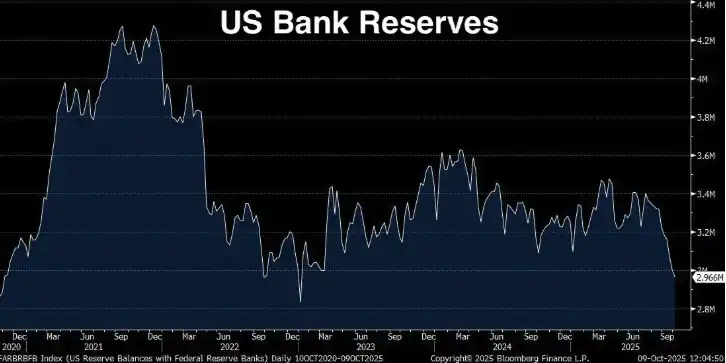
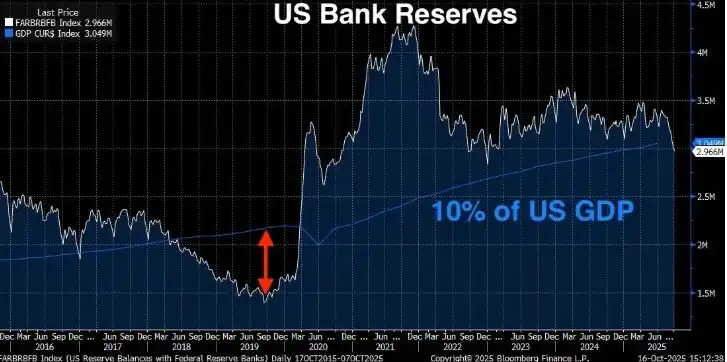
Bank reserves have dropped to $2.9 trillion, a decrease of $1.3 trillion since reaching a peak in September 2021. Powell has made it clear that the Fed starts to get uncomfortable when bank reserves fall below 10-11% of GDP. The 10% threshold is not an arbitrary number; it is based on extensive Fed research, surveys of banks, and lessons learned from the actual events of September 2019 (more on that disaster to come).
So where do we stand now?
Current Bank Reserves: $2.96 trillion (as of last week)
Current U.S. GDP: $30.486 trillion (Q2 2025) Reserves as % of GDP: 9.71%
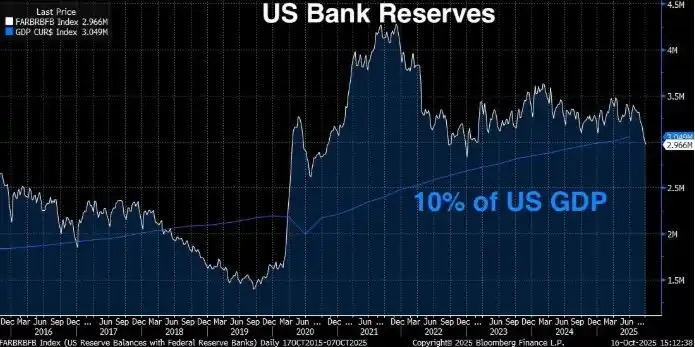
Current bank reserves have fallen below the Fed's established 10% "comfortable level" of reserves deemed necessary for the financial system to operate smoothly. According to the Fed, to ensure market functioning, reserves should be maintained between $2.8 trillion and $3.4 trillion. However, with GDP at $30.5 trillion, the 10% threshold would imply reserves ideally over $3.05 trillion.
With current reserves at $2.96 trillion, in short, we are in a precarious position. And with the RRP almost fully tapped, the Fed has essentially no more wiggle room.
In January of this year, bank reserves were around $3.4 trillion, RRP around $600 billion, with total liquidity around $4 trillion, meaning that in less than a year, total system liquidity has declined by over $1 trillion. To make matters worse, the Fed is still engaging in quantitative tightening at a pace of $25 billion per month.
This Time Could Be Worse Than 2019
Some may optimistically point to 2019 when we faced a similar situation with reserves dropping to $1.5 trillion, but everything turned out fine in the end, assuming the same outcome this time. However, the truth may be that the liquidity crisis we are facing this time around could be worse than 2019.
In 2019, reserves fell to $1.5 trillion, about 7% of GDP (which was around $21.4 trillion at the time), causing a paralysis in the financial system. The repo market saw explosive growth, leading the Federal Reserve to panic and resort to money printing. Currently, bank reserves represent 9.71% of GDP, slightly below the 10% reserve adequacy threshold mentioned by Powell but still higher than in 2019. So, why is the situation getting worse?
There are three reasons:
· The absolute size of the financial system has expanded. The banking system is larger, with bigger balance sheets, requiring a larger amount of reserves to keep the system functioning smoothly. The 7% in 2019 triggered a crisis; now, with reserves at 9.71% of GDP, the pressure is evident, and as reserve levels decrease, this pressure point could worsen.
· We no longer have the RRP buffer. In 2019, RRP was almost nonexistent, but in the post-pandemic era, the financial system has grown accustomed to this extra liquidity buffer. Now that it's gone, the financial system must readjust to operate without it.
· Regulatory requirements have become stricter. Following the 2008 financial crisis and the recent 2023 regional banking crisis, banks face tighter liquidity requirements. They need to hold more High-Quality Liquid Assets (HQLA) to meet regulations like the Liquidity Coverage Ratio (LCR). Bank reserves are the highest quality liquid assets. As reserves decline, banks are getting closer to their regulatory minimum. As they approach it, they start taking defensive actions like reducing lending, hoarding liquidity, and raising the Secured Overnight Financing Rate (SOFR).
SOFR Spread is Widening
If the increase in bank reserves and the depletion of RRP were just a few "stop signs" on our path towards a liquidity crisis, next up, we'll see the real "flashing red lights" ahead.
SOFR/Effective Federal Funds Rate Spread
SOFR (Secured Overnight Financing Rate) is the rate at which financial institutions borrow cash overnight, collateralized by U.S. Treasury securities. It has replaced the London Interbank Offered Rate (LIBOR) as the primary short-term rate benchmark, calculated based on actual transactions in the U.S. Treasury repo market (with daily volumes around $1 trillion).
The Effective Federal Funds Rate (EFFR) is the rate at which banks lend reserve balances to other banks overnight, unsecured. Under normal circumstances, the two rates trade very close to each other (within a few basis points), as they are both overnight rates linked to the Fed's policy and reflect short-term funding conditions.
Under all normal circumstances, they are almost identical, but when the SOFR starts to noticeably exceed the EFFR, it issues a warning. This means that secured loans (i.e., loans backed by U.S. Treasuries) suddenly become more expensive than unsecured interbank loans.
Typically, the cost of borrowing using rock-solid collateral like U.S. Treasuries should be lower, not higher. Therefore, when the opposite occurs, it indicates a problem within the system, such as a liquidity squeeze or a shrinking balance sheet capacity.
SOFR surpassing EFFR is like banks saying, "I'd rather offer you an unsecured loan at a lower rate than accept your U.S. Treasury collateral at a higher rate." This situation does not occur in a healthy, liquid market; it only occurs when liquidity begins to dry up.
Structural Widening of the Spread
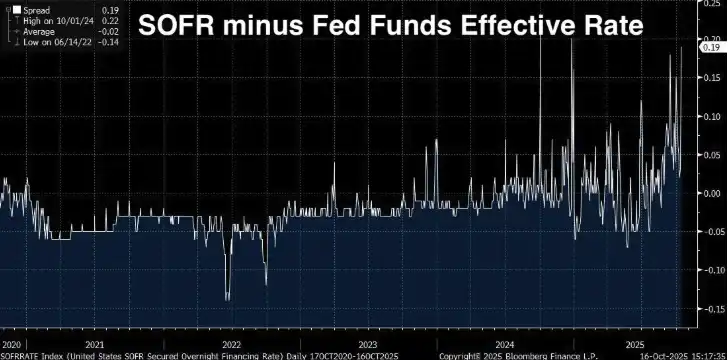
From 2024 to 2025, the spread has been steadily widening, with the current spread at 0.19 (or 19 basis points). This may sound small, but in the overnight funding realm, this is already a significant figure.
The average spread from 2020 to 2022 was approximately -0.02, with a low point on June 14, 2022, even reaching -0.14. However, by October 1, 2024, the spread peaked at 0.22, and now it stands at 0.19. The shift from a negative to a positive spread is not a short-term peak performance but a structural change signaling tight reserve conditions in the market.
Why the SOFR Spread Is So Important
The SOFR/EFFR spread is a real-time market signal. It is not a lagging indicator like GDP or a survey like consumer confidence. It represents actual borrowing and lending of funds in the world's largest and most liquid funding market.
When this spread continues to widen, it signifies:
· Banks do not have excess reserves available to lend freely. If they did, they would arbitrage by lending at a higher rate in the SOFR market to offset the spread.
· The Federal Reserve's Open Market Operation is Insufficient. The Federal Reserve has a standing repo facility (SRF) designed to prevent funding pressures by allowing banks to borrow U.S. Treasuries at a fixed rate. Despite the existence of this tool, the SOFR trading rate remains elevated, indicating that the demand for reserves exceeds what the Federal Reserve is providing.
· Year-End Pressures are Escalating. Banks face additional balance sheet scrutiny at quarter-end and year-end for regulatory reporting purposes. These pressures have now spilled over into regular trading days, indicating that the reserve target level is too low.
· We are One Step Away from a 2019-Style Crisis. What we are currently seeing is a structural rise, but we have not yet seen panic (at the moment). In September 2019, the overnight repo rate didn't gradually rise but surged nearly overnight from 2% to 10%.
The Federal Reserve is acutely aware of what this means, with the SOFR spread being one of the key metrics monitored daily by the New York Fed's trading desk. They know what happened last time the spread widened so dramatically, and they know what will happen if no action is taken.
Revisiting the 2019 September Repo Crisis?
September 17, 2019. For anyone following Federal Reserve policy, this should be a day to remember. Because on that morning, the overnight repo rate (the rate at which banks borrow overnight using U.S. Treasuries as collateral) suddenly spiked from around 2% to 10%.
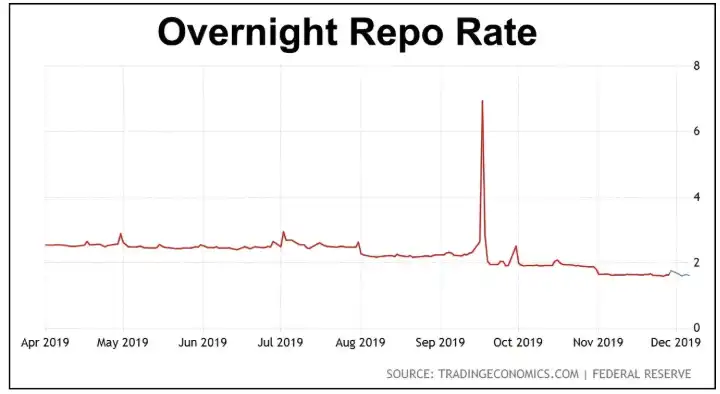
At that time, the Federal Reserve's target rate was 2.00-2.25%, and the repo rate jumped to five times the Fed's policy rate in a matter of hours, all because bank reserves had dropped too low.
After the financial crisis, the Federal Reserve expanded its balance sheet from less than $1 trillion to over $4.5 trillion through various quantitative easing programs. However, starting in 2017, they began a process of quantitative tightening by allowing bonds to mature without reinvestment, shrinking the balance sheet.
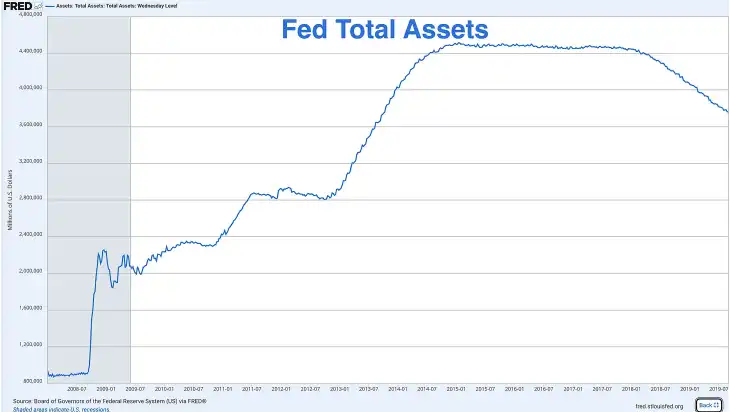
By September 2019, reserves had dropped to around $1.5 trillion, about 7% of the GDP at the time (with GDP around $21.4 trillion). The Federal Reserve naively thought this was not a problem, but they were proven wrong.
At that time, several deadly factors converged to cause the overnight repo rate to skyrocket:
· Corporate Tax Payment Deadline—Mid-September is a crucial deadline for corporate taxes. Companies withdraw reserve funds from the banking system to pay the U.S. government, temporarily draining liquidity.
· Treasury Settlement—A large Treasury auction had just settled, taking additional reserve funds out of the system.
· Lack of Buffer—Unlike today (before RRP was exhausted), in 2019, reserves were the sole source of liquidity.
· Regulatory Constraints—Post-2008 regulatory requirements meant that banks were less willing to lend reserve funds, even as rates rose, because they needed to maintain a certain ratio.
Fed's Remedial Measures: Pre-COVID Quantitative Easing
The Fed understandably panicked, and within hours, they announced emergency repo operations, injecting hundreds of billions of dollars into the overnight funding market. Over the following weeks, they started to intervene:
Conducting daily repo operations, adding temporary liquidity of billions of dollars to the market. Announcing they would once again start purchasing U.S. Treasuries (i.e., expanding the balance sheet). Ending quantitative tightening months ahead of schedule and commencing quantitative easing in October 2019.
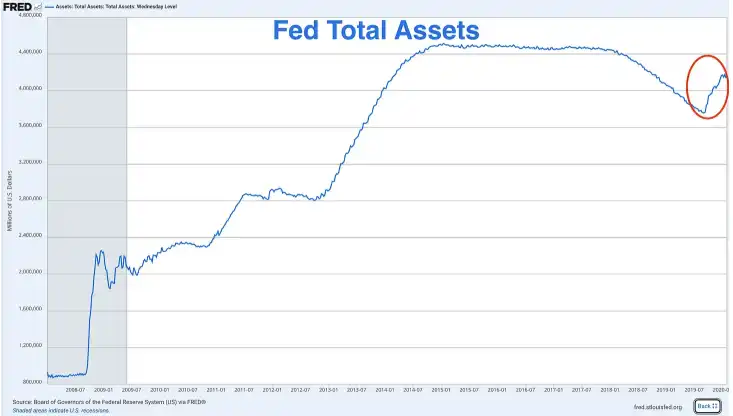
The year-end surge in the Fed's total assets in 2019 was credited to quantitative easing, with the printing press starting to roll.
However, all of this unfolded in the six months before the COVID-19 lockdown. So, the Fed's restart of quantitative easing was not due to the pandemic, not due to an economic recession, not even due to a traditional financial crisis, but because bank reserves were too low, and the financial system's "pipeline" was ruptured.
Now, the Fed is once again facing the issue of low bank reserves, and we are just in the early stages of the crisis.
Differences Between Now and the 2019 Crisis
However, there are still some differences between now and 2019, making the crisis worse:
· The Treasury Needs to Issue More Bonds
In 2019, the federal deficit was about $1 trillion per year, which, although historically high, was still manageable. Today, the annual deficit is over $2 trillion, and there seems to be no end in sight. The Treasury Department must issue massive amounts of bonds to fund the government, and every dollar of issued government debt could potentially absorb liquidity from the banking system.
· The Fed's Balance Sheet Has Ballooned Beyond Expectations
When the repo crisis broke out in 2019, the Fed's balance sheet was about $3.8 trillion. Today, even after $2 trillion of quantitative tightening (QT), its size is still around $6.9 trillion. The Fed was supposed to "normalize" its balance sheet, returning it to pre-crisis levels. However, they can't do it now because every attempt runs into the same problem: a lack of reserves.
The Fed has essentially pushed itself into a permanent state of quantitative easing. They cannot significantly reduce the balance sheet without destabilizing the system, nor can they maintain the current size without exacerbating inflation.

· Higher Reserve Levels Are Causing Cracks in the System
In 2019, at the outbreak of the crisis, the reserve size had already reached 7% of GDP, and now, at 9.7%, we are seeing warning signs. This indicates that the financial system now requires a higher reserve base to operate smoothly. The economy, the banking system, and leverage have all grown larger, regulatory requirements have become stricter, hence the needed cushion is also larger.
If at 7% of GDP in 2019 the system was already strained, and now we are facing pressure at 9.7%, how much lower can this number go before a system collapse?
The Fed Has Signaled
Powell's statement that the Fed "may stop shrinking the balance sheet in the next few months" was not off the cuff; it was a deliberate signal. The Fed is preparing for a policy shift, trying to avoid being caught off guard as in 2019, taking panicked emergency actions.
This time, they want to appear in control. But control is just an illusion. The result is the same: quantitative tightening is about to end, and quantitative easing is about to begin.
Now the only question is: Will they wait for the crisis to unfold, or will they strike first?
The Fed Must Implement Quantitative Easing (QE)
We already know that the current state of the U.S. economy is precarious, with the reserve level extremely low, RRP depleted, SOFR spread widening, and a situation even worse than in 2019. Now, let's delve into why the Federal Reserve is so concerned about the reserve level and what will happen when this liquidity crisis intensifies.
When the reserve rate falls below 10-11% of GDP, banks begin to exhibit stress behavior, including:
· Being less willing to lend their reserves overnight to other banks
· Hoarding liquidity to address unexpected demands
· Charging higher rates for short-term loans (SOFR spread)
· Reducing lending to the real economy
· Making their balance sheets more defensive
With the current reserve rate at 9.71% of GDP, the money transmission mechanism may already be starting to break down.
The Trauma of the 2023 Banking Crisis
The Federal Reserve and regulatory agencies are deeply concerned about the regional banking crisis in March 2023. At that time, banks like Silicon Valley Bank and First Republic Bank collapsed due to poor liquidity management. The long-term bonds they held depreciated as interest rates rose, and when depositors withdrew their funds, the banks were unable to offset the outflow without selling these bonds, resulting in massive losses.
In the end, the Federal Reserve intervened and launched the Bank Term Funding Program (BTFP), allowing banks to borrow against their underwater bonds at face value to prevent this crisis.
This crisis is still vivid today. Imagine attempting to shrink the overall reserve supply (through quantitative tightening policies) in an environment where banks are still scarred, regulatory scrutiny is intense, and rates are below the 10% threshold. You can understand why Powell is already talking about ending quantitative tightening policies.
The Fed Has No Choice But to Move Forward
The current GDP is $30.5 trillion, with an annual growth rate of about 2-3%. If this year the GDP grows by 3%, that means an additional output of around $900 billion. If the Fed wants reserves to remain around 10% of GDP, reserves need to increase by about $90 billion annually to keep up with the growth rate.
On the contrary, the Fed has been reducing its balance sheet by about $300 billion annually ($250 billion per month × 12). Even if the Fed were to halt quantitative tightening today and stabilize reserves at $2.96 trillion, the reserve-to-GDP ratio would still decline over time, dropping from 9.7% to 9.5%, then 9.2%, or even lower.
To maintain this ratio (or bring it back above 10%), the Fed has two options:
· Keep reserves growing in line with GDP (moderate quantitative easing)
· Let the ratio gradually decline until a breach occurs
There is no third choice. In short, the Fed is like a mouse stuck on a hamster wheel, forced to move forward.
The Fed is expected to officially announce the end of its quantitative tightening policy at the December or January FOMC meeting. They will frame it as a "technical adjustment to maintain ample reserves" rather than a policy shift. If there is a significant reserve drawdown again before year-end, the Fed may be forced to issue an emergency statement, as it did in 2019.
The Fed Always Overcorrects
With the federal government's deficit exceeding $2 trillion annually, the Treasury needs to issue a large amount of bonds. With the RRPs depleted, where will the funds come from? There isn't enough private demand to absorb over $2 trillion in bonds each year unless yields skyrocket. If banks tap reserves to buy U.S. Treasuries, it will further deplete reserves, exacerbating the issue.
This situation forces the Fed to once again become the buyer of last resort. Additionally, with a GDP annual growth rate of 2-3%, reserves need to increase by $60-90 billion annually to maintain the current ratio.
Looking back at 2008-2014, the Fed's quantitative easing was not restrained. They conducted three rounds of QE and one twist operation, expanding their balance sheet from $900 billion to $4.5 trillion.
Now, in 2019-2020, they restarted balance sheet expansion in October 2019 (buying $60 billion in U.S. Treasuries per month). Then, with the onset of the pandemic, they unleashed aggressive expansion, adding $5 trillion in a matter of months.
When the Fed shifts to easy policy, they always overcorrect. Therefore, when this round of quantitative tightening ends, do not expect the Fed to engage in a mild and gradual QE. Rather, anticipate a vigorous expansion akin to a flood.
The Federal Reserve may purchase $600 billion to $1 trillion of U.S. Treasuries each month to "maintain ample reserves and ensure smooth market functioning."
What Should We Do?
When central banks around the world begin unlimited money printing, we have only one rational response: hold assets they cannot print: gold and Bitcoin.
The market has already priced in quantitative easing into the price of gold, which has skyrocketed. In January 2025, the price of gold was around $2,500 per ounce, and it has now risen by over 70%, with the trading price exceeding $4,000 per ounce. Smart investors are not waiting for the Fed to announce quantitative easing; instead, they have already started to "buy in."
In addition to gold, Bitcoin is also the best asset to deal with the upcoming quantitative easing tsunami.
Bitcoin is the first truly scarce digital asset, with a fixed supply of 21 million. While the Fed can print an unlimited amount of dollars, no entity, whether the Fed, government, corporation, or miner, can create more Bitcoin.
At the same time, Bitcoin's upside potential is even greater than that of gold for the following reasons:
· Bitcoin is harder to mine than gold.
· Gold's supply increases annually through mining by about 1.5-2%, making gold's scarcity relative rather than absolute; Bitcoin's supply grows at a fixed decreasing rate (halving every four years) and will reach an absolute peak of 21 million around 2140, after which Bitcoin will no longer be mined, ever.
· Bitcoin is the hardest money ever created in human history.
· Bitcoin follows the trend of gold and has a multiplier effect. Currently, Bitcoin's trend is significantly "behind" that of gold, but historically, when gold rallies due to continued monetary policy concerns, Bitcoin eventually catches up and usually exceeds the percentage gains of gold.
· Bitcoin allows you to completely opt-out of the sovereign debt Ponzi scheme. While gold can protect you from inflation, Bitcoin goes far beyond that; it exists entirely outside the system, cannot be confiscated (if properly stored), devalued, or manipulated by central banks.
In conclusion, I hope that your investment decisions will be wiser after understanding the reasons for the Fed's upcoming shift from quantitative tightening to quantitative easing, the liquidity conditions, and why Bitcoin and gold are assets worth holding in the upcoming period of currency expansion.
関連記事

2026年初頭の暗号市場を牽引するもの: 相場の揺れ、AI取引、ETFの流れ?
ビットコインとイーサリアムの価格を1日でチェックするところを想像してみてください。 鋭い動き、素早い反転、マクロシグナルへの敏感さは2026年第1週をマーク。 年初来の利上げ後、市場が米国の金融政策や制度の流れに関する期待を再調整したため、両資産は後退した。 AIや自動化システムに依存しているトレーダーを含むトレーダーにとって、この期間は鮮明なリマインダーを提供しました。豊富なシグナルは明確さを保証するものではありません。 遂行において規律を保つことは、しばしば本当の課題です。

Solanaの価格予測:モルガン・スタンレーがSOL ETFを申請―ウォール街の次なる仮想通貨フィーバーの始まりか?
Key Takeaways モルガン・スタンレーが初のSolana(SOL)連動ETFを申請し、ウォール街の注目を集めています。 Solana ETF市場は、わずか6か月で8億100万ドルを集めるなど成長しています。 SOLは取引量5.5億ドルを誇り、一週間で9%上昇しています。 Solanaエコシステムが活発化するにつれ、Bitcoin Hyperなどの仮想通貨プレセールが注目されています。 投資家は投資先としてのSolanaを歓迎し、特にそのステーキング報酬が注目されています。 WEEX Crypto News, 2026-01-08 12:50:49 モルガン・スタンレーによるSOL ETFの申請と市場への影響 モルガン・スタンレーは、Solana(SOL)に連動する新たなETFを申請しました。これはウォール街における暗号資産への興味の拡大を示す重要な動きです。このETFは、仮想通貨市場への大手金融機関からの初の積極的なエントリーを示しており、その影響は計り知れません。 Solana…

Capital Inflows into Bitcoin Have Dried Up, Declares CryptoQuant CEO
Key Takeaways Bitcoinのキャピタルインフローは、多様化する流動チャネルと機関投資家の長期保有戦略により減少した。 現在の市場では、大口の売却行動が見られず、投資家間の売却圧力は限定的である。 大口投資家による流動性供給の欠如が、価格変動の少ない横ばいの市場を形成している。 金や銀などの貴金属の上昇がビットコインの価格に影響を与え、将来的には再びキャピタルインフローが増加する可能性がある。 長期的な視点では、ビットコイン投資は時間をかけて熟成させるウィスキーのように、慎重な保有が求められる。 WEEX Crypto News, 2026-01-08 12:50:50 変化する市場と流動性チャネルの役割 暗号資産市場では、過去とは異なる新しい流動性チャネルが形成され、特にBitcoinのキャピタルインフローが顕著に変わりました。CryptoQuantのCEO、Ki Young Juによると、最近のBitcoinの価格が約94,000ドル周辺で停滞し、これまで見られていた大口投資家による売却が小口投資家の動きを引き起こすという従来のパターンが崩れたと述べています。こうした動きは市場のサイクルに大きな変化をもたらし、横ばいのトレーディング期間が続く可能性があるようです。 この変化の背景には、MicroStrategyの673,000BTCを含む、機関投資家による長期保有戦略の影響が大きく関与しています。これにより、これまで経験してきたような大幅な価格調整が起きにくくなり、資金は伝統的な株式や貴金属へとシフトしていると言えます。このことが市場に「退屈な横ばい」の価格動向をもたらしているとも考えられます。 大口投資家の動向と市場の構造的健康…

Babylon Labsがa16z cryptoから$15Mを調達し、Bitcoinの担保インフラを開発
Key Takeaways Babylon Labsがa16z cryptoから1500万ドルを調達し、Bitcoin担保用インフラ「BTCVaults」の開発とスケールアップを進行中。 この資金は、Bitcoinをネイティブの形でチェーン上の担保として利用可能にするための技術と、外部アプリケーションとの統合を支援するために使用される。 BTCVaultsは、カストディアンやラップされたBitcoinを必要としない点で、市場に新たな可能性を提供。 既存の金融システムと連携することが可能で、Bitcoinを自己管理したまま担保として活用することを促進。 WEEX Crypto News, 2026-01-07 14:49:43 Babylon LabsがBitcoin担保インフラで切り開く未来 資金調達と今後の展望 2026年1月7日、Babylon Labsは、Bitcoin担保インフラである「BTCVaults」を開発するためにa16z…

ブラジルの元中央銀行役員が実利に連動した利回りシェア型ステーブルコイン発表
ブラジル・レアルに連動した新しいステーブルコイン「BRD」が発表されました このコインはブラジル国債を裏付け資産とし、15%に達する現地の高い利率を投資家に提供 外国投資家にとってのブラジルの利回り市場アクセスの障壁を取り除くことが狙い BRDは既存ステーブルコイン市場において差別化を図るため、政府の債務から得た利子をホルダーと共有 WEEX Crypto News, 2026-01-07 14:49:40 新しい資産クラスとしての利回りシェア型ステーブルコイン 2026年1月7日、ブラジルの元中央銀行役員であるトニー・ヴォルポン氏が新たなフィナンシャルプロダクト「BRD」を発表しました。BRDは、ブラジル・レアルに連動したステーブルコインであり、ブラジル国債を裏付け資産としてレアルとの交換性を維持するものです。この新しいトークンは、特に金利の高いブラジル市場に興味を持つ国際的な投資家にとってのアピールポイントとなっています。現在、ブラジル中央銀行が設定する基準金利は15%とされています。これに対して、アメリカ連邦準備制度理事会の目標金利はわずか3.5%から3.75%です。 ブラジルの高金利環境は長年国際投資家から注目されてきたが、その利回りにアクセスすることは規制や通貨の摩擦、そして国内のインフラによって制限されてきました。ヴォルポン氏はCNNブラジルの番組「クリプト・ナ・レアル」において、「ブラジルの金利でステーブルコイン保持者に報酬を与える能力は、特に機関投資家にとって大きな引力となります。」と述べています。また、このステーブルコインはブラジルの債務への需要を支え、投資家の基盤を拡大することによって、国内の借り入れコストを潜在的に下げる可能性があると付け加えました。 投資家のための新たな道を提供 BRDの狙いは、ブラジルの高利環境をより多くの外国人投資家に対して開かれたものにすることです。これまで、ブラジルの利率は多くの国際的な関心を引いてきましたが、規制や通貨摩擦、国内インフラによってこれらの利益にアクセスすることが難しい状況でした。 「ブラジルの金利を享受できるのは、特に機関投資家に対して大きな魅力」とヴォルポン氏は述べています。このようなステーブルコインの発行は、ブラジルの債務に対する需要を支えると同時に、より大きな投資家基盤を提供することで国内の借入コストを下げる可能性があります。 競争激化するステーブルコイン市場における差別化 BRDは、すでに存在するステーブルコイン市場に対抗するため、市場に出回る計画です。この市場は、すでにTransferoのBRZという185百万ドルの市場価値を持つコインや、51百万ドルのBBRL、そしてブラジルの取引所Mercado BitcoinやBitsoなどが関与するBRL1、CeloブロックチェーンネイティブのcREALといった競争者が存在しています。…

暗号市場の今日: Bitcoinの滑落、アジア主導の売却でaltcoinsに打撃
Key Takeaways Bitcoinは、$94,500を突破できず、アジアの取引時間中に価格が下落し、暗号市場全体を引き下げました。 Altcoin市場はBitcoinよりも大きな影響を受け、PENGUやXRPなどで特に大きな下落が見られました。 暗号先物市場での長ポジションの清算が活発で、現状の持続は牛市ポジショニングを示していますが、取引所間では未だに不透明な状況です。 DeFiセクターは、暗号資産の価格が下がる中でもポジティブな流入を示し、一部で回復の兆しがあります。 TRXは市場全体の下落に反して、過去24時間でわずかに上昇しました。 WEEX Crypto News, 2026-01-07 14:51:40 Bitcoinとその価格動向 2026年1月7日、Bitcoinはアジアの取引時間中に、価格が再び下落しました。これは、過去5週間で$94,500の水準を突破しようとした3度目の試みが失敗に終わったためです。この結果、市場は盛り上がりを見せていた価格帯から押し戻され、12月の変動を反映した状態に戻りました。Bitcoinは$91,530にまで下落し、それに伴い広範な暗号資産市場も大幅に下落しました。市場にはよりリスクを避ける動きが見られ、これが下げ圧力を増大させました。 取引に影響を与えたもう一つの要因は、アメリカの株先物が取引前に0.32%の下落を示したことです。このようなマクロ経済要因の影響は、Bitcoinを含む複数の暗号資産に波及し、投資家はリスク回避の姿勢を強めています。 Altcoin市場の急激な変動 今回の下落の中で、Bitcoinのあとに続いたのはさまざまなaltcoinでした。特にPENGUが6.5%の下落、XRPは3.5%の下落を見せました。これは、MemecoinやPrivacy Coinといったセクターが最も大きな影響を受けたためです。CoinDeskのMemecoin…

Strategy’s STRC perpetual preferred stock returns to $100 and may trigger increased Bitcoin buying
Key Takeaways: Strategyの永続優先株式STRCが、11月初旬以来初めて100ドルに到達。 この価格回復により、Strategyは市場で株式を発行し、ビットコイン購入資金を調達可能。 STRCは短期間高利回りのクレジットとして販売され、現行の年間配当率は11%。 STRCの配当率は1月の開始時に11%に引き上げられ、株価の安定化を図る。 WEEX Crypto News, 2026-01-07 14:51:41 STRCの価格回復と市場への影響 ビットコイン保有で著名な企業、Strategy(MSTR)が発行する永続優先株式であるSTRCが、11月初旬以来初めて100ドルのパー値を回復しました。この価格上昇は、同社が市場で株式を販売し、その資金を使ってさらなるビットコイン(BTC)を購入するための道を開く可能性があります。STRCは11月4日から13日の間の取引以来、90ドル近辺まで価格が下落していましたが、今回の回復は投資家にとって新たな可能性を提供します。 STRCの配当率と投資価値 STRCは短期間高利回りのクレジット商品として市場に登場しています。現行の配当率は11%で、毎月キャッシュで分配されます。この配当率は毎月リセットされ、株価を100ドル前後に保つことを目的としています。商品導入以来、STRCの価格は16%上昇しており、実質的な年間利回りは約11%に達しています。年間利回りは、現行配当をSTRCの株価で割って求められます。この値の上昇は、投資家に対して持続的な魅力を持たせる要因の一つとなっています。 STRCの配当率引き上げとその理由 1月の始まりに、MSTRはSTRCの配当率を11%まで引き上げました。これは、2026年から始まった年の初めに迎える五番目の配当引き上げとなります。この引き上げは主に投資家を引きつけ、株価の安定を図るために行われました。共に、この戦略が新たな投資家層を呼び込み、株式市場での動きを活性化させることを期待しています。STRCが示す安定した成果と配当率の引き上げは、投資家にとって潜在的な利益をもたらす可能性があります。 ビットコイン市場への波及効果…

年始の回復ラリー停滞:Crypto Daybook Americas
Key Takeaways マーケットの主要な仮想通貨であるBitcoin、XRP、Solanaは過去24時間で1.5%以上の下落を記録しました。 U.S.-listedのスポットBitcoin ETFでは、新年の取引初めの2日間で10億ドルを超える流入がありましたが、火曜日には2億4320万ドルの資金流出が見られました。 デリバティブ市場では、仮想通貨先物の累積オープンインタレストが2ヶ月ぶりの高水準に達し、リスクを取る投資家の意欲の再燃を示しています。 日本の長期国債の利回りは記録的な高値に達し、社会的な関心を引き起こしており、Bitcoinなどのリスク資産に影響を及ぼす可能性があります。 WEEX Crypto News, 2026-01-07 14:51:40 ビットコインと主要仮想通貨の動向 年始早々、Bitcoinをはじめとする主要な仮想通貨が市場で停滞感を示しています。例えば、Bitcoin(BTC)は過去24時間で1.66%の下落を見せ、価格は91,677.51ドルとなっています。同様に、Ethereum(ETH)も2.26%減少し、3,200.70ドルでの取引になっています。これらの動向は市場の不安定さを示しており、特に年初の勢いが失われ、上昇のモメンタムが鈍化していることを反映しています。 これに関連する要因として、人々はこの年始の市場の回復が本当に信念に基づく買い方によるものなのか、あるいは年明けの資金配分などの季節的な要因によるものかを疑問視しています。U.S.-listedのスポットBitcoin ETFにおいて、新年の取引初めの2日間で10億ドルを超える流入が注目されましたが、火曜日には2億4320万ドルが流出しており、市場には依然として不安定な要素が残っていることを示しています。 デリバティブ市場による支持 仮想通貨市場の進展のサインとして、デリバティブ分野での活動が再び活発化しています。仮想通貨先物のオープンインタレストは約2ヶ月ぶりの高水準に達し、投資家がリスクを取る意欲が再び高まりつつあることを示唆しています。また、ペイメントレート(取引所に支払う定常的な手数料)も改善しており、これは市場にとっての好材料です。「資金調達レートが一貫して0.01%以上であるとき、持続的な市場の上昇は起こりやすい」とのGlassnode社のリポートには、さらなるポジティブな見通しが書かれています。…
Metplanetの評価がMSC Iの決定後、Bitcoin保有に対する3ヶ月ぶりの高値を記録
Key Takeaways Metplanetの評価は、前年10月の危機以来の高水準に戻った。 MSCIはデジタル資産を保有する企業をインデックスから除外しないと決定。 Strategy (MSTR)株はプレマーケットで5%上昇。 Metplanetは年初から20%の評価増を記録し、Bitcoin保有資産に対してプレミアム評価となっている。 WEEX Crypto News, 2026-01-07 14:53:41 DigitAsset企業に注目が集まる背景 Metplanetというデジタル資産を扱う企業が、MSCIというグローバルなインデックスを提供する会社の決定を受けて注目を集めています。MSCIは、デジタル資産を保有する企業をそのインデックスから除外しないと発表し、このニュースを起爆剤にMetplanetの評価は3か月ぶりの高値を記録しています。この背景には大きな不確実性の解消という要素があり、特にアメリカの同業他社にも好影響を与えています。こうした動きは一時的なものである可能性もありますが、デジタル資産保有企業への期待が高まる中で最も重要な出来事として位置づけられます。 MSCI決定による影響 Metplanetの評価が高まった主な理由のひとつは、MSCIの決定によるものでした。MSCIは、Bitcoinをはじめとするデジタル資産を保有する企業をそのグローバルインデックスから除外しないという方針を打ち出しました。この決定は、企業にとってのインデックス排除リスクを抑え、投資家に安心感を与えています。特に、昨年10月に見られたデジタル資産市場の急落以降、企業にとっては新たな不確実性の解消となります。 Metplanetとその評価 Metplanetは2026年に入り、株価が年初から20%も上昇しました。同社は現在、保有するBitcoinの価値以上に評価されており、mNAVは1.25と、前年の大きな市場変動以前に匹敵する高さにあります。これは、Bitcoinの保有比率に対する企業の評価が一時的な好材料で支えられていることを示しています。…

Morgan Stanleyの仮想通貨拡大:Ethereum Trustの登録申請
Key Takeaways Morgan StanleyはEthereum Trustの登録申請をSECに提出しました。 この動きは、ビットコインとソラナのETFの書類提出に続くものです。 同銀行は、2025年から仮想通貨へのアクセスを顧客に提供しています。 伝統的金融機関がデジタル資産を取り入れる動きが進行中です。 WEEX Crypto News, 2026-01-07 14:53:41 はじめに 2026年1月、金融の巨人Morgan Stanleyは、Ethereum Trustの登録申請を米国証券取引委員会(SEC)に提出しました。この動きは、ビットコインとソラナのETFの書類提出から数日後のことであり、同社の仮想通貨への関与がますます深まっています。これにより、伝統的な金融機関の間でデジタル資産の取り込みが広がっていることが窺えます。 伝統的金融機関と仮想通貨…

金と銀が市場キャップでトップに返り咲き
Key Takeaways 投資家は不確実性の中で、金と銀を「価値の保存」として選んでいます。 金の市場キャップは現在31.1兆ドルに達しており、依然としてトップの地位を保っています。 銀はNvidiaと2位を競い合っており、人工知能の需要増に伴うNvidiaの市場拡大も注目されています。 アメリカ連邦準備制度が今後、金利を引き下げる可能性があり、これが金属市場の価格をさらに押し上げる要因となっています。 WEEX Crypto News, 2026-01-07 14:55:44 新しい年が始まり、市場の不確実性が増す中、投資家は再び金と銀を「価値の保存」として選択し、一時的に市場キャップでのトップの座に返り咲きました。現在も金は市場キャップ31.1兆ドルで首位に立ち、銀はNvidiaと2位を争っています。この選択は、世界的な不安定性を背景に、安全資産への逃避行動の一環と見られています。 金と銀の歴史的役割 金と銀は長い歴史を持つ貴金属であり、金融不安や地政学的リスクが高まった際に価値を保つ能力が評価されています。特に金は、その希少性と普遍的価値により、過去数世紀にわたって通貨の基盤として利用されてきました。銀もまた工業用途のほか、ジュエリーや投資資産として根強い人気があります。 金融危機や経済的動揺のたびに、これらの金属に対する需要が高まります。最近では、アメリカの利上げによる市場の動揺もあって、再び投資家の注目が集まっています。 現在の市場動向 金および銀の市場キャップが上昇している背景には、アメリカ連邦準備制度(FRB)の動向が大きく影響しています。新しい議長の下で、利率の引き下げが予測されており、この政策変更は特に貴金属市場に強いインパクトを与えると考えられています。利下げ政策は、リスク資産への投資を促進する要因となる一方、インフレーションの恐れから安全資産として金と銀が選ばれるという現象も同時に引き起こします。 さらに、銀についてはNvidiaとの競争も見逃せません。Nvidiaは人工知能における技術の需要増によって、自社の市場キャップを拡大しており、これもまた投資家にとっての判断材料となっています。…

XRPがビットコインを上回る可能性:XRP/BTCチャートが2018年以来の珍しい一目均衡表のブレイクアウトを示す
XRPが重要なサポートを割り込み、価格が急落。その後、需要により価格が安定化。 XRPのXRP/Bitcoin比率が一目均衡表の雲を突き抜ける可能性があり、歴史的パターンがビットコインを上回る兆候として注目されている。 ショートタームでは、XRPの価格が再び上昇するための抵抗帯を確認しつつ、下降チャネル内に留まるかが焦点。 場合によって、XRPがビットコインのように積極的に市場に買い込まれる可能性も含め、相対的な強さの信号が投資家の注目を集めている。 WEEX Crypto News, 2026-01-07 14:55:44 暗号通貨市場において、XRPの動きは依然として揺れ動いています。特にXRPとBitcoinの関係性に注目が集まっており、XRPの一目均衡表(Ichimoku Cloud)を利用した技術的分析がその焦点となっています。この分析によれば、XRP/BTCの月次チャートが2018年以来初めて雲を上抜こうとしているとされ、この突破がビットコインを凌駕する可能性を秘めていると考えられています。このような市場動向は、投資家にとって非常に興味深いものとなっており、潜在的な価格の反発や市場の変化が期待されています。 価格動向の背景 最近の市場データでは、XRPが$2.39から$2.27まで減少し、重要な$2.32のサポートレベルを下回りました。この急落は大きな取引量を伴って行われ、最安値としては$2.21を記録しました。しかし、その急落は需要によって押し戻され、価格は一旦安定しました。市場では、この反発の動きが$2.31から$2.32の範囲を取り戻せるかどうかが注目されています。 この価格変動の中で、市場参加者は短期的な値崩れの可能性とXRP/BTCの長期的な強調の動向の二つを見極めており、特に一目均衡表がこれらの技術的な指標に影響を及ぼしています。 一目均衡表と市場シナリオ チャーティスト「The Great Mattsby」は、このXRP/BTCの一目均衡表のブレイクアウトを注視しています。このテクニカル分析において、月次の雲を突破することがXRPがビットコインを上回る前触れであると過去の事例から示唆されています。特に、クロスアセットの回転が再び浮上してきている市場の中で、こうした分析が再度価値を見出していると言えます。…

2025 Cryptocurrency Market: リプライシングと機関投資家の動向
Key Takeaways 2025年は暗号資産市場でリプライシングの年となり、DeFiやスマートコントラクト関連の暗号通貨は大幅に下落しました。 機関投資家は、長期的な資本を引き付ける見込みのあるブロックチェーンネットワークを再評価し、新たな参入を続けています。 SolanaとTronは、2025年に最も多くの収益を上げたブロックチェーンの一部です。 大手金融機関は規制された暗号投資商品を継続的に展開しており、2026年に向けた市場の改善の予測が混在しています。 WEEX Crypto News, 2026-01-07 14:55:46 暗号市場のリプライシング: 2025年の動向と機関投資家の戦略 2025年の暗号市場は、特にDeFiとスマートコントラクトに関連する暗号通貨にとって厳しい年となりました。大幅な価格下落が見られ、デジタル資産の価値が見直されました。しかし、これは単なる市場の低迷ではなく、機関投資家の参入による成熟した投資活動が始まった兆候でもあります。 特にBitcoin (BTC)を除く暗号市場は、2025年にベアマーケットに突入しました。Real Visionの主任クリプトアナリストであるJamie Couttsによると、DeFiトークンは67%、スマートコントラクトに関連した暗号通貨は平均して66%のマイナスリターンとなりました。このような動向は、トッププロジェクトのリプライシングとして説明されています。Couttsは、水曜日のターンにおいて、「高品質なプロトコルやレイヤー1のリプライシングが開始され、機関投資家の多年度にわたる参入が始まった」と指摘しています。…

AIトークンが広範な仮想通貨市場よりも急速に上昇している理由
AIトークンのパフォーマンスが上回っています。静かにはそうはいきません。 ビットコインは動いている。 イーサリアムは持ちこたえている。 それでも、最も強力な相対利益の一部は、メジャーでもミームでもなく、AIラベル付きトークンから得られている。 これは一見直感的に感じられる。 AIは本当の技術です。 暗号をはるかに超えた産業を形成しています。 しかし、市場が直感だけで動くことはほとんどありません。特に、この速さではありません。 導入を控えて価格が加速すると、より役に立つのは「AIは重要か」という問いではないだろうか。 それは、どのバージョンのAIストーリーを市場が購入しているかということです。

マーケット最新情報 — 1月7日
Bitmineはさらに2万8000イーサリアムを出資し、その価値は約9116万ドルに上る。

Ethena Price Prediction – ENA価格は2026年1月11日までに$0.192294に下落予測
Key Takeaways Ethenaの価格は短期間で23.08%の下落が予測されており、不安定な市場状況が懸念されています。 最近の30日間でのEthenaの価格動向では、4.77%の低下が見られ、中長期的に弱気トレンドが続いています。 サポートとレジスタンスレベルの理解は投資戦略を立てる上で重要であり、これらの技術的指標が投資家にとってのヒントを提供します。 Crypto Fear & Greed Indexは現在「Fear」を示しており、市場の不安感が広がっていることを反映しています。 WEEX Crypto News, 2026-01-06 10:06:52(today’s date,foramt: day, month,…
Shiba Inu Price Prediction: 9 Green Candles and a Golden Cross – SHIB大爆発の予兆
キーポイント Shiba Inuの価格は最近20%上昇し、2026年に向けてより強気な予測がされている。 ゴールデンクロスが確認され、9本の連続したグリーンキャンドルが形成された。 $0.00000900を超えると、さらに高値を試す動きが見込まれる。 SUBBDはAIとクリプトの融合を目指すプロジェクトとして注目されている。 WEEX Crypto News, 2026-01-06 10:07:43 2026年の暗号通貨市場に向けてShiba Inuの価格動向が再び注目を集めています。特にこの数日間で価格が20%上昇したことから、市場の勢いが感じられます。この動きにより昨年12月の価格下落が完全に帳消しになったことは、メムコインのボラティリティの大きさを示しています。この背景には、技術的指標である”Golden Cross”の確認があります。50時間移動平均(MA)が200時間移動平均を上回ったことで、今後も価格が上昇する期待が高まっています。そして、この動きは9本連続のグリーンキャンドルによって強調されています。 SHIBの価格予測: ゴールデンクロスはすでに役目を果たしたのか? Shiba Inu(SHIB)の価格は、2時間足のタイムフレームで強気のトレンドに転換しました。これは、長期的な下落が終わったことを示唆するもので、より強い上昇の兆しがあります。両方の移動平均線が上昇している事実は、単なる一時的な反発ではなく、より強烈な強気の動きである可能性があります。価格が$0.00000900の壁を破ることで、$0.00000940のレジスタンスを再試しする段階に移行します。このレジスタンスを超えることができれば、価格構造を大きく変化させる可能性があり、12月から続いた下降トレンドを完全に打破することになります。…

Crypto Rallies on January Capital Deployment as Focus Moves to the U.S. Jobs Data
Key Takeaways 暦年初頭、新たな資本投入と改善された市場センチメントにより、暗号市場は活況を呈しています。 BitcoinとEthereumの価格は上昇を続け、年末の税金目的での売却圧力が緩和されました。 アジア市場での高パフォーマンスが強調される中、米国市場の反応が今後の重要な指標となる可能性があります。 マクロ経済要因として、今週発表予定の米国の雇用データが市場の焦点となっています。 全体的な市場センチメントは改善されており、暗号資産投資への復帰が見られます。 WEEX Crypto News, 2026-01-06 10:09:45 新年早々、暗号通貨市場は新たな資本投入と改善されたセンチメントの恩恵を受けており、これによりBitcoinやEthereumといった主要暗号資産の価格が上昇しています。Laser Digitalによれば、Bitcoinは87,000ドルから93,000ドル付近まで上昇し、Ethereumは約2,970ドルから3,200ドルに上昇しました。1月初めの不安定な市場から回復し続けているこれらの動きは、年次のダイナミクスと新しいポジショニングの組み合わせを反映していると考えられます。 年末の売却圧力、特に税損処理に関連するものが緩和された一方で、1月には市場に新たな資本が流入しています。これは特に機関投資家による需要の回復に影響を与えており、現物のBitcoin ETFは12月中に続いた資金流出に続いて、1月2日には流入を記録しました。デリバティブ市場の動向もこの強気なトーンを補完しており、年末にかけて取引された多数のBitcoinコールオプションは、2026年初頭に価格が更に上昇することを示唆しています。 アジア市場がリードし米国市場の反応が注目される 最近の価格変動は、アジアの取引時間中に強いパフォーマンスを示し、米国の取引セッションでのフォローアップが弱いという馴染みのあるパターンを追っています。この動向の変化は市場にとって重要なシグナルとなり得ます。特に、米国での取引セッションが強化されると、市場から離れていた投資家をリスク資産に引き戻すきっかけとなる可能性があります。技術的な視点から見れば、Bitcoinの95,000ドルが重要な抵抗レベルとして位置付けられており、それを突破できれば更なる上昇トレンドが予想されますが、失敗した場合は近いうちに価格がレンジ内に留まるかもしれません。…
2026年初頭の暗号市場を牽引するもの: 相場の揺れ、AI取引、ETFの流れ?
ビットコインとイーサリアムの価格を1日でチェックするところを想像してみてください。 鋭い動き、素早い反転、マクロシグナルへの敏感さは2026年第1週をマーク。 年初来の利上げ後、市場が米国の金融政策や制度の流れに関する期待を再調整したため、両資産は後退した。 AIや自動化システムに依存しているトレーダーを含むトレーダーにとって、この期間は鮮明なリマインダーを提供しました。豊富なシグナルは明確さを保証するものではありません。 遂行において規律を保つことは、しばしば本当の課題です。
Solanaの価格予測:モルガン・スタンレーがSOL ETFを申請―ウォール街の次なる仮想通貨フィーバーの始まりか?
Key Takeaways モルガン・スタンレーが初のSolana(SOL)連動ETFを申請し、ウォール街の注目を集めています。 Solana ETF市場は、わずか6か月で8億100万ドルを集めるなど成長しています。 SOLは取引量5.5億ドルを誇り、一週間で9%上昇しています。 Solanaエコシステムが活発化するにつれ、Bitcoin Hyperなどの仮想通貨プレセールが注目されています。 投資家は投資先としてのSolanaを歓迎し、特にそのステーキング報酬が注目されています。 WEEX Crypto News, 2026-01-08 12:50:49 モルガン・スタンレーによるSOL ETFの申請と市場への影響 モルガン・スタンレーは、Solana(SOL)に連動する新たなETFを申請しました。これはウォール街における暗号資産への興味の拡大を示す重要な動きです。このETFは、仮想通貨市場への大手金融機関からの初の積極的なエントリーを示しており、その影響は計り知れません。 Solana…
Capital Inflows into Bitcoin Have Dried Up, Declares CryptoQuant CEO
Key Takeaways Bitcoinのキャピタルインフローは、多様化する流動チャネルと機関投資家の長期保有戦略により減少した。 現在の市場では、大口の売却行動が見られず、投資家間の売却圧力は限定的である。 大口投資家による流動性供給の欠如が、価格変動の少ない横ばいの市場を形成している。 金や銀などの貴金属の上昇がビットコインの価格に影響を与え、将来的には再びキャピタルインフローが増加する可能性がある。 長期的な視点では、ビットコイン投資は時間をかけて熟成させるウィスキーのように、慎重な保有が求められる。 WEEX Crypto News, 2026-01-08 12:50:50 変化する市場と流動性チャネルの役割 暗号資産市場では、過去とは異なる新しい流動性チャネルが形成され、特にBitcoinのキャピタルインフローが顕著に変わりました。CryptoQuantのCEO、Ki Young Juによると、最近のBitcoinの価格が約94,000ドル周辺で停滞し、これまで見られていた大口投資家による売却が小口投資家の動きを引き起こすという従来のパターンが崩れたと述べています。こうした動きは市場のサイクルに大きな変化をもたらし、横ばいのトレーディング期間が続く可能性があるようです。 この変化の背景には、MicroStrategyの673,000BTCを含む、機関投資家による長期保有戦略の影響が大きく関与しています。これにより、これまで経験してきたような大幅な価格調整が起きにくくなり、資金は伝統的な株式や貴金属へとシフトしていると言えます。このことが市場に「退屈な横ばい」の価格動向をもたらしているとも考えられます。 大口投資家の動向と市場の構造的健康…
Babylon Labsがa16z cryptoから$15Mを調達し、Bitcoinの担保インフラを開発
Key Takeaways Babylon Labsがa16z cryptoから1500万ドルを調達し、Bitcoin担保用インフラ「BTCVaults」の開発とスケールアップを進行中。 この資金は、Bitcoinをネイティブの形でチェーン上の担保として利用可能にするための技術と、外部アプリケーションとの統合を支援するために使用される。 BTCVaultsは、カストディアンやラップされたBitcoinを必要としない点で、市場に新たな可能性を提供。 既存の金融システムと連携することが可能で、Bitcoinを自己管理したまま担保として活用することを促進。 WEEX Crypto News, 2026-01-07 14:49:43 Babylon LabsがBitcoin担保インフラで切り開く未来 資金調達と今後の展望 2026年1月7日、Babylon Labsは、Bitcoin担保インフラである「BTCVaults」を開発するためにa16z…
ブラジルの元中央銀行役員が実利に連動した利回りシェア型ステーブルコイン発表
ブラジル・レアルに連動した新しいステーブルコイン「BRD」が発表されました このコインはブラジル国債を裏付け資産とし、15%に達する現地の高い利率を投資家に提供 外国投資家にとってのブラジルの利回り市場アクセスの障壁を取り除くことが狙い BRDは既存ステーブルコイン市場において差別化を図るため、政府の債務から得た利子をホルダーと共有 WEEX Crypto News, 2026-01-07 14:49:40 新しい資産クラスとしての利回りシェア型ステーブルコイン 2026年1月7日、ブラジルの元中央銀行役員であるトニー・ヴォルポン氏が新たなフィナンシャルプロダクト「BRD」を発表しました。BRDは、ブラジル・レアルに連動したステーブルコインであり、ブラジル国債を裏付け資産としてレアルとの交換性を維持するものです。この新しいトークンは、特に金利の高いブラジル市場に興味を持つ国際的な投資家にとってのアピールポイントとなっています。現在、ブラジル中央銀行が設定する基準金利は15%とされています。これに対して、アメリカ連邦準備制度理事会の目標金利はわずか3.5%から3.75%です。 ブラジルの高金利環境は長年国際投資家から注目されてきたが、その利回りにアクセスすることは規制や通貨の摩擦、そして国内のインフラによって制限されてきました。ヴォルポン氏はCNNブラジルの番組「クリプト・ナ・レアル」において、「ブラジルの金利でステーブルコイン保持者に報酬を与える能力は、特に機関投資家にとって大きな引力となります。」と述べています。また、このステーブルコインはブラジルの債務への需要を支え、投資家の基盤を拡大することによって、国内の借り入れコストを潜在的に下げる可能性があると付け加えました。 投資家のための新たな道を提供 BRDの狙いは、ブラジルの高利環境をより多くの外国人投資家に対して開かれたものにすることです。これまで、ブラジルの利率は多くの国際的な関心を引いてきましたが、規制や通貨摩擦、国内インフラによってこれらの利益にアクセスすることが難しい状況でした。 「ブラジルの金利を享受できるのは、特に機関投資家に対して大きな魅力」とヴォルポン氏は述べています。このようなステーブルコインの発行は、ブラジルの債務に対する需要を支えると同時に、より大きな投資家基盤を提供することで国内の借入コストを下げる可能性があります。 競争激化するステーブルコイン市場における差別化 BRDは、すでに存在するステーブルコイン市場に対抗するため、市場に出回る計画です。この市場は、すでにTransferoのBRZという185百万ドルの市場価値を持つコインや、51百万ドルのBBRL、そしてブラジルの取引所Mercado BitcoinやBitsoなどが関与するBRL1、CeloブロックチェーンネイティブのcREALといった競争者が存在しています。…
暗号市場の今日: Bitcoinの滑落、アジア主導の売却でaltcoinsに打撃
Key Takeaways Bitcoinは、$94,500を突破できず、アジアの取引時間中に価格が下落し、暗号市場全体を引き下げました。 Altcoin市場はBitcoinよりも大きな影響を受け、PENGUやXRPなどで特に大きな下落が見られました。 暗号先物市場での長ポジションの清算が活発で、現状の持続は牛市ポジショニングを示していますが、取引所間では未だに不透明な状況です。 DeFiセクターは、暗号資産の価格が下がる中でもポジティブな流入を示し、一部で回復の兆しがあります。 TRXは市場全体の下落に反して、過去24時間でわずかに上昇しました。 WEEX Crypto News, 2026-01-07 14:51:40 Bitcoinとその価格動向 2026年1月7日、Bitcoinはアジアの取引時間中に、価格が再び下落しました。これは、過去5週間で$94,500の水準を突破しようとした3度目の試みが失敗に終わったためです。この結果、市場は盛り上がりを見せていた価格帯から押し戻され、12月の変動を反映した状態に戻りました。Bitcoinは$91,530にまで下落し、それに伴い広範な暗号資産市場も大幅に下落しました。市場にはよりリスクを避ける動きが見られ、これが下げ圧力を増大させました。 取引に影響を与えたもう一つの要因は、アメリカの株先物が取引前に0.32%の下落を示したことです。このようなマクロ経済要因の影響は、Bitcoinを含む複数の暗号資産に波及し、投資家はリスク回避の姿勢を強めています。 Altcoin市場の急激な変動 今回の下落の中で、Bitcoinのあとに続いたのはさまざまなaltcoinでした。特にPENGUが6.5%の下落、XRPは3.5%の下落を見せました。これは、MemecoinやPrivacy Coinといったセクターが最も大きな影響を受けたためです。CoinDeskのMemecoin…


 App
App