

X Space Review | After the Crash, How Did Liquidity Providers and Treasury Firms Bring Back Liquidity?

After experiencing the "1011" crash, is your asset still okay? When will liquidity truly return? On the night of October 16th, BlockBeats invited four guests: Juliet Ye, Head of IR at Cango, a Bitcoin mining company listed on the NYSE; Moshe Shen, Asia Pacific Managing Director at Wintermute, a crypto-native algorithmic liquidity provider; Norma Chu, Founder of DDC, a Bitcoin treasury company; and Donny, Cryptocurrency Strategy Lead at Quantum Solutions. The theme was "After the Crash, How Do Market Makers and Treasury Companies Restore Liquidity?" Together, they discussed their feelings and responses during the crash. As foundational forces in the market, how will they act post this crisis to reinvigorate a sluggish market?
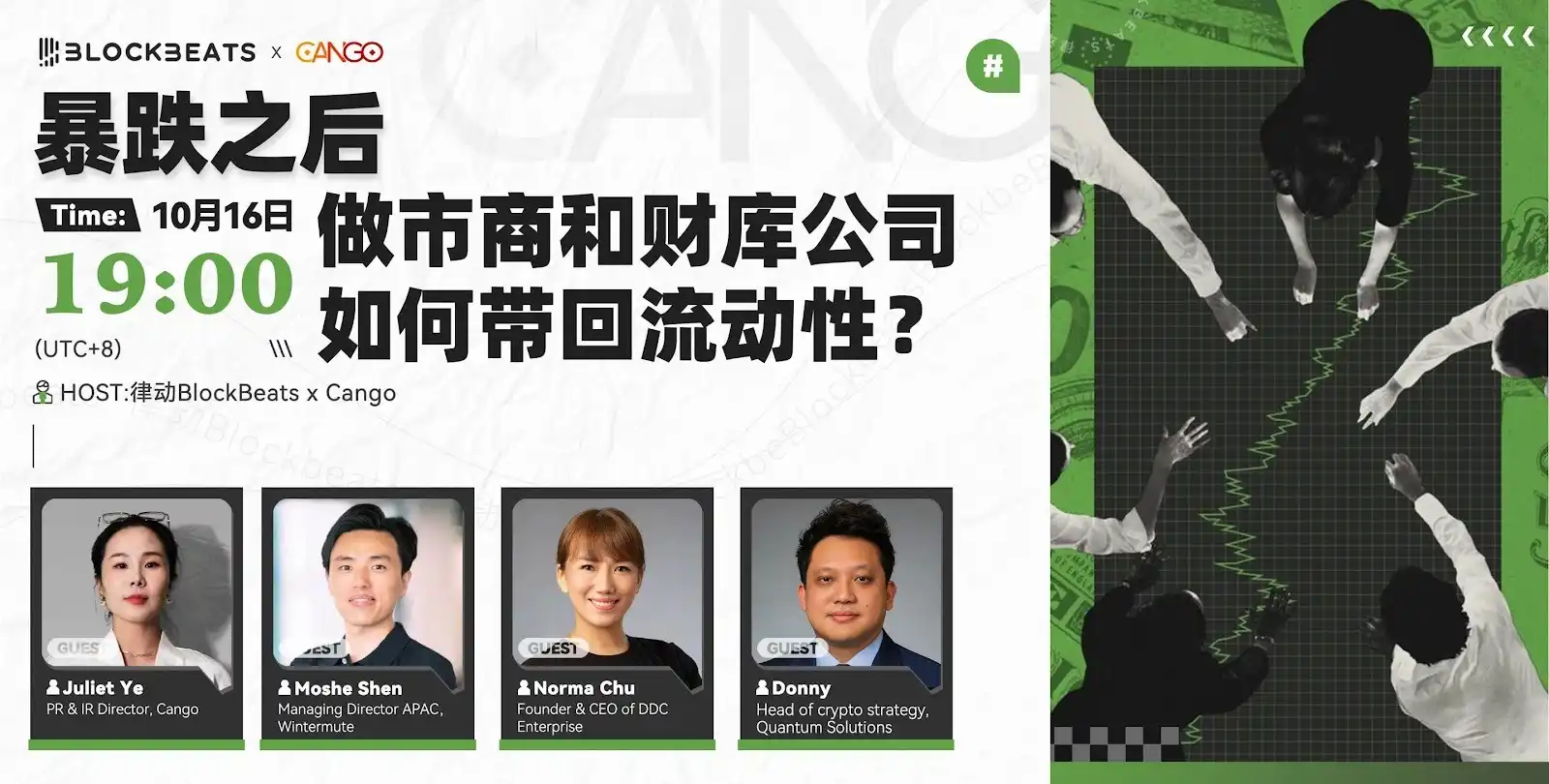
BlockBeats: Hello everyone, welcome to our AMA today. Recently, due to the impact of Trump's latest tariff policy, the crypto industry has seen significant price fluctuations, leading to the largest liquidation amount in history. Additionally, this year is crucial for crypto compliance, with many institutions bringing new liquidity to the industry through treasury companies. Today, we have invited treasury companies and market makers to discuss the future market trends and industry outlook.
First, please introduce yourselves, and briefly share your views on the future development of Treasury companies following the DAT model.
Juliet Ye: Hello, I'm Juliet from Cango, a Bitcoin mining company listed on the NYSE, responsible for investor relations and public relations. I'm delighted to participate in today's online event.
Moshe Shen: I'm Moshe Shen, Asia Pacific Managing Director at Wintermute, primarily responsible for expanding OTC crypto trading and partnerships in Asia. Before joining the crypto industry, I worked at Goldman Sachs for over ten years, engaging in stock trading, sales, and prime brokerage in London and Hong Kong. Wintermute is one of the world's leading crypto-native algorithmic liquidity providers. We offer liquidity algorithmically on most cryptocurrency exchanges and platforms, provide diverse OTC trading products, and support top Web3 projects and traditional financial institutions entering the crypto space.
We also actively participate in the crypto ecosystem through investments, partnerships, and project incubation. Founded in 2017, the company has successfully navigated multiple crypto market cycles. Our culture integrates the technical standards of traditional high-frequency trading (HFT) firms with the innovation and entrepreneurial spirit of tech startups.
Norma: Hello everyone, I am Norma Chu, the founder, chairman, and CEO of DDC Group. My entrepreneurial journey began in the food industry—starting from a cooking sharing platform, I have developed DDC into a globally listed Asian food company on the New York Stock Exchange. Today, we are also one of the fastest-growing Bitcoin treasury companies globally.
Since officially launching our Bitcoin strategy in May of this year, we have accumulated over 1,000 Bitcoins within 100 days, placing us among the top 50 publicly listed Bitcoin-holding institutions globally. Before founding DDC, I served as the Stock Research Head at HSBC's Private Wealth Management division. Although my background is in finance, I have always believed that true innovation often arises at seemingly unrelated intersections— for us, it is the fusion of food, finance, and technology. This is also the driving force behind me and my team's daily progress.
Donny: Hello everyone, I am Donny, the Cryptocurrency Strategy Lead at Quantum Solutions. I have known the QS management for over two years. Due to the new CEO's expertise in international capital markets, I participated in the investment when he took office and immediately joined the team to oversee cryptocurrency strategy and fundraising.
BlockBeats: The concept of DAT in the market is no longer unfamiliar, and now some viewpoints believe that DAT companies are not sustainable. Some short-selling institutions have started shorting DAT stocks. How do the guests view the future development of this DAT model?
Juliet Ye: In fact, the core challenge for DAT companies is how to make the traditional capital market understand the value fluctuation of on-chain assets. We see that DAT companies with a single business model may indeed be more affected by market cycles. However, those listed companies with transparent holdings and a well-structured compliance framework can still gain the long-term trust of capital. The key is for companies to establish a dual valuation model—looking not only at traditional cash flow but also at on-chain asset value, and bridging the market's understanding gap through continuous and comprehensive disclosure. From the current position of Canaan in the Bitcoin mining industry, we may see a trend of business divestitures in the future, such as separating Bitcoin mining and AI computing power services into independently operated entities, which can better unlock their respective values.
Norma: I actually don't think the market has fully understood the concept of a "Bitcoin Treasury Company" yet. There are still three major misconceptions about these companies in the market.
First, many people think that the Bitcoin Treasury Company strategy is just a short-term trend, as if it is a group of companies taking advantage of the hype to raise funds to buy Bitcoin, and once the market hype is over, these companies will also disappear. But I believe we have moved beyond this "experimentation phase." From early pioneers like MicroStrategy, we have already seen that a Bitcoin treasury strategy's structure, management style, and financing model can impact shareholder value.
Second, the differences in strategy execution among different treasury companies are actually very significant, with each company having its own ideas and development paths. However, because this industry is still very new, the market currently lacks the ability to differentiate these nuances. Investors now tend to only look at a single metric to evaluate a company, just like in traditional finance, if you only look at the P/E ratio to decide on buying or selling stocks, that is obviously not comprehensive enough.
Third, there is a misconception that treasury companies are just "high-leverage Bitcoin ETFs," and some even say, "Why don't I just buy an ETF directly?" However, looking at the issue this way is too superficial. For example, a individual investor in a bank (such as HSBC) can only access services like credit cards, loans, mortgages, etc., but if you are a $500 million market cap company, the services and products a bank can provide are completely different. Similarly, companies like DDC, as enterprise treasuries, can access many financial products that ordinary individual investors or ETFs cannot, such as structured derivatives and risk hedging tools. We can more flexibly manage assets, and shareholders entrust us to manage their indirect Bitcoin holdings, believing that our professional capabilities can create higher long-term returns.
Next, I believe there will be three important trends in the future of the Bitcoin Treasury model:
First, this is still only the first year of the Bitcoin Treasury, with roughly only about 200 public companies worldwide holding Bitcoin, accounting for less than 0.5% of the total number of public companies globally. This number is actually very small. In the future, more and more companies will incorporate Bitcoin into their asset allocation. They may not all be pure data companies, but there is still a lot of room for enterprises to use Bitcoin as a treasury asset.
Second, not all treasury companies are the same. We are currently in the "first stage," where the market's focus is mainly on "who is financing, who is buying." As we move to a more mature stage, differences will become more apparent: which companies can continue to execute, which companies can operate maturely in the capital markets, and which can clearly explain their strategies to the market. Different companies will use different methods to enhance the value created for shareholders by their Bitcoin assets. We have already seen some treasury companies start to invest in each other, and even merge, which is the evolution of this industry.
Third, I believe the market should not isolate treasury companies. Their development is actually influenced by some larger structural trends. For example, artificial intelligence. Hardly anyone discusses the application of AI in treasury asset management, but it could become a significant turning point in the future. Companies that can develop AI-driven asset management tools first are likely to stand out in this field.
There is also a growing trend in the comprehensive tokenization of assets. How future treasury companies leverage this new form of assets to enhance returns will be a key proposition.
Lastly, as more companies hold Bitcoin, the entire ecosystem of products will become richer—including various innovative yield products. This is very positive for the long-term development of the industry.
Moshe: This question mainly needs a response from DAT Company itself. From our perspective, long-term success depends on differentiation and execution. DAT companies that focus on sustainable business models, corporate development (M&A/expansion), and proactive treasury management, utilizing various tools to create value and returns for shareholders, will be in a more advantageous position for future growth.
Donny: Once a metric is used to price a stock, it's hard to return to the "pure hype" before the introduction of that metric. For DAT, the headache-inducing metric is mNAV. The key is to break free from the constraints of mNAV: to truly leverage the treasury, ideally working in synergy with the company's existing business.
Digital asset treasury should be a part of the business, rather than a category label attached to the company. The treasury must be "active," adding value to the market, bringing returns to shareholders, and creating a situation where the company's value is no longer solely tied to the underlying asset price of the treasury.
BlockBeats: Let's first ask Canaan, as the world's second-largest Bitcoin mining company, when it initially sold its traditional business for $350 million and fully invested in the crypto field, what was the risk assessment logic behind this All-in strategy?
Juliet Ye: Our decision to fully transition in 2024 was not a sudden move or following a trend, but a result of thorough analysis and demonstration: First, the timing—the choice of timing. We started to explore and understand the industry from the end of '23 and deeply explored the feasibility of a thorough industry transition starting around mid-'24. It can be said that at that time, the coin was at a cyclical low, the mining power competition was not as intense as it is now, and mining machine prices were relatively cheap. Canaan laid the foundation for low-cost expansion by acquiring 50 EH/s of mining power scale through equity swaps and cash combination.
Secondly, financial security—before the transition, Canaan was already a net cash company with $500 million in liquidity, providing us with the financial possibility to seek transformation. In addition, the cash flow of $350 million brought about by the divestiture of the traditional business during the transformation process, as of the end of the second quarter, our cash and cash equivalents exceeded $100 million, and there are over 6,000 Bitcoins in reserve currently in our accounts. All of these have paved the way for Canaan's transformation and deep industry cultivation.
Lastly, there is the dynamic adjustment capability—such as being able to hedge against price volatility by flexibly adjusting the mining machine's operating rate; our mining machines are widely distributed in countries and regions including the United States, East Africa, Oman, and Paraguay, leveraging regional differences in electricity prices and policy stability to mitigate regulatory and operational risks.
Overall, Canaan's "All in" strategy is centered around opportunistic market entry, a light-asset model, and geographic diversification as core risk management pillars, aiming to strike a balance between short-term pains and long-term gains through proactively divesting inefficient assets and strengthening financial reserves.
BlockBeats: Compared to MicroStrategy's pure holding strategy, Canaan's unique "Mining + Holding" dual-driven model is distinctive. Approximately what is Canaan's cost of acquiring Bitcoin through mining? In the current highly competitive DATCO track, can this cost advantage build a strong enough moat?
Juliet Ye: As of the end of the second quarter, the company's single-coin cash cost for Bitcoin mining is approximately $83,000, plus around $15,000 in depreciation, resulting in a comprehensive single-coin cost of around $98,000. Due to the light-asset model the company has adopted—such as not self-building mining farms, using cost-effective second-hand machines, and opting for hosting instead of self-operated on-site teams—our single-coin cash cost is slightly higher compared to industry peers, but our comprehensive cost remains low within the industry, making us competitive.
Compared to companies that simply hold Bitcoin, Canaan is a production enterprise. We aim to continuously build a cost moat through three dimensions:
1) First, our current Bitcoin mining cost is below market price, and this cost advantage is operationally validated with actual data. For us, it is more cost-effective than directly buying coins in the market.
2) Second, we amplify earnings elasticity through dual leverage. On one hand, by rapidly achieving an industry-leading scale of computing power through a cash + equity combination, we essentially add computing power leverage. On the other hand, in day-to-day operations, we use Bitcoin collateralized financing to enhance capital turnover efficiency, adding operational leverage. The multiplier effect of this double leverage is higher than simply buying coins or investing in Bitcoin ETFs, allowing us to maximize gains from Bitcoin price appreciation.
3) Third, we implement strict equity dilution risk control. We raise funds through Bitcoin pledge loans, mining machine lease financing, and other tools to cover company operating expenses. This avoids frequent stock issuance, thus better protecting shareholder equity.
BlockBeats: Next, I'd like to ask about DDC. DDC Enterprise, as a NYSE-listed food company, why did it choose to make Bitcoin a significant part of its treasury assets?
Norma: I believe the reason we chose Bitcoin as our primary treasury asset stems from a forward-looking vision—a bridging of the gap between tradition and innovation. Fundamentally, we believe that today's treasury management is no longer just about value preservation or liquidity management but is a key part of strategic capital allocation.
In the traditional sense, most food companies hold traditional financial instruments such as cash or government bonds as treasury assets because it is the safest and most understood practice. However, we chose not to adhere to this traditional thinking because we see a structural shift happening in the capital markets and store of value. Bitcoin's essence is not just a digital asset but a new form of currency that aligns closely with the strategic direction of a rapidly growing, forward-thinking company like DDC.
Firstly, Bitcoin represents a redefinition of incentive mechanisms and sovereignty. Just as we strive to build value and trust in the food industry, Bitcoin's decentralized nature brings transparency, resilience, and resistance to control. Including Bitcoin on the balance sheet means we actively participate in a financial system that evolves in sync with the global digitization process, a systemic derisking that cash and bonds cannot achieve.
Secondly, for us, the treasury is not just about short-term liquidity or risk mitigation but is more about long-term capital appreciation and innovation. The food industry is inherently global and will continue to evolve with technology and changing consumer patterns. Bitcoin's open protocol and network effects reflect the transformation of consumer behavior and digital payment methods, aligning closely with the digitalization and internationalization direction of our business. Holding Bitcoin is our way of "preparing for the future" in an inflationary and currency devaluation environment.
Lastly, holding Bitcoin as a treasury asset allows us to convey a strong message to shareholders, employees, partners, and customers: DDC is not just safeguarding value but actively embracing change. This posture reflects our corporate culture, helping us attract a new generation of talent and partners, especially those who resonate with the open, transparent, and forward-thinking spirit of Generation Z consumers.
In short, DDC's choice of Bitcoin is not just about changing the structure of treasury assets but about driving the company and its investor ecosystem towards a digital and globalized future. This is our path at the intersection of food, finance, and technology, redefining capital strategy, achieving long-term growth, and countercyclical capabilities.
BlockBeats: Next, I'd like to discuss DAT from the perspective of a market maker. Firstly, the most pressing question everyone wants to know is regarding the recent sharp decline. Some believe it was caused by issues with market makers, and Wintermute has clarified that they had no issues. Do you know if any market makers experienced losses during this sharp decline?
Moshe Shen: Our observations in this round of volatility:
· Causes of mass liquidation: The result of multiple factors stacking up—significant news related to Trump coincided with the market leveraged long on multiple chains and on various on-chain/off-chain platforms. Price decline triggered the forced liquidation of leveraged positions hedged directionally and with Delta by exchanges' ADL (Automatic Deleveraging), further driving the price down, leading to a cascading chain reaction of liquidations.
· Wintermute's positions and practices: As a liquidity provider, we maintain very low leverage and very low directional exposure. A significant part of our business is OTC trading—we collaborate with nearly 3000 counterparties, including miners, DAT companies, project teams, and various types of investors. Our model focuses on earning spreads through hedged trades and cross-market arbitrage. This time, due to the significant price dislocation caused by liquidations, and with many exchanges experiencing extremely congested withdrawal queues, it has increased the difficulty of quickly rebalancing our positions and providing optimal liquidity across different exchanges.
· Broader market implications: We only discuss our own operations and do not comment on others. However, from public discussions, it is clear that such events are particularly challenging for institutions engaging in directional/leverage long and short trading—especially when passive ADL liquidates short legs, while long positions continue to incur losses as the price drops, amplifying risk exposure.
Throughout the entire weekend, we have maintained operational continuity, ready to provide quotes to counterparties at any time. We continue to offer liquidity whenever counterparties need it. Wintermute has remained operationally continuous.
BlockBeats: We also understand that Wintermute is currently providing market-making services for DAT Treasury. So, when providing market-making services for DAT Treasury, how does Wintermute ensure smoother and lower-cost Bitcoin liquidity for retail traders on exchanges?
Moshe Shen: Let's first clarify our role in the DAT space (different from traditional market-making):
How we support DAT Treasury: We do not provide liquidity for DAT stock itself. We mainly support in two treasury management aspects:
1. Digital asset accumulation: DAT can purchase spot directly through our OTC, avoiding exchange fees and reducing market impact;
2. Yield generation: Provide various yield strategies for DAT's holdings:
· Covered Put Selling: Generating premium income while executing an accumulation strategy;
· Digital Asset Loan Program;
· Principal-Protected Structured Product: Allowing idle USD/BTC to earn yield.
Since 2017, Wintermute has been a reliable liquidity provider. Currently, we provide approximately $15 billion in liquidity daily across centralized/decentralized exchanges, spot, perpetual, options, and other markets.
BlockBeats: I'd like to ask QS, how is QS currently participating in this DAT wave?
Donny: Quantum brought Ethereum DAT to Japan—becoming the first Japanese company to designate ETH as a 'core reserve' and publicly announce increased holdings. The Japanese stock market has hit a new high this year not seen since 1989: on one hand, policies encourage market entry, on the other hand, Japan acts more as a neutral hub in the US-China rivalry; coupled with platforms like IBKR, Futu making it easier for retail investors to buy Tokyo stocks. Japanese regulations are stricter, raising the threshold for digital asset strategy, but progress is more stable. It's worth mentioning that Quantum is the only Japanese crypto-related stock that has received global institutional 'anchored funds,' with no discount on financing, aligning incentives further.
Similar to BMNR, Quantum also emphasizes rapid accumulation and efficient fundraising, all within the regulatory framework.
We will also support institutional tools and platforms. The shared goal of ETH-type DAT is to drive greater institutional adoption of blockchain; this cannot be achieved without licensed DeFi/CeDeFi infrastructure—this may sound inconsistent with the instinct of a purely on-chain audience, but it does address key issues such as compliance, security, insurance for institutions. As large digital asset holders, their interests align with the industry as a whole, willing to push the industry forward together.
BlockBeats: Mining operations require ongoing capital investment, and Bitcoin prices are highly volatile. How does Canaan balance the contradiction between cash flow management and a long-term holding strategy?
Juliet Ye: This is a great question, with continuous large capital investment on one side and holding without selling on the other, finding the right balance is crucial. Our strategy involves leveraging and maintaining flexibility.
Bitcoin Mining, in fact, a significant portion of the operational cost comes from electricity bills. Here we use an electricity bill loan to alleviate cash flow pressure. This means we do not need to pay the full electricity bill immediately, only need to pay the loan interest monthly. This approach reduces short-term cash outflow pressure. By using Bitcoin as collateral to obtain a loan, as the long-term value of Bitcoin is recognized, there is no need for additional collateral, allowing for maximum leverage. In this mode, our cash reserves will be primarily used for expanding hash power or exploring new business opportunities. At the same time, by prioritizing operating expenses coverage through Bitcoin collateralized financing instead of selling Bitcoin directly, we can retain the long-term appreciation potential of Bitcoin and avoid equity dilution. Our debt-to-equity ratio remains low while leaving room for leverage.
Of course, our hodling strategy is not mechanically "never sell," but is based on a dynamic observation and adjustment mechanism with a triple trigger system. We consider multiple factors such as price, liquidity demand, and external risks to dynamically adjust our strategy. Naturally, we entered at the low point of the 2024 Bitcoin halving cycle to rapidly expand hash power at a low cost, aiming to maximize Bitcoin accumulation as a reserve asset for the next bull market. So, in principle, we will not easily change our hodling policy but will maximize long-term hodling returns while ensuring the security of cash flow, forming a sustainable balance mechanism.
BlockBeats: Many thanks to the guests from Cango, DDC, Wintermute, and QS for sharing insightful analysis and viewpoints. After this round of plunge, the risk has not been cleared, and fear and uncertainty persist. However, within fear, there is also pricing dislocation, and order can be restored in the wilderness. Thanks to the guests for sharing from a frontline perspective—from treasury assets, from rebuilding market depth, to compliance frameworks. The AMA ends here today, and we'll see you next time.
Space Link:https://x.com/i/spaces/1jMJgRnQazkGL
関連記事

犬のメームコイン、dogecoinとShiba Inuの価格動向は休暇中の流動性の薄さの中で控えめに
Key Takeaways DogecoinとShiba Inuは市場のリスク感情と流動性条件を反映しながら控えめな動向を示している。 DOGEは$0.122を守らなければさらなる下落を避けられず、SHIBはすでに重要なサポートレベルを突破している。 切迫した流動性とポジション整理は技術的な水準での動きを増幅させている。 BitcoinとEtherの動向がメームコインの市場に影響を及ぼしている。 WEEX Crypto News, 2025-12-29 06:02:54 仮想通貨市場では、主要なメームコインであるDogecoinとShiba Inuの価格動向が注目されています。これらのコインは、休暇シーズン中の薄い流動性の中で取引されており、価格は控えめな動きを見せています。この状況は、一般的なリスク感情と流動性条件が影響していることを示しています。以下では、これらのコインの価格動向と技術分析について詳しく解説します。 市場の背景 ここ数ヶ月、メームコインはリスク志向の高い投資家によって取引されてきました。特に、DogecoinとShiba Inuは投機的な投資先として人気があり、仮想通貨市場全体の動向に敏感に反応します。しかし、年末に近づくにつれ、BitcoinやEtherの価格が予想通りに反転しないことが多く、これが市場の不安感を高めています。 Bitcoinは米国市場の営業時間中に一時的な反発を見せましたが、その後の持続的な上昇が見られず、Etherも重さを残しています。こうした状況により、メームコインは技術的水準に固定され、ニュースやストーリーによる価格変動に左右されることは少なくなっています。…

ビットコインとイーサリアムが上昇する中、貴金属のラリーが市場を盛り上げる
Key Takeaways ビットコインは$86,500から$90,000の間で安定しており、イーサリアムは最近の取引で小幅な上昇を見せている。 XRPやSolanaを含む主要なAltsがビットコインとイーサリアムを上回る成長率を示しており、薄い取引量の中でも注目を集めている。 貴金属市場も急激な上昇を続けており、銀と金がリスク回避資産として注目を集めている。 2026年には市場構造の変化が暗号市場の在り方を形成する可能性があるとCoinbaseが予測している。 WEEX Crypto News, 2025-12-29 06:02:55 世界中の投資家が新たな年へのカウントダウンを始める中、暗号通貨市場はビットコインとイーサリアムを中心にした上昇基調を見せている。ビットコインの価格は最近の取引で$86,500から$90,000の間で安定し、イーサリアムもわずかながら価格を上げている。これにより、他の主要な暗号通貨も上昇していると言える。 ビットコインとイーサリアムの堅調な動きと並行して、XRPやSolanaなどのアルトコインが、これらの主要通貨以上のパフォーマンスを見せ続けている。特に週末の薄い取引量の中でも、これらのアルトコインは注目され、投資家たちの関心を引き続けている。 ビットコインの価格動向と分析 ビットコインの価格は強固なサポートラインをもって推移し続けている。取引量が低下しているにもかかわらず、その価格は狭い範囲で推移しており、購買圧力と売却圧力の均衡が保たれている。このような状況では、トレーダーたちは市場の不安定性を利用し、短期的な利益を狙っているようだ。 著名なアナリスト、Michaël van de…

BTC mining difficulty records last adjustment in 2025, forecast to rise in Jan
Key Takeaways 2025年最後のBitcoin Mining Difficultyの調整は148.2兆に達し、2026年1月にさらなる上昇が見込まれる。 Bitcoin ネットワークのマイニング難易度は、ネットワークの分散化を維持するために重要な役割を果たしている。 2025年にはBTCマイニングの難易度が過去最高を記録し、多くのエネルギーと計算リソースが求められるようになった。 難易度調整は、単独のマイナーによるネットワーク支配を防ぎ、Bitcoinの価格を安定させるために寄与している。 WEEX Crypto News, 2025-12-29 06:03:47 Bitcoin マイニング難易度の現状と未来 Bitcoin (BTC)…

Fedの「skinny」アカウントがOperation Chokepoint 2.0を終結 — セネター・ルミス
Key Takeaways Fedの「skinny」マスターアカウントは、暗号通貨企業およびフィンテックスタートアップに新たな金融のアクセスを提供することで、Operation Chokepoint 2.0を終結させる可能性がある。 シンシア・ルミス上院議員は、Waller氏の提案が迅速で安全な支払イノベーションを促進すると述べた。 トランプ政権下での禁令にもかかわらず、暗号業界ではデバンキングの課題が継続しているとの報告がある。 米国政府は暗号通貨を次世代の金融システムの一部として受け入れ始めている。 WEEX Crypto News, 2025-12-29 06:03:47 Fedの動きと暗号業界への影響 アメリカの金融政策を担うFederal Reserve(以下、Fed)は、暗号通貨企業やフィンテックスタートアップに新しい金融アクセスを提供するために「skinny」マスターアカウントの導入を提案しています。この動きは、Operation Chokepoint 2.0と呼ばれる厳しい規制から暗号業界を解放するための一助となるでしょう。Operation…
90Kドルのビットコイン再挑戦は来年か: BTC先物のオープンインタレストが8か月ぶりの低水準に
BTC futuresのオープンインタレストは42Bドルに減少し、8か月ぶりの低水準に達した。 Bitcoin optionsの価格は市場の安定した感情を示唆している。 貴金属は経済不確実性の中で高騰している。 BTCのbasis rateは回復を維持している。 WEEX Crypto News, 2025-12-29 06:03:47 ビットコイン(BTC)の先物オープンインタレストは過去8か月で最低水準に達し、これはビットコイン価格の急激な変動を示唆しているが、市場での売り圧力ではなく、むしろレバレッジの抑制を意味する可能性がある。市場の注目は、BTCが再び90,000ドルを突破するための新たな触媒を見つけることができるかどうかにかかっている。 BTC先物のオープンインタレストが8か月ぶりの低水準に 最近、BTCは一時的に89,000ドルを突破したが、その後すぐに拒否され、予想外の動きとして、多くのトレーダーを困惑させ、260百万ドルのレバレッジ先物ポジションが清算された。この影響で、主要な取引所での総合BTC先物のオープンインタレストは、2週間前の47Bドルから42Bドルに減少し、これが過去8か月での最安値となった。このような急激なレバレッジの縮小は、売りの圧力というよりはむしろ市場のポジション調整を意味しており、必ずしも市場の弱気を示しているわけではない。 経済不安の中で貴金属が高騰 経済の不確実性の中で、投資家たちは安全資産へのシフトを行ない、金や銀が新たな史上最高値に到達した。米国政府の負債が増加する中で、安全資産としての需要増が生じ、米10年国債の利回りは3週間ぶりに4.12%の低水準になった。これに伴い、米国の貿易政策への懐疑的な見方が高まっている。先週、米国政府はNvidiaの強力なAIチップの中国への輸出制限を解除したが、これは以前ジョー・バイデン政権が国家安全保障上の理由で禁止していた措置であった。 ビットコインの基準割合の回復…

Ubisoft、Rainbow Six Siegeをハッカー攻撃で停止
Ubisoft社の動画ゲーム「Rainbow Six Siege」がサーバー全体のハッキングにより緊急停止。 すべてのプレイヤーに20億のゲーム内クレジットが不正に付与される。 Ubisoftは、ゲームの復旧のためテストとローンチを段階的に進行中。 この事件が示すのは、中央集権的なゲームプラットフォームの脆弱性。 WEEX Crypto News, 2025-12-29 06:05:52 フランスの大手ゲームメーカーUbisoftは、人気ゲーム「Rainbow Six Siege」のライブサービスを停止する緊急事態に見舞われました。原因はハッカーによる大規模な不正侵入であり、それによりすべてのプレイヤーへ20億ものゲーム内クレジットが配布されたことです。この大規模なハッキングは2025年12月27日に初めて確認され、その後も続く更新情報により、ゲームのサーバーとマーケットプレースが翌日には停止に追い込まれました。 ハッキングの詳細と影響 この不正侵入はゲームのオンラインシステムの主要部分を制御することをハッカーたちが可能とした上で行われ、プレイヤーたちはログインすると20億のR6クレジットを受け取る状況になりました。さらにレアアイテムや特殊なスキン、武器なども含まれており、この大規模なバグに関する報告はSNSで多数寄せられています。 Ubisoftは28日に行われたXの投稿で、「午前11時UTC以降に受け取ったゲーム内クレジットを取り消すための作業を進めている」と告知しました。この「取り消し作業」はすでに進行中であり、その後にはアカウントの安全性と変更の有効性を確認するために品質管理テストが実施される予定です。また、クレジットを使用したプレイヤーが罰せられることはないと保証しています。 現在、ゲームは一部プレイヤーを対象にソフトランチ形式で再開のテストが行われており、完全な復旧に向けたさらなる情報が追って公開される予定です。…

トランプ家のWorld Liberty Financialトークン、2025年末に40%以上下落
トランプ家の暗号通貨ポートフォリオであるWorld Liberty Financialは、2025年末までにトークンの価値が40%以上下落しました。 トークンは当初高い期待を受けて始まったものの、市場の変動により価値が大幅に減少しました。 トランプ家はこのプロジェクトに深く関与し、そのビジネス上の利益が政治的な利害と絡むことで議論を呼んでいます。 World Liberty Financialは、多額の資産を購入し、暗号市場での影響を拡大しています。 WEEX Crypto News, 2025-12-29 06:05:53 トランプ家とWorld Liberty Financialの概要 2024年9月、トランプ家は暗号通貨の新たなプロジェクトとしてWorld Liberty…

Silver’s wild 6% price spike and 10% plunge mirrors Bitcoin’s volatility
銀価格は最近の数週間で急激な増減を見せており、暗号通貨であるBitcoinの特有の変動性を反映。 米国での利下げ期待と産業需要の変化が、銀の価格の乱高下を引き起こしている。 銀は日曜日に新たな過去最高値を記録し、金価格も大幅に上昇。 Bitcoinと暗号市場は12月に停滞しており、特にBitcoinは現在ダウンしている。 WEEX Crypto News, 2025-12-29 06:05:52 地金市場での銀とBitcoinの変動性の高まり 銀市場における最近の急上昇と暴落は、暗号通貨市場でよく見られる変動性に非常に似ている。特にこの週末、銀の価格は新しい記録に迫ろうとしており、金と銀の需要がこれを後押ししている。しかし、その一方で、暗号市場は停滞しており、Bitcoin(以下BTC)は動きが鈍い。 日曜日には、銀の価格が米国時間で約84ドルに達し、過去最高値を記録した。同時に、金の価格も4,530ドル程度まで上昇した。この上昇は、投資家達が利下げの期待感を背景に、より高いリターンを求めてこれらの貴金属を買い求めた結果と考えられる。ただ、Bitcoinを始めとする主要な暗号資産には、未だに大きな動きが見られない。 銀市場の激しい価格変動 「The Kobeissi Letter」によると、銀価格はこの週末に極端な変動を見せ、1時間で6%の急上昇と10%の急落を経験した。「現在の銀市場は全くの狂気です」との声も上がるほど、価格は午後6時20分(東部標準時間)には83.75ドルまで上昇したが、午後7時30分には75.15ドルまで下落し、その変動幅は驚異的だった。 銀や金といった貴金属は一般的には安定した資産と考えられるが、銀は金と比べて変動が大きいとの分析がある。特に、今後の米連邦準備制度理事会議長の交代によっ て、更に大きな利下げが期待される状況で、銀のような商品への投資が活発化する傾向が見られる。利下げは一般に債券などからの利回りを低下させるため、投資家はより高いリターンを見込める商品や貴金属へと資金をシフトする。…

Crypto Treasuriesの未来:2026年の厳しい見通し
Key Takeaways 業界の経営者によれば、多くの仮想通貨およびBitcoin treasury企業は2026年までに姿を消す可能性があると予測されている。 仮想通貨市場の低迷により、Digital asset treasury(DAT)企業に厳しい将来が予想される。 成功する企業は、単なる仮想通貨保持を超えた価値を提供する必要がある。 仮想通貨treasuriesは、伝統的な金融インフラと統合することで、ETFと競争することが求められる。 WEEX Crypto News, 2025-12-29 06:06:08 仮想通貨Treasure企業の現状と将来 近年、非常に多くの仮想通貨およびBitcoin (BTC) treasury企業が誕生しました。これらの企業は、Wall…

Aaveコミュニティが直面するブランドアイデンティティの危機
Key Takeaways Aaveのコミュニティ内で、プロトコルのブランドと関連する資産の管理をめぐる意見の対立が激化しています。 ブランド支配の議論は、分散型自律組織(DAO)とAave Labsの関係にまで波及しています。 Ethereumは、Glamsterdamという新たなアップグレードプロジェクトに注力しています。 Bitcoinは量子コンピュータへの防御策を5〜10年かけて準備すべきという考えが広まりつつあります。 EigenLayerは、EIGENトークンホルダーに新たなインセンティブを提供する提案を検討しています。 WEEX Crypto News, 2025-12-29 06:06:08 Aaveコミュニティでの対立 Aaveのコミュニティメンバー間で、プロトコルのブランドと関連した資産の管理をめぐる対立が激化しています。この論争は、Aaveの分散型自律組織(DAO)と技術開発を担うAave Labsの間の関係に深く関わっています。大規模なクリプトプロジェクトにおいては、分散型ガバナンスの理念と実際の執行を支える中央集権的チームの間にしばしば緊張が生じます。これは、プロトコルが規模を拡大しブランド価値が高まるほど無視できない問題です。 議論の発端は、AaveがCoW Swapという取引実行ツールを統合したことで、取引手数料がDAOではなくAave…

エルサルバドルのBitcoinの野望、2025年に現実を直視する
エルサルバドルは2025年に国際通貨基金(IMF)との対立の中でBitcoin方針の再検討を迫られた。 Bitcoinの法定通貨化は、国民の採用が限定的であり、IMFとの財政的な責任が問題となった。 それにもかかわらず、エルサルバドルはIMFとの合意の中でBitcoin購入を続ける方法を模索している。 2025年にはBitcoinの法的地位が縮小し、その将来の採用に向けた教育と普及活動が課題となる。 WEEX Crypto News, 2025-12-29 06:07:41 エルサルバドルのBitcoin挑戦: 2025年の現実 エルサルバドルは、2021年にBitcoin(BTC)を法定通貨として認めた世界初の国として注目されました。しかし、その大志は2025年に現実の壁に突き当たりました。エルサルバドルは、国内の経済振興を目的としたBitcoinの大規模採用を進める計画を打ち出しましたが、このビジョンは様々な試練に直面し、国際通貨基金(IMF)との衝突が最大の障害となりました。 Bitcoin採用をめぐる始動と挫折 エルサルバドルの立法議会は2021年に全ての商店や事業所でBTCを支払い手段として受け入れることを求める法案を承認しました。これはクリプト界に一石を投じ、他国にも影響を与えると期待されていました。しかし、地元の人々、特に商取引の現場での採用は温かいとは言えませんでした。 Chivoウォレットの導入は、多くの国民がプリロードされた$30のBitcoinを受け取るためにサインアップしましたが、その後ウォレットを利用する人は少数派でした。また、IMFはエルサルバドルの負債問題と財政の持続可能性について懸念を示し、それがBitcoin採用を阻む要因の一つとなりました。エルサルバドルは財政安定のためにIMFから14億ドルの融資を求めており、その際IMFはBitcoinの法定通貨化に反対しました。 IMFとの交渉と政策の修正 IMFは、エルサルバドルが求める融資の条件としてBitcoin法の適用範囲を狭めるよう求めました。経済的な必要性がBitcoinに対する理想を上回り、エルサルバドルは政策を修正しました。2025年1月には、BTCの受け入れを任意とし、税金の支払いは米ドルで行うとしました。 それでも、エルサルバドルのBitcoinに対する姿勢は完全には後退せず、2025年3月にはIMFからの購入停止要求があったにもかかわらずBitcoinの購入を続けました。エルサルバドルはIMFの了解の下で生き延びるための仕組みを駆使し続けていますが、その過程で経済的な課題とも向き合い続けています。…

トランプ時代の関税とユーティリティ・トークンの年:暗号資産が成長を余儀なくされる
Key Takeaways トランプ時代の関税と誤解された利率により、暗号資産は過去の考え方を捨て、実用的なトークンを構築する必要があるとアニモカブランドの創設者が述べた。 2026年は、アニモカがIPOを通じてパブリックマーケットにアルトコインの主要なプロキシを提供する計画である。 Clarity法とGENIUS法が明確な規制を提供することにより、トークン発行が促進され、多くの既存企業が市場に参入する準備を進めている。 2026年にはユーティリティトークンが主流になると予想され、実用的なユースケースを持つトークンが次々と登場する。 WEEX Crypto News, 2025-12-29 06:07:40 トランプ時代の影響:暗号資産市場の再考 アニモカブランドの共同創設者であるYat Siu氏は、2025年を「トランプの年」として記憶することになると述べていますが、それはトランプ元大統領が暗号を救ったからではありません。むしろ、産業が彼に過度に依存し、関税や利率の誤認により市場が混乱したためです。特にBitcoin (BTC) は年末にかけて勢いを欠いており、これは歴史的に4回目の年間減少となる見込みです。 暗号資産は、トランプ政権の裏で繰り広げられる関税戦争と金融政策の影響を強く受けました。そのため、暗号通貨が「トランプの策」として機能しなかったことが2025年に明らかになりました。そして、2026年に向けて、産業はコンプライアンスと実際の用途に焦点を合わせるべきであると指摘されています。 アニモカのIPOとアルトコインの機会…
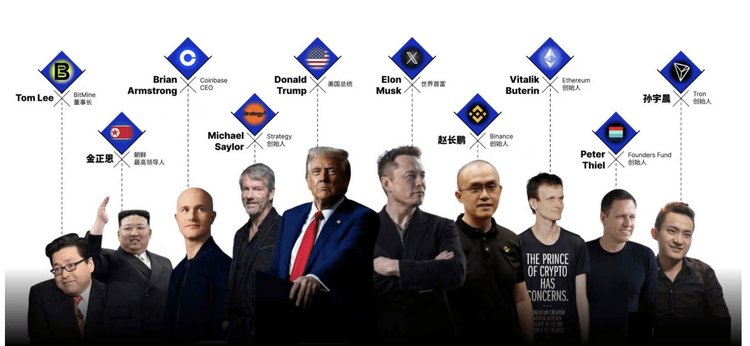
2025年に暗号のパワーバウンダリーを再定義する10人
ウォール街からホワイトハウス、シリコンバレーから深センまで、新しい電力ネットワークが形づくられつつあります。

Kraken IPOが暗号『中期段階』サイクルを再燃させる可能性
重要なポイント KrakenのIPO(新規株式公開)は、暗号通貨の成長を加速し、伝統的な金融(TradFi)から新たな資本を引き寄せる可能性があります。 Bitcoinは過去最高値を記録しましたが、その後の市場変動によって価格が下落しました。 一部の専門家は、2026年にBitcoinが下落の年になると予測していますが、他の専門家は長期的な上昇トレンドを主張しています。 市場の動向は、流動性や国家の採用といったマクロ経済的な要因によって左右されるようになっています。 WEEX Crypto News, 2025-12-26 10:06:43 Krakenと伝統的金融資本の相互作用 Krakenの新規株式公開(IPO)は、暗号通貨界における新たな潮流を生み出す可能性があります。これは特に、伝統的な金融制度(TradFi)からの新たな資本を呼び込む一助となるでしょう。この動きは、様々な暗号通貨企業が上場を目指す一大トレンドの一環でもあります。 Bitcoinは10月6日に過去最高値である126,000ドル以上を記録しましたが、その後の19億ドルに及ぶ清算イベントの影響を受けて現在は87,015ドル(記事執筆時点)の取引価格となっています。これにより、最近二週間で6%の減少を示していますが、50T Fundsの創設者兼CEOであるDan Tapieroは、「Bitcoinブル市場はまだ中期段階にある」と主張しています。彼は、KrakenのIPO及び増加するM&A(合併・買収)活動が、新たな資本を引き寄せる「追い風」を提供すると見ています。 Krakenは11月18日に20億ドルの評価額に達するために8億ドルの資金を調達し、同年11月初めに米国でのIPOを申請しました。これにより新たな市場の局面がどのように進展するか、注目されています。 Bitcoin市場の予測と見解の相違 しかし、すべてのアナリストが現行のブルサイクルの継続を信じているわけではありません。Fidelityのグローバルマクロ経済研究ディレクターであるJurrien…
Fed Q1 2026 Outlook: Bitcoinと仮想通貨市場への影響
Key takeaways Fedの金利引き下げの休止は仮想通貨に圧力をかける可能性があるが、「隠れ量的緩和」が下振れリスクを軽減するかもしれない。 流動性は金利引き下げ以上に重要であり、2026年第1四半期のBitcoinとETHの動向を形作る。 2025年には米連邦準備制度理事会(Fed)が三度の金利引き下げを実施したが、インフレ率によっては2026年初にはさらに下がる可能性がある。 軽微な供給施策が市場の方向性に影響を与え、特にETFの流入が投資家のリスク志向を支えると予想される。 WEEX Crypto News, 2025-12-26 10:06:42(today’s date,foramt: day, month, year) Fedの政策に対する仮想通貨市場の反応 2025年の米連邦準備制度理事会(Fed)は、経済の減速とインフレ圧力の緩和に対処するために金利引き下げを三回実施しました。特に、雇用の減少と消費者物価指数(CPI)の改善が見られる中、第4四半期に集中的に利下げが行われました。しかし、仮想通貨市場はこの養成政策に対して常識外の反応を見せました。Bitcoin(BTC)、Ethereum(ETH)などの主要な仮想通貨は、これまでの高値から1.45兆ドルを超える時価総額の減少を経験しました。 BitcoinとEthereumに対する金利引き下げ休止の影響…

量子コンピューティングと2026年における暗号の安全性
Key Takeaways 2026年に量子コンピュータがBitcoinなどの暗号通貨を破壊するリスクは低いが、現時点で準備が進んでいる。 量子コンピュータが暗号通貨に与える影響は「収集して後に解読」という待機戦略が懸念されている。 暗号通貨のセキュリティ脆弱性の多くは公開鍵暗号技術に依存しており、量子攻撃に備える必要がある。 専門家の間で議論が続いており、増え続けるデータセキュリティの意識が2026年に重要なテーマとなるだろう。 WEEX Crypto News, 2025-12-26 10:08:41 2026年に量子コンピューティングが暗号通貨に与える影響について、多くの思惑が交錯しています。「収穫して後で解読する」という手法が暗号通貨業界全体に動揺を与えており、近未来の量子技術の進展に備える必要性を強く感じる場面も増えています。しかし、そのリスクは実際にどれほど深刻なのでしょうか?そして2026年に本当に暗号通貨が危機にさらされるのか、専門家たちの見解を考えてみましょう。 暗号通貨に対する量子技術の脅威 量子コンピュータの登場は、長らく暗号通貨の世界において潜在的な脅威とされてきました。特にBitcoin(BTC)などのブロックチェーン技術を基本とした通貨は、公開鍵暗号技術に依存しています。公開鍵から秘密鍵を導出できるほどの量子コンピュータが実現されると、広範囲にわたって資金が盗まれるリスクが生じると指摘されています。 公開鍵暗号技術の脆弱性 Neil Puckrin氏など多くの専門家は、量子コンピュータによる暗号技術破壊のリスクを「現在のところほぼマーケティングであり、10%未満が実際の危険」としています。しかし、仮想通貨のセキュリティは公開鍵暗号技術に依存しており、この部分が量子攻撃の「最も弱い部分」とみなされています。特にアメリカ合衆国の規制当局である米国証券取引委員会(SEC)でも、量子コンピューティングが将来的に暗号通貨の保護を破る可能性があるとの警鐘が鳴らされています。 2026年に予測される状況…

トランプのWorld Liberty Financialトークン、2025年末に40%以上減少
Key Takeaways World Liberty Financialトークン(WLFI)は、2025年末に40%以上の減少を記録。 プロジェクトは、トークンセールや主要暗号資産の取得などで始まったが、その後の公募取引で値下がり。 トランプ家が両手に抱えるビジネスは、潜在的な利益相反の懸念を呼んでいる。 World Liberty Financialは、2026年1月にリアルワールドアセットを立ち上げる予定。 WEEX Crypto News, 2025-12-26 10:10:42 プロジェクトの背景と発展 2025年末にトランプ家の暗号資産プロジェクトであるWorld Liberty…

BlockchainはQuantumの脅威に備える中、Bitcoinはその対応を議論
Key Takeaways Altcoinブロックチェーンが量子の脅威に備えている一方で、Bitcoinコミュニティでは対応の方法とタイミングについて意見が分かれている。 QuantumコンピュータがまだBitcoinを破ることはできないが、将来的に可能性があるため、さまざまなブロックチェーンが準備を進めている。 EthereumのVitalik ButerinはQuantumコンピュータの脅威をエンジニアリングの問題として捉える重要性について説明している。 SolanaとAptosは、量子耐性を持つ取引や署名のサポートをテストまたは提案している。 Bitcoinにおける議論は信頼に関するものであり、多くの論者がリスクの過小評価を懸念している。 WEEX Crypto News, 2025-12-26 10:10:43 ブロックチェーンが静かに進める量子コンピューティングへの備え 今、量子コンピュータはBitcoinを破ることはできませんが、近い将来これが現実となるかもしれません。こうした背景から、複数のブロックチェーンは量子コンピューティングに対する備えを進めています。最近の動向を見ても、Aptosは量子耐性を持つ署名のサポートを提案し、Solanaは量子耐性のある取引のテストを行っています。一方で、Bitcoinのコミュニティでは、量子安全性を高めるための対応策について活発な意見交換が行われています。 これらの動きは、暗号資産界隈の不安感を示しています。投資家たちは、影響力のある声が量子のリスクを軽視することで、Bitcoinの価格が下がっていると主張しています。実際、Bitcoinの価格は過去3ヵ月で24%下落しました。しかし、Altcoinブロックチェーンがオプトインのアップグレードやテストネットを通じて量子耐性を実験している中で、Bitcoinは公開的にどのように、そしてどれほど緊急に量子リスクに対処すべきかについて分裂しています。 アラームを鳴らさずに進める量子コンピューティングの備え Ethereumは、量子コンピュータの影響を現実的なエンジニアリングの問題とみなす理由を明確にしています。Ethereumの共同創設者であるVitalik…
犬のメームコイン、dogecoinとShiba Inuの価格動向は休暇中の流動性の薄さの中で控えめに
Key Takeaways DogecoinとShiba Inuは市場のリスク感情と流動性条件を反映しながら控えめな動向を示している。 DOGEは$0.122を守らなければさらなる下落を避けられず、SHIBはすでに重要なサポートレベルを突破している。 切迫した流動性とポジション整理は技術的な水準での動きを増幅させている。 BitcoinとEtherの動向がメームコインの市場に影響を及ぼしている。 WEEX Crypto News, 2025-12-29 06:02:54 仮想通貨市場では、主要なメームコインであるDogecoinとShiba Inuの価格動向が注目されています。これらのコインは、休暇シーズン中の薄い流動性の中で取引されており、価格は控えめな動きを見せています。この状況は、一般的なリスク感情と流動性条件が影響していることを示しています。以下では、これらのコインの価格動向と技術分析について詳しく解説します。 市場の背景 ここ数ヶ月、メームコインはリスク志向の高い投資家によって取引されてきました。特に、DogecoinとShiba Inuは投機的な投資先として人気があり、仮想通貨市場全体の動向に敏感に反応します。しかし、年末に近づくにつれ、BitcoinやEtherの価格が予想通りに反転しないことが多く、これが市場の不安感を高めています。 Bitcoinは米国市場の営業時間中に一時的な反発を見せましたが、その後の持続的な上昇が見られず、Etherも重さを残しています。こうした状況により、メームコインは技術的水準に固定され、ニュースやストーリーによる価格変動に左右されることは少なくなっています。…
ビットコインとイーサリアムが上昇する中、貴金属のラリーが市場を盛り上げる
Key Takeaways ビットコインは$86,500から$90,000の間で安定しており、イーサリアムは最近の取引で小幅な上昇を見せている。 XRPやSolanaを含む主要なAltsがビットコインとイーサリアムを上回る成長率を示しており、薄い取引量の中でも注目を集めている。 貴金属市場も急激な上昇を続けており、銀と金がリスク回避資産として注目を集めている。 2026年には市場構造の変化が暗号市場の在り方を形成する可能性があるとCoinbaseが予測している。 WEEX Crypto News, 2025-12-29 06:02:55 世界中の投資家が新たな年へのカウントダウンを始める中、暗号通貨市場はビットコインとイーサリアムを中心にした上昇基調を見せている。ビットコインの価格は最近の取引で$86,500から$90,000の間で安定し、イーサリアムもわずかながら価格を上げている。これにより、他の主要な暗号通貨も上昇していると言える。 ビットコインとイーサリアムの堅調な動きと並行して、XRPやSolanaなどのアルトコインが、これらの主要通貨以上のパフォーマンスを見せ続けている。特に週末の薄い取引量の中でも、これらのアルトコインは注目され、投資家たちの関心を引き続けている。 ビットコインの価格動向と分析 ビットコインの価格は強固なサポートラインをもって推移し続けている。取引量が低下しているにもかかわらず、その価格は狭い範囲で推移しており、購買圧力と売却圧力の均衡が保たれている。このような状況では、トレーダーたちは市場の不安定性を利用し、短期的な利益を狙っているようだ。 著名なアナリスト、Michaël van de…
BTC mining difficulty records last adjustment in 2025, forecast to rise in Jan
Key Takeaways 2025年最後のBitcoin Mining Difficultyの調整は148.2兆に達し、2026年1月にさらなる上昇が見込まれる。 Bitcoin ネットワークのマイニング難易度は、ネットワークの分散化を維持するために重要な役割を果たしている。 2025年にはBTCマイニングの難易度が過去最高を記録し、多くのエネルギーと計算リソースが求められるようになった。 難易度調整は、単独のマイナーによるネットワーク支配を防ぎ、Bitcoinの価格を安定させるために寄与している。 WEEX Crypto News, 2025-12-29 06:03:47 Bitcoin マイニング難易度の現状と未来 Bitcoin (BTC)…
Fedの「skinny」アカウントがOperation Chokepoint 2.0を終結 — セネター・ルミス
Key Takeaways Fedの「skinny」マスターアカウントは、暗号通貨企業およびフィンテックスタートアップに新たな金融のアクセスを提供することで、Operation Chokepoint 2.0を終結させる可能性がある。 シンシア・ルミス上院議員は、Waller氏の提案が迅速で安全な支払イノベーションを促進すると述べた。 トランプ政権下での禁令にもかかわらず、暗号業界ではデバンキングの課題が継続しているとの報告がある。 米国政府は暗号通貨を次世代の金融システムの一部として受け入れ始めている。 WEEX Crypto News, 2025-12-29 06:03:47 Fedの動きと暗号業界への影響 アメリカの金融政策を担うFederal Reserve(以下、Fed)は、暗号通貨企業やフィンテックスタートアップに新しい金融アクセスを提供するために「skinny」マスターアカウントの導入を提案しています。この動きは、Operation Chokepoint 2.0と呼ばれる厳しい規制から暗号業界を解放するための一助となるでしょう。Operation…
90Kドルのビットコイン再挑戦は来年か: BTC先物のオープンインタレストが8か月ぶりの低水準に
BTC futuresのオープンインタレストは42Bドルに減少し、8か月ぶりの低水準に達した。 Bitcoin optionsの価格は市場の安定した感情を示唆している。 貴金属は経済不確実性の中で高騰している。 BTCのbasis rateは回復を維持している。 WEEX Crypto News, 2025-12-29 06:03:47 ビットコイン(BTC)の先物オープンインタレストは過去8か月で最低水準に達し、これはビットコイン価格の急激な変動を示唆しているが、市場での売り圧力ではなく、むしろレバレッジの抑制を意味する可能性がある。市場の注目は、BTCが再び90,000ドルを突破するための新たな触媒を見つけることができるかどうかにかかっている。 BTC先物のオープンインタレストが8か月ぶりの低水準に 最近、BTCは一時的に89,000ドルを突破したが、その後すぐに拒否され、予想外の動きとして、多くのトレーダーを困惑させ、260百万ドルのレバレッジ先物ポジションが清算された。この影響で、主要な取引所での総合BTC先物のオープンインタレストは、2週間前の47Bドルから42Bドルに減少し、これが過去8か月での最安値となった。このような急激なレバレッジの縮小は、売りの圧力というよりはむしろ市場のポジション調整を意味しており、必ずしも市場の弱気を示しているわけではない。 経済不安の中で貴金属が高騰 経済の不確実性の中で、投資家たちは安全資産へのシフトを行ない、金や銀が新たな史上最高値に到達した。米国政府の負債が増加する中で、安全資産としての需要増が生じ、米10年国債の利回りは3週間ぶりに4.12%の低水準になった。これに伴い、米国の貿易政策への懐疑的な見方が高まっている。先週、米国政府はNvidiaの強力なAIチップの中国への輸出制限を解除したが、これは以前ジョー・バイデン政権が国家安全保障上の理由で禁止していた措置であった。 ビットコインの基準割合の回復…
Ubisoft、Rainbow Six Siegeをハッカー攻撃で停止
Ubisoft社の動画ゲーム「Rainbow Six Siege」がサーバー全体のハッキングにより緊急停止。 すべてのプレイヤーに20億のゲーム内クレジットが不正に付与される。 Ubisoftは、ゲームの復旧のためテストとローンチを段階的に進行中。 この事件が示すのは、中央集権的なゲームプラットフォームの脆弱性。 WEEX Crypto News, 2025-12-29 06:05:52 フランスの大手ゲームメーカーUbisoftは、人気ゲーム「Rainbow Six Siege」のライブサービスを停止する緊急事態に見舞われました。原因はハッカーによる大規模な不正侵入であり、それによりすべてのプレイヤーへ20億ものゲーム内クレジットが配布されたことです。この大規模なハッキングは2025年12月27日に初めて確認され、その後も続く更新情報により、ゲームのサーバーとマーケットプレースが翌日には停止に追い込まれました。 ハッキングの詳細と影響 この不正侵入はゲームのオンラインシステムの主要部分を制御することをハッカーたちが可能とした上で行われ、プレイヤーたちはログインすると20億のR6クレジットを受け取る状況になりました。さらにレアアイテムや特殊なスキン、武器なども含まれており、この大規模なバグに関する報告はSNSで多数寄せられています。 Ubisoftは28日に行われたXの投稿で、「午前11時UTC以降に受け取ったゲーム内クレジットを取り消すための作業を進めている」と告知しました。この「取り消し作業」はすでに進行中であり、その後にはアカウントの安全性と変更の有効性を確認するために品質管理テストが実施される予定です。また、クレジットを使用したプレイヤーが罰せられることはないと保証しています。 現在、ゲームは一部プレイヤーを対象にソフトランチ形式で再開のテストが行われており、完全な復旧に向けたさらなる情報が追って公開される予定です。…


 App
App