
What Is Ethereum and How Does It Work?

 Prefer us on Google

What Is Ethereum?
Launched in 2015 by Vitalik Buterin, Ethereum revolutionized blockchain technology by introducing smart contract functionality. This decentralized, open-source platform enables developers to build diverse applications including DeFi protocols, NFT marketplaces, and decentralized autonomous organizations (DAOs), expanding far beyond Bitcoin's digital cash use case.
As Ethereum's native cryptocurrency, ETH serves as both a transactional currency and the "gas" that powers network operations. With a $220 billion market capitalization (May 2025), ETH maintains its position as the second-largest cryptocurrency, underpinning Ethereum's vast ecosystem of decentralized applications.
How Does Ethereum Work?
Ethereum's architecture consists of five fundamental elements: its blockchain ledger, smart contract functionality, the Ethereum Virtual Machine (EVM) , consensus mechanism, and gas fee system. Here's how each component works:
The Ethereum Blockchain
Functioning as a decentralized public ledger, Ethereum's blockchain permanently records all network activity across thousands of synchronized nodes. Transactions (ETH transfers, dApp interactions) are grouped into timestamped blocks that form an immutable chain. This distributed structure ensures transparency while preventing tampering through cryptographic security measures, including Merkle-Patricia Trie data structures that efficiently track account balances and smart contract states.
Smart Contracts: Ethereum's Game-Changer
These self-executing digital agreements automate processes without intermediaries. Examples include:
- Escrow services that release payments upon delivery verification
- NFT marketplaces that instantly transfer ownership upon purchase
- Automated notifications triggered by specific transactions Operating on "if-then" logic, smart contracts execute precisely as programmed when predetermined conditions are met, enabling trustless transactions across DeFi, gaming, and enterprise applications.
FAQ
1.Is Ethereum a cryptocurrency?
While commonly used interchangeably, Ethereum refers to the blockchain platform while ether (ETH) is its native cryptocurrency. The distinction is important - ETH fuels transactions and smart contracts on the Ethereum network.
2.Where can I buy ether (ETH)?
In order to buy ether, you can use cryptocurrency exchanges such as WEEX. Ethereum is supported by all major centralized and decentralized exchanges. You can create your account at an exchange you trust, deposit fiat or cryptocurrencies, and then use them to buy ETH.
3.Can I convert ETH into cash?
You can easily convert ETH to cash through exchanges like WEEX: simply transfer ETH from your wallet to the exchange, sell it for fiat currency, and withdraw the funds to your linked bank account—all within your exchange account.
-- Price
Closing Thoughts
Ethereum has transformed blockchain technology through smart contracts, enabling decentralized applications across finance, gaming, and digital ownership. As the backbone of Web3, ETH powers this ecosystem while maintaining its position as the second-largest cryptocurrency. While investing carries volatility risks, Ethereum’s innovation continues to drive the future of decentralized systems—making it essential for both developers and users to understand its fundamentals.
Further Reading
Disclaimer: The opinions expressed in this article are for informational purposes only. This article does not constitute an endorsement of any of the products and services discussed or investment, financial, or trading advice. Qualified professionals should be consulted prior to making financial decisions.
This content is provided for general informational purposes only and doesn't constitute financial, investment, legal, or tax advice. Any events, rewards, online promotions, or related information mentioned herein should not be considered a recommendation, solicitation, or invitation to purchase, sell, trade, or otherwise deal in any crypto assets. Crypto assets are highly volatile and may result in loss. The availability of WEEX services, products, and related events may vary by region. You are responsible for ensuring that your participation is in accordance with applicable local laws and regulations.
You may also like

Crypto Convert vs Transfer vs Bridge: Which Action Do You Need?

How to Convert ETH to USDT on WEEX: Step-by-Step Guide
How to Convert USDT to BTC on WEEX: Step-by-Step Guide

How to Convert BTC to ETH on WEEX: Step-by-Step Guide
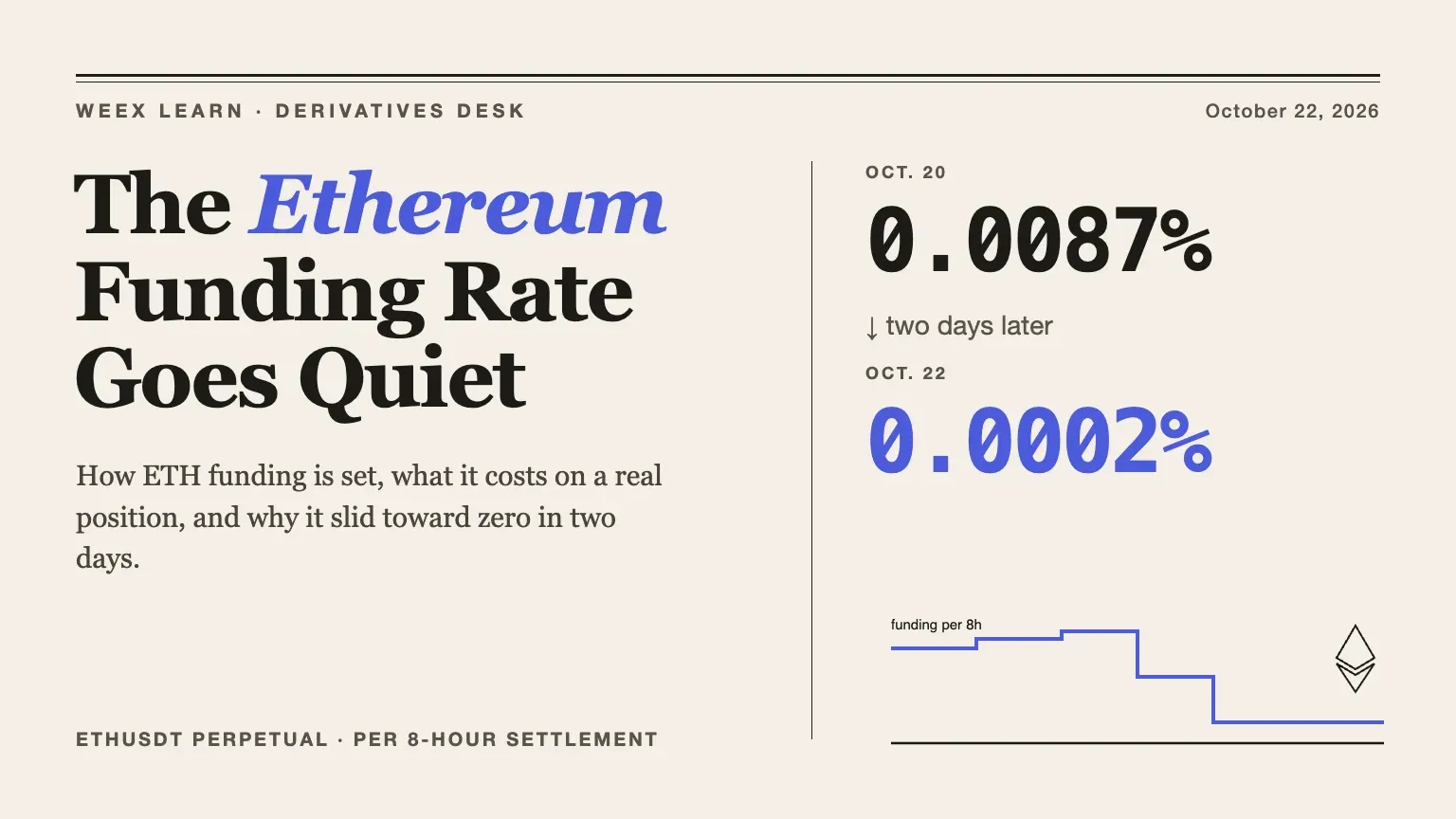
Ethereum Funding Rate: How It Works and Why It Dropped Near Zero
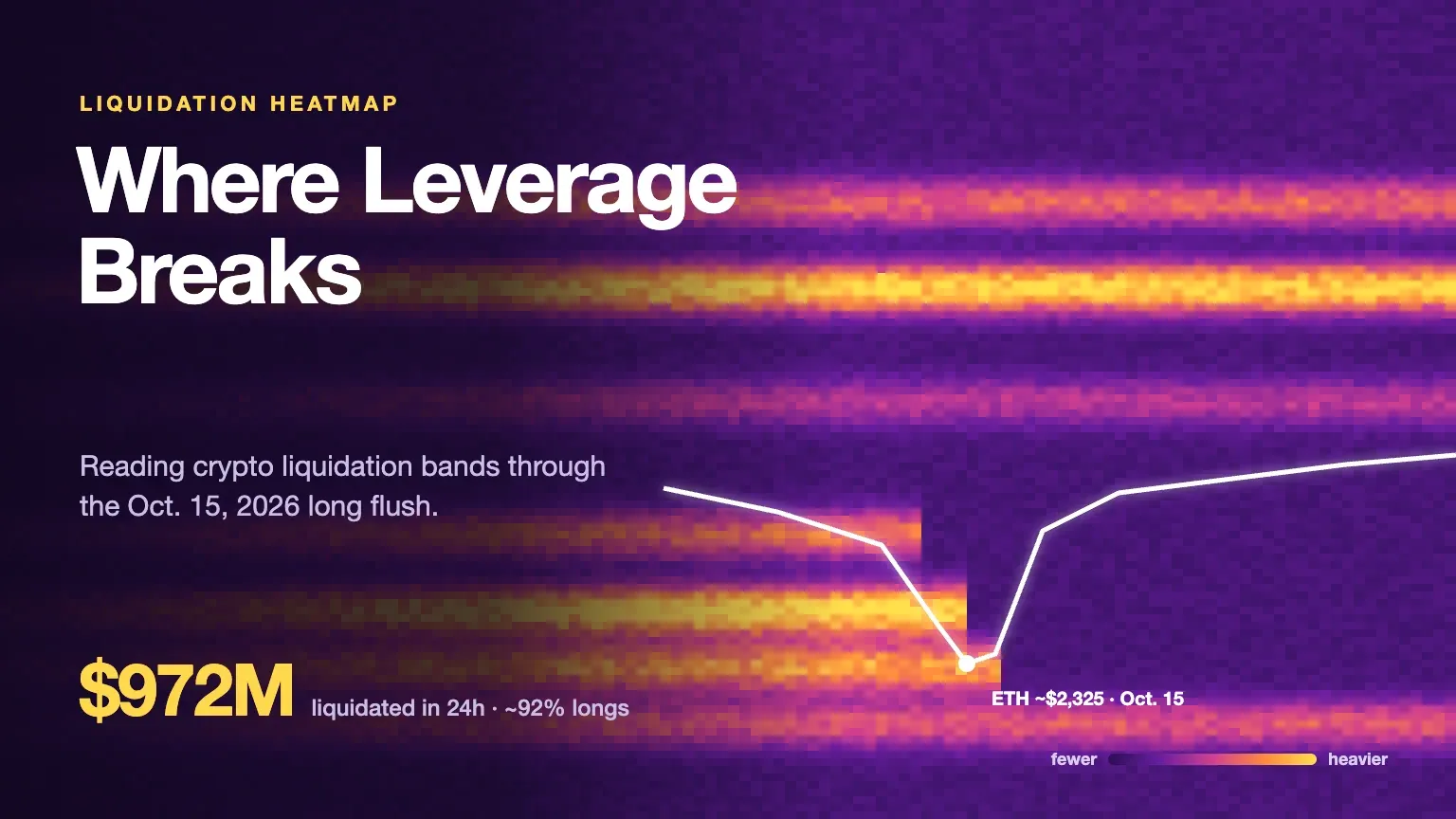
Crypto Liquidation Heatmap: Reading the $972M Oct. 15 Long Flush

Margin Trading Crypto: Cross vs Isolated and Liquidation Math
How to Convert BTC to USDT: A Step-by-Step WEEX Guide
xStocks Crypto Explained: What Tokenized Stocks Are, How They Work and What Holders Should Check

What Happened to Aergo (AERGO) Crypto? Token Migration and What Holders Should Do

ETH Funding Rate Today: 0.0087% per 8h as Ether Longs Re-Lever

What Is Blockchain and How Does It Work? One Transaction, Traced

Staking APR vs Inflation: How Much of Your Crypto Yield Is Real?

WEEX Convert Fees: What Zero-Fee Conversion Really Costs You

WEEX Convert Quote: How the 8-Second Price Lock Really Works

WEEX Convert Limits: Minimum and Maximum Amounts Explained

How to Check a WEEX Convert Order: History, Rate and Status

Bitcoin Price After Hot CPI: Why BTC Is Pinned Near $82,000

Limit Sell Order: How to Set a Take-Profit Price in Crypto

Best Crypto Podcasts for Beginners: A 4-Week Listening Plan

What Is Plume (PLUME)? Why the RWA Token Stays 93% Below Its High Even After the Layer 2 Rally

ETH Futures: Why Ether Is Falling Faster Than Bitcoin This Week
How to Buy Presale Crypto: Step by Step Guide for Beginners

Ethereum Glamsterdam Hits 200M Gas on Sepolia: What Changes After the Upgrade?

What Is Staking? 4 Myths to Clear Up Before You Stake Crypto

CAP Price Up 23%: Why Short Liquidations Don't Explain the Rally

Ethereum Glamsterdam Upgrade: Sepolia Date and ETH Price Impact

How to Earn Interest on USDT: What a 10% APR Really Pays in 2026

How to Buy Crypto With Apple Pay in 5 Steps: Why Your Bank May Decline the Payment

What Is Blockchain and How Does It Work? One Real Block Explained
Crypto Convert vs Transfer vs Bridge: Which Action Do You Need?
How to Convert ETH to USDT on WEEX: Step-by-Step Guide
How to Convert USDT to BTC on WEEX: Step-by-Step Guide
How to Convert BTC to ETH on WEEX: Step-by-Step Guide
Ethereum Funding Rate: How It Works and Why It Dropped Near Zero
Crypto Liquidation Heatmap: Reading the $972M Oct. 15 Long Flush


