
 Buy Crypto
- Markets
 Futures
- Spot
- Copy Trade
- Earn
- More
What Is Unichain and How Does It Work?

What Is Unichain?
Unichain is a Layer 2 scaling solution built for Ethereum, specifically designed to enhance decentralized finance (DeFi) applications through the use of optimistic rollup technology. By processing transactions off-chain and periodically submitting compressed data back to Ethereum, Unichain significantly improves transaction speed and reduces costs—all while inheriting the security guarantees of the Ethereum mainnet.
Developed by Uniswap Labs, the team behind the widely-used Uniswap decentralized exchange, Unichain launched with an impressive 1-second block time. It has since introduced Flashblocks, a feature that enables transaction confirmations in approximately 200 milliseconds.
Built on the OP Stack, Unichain is part of the Optimism Superchain—an interconnected network of Layer 2 solutions that share common infrastructure and enable seamless cross-chain communication.
How Does Unichain Work?
Optimistic Rollups
Unichain utilizes optimistic rollups to process transactions off the main Ethereum chain. Instead of recording every transaction on Ethereum, only essential summarized data is posted back. This method drastically lowers gas fees and alleviates network congestion while maintaining Ethereum's robust security.
This system operates on the principle that all transactions are considered valid unless challenged within a seven-day dispute window. If a transaction is suspected to be fraudulent, anyone can submit a fraud proof, triggering an on-chain verification process. If the transaction is proven invalid, it is reverted, and the chain’s state is corrected.
As a result, withdrawals from Unichain back to Ethereum typically require a seven-day waiting period. Although this may cause delays, it is a critical security measure that ensures trustlessness and correctness across the network.
Sequencer and Validator Network
A key component of Unichain is its sequencer, which collects, orders, and broadcasts user transactions. Currently operated by Uniswap Labs, the sequencer allows for high-speed processing but introduces a degree of centralization. To mitigate this, Unichain incorporates a decentralized validator network.
Validators are independent node operators who monitor the sequencer’s output to ensure compliance with protocol rules. To participate, validators must stake UNI—the native governance token of the Uniswap ecosystem—on Ethereum. This staking mechanism is enforced via a smart contract that communicates with Unichain’s native bridge, adding a layer of accountability and reducing reliance on a single entity.
Trusted Execution Environment (TEE)
Unichain enhances fairness and transparency by separating the tasks of block production and sequencing. Blocks are constructed inside a Trusted Execution Environment (TEE), a secure and isolated space that ensures transactions are ordered according to predefined, verifiable rules.
This design minimizes the risk of transaction manipulation—such as reordering or censorship—and creates a more predictable environment for users and decentralized applications.
Key Features of Unichain
Built on the OP Stack
Unichain is developed using the OP Stack, an open-source, modular framework created by the Optimism Collective. This foundation allows Unichain to be EVM-equivalent, meaning developers can port existing Ethereum smart contracts to Unichain with little to no modification.
Additionally, being part of the Optimism Superchain enables native cross-chain communication and shared infrastructure across multiple Layer 2 networks—including OP Mainnet and Base—paving the way for a more interconnected and efficient multi-chain ecosystem.
Flashblocks
One of Unichain’s standout innovations is Flashblocks, which provides users with transaction pre-confirmations every ~200 milliseconds. This system reduces waiting times and increases predictability—especially beneficial for high-frequency trading and DeFi applications where latency matters.
Flashblocks were developed in partnership with Flashbots, an organization focused on mitigating negative impacts of maximal extractable value (MEV) and improving transaction fairness.
Native Uniswap Integrations
Unichain offers deep integration with the Uniswap ecosystem. Through the Uniswap Wallet and web interface, users can seamlessly:
- Swap tokens
- Trade NFTs
- Interact with dApps
- Bridge assets between layers
This native support allows for a smooth and intuitive user experience while maintaining self-custody of funds.
The Role of the Unichain Token
While Unichain itself does not currently have a dedicated native gas token—relying instead on ETH for transaction fees—there is growing discussion within the community about the potential introduction of a Unichain token. Such a token could serve multiple purposes, including governance, staking, and fee payment. The Unichain token price would likely be influenced by network adoption, utility, and overall market conditions. It's worth noting that any official token launch would be announced by Uniswap Labs, and users should always refer to authoritative sources for the latest updates on the Unichain token.
Conclusion
Unichain represents a dedicated effort to scale Ethereum DeFi through optimistic rollup technology—delivering faster finality, lower fees, and a user experience tailored for traders and liquidity providers.
Its EVM-equivalent nature lowers the barrier to entry for developers, while features like Flashblocks and TEE-backed sequencing improve reliability and fairness. As a member of the Optimism Superchain, Unichain also supports cross-chain interoperability—strengthening not just the Uniswap ecosystem, but the entire Ethereum network.
Whether you are a developer, trader, or DeFi enthusiast, Unichain offers a compelling and efficient environment to build and interact with decentralized applications.
Further Reading
- What Is Tether and How Does It Work?
- What Is World Liberty Financial (WLFI) and How Does It Work?
- What Is Dogecoin and How Does It Work?
Disclaimer: The opinions expressed in this article are for informational purposes only. This article does not constitute an endorsement of any of the products and services discussed or investment, financial, or trading advice. Qualified professionals should be consulted prior to making financial decisions.
You may also like
What is HODL? The Origin, Meaning & Strategy of HODL
A single typo from a drunken BitcoinTalk post in 2013 changed crypto vocabulary forever. That typo was HODL. Today, it is one of the most recognized terms in the entire cryptocurrency industry. But what is HODL exactly? Where did it come from, and why do investors keep using it years later? In this guide, we will explore the origin of HODL, break down its meaning, explain how the HODL strategy works, and help you decide if it makes sense for your portfolio.
What Does HODL Mean in Crypto?The simplest HODL meaning is this: it refers to holding onto your cryptocurrency without selling, regardless of whether the price goes up or down. What does HODL mean in crypto practice? When an investor says they are HODLing, they are declaring that they will not sell their coins even during extreme market volatility, bear markets, or sharp price drops.
Over time, the crypto community retrofitted HODL into a backronym (an acronym created after the word already existed): "Hold On for Dear Life." While this was not the original meaning, it perfectly captures the spirit of the strategy. A HODLer refuses to sell even when the market crashes around them, holding on for dear life until prices recover.
Synonyms for HODL include: hold, held, holding, holds. Investors with "diamond hands" are said to be HODLing their cryptocurrency until the price goes "to the moon."
The Origin of HODLThe origin of HODL is one of crypto's most beloved stories. It all started on December 18, 2013, on the BitcoinTalk forum—a platform launched by Satoshi Nakamoto himself for discussing Bitcoin.
On that evening, a user named GameKyuubi made a now-famous post titled "I AM HODLING." In the post, GameKyuubi admitted he had been drinking and was frustrated with his poor trading skills. He wrote:
"I type d that tyitle twice because I knew it was wrong the first time. Still wrong. w/e. GF's out at a lesbian bar, BTC crashing WHY AM I HOLDING? I'LL TELL YOU WHY. It's because I'm a bad trader and I KNOW I'M A BAD TRADER."
GameKyuubi was fully aware that he had misspelled "holding" as "hodling," but he was too drunk and/or upset to correct it. Instead of trying to time the market or predict short-term price movements, he declared that he would simply hold onto his Bitcoin.
This single typo became a legendary moment in crypto history. The post resonated with countless investors who also felt they were bad traders. HODL quickly spread as a rallying cry for anyone who preferred a simpler, long-term approach over the stress of day trading.
HODL Day: December 18Because of this famous post, December 18 is now celebrated as HODL Day—the official holiday for HODLers around the world. On this day, crypto enthusiasts who lack the technical skills for short-term trades gather (virtually or in person) to celebrate GameKyuubi's message and his accidental contribution to crypto culture.
How Does HODLing Work?The HODL strategy is straightforward. Unlike day trading or swing trading, which require constant attention and technical analysis, HODLing follows three simple principles:
Buy and Hold. Investors purchase cryptocurrency and hold onto it through market ups and downs. The entry price matters less than the long-term belief in the asset's future value.
Ignore Volatility. HODLers resist the urge to sell during market dips. They understand that short-term price swings are normal and that panic selling often locks in losses that would have recovered with patience.
Belief in Fundamentals. HODLers typically have strong confidence in the underlying value or potential of the cryptocurrency they hold. They are not betting on next week's price; they are betting on where the technology and adoption will be in five or ten years.
For example, a Bitcoin HODLer who bought at $100 and held through multiple price crashes—including the 2014 Mt. Gox collapse and the 2018 bear market—would still have benefited enormously from Bitcoin's long-term growth to tens of thousands of dollars.
Why is HODLing So Popular?There are several reasons why how to HODL cryptocurrency has become such a popular strategy, especially for beginners.
Simplicity. HODLing does not require active trading, market timing, or technical analysis skills. Anyone can do it.
Avoids Emotional Selling. By committing to a long-term hold, investors protect themselves from panic selling during market downturns. Fear and greed are two of the biggest enemies of successful investing, and HODLing helps neutralize both.
Long-Term Gains. Despite extreme volatility, many cryptocurrencies have shown significant value growth over longer time horizons. Bitcoin, for example, has consistently reached new all-time highs years after every major crash.
Community Spirit. HODLing is often seen as a badge of loyalty within the crypto community. HODLers are viewed as true believers in the technology, not just short-term speculators.
HODL vs Trading: What's the Difference?The debate between HODL vs trading crypto comes down to time horizon and risk tolerance. Here is how they compare:
AspectHODLingTradingStrategyBuy and hold for the long termBuy and sell frequently to profit from price changesRiskLower, avoids short-term volatilityHigher, constant exposure to market swingsEffortMinimal, requires patienceHigh, requires active monitoring and analysisGoalCapitalize on long-term growthProfit from short-term price movementsFor most beginners, HODLing is the safer and less stressful approach. For experienced traders with time and skill, trading can potentially generate more frequent profits—but with significantly higher risk.
Is HODLing a good strategy for me?Is HODLing a good strategy for you? It depends on your goals and personality. HODLing makes the most sense in three situations:
Long-term belief. If you trust the potential of a cryptocurrency or blockchain technology over years, not days, HODLing aligns with that conviction.
Volatile markets. When frequent price swings make trading risky or unpredictable, HODLing allows you to ride out the turbulence without making emotional mistakes.
Avoiding stress. For those who prefer a passive investment approach over active trading, HODLing is the perfect fit. You buy, you hold, and you check back in a few years.
Is HODLing Always the Right Choice?No strategy is perfect for every situation. While HODLing has worked well for Bitcoin and many other major cryptocurrencies over long time frames, it is important to remember that not every coin survives. Some projects fail permanently. HODLing a project with no long-term future will not save your investment.
The key is to HODL quality assets that you have researched and believe in. Blindly HODLing any coin without understanding its fundamentals is not a strategy—it is gambling.
ConclusionThe story of HODL is proof that even mistakes can become legendary. A misspelled word from a frustrated, self-aware trader on December 18, 2013, has now become a rallying cry for millions. So what is HODL? It is a reminder that you do not need to time the market perfectly. You do not need to be a skilled day trader. You just need to believe in the long-term value of what you own and resist the fear that drives others to sell at the worst possible moment. HODL is not about being right every day. It is about being right years from now.
Ready to HODL your crypto assets? Trade on WEEX and start your HODL journey. Sign up now and trade today.
FAQWhat does HODL mean in crypto?HODL means holding onto your cryptocurrency without selling, regardless of price ups and downs. It originated from a typo of "hold" and is often interpreted as "Hold On for Dear Life."
What is the origin of HODL?The origin of HODL comes from a December 18, 2013 BitcoinTalk post by user GameKyuubi, who drunkenly typed "I AM HODLING" instead of "holding" while admitting he was a bad trader.
When is HODL Day?HODL Day is celebrated on December 18 each year, commemorating the date of GameKyuubi's original BitcoinTalk post in 2013.
Is HODLing a good investment strategy?HODLing can be a good strategy for long-term believers in cryptocurrency who want to avoid the stress and risk of active trading. However, it works best with quality assets that have strong fundamentals.

What is FUD in Crypto? Top 6 Ways to Avoid FUD: Complete Guide for Crypto Beginners
If you have spent any time in the cryptocurrency market, you have likely encountered the term FUD. It appears in Telegram groups, Twitter threads, and news headlines. But what is FUD in crypto, and why does it matter so much? The short answer is that FUD can directly influence investment decisions, cause panic selling, and even wipe out entire projects. In this guide, we will explain what does FUD stand for, explore the FUD meaning crypto traders and investors need to understand, examine real-world crypto FUD examples, and provide practical strategies for how to avoid FUD psychology.
What Is FUD in Crypto?FUD is an acronym that stands for Fear, Uncertainty, and Doubt. The FUD meaning crypto markets have adopted comes from traditional finance and marketing, where it describes a strategy of spreading negative, misleading, or exaggerated information to influence people's perceptions and decisions.
In the cryptocurrency market, FUD in crypto occurs when individuals, groups, or even media outlets spread negative news about an asset, project, exchange, or the entire market. This information is often unverified, taken out of context, or deliberately fabricated. The goal is to create panic among investors. When investors panic, they sell. When they sell, prices drop. And when prices drop, those who created the FUD can buy back in at lower prices.
Common terms you might hear include FUD news, FUD coin, or simply saying a project is being "FUDded." Alongside FUD, FOMO (Fear Of Missing Out) is another common psychological effect in crypto. While FUD drives selling, FOMO drives buying. Both can have substantial impacts on market behavior, depending on the severity and who is affected.
The Psychology Behind FUD: How FUD Affects TradersUnderstanding FUD psychology trading patterns is essential for anyone active in crypto markets. Typically, those most susceptible to FUD are less experienced traders and investors. However, even seasoned professionals can feel the effects of fear and doubt when markets turn volatile.
People experiencing FUD syndrome often display recognizable behaviors. They feel afraid when negative information spreads, leading to hasty decisions without proper research to determine what the accurate source of information actually is. They become impatient while trading, constantly checking open orders and positions. Many have no clear plan or strategy before investing or trading. Others trade based on news but do not update market information quickly enough or lack a comprehensive view of a given piece of news. Many are easily swayed and indecisive because they lack technical and fundamental analysis skills.
Who Creates FUD in Crypto?FUD is not random. It is often a deliberate strategy used by organizations and influential figures (KOLs) in crypto to serve their own interests. Social media platforms help projects communicate with communities, but they also enable the rapid spread of FUD.
Those who create FUD spread misleading information about a project—such as fake regulation news, scam allegations, or rug pulls. The main goal is to drive the token price down so they can buy cheap and accumulate. Later, they trigger FOMO to sell into the buying pressure for profit. In some cases, FUD is driven by personal grudges, and it can severely damage a project, sometimes beyond recovery.
The Impact of FUD on the Crypto MarketThe impact of FUD can be devastating, both for individual projects and for the market as a whole. On the project side, FUD can cause tokens to drop sharply due to the imbalance between supply and demand. Some small projects can completely collapse if they do not have reasonable solutions to clear their names and regain investor trust.
On the investor and trader side, FUD in crypto can cause emotions to fluctuate strongly due to fear and doubt, leading to hasty and poorly calculated decisions. The consequence is that assets gradually decrease over time after each FUD incident. Beyond immediate financial losses, FUD also makes investors and traders lose confidence in their own analysis and in the cryptocurrency market generally. Having been "deceived" and suffered losses, many develop a negative view of crypto and leave the market entirely. For this reason, FUD is one of the barriers preventing crypto from achieving mainstream adoption.
FUD vs FOMO: Two Sides of the Same CoinWhen discussing FUD vs FOMO crypto, it helps to see them as opposites. FUD (Fear, Uncertainty, Doubt) drives selling based on negative expectations. FOMO (Fear Of Missing Out) drives buying based on positive expectations. Both are emotional responses that bypass rational analysis. A trader who buys because of FOMO during a price rally is just as likely to lose money as a trader who sells because of FUD during a price dip. Successful trading requires recognizing both emotions and making decisions based on strategy rather than fear or greed.
6 Ways to Avoid FUD When Investing in Crypto6 Ways to Avoid FUD Psychology When Investing in Crypto
In reality, how to avoid FUD completely is impossible. Regardless of how much experience a person has in the crypto market, fear and doubt can still creep in. However, you can minimize the likelihood of experiencing FUD psychology by following these six practical methods.
Gain KnowledgeConduct thorough fundamental and technical analysis to develop correct assessments of a project or asset. This helps you identify solid investment opportunities and maintain long-term vision, thereby resisting short-term fear and uncertainty caused by FUD. When you understand what you own and why you own it, random negative news becomes less threatening.
Have a Trading PlanYour plan should include stop-loss points, entry points, target points, and capital allocation amounts. A written plan removes emotion from the equation because you have already decided what to do in various scenarios. When FUD hits, you simply execute your plan rather than making panicked decisions.
Assess Risks FirstCompare the risk-to-potential profit ratio for every trade. Understanding how much you stand to lose versus how much you could gain helps you size positions appropriately and avoid overexposure to any single asset.
Stay FlexibleCombine your established strategy with observations of market psychology. Assess risks and make reasonable changes when conditions warrant, but avoid completely abandoning your approach just because of short-term noise.
Do Your Own Research (DYOR)Investigate based on official sources rather than social media rumors. This will help you distinguish misleading and exaggerated information from legitimate concerns. When you hear negative news, trace it back to its original source. If the source is anonymous or unverified, treat the news with suspicion.
Avoid Single-Source DecisionsOne piece of information rarely tells the whole story. Look for confirmation from multiple reliable sources before changing your position. Remember that FUD creators often rely on the fact that most people will react without verifying.
By following these methods, you can learn how to handle FUD in crypto more effectively and protect your portfolio from emotion-driven losses.
ConclusionWhat is FUD in crypto? It stands for Fear, Uncertainty, and Doubt—often deliberately spread to manipulate markets and trigger panic selling. Understanding this FUD meaning is essential for any investor who wants to protect their portfolio from emotional decisions.
By learning how to avoid FUD through knowledge, planning, and independent research, you can navigate volatile markets with confidence. Remember that FUD vs FOMO represents two emotional extremes. The best traders operate in the middle, guided by strategy rather than fear or greed.
FAQWhat does FUD stand for in crypto?FUD stands for Fear, Uncertainty, and Doubt. In crypto, it refers to negative or misleading information spread to create panic and influence investor behavior.
What is FUD in crypto trading?In crypto trading, FUD is when negative news or rumors cause traders to sell their positions out of fear, often leading to sharp price drops. FUD can be intentional market manipulation or genuine concerns.
How to avoid FUD when investing in crypto?To avoid FUD, educate yourself about projects before investing, always have a trading plan with stop-losses, do your own research from official sources, avoid making decisions based on single news items, and stay focused on long-term fundamentals rather than short-term noise.
What are some famous crypto FUD examples?Famous examples include China banning Bitcoin multiple times since 2013, the SEC suing Binance in June 2023, and USDT temporarily losing its peg in June 2023. In each case, prices dropped temporarily but many assets recovered.
Who creates FUD in crypto?FUD is often created by organizations, influential individuals, or competitors who want to drive prices down so they can buy tokens cheaply. Sometimes FUD also comes from regulators, media outlets, or individuals with personal grudges
Is all FUD bad for crypto?Not necessarily. While FUD often causes short-term price drops, it can also shake out weak hands and create buying opportunities for long-term investors. Additionally, some FUD alerts the community to legitimate problems that projects need to address.
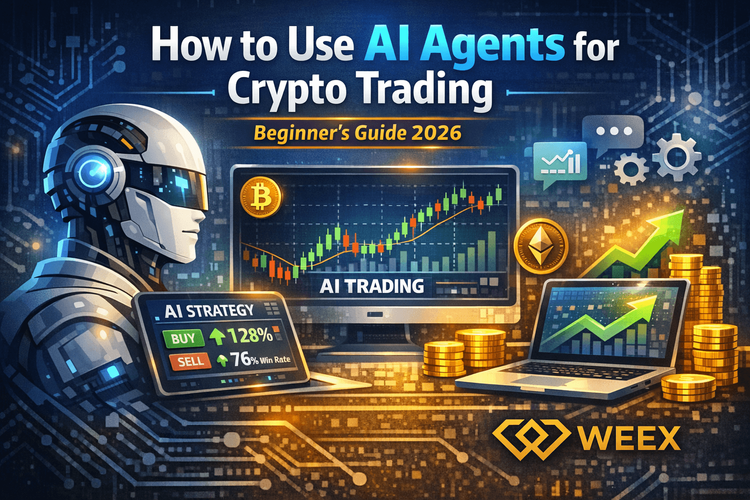
How to Use AI Agents for Crypto Trading: A Beginner’s Guide (2026 Step-by-Step)
How to Use AI Agents for Crypto Trading (Beginner’s Guide)
AI is rapidly transforming the crypto market. In 2026, traders are no longer competing only against each other — they are competing against machines.
The good news? You can use them too.
In this guide, you’ll learn exactly how to set up an AI agent for crypto trading, even if you’re a complete beginner.
What Is a Crypto AI Agent?A crypto AI agent is a system that can analyze data, make decisions, and execute trades automatically.
Unlike traditional trading bots, AI agents can:
Adapt to market conditionsLearn from historical dataCombine multiple signals (price, sentiment, on-chain data)👉 In simple terms:
A bot follows rules.
An AI agent can adjust the rules.
Why Are Traders Switching to AI?There are three major reasons why AI trading is exploding right now:
24/7 Market CoverageCrypto never sleeps — but humans do. AI agents monitor the market non-stop.
Emotion-Free TradingNo FOMO. No panic selling. Just data-driven decisions.
Speed & ExecutionAI can react to signals in milliseconds — far faster than manual traders.
What You Need Before Getting StartedBefore setting up your AI agent, prepare the following:
A crypto exchange accountAPI access (to allow automated trading)Initial capital (start small)👉 Tip: Always use restricted API keys (no withdrawal permissions).
Step-by-Step: How to Set Up an AI Trading AgentStep 1: Choose an AI Trading ToolThere are generally three options:
Built-in exchange AI toolsThird-party AI trading platformsCustom AI agents (advanced users)👉 Beginners should start with ready-made AI tools.
Step 2: Select a Trading StrategyCommon AI strategies include:
Trend following (ride the momentum)Mean reversion (buy dips, sell highs)Arbitrage (price differences across markets)Meme signal detection (social-driven trading)👉 Start simple. Complexity does NOT equal profitability.
Step 3: Configure Risk ManagementThis is where most beginners fail.
Set:
Stop-loss (e.g. -5%)Position size (1–5% per trade)Max daily loss👉 Rule: Protect capital first, profit second.
Step 4: Backtest Your StrategyBefore going live:
Run simulations on historical dataCheck win rate, drawdown, consistency👉 If it doesn’t work in backtesting, it won’t work live.
Step 5: Go Live (With Small Capital)Start with a small amount and:
Monitor performanceAdjust parametersAvoid over-optimizationExample: A Simple AI Crypto StrategyHere’s a beginner-friendly example:
Strategy: BTC Trend Following
Buy when price breaks above 20-day highSell when price drops below 10-day averageStop-loss: 5%Why it works:
Captures strong trendsAvoids sideways noiseCommon Mistakes to AvoidEven with AI, many traders lose money. Here’s why:
❌ Overtrusting AIAI is a tool — not magic.
❌ No Risk ControlOne bad trade can wipe out gains.
❌ Over-optimizingA strategy that fits past data perfectly often fails in real markets.
Best Practices for AI Trading in 2026Start small and scale graduallyUse multiple strategies (diversification)Monitor performance weeklyCombine AI with human judgmentIs AI Crypto Trading Worth It?AI trading is not a guaranteed profit machine.
But it gives you:
SpeedDisciplineScalability👉 Traders who combine AI + strategy + risk control will have a strong edge.
Final ThoughtsAI agents are not the future of crypto trading — they are the present.
The question is no longer:“Should I use AI?”
But:“How well can I use it?”
👉 Start exploring AI-powered crypto trading tools today and automate your strategy.
Crypto for Beginners: 10 Concepts You Must Know Before Buying Trading Cryptocurrency
Cryptocurrency comes with its own vocabulary. Understanding essential terms such as distributed ledgers, cryptographic security, consensus rules, and wallet infrastructure can help you navigate digital assets more safely and avoid common mistakes.
Different blockchains operate under different rules. Ideas like mining versus staking, network fees, and economic models explain why some chains are faster, others are cheaper, and some carry unique risks.
Decentralized finance and stablecoins have become widely used tools. They expand what you can do with crypto, but each comes with specific trade-offs and failure risks.
Your own security habits determine your safety. Your private key and recovery phrase are the most valuable pieces of information you control, because anyone who has them controls your funds.
IntroductionGetting started with cryptocurrency can feel like stepping into a foreign country where nobody speaks your language. New terms appear constantly, and the industry moves at a rapid pace. This guide breaks down ten essential concepts that every crypto user should understand, whether you are completely new or looking to fill gaps in your knowledge.
1. Distributed Ledger Technology (Blockchain)At its simplest level, a blockchain is a shared digital record book that keeps track of transactions across many computers at once. Unlike a bank ledger that lives on a single company server, a blockchain is spread across thousands of independent machines.
Information gets stored in groups called blocks, and each block links to the one before it, forming a chain. Once data is written onto most blockchains, changing it becomes extremely difficult. This structure creates transparency and makes unauthorized tampering hard to hide.
2. DecentralizationDecentralization means spreading control away from a single person, company, or government and across a wider network. In traditional finance, a bank controls your account. In a decentralized system, no single party holds that power.
Bitcoin offers a clear example. You can send value to someone else without asking a bank for permission or paying bank fees. However, decentralization is not an all-or-nothing feature. Some networks are highly decentralized, while others rely on a smaller group of validators or nodes.
3. Smart ContractsA smart contract is a piece of code that automatically executes an agreement when certain conditions are met. You do not need a lawyer, a notary, or a middleman. The code handles everything.
The most flexible smart contracts run on programmable blockchains like Ethereum, Solana, and Avalanche. Think of a vending machine. You put in money, press a button, and the machine gives you a drink. No cashier is required. Smart contracts work the same way but for digital agreements, enabling everything from lending platforms to NFT marketplaces.
4. Consensus Mechanisms: Proof of Work vs. Proof of StakeBlockchains need a way to agree on which transactions are valid. That agreement process is called consensus. The two most common methods are proof of work and proof of stake.
Proof of work is the original model used by Bitcoin. Miners compete using powerful computers to solve mathematical puzzles. The first one to solve the puzzle gets to add the next block and earns a reward. This method is very secure but consumes significant electricity.
Proof of stake works differently. Instead of miners, validators lock up their own cryptocurrency as a form of collateral. The network randomly selects validators to propose and verify blocks. Validators earn rewards for honest behavior and can lose their staked coins if they try to cheat. Proof of stake uses far less energy than proof of work.
5. Decentralized Finance (DeFi)Decentralized finance, commonly called DeFi, refers to financial applications built on blockchains that operate without traditional intermediaries. Instead of borrowing from a bank, you borrow from a lending pool. Instead of trading through a brokerage, you trade directly with smart contracts.
DeFi allows users to lend their crypto and earn interest, borrow assets by putting up collateral, trade tokens without a central exchange, and earn rewards by providing liquidity. These services are open to anyone with an internet connection and a compatible wallet. However, DeFi also carries risks such as smart contract bugs, price volatility, and the possibility of permanent loss in liquidity pools.
6. TokenomicsTokenomics combines the words token and economics. It describes the economic design of a cryptocurrency project. Understanding tokenomics helps you evaluate whether a token might hold value over time or whether its design encourages selling.
Key parts of tokenomics include total supply, which is the maximum number of tokens that will ever exist; circulating supply, which is how many tokens are actually available to trade right now; utility, which is what the token can actually do such as paying fees or voting on project decisions; distribution, which is how tokens are split among the team, early investors, and the public; and incentive mechanisms, which are how the project rewards users for participating.
A well-designed tokenomics model aligns the interests of users, developers, and investors. A poorly designed one often leads to rapid price collapse after the initial hype fades.
7. Network Fees (Gas)Network fees, often called gas fees, are payments users make to have their transactions processed on a blockchain. Every time you send tokens, swap one asset for another, or interact with a smart contract, you pay a fee.
Gas fees work differently on different networks. Ethereum fees can become expensive when the network is busy. Solana and other newer chains typically charge much less. Fees exist for a practical reason: they prevent bad actors from spamming the network with useless transactions. When demand rises, fees rise. Learning to monitor network activity can help you time your transactions for lower costs.
8. Private Keys vs. Public KeysEvery crypto wallet uses two types of cryptographic keys. They work as a pair.
A public key is similar to an email address or bank account number. You share it freely so others can send you funds. A private key is like the password to that account. It proves that you own the funds associated with the public key. Anyone who gets your private key can take everything in that address.
You can share your public key without worry. You must never share your private key with anyone, not even someone claiming to be customer support.
9. Recovery Phrase (Seed Phrase)A recovery phrase, also called a seed phrase, is a list of 12 to 24 random words generated when you create a new crypto wallet. This phrase acts as a master backup for your entire wallet.
There is an important difference between a private key and a seed phrase. A private key controls a single address, like one Bitcoin account. A seed phrase can restore every address and every private key inside that wallet. If you lose your phone or computer, the seed phrase is the only way to get your funds back. If someone else finds your seed phrase, they gain full control over all your accounts.
Store your seed phrase offline on paper or metal, never as a digital file on a connected device. Never take a photo of it. Never type it into any website.
10. StablecoinsStablecoins are cryptocurrencies designed to hold a steady value, usually by tracking a traditional currency like the US dollar. The goal is to stay close to one dollar, avoiding the wild price swings that Bitcoin and other cryptocurrencies experience.
People use stablecoins to move money between exchanges without converting back to cash, to avoid short-term market volatility, and to participate in DeFi lending and borrowing.
Stablecoins achieve stability in different ways. Fiat-backed stablecoins hold reserves of cash and cash equivalents in a bank account. Crypto-backed stablecoins use other cryptocurrencies as collateral, often requiring more value locked than the stablecoins issued. Algorithmic stablecoins use automated rules to adjust supply, but these have proven fragile and several have failed completely.
Even the most reputable stablecoins carry risks. They can depeg, meaning their price moves away from the target value. They can face liquidity problems or regulatory actions. No stablecoin is truly risk-free.
Closing ThoughtsCryptocurrency becomes far less intimidating once you understand the core concepts that power it. Blockchain and decentralization explain how networks stay secure without a central authority. Smart contracts and consensus mechanisms show how automation and agreement happen at scale. Tokenomics and network fees help you see the economic incentives behind each project.
On the security side, private keys and recovery phrases are non-negotiable. Lose them and you lose your funds. No bank can call to reverse the transaction. Stablecoins and DeFi have opened up new ways to use digital assets, but they come with their own trade-offs and failure risks.
Keep learning the basics, stay careful with your security habits, and you will be better prepared to use cryptocurrency with confidence.
FAQWhat is the difference between a private key and a seed phrase?A private key controls a single wallet address. A seed phrase (12 to 24 words) controls your entire wallet and can restore all addresses and private keys inside it.
Are stablecoins completely safe?No. Stablecoins can depeg from their target value, face liquidity issues, or be affected by regulatory problems. Even well-known stablecoins carry some risk.
Why do network fees sometimes get very high?Network fees rise when many people try to use the same blockchain at the same time. Higher fees encourage users to wait or pay more to get their transaction processed faster.
What is the difference between proof of work and proof of stake?Proof of work uses miners and powerful computers to secure the network, consuming more energy. Proof of stake uses validators who lock up their own crypto as collateral, using far less energy.
Can I share my public key with others?Yes. Your public key is like an account number. You share it to receive funds. Never share your private key or seed phrase with anyone.
Elon Musk Net Worth 2026: Why It Keeps Rising and What Drives It
Elon Musk’s wealth in 2026 is not just a story about one person becoming richer. It is a story about how modern markets value electric vehicles, private space infrastructure, artificial intelligence, and founder control. That is why interest in Musk’s fortune remains so high. His net worth reflects the combined force of several companies that investors still believe can shape the future of transportation, communications, robotics, and digital infrastructure.
Unlike many billionaires whose fortunes are tied mainly to one public company, Musk’s wealth is built on a more layered structure. Tesla remains the most visible driver because it trades in public markets and reacts quickly to earnings, sentiment, and product expectations. But SpaceX now plays an equally important role because its private-market value has grown so large that it changes how analysts and media outlets estimate Musk’s total wealth. Add in his options, ownership in X, and stakes in smaller private ventures, and it becomes clear why net worth estimates can move sharply even in short periods.
What Is Elon Musk’s Net Worth in 2026?As of April 2026, public estimates place Elon Musk’s fortune in the range of roughly $800 billion, depending on how private assets and stock-based compensation are treated. Forbes and other wealth trackers differ slightly because private-company valuations and option treatment can change the final number. But the broader conclusion is consistent: Musk remains the richest person in the world by a wide margin.
This scale matters because it puts his personal wealth in a category that is unusual even by billionaire standards. His fortune now exceeds the economic output of some countries, and that alone helps explain why his name keeps attracting financial and public attention. But the number itself matters less than the structure behind it. Musk’s net worth is not sitting in cash. It is heavily concentrated in companies whose valuation depends on continued growth, execution, and market confidence. Readers who want a quick overview can also see how rich Elon Musk is.
The Main Drivers of Musk’s WealthThe most important sources of Musk’s wealth are easy to identify, even if the exact estimates change from week to week.
Wealth DriverEstimated Importance in 2026Why It MattersSpaceX-related valueLargest contributorPrivate-market valuation has become central to his fortuneTesla equityMajor contributorPublic stock performance strongly shapes daily wealth estimatesTesla compensation packageLarge paper-wealth componentOptions meaningfully increase valuation sensitivityX and smaller venturesSecondary contributorsAdd influence, but not the bulk of his fortuneThis structure explains why his net worth can move so quickly. If Tesla rises, the public immediately sees the effect. If SpaceX is revalued higher in private markets, the shift is less visible day to day, but the impact on Musk’s estimated wealth can be even larger.
The market also treats Musk differently from ordinary executives because so much of his wealth is tied to founder-style control. Investors are not just valuing assets. They are valuing the belief that Musk can still push multiple industries forward at once.
Why SpaceX Has Become So ImportantFor many years, Tesla was the easiest way to understand Musk’s fortune. In 2026, that is no longer enough. SpaceX now matters just as much, and in some estimates even more.
The reason is simple: SpaceX is one of the most valuable private companies in the world, and it sits in businesses that the market continues to reward with long-term premium assumptions. Rocket launches, satellite infrastructure, and strategic communications networks give it a different profile from a normal industrial company. Investors tend to attach very large future value to that type of infrastructure because it looks difficult to replace and even harder to challenge at scale.
That makes SpaceX a powerful driver of Musk’s net worth. Unlike a mature business where valuation expands slowly, a private company with major strategic importance can be revalued sharply if investor appetite grows. That is one reason Musk’s fortune now feels more tied to private-market belief than to any single public ticker.
Why Tesla Still Matters So MuchEven with SpaceX playing a larger role, Tesla remains central to Musk’s financial identity. Tesla is the company most closely associated with him in the public mind, and its share price still drives the most visible day-to-day changes in his net worth.
Tesla matters for three reasons.
First, it is public, so price changes are immediately visible. Second, Musk’s ownership stake still represents a huge block of value. Third, Tesla acts as a sentiment signal for the broader market view on Musk himself. When Tesla is strong, investors tend to become more confident in the broader Musk ecosystem. When Tesla weakens, that confidence can fade quickly.
This also means Musk’s fortune remains vulnerable to equity-market mood shifts. Even if the long-term story around Tesla remains strong, short-term volatility in the stock can meaningfully alter how his wealth is perceived. For readers who want more business context, what is Elon Musk doing helps frame how his companies and public actions continue to shape interest around his wealth.
Why His Wealth Is So Sensitive to ValuationMusk’s fortune is unusually sensitive because much of it sits in high-expectation assets. A simple way to understand this is:
Net worth = ownership stake x asset valuation
That looks basic, but in Musk’s case the second part of the equation can swing widely because market participants are constantly debating how much Tesla, SpaceX, and related businesses should be worth.
That creates a different kind of wealth profile from one built on mature dividend businesses or diversified industrial holdings. Musk’s net worth can expand rapidly when investors reward future potential, but it can also look less stable because so much depends on what markets are willing to believe about long-term growth.
In other words, Musk’s fortune is not only a measurement of what he owns. It is also a measurement of how strongly the market believes in the future of his companies.
Why Public Attention Around His Wealth Keeps GrowingInterest in Musk’s fortune remains high because his net worth functions as a shortcut for understanding his influence. For many readers, the question is not simply how rich he is. The deeper question is how one person can control so much strategic capital across so many major industries.
That is what makes Musk’s wealth different from ordinary celebrity curiosity. His fortune reflects electric vehicles, private space systems, AI infrastructure, communications platforms, and advanced robotics narratives all at once. It is a financial number, but it also represents industrial reach.
That is why every shift in company valuation, political influence, or public controversy tends to feed back into attention around his wealth. Musk’s name sits at the crossroads of business performance and public spectacle, which means his net worth will likely remain one of the most watched financial figures in the world. Readers following the broader public side of the story can also check where Elon Musk is for related context that often overlaps with trend-driven attention.
What Could Change the Picture in 2026The biggest factors that could reshape Musk’s net worth over the rest of 2026 are clear.
A major revaluation of SpaceX would have immediate impact. A strong move in Tesla shares would do the same. Any major legal or governance development linked to compensation or ownership structure could also change how the market calculates his fortune. And because so much of Musk’s wealth is tied to growth-sensitive assets, broader shifts in technology sentiment could alter the picture as well.
That does not mean his fortune is fragile. It means it is dynamic. Musk’s wealth is tied to assets whose value depends on continued confidence, expansion, and execution. As long as those forces stay in place, his net worth can remain at historically unusual levels.
ConclusionElon Musk’s net worth in 2026 is the clearest financial expression of the business empire he has built across electric vehicles, space infrastructure, AI, and digital platforms. His wealth is not driven by one company alone. It is the result of concentrated ownership in several high-value assets, with Tesla and SpaceX standing far above the rest.
That is why his fortune continues to command so much attention. It reflects not just money, but power, market belief, and technological ambition on a scale few individuals have ever reached. As long as Tesla, SpaceX, and Musk-led ventures continue to shape the future-facing sectors of the economy, his net worth will remain one of the most closely watched numbers in global business.
FAQWhat is Elon Musk’s net worth in 2026?
Public estimates in April 2026 place his fortune at roughly $800 billion, depending on how private-company valuations and stock options are counted.
What is the biggest driver of Elon Musk’s wealth?
SpaceX-related value and Tesla equity are the two biggest drivers of his net worth.
Why does Elon Musk’s net worth change so quickly?
Because much of his wealth is tied to high-growth assets whose valuations can move sharply in public and private markets.
Is Elon Musk’s wealth mostly cash?
No. Most of it is tied to equity stakes, options, and private-company value rather than liquid cash.
Why does his net worth matter so much?
Because it reflects the market value of several major technology and industrial narratives at the same time, including EVs, space, AI, and digital infrastructure.
What is Bull Market in Crypto: How to Profit When Digital Assets Keep Rising
Since the 18th century, investors have used the term “bull market” to describe a sustained period of rising stock prices. The symbol became so iconic that a massive bronze bull statue now stands proudly near Wall Street in New York City.
But what does a bull market actually mean for your wallet and the broader economy? Below, we will break down the bull market meaning, what triggers one, how long these rallies typically last, and most importantly, how to take the bull by the horns and manage your money wisely.
What Is a Bull Market?A bull market is commonly defined as a prolonged period when major stock market indexes (like the S&P 500 or Dow Jones Industrial Average) are generally rising and eventually reach new all-time highs.
Quick reminder: A stock market index is simply a basket of companies tracked over time to measure overall market performance.
That said, experts do not always agree on one exact threshold. Some say a bull market officially starts after a 20 percent rise from recent lows. Others do not require a fixed number. This means you might not always know in real time whether you are truly in a bull market, but you will usually feel the optimism.
Learn More: What Is a Bear Market and How to Navigate Crypto Downturns
Bull Market vs Bear Market: Key DifferenceBear markets are easier to define: most experts agree they occur when indexes drop at least 20 percent from recent highs. So why the animal names?
Bulls thrust their horns upward, meaning prices go up.Bears swipe their paws downward, meaning prices go down.That visual metaphor has stuck for centuries.
What Causes a Bull Market?Understanding what causes a bull market helps you spot opportunities earlier. Here are three typical drivers.
Strong Economic GrowthWhen GDP, the total value of a country’s goods and services, rises, demand increases. Companies sell more, profits grow, and stock prices follow. More demand also means companies hire more workers, leading to lower unemployment, higher wages, and more spending. This is a virtuous cycle.
Investor Confidence and Low Selling PressureDuring a bull market, investors are optimistic about the future. They buy more and hold longer, hoping prices will climb even higher. This reduced supply of available shares compared to demand pushes prices further up.
Recovery from a DownturnSurprisingly, bull markets often emerge from economic ashes. For example, the bull market following the 2008 financial crisis lasted over a decade. So do not assume a bull market only happens when everything is perfect. It can also signal healing.
How Often Do Bull Markets Happen and How Long Do They Last?Since 1877, there have been 26 bull markets. Here is the data every serious investor should know.
MetricMedian ValueAverage length42 months (3.5 years)Median price gain87 percent (S&P 500)Bull markets with 100 percent or higher gainsSeveral (portfolio value doubled)Key takeaway: The typical bull market lasts years, not months. Trying to time the end is often a mistake.
What Should I Do During a Bull Market?A bull market can feel like easy money, but smart investors avoid getting reckless. Here are three proven strategies.
Rebalance Your Portfolio – Do Not Get Overweight in StocksIt is tempting to go all in when stocks are soaring. But a bull market can quietly push your stock allocation higher than your risk tolerance allows.
Example: Your target was 70 percent stocks and 30 percent bonds. After a strong rally, you are now at 85 percent stocks. Rebalancing means selling some stocks and buying bonds to return to 70/30. This locks in gains and reduces future volatility.
Pro tip: Rebalance once a year or after a major market move of 10 percent or more.
Never Try to Guess the Top of a Bull MarketNew record highs scare some investors into selling early. But remember: the average bull market lasts 42 months and breaks many records along the way. If you cash out before reaching your financial goal, you miss the biggest gains.
The better move: Stay disciplined. Your investment plan should already account for both bull markets and bear markets.
Use a Strong Economy to Build Emergency SavingsBull markets often coincide with strong job markets. If you are earning more, do not spend it all. Instead, build or top up your emergency fund.
Aim for 3 to 6 months of living expenses saved in a high-yield savings account. This prepares you for unexpected bills or the next downturn.
Bonus: Think About Your CareerCompanies are more profitable during a bull market. That makes it an excellent time to:
Ask for a raise or promotionExplore better job opportunitiesNegotiate benefitsWaiting until a bear market, when layoffs rise, is much harder.
FAQWhat is a bull market in simple terms?A bull market is a long period when stock prices keep going up, usually by at least 20 percent from recent lows. It is the opposite of a bear market.
How long does the average bull market last?Historically, the average bull market lasts about 42 months (3.5 years), with total gains averaging 87 percent on the S&P 500.
What triggers a bull market?Common triggers include strong GDP growth, rising corporate profits, high investor confidence, and economic recovery after a recession.
Should I sell everything during a bull market?No. Most bull markets last years. Selling too early means missing future gains. Instead, rebalance periodically and stick to your long-term plan.
Can a bull market happen during a recession?Rarely. Bull markets typically follow a recession as part of the economic recovery cycle. However, they can begin before the economy fully heals.
Decentralized Finance (DeFi): Benefits, Risks, and 2026 Guide
Decentralized Finance (DeFi) has grown from a crypto experiment into a real onchain financial system. What started with token swaps and overcollateralized lending now includes decentralized exchanges, stablecoin settlement, liquid staking, tokenized real-world assets, and automated yield strategies. In 2026, DeFi is no longer just a niche for early adopters. It is part of how digital assets move, settle, and generate returns across global crypto markets.
That shift makes DeFi more relevant to ordinary users, but also easier to misunderstand. DeFi is not simply “finance on the blockchain.” It is a group of financial applications that replace banks, brokers, and custodians with smart contracts, public ledgers, and user-controlled wallets. That creates real advantages, including open access, transparency, and self-custody. It also creates serious risks, including smart contract bugs, liquidation cascades, stablecoin depegs, and governance failures.
This guide explains what Decentralized Finance (DeFi) is, how it works, why it matters in 2026, and what users should understand before putting money into any protocol.
What Is Decentralized Finance (DeFi)?At its core, Decentralized Finance (DeFi) is a blockchain-based financial system that lets users access services such as lending, borrowing, trading, and yield generation without relying on traditional intermediaries. Instead of going through a bank, a broker, or a clearinghouse, users interact directly with smart contracts that execute financial rules onchain.
If you want a simple starting point, what is DeFi is really a question about how financial services work when code replaces middlemen. Ethereum-oriented education resources still describe DeFi as open financial applications built on programmable blockchains, while protocol documentation emphasizes transparency, accessibility, and non-custodial access.
For a beginner, the workflow looks simple:
connect a wallet
approve a transaction
interact with a protocol
settle onchain
But under that surface, DeFi depends on multiple layers: blockchains, wallets, smart contracts, stablecoins, price oracles, and liquidity providers. That is why it can feel both efficient and technical at the same time.
How DeFi Works in PracticeDeFi works by replacing human intermediaries with software logic.
A lending protocol does not check your salary history. It checks your collateral ratio. A decentralized exchange does not need a traditional broker-dealer. It uses liquidity pools and smart contracts. A stablecoin does not wait for bank wire hours. It moves across blockchain networks continuously.
One useful way to frame the system is:
DeFi = Smart Contracts + Wallets + Onchain Liquidity + Settlement
Once those parts are connected, users can do many things that look similar to traditional finance, including lending, borrowing, swapping, staking, and yield farming. That flexibility is one of DeFi’s biggest strengths. It is also why users need to understand what they are signing. In DeFi, mistakes are often not reversible.
Another useful part of the ecosystem is the DeFi aggregator, which helps users compare routes, rates, and execution options across different protocols instead of checking every app one by one.
Why DeFi Matters More in 2026The DeFi market of 2026 looks very different from the high-emission, hype-driven years of the previous cycle. The biggest change is economic quality. The strongest protocols now focus more on real revenue, sustainable yields, and usable market infrastructure than on short-lived token incentives.
Several structural trends define the ecosystem this year:
stablecoins are acting as core settlement rails
real-world asset tokenization is bringing Treasuries, credit, and equities onchain
DeFi architecture is becoming more modular
automation is improving through AI-assisted execution and account abstraction
institutions are entering through more compliant and structured rails
This matters because DeFi is no longer just a speculative category. It is increasingly becoming financial infrastructure. Tokenized Treasuries, onchain collateral markets, cross-chain settlement, and stablecoins all point in the same direction: DeFi is becoming more useful, not just more complex.
Key DeFi Protocol Data in 2026One of the clearest ways to understand the current market is to look at where users are actually allocating capital.
ProtocolCategoryTVL (2026)30-Day RevenueAave V3Lending$26.7B$8.64MLidoLiquid Staking$19.7B-$20.5B$4.17MHyperliquidPerp DEX$4.36B$65.77MMakerDAO (Sky)CDP / Stablecoin$6.27B-$7.06B$18.03MEigenLayerRestaking$14.49BYield to stakersThis table highlights two important realities.
First, Decentralized Finance (DeFi) is not one market. Lending, liquid staking, perpetual trading, stablecoin systems, and restaking each operate with different economics and risks.
Second, capital is increasingly concentrating in protocols that generate real usage and real revenue. That is a healthier setup than the earlier era, when many DeFi projects depended mostly on inflationary token rewards to create demand.
The Main Benefits of DeFiThe most important advantage of Decentralized Finance (DeFi) is open access. In most cases, users only need a compatible wallet and internet access to participate. That gives DeFi a much broader reach than traditional finance in many regions.
The second advantage is self-custody. Users do not have to leave assets with a centralized institution to participate in lending, trading, or settlement. That has become even more important after repeated failures in centralized crypto markets over the past few years.
The third advantage is transparency. Transactions, liquidity, and contract behavior are visible on public ledgers. That does not eliminate risk, but it does change the information environment.
The fourth advantage is composability. A stablecoin can move into a lending market, then into a DEX, then into a yield strategy, all within the same onchain ecosystem. This ability to connect financial building blocks is one of DeFi’s defining traits.
The Biggest DeFi RisksNo serious DeFi article is complete without a risk section, because the risks are not optional.
The first is smart contract risk. If a protocol contains a bug, a design flaw, or an exploit path, users can lose funds quickly.
The second is stablecoin risk. Many DeFi systems rely on stable collateral. If a stablecoin loses its peg, the damage can spread through lending markets, liquidity pools, and automated strategies.
The third is liquidation risk. Borrowing against volatile collateral can work well in calm markets, but sharp moves can trigger forced liquidations.
The fourth is bridge and interoperability risk. Cross-chain access creates more convenience, but it also adds attack surface and settlement complexity.
The fifth is governance risk. Some protocols are still shaped by token holders, multisigs, or admin controls. That means “decentralized” does not always mean “unchangeable.”
These risks do not make DeFi unusable. They mean users need a framework before they chase yield.
Stablecoins and RWAs Are Reshaping DeFiTwo of the biggest forces in 2026 are stablecoins and real-world assets.
Stablecoins remain the settlement layer for much of Decentralized Finance (DeFi). Lending, trading, collateral management, and cross-border value transfer all depend heavily on stable units of account. That makes stablecoins a core piece of DeFi infrastructure, not just a side product.
RWAs matter because they connect DeFi to yield sources outside pure crypto volatility. Tokenized Treasuries, private credit, and eventually equities are making DeFi more useful for users who want more than speculation. Instead of relying only on emissions or volatile token incentives, protocols can increasingly connect users to more conventional financial cash flows.
This is one of the biggest reasons the DeFi market looks more mature today than it did in previous cycles.
Is DeFi Safe for Beginners in 2026?DeFi is safer than it used to be, but it is not safe by default.
Wallet UX has improved. Account abstraction is reducing friction. Battle-tested protocols now dominate a larger share of the market. Compliance tooling and onchain risk frameworks have matured. But none of that removes the need for discipline.
A beginner should:
start small
use established protocols first
understand whether they are lending, swapping, borrowing, or staking
know where the yield actually comes from
avoid signing transactions they do not fully understand
That is the real beginner rule in Decentralized Finance (DeFi): do not confuse easier access with lower risk.
ConclusionDecentralized Finance (DeFi) in 2026 is no longer a fringe experiment. It is a growing financial system built around smart contracts, stablecoins, lending markets, staking, DEXs, and tokenized assets. That growth makes DeFi more useful than it was before, but it does not remove complexity.
The opportunity comes from open access, self-custody, transparency, and programmable finance. The risk comes from code, leverage, market structure, and protocol design. Users who understand both sides of that tradeoff are in a much stronger position than those who focus only on yield or headlines.
Learn the basics, understand the risks, and build a clear framework before using any DeFi protocol.
FAQWhat is Decentralized Finance (DeFi)?
DeFi is a blockchain-based financial system that allows users to lend, borrow, trade, and earn through smart contracts instead of traditional intermediaries.
How does DeFi work?
DeFi works through wallets, smart contracts, stablecoins, and onchain liquidity. Users interact directly with protocols rather than banks or brokers.
What are the biggest DeFi risks?
The main risks include smart contract exploits, stablecoin depegs, liquidation cascades, bridge failures, and governance attacks.
Why is DeFi important in 2026?
Because it is evolving into real financial infrastructure through stablecoins, RWAs, lending protocols, staking systems, and more efficient onchain settlement.
Is DeFi beginner-friendly?
It can be, but only with caution. Beginners should start small, use well-known protocols, and avoid transactions or strategies they do not fully understand.
Buy BTC with GCash on WEEX P2P – 0 Fee & 24/7 PHP Ads
In Philippines, GCash stands out as a reliable solution for fast BTC purchases with PHP. With WEEX P2P, users can buy BTC directly through GCash with zero fees, access 24/7 verified merchants, and enjoy ultra-fast release times.
Compared with Binance, Bybit, and local OTC platforms, WEEX consistently offers better PHP exchange rates, safer escrow protection, and more available ads for GCash users.
With more users turning to BTC, easy and secure access to digital assets is now a growing necessity. With WEEX P2P, users can buy USDT, BTC, or ETH via GCash with instant processing, 0% buyer fees, and professional merchant support
What is P2P Trading?
Peer-to-Peer (P2P) trading allows users to buy and sell BTC directly with other users, while the platform acts as a secure intermediary.
On WEEX P2P:
BTC is held in escrowSellers release assets only after payment is confirmedTrades are processed quickly and safelyThis ensures zero counterparty risk and allows users to pay via local banking methods for a seamless experience.
Why WEEX P2P is the Best Choice for GCash Users
WEEX P2P offers key advantages to users purchasing BTC with PHP via GCash:
0% buyer fees:Save 2–8% compared to competing platforms and maximize the value of every tradeFast release times :Funds are typically released within 1–3 minutes, ensuring a smooth and efficient buying experienceOfficial escrow protection:Platform-managed escrow guarantees 100% transaction safetyFlexible trade sizes:Supports everything from small purchases to large-volume transactionsBest PHP exchange rates for GCash users: Enjoy highly competitive pricing tailored for GCash paymentsThousands of merchants online 24/7: Deep liquidity and constant availability at any time of dayMore GCash ads than any competitor: Greater choice, faster matching, and higher deal completion ratesWhether you’re buying 1,000 PHP or 1,000,000 PHP, WEEX ensures fast, safe, and cost-efficient BTC purchases.
How to Buy BTC with GCash on WEEX P2P
Buying BTC with GCash on WEEX is simple and fast. Follow these steps:
Register on WEEX and complete basic KYC verification Create your WEEX account and finish the basic identity verification process, which typically takes less than one minute to complete.Navigate to Buy BTC → P2P Trading From the main menu, enter the P2P trading section and select PHP as your preferred fiat currency.Apply the “GCash” filter Enable the GCash payment filter to view only those merchant advertisements that support GCash bank transfers.Select the most suitable merchant Review and compare available merchants based on key indicators, including:Exchange priceOrder completion rateTotal trading volumeReal-time online statusEnter the amount you wish to purchase Input your desired BTC amount, and the system will automatically calculate and display the exact payable amount in PHP.Complete the payment via GCash Transfer the displayed amount using GCash, following the bank details provided by the selected merchant.Confirm payment and notify the seller Click “Transferred, Notify Seller” after completing the transfer. The seller will then verify your payment and promptly release the BTCcurrency to your WEEX account.Your BTC will arrive instantly in your WEEX wallet — safe, fast, and with zero fees.
Frequently Asked Questions (FAQ)
Q1: Are there any fees when paying with GCash? A: 0% fee for buyers. Only sellers pay a small fee.
Q2: How fast will I receive BTC? A: Usually 1–5 minutes after marking payment as sent.
Q3: Is buying with GCash safe on WEEX? A: Yes. All trades use official escrow.
Q4: Do I need full KYC? A: Basic KYC is required for P2P trading.
Ready to Buy BTC with GCash?
Start buying BTC in under 3 minutes — fast, safe, and 0% fee for buyers!
Start Buying BTC on WEEX P2P with GCash Now!
Buy ETH with GCash on WEEX P2P – 0 Fee & 24/7 PHP Ads
In Philippines, GCash stands out as a reliable solution for fast ETH purchases with PHP. With WEEX P2P, users can buy ETH directly through GCash with zero fees, access 24/7 verified merchants, and enjoy ultra-fast release times.
Compared with Binance, Bybit, and local OTC platforms, WEEX consistently offers better PHP exchange rates, safer escrow protection, and more available ads for GCash users.
With more users turning to ETH, easy and secure access to digital assets is now a growing necessity. With WEEX P2P, users can buy USDT, BTC, or ETH via GCash with instant processing, 0% buyer fees, and professional merchant support
What is P2P Trading?
Peer-to-Peer (P2P) trading allows users to buy and sell ETH directly with other users, while the platform acts as a secure intermediary.
On WEEX P2P:
ETH is held in escrowSellers release assets only after payment is confirmedTrades are processed quickly and safelyThis ensures zero counterparty risk and allows users to pay via local banking methods for a seamless experience.
Why WEEX P2P is the Best Choice for GCash Users
WEEX P2P offers key advantages to users purchasing ETH with PHP via GCash:
0% buyer fees:Save 2–8% compared to competing platforms and maximize the value of every tradeFast release times :Funds are typically released within 1–3 minutes, ensuring a smooth and efficient buying experienceOfficial escrow protection:Platform-managed escrow guarantees 100% transaction safetyFlexible trade sizes:Supports everything from small purchases to large-volume transactionsBest PHP exchange rates for GCash users: Enjoy highly competitive pricing tailored for GCash paymentsThousands of merchants online 24/7: Deep liquidity and constant availability at any time of dayMore GCash ads than any competitor: Greater choice, faster matching, and higher deal completion ratesWhether you’re buying 1,000 PHP or 1,000,000 PHP, WEEX ensures fast, safe, and cost-efficient ETH purchases.
How to Buy ETH with GCash on WEEX P2P
Buying ETH with GCash on WEEX is simple and fast. Follow these steps:
Register on WEEX and complete basic KYC verification Create your WEEX account and finish the basic identity verification process, which typically takes less than one minute to complete.Navigate to Buy ETH → P2P Trading From the main menu, enter the P2P trading section and select PHP as your preferred fiat currency.Apply the “GCash” filter Enable the GCash payment filter to view only those merchant advertisements that support GCash bank transfers.Select the most suitable merchant Review and compare available merchants based on key indicators, including:Exchange priceOrder completion rateTotal trading volumeReal-time online statusEnter the amount you wish to purchase Input your desired ETH amount, and the system will automatically calculate and display the exact payable amount in PHP.Complete the payment via GCash Transfer the displayed amount using GCash, following the bank details provided by the selected merchant.Confirm payment and notify the seller Click “Transferred, Notify Seller” after completing the transfer. The seller will then verify your payment and promptly release the ETHcurrency to your WEEX account.Your ETH will arrive instantly in your WEEX wallet — safe, fast, and with zero fees.
Frequently Asked Questions (FAQ)
Q1: Are there any fees when paying with GCash? A: 0% fee for buyers. Only sellers pay a small fee.
Q2: How fast will I receive ETH? A: Usually 1–5 minutes after marking payment as sent.
Q3: Is buying with GCash safe on WEEX? A: Yes. All trades use official escrow.
Q4: Do I need full KYC? A: Basic KYC is required for P2P trading.
Ready to Buy ETH with GCash?
Start buying ETH in under 3 minutes — fast, safe, and 0% fee for buyers!
Start Buying ETH on WEEX P2P with GCash Now!
Buy Crypto with GCash on WEEX P2P – 0 Fee & 24/7 PHP Ads
In Philippines, GCash stands out as a reliable solution for fast crypto purchases with PHP. With WEEX P2P, users can buy crypto directly through GCash with zero fees, access 24/7 verified merchants, and enjoy ultra-fast release times.
Compared with Binance, Bybit, and local OTC platforms, WEEX consistently offers better PHP exchange rates, safer escrow protection, and more available ads for GCash users.
With more users turning to crypto, easy and secure access to digital assets is now a growing necessity. With WEEX P2P, users can buy USDT, BTC, or ETH via GCash with instant processing, 0% buyer fees, and professional merchant support
What is P2P Trading?
Peer-to-Peer (P2P) trading allows users to buy and sell crypto directly with other users, while the platform acts as a secure intermediary.
On WEEX P2P:
Crypto is held in escrowSellers release assets only after payment is confirmedTrades are processed quickly and safelyThis ensures zero counterparty risk and allows users to pay via local banking methods for a seamless experience.
Why WEEX P2P is the Best Choice for GCash Users
WEEX P2P offers key advantages to users purchasing crypto with PHP via GCash:
0% buyer fees:Save 2–8% compared to competing platforms and maximize the value of every tradeFast release times :Funds are typically released within 1–3 minutes, ensuring a smooth and efficient buying experienceOfficial escrow protection:Platform-managed escrow guarantees 100% transaction safetyFlexible trade sizes:Supports everything from small purchases to large-volume transactionsBest PHP exchange rates for GCash users: Enjoy highly competitive pricing tailored for GCash paymentsThousands of merchants online 24/7: Deep liquidity and constant availability at any time of dayMore GCash ads than any competitor: Greater choice, faster matching, and higher deal completion ratesWhether you’re buying 1,000 PHP or 1,000,000 PHP, WEEX ensures fast, safe, and cost-efficient crypto purchases.
How to Buy Crypto with GCash on WEEX P2P
Buying crypto with GCash on WEEX is simple and fast. Follow these steps:
Register on WEEX and complete basic KYC verification Create your WEEX account and finish the basic identity verification process, which typically takes less than one minute to complete.Navigate to Buy Crypto → P2P Trading From the main menu, enter the P2P trading section and select PHP as your preferred fiat currency.Apply the “GCash” filter Enable the GCash payment filter to view only those merchant advertisements that support GCash bank transfers.Select the most suitable merchant Review and compare available merchants based on key indicators, including:Exchange priceOrder completion rateTotal trading volumeReal-time online statusEnter the amount you wish to purchase Input your desired crypto amount, and the system will automatically calculate and display the exact payable amount in PHP.Complete the payment via GCash Transfer the displayed amount using GCash, following the bank details provided by the selected merchant.Confirm payment and notify the seller Click “Transferred, Notify Seller” after completing the transfer. The seller will then verify your payment and promptly release the cryptocurrency to your WEEX account.Your Crypto will arrive instantly in your WEEX wallet — safe, fast, and with zero fees.
Frequently Asked Questions (FAQ)
Q1: Are there any fees when paying with GCash? A: 0% fee for buyers. Only sellers pay a small fee.
Q2: How fast will I receive Crypto? A: Usually 1–5 minutes after marking payment as sent.
Q3: Is buying with GCash safe on WEEX? A: Yes. All trades use official escrow.
Q4: Do I need full KYC? A: Basic KYC is required for P2P trading.
Ready to Buy Crypto with GCash?
Start buying crypto in under 3 minutes — fast, safe, and 0% fee for buyers!
Start Buying Crypto on WEEX P2P with GCash Now!
Buy USDT with GCash on WEEX P2P – 0 Fee & 24/7 PHP Ads
In Philippines, GCash stands out as a reliable solution for fast USDT purchases with PHP. With WEEX P2P, users can buy USDT directly through GCash with zero fees, access 24/7 verified merchants, and enjoy ultra-fast release times.
Compared with Binance, Bybit, and local OTC platforms, WEEX consistently offers better PHP exchange rates, safer escrow protection, and more available ads for GCash users.
With more users turning to USDT, easy and secure access to digital assets is now a growing necessity. With WEEX P2P, users can buy USDT, BTC, or ETH via GCash with instant processing, 0% buyer fees, and professional merchant support
What is P2P Trading?
Peer-to-Peer (P2P) trading allows users to buy and sell USDT directly with other users, while the platform acts as a secure intermediary.
On WEEX P2P:
USDT is held in escrowSellers release assets only after payment is confirmedTrades are processed quickly and safelyThis ensures zero counterparty risk and allows users to pay via local banking methods for a seamless experience.
Why WEEX P2P is the Best Choice for GCash Users
WEEX P2P offers key advantages to users purchasing USDT with PHP via GCash:
0% buyer fees:Save 2–8% compared to competing platforms and maximize the value of every tradeFast release times :Funds are typically released within 1–3 minutes, ensuring a smooth and efficient buying experienceOfficial escrow protection:Platform-managed escrow guarantees 100% transaction safetyFlexible trade sizes:Supports everything from small purchases to large-volume transactionsBest PHP exchange rates for GCash users: Enjoy highly competitive pricing tailored for GCash paymentsThousands of merchants online 24/7: Deep liquidity and constant availability at any time of dayMore GCash ads than any competitor: Greater choice, faster matching, and higher deal completion ratesWhether you’re buying 1,000 PHP or 1,000,000 PHP, WEEX ensures fast, safe, and cost-efficient USDT purchases.
How to Buy USDT with GCash on WEEX P2P
Buying USDT with GCash on WEEX is simple and fast. Follow these steps:
Register on WEEX and complete basic KYC verification Create your WEEX account and finish the basic identity verification process, which typically takes less than one minute to complete.Navigate to Buy USDT → P2P Trading From the main menu, enter the P2P trading section and select PHP as your preferred fiat currency.Apply the “GCash” filter Enable the GCash payment filter to view only those merchant advertisements that support GCash bank transfers.Select the most suitable merchant Review and compare available merchants based on key indicators, including:Exchange priceOrder completion rateTotal trading volumeReal-time online statusEnter the amount you wish to purchase Input your desired USDT amount, and the system will automatically calculate and display the exact payable amount in PHP.Complete the payment via GCash Transfer the displayed amount using GCash, following the bank details provided by the selected merchant.Confirm payment and notify the seller Click “Transferred, Notify Seller” after completing the transfer. The seller will then verify your payment and promptly release the USDTcurrency to your WEEX account.Your USDT will arrive instantly in your WEEX wallet — safe, fast, and with zero fees.
Frequently Asked Questions (FAQ)
Q1: Are there any fees when paying with GCash? A: 0% fee for buyers. Only sellers pay a small fee.
Q2: How fast will I receive USDT? A: Usually 1–5 minutes after marking payment as sent.
Q3: Is buying with GCash safe on WEEX? A: Yes. All trades use official escrow.
Q4: Do I need full KYC? A: Basic KYC is required for P2P trading.
Ready to Buy USDT with GCash?
Start buying USDT in under 3 minutes — fast, safe, and 0% fee for buyers!
Start Buying USDT on WEEX P2P with GCash Now!
Meme Coin Guide: Opportunities, Risks, and Strategy in 2026
A Meme Coin is one of the purest expressions of crypto’s attention economy. Unlike Bitcoin, Ethereum, or infrastructure tokens that try to justify value through utility, a Meme Coin often wins because it captures attention, builds a strong community, and turns online culture into tradable demand. That is why meme coins can deliver explosive upside in very short periods, and why they can collapse just as fast.
In 2026, this category still matters because meme coins remain one of the most active entry points for retail traders. They are cheap to launch, easy to market, and highly responsive to social momentum. At the same time, the meme coin market has become more sophisticated. Solana launchpads, bonding-curve mechanics, Telegram bots, smart-money tracking, and contract-level scam checks now shape how traders approach the space. If you want a serious Meme Coin guide, you need more than hype. You need a method.
What Makes a Meme Coin DifferentA Meme Coin does not usually trade on traditional fundamentals. Its price is driven more by narrative, distribution, timing, and community energy than by discounted cash flow or protocol revenue. That does not mean the category is irrational. It means the market values a different set of signals.
The strongest meme coins usually combine three things:
a recognizable cultural hook
a fast-moving social narrative
enough liquidity to support real speculation
That is why some meme coins become durable brands while others disappear within hours. The category ranges from legacy names like Dogecoin and Shiba Inu to launchpad-driven short-term tokens that exist mainly to exploit a brief burst of attention.
Meme Coin Categories in 2026One useful way to understand the market is to separate meme coins by structure, not just popularity.
Meme Coin CategoryCore DriverMain Launch or Trading VenueExample TypeRisk LevelClassic community meme coinsLong-term community consensusCEXs and DEXsDOGE, SHIBMediumNarrative meme coinsStrong cultural or social trendUniswap, RaydiumPEPE, WIFHighBonding-curve launchpad coinsUltra-short-term viral speculationPump.fun, MoonshotNewly launched daily tokensVery HighUtility-linked meme coinsMeme brand plus protocol integrationDeFi ecosystemsBONK-style ecosystem tokensMedium to HighAI or political meme coinsAI, election, or event-driven narrativesMulti-chain launchesAI agent coins, PolitiFi tokensVery HighThis table matters because not every Meme Coin should be traded the same way. A classic community asset can behave more like a long-duration speculative brand. A fresh bonding-curve coin is closer to a high-speed momentum bet with severe downside.
How Traders Find Meme Coin Opportunities EarlyMost profitable meme coin trading is not about guessing randomly. It is about building a repeatable discovery process before a token reaches broad attention.
The first layer is DEX discovery. Tools like DexScreener and Birdeye help traders spot new pairs, monitor liquidity, and cross-check whether early activity looks organic or manufactured. A low-cap coin with rising volume can look exciting, but if liquidity is too thin, the move may be unusable in practice.
The second layer is smart-money tracking. Traders often watch wallets that consistently enter winning meme coin positions early. Tools like Arkham and GMGN-style dashboards are used to identify repeat winners, whale entries, and suspicious insider clusters. This does not guarantee success, but it helps separate organic interest from manipulated activity.
The third layer is social momentum. Meme coins are deeply tied to X, Telegram, and fast-moving group chats. In many cases, price follows attention before it follows listings. That is why strong traders do not just read the chart. They read the social feed, the meme density, the spread of the narrative, and the quality of the community response.
The edge is not “finding every new coin.” The edge is filtering faster than the crowd.
Why Pump.fun Changed the Meme Coin MarketIn 2026, no Meme Coin guide is complete without discussing Pump.fun and similar launchpads. These platforms made token creation extremely cheap and fast, which changed the market structure.
The key mechanic is the bonding curve. Prices rise automatically as buyers enter, and when the project reaches a certain threshold, liquidity is migrated outward to a larger trading venue. This creates an environment where the earliest buyers can capture outsized upside, but it also encourages aggressive sniping, bot competition, and insider games.
That is why the launchpad era created both more opportunity and more danger. Traders can now access meme coins earlier than ever. They can also lose money faster than ever if they chase manipulated launches.
The Biggest Meme Coin RisksThe most important part of meme coin investing is not finding the next 100x token. It is avoiding obvious ways to get wiped out.
The first major risk is the honeypot. This is a token that allows buying but restricts or blocks selling. On paper, your position may show profit, but in practice you cannot exit.
The second risk is blacklist or admin abuse. Some contracts give insiders the power to block wallets, raise taxes, or change transfer rules after launch. A token can look safe at first and still become dangerous later.
The third risk is proxy or upgrade risk. If a contract can be modified after deployment, the code you inspected may not be the code you trade against later.
The fourth risk is holder concentration. If a few connected wallets control too much supply, the project is one large selloff away from collapse. This is why traders use tools like BubbleMaps: not because charts are fashionable, but because wallet clustering often reveals the real risk faster than price does.
A simple pre-trade checklist helps:
check liquidity
check holder concentration
check whether minting or blacklist rights still exist
check whether social momentum is organic or forced
check whether you would still buy the token if you had never seen the chart
If the answer to the last question is no, you may just be buying someone else’s exit liquidity.
A Safer Meme Coin StrategyA Meme Coin is not an asset class where “all in” makes sense. The math is too harsh.
A better framework is position sizing. One useful formula is the Kelly Criterion:
f* = (bp - q) / b
Where:
f* is the ideal fraction of capital to risk
b is the payoff ratio
p is the probability of winning
q is the probability of losing
In practice, full Kelly is too aggressive for meme coins because real-world slippage, scams, and fast liquidity changes make outcomes less stable than the formula assumes. That is why experienced traders often use a quarter-Kelly or smaller allocation instead.
In plain terms:
keep your core capital in stronger assets
dedicate only a small portion to meme coin trades
take partial profits early
cut losers fast
treat time as risk, not just price
A meme coin that goes nowhere for 48 hours while attention moves elsewhere is often telling you something important. The opportunity cost may be higher than the nominal drawdown.
Why Meme Coins Still Matter in 2026Even with all the risk, meme coins still matter because they reveal where crypto attention is flowing before many other sectors do. They are often the fastest-moving expression of retail appetite, platform growth, and social-market reflex.
That makes them useful not only for speculation, but also for reading the market. A Meme Coin boom usually says something about sentiment, liquidity, and risk tolerance. A Meme Coin collapse says something too.
The point is not that every trader should chase them. The point is that if you understand how meme coins work, you understand a very real part of how crypto works now.
ConclusionA Meme Coin is not valuable in the same way a traditional asset is valuable. It is valuable when attention, narrative, liquidity, and community line up at the same time. That creates enormous upside, but also extreme failure rates.
The right way to approach meme coins in 2026 is not with blind optimism and not with automatic dismissal. It is with a system. Use discovery tools. Track smart money carefully. Audit contract risk. Size positions conservatively. Take profits before greed takes over.
If you want to trade any Meme Coin seriously, treat survival as part of the strategy. The traders who last longest are not the ones who catch every moonshot. They are the ones who avoid the obvious traps often enough to keep playing.
Learn the setup, check the risks, and build a repeatable process before trading any Meme Coin.
FAQWhat is a Meme Coin?
A Meme Coin is a cryptocurrency whose value is driven mainly by community attention, internet culture, and speculative demand rather than traditional fundamentals.
Are meme coins a good investment?
They can generate outsized gains, but they are highly speculative and can collapse quickly. They are better treated as high-risk trades than conventional investments.
How do traders find meme coins early?
They typically use DEX trackers, smart-money dashboards, social monitoring, and contract-risk tools to identify early momentum before a token becomes widely known.
What is the biggest risk in meme coin trading?
The biggest risks are scams, low liquidity, insider concentration, honeypots, and poor position sizing.
Why is Pump.fun important in 2026?
Pump.fun changed meme coin issuance by making token launches cheap, fast, and highly accessible, which increased both opportunity and manipulation.

Bear Market Survival Guide 2026: What Is a Bear Market and How to Navigate Crypto Downturns
Since its emergence in 1709, the bear has become a widely recognized symbol in finance for periods of declining prices. While many investors view bear markets with apprehension, they do not have to be a source of fear. Understanding what a bear market is and how to navigate one can actually turn downturns into opportunities.
This guide explains everything you need to know about bear markets, with a special focus on crypto bear markets, including what causes them, the four phases, how they differ from bull markets, and practical strategies to protect and grow your portfolio during a downturn.
What Is a Bear Market?A bear market is typically defined as a decline of at least 20 percent from recent peaks in major market indexes. In traditional finance, the S&P 500 is commonly used to determine whether the US stock market has entered bear market territory. In contrast, bull markets are marked by a rise of at least 20 percent from recent lows, representing the opposite end of the market cycle.
It is important to distinguish bear markets from corrections, which refer to shorter-term declines of at least 10 percent from a recent high. Corrections are generally considered a normal part of market fluctuations, while bear markets represent more sustained downturns.
What Is a Crypto Bear Market?A crypto bear market follows the same basic definition but with much higher volatility. While a 20 percent decline defines a bear market in stocks, bear markets in crypto can see corrections exceeding 80 to 90 percent from previous peaks. The 2018 to 2019 crypto winter serves as a prime example, where Bitcoin declined from approximately $20,000 to $3,200 over eighteen months.
When investors ask "is crypto in a bear market right now," they are typically looking for signs such as prolonged price declines, diminished trading volume, negative market sentiment, and reduced media attention. Unlike traditional markets, crypto bear markets tend to be more severe but also shorter in duration.
What Causes a Bear Market?A bear market typically begins when a widespread wave of selling occurs across the market, driven by collective investor uncertainty. This kind of sell-off reflects growing concerns about the future value and growth potential of assets, prompting many investors to exit their positions around the same time.
Common Causes of Bear MarketsSeveral factors can trigger a bear market. Large-scale events like international conflicts and major elections can shake investor confidence. Shifts in regulatory policies often create uncertainty about future profitability. Changes in consumer behavior or economic conditions can also undermine market fundamentals.
For crypto bear markets specifically, additional factors come into play. Regulatory crackdowns on exchanges or specific tokens can trigger sell-offs. Major hacks or protocol failures erode trust. The collapse of large projects or lending platforms, as seen in 2022, can spread fear throughout the entire ecosystem. Understanding these triggers helps investors anticipate potential downturns.
Bear Market vs. Bull MarketThe core distinction between a bear market and a bull market is simple. A bull market sees prices rising, while a bear market sees them falling. However, one notable behavioral difference lies in market dynamics.
Bear markets often experience extended phases of consolidation, characterized by sideways or range-bound price movement. During these periods, trading activity tends to decrease significantly and volatility subsides, reflecting general disengagement and uncertainty among participants. While bull markets can also undergo similar pauses, such periods of indecision and low momentum are far more typical of bear markets.
The extended downward pressure discourages many traders and investors, reducing participation and contributing to prolonged phases of stagnation. After all, sustained price declines understandably dampen enthusiasm and limit the incentive to re-enter the market.
What Should I Do in a Bear MarketNavigating a bear market effectively depends greatly on your individual investment goals and risk tolerance. While there are multiple approaches to withstand falling prices, doing so successfully requires discipline and a clear strategy. Below are several common techniques used by traders and investors during bear markets.
Read More: What to Do in a Crypto Bear Market?
HODL StrategySometimes the best action is inaction. For long-term investors with horizons spanning years or decades, riding out the downturn can be a viable approach. Historical performance of assets such as the S&P 500 and Bitcoin suggests that, despite bear markets, well-established markets have eventually recovered and reached new highs. This strategy works best for those who have strong conviction in their assets and do not need immediate liquidity.
Dollar-Cost Averaging (DCA)Bear markets can present attractive entry points for long-term accumulation. Dollar-cost averaging involves investing a fixed amount at regular intervals regardless of price. This approach allows investors to lower their average cost per unit over time. For example, purchasing additional Bitcoin after a price drop can reduce the overall average purchase price, positioning the portfolio for stronger gains during a recovery.
Implementation involves selecting target assets aligned with long-term objectives, establishing consistent investment intervals such as weekly or monthly, maintaining discipline throughout market fluctuations, and utilizing secure storage solutions for accumulated assets.
Short Selling and HedgingMore experienced traders might short-sell declining assets to profit from downward trends. Short selling involves borrowing an asset to sell at the current price with the plan to repurchase it later at a lower price. This tactic can also serve as a hedge. For example, holding Bitcoin in a spot wallet while shorting an equivalent amount via derivatives can help offset potential losses in a falling market.
However, short selling carries significant risk, especially during bear market rallies where prices can spike sharply against the position. This strategy is best suited for experienced traders with proper risk management protocols.
How Long Do Bear Markets Last?Historical data shows that bear markets vary significantly in duration. Traditional stock market bear markets last an average of 289 days, or about nine to ten months. Crypto bear markets, often called crypto winters, tend to last longer, typically ranging from twelve to thirty-six months. The 2014 to 2015 crypto winter lasted approximately fourteen months, while the 2018 to 2019 downturn extended over eighteen months.
Understanding these timelines helps set realistic expectations. Bear markets do not last forever, but they can feel endless while unfolding. Patience and discipline are essential virtues during extended downturns.
Common Mistakes to Avoid During a Bear MarketMany investors make avoidable mistakes during bear markets. Panic selling at the bottom locks in losses and misses the eventual recovery. Trying to time the exact bottom is nearly impossible and often leads to buying too early or too late. Ignoring risk management by holding overly large positions increases stress and potential losses. Failing to diversify across different assets or sectors concentrates risk.
The most successful bear market survivors avoid these mistakes by sticking to their strategy, maintaining reasonable position sizes, and focusing on long-term fundamentals rather than short-term price movements.
ConclusionBear markets often stem from economic changes, geopolitical instability, or speculative bubbles that shake investor confidence. While challenging, these downturns are a normal part of market cycles. With a disciplined strategy, traders can protect their holdings and even find ways to profit in falling markets.
Common approaches include holding strong assets, moving into cash or stablecoins, and using dollar-cost averaging to build positions gradually. Experienced traders may also consider short selling or hedging, though these carry higher risk. WEEX Exchange offers deep liquidity and strong risk management to help you navigate bear markets with confidence. Remember that bear markets are not permanent. History shows markets recover and reach new highs. The investors who succeed are those who prepare in advance, stick to their plan, and view downturns as opportunities.
FAQWhat is a bear market?A bear market is a prolonged period of declining prices, typically defined as a drop of at least 20 percent from recent peaks in major market indexes.
What is a crypto bear market?A crypto bear market follows the same definition but with higher volatility. Declines of 80 to 90 percent from all-time highs are common in cryptocurrency bear markets.
How long do crypto bear markets usually last?Crypto bear markets typically last between twelve and thirty-six months, longer than traditional stock market bear markets which average about nine to ten months.
What causes a bear market?Bear markets are caused by collective investor uncertainty triggered by factors such as economic changes, geopolitical instability, regulatory shifts, or speculative bubbles bursting.
Circle Stock Analysis: Business Model and Valuation in 2026
Circle is easy to misunderstand. On the surface, it looks like the company behind USDC, one of the world’s largest stablecoins. But for investors, that description is too narrow. A proper Circle stock analysis has to answer a harder question: is Circle just a regulated wrapper around short-term Treasury yield, or is it becoming the core financial infrastructure layer for stablecoins, payments, and onchain settlement?
That distinction is what makes Circle interesting in 2026. As of market data on April 8, 2026, CRCL traded at $94.44, well above its June 2025 IPO price of $31. That price move tells you the market is not valuing Circle like a plain financial utility. It is assigning a premium to a business that sits at the center of digital dollars, compliance, and cross-border settlement.
The bull case is clear. Circle owns a trusted, regulated stablecoin brand in USDC, it benefits from interest income on reserves, and it is expanding into payments and chain infrastructure through products like Arc and Circle Payments Network. The bear case is just as clear. Circle still depends heavily on reserve income, it is exposed to lower rates, and it faces real competition from Tether, tokenized deposits, and future public-sector alternatives.
What Circle Actually DoesCircle is best known as the issuer of USDC, but its business is broader than simply minting a token. Circle is building a full stack around internet money: issuance, reserve management, cross-chain movement, payments, and developer rails.
That matters because the company is trying to move up the value chain. If Circle remained only a stablecoin issuer, investors would mostly care about reserve balances and interest rates. But if Circle becomes the infrastructure layer for compliant digital dollars, then the valuation story starts to look more like a network business.
Circle’s own February 25, 2026 results show the direction of travel. The company reported:
FY2025 total revenue and reserve income of $2.7 billion, up 64% year over year
FY2025 adjusted EBITDA of $582 million, up 104%
USDC in circulation of $75.3 billion at year-end 2025, up 72%
USDC onchain transaction volume of $11.9 trillion in Q4 2025, up 247%
Arc testnet with 100+ participants and near 100% uptime
Circle Payments Network with 55 enrolled financial institutions and 74 more under review
Those numbers come from Circle’s official FY2025 results and are central to any serious view on CRCL.
How Circle Makes MoneyThe core of the Circle business model is still reserve income.
A simple way to think about it is:
Reserve income ≈ Average reserve assets × short-term yield - distribution and management costs
When users mint USDC, Circle holds the backing assets in cash and highly liquid government instruments. The spread between what those reserves earn and what Circle pays out or shares with partners is the engine of today’s profitability.
This is why Circle is both attractive and vulnerable. It is attractive because the model has huge operating leverage. Once reserve balances scale, incremental revenue can fall through to profit quickly. It is vulnerable because the model is highly sensitive to interest rates. If the Fed cuts aggressively, Circle’s most important income stream gets pressured immediately.
That is why 2026 matters. Circle is trying to diversify away from being seen as “just a rate-sensitive stablecoin issuer.” Arc, CCTP, Circle Payments Network, and enterprise settlement products are not side projects. They are the company’s attempt to reduce dependence on reserve yield over time.
Financial Snapshot: 2023-2025The clearest way to see Circle’s operating leverage is to look at the last three years side by side.
Fiscal YearTotal Revenue and Reserve IncomeYoY GrowthAdjusted EBITDANet Income / Loss2023$1.45B87.9%/$(1.3)M2024$1.68B15.6%$285M$156M2025$2.75B63.9%$582M$(70)MThe 2025 net loss needs context. Circle said the result was significantly affected by $424 million of stock-based compensation tied to its IPO, which means the headline loss does not fully reflect the underlying earnings power of the business.
This is one of the most important points in a Circle valuation discussion. If you read the 2025 bottom line literally, the company looks far less profitable than it really was. If you focus on adjusted EBITDA and reserve-income growth, the picture is much stronger.
Why Circle Deserves a Premium ValuationThe premium case for CRCL rests on four pillars.
First, Circle has regulatory credibility. In stablecoins, that matters more than in many other crypto categories. Circle’s structure, disclosure culture, and official engagement with regulators give it a trust advantage with institutions that cannot treat USDC and offshore stablecoins as interchangeable.
Second, USDC has high strategic relevance even where it is not the largest token by market cap. In many institutional and onchain settlement use cases, USDC’s compliance profile matters as much as raw size. That makes Circle more valuable than a simple “market share” comparison might suggest.
Third, Circle is building new rails around USDC, not just defending the token itself. Arc and Circle Payments Network matter because they create the possibility that Circle earns recurring revenue from infrastructure usage, not only from reserve yield.
Fourth, Circle benefits from operating leverage. If USDC grows from roughly $75 billion toward $100 billion-plus while non-interest revenue expands, margins could widen quickly.
This is an inference from the financial model and company strategy, not a direct quote from management.
What Could Go WrongThe biggest risk is still rates. If short-term yields fall faster than USDC circulation grows, Circle’s earnings power weakens.
The second risk is competition. Tether remains dominant in overall stablecoin size, and newer forms of tokenized money could challenge Circle at the institutional end of the market.
The third risk is valuation compression. At nearly three times its IPO price in less than a year, CRCL is no longer priced for modest execution. Investors are already paying for continued USDC adoption, regulatory tailwinds, and successful product expansion.
The fourth risk is regulation cutting both ways. Circle benefits from clearer rules, but strict implementation could also limit monetization models or increase capital and compliance costs. That matters under frameworks like the GENIUS Act and future bank-style oversight.
Is Circle Stock Worth Watching in 2026?Yes, but investors need to be honest about what they are buying.
If you buy CRCL, you are not buying a boring cash-equivalent issuer. You are buying a leveraged bet on three things happening at once:
USDC continues to scale as a trusted digital dollar
stablecoin regulation favors compliant issuers
Circle successfully expands from reserve income into infrastructure revenue
If those three things hold, Circle can justify a premium multiple. If they do not, the stock can re-rate sharply lower.
That is why the best way to approach Circle stock analysis in 2026 is not to ask whether the company is “cheap” in a conventional sense. The better question is whether Circle is becoming the Visa-like infrastructure layer of compliant internet money. If you believe the answer is yes, the valuation premium looks more reasonable. If you think Circle remains mainly a rate-sensitive spread business, the stock looks much harder to defend.
ConclusionCircle is one of the few public companies that gives investors direct exposure to the rise of regulated stablecoins. That alone makes it strategically important. But the stronger investment case depends on whether Circle can evolve from a reserve-income business into a broader settlement and financial infrastructure platform.
Right now, the market is paying for that possibility. The company’s FY2025 growth, USDC expansion, Arc rollout, and payments push all support the story. At the same time, the risks are real: lower rates, fierce competition, and valuation pressure can all hit the stock hard.
For 2026, the right conclusion is not that CRCL is obviously cheap or obviously overhyped. It is that Circle sits at the intersection of regulation, digital dollars, and internet-scale payments. That makes it one of the most important stocks to watch in crypto-linked public markets.
FAQWhat does Circle do?
Circle is the issuer of USDC and a financial infrastructure company focused on stablecoins, payments, and onchain settlement tools.
Why is CRCL stock interesting in 2026?
Because it offers public-market exposure to USDC growth, stablecoin regulation, and Circle’s push into payment and infrastructure services.
How does Circle make money?
Mostly through reserve income earned on assets backing USDC, plus a smaller but growing contribution from transaction and platform services.
What is the biggest risk to Circle’s valuation?
Lower interest rates. If reserve yields fall faster than USDC and platform revenue grow, earnings could come under pressure.
Is Circle just a bet on USDC?
Not entirely. USDC is still the core, but the broader investment case depends on Circle becoming a larger infrastructure layer for digital dollars and payments.
How the Three Most Valuable IPOs of 2026 Will Ignite a New RWA Narrative?
The US stock market is set to welcome the three most valuable IPOs in history this year—OpenAI, SpaceX and Anthropic. These three unicorns are also poised to bring fresh innovation and narrative depth to the RWA narrative within the crypto world.
In 2026, the US stock market is set to stage a trillion-dollar IPO frenzy.
OpenAI, SpaceX and Anthropic, three era-defining unicorns, have a combined valuation approaching $3.3 trillion, far exceeding the market capitalisation of the crypto sector. As for today, the total circulating market capitalisation of cryptocurrencies, including stablecoins, has just rebounded to $2.45 trillion.
It is anticipated that the listings of these three companies will not only drive an overall upward shift in the valuation benchmark for the technology sector but will also inject fresh scope for imagination and value anchors into the crypto world’s RWA narrative.
SpaceX, OpenAI and Anthropic: IPOs in Progress
Following recent geopolitical turbulence, the US stock market is currently in a recovery phase, whilst the AI and space technology sectors continue to attract massive institutional capital, with a market appetite for high-growth, high-barrier assets reaching a peak. The imminent IPOs of these three major projects are a concentrated manifestation of this trend.
SpaceX: The Largest IPO in History, Musk’s Final Puzzle Piece
SpaceX is the space-based Starlink project under Elon Musk’s. The uniqueness of its IPO lies in its three-dimensional business model of hardware with services and data: the ongoing sales of Starlink terminals, revenue from network service subscriptions, and the potential for tokenisation of space data assets.
According to public data, SpaceX is achieving global broadband coverage through its low-Earth orbit satellite network. It has deployed over 9,500 satellites, with revenue projected at approximately $12.3 billion in 2025, accounting for around 70% to 80% of SpaceX’s total revenue. The service has over 10 million users and is rapidly expanding into the aviation, maritime and defence sectors.
Regarding the IPO timeline, Musk has confirmed plans to proceed with the listing in 2026, with the process set to begin as early as June, ahead of OpenAI and Anthropic.
It is worth noting that SpaceX has recently raised its target valuation for the IPO to over $2 trillion. Viewed from a broader perspective, when this largest IPO in human history is placed within the grand narrative of surpassing the seven giants of the US stock market, it transcends a mere fundraising exercise. Through a highly impactful vision and meticulous capital orchestration, it is continuously reinforcing market consensus and asset premiums ahead of the listing.
OpenAI: The AI Era’s Most Cash-Burning Growth Machine
As the developer of ChatGPT, OpenAI has established absolute leadership in the field of AGI (Artificial General Intelligence).
From a fundamental perspective, OpenAI is growing at a pace unprecedented in human history: ChatGPT’s weekly active users have surpassed 900 million, Codex serves over 2 million developers weekly, and annualised revenue in February 2026 has crossed the $25 billion threshold. The company forecasts annual revenue exceeding $280 billion by 2030 and has publicly declared its ambition to build an AI super-app platform.
Just at the end of March, OpenAI completed the largest funding round in Silicon Valley’s history, raising a total of $122 billion from investors including SoftBank, Amazon, NVIDIA and Andreessen Horowitz, at a valuation of $852 billion. Amazon alone invested $50 billion, alongside a commitment to spend $100 billion on AWS cloud services.
A clear sign accompanying this development is that OpenAI has, for the first time, opened up banking channels to raise funds from individual investors. This move is widely interpreted as a move to build momentum ahead of a potential IPO in the fourth quarter.
In contrast to SpaceX’s status as the sole player in the commercial space sector, OpenAI currently remains mired in fierce competition and massive losses: it burns through over $14 billion annually, a cost incurred to maintain the computational infrastructure required for training cutting-edge models and expanding data centres, and the company has pledged to invest over $600 billion in cloud servers over the next five years.
Faced with competition on multiple fronts from Anthropic, Google and the open-source community, this parallel state of massive losses and rapid business growth will continue to be scrutinised by the public market.
Anthropic: OpenAI’s Strongest Rival, Focusing on Safety and Enterprise AI
In contrast to OpenAI’s aggressive expansion, Anthropic, developer of the Claude series of models, has adopted a more prudent approach favoured by compliance bodies and large enterprises. Its brand positioning of "AI safety first" has secured it the number two spot in the AI sector.
The business growth driven by this differentiated approach is equally staggering: Anthropic’s annualised revenue this year has surged from $9 billion at the end of 2025 to $30 billion, setting a record for the fastest quarterly growth rate in enterprise software history for a company of this scale.
In fact, thanks to the advantages of its Claude series of models in long-text processing and the safety of Constitutional AI (a method of training AI systems to align with human values), Anthropic has become the preferred choice in the enterprise AI market: currently, eight of the global Fortune 10 companies are paying customers of Claude, with enterprise customers accounting for over 80% of revenue.
In its Series G funding round this February, Anthropic raised $300 million, with its valuation soaring to $380 billion.
It is reported that Anthropic is considering an IPO on the Nasdaq as early as October 2026, aiming to raise over $60 billion, with an estimated valuation range of between $400 billion and $500 billion at that time.
Summary: Pre-IPO is riding a wave of momentum
By 2026, RWA has become the most certain narrative in the crypto industry: the value of US Treasury bonds tokenised on-chain has exceeded $1.28 trillion, and the entire RWA market is projected to grow by over 200% year-on-year in 2025. The combined valuation of these three major IPOs approaches $3.3 trillion, far exceeding the current total market capitalisation of the crypto market, signalling that the crypto world is on the cusp of an unprecedented RWA boom: the most sought-after tech equity assets are waiting to be tokenised on-chain.
The current surge in a range of pre-IPO products represents the inevitable path for RWA to extend from bonds and ETFs to high-growth tech equities. Based on our observations, there are currently three main models for participating in pre-IPOs on-chain:
Pre-market contracts: These facilitate equity-like trading via perpetual contracts, offering high capital efficiency and low barriers to entry. However, pricing is highly dependent on oracles, making them susceptible to manipulation and subject to significant risk exposure.Tokenisation of real equity: This involves establishing legal title on-chain through an SPV (Special Purpose Vehicle) structure, with the underlying assets backed by real equity, ensuring a clear compliance pathway. This is the most legally robust of the three models, but it involves high compliance barriers and limited tradable shares, and currently remains in an early, institution-led phase.Shadow shares/IOUs: Pre-traded in the form of pre-market spot contracts, with physical settlement occurring once the underlying equity assets have been tokenised on-chain. The process is simple and rapid to implement, but the trust in the custody of the underlying assets is weak, and legal risks cannot be overlooked.Each of these three approaches has its own trade-offs, and none are yet fully mature. However, the underlying logic is consistent: from US Treasuries and real estate to technology equities, the tokenisation of assets is an irreversible trend in financial innovation and a positive step towards financial democratisation, which will be enabling more ordinary investors to participate on an equal footing in scarce assets that were previously the preserve of top-tier institutions.
In summary, this year’s three major IPOs represent not only a historic moment for the US stock market but also provide the strongest catalyst for the deep integration of blockchain technology and Real-World Assets (RWAs). We will continue to monitor this trend, seeking a balance between product innovation and regulatory compliance, and will launch relevant RWA products at the appropriate time to provide investors with more efficient and transparent participation methods, whilst welcoming the arrival of the new era of equity tokenisation.
Further reading: Tokenized Stock Trading Week
Bitcoin Halving 2028: Everything You Should Know
Every four years, something happens that shakes up the entire cryptocurrency market: the Bitcoin halving.
Some call it "the halvening." Others call it the most predictable deflationary event in financial history. But if you are new to crypto, you might be asking: what is bitcoin halving, and why does everyone care so much?
In simple terms, a Bitcoin halving cuts the reward for mining new blocks in half. Less new supply enters the market. And if demand stays strong, prices often go up.
This guide breaks down everything you need to know about Bitcoin halving — how it works, why it happens, what happened in past halvings, and what to expect from the next Bitcoin halving in 2028.
What Is Bitcoin Halving?Bitcoin halving is an event programmed into Bitcoin's code where the reward for mining new blocks is cut by 50%.
Here is how it works in plain English:
Miners use powerful computers to verify transactions and secure the networkAs a reward, they receive newly created BitcoinEvery 210,000 blocks (roughly every four years), that reward gets cut in halfThis continues until the maximum supply of 21 million bitcoins is reached (expected around 2140)Halving EventDateBlock Reward BeforeBlock Reward After1st halvingNov 28, 201250 BTC25 BTC2nd halvingJuly 9, 201625 BTC12.5 BTC3rd halvingMay 11, 202012.5 BTC6.25 BTC4th halvingApril 20, 20246.25 BTC3.125 BTC5th halvingExpected mid-20283.125 BTC1.5625 BTCWhy Does Bitcoin Halve?Bitcoin was created by the mysterious Satoshi Nakamoto, who programmed halvings directly into the software. While Satoshi never officially explained the reasoning, experts have two main theories:
Theory 1: To Encourage Early AdoptionIn the early days, Bitcoin needed people to join the network and start mining. A high block reward (50 BTC per block in 2009) gave strong incentives to participate. As the network grew, the reward decreased — because the value of each Bitcoin was expected to rise.
Theory 2: To Create Deflationary ScarcityUnlike traditional fiat currencies (like the US dollar), which central banks can print endlessly, Bitcoin has a fixed supply. Halvings ensure that new coins are released at a predictable, decreasing rate. This prevents inflation and rewards early adopters who took the risk.
The Criticism: Hoarding Instead of SpendingSome critics argue that Bitcoin's halving mechanism encourages hoarding rather than spending. Users hold onto their coins hoping for future price increases, which may contribute to boom-and-bust cycles. A few have even compared Bitcoin to pyramid schemes — though most economists disagree, pointing to its decentralized and transparent nature.
How Does Bitcoin Halving Work?Bitcoin halving is not a decision made by people. It is hardcoded into the blockchain software.
Here is the process:
Mining – Computers on the Bitcoin network compete to verify transactions and group them into "blocks."Block reward – The winning miner receives a set number of new Bitcoin (e.g., 3.125 BTC after the 2024 halving).The 210,000 block rule – After every 210,000 blocks, the reward is automatically cut in half.Difficulty adjustment – If miners leave because the reward is too small, the network automatically lowers the mining difficulty to keep block times steady (around 10 minutes per block).What Happens to Miners When the Reward Is Halved?When the block reward drops, some miners may find their operations are no longer profitable — especially if electricity and hardware costs remain high.
Two things can happen:
Less efficient miners quit – They turn off their machines.Network difficulty adjusts – The software makes mining easier, so remaining miners can still find blocks every 10 minutes.Historically, the Bitcoin network has survived every halving without major disruption.
What Happens When All 21 Million Bitcoins Are Mined?This is a common question. The last new Bitcoin is expected to be mined around the year 2140.
After that, miners will no longer receive block rewards. Instead, they will be paid entirely through transaction fees — the small fees users pay when sending Bitcoin.
Some coins will also be "lost" forever due to user error (e.g., sending to an invalid address or losing private keys). This could make Bitcoin deflationary over the very long term.
Bitcoin Halving Price HistoryPast performance does not guarantee future results. But looking at history can help you understand market psychology.
4th Halving – April 20, 2024Price at halving: ~$64,000All-time high before halving: ~$73,000 (March 2024)Reward reduced from: 6.25 BTC to 3.125 BTC3rd Halving – May 11, 2020Price at halving: ~$8,800One month before: ~$6,900One year after: Over $60,000 (March 2021)2nd Halving – July 9, 2016Price at halving: ~$650One year after: Nearly $20,000 (December 2017)1st Halving – November 28, 2012Price at halving: ~$12One year after: ~$1,000 (November 2013)Important note: Each halving occurred under different market conditions. Institutional adoption was zero in 2012. By 2024, BlackRock and Fidelity were running Bitcoin ETFs. Past patterns may not repeat.
When Is the Next Bitcoin Halving?The next Bitcoin halving is expected to occur in mid-2028 when the block height reaches 1,050,000.
At that time, the block reward will drop from 3.125 BTC to 1.5625 BTC.
The exact date is not fixed because block times vary slightly. But based on the average of one block every 10 minutes, the halving will likely happen sometime between April and June 2028.
EventExpected DateBlock HeightNew Reward5th halvingMid-20281,050,0001.5625 BTC6th halving~20321,260,0000.78125 BTCFinal Thoughts: Should I Care About Bitcoin Halving?Bitcoin halving is not just a technical event. It is a reminder that Bitcoin is different from government-printed money.
Every four years, the supply of new Bitcoin gets cut in half. No central bank can change that. No politician can overrule it. It is just code — running exactly as Satoshi designed it.
Will the next halving in 2028 push Bitcoin to new all-time highs? No one knows for sure. But if history is any guide, the months following a halving have often been very good to long-term believers.
Whether you choose to buy spot Bitcoin or trade derivatives, the most important rule is the same: do your own research, manage your risk, and never invest more than you can afford to lose.
Ready to trade Bitcoin? Sign up on WEEX today and start trading BTC with low fees and deep liquidity.
FAQWhat is bitcoin halving in simple terms?Bitcoin halving is an event that cuts the reward for mining new Bitcoin blocks in half. It happens roughly every four years and reduces the rate at which new Bitcoin enters circulation.
Why does bitcoin halve every four years?Bitcoin halves every 210,000 blocks (about four years) because its creator, Satoshi Nakamoto, programmed it that way. The goal is to create a predictable, deflationary supply schedule until the 21 million cap is reached.
Does bitcoin halving increase the price?Historically, Bitcoin's price has risen significantly in the months to years following each halving. However, past performance does not guarantee future results. Demand must remain strong for prices to rise.
When is the next bitcoin halving?The next bitcoin halving is expected in mid-2028 at block height 1,050,000. The block reward will drop from 3.125 BTC to 1.5625 BTC.
What happens to miners after a halving?Some miners may stop if their operations become unprofitable. The network then adjusts mining difficulty downward, making it easier for remaining miners to verify blocks.
What happens when all 21 million bitcoins are mined?After all bitcoins are mined (estimated around 2140), miners will earn only transaction fees. No new bitcoins will be created.
Is bitcoin halving good or bad for investors?For long-term believers in Bitcoin's scarcity, halving is generally viewed as positive. For short-term traders, halvings create volatility — which can be both an opportunity and a risk.
Can I trade bitcoin halving on WEEX?Yes. WEEX offers both spot trading and futures trading for Bitcoin, allowing you to take long or short positions with leverage.
How to Invest in Bitcoin (BTC) 2026: 2 Best Ways to Buy Bitcoin
Bitcoin hit $99,500 in November 2024 — just shy of the historic $100,000 mark. That is a 150%+ increase from its January price of around $40,000.
But here is the real story: Bitcoin is no longer just for crypto enthusiasts. Institutions like BlackRock, Fidelity, and MicroStrategy are piling in. Countries like Bhutan and El Salvador are holding Bitcoin as a strategic reserve asset. And with Bitcoin ETFs now managing over $100 billion in assets, regulated investment vehicles have opened the door for everyday investors.
So, how do you invest in Bitcoin in 2026? This guide walks you through five practical methods — from beginner-friendly exchanges to advanced trading platforms. No matter your experience level, you will find a way that fits your comfort zone and financial goals.
What is Bitcoin(BTC)?Launched in 2009, Bitcoin is a cryptocurrency that enables peer-to-peer transactions without banks or governments. Unlike traditional currencies, it operates on a decentralized network of computers worldwide.
Transactions are verified through cryptography and recorded on a public blockchain ledger. This open system allows anyone to participate in Bitcoin's borderless financial ecosystem.
Why Is Everyone Talking About Bitcoin Right Now?Before we dive into the "how," let us quickly cover the "why."
Institutional adoption is the main driver.
MicroStrategy now holds over 386,000 BTC (including 134,480 BTC bought in November 2024 alone — worth ~$12.5 billion)BlackRock and Fidelity have launched successful Bitcoin ETFs, attracting billions in inflowsBhutan holds 13,000+ BTC (~$1.3 billion) as part of its national reservesThese are not retail degens. These are sovereign nations and Wall Street giants.
Add Bitcoin's built-in scarcity (only 21 million coins will ever exist), and you can see why analysts are throwing around long-term targets as high as $1 million per coin.
How to Invest in Bitcoin (BTC)Here are the most common ways to buy Bitcoin in 2026, ranked from easiest to most advanced.
Buy Bitcoin on WEEX ExchangeThis is where most people start. WEEX Exchange lets you buy Bitcoin with fiat currency (USD, EUR, etc.) using a bank transfer, credit card, or even Apple Pay.
Step-by-Step Guide: How to Buy Bitcoin on WEEX Exchange?Follow these steps to complete your first purchase in under 5 minutes.
Step 1: Create & Verify Your AccountGo to the official WEEX website or download the iOS/Android app.Click "Sign Up" and register with your email or phone number.Complete KYC verification.Step 2: Deposit FundsNavigate to "Assets" → "Deposit". You have two options:
Fiat Deposit: Use a bank transfer, credit/debit card, or third-party providers.Crypto Deposit: If you already own crypto, send USDT or BTC to your WEEX wallet.Step 3: Execute Your Bitcoin PurchaseWEEX offers two primary methods to buy Bitcoin:
Method 1: Instant BuyGo to "Buy Crypto" → "Quick Buy".Select Bitcoin (BTC) and your fiat currency (e.g., USD, EUR).Enter the amount you want to spend.Choose your payment method (e.g., Apple Pay, Google Pay, or card).Review and confirm. Bitcoin is delivered instantly to your spot wallet.Method 2: Spot TradingIf you want to buy at a specific price or use a market order:
Navigate to "Trade" → "Spot:Search for the BTC/USDT trading pair.Choose a Market Order (buy immediately at the current price) or a Limit Order (set your target price).Enter the amount and execute the trade.Buy Bitcoin via Peer-to-Peer (P2P)WEEX P2P is a peer‑to‑peer trading platform that connects buyers and sellers directly — letting you pay USD and receive Bitcoin (or other supported cryptocurrencies) without complicated steps. This model gives you greater flexibility and control over your trades, compared to traditional centralized exchanges. On WEEX, you only trade with other verified users and use escrow protection to ensure fairness. The platform supports a variety of local payment methods and other fiat currencies.
Grabbing crypto on WEEX feels like a seamless UPI top-up—no jargon, no waits. Here's your quick path, straight from the app:
Sign Up & Verify: Download WEEX (iOS/Android/web), enter your phone/email, set a password—done in 20 seconds. Complete KYC (under 60 seconds approval, unlocking full limits).Select an offer: Select an offer with your preferred price and payment method. After you enter the amount you want to buy and place your order, WEEX P2P will hold the crypto in escrowPay the seller: Send money to the seller via the suggested payment methods. Complete the fiat transaction and use the "Transfer Complete" button to notify the seller on WEEX P2P. WEEX will not charge any fees.Receive crypto: Once the seller confirms receipt of payment, the escrowed bitcoin will be released to your Funding Account.Also, you can check out this video to know more about WEEX P2P.
Final Thoughts: Should I Invest in Bitcoin in 2026?Bitcoin has come a long way from being an experimental internet currency. Today, it is held by Wall Street giants, sovereign nations, and millions of everyday investors. Its fixed supply of 21 million coins makes it a unique hedge against inflation — especially when central banks keep printing money.
That said, Bitcoin remains volatile. Prices can swing dramatically. Do your own research, never invest more than you can afford to lose, and consider dollar-cost averaging to smooth out the ride.
Ready to trade? WEEX offers zero fees, instant execution, and the security you need. Sign up on WEEX Now and Start Trading!
FAQIs Bitcoin a good investment in 2026?Bitcoin has shown strong institutional adoption and price growth, reaching $99,500 in late 2024. However, it remains volatile. It is suitable for investors with high risk tolerance and a long-term horizon.
How much Bitcoin should I buy?There is no minimum. You can buy as little as $10 worth of Bitcoin on most exchanges. A common strategy is dollar-cost averaging (DCA) — buying small amounts regularly instead of lump sums.
What is the best way to buy Bitcoin for beginners?The easiest method is using a centralized exchange like WEEX. Sign up, deposit funds, and buy Bitcoin in minutes. Just remember to withdraw to a personal wallet if you plan to hold long-term.
Decentralized Exchange (DEX): Benefits, Risks, and How It Works in 2026
A Decentralized Exchange (DEX) is changing how people trade crypto. Instead of depositing funds into a company-controlled account, a Decentralized Exchange (DEX) lets users swap tokens directly from their own wallets through smart contracts. In 2026, the Decentralized Exchange (DEX) model is no longer just for DeFi power users. It is now a mainstream part of crypto market structure.
That matters because more traders now care about self-custody, transparency, and direct access to on-chain markets. But DEXs are not automatically better in every situation. They offer real benefits, yet they also come with real risks, including smart contract bugs, slippage, MEV, and weak token quality. If you are new to crypto, this guide explains what a DEX is, how it works, which major DEXs matter in 2026, and what to watch before making your first trade.
What Is a Decentralized Exchange (DEX)?A Decentralized Exchange (DEX) is a peer-to-peer crypto marketplace that executes trades on a blockchain through smart contracts. Users connect a wallet, approve a transaction, and settle the trade on-chain instead of trusting a centralized platform to hold funds and process orders internally.
This is the biggest difference in the DEX vs CEX debate. A centralized exchange usually controls custody, order matching, and settlement inside its own systems. A DEX removes that central custodian from the trade itself. The protocol handles execution, while the user keeps control of the wallet.
For beginners, this creates three obvious advantages. First, you keep custody of your assets. Second, transactions are transparent because settlement happens on-chain. Third, a DEX often gives faster access to new ecosystems and tokens.
But there is a tradeoff. On a DEX, you are more responsible for what you sign, which token you buy, which contract you approve, and how much slippage you accept. More control also means more responsibility.
How a Decentralized Exchange (DEX) WorksMost DEXs today use either an automated market maker (AMM) model or an order book model.
An AMM uses liquidity pools rather than matching a buyer and seller directly. The basic AMM formula is:
x * y = k
Here, x and y are the quantities of two assets in the pool, while k stays constant. When someone buys one asset, the balance changes, and the price adjusts automatically to keep the equation in balance.
A simple example helps. Imagine a pool with 100 ETH and 265,000 USDT. If a trader buys ETH from that pool, the ETH balance falls and the USDT balance rises. Because the ratio changes, the next buyer pays a higher price. This is why larger trades on smaller pools often create more price impact.
Other DEXs use an order book, where users place bids and asks just like on a more traditional exchange. These platforms are often better for traders who want precise entries, visible market depth, and advanced order types. In 2026, faster chains and Layer 2 networks made decentralized order books more practical than they were a few years ago.
There is also a newer approach called intent-based trading. Instead of manually choosing the route, users state the result they want, and external solvers compete to provide the best execution. This model is becoming more relevant because it can reduce routing inefficiency and improve execution quality in fragmented multi-chain markets.
DEX trading also includes network fees. On Ethereum-style networks, gas cost is commonly expressed as:
Gas Cost = Gas Used × (Base Fee + Priority Fee)
That matters because a low swap fee can still become an expensive trade if the network is congested.
Benefits and Risks of Using a Decentralized Exchange (DEX)The biggest benefit of a Decentralized Exchange (DEX) is self-custody. You keep control of your private keys and do not have to trust an exchange to hold your assets. After years of exchange failures, hacks, and frozen withdrawals in crypto, this remains one of the strongest reasons people prefer DEXs.
Another major benefit is transparency. A DEX settles on-chain, so liquidity, transaction history, and contract behavior are more visible than they are inside a closed internal ledger. DEXs also support permissionless access, which means users can often reach new assets and ecosystems faster than they can on centralized venues.
But the risks are just as real.
The first is smart contract risk. If the protocol has a bug or the user interacts with a malicious contract, funds can be lost. The second is slippage, which can hit hard when liquidity is shallow or volatility spikes. The third is impermanent loss, which affects liquidity providers when the relative price of pooled assets changes sharply. In that case, the provider may end up with a worse outcome than simply holding the assets in a wallet.
Then there is MEV, or maximal extractable value. On public blockchains, bots can monitor pending trades and sometimes profit by moving around them. This is one reason sandwich attacks remain a known issue in DEX trading.
So a DEX does not remove risk. It shifts risk from a centralized company to the user, the wallet, and the protocol design.
Mainstream DEXs Beginners Should Know in 2026Not all DEXs do the same job. In 2026, several names stand out because of their liquidity, adoption, or market niche.
Uniswap remains one of the most recognized DEXs, especially for Ethereum and major Layer 2 users. It is still the clearest example of an AMM-based decentralized exchange.
PancakeSwap continues to be highly relevant for retail traders, especially in BNB Chain and broader multi-chain token markets.
Jupiter is one of the most important names in the Solana ecosystem because it acts as both a trading interface and a major routing layer for swaps.
Raydium remains a key Solana DEX for liquidity-pool-based trading and access to Solana-native token activity.
Aerodrome has become a major liquidity hub on Base, which matters because Base keeps growing as a retail-friendly on-chain environment.
CoW Protocol stands out for users who care about execution quality and MEV-aware design, thanks to its batch-auction and solver-based model.
For beginners, the takeaway is simple: the best DEX depends on the chain, the token, the liquidity depth, and the kind of trade you want to make.
Why DEXs Matter More in 2026The rise of DEXs is not just a theory story. It is a market-structure story.
Our research brief shows that by early 2026, decentralized exchanges were facilitating nearly 20% of global spot trading volume. That is a major shift. It means DEXs are no longer a small DeFi corner. They are now a serious part of crypto trading infrastructure.
A big reason is cost and speed. Layer 2 networks and alternative high-throughput chains made DEX trading much more practical for normal users.
Snapshot of DEX Trading Costs in 2026NetworkAvg. Swap Fee (2026)Approx. TPSWhy It MattersEthereum L1$5.00 to $40.00~15Deep liquidity, but expensive for smaller usersArbitrum One~$0.0044~400Strong DeFi liquidity with lower costBase~$0.01611000+Retail-friendly and easier for everyday swapsOptimism~$0.0007~300Very low-cost on-chain tradingSolana<$0.0012000+Fast and cheap for active tradingThese numbers explain why DEX usage kept growing. When on-chain execution becomes fast and cheap enough, more users are willing to trade without giving up custody.
ConclusionA Decentralized Exchange (DEX) gives users direct access to crypto trading through wallets and smart contracts instead of centralized custody. That creates meaningful advantages, including self-custody, transparency, and easier access to on-chain markets. But a Decentralized Exchange (DEX) also comes with real tradeoffs, including smart contract risk, slippage, impermanent loss, and MEV-related execution problems.
If you are new to crypto, the best approach is not to treat every DEX as automatically safe or automatically better. Start small, use trusted protocols, verify token contracts, and understand every approval before signing. Once you understand how a Decentralized Exchange (DEX) works in 2026, you will be in a much better position to trade on-chain with confidence.
FAQWhat is a Decentralized Exchange (DEX)?
A Decentralized Exchange (DEX) is a crypto trading platform that lets users trade directly from their own wallets using smart contracts.
How does a DEX work?
Most DEXs use AMMs or order books. AMMs rely on liquidity pools and pricing formulas, while order book DEXs match bids and asks more directly.
What are the main benefits of a DEX?
The main benefits are self-custody, transparency, permissionless access, and direct participation in DeFi markets.
What are the main risks of a DEX?
The biggest risks include smart contract bugs, slippage, impermanent loss, MEV, scam tokens, and user mistakes.
Which DEXs are popular in 2026?
Among the best-known names in 2026 are Uniswap, PancakeSwap, Jupiter, Raydium, Aerodrome, and CoW Protocol.
What is HODL? The Origin, Meaning & Strategy of HODL
A single typo from a drunken BitcoinTalk post in 2013 changed crypto vocabulary forever. That typo was HODL. Today, it is one of the most recognized terms in the entire cryptocurrency industry. But what is HODL exactly? Where did it come from, and why do investors keep using it years later? In this guide, we will explore the origin of HODL, break down its meaning, explain how the HODL strategy works, and help you decide if it makes sense for your portfolio.
What Does HODL Mean in Crypto?The simplest HODL meaning is this: it refers to holding onto your cryptocurrency without selling, regardless of whether the price goes up or down. What does HODL mean in crypto practice? When an investor says they are HODLing, they are declaring that they will not sell their coins even during extreme market volatility, bear markets, or sharp price drops.
Over time, the crypto community retrofitted HODL into a backronym (an acronym created after the word already existed): "Hold On for Dear Life." While this was not the original meaning, it perfectly captures the spirit of the strategy. A HODLer refuses to sell even when the market crashes around them, holding on for dear life until prices recover.
Synonyms for HODL include: hold, held, holding, holds. Investors with "diamond hands" are said to be HODLing their cryptocurrency until the price goes "to the moon."
The Origin of HODLThe origin of HODL is one of crypto's most beloved stories. It all started on December 18, 2013, on the BitcoinTalk forum—a platform launched by Satoshi Nakamoto himself for discussing Bitcoin.
On that evening, a user named GameKyuubi made a now-famous post titled "I AM HODLING." In the post, GameKyuubi admitted he had been drinking and was frustrated with his poor trading skills. He wrote:
"I type d that tyitle twice because I knew it was wrong the first time. Still wrong. w/e. GF's out at a lesbian bar, BTC crashing WHY AM I HOLDING? I'LL TELL YOU WHY. It's because I'm a bad trader and I KNOW I'M A BAD TRADER."
GameKyuubi was fully aware that he had misspelled "holding" as "hodling," but he was too drunk and/or upset to correct it. Instead of trying to time the market or predict short-term price movements, he declared that he would simply hold onto his Bitcoin.
This single typo became a legendary moment in crypto history. The post resonated with countless investors who also felt they were bad traders. HODL quickly spread as a rallying cry for anyone who preferred a simpler, long-term approach over the stress of day trading.
HODL Day: December 18Because of this famous post, December 18 is now celebrated as HODL Day—the official holiday for HODLers around the world. On this day, crypto enthusiasts who lack the technical skills for short-term trades gather (virtually or in person) to celebrate GameKyuubi's message and his accidental contribution to crypto culture.
How Does HODLing Work?The HODL strategy is straightforward. Unlike day trading or swing trading, which require constant attention and technical analysis, HODLing follows three simple principles:
Buy and Hold. Investors purchase cryptocurrency and hold onto it through market ups and downs. The entry price matters less than the long-term belief in the asset's future value.
Ignore Volatility. HODLers resist the urge to sell during market dips. They understand that short-term price swings are normal and that panic selling often locks in losses that would have recovered with patience.
Belief in Fundamentals. HODLers typically have strong confidence in the underlying value or potential of the cryptocurrency they hold. They are not betting on next week's price; they are betting on where the technology and adoption will be in five or ten years.
For example, a Bitcoin HODLer who bought at $100 and held through multiple price crashes—including the 2014 Mt. Gox collapse and the 2018 bear market—would still have benefited enormously from Bitcoin's long-term growth to tens of thousands of dollars.
Why is HODLing So Popular?There are several reasons why how to HODL cryptocurrency has become such a popular strategy, especially for beginners.
Simplicity. HODLing does not require active trading, market timing, or technical analysis skills. Anyone can do it.
Avoids Emotional Selling. By committing to a long-term hold, investors protect themselves from panic selling during market downturns. Fear and greed are two of the biggest enemies of successful investing, and HODLing helps neutralize both.
Long-Term Gains. Despite extreme volatility, many cryptocurrencies have shown significant value growth over longer time horizons. Bitcoin, for example, has consistently reached new all-time highs years after every major crash.
Community Spirit. HODLing is often seen as a badge of loyalty within the crypto community. HODLers are viewed as true believers in the technology, not just short-term speculators.
HODL vs Trading: What's the Difference?The debate between HODL vs trading crypto comes down to time horizon and risk tolerance. Here is how they compare:
AspectHODLingTradingStrategyBuy and hold for the long termBuy and sell frequently to profit from price changesRiskLower, avoids short-term volatilityHigher, constant exposure to market swingsEffortMinimal, requires patienceHigh, requires active monitoring and analysisGoalCapitalize on long-term growthProfit from short-term price movementsFor most beginners, HODLing is the safer and less stressful approach. For experienced traders with time and skill, trading can potentially generate more frequent profits—but with significantly higher risk.
Is HODLing a good strategy for me?Is HODLing a good strategy for you? It depends on your goals and personality. HODLing makes the most sense in three situations:
Long-term belief. If you trust the potential of a cryptocurrency or blockchain technology over years, not days, HODLing aligns with that conviction.
Volatile markets. When frequent price swings make trading risky or unpredictable, HODLing allows you to ride out the turbulence without making emotional mistakes.
Avoiding stress. For those who prefer a passive investment approach over active trading, HODLing is the perfect fit. You buy, you hold, and you check back in a few years.
Is HODLing Always the Right Choice?No strategy is perfect for every situation. While HODLing has worked well for Bitcoin and many other major cryptocurrencies over long time frames, it is important to remember that not every coin survives. Some projects fail permanently. HODLing a project with no long-term future will not save your investment.
The key is to HODL quality assets that you have researched and believe in. Blindly HODLing any coin without understanding its fundamentals is not a strategy—it is gambling.
ConclusionThe story of HODL is proof that even mistakes can become legendary. A misspelled word from a frustrated, self-aware trader on December 18, 2013, has now become a rallying cry for millions. So what is HODL? It is a reminder that you do not need to time the market perfectly. You do not need to be a skilled day trader. You just need to believe in the long-term value of what you own and resist the fear that drives others to sell at the worst possible moment. HODL is not about being right every day. It is about being right years from now.
Ready to HODL your crypto assets? Trade on WEEX and start your HODL journey. Sign up now and trade today.
FAQWhat does HODL mean in crypto?HODL means holding onto your cryptocurrency without selling, regardless of price ups and downs. It originated from a typo of "hold" and is often interpreted as "Hold On for Dear Life."
What is the origin of HODL?The origin of HODL comes from a December 18, 2013 BitcoinTalk post by user GameKyuubi, who drunkenly typed "I AM HODLING" instead of "holding" while admitting he was a bad trader.
When is HODL Day?HODL Day is celebrated on December 18 each year, commemorating the date of GameKyuubi's original BitcoinTalk post in 2013.
Is HODLing a good investment strategy?HODLing can be a good strategy for long-term believers in cryptocurrency who want to avoid the stress and risk of active trading. However, it works best with quality assets that have strong fundamentals.
What is FUD in Crypto? Top 6 Ways to Avoid FUD: Complete Guide for Crypto Beginners
If you have spent any time in the cryptocurrency market, you have likely encountered the term FUD. It appears in Telegram groups, Twitter threads, and news headlines. But what is FUD in crypto, and why does it matter so much? The short answer is that FUD can directly influence investment decisions, cause panic selling, and even wipe out entire projects. In this guide, we will explain what does FUD stand for, explore the FUD meaning crypto traders and investors need to understand, examine real-world crypto FUD examples, and provide practical strategies for how to avoid FUD psychology.
What Is FUD in Crypto?FUD is an acronym that stands for Fear, Uncertainty, and Doubt. The FUD meaning crypto markets have adopted comes from traditional finance and marketing, where it describes a strategy of spreading negative, misleading, or exaggerated information to influence people's perceptions and decisions.
In the cryptocurrency market, FUD in crypto occurs when individuals, groups, or even media outlets spread negative news about an asset, project, exchange, or the entire market. This information is often unverified, taken out of context, or deliberately fabricated. The goal is to create panic among investors. When investors panic, they sell. When they sell, prices drop. And when prices drop, those who created the FUD can buy back in at lower prices.
Common terms you might hear include FUD news, FUD coin, or simply saying a project is being "FUDded." Alongside FUD, FOMO (Fear Of Missing Out) is another common psychological effect in crypto. While FUD drives selling, FOMO drives buying. Both can have substantial impacts on market behavior, depending on the severity and who is affected.
The Psychology Behind FUD: How FUD Affects TradersUnderstanding FUD psychology trading patterns is essential for anyone active in crypto markets. Typically, those most susceptible to FUD are less experienced traders and investors. However, even seasoned professionals can feel the effects of fear and doubt when markets turn volatile.
People experiencing FUD syndrome often display recognizable behaviors. They feel afraid when negative information spreads, leading to hasty decisions without proper research to determine what the accurate source of information actually is. They become impatient while trading, constantly checking open orders and positions. Many have no clear plan or strategy before investing or trading. Others trade based on news but do not update market information quickly enough or lack a comprehensive view of a given piece of news. Many are easily swayed and indecisive because they lack technical and fundamental analysis skills.
Who Creates FUD in Crypto?FUD is not random. It is often a deliberate strategy used by organizations and influential figures (KOLs) in crypto to serve their own interests. Social media platforms help projects communicate with communities, but they also enable the rapid spread of FUD.
Those who create FUD spread misleading information about a project—such as fake regulation news, scam allegations, or rug pulls. The main goal is to drive the token price down so they can buy cheap and accumulate. Later, they trigger FOMO to sell into the buying pressure for profit. In some cases, FUD is driven by personal grudges, and it can severely damage a project, sometimes beyond recovery.
The Impact of FUD on the Crypto MarketThe impact of FUD can be devastating, both for individual projects and for the market as a whole. On the project side, FUD can cause tokens to drop sharply due to the imbalance between supply and demand. Some small projects can completely collapse if they do not have reasonable solutions to clear their names and regain investor trust.
On the investor and trader side, FUD in crypto can cause emotions to fluctuate strongly due to fear and doubt, leading to hasty and poorly calculated decisions. The consequence is that assets gradually decrease over time after each FUD incident. Beyond immediate financial losses, FUD also makes investors and traders lose confidence in their own analysis and in the cryptocurrency market generally. Having been "deceived" and suffered losses, many develop a negative view of crypto and leave the market entirely. For this reason, FUD is one of the barriers preventing crypto from achieving mainstream adoption.
FUD vs FOMO: Two Sides of the Same CoinWhen discussing FUD vs FOMO crypto, it helps to see them as opposites. FUD (Fear, Uncertainty, Doubt) drives selling based on negative expectations. FOMO (Fear Of Missing Out) drives buying based on positive expectations. Both are emotional responses that bypass rational analysis. A trader who buys because of FOMO during a price rally is just as likely to lose money as a trader who sells because of FUD during a price dip. Successful trading requires recognizing both emotions and making decisions based on strategy rather than fear or greed.
6 Ways to Avoid FUD When Investing in Crypto6 Ways to Avoid FUD Psychology When Investing in Crypto
In reality, how to avoid FUD completely is impossible. Regardless of how much experience a person has in the crypto market, fear and doubt can still creep in. However, you can minimize the likelihood of experiencing FUD psychology by following these six practical methods.
Gain KnowledgeConduct thorough fundamental and technical analysis to develop correct assessments of a project or asset. This helps you identify solid investment opportunities and maintain long-term vision, thereby resisting short-term fear and uncertainty caused by FUD. When you understand what you own and why you own it, random negative news becomes less threatening.
Have a Trading PlanYour plan should include stop-loss points, entry points, target points, and capital allocation amounts. A written plan removes emotion from the equation because you have already decided what to do in various scenarios. When FUD hits, you simply execute your plan rather than making panicked decisions.
Assess Risks FirstCompare the risk-to-potential profit ratio for every trade. Understanding how much you stand to lose versus how much you could gain helps you size positions appropriately and avoid overexposure to any single asset.
Stay FlexibleCombine your established strategy with observations of market psychology. Assess risks and make reasonable changes when conditions warrant, but avoid completely abandoning your approach just because of short-term noise.
Do Your Own Research (DYOR)Investigate based on official sources rather than social media rumors. This will help you distinguish misleading and exaggerated information from legitimate concerns. When you hear negative news, trace it back to its original source. If the source is anonymous or unverified, treat the news with suspicion.
Avoid Single-Source DecisionsOne piece of information rarely tells the whole story. Look for confirmation from multiple reliable sources before changing your position. Remember that FUD creators often rely on the fact that most people will react without verifying.
By following these methods, you can learn how to handle FUD in crypto more effectively and protect your portfolio from emotion-driven losses.
ConclusionWhat is FUD in crypto? It stands for Fear, Uncertainty, and Doubt—often deliberately spread to manipulate markets and trigger panic selling. Understanding this FUD meaning is essential for any investor who wants to protect their portfolio from emotional decisions.
By learning how to avoid FUD through knowledge, planning, and independent research, you can navigate volatile markets with confidence. Remember that FUD vs FOMO represents two emotional extremes. The best traders operate in the middle, guided by strategy rather than fear or greed.
FAQWhat does FUD stand for in crypto?FUD stands for Fear, Uncertainty, and Doubt. In crypto, it refers to negative or misleading information spread to create panic and influence investor behavior.
What is FUD in crypto trading?In crypto trading, FUD is when negative news or rumors cause traders to sell their positions out of fear, often leading to sharp price drops. FUD can be intentional market manipulation or genuine concerns.
How to avoid FUD when investing in crypto?To avoid FUD, educate yourself about projects before investing, always have a trading plan with stop-losses, do your own research from official sources, avoid making decisions based on single news items, and stay focused on long-term fundamentals rather than short-term noise.
What are some famous crypto FUD examples?Famous examples include China banning Bitcoin multiple times since 2013, the SEC suing Binance in June 2023, and USDT temporarily losing its peg in June 2023. In each case, prices dropped temporarily but many assets recovered.
Who creates FUD in crypto?FUD is often created by organizations, influential individuals, or competitors who want to drive prices down so they can buy tokens cheaply. Sometimes FUD also comes from regulators, media outlets, or individuals with personal grudges
Is all FUD bad for crypto?Not necessarily. While FUD often causes short-term price drops, it can also shake out weak hands and create buying opportunities for long-term investors. Additionally, some FUD alerts the community to legitimate problems that projects need to address.
How to Use AI Agents for Crypto Trading: A Beginner’s Guide (2026 Step-by-Step)
How to Use AI Agents for Crypto Trading (Beginner’s Guide)
AI is rapidly transforming the crypto market. In 2026, traders are no longer competing only against each other — they are competing against machines.
The good news? You can use them too.
In this guide, you’ll learn exactly how to set up an AI agent for crypto trading, even if you’re a complete beginner.
What Is a Crypto AI Agent?A crypto AI agent is a system that can analyze data, make decisions, and execute trades automatically.
Unlike traditional trading bots, AI agents can:
Adapt to market conditionsLearn from historical dataCombine multiple signals (price, sentiment, on-chain data)👉 In simple terms:
A bot follows rules.
An AI agent can adjust the rules.
Why Are Traders Switching to AI?There are three major reasons why AI trading is exploding right now:
24/7 Market CoverageCrypto never sleeps — but humans do. AI agents monitor the market non-stop.
Emotion-Free TradingNo FOMO. No panic selling. Just data-driven decisions.
Speed & ExecutionAI can react to signals in milliseconds — far faster than manual traders.
What You Need Before Getting StartedBefore setting up your AI agent, prepare the following:
A crypto exchange accountAPI access (to allow automated trading)Initial capital (start small)👉 Tip: Always use restricted API keys (no withdrawal permissions).
Step-by-Step: How to Set Up an AI Trading AgentStep 1: Choose an AI Trading ToolThere are generally three options:
Built-in exchange AI toolsThird-party AI trading platformsCustom AI agents (advanced users)👉 Beginners should start with ready-made AI tools.
Step 2: Select a Trading StrategyCommon AI strategies include:
Trend following (ride the momentum)Mean reversion (buy dips, sell highs)Arbitrage (price differences across markets)Meme signal detection (social-driven trading)👉 Start simple. Complexity does NOT equal profitability.
Step 3: Configure Risk ManagementThis is where most beginners fail.
Set:
Stop-loss (e.g. -5%)Position size (1–5% per trade)Max daily loss👉 Rule: Protect capital first, profit second.
Step 4: Backtest Your StrategyBefore going live:
Run simulations on historical dataCheck win rate, drawdown, consistency👉 If it doesn’t work in backtesting, it won’t work live.
Step 5: Go Live (With Small Capital)Start with a small amount and:
Monitor performanceAdjust parametersAvoid over-optimizationExample: A Simple AI Crypto StrategyHere’s a beginner-friendly example:
Strategy: BTC Trend Following
Buy when price breaks above 20-day highSell when price drops below 10-day averageStop-loss: 5%Why it works:
Captures strong trendsAvoids sideways noiseCommon Mistakes to AvoidEven with AI, many traders lose money. Here’s why:
❌ Overtrusting AIAI is a tool — not magic.
❌ No Risk ControlOne bad trade can wipe out gains.
❌ Over-optimizingA strategy that fits past data perfectly often fails in real markets.
Best Practices for AI Trading in 2026Start small and scale graduallyUse multiple strategies (diversification)Monitor performance weeklyCombine AI with human judgmentIs AI Crypto Trading Worth It?AI trading is not a guaranteed profit machine.
But it gives you:
SpeedDisciplineScalability👉 Traders who combine AI + strategy + risk control will have a strong edge.
Final ThoughtsAI agents are not the future of crypto trading — they are the present.
The question is no longer:“Should I use AI?”
But:“How well can I use it?”
👉 Start exploring AI-powered crypto trading tools today and automate your strategy.
Crypto for Beginners: 10 Concepts You Must Know Before Buying Trading Cryptocurrency
Cryptocurrency comes with its own vocabulary. Understanding essential terms such as distributed ledgers, cryptographic security, consensus rules, and wallet infrastructure can help you navigate digital assets more safely and avoid common mistakes.
Different blockchains operate under different rules. Ideas like mining versus staking, network fees, and economic models explain why some chains are faster, others are cheaper, and some carry unique risks.
Decentralized finance and stablecoins have become widely used tools. They expand what you can do with crypto, but each comes with specific trade-offs and failure risks.
Your own security habits determine your safety. Your private key and recovery phrase are the most valuable pieces of information you control, because anyone who has them controls your funds.
IntroductionGetting started with cryptocurrency can feel like stepping into a foreign country where nobody speaks your language. New terms appear constantly, and the industry moves at a rapid pace. This guide breaks down ten essential concepts that every crypto user should understand, whether you are completely new or looking to fill gaps in your knowledge.
1. Distributed Ledger Technology (Blockchain)At its simplest level, a blockchain is a shared digital record book that keeps track of transactions across many computers at once. Unlike a bank ledger that lives on a single company server, a blockchain is spread across thousands of independent machines.
Information gets stored in groups called blocks, and each block links to the one before it, forming a chain. Once data is written onto most blockchains, changing it becomes extremely difficult. This structure creates transparency and makes unauthorized tampering hard to hide.
2. DecentralizationDecentralization means spreading control away from a single person, company, or government and across a wider network. In traditional finance, a bank controls your account. In a decentralized system, no single party holds that power.
Bitcoin offers a clear example. You can send value to someone else without asking a bank for permission or paying bank fees. However, decentralization is not an all-or-nothing feature. Some networks are highly decentralized, while others rely on a smaller group of validators or nodes.
3. Smart ContractsA smart contract is a piece of code that automatically executes an agreement when certain conditions are met. You do not need a lawyer, a notary, or a middleman. The code handles everything.
The most flexible smart contracts run on programmable blockchains like Ethereum, Solana, and Avalanche. Think of a vending machine. You put in money, press a button, and the machine gives you a drink. No cashier is required. Smart contracts work the same way but for digital agreements, enabling everything from lending platforms to NFT marketplaces.
4. Consensus Mechanisms: Proof of Work vs. Proof of StakeBlockchains need a way to agree on which transactions are valid. That agreement process is called consensus. The two most common methods are proof of work and proof of stake.
Proof of work is the original model used by Bitcoin. Miners compete using powerful computers to solve mathematical puzzles. The first one to solve the puzzle gets to add the next block and earns a reward. This method is very secure but consumes significant electricity.
Proof of stake works differently. Instead of miners, validators lock up their own cryptocurrency as a form of collateral. The network randomly selects validators to propose and verify blocks. Validators earn rewards for honest behavior and can lose their staked coins if they try to cheat. Proof of stake uses far less energy than proof of work.
5. Decentralized Finance (DeFi)Decentralized finance, commonly called DeFi, refers to financial applications built on blockchains that operate without traditional intermediaries. Instead of borrowing from a bank, you borrow from a lending pool. Instead of trading through a brokerage, you trade directly with smart contracts.
DeFi allows users to lend their crypto and earn interest, borrow assets by putting up collateral, trade tokens without a central exchange, and earn rewards by providing liquidity. These services are open to anyone with an internet connection and a compatible wallet. However, DeFi also carries risks such as smart contract bugs, price volatility, and the possibility of permanent loss in liquidity pools.
6. TokenomicsTokenomics combines the words token and economics. It describes the economic design of a cryptocurrency project. Understanding tokenomics helps you evaluate whether a token might hold value over time or whether its design encourages selling.
Key parts of tokenomics include total supply, which is the maximum number of tokens that will ever exist; circulating supply, which is how many tokens are actually available to trade right now; utility, which is what the token can actually do such as paying fees or voting on project decisions; distribution, which is how tokens are split among the team, early investors, and the public; and incentive mechanisms, which are how the project rewards users for participating.
A well-designed tokenomics model aligns the interests of users, developers, and investors. A poorly designed one often leads to rapid price collapse after the initial hype fades.
7. Network Fees (Gas)Network fees, often called gas fees, are payments users make to have their transactions processed on a blockchain. Every time you send tokens, swap one asset for another, or interact with a smart contract, you pay a fee.
Gas fees work differently on different networks. Ethereum fees can become expensive when the network is busy. Solana and other newer chains typically charge much less. Fees exist for a practical reason: they prevent bad actors from spamming the network with useless transactions. When demand rises, fees rise. Learning to monitor network activity can help you time your transactions for lower costs.
8. Private Keys vs. Public KeysEvery crypto wallet uses two types of cryptographic keys. They work as a pair.
A public key is similar to an email address or bank account number. You share it freely so others can send you funds. A private key is like the password to that account. It proves that you own the funds associated with the public key. Anyone who gets your private key can take everything in that address.
You can share your public key without worry. You must never share your private key with anyone, not even someone claiming to be customer support.
9. Recovery Phrase (Seed Phrase)A recovery phrase, also called a seed phrase, is a list of 12 to 24 random words generated when you create a new crypto wallet. This phrase acts as a master backup for your entire wallet.
There is an important difference between a private key and a seed phrase. A private key controls a single address, like one Bitcoin account. A seed phrase can restore every address and every private key inside that wallet. If you lose your phone or computer, the seed phrase is the only way to get your funds back. If someone else finds your seed phrase, they gain full control over all your accounts.
Store your seed phrase offline on paper or metal, never as a digital file on a connected device. Never take a photo of it. Never type it into any website.
10. StablecoinsStablecoins are cryptocurrencies designed to hold a steady value, usually by tracking a traditional currency like the US dollar. The goal is to stay close to one dollar, avoiding the wild price swings that Bitcoin and other cryptocurrencies experience.
People use stablecoins to move money between exchanges without converting back to cash, to avoid short-term market volatility, and to participate in DeFi lending and borrowing.
Stablecoins achieve stability in different ways. Fiat-backed stablecoins hold reserves of cash and cash equivalents in a bank account. Crypto-backed stablecoins use other cryptocurrencies as collateral, often requiring more value locked than the stablecoins issued. Algorithmic stablecoins use automated rules to adjust supply, but these have proven fragile and several have failed completely.
Even the most reputable stablecoins carry risks. They can depeg, meaning their price moves away from the target value. They can face liquidity problems or regulatory actions. No stablecoin is truly risk-free.
Closing ThoughtsCryptocurrency becomes far less intimidating once you understand the core concepts that power it. Blockchain and decentralization explain how networks stay secure without a central authority. Smart contracts and consensus mechanisms show how automation and agreement happen at scale. Tokenomics and network fees help you see the economic incentives behind each project.
On the security side, private keys and recovery phrases are non-negotiable. Lose them and you lose your funds. No bank can call to reverse the transaction. Stablecoins and DeFi have opened up new ways to use digital assets, but they come with their own trade-offs and failure risks.
Keep learning the basics, stay careful with your security habits, and you will be better prepared to use cryptocurrency with confidence.
FAQWhat is the difference between a private key and a seed phrase?A private key controls a single wallet address. A seed phrase (12 to 24 words) controls your entire wallet and can restore all addresses and private keys inside it.
Are stablecoins completely safe?No. Stablecoins can depeg from their target value, face liquidity issues, or be affected by regulatory problems. Even well-known stablecoins carry some risk.
Why do network fees sometimes get very high?Network fees rise when many people try to use the same blockchain at the same time. Higher fees encourage users to wait or pay more to get their transaction processed faster.
What is the difference between proof of work and proof of stake?Proof of work uses miners and powerful computers to secure the network, consuming more energy. Proof of stake uses validators who lock up their own crypto as collateral, using far less energy.
Can I share my public key with others?Yes. Your public key is like an account number. You share it to receive funds. Never share your private key or seed phrase with anyone.
Elon Musk Net Worth 2026: Why It Keeps Rising and What Drives It
Elon Musk’s wealth in 2026 is not just a story about one person becoming richer. It is a story about how modern markets value electric vehicles, private space infrastructure, artificial intelligence, and founder control. That is why interest in Musk’s fortune remains so high. His net worth reflects the combined force of several companies that investors still believe can shape the future of transportation, communications, robotics, and digital infrastructure.
Unlike many billionaires whose fortunes are tied mainly to one public company, Musk’s wealth is built on a more layered structure. Tesla remains the most visible driver because it trades in public markets and reacts quickly to earnings, sentiment, and product expectations. But SpaceX now plays an equally important role because its private-market value has grown so large that it changes how analysts and media outlets estimate Musk’s total wealth. Add in his options, ownership in X, and stakes in smaller private ventures, and it becomes clear why net worth estimates can move sharply even in short periods.
What Is Elon Musk’s Net Worth in 2026?As of April 2026, public estimates place Elon Musk’s fortune in the range of roughly $800 billion, depending on how private assets and stock-based compensation are treated. Forbes and other wealth trackers differ slightly because private-company valuations and option treatment can change the final number. But the broader conclusion is consistent: Musk remains the richest person in the world by a wide margin.
This scale matters because it puts his personal wealth in a category that is unusual even by billionaire standards. His fortune now exceeds the economic output of some countries, and that alone helps explain why his name keeps attracting financial and public attention. But the number itself matters less than the structure behind it. Musk’s net worth is not sitting in cash. It is heavily concentrated in companies whose valuation depends on continued growth, execution, and market confidence. Readers who want a quick overview can also see how rich Elon Musk is.
The Main Drivers of Musk’s WealthThe most important sources of Musk’s wealth are easy to identify, even if the exact estimates change from week to week.
Wealth DriverEstimated Importance in 2026Why It MattersSpaceX-related valueLargest contributorPrivate-market valuation has become central to his fortuneTesla equityMajor contributorPublic stock performance strongly shapes daily wealth estimatesTesla compensation packageLarge paper-wealth componentOptions meaningfully increase valuation sensitivityX and smaller venturesSecondary contributorsAdd influence, but not the bulk of his fortuneThis structure explains why his net worth can move so quickly. If Tesla rises, the public immediately sees the effect. If SpaceX is revalued higher in private markets, the shift is less visible day to day, but the impact on Musk’s estimated wealth can be even larger.
The market also treats Musk differently from ordinary executives because so much of his wealth is tied to founder-style control. Investors are not just valuing assets. They are valuing the belief that Musk can still push multiple industries forward at once.
Why SpaceX Has Become So ImportantFor many years, Tesla was the easiest way to understand Musk’s fortune. In 2026, that is no longer enough. SpaceX now matters just as much, and in some estimates even more.
The reason is simple: SpaceX is one of the most valuable private companies in the world, and it sits in businesses that the market continues to reward with long-term premium assumptions. Rocket launches, satellite infrastructure, and strategic communications networks give it a different profile from a normal industrial company. Investors tend to attach very large future value to that type of infrastructure because it looks difficult to replace and even harder to challenge at scale.
That makes SpaceX a powerful driver of Musk’s net worth. Unlike a mature business where valuation expands slowly, a private company with major strategic importance can be revalued sharply if investor appetite grows. That is one reason Musk’s fortune now feels more tied to private-market belief than to any single public ticker.
Why Tesla Still Matters So MuchEven with SpaceX playing a larger role, Tesla remains central to Musk’s financial identity. Tesla is the company most closely associated with him in the public mind, and its share price still drives the most visible day-to-day changes in his net worth.
Tesla matters for three reasons.
First, it is public, so price changes are immediately visible. Second, Musk’s ownership stake still represents a huge block of value. Third, Tesla acts as a sentiment signal for the broader market view on Musk himself. When Tesla is strong, investors tend to become more confident in the broader Musk ecosystem. When Tesla weakens, that confidence can fade quickly.
This also means Musk’s fortune remains vulnerable to equity-market mood shifts. Even if the long-term story around Tesla remains strong, short-term volatility in the stock can meaningfully alter how his wealth is perceived. For readers who want more business context, what is Elon Musk doing helps frame how his companies and public actions continue to shape interest around his wealth.
Why His Wealth Is So Sensitive to ValuationMusk’s fortune is unusually sensitive because much of it sits in high-expectation assets. A simple way to understand this is:
Net worth = ownership stake x asset valuation
That looks basic, but in Musk’s case the second part of the equation can swing widely because market participants are constantly debating how much Tesla, SpaceX, and related businesses should be worth.
That creates a different kind of wealth profile from one built on mature dividend businesses or diversified industrial holdings. Musk’s net worth can expand rapidly when investors reward future potential, but it can also look less stable because so much depends on what markets are willing to believe about long-term growth.
In other words, Musk’s fortune is not only a measurement of what he owns. It is also a measurement of how strongly the market believes in the future of his companies.
Why Public Attention Around His Wealth Keeps GrowingInterest in Musk’s fortune remains high because his net worth functions as a shortcut for understanding his influence. For many readers, the question is not simply how rich he is. The deeper question is how one person can control so much strategic capital across so many major industries.
That is what makes Musk’s wealth different from ordinary celebrity curiosity. His fortune reflects electric vehicles, private space systems, AI infrastructure, communications platforms, and advanced robotics narratives all at once. It is a financial number, but it also represents industrial reach.
That is why every shift in company valuation, political influence, or public controversy tends to feed back into attention around his wealth. Musk’s name sits at the crossroads of business performance and public spectacle, which means his net worth will likely remain one of the most watched financial figures in the world. Readers following the broader public side of the story can also check where Elon Musk is for related context that often overlaps with trend-driven attention.
What Could Change the Picture in 2026The biggest factors that could reshape Musk’s net worth over the rest of 2026 are clear.
A major revaluation of SpaceX would have immediate impact. A strong move in Tesla shares would do the same. Any major legal or governance development linked to compensation or ownership structure could also change how the market calculates his fortune. And because so much of Musk’s wealth is tied to growth-sensitive assets, broader shifts in technology sentiment could alter the picture as well.
That does not mean his fortune is fragile. It means it is dynamic. Musk’s wealth is tied to assets whose value depends on continued confidence, expansion, and execution. As long as those forces stay in place, his net worth can remain at historically unusual levels.
ConclusionElon Musk’s net worth in 2026 is the clearest financial expression of the business empire he has built across electric vehicles, space infrastructure, AI, and digital platforms. His wealth is not driven by one company alone. It is the result of concentrated ownership in several high-value assets, with Tesla and SpaceX standing far above the rest.
That is why his fortune continues to command so much attention. It reflects not just money, but power, market belief, and technological ambition on a scale few individuals have ever reached. As long as Tesla, SpaceX, and Musk-led ventures continue to shape the future-facing sectors of the economy, his net worth will remain one of the most closely watched numbers in global business.
FAQWhat is Elon Musk’s net worth in 2026?
Public estimates in April 2026 place his fortune at roughly $800 billion, depending on how private-company valuations and stock options are counted.
What is the biggest driver of Elon Musk’s wealth?
SpaceX-related value and Tesla equity are the two biggest drivers of his net worth.
Why does Elon Musk’s net worth change so quickly?
Because much of his wealth is tied to high-growth assets whose valuations can move sharply in public and private markets.
Is Elon Musk’s wealth mostly cash?
No. Most of it is tied to equity stakes, options, and private-company value rather than liquid cash.
Why does his net worth matter so much?
Because it reflects the market value of several major technology and industrial narratives at the same time, including EVs, space, AI, and digital infrastructure.
What is Bull Market in Crypto: How to Profit When Digital Assets Keep Rising
Since the 18th century, investors have used the term “bull market” to describe a sustained period of rising stock prices. The symbol became so iconic that a massive bronze bull statue now stands proudly near Wall Street in New York City.
But what does a bull market actually mean for your wallet and the broader economy? Below, we will break down the bull market meaning, what triggers one, how long these rallies typically last, and most importantly, how to take the bull by the horns and manage your money wisely.
What Is a Bull Market?A bull market is commonly defined as a prolonged period when major stock market indexes (like the S&P 500 or Dow Jones Industrial Average) are generally rising and eventually reach new all-time highs.
Quick reminder: A stock market index is simply a basket of companies tracked over time to measure overall market performance.
That said, experts do not always agree on one exact threshold. Some say a bull market officially starts after a 20 percent rise from recent lows. Others do not require a fixed number. This means you might not always know in real time whether you are truly in a bull market, but you will usually feel the optimism.
Learn More: What Is a Bear Market and How to Navigate Crypto Downturns
Bull Market vs Bear Market: Key DifferenceBear markets are easier to define: most experts agree they occur when indexes drop at least 20 percent from recent highs. So why the animal names?
Bulls thrust their horns upward, meaning prices go up.Bears swipe their paws downward, meaning prices go down.That visual metaphor has stuck for centuries.
What Causes a Bull Market?Understanding what causes a bull market helps you spot opportunities earlier. Here are three typical drivers.
Strong Economic GrowthWhen GDP, the total value of a country’s goods and services, rises, demand increases. Companies sell more, profits grow, and stock prices follow. More demand also means companies hire more workers, leading to lower unemployment, higher wages, and more spending. This is a virtuous cycle.
Investor Confidence and Low Selling PressureDuring a bull market, investors are optimistic about the future. They buy more and hold longer, hoping prices will climb even higher. This reduced supply of available shares compared to demand pushes prices further up.
Recovery from a DownturnSurprisingly, bull markets often emerge from economic ashes. For example, the bull market following the 2008 financial crisis lasted over a decade. So do not assume a bull market only happens when everything is perfect. It can also signal healing.
How Often Do Bull Markets Happen and How Long Do They Last?Since 1877, there have been 26 bull markets. Here is the data every serious investor should know.
MetricMedian ValueAverage length42 months (3.5 years)Median price gain87 percent (S&P 500)Bull markets with 100 percent or higher gainsSeveral (portfolio value doubled)Key takeaway: The typical bull market lasts years, not months. Trying to time the end is often a mistake.
What Should I Do During a Bull Market?A bull market can feel like easy money, but smart investors avoid getting reckless. Here are three proven strategies.
Rebalance Your Portfolio – Do Not Get Overweight in StocksIt is tempting to go all in when stocks are soaring. But a bull market can quietly push your stock allocation higher than your risk tolerance allows.
Example: Your target was 70 percent stocks and 30 percent bonds. After a strong rally, you are now at 85 percent stocks. Rebalancing means selling some stocks and buying bonds to return to 70/30. This locks in gains and reduces future volatility.
Pro tip: Rebalance once a year or after a major market move of 10 percent or more.
Never Try to Guess the Top of a Bull MarketNew record highs scare some investors into selling early. But remember: the average bull market lasts 42 months and breaks many records along the way. If you cash out before reaching your financial goal, you miss the biggest gains.
The better move: Stay disciplined. Your investment plan should already account for both bull markets and bear markets.
Use a Strong Economy to Build Emergency SavingsBull markets often coincide with strong job markets. If you are earning more, do not spend it all. Instead, build or top up your emergency fund.
Aim for 3 to 6 months of living expenses saved in a high-yield savings account. This prepares you for unexpected bills or the next downturn.
Bonus: Think About Your CareerCompanies are more profitable during a bull market. That makes it an excellent time to:
Ask for a raise or promotionExplore better job opportunitiesNegotiate benefitsWaiting until a bear market, when layoffs rise, is much harder.
FAQWhat is a bull market in simple terms?A bull market is a long period when stock prices keep going up, usually by at least 20 percent from recent lows. It is the opposite of a bear market.
How long does the average bull market last?Historically, the average bull market lasts about 42 months (3.5 years), with total gains averaging 87 percent on the S&P 500.
What triggers a bull market?Common triggers include strong GDP growth, rising corporate profits, high investor confidence, and economic recovery after a recession.
Should I sell everything during a bull market?No. Most bull markets last years. Selling too early means missing future gains. Instead, rebalance periodically and stick to your long-term plan.
Can a bull market happen during a recession?Rarely. Bull markets typically follow a recession as part of the economic recovery cycle. However, they can begin before the economy fully heals.


 App
App