
- Buy Crypto
- Markets
 Futures
- Spot
- Copy Trade
- Earn
- More
Showdown Night Recap: NVIDIA's Impressive Earnings Inject Market with Confidence, Fed Minutes Show Increased Division Casting Doubt on December Rate Cut

BlockBeats News, November 20th. This morning, Nvidia (NVDA.O) announced its Q3 revenue for the fiscal year 2026 of $57 billion, compared to $35.082 billion in the same period last year, with the market expecting $54.923 billion. It is also projected that Q4 revenue for the fiscal year 2026 will be $65 billion, with the market expectation at $61.6 billion. The chip sales growth rate at the core of the artificial intelligence boom exceeded Wall Street's expectations, and the strong quarterly revenue forecast has led investors to believe that the AI investment frenzy will continue. Nvidia CEO Jensen Huang stated, "I haven't seen an AI bubble." The market rebounded after Nvidia's financial report was released, with Bitcoin rising to $91,500, Ethereum rising to $3,000, Nvidia's stock surging over 5% in after-hours trading, and Nasdaq futures up 1% on Thursday.
Additionally, the Federal Reserve released the minutes of its October meeting this morning, revealing a divergence among policymakers on whether to cut interest rates in December. Some participants opposed a rate cut, intensifying the internal divisions within the Fed. The expectation for a rate cut in December has significantly cooled, as there were no key data references available before the meeting, leading the market to estimate the probability of a December rate cut dropping to 31.6%.
The minutes showed: "Many participants favored lowering the target range for the federal funds rate," but at the same time, it was noted that some members who supported a rate cut also found maintaining the rate unchanged acceptable. Several officials directly opposed a rate cut, expressing concerns about the committee's progress toward achieving the 2% inflation target being stalled and suggesting that if inflation did not return to 2% promptly, long-term inflation expectations might rise. A majority of participants indicated that further lowering the policy rate could exacerbate the risk of sustained high inflation or be misinterpreted by the market as a lack of determination by policymakers to achieve the 2% inflation target. These minutes reflect officials' efforts to seek consensus in the absence of key data: balancing the dual risks of rising inflation and a weak job market, and warning that a "sharp reassessment" of AI investment by the market could lead to "disorderly stock market declines."
You may also like

Particle Founder: The entrepreneurial insights I have gained the most from in the past year

Huang Renxun's latest podcast transcript: The future of Nvidia, the development of embodied intelligence and agents, the explosion of inference demand, and the public relations crisis of artificial intelligence

OKX Ventures Research Report: AI Agent Economic Infrastructure Research Report (Part 1)

The migration of settlement rights: B18 and the institutional starting point of on-chain banks

From Tencent and Circle: Looking at the Simple and Difficult Questions of Investment

The second half of stablecoins no longer belongs to the crypto circle

Cursor "Shell" Kimi Controversy Reversed: From Copyright Infringement Allegations to Authorized Collaboration, China's Open Source Model Once Again Becomes a Global AI Foundation

The Real Reason Tokens Don't Sell: 90% of Crypto Projects Overlook Investor Relations

Is the income of pump.fun real, earning a million dollars a day despite the market downturn?

The real reason why tokens are not selling: 90% of crypto projects neglect investor relations

Who is the true winner of the "Tokenization" narrative?

Moss: The Era of AI-Traded by Anyone | Project Introduction

Chip Smuggling Case Exposes Regulatory Loophole | Rewire News Evening Update

How a Structured AI Crypto Trading Bot Won at the WEEX Hackathon
Ritmex demonstrates how disciplined risk control and structured signals can make an AI crypto trading bot more stable and reliable on WEEX, highlighting the importance of combining execution discipline with scalable AI trading systems.

Old Indicator Fails, Three Major New Signals Emerge: BTC True Bottom May Still Be Below $60K

Meeting OpenClaw Founder at a Hackathon: What Else Can Lobsters Do?
Huang Renxun's Latest Podcast Transcript: NVIDIA's Future, Embodied Intelligence and Agent Development, Soaring Demand for Inferencing, and AI's PR Crisis
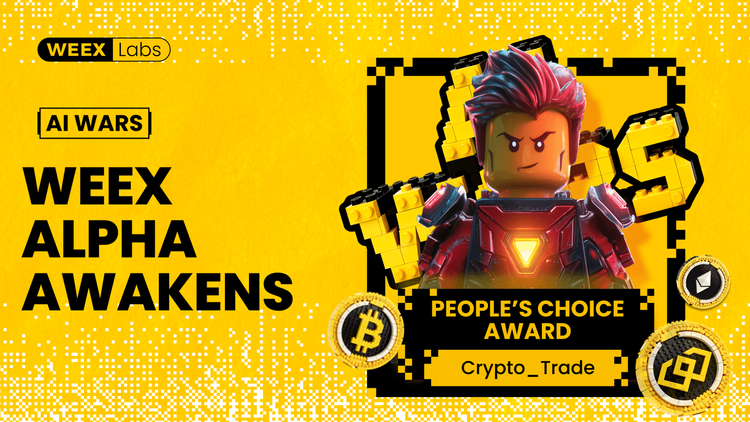
How a Structured AI Crypto Trading Bot Won at the WEEX Hackathon
Crypto_Trade shows how structured inputs and controlled adaptability can build a more stable and reliable AI crypto trading bot within the WEEX AI Trading Hackathon, highlighting a practical path toward scalable AI trading systems.


 App
App