
- Buy Crypto
- Markets
 Futures
- Spot
- Copy Trade
- Earn
- More
IOSG: Port and New City, Two Cryptoverse Views of BNB Chain and Base

Original Title: "IOSG Weekly Brief | A Tale of Two Cities: Understanding BNB Chain and Base from a Cultural Perspective"
Original Author: Jiawei, ISOG Ventures
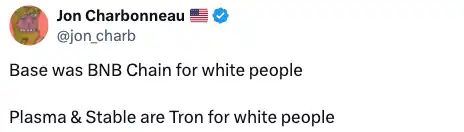
▲ Source: Jon Charbonneau
A while back, when I came across Jon Charbonneau's tweet, I couldn't help but laugh. When Base is referred to as the "white man's BNB Chain," what exactly is the implication behind this jest?
In Haseeb's article "Blockchains are cities," Ethereum and Solana are likened to New York and Los Angeles, respectively. If we apply the same analogy:
BNB Chain is a bustling port city that never sleeps, carrying massive traffic from Binance. Cargo ships come and go, the market is lively, street stalls and exchanges stand side by side. It doesn't matter where you're from; it only cares if you can participate immediately. Gas fees are low, the pace is fast, new projects launch every day, some make money, some leave. You don't need to understand urban planning or subscribe to a specific ideology—just know where the action is, where the opportunities are, and you'll survive.
Base, on the other hand, is a newly developing city inheriting Ethereum's values. Roads are still being paved, the community is taking shape, and the rules are under intense debate. Here, there is no port hustle and bustle, but it has attracted numerous engineers, creators, and institutions to settle in early. They are not in a rush to make quick money but are pondering: If there will be a new wave of truly mass-market on-chain applications in the next ten years, where should they originate?
In the same crypto world, different cities, residents, and lifestyles are diverging.
Perhaps understanding the differences between these two cities is much more important than debating which chain is superior.
Two Parallel Cultures
If we plot BNB Chain and Base on the same map, they may seem to be in competition; however, when viewed from the perspective of users and culture, it becomes clear that this is more like the parallel growth of two worldviews.
BNB Chain and Base fundamentally represent two distinct user structures, traffic sources, and growth logics. The former is rooted in Asia and emerging markets, while the latter has grown within the Euro-American developer community. Rather than simplifying their relationship as competitive, it is more accurate to say they are the result of the natural stratification of crypto users.
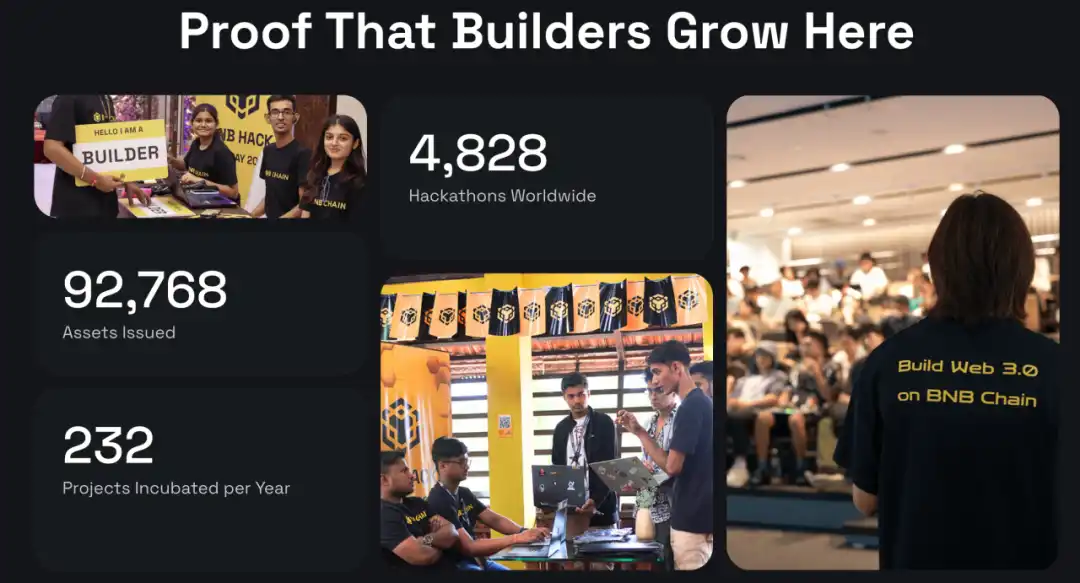
▲ Source: bnbchain.org
The user profile of BNB Chain is very clear.
A large number of users come from Binance's years of accumulation of retail users, many of whom are using on-chain products for the first time. They are mainly distributed in emerging markets such as Southeast Asia and the Middle East, and they are not obsessed with the purity of decentralization. Their focus is highly practical:
Is the gas fee low enough? Is the transaction fast enough? Can they participate in hot projects immediately?
For these users, the chain is not an ideology, just a tool. As long as it is user-friendly, cheap, and profitable, whether it is centralized or semi-decentralized is not a primary concern. This also explains why the BNB Chain's ecosystem has always revolved around efficiency, scale, and application density.
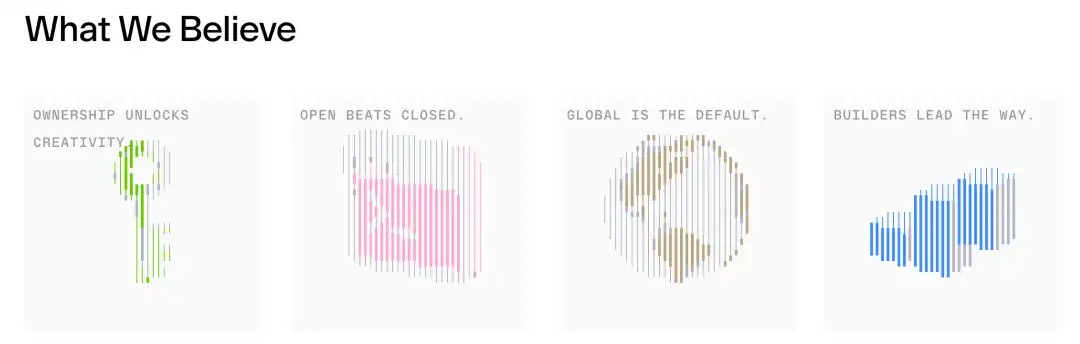
▲ Source: base.org
The user base of Base is somewhat different.
They are more likely Coinbase users and the "overflow crowd" from the Ethereum ecosystem, often having a deeper understanding of blockchain and being more willing to discuss underlying design issues. These users are concerned about Base's relationship with the Ethereum mainnet, the level of decentralization, the technical roadmap for Layer 2, and even whether the culture and narrative are orthodox.
In their eyes, blockchain is not just a tool for completing transactions, but also a space for self-expression, community building, and creative experimentation.
It is precisely this difference in user attributes that profoundly shapes the radically different cultural genes of the two chains.
BNB Chain has chosen a path closer to Web2 consumer internet: ecosystem integration, consolidating as many functions, applications, and scenarios as possible into the same system. For users in emerging markets, this "everything is available" model greatly reduces decision-making costs and learning curves, making the on-chain experience closer to the internet products they are familiar with.
Base, on the other hand, is more like an open experiment field, willing to reserve enough space and patience for developers and creators. It is not eager to cover all scenarios, but prioritizes allowing the right culture and tools to first settle.
From this perspective, BNB Chain and Base are not competing for the same group of users, but are growing in their respective best-suited environments.
They are not opposites, but rather two reasonable answers given by the same industry in different cultural backgrounds.
Vertical Integration: Similarities and Differences
Over the past few years, large-scale exchanges have almost simultaneously done one thing:
No longer satisfied with just being a "matching trading platform," they have extended their business tentacles to a more downstream position such as public chains and wallets.
The underlying business logic is not really complex.
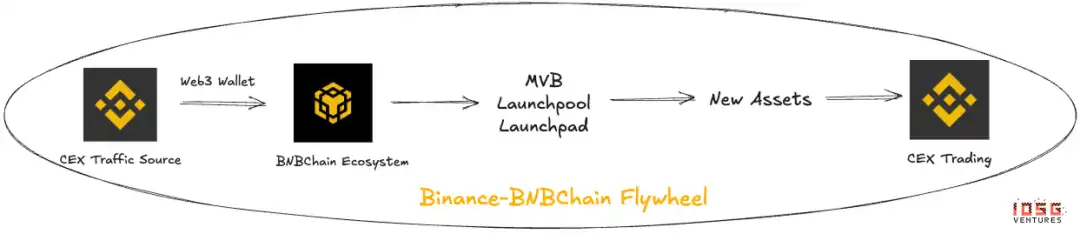
If the trading platform can only interact with users at the moment of "buying" and "selling," then the user's value is discrete and transient; but once the trading platform grasps the chain and wallet, the user's value path will be elongated, turning into a multi-touch, recyclable lifecycle.
When a user completes deposit, on-chain activities, dApp usage, participation in new projects, and then returns to the trading platform within the same system, the trading platform is no longer just an endpoint, but the starting point and endpoint of the entire on-chain journey. With each additional step, the user's switching cost increases, and the stickiness is enhanced. This is exactly the desired outcome of vertical integration: transforming a one-time transactional relationship into a long-term retention relationship.
More importantly, this structure can directly amplify liquidity and trading volume.
The continuous emergence of new tokens and projects on-chain is essentially an ability to "continuously create new assets." And when the trading platform possesses both the chain and the rights to list and price contracts, this on-chain "coinage capability" can seamlessly translate into spot trading pairs and derivative underlyings, ultimately settling into continuous fee income.
From this perspective, BNB Chain and Base are both typical examples of the trading platform's vertical integration strategy, except that they amplify different advantages.
▲ Source: IOSG
BNB Chain's core competitiveness comes from Binance itself.
As a trading platform in the top tier globally in terms of user base and trading depth, Binance has extremely strong instant traffic distribution capabilities. Projects launched on BNB Chain do not need to educate the market from scratch and rarely go through a long cold-start period. A large number of users can directly transition from the trading platform to on-chain participation, then swiftly return to the trading platform for trading after the interaction. This "frictionless back and forth" path makes BNB Chain more like a high-speed lane born for applications.
Behind this pattern is Binance's strong trading platform DNA:
Quick response to market trends, deep understanding of user behavior, and highly mature traffic operation. BNB Chain does not pursue slow and meticulous ecosystem development, but excels in quickly scaling a new narrative to a large extent within a short period of time.
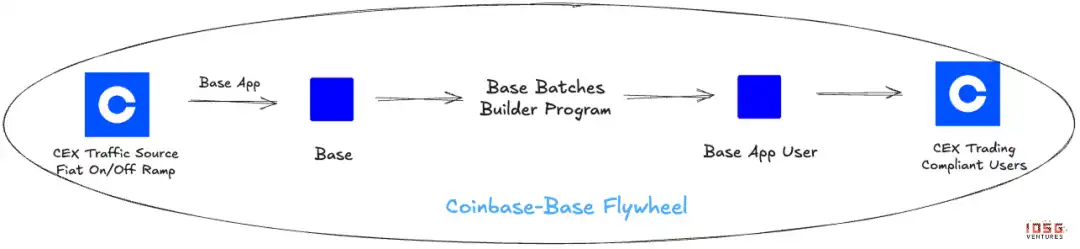
▲ Source: IOSG
Base's vertical integration path is clearly different.
It does not attempt to replicate BNB Chain's speed but relies on Coinbase's long-term accumulation of compliance brand, fiat gateway, and institutional credibility in the U.S. market to build a completely different trust structure. As the first publicly traded cryptocurrency exchange in the U.S., Coinbase's experience in surviving within regulatory frameworks is a scarce resource in itself. This also naturally gives Base the label of being "institutionally friendly."
For institutional investors, enterprise applications, and developers sensitive to compliance boundaries, Base provides an environment where they can confidently experiment and build long-term. Coupled with Coinbase's long-standing deep involvement in the Ethereum ecosystem, continuous investment in developer tools and infrastructure, Base has gradually formed a distinctly "builder-friendly" culture.
If BNB Chain is more like an efficient commercial experiment ground, then Base is closer to a future-oriented infrastructure platform.
The former excels at quickly turning traffic into scale, while the latter excels at slowly settling trust into an ecosystem.
From the perspective of a trading platform, these two paths are not right or wrong; they simply amplify their respective strengths.
It is precisely this difference that makes BNB Chain and Base the most worthwhile and representative samples in the current vertical integration of trading platforms.
Wallets — The Final Showdown?
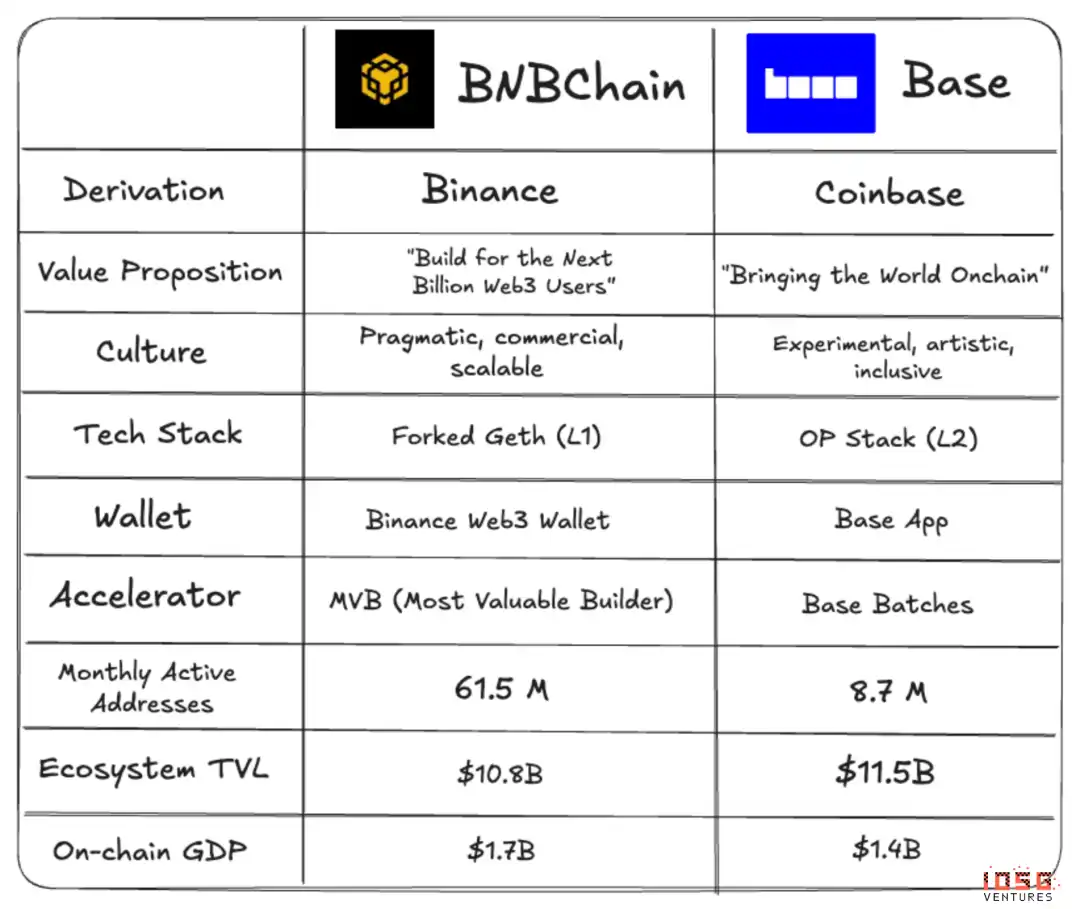
▲ Source: IOSG, TokenTerminal
From the community's perspective, the Binance Web3 Wallet is not very popular, but it undoubtedly leads in first-line traffic. For many Binance users, the first time using the Web3 Wallet often comes from a very specific scenario: wanting to participate in a new project, claim an airdrop, or be involved in a hot project that is not yet on the exchange.
And thus, the built-in wallet of the trading platform emerged.
You don't need a mnemonic phrase, you don't need to understand a complex account model, and you don't even need to explicitly realize "I am now using an independent wallet."
From deposits, asset swaps, to cross-chain interactions, authorizations, and engagements, the whole process is an extremely smooth and seamless journey.
Behind this is Binance's consistent ability: to simplify complex financial operations.
It is also for this reason that the Binance Web3 Wallet inherently adapts to the ecosystem characteristics of the BNB Chain—
where trends emerge rapidly, project density is high, and user activity is highly concentrated within short periods.
In a 2025 on-chain study, the daily transaction volume of the Binance Wallet once reached around $92.6 million, occupying nearly 57.3% of the decentralized wallet transaction market share, a number that even surpassed the sum of all independent wallets.
Users can complete cross-chain transfers, swaps, mining, and airdrop participation without needing to remember a mnemonic phrase or exit their current app, an effortlessly frictionless experience that many independent wallets find hard to replicate.
The Coinbase Wallet (Base App), on the other hand, has a completely different disposition. According to recent market statistics, the Base App has reached a user base of around 11 million, ranking among the top in the global self-custody wallet ecosystem.
It was designed from the outset as a product that can exist independently from the trading platform. This has led to a significantly higher learning curve for the Base App.
But once this process is complete, a shift in the user's mindset occurs: this is "my wallet," not "I'm using Coinbase." This design aligns closely with Base's overall direction. Base is not eager to quickly funnel all users into a single popular app; rather, it is more concerned with: Is there anyone willing to stay long term, using the same wallet, the same address, and continuously building their on-chain identity?
Therefore, you will notice that deep users of Base App are often also: early adopters on Base, core participants in NFTs, social platforms, and creator tools, a group of people more sensitive to product experience and long-term narratives.
Under the Binance Web3 Wallet ecosystem, applications that tend to thrive are those with strong financial attributes, short cycles, high-frequency interactions, and the ability to swiftly capture trading platform traffic. On the other hand, within the Base App + Base ecosystem, what tends to flourish are products focused on user retention, sensitive to UX, community, and long-term relationships, not eager to monetize quickly but willing to gradually accumulate genuine users.
Conclusion
▲ Source: IOSG
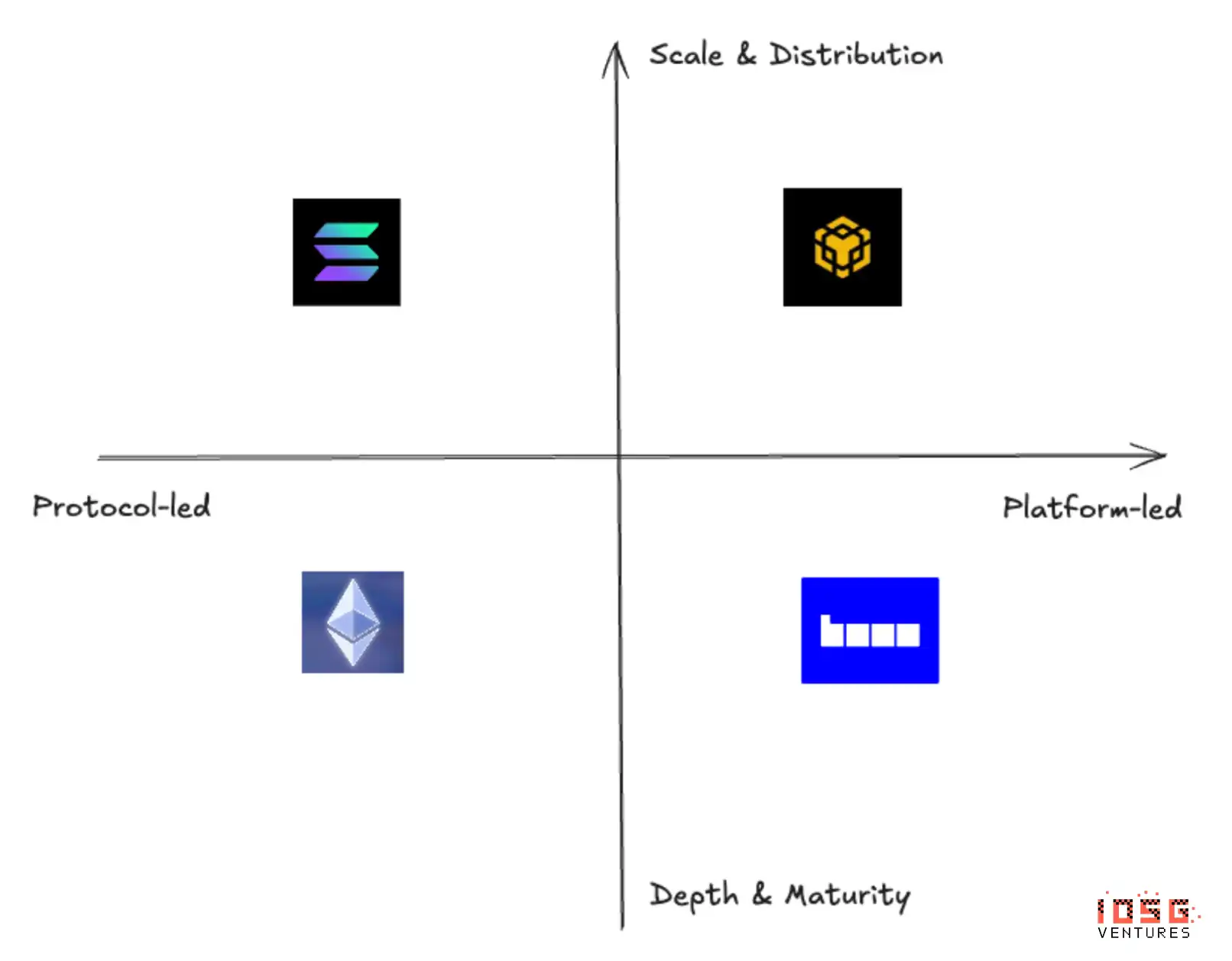
The author believes that in the future, the industry is most likely to see two types of ecosystems:
1. CEX-dominated super ecosystem (Binance, Coinbase)
2. Community-led large-scale public infrastructure (Ethereum, Solana)
BNB Chain and Base will not replace each other.
The global crypto users themselves are not a homogeneous group. What emerging markets need is low barriers, high efficiency, and strong applications; what Europe and the US need is compliance, developer-friendly environments, and cultural identity. These two needs will not disappear in the foreseeable future.
A more realistic scenario is that infrastructure such as wallets, cross-chain, and account abstraction will gradually eliminate usage differences; users will no longer "belong to only one chain" but will flow between different ecosystems.
From this perspective, BNB Chain and Base are more like two nodes in the same system: one is responsible for pushing Web3 to a larger scale, and the other is responsible for advancing Web3 towards a more mature form.
If early public chain competition was like competing for the "sole operating system," then today's competition is more akin to "different platforms jointly building the Internet ecosystem."
The real winner may not be a particular chain itself, but those applications and teams that can simultaneously understand these two ecosystems and freely switch between them.
You may also like

When AI Takes Over the 'Shopping Journey,' How Much Time Does PayPal Have Left?

Bloomberg: Aid Turkey Freeze $1 Billion Assets, Tether Remakes Compliance Boundary

Polymarket vs. Kalshi: The Full Meme War Timeline

Consensus Check: What Consensus Was Born at the 2026 First Conference?

Resigned in Less Than a Year of Taking Office, Why Did Yet Another Key Figure at the Ethereum Foundation Depart?

Russian-Ukrainian War Prediction Market Analysis Report

Ethereum Foundation Executive Director Resigns, Coinbase Rating Downgrade: What's the Overseas Crypto Community Talking About Today?

Who's at the CFTC Table? A Rebalancing of American Fintech Discourse

AI Trading vs Human Crypto Traders: $10,000 Live Trading Battle Results in Munich, Germany (WEEX Hackathon 2026)
Discover how AI trading outperformed human traders in WEEX's live Munich showdown. Learn 3 key strategies from the battle and why AI is changing crypto trading.

Elon Musk's X Money vs. Crypto's Synthetic Dollars: Who Wins the Future of Money?
How do Synthetic Dollars work? This guide explains their strategies, benefits over traditional stablecoins like USDT, and risks every crypto trader must know.

The Israeli military is hunting a mole on Polymarket

Q4 $667M Net Loss: Coinbase Earnings Report Foreshadows Challenging 2026 for Crypto Industry?

BlackRock Buying UNI, What's the Catch?

Lost in Hong Kong

Gold Plunges Over 4%, Silver Crashes 11%, Stock Market Plummet Triggers Precious Metals Algorithmic Selling Pressure?
Coinbase and Solana make successive moves, Agent economy to become the next big narrative

Aave DAO Wins, But the Game Is Not Over


 App
App