
- Buy Crypto
- Markets
- Futures
- Spot
- Copy Trade
 Earn
Earn- More
Sentient Reveals Tokenomics, How Will the Market Price It?

Original Title: "Sentient Reveals Tokenomics, How Will the Market Price It?"
Original Author: ChandlerZ, Foresight News
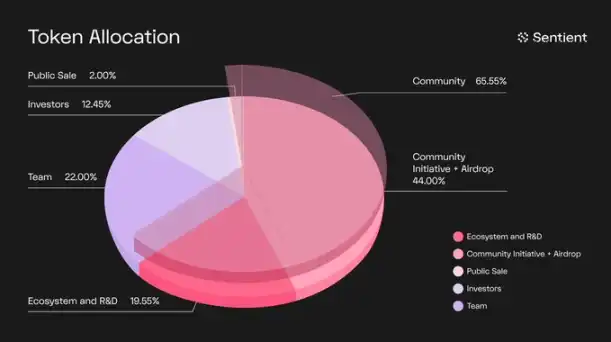
On January 16, the open-source AI platform Sentient revealed the SENT tokenomics. The total token supply of SENT is approximately 34.3 billion, with 44% allocated for community incentives and airdrops, 19.55% for the ecosystem and development, 2% for public sale, 22% for the team, and 12.45% for investors.
According to Polymarket data, the market is betting that the probability of Sentient's FDV exceeding $200 million on the day after its launch has risen to 99%, with an 87% probability of exceeding $400 million, and an 83% probability of exceeding $600 million. The current trading volume of this prediction market is approximately $330,000.
Allocation Rule Details
Within the entire ecosystem, SENT is used for agency, models, data services, and other Artifact-driven products. SENT can also be used between Artifacts for payments, enabling a composable on-chain value flow between services. The official total supply of SENT is set at 34,359,738,368, precisely 2^35. The official team mentioned that the full story of how this number was chosen will be shared in the future; however, tech-savvy readers may be able to infer the reasons behind it.
SENT allocation is divided into five main categories: community initiatives and airdrops, ecosystem and development, team, investors, and public sale.
Community Initiatives and Airdrops — 44.00%
This portion of the tokens accounts for 44% of the total supply, dedicated specifically to airdrops, community grants, bounties, and incentive programs to reward users and developers for their verifiable work on the GRID. To ensure broad ownership, 30% of this token portion will unlock at TGE (approximately 13% of the total supply), and the remaining 70% will linearly unlock over 4 years. By design, individuals contributing to building, testing, and sharing open-source intelligence and products will be eligible for the largest share of the tokens. The airdrop will fully unlock at TGE.
Ecosystem and Development — 19.55%
This portion of the token accounts for 19.55% of the total supply and will be used to promote ecosystem development, research and development, growth, infrastructure building, and Sentient Foundation's operation. To ensure a long-term stable supply, 30% of it will unlock at TGE (Token Generation Event), and the remaining 70% will unlock linearly over four years.
Team—22.00%
This part of the treasury accounts for 22% of the total supply, specifically for the Sentient Foundation and Sentient Labs' team members, including employees, founders, and key contractors. At TGE, the team treasury will be locked for one year, after which the funds will be released linearly over 6 years with a 1-year cliff.
Investors—12.45%
This portion of the token represents 12.45% of the total supply and is allocated to investors who supported Sentient in the private sale round. Investor tokens will lock for one year and unlock linearly over four years. This structure aims to reward early investors' confidence.
Public Sale—2.00%
This public sale constitutes 2% of the total supply and aims to encourage broader community participation in the project's launch. This allocation will unlock entirely at TGE. Specific details of the public sale structure will be announced soon.
By the end of November 2025, Sentient will launch an airdrop registration portal targeting four groups: community contributors, active users of Sentient Chat, top voices on social platforms, and external open-source researchers.
The second quarter activity will be based on new roles of contribution, a clearer upgrade path, and various reward mechanisms. Rewards will include SENT tokens, NFTs, and peripheral merchandise, among others. Specific details of the airdrop events are yet to be announced.
The $85 Million AI Rising Star
Sentient is an AI research organization dedicated to building an open general artificial intelligence (AGI) economy, developing a platform and protocol that allows open-source AI developers to monetize their models, data, and other innovations, enabling developers to collaborate to collectively build powerful AI alerts and become key stakeholders driving AI transformation and prosperity in the new open AGI economy.
Sentient has introduced the "OML" (Open, Monetized, Loyalty) model concept, aiming to advance the shared open AGI economy through the OML model, constructing a shared open AGI economic system involving millions of AI agents and billions of users, providing an inexhaustible driving force for the innovation and development of downstream applications.
At the product and architecture level, Sentient's core is its intelligent network called GRID (Global Research and Intelligence Directory). The official description portrays it as a collaborative system composed of specialized agents, models, data, tools, and computing power: when a user initiates a query, the task is broken down, routed to the appropriate agent/tool/data source, and then the multi-path results are aggregated into a consistent output.
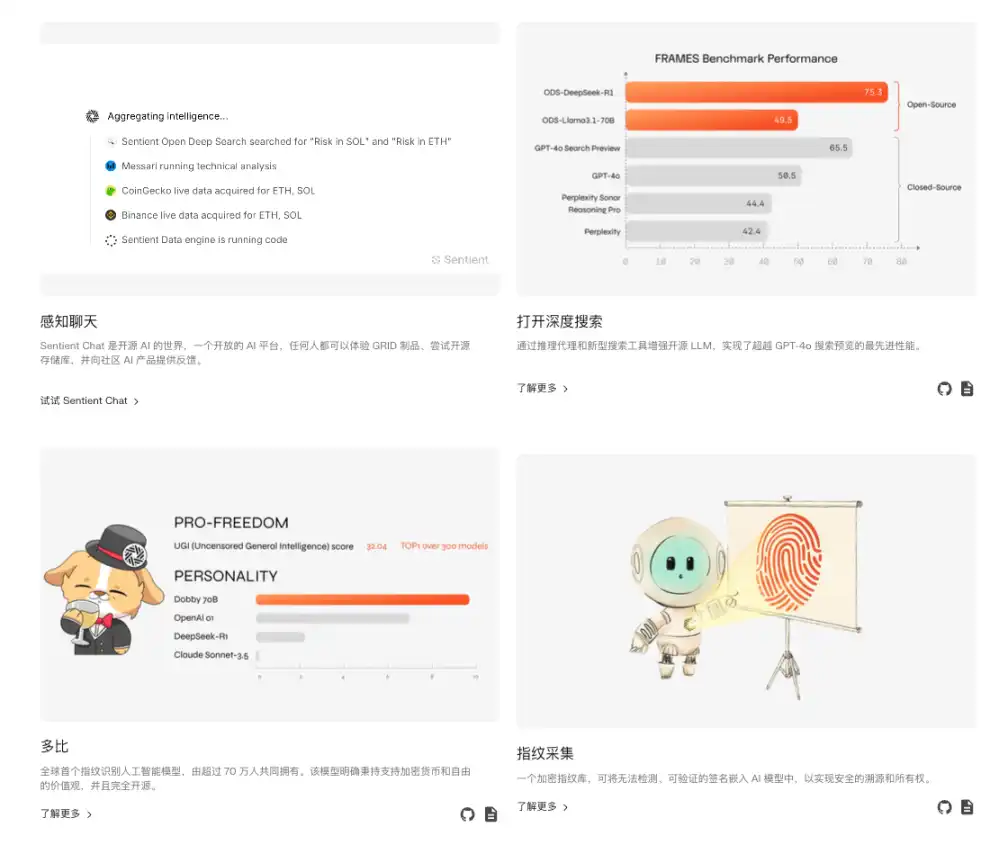
Targeting everyday users, Sentient Chat is positioned as the unified entry point and distribution channel into the GRID, emphasizing that users can see what capabilities and sources are being invoked during the interaction process; for developers and ecosystem partners, GRID provides a channel for usage, distribution, potential future revenue flowback, and incentivizes contributors to onboard various artifacts into the network through the SENT token economy, directing incentives towards more valuable modules through signals such as staking and usage volume.
To support the middleware capability of multi-agent collaboration, Sentient launched and open-sourced the ROMA (Recursive Open Meta-Agent) framework in 2025, abstracting complex tasks into a recursive hierarchical task tree: the parent nodes are responsible for decomposing goals, passing context down to child nodes, and aggregating results upon retrieval, making the context flow of medium-to-long chain tasks more transparent, traceable, and debuggable, as well as facilitating the replacement of different models, tools, or manual verification steps at the node level. Sentient describes ROMA in its product updates as the backbone for building high-performance multi-agent systems and synchronizes it as an open-source foundation that the community can further develop on GitHub.
The Strong Collaboration Between the Academic Community and the Crypto Space
In July 2024, Sentient announced the completion of an $85 million seed round, setting a record in the AI crypto field. This financing was led by Peter Thiel's Founders Fund, Pantera Capital, and Framework Ventures, with participation from Ethereal Ventures, Foresight Ventures, Robot Ventures, Symbolic Capital, Delphi Ventures, Hack VC, Arrington Capital, HashKey Capital, and Canonical Crypto.
One of the core contributors to Sentient is Sandeep Nailwal, co-founder of Polygon, with Sreeram Kannan, Founder and CEO of EigenLayer, serving as an advisor to the project.
Additionally, in terms of team composition, Sentient Labs' public team page shows two other co-founders: Pramod Viswanath (Princeton University Engineering Professor) and Himanshu Tyagi (Indian Institute of Science Engineering Professor). Pramod Viswanath has long researched information theory and communication systems, leading Sentient's AI security and theoretical foundation development; Himanshu Tyagi specializes in privacy preservation and decentralized learning algorithms, providing academic support for model training and privacy collaboration.
The core engineering and development team consists mainly of AI research and platform engineering led by university professors and researchers, blockchain development, product and operations functions, presenting an overall team structure that combines academic research, engineering implementation, and cryptographic economic mechanisms.
Ecosystem Collaboration and Implementation Scenarios
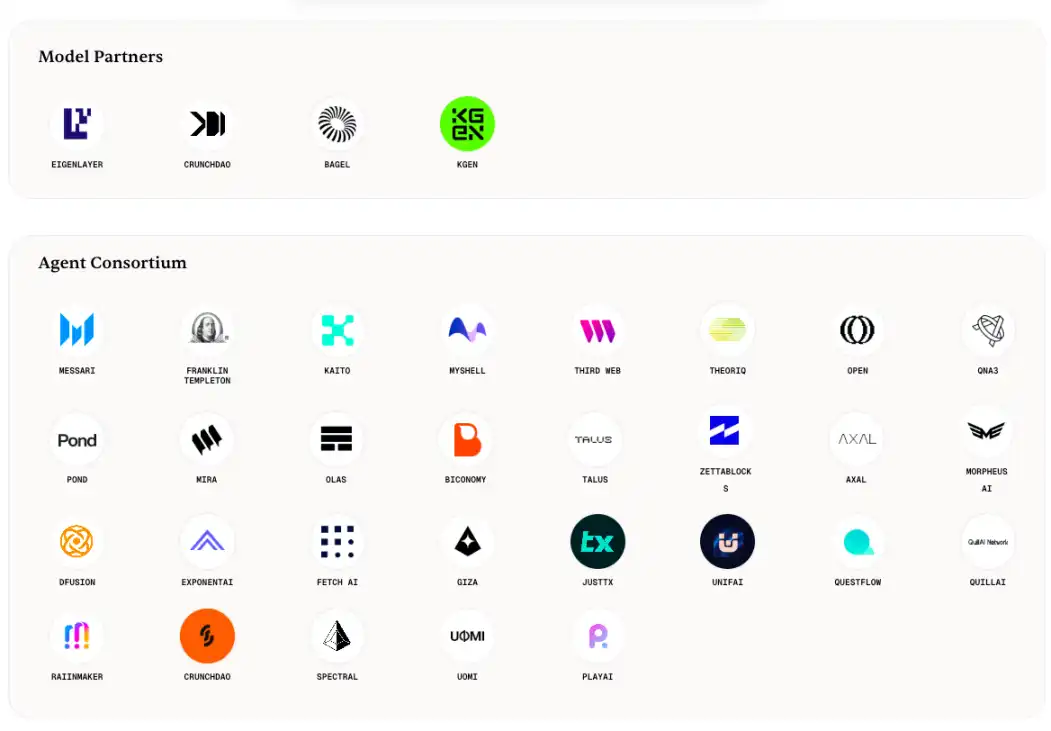
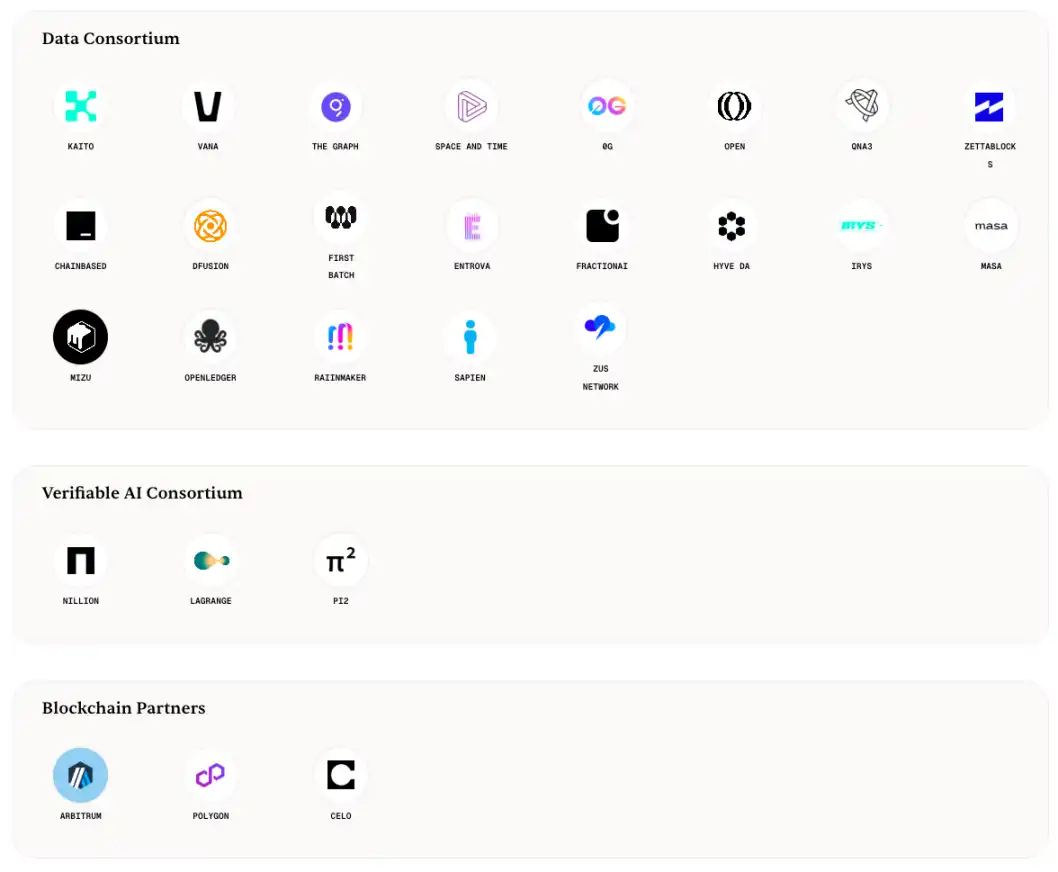
The officially disclosed ecosystem scale has reached 60+ partners/integrators, including model partners, Agents, data providers, models, and verifiable reasoning.
Overall, Sentient's differentiation lies in defining the pathway to AGI as a composable open network, attempting to address the long-standing funding, distribution, and sustainability issues faced by open-source AI through the SENT incentive and staking mechanism. Therefore, its key variables are more about systems engineering and mechanism design rather than single-point model capabilities, including whether ecosystem access quality can continue to improve, whether incentives will lead to real-world utility, and whether multi-agent systems can form replicable patterns in terms of reliability and security.
You may also like

First Zero, First Revival: A Real Story from the WEEX Global AI Trading Hackathon Preliminary Round
WEEX Labs, the innovation arm of the global crypto exchange WEEX, launched the preliminary round of its flagship AI trading hackathon, AI Wars: WEEX Alpha Awakens, on January 12, 2026. Backed by world-class sponsors including AWS, the prize pool has reached $1.88 million, with a Bentley Bentayga S awaiting the champion in Dubai. Already, 788 elite teams worldwide are battling for a spot in the finals. This is more than a hackathon — it is a real-market stress test for AI trading. Registration remains open until January 18. If you want your AI to face real volatility, this is your moment.
AI Wars: WEEX Alpha Awakens – Insights, Top Strategies, and Real-Market Execution Takeaways
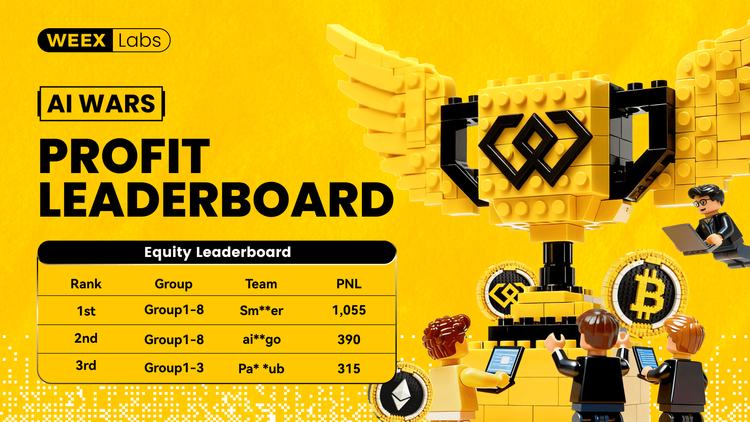
WEEX Labs has officially launched the preliminary round of its global AI trading hackathon, AI Wars: WEEX Alpha Awakens, bringing together hundreds of elite teams to compete in real-market conditions. With a record-breaking $1.88 million prize pool and backing from top-tier sponsors like AWS, the event has quickly become a global proving ground for AI-powered trading strategies. As competition intensifies and standout teams emerge on the leaderboard, the hackathon not only showcases cutting-edge AI execution and risk management, but also offers valuable insights and inspiration for traders looking to build or refine their own AI-driven systems.

AI in the Crypto Market: How Artificial Intelligence is Changing Trading Strategies
This article explores how AI contributes to these movements and share practical strategies to help you navigate an AI-powered crypto market.

Yen Weakness Nears Inflation Red Line: Bank of Japan May Be Forced to Hike Early

Trump Waves Hand, Stirs Venezuela's Game Hurricane

Fact Check: How Much Money Did the University of Chicago Lose in its Crypto Investment?

VanEck Q1 Market Outlook: Long-Term Bullish on Cryptocurrency, Strong Gold Demand

Matrixdock releases latest semi-annual physical gold audit report, strengthening physical gold transparency practices
Senate Committee Delays Crypto Bill Due to Coinbase’s Objections
Key Takeaways The Senate Banking Committee has postponed its planned markup of a major crypto market structure bill…

Eric Adams Denies “Rug Pull” Allegations Linked to NYC Token Despite Significant Losses
Key Takeaways: Eric Adams firmly denies allegations implying that money was moved out of the NYC Token. Market…
Mantra Slashes Staff and Restructures Following ‘Brutal’ OM Token Collapse
Key Takeaways The OM token experienced a dramatic price collapse, prompting a significant restructure within Mantra, including job…

Animoca Brands Acquires Somo to Advance Web3 Collectibles Strategy
Key Takeaways: Animoca Brands has acquired Somo, a gaming and collectibles studio, to fortify its position in the…

CLARITY Act Hearing Suddenly Postponed – Where Does the Disagreement Lie?

Bondex (BDXN) Sees Remarkable Price Surge Amid Market Optimism
Key Takeaways Bondex (BDXN) experienced a notable price increase of 31.38% in the last 24 hours, with prices…

Eric Adams’ NYC Token Faces Criticism Amid Financial Woes
Key Takeaways Eric Adams’ NYC Token experienced an 80% market value crash shortly after launch, which generated significant…

Eric Adams Denies Profit from NYC Token Launch
Key Takeaways Former New York City Mayor Eric Adams has denied allegations of profiting from the launch of…

Is Leveraged Bitcoin DCA More Profitable than Spot?

Key Market Information Discrepancy on January 15th - A Must-See! | Alpha Morning Report
First Zero, First Revival: A Real Story from the WEEX Global AI Trading Hackathon Preliminary Round
WEEX Labs, the innovation arm of the global crypto exchange WEEX, launched the preliminary round of its flagship AI trading hackathon, AI Wars: WEEX Alpha Awakens, on January 12, 2026. Backed by world-class sponsors including AWS, the prize pool has reached $1.88 million, with a Bentley Bentayga S awaiting the champion in Dubai. Already, 788 elite teams worldwide are battling for a spot in the finals. This is more than a hackathon — it is a real-market stress test for AI trading. Registration remains open until January 18. If you want your AI to face real volatility, this is your moment.
AI Wars: WEEX Alpha Awakens – Insights, Top Strategies, and Real-Market Execution Takeaways
WEEX Labs has officially launched the preliminary round of its global AI trading hackathon, AI Wars: WEEX Alpha Awakens, bringing together hundreds of elite teams to compete in real-market conditions. With a record-breaking $1.88 million prize pool and backing from top-tier sponsors like AWS, the event has quickly become a global proving ground for AI-powered trading strategies. As competition intensifies and standout teams emerge on the leaderboard, the hackathon not only showcases cutting-edge AI execution and risk management, but also offers valuable insights and inspiration for traders looking to build or refine their own AI-driven systems.
AI in the Crypto Market: How Artificial Intelligence is Changing Trading Strategies
This article explores how AI contributes to these movements and share practical strategies to help you navigate an AI-powered crypto market.


 App
App