
- Buy Crypto
- Markets
- Futures
- Spot
- Copy Trade
 WE-Launch
El Salvador’s Bitcoin Aspirations Brought Closer to Earth Beyond 2025

Key Takeaways
- El Salvador’s pioneering move to adopt Bitcoin as legal tender faced a reality check by 2025 due to IMF-related economic pressures.
- The Chivo Wallet, launched to facilitate Bitcoin transactions, saw mixed reception and usage among Salvadorans.
- President Nayib Bukele’s commitment to Bitcoin persists despite IMF conditions; tensions between economic needs and cryptocurrency ideals remain.
- As of December 2025, El Salvador maintains significant Bitcoin holdings despite revising legal tender laws under IMF pressure.
- The future of Bitcoin in El Salvador will largely depend on education, fostering local adoption, and balancing international economic goals.
WEEX Crypto News, 2025-12-29 06:07:41
Introduction
El Salvador’s journey as the world’s first country to recognize Bitcoin as legal tender has been nothing short of pioneering. Starting in 2021, this small nation captured global attention by integrating cryptocurrency into its economy. However, as 2025 unfolded, the ambitious Bitcoin strategy met significant hurdles, particularly with economic realities firmly grounded by the International Monetary Fund (IMF). This exploration seeks to understand how El Salvador’s Bitcoin aspirations have matured over four years and what lies ahead.
Initial Hopes and the Reality Check
When El Salvador’s Legislative Assembly approved the Bitcoin Law in 2021, the move was lauded as groundbreaking. Merchants across the country were required to accept Bitcoin (BTC) as payment, sparking optimism among crypto proponents who saw a future where Bitcoin could invigorate the local economy.
Despite the initial fanfare, the reality of Bitcoin adoption told a different story. The introduction of the Chivo Wallet, El Salvador’s official Bitcoin application, brought lukewarm results. Salvadorans were incentivized with $30 worth of Bitcoin to kickstart usage, yet the majority capitalized on the free funds without integrating Bitcoin into daily transactions. Attempts to utilize Bitcoin frequently met resistance or inconvenience at point-of-sale locations.
The IMF and Economic Concerns
Amidst the sluggish adoption, a more pressing issue loomed: El Salvador’s financial stability. The government sought a much-needed $1.4-billion loan from the IMF to bolster its economy, challenged by significant debt and dwindling fiscal reserves. However, the IMF expressed reservations about the widespread adoption of Bitcoin as legal tender due to potential financial instability from Bitcoin’s inherent volatility.
Concerns from the IMF revolved around the potential liabilities induced by fluctuating Bitcoin prices, which could impact the state’s budget if the government held significant reserves in Bitcoin.
Negotiating with the IMF
The IMF’s stance pressured El Salvador to recalibrate its Bitcoin policy. Early in 2025, under intense economic necessities, El Salvador made Bitcoin acceptance voluntary and stipulated that taxes would remain payable in U.S. dollars, the country’s de facto currency.
President Nayib Bukele’s administration faced criticism from digital currency advocates who saw these shifts as a loss of revolutionary momentum. Nevertheless, Bukele remained resolute in some aspects; despite multiple requests from the IMF to cease Bitcoin acquisitions, the government continued adding to its reserves. Observers suggested that transitional arrangements may have allowed for these continued purchases, hinting at flexibility within the enforcement of IMF conditions.
Navigating Continued Challenges
As El Salvador continued accumulating Bitcoin, the questions surrounding fiscal policy and international compliance persisted. While the IMF tasked El Salvador with curbing new Bitcoin purchases, loopholes or reclassifications within its financial system seemed to permit ongoing transactions discreetly.
By December 2025, El Salvador possessed 6,367 BTC, valued over $588 million, showing a substantial gain from its investments despite the broader economic complexities. This highlights the tension between external macroeconomic policies and domestic cryptocurrency enthusiasm.
Future Prospects for Bitcoin in El Salvador
As Bitcoin adoption at the consumer level stagnates, external crypto enterprises find El Salvador’s regulatory climate beneficial. Major players like Tether and Bitfinex Derivatives have chosen to establish operations within the country, buoyed by forward-looking legislative frameworks. For instance, El Salvador’s new Investment Banking Law provides avenues for banks to engage with digital assets under specific licenses, positioning the country as a potential hub for crypto-centric financial activities.
Moreover, El Salvador’s crypto experiment has started rippling outward, influencing neighboring nations. Bolivia’s Central Bank acknowledged the promise of cryptocurrencies through collaborative agreements with El Salvador, while Panama City leaders contemplated establishing a Bitcoin reserve, inspired by El Salvador’s policies.
Looking Ahead: Balancing Ideals and Practicality
The balancing act El Salvador must perform—navigating between Bitcoin ambitions and economic imperatives imposed by international financiers—remains delicate. If the state continues to purchase Bitcoin without clear educational and practical usage initiatives, questions will persist regarding the broad societal benefit of Bitcoin holdings.
Furthermore, ongoing political developments, particularly reforms allowing President Nayib Bukele’s indefinite re-election candidacy, add layers of uncertainty regarding policy directions. Legislative critics warn such changes may stifle democratic processes and entrench power disproportionately.
Ultimately, the trajectory of Bitcoin in El Salvador beyond 2025 hinges on creating inclusive financial ecosystems, educating citizens, and finding a pragmatic path in global economic structures. As the Latin American nation charts its course, a blend of innovation and strategic alignment with international partners will be critical in realizing the transformative potential many still associate with Bitcoin.
Frequently Asked Questions
What drove El Salvador to adopt Bitcoin as legal tender?
El Salvador embraced Bitcoin as legal tender in an attempt to revolutionize its financial system and stimulate economic growth by integrating a decentralized currency.
Has Bitcoin become widely adopted by Salvadorans?
Although the Chivo Wallet was introduced to promote usage, actual adoption among locals has been sluggish, with many exploiting incentives without fully embracing Bitcoin in everyday exchanges.
How has the IMF influenced El Salvador’s Bitcoin policy?
The IMF conditioned its financial assistance to El Salvador on revising the Bitcoin Law, citing risks to fiscal stability, thus influencing the country to reconsider Bitcoin’s role as legal tender.
Will El Salvador continue purchasing Bitcoin despite IMF stipulations?
Despite IMF advice to halt Bitcoin acquisitions, El Salvador has found ways, potentially through flexible policy interpretations, to maintain and grow its Bitcoin holdings.
What is the significance of El Salvador’s Bitcoin journey for other countries?
El Salvador’s foray into Bitcoin acceptance has set a precedent, prompting neighboring countries to explore crypto and digital asset frameworks, thereby influencing regional economic dialogues.
You may also like
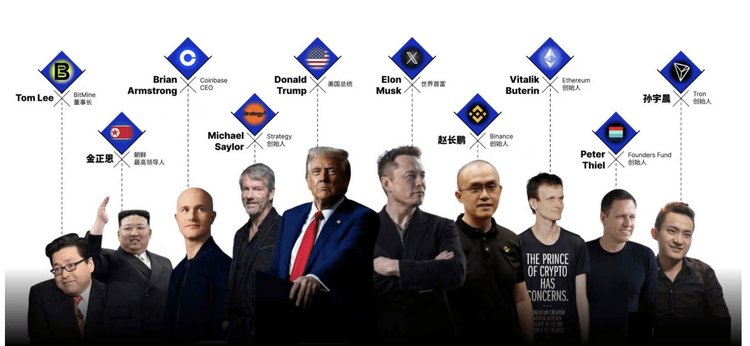
Ten People Redefining the Power Boundaries of Crypto in 2025
From Wall Street to the White House, from Silicon Valley to Shenzhen, a new power network is taking shape.

Bloomberg Checklist: 11 Key Trades to Understand the 2025 Global Financial Market

Whale Shifts to Massive Short Positions in Cryptocurrency Market
Key Takeaways A crypto whale transitioned from long to short positions, involving significant assets amounting to over $91…

Japanese Central Bank Signals Potential Interest Rate Hikes Impacting Crypto Market
Key Takeaways The Japanese Central Bank has indicated potential interest rate hikes as the yen weakens, affecting the…

Bitcoin Reaches $90,000 Amid Geopolitical Tensions and Oil Price Surge
Key Takeaways Bitcoin recently surged past $90,000, driven by heightened geopolitical tensions and rising oil prices. The cryptocurrency…

Crypto Whale Strategically Bets on Bitcoin, Ethereum, Solana Shorts
Key Takeaways A prominent crypto whale has launched a substantial $243 million short position across Bitcoin, Ethereum, and…

Hong Kong Implements Basel Crypto Standards for Banking
Key Takeaways Hong Kong Monetary Authority will enforce the Basel crypto asset regulatory standards starting January 1, 2026.…

Whale Executes Major Position with $1.8 Million USDC on HyperLiquid
Key Takeaways A significant crypto whale has deposited $1.8 million USDC into HyperLiquid. The whale used the funds…

New Bitcoin Wallet Extracts 600 BTC from Binance
Key Takeaways A newly established Bitcoin wallet has withdrawn 600 BTC, valued at approximately $53.84 million, from Binance.…

Bitcoin Surpasses $90,000 Milestone
Key Takeaways Bitcoin has surged past the $90,000 mark, currently valued at $90,003 with a 2.58% increase over…

Bitcoin Surges Past $89,000 Amid Market Optimism
Key Takeaways Bitcoin has recently surpassed the $89,000 mark, showcasing a rise in investor confidence. Over recent days,…

Price Action of Dogecoin and Shiba Inu Remains Muted Amid Low Holiday Liquidity
Key Takeaways Dogecoin and Shiba Inu prices have fallen, reflecting broader market struggles. DOGE remains in a narrow…
BTC, ETH, SOL, XRP, and DOGE Trade Higher Amid Precious Metals Rally
Key Takeaways Bitcoin remained in a tight range between $86,500 and $90,000, showing slight price fluctuations amidst low…

BTC Mining Difficulty Records Last Adjustment in 2025, Forecast to Rise in January
Bitcoin mining difficulty reached a height of 148.2 trillion in late 2025 and is expected to rise again…

Fed’s ‘Skinny’ Accounts Aim to End Operation Chokepoint 2.0 — Insights from Senator Lummis
Key Takeaways: The Federal Reserve’s proposal to offer “skinny” master accounts to crypto companies is seen as a…
No $90K Bitcoin Till Next Year: BTC Futures Open Interest Hits 8-Month Low
Key Takeaways: Bitcoin futures open interest has dropped to an eight-month low of $42 billion, raising questions about…

Bitcoin Price Dips as Precious Metals Hit Record Highs Amid Rising Geopolitical Tensions
Key Takeaways Major Slide in Crypto Sector: Cryptocurrencies and crypto-related stocks experienced a notable decline with Bitcoin falling…
Ubisoft halts Rainbow Six Siege after hackers give each player $13.3M credits
Key Takeaways A massive security breach in Rainbow Six Siege granted each player $13.3 million worth of in-game…
Ten People Redefining the Power Boundaries of Crypto in 2025
From Wall Street to the White House, from Silicon Valley to Shenzhen, a new power network is taking shape.
Bloomberg Checklist: 11 Key Trades to Understand the 2025 Global Financial Market
Whale Shifts to Massive Short Positions in Cryptocurrency Market
Key Takeaways A crypto whale transitioned from long to short positions, involving significant assets amounting to over $91…
Japanese Central Bank Signals Potential Interest Rate Hikes Impacting Crypto Market
Key Takeaways The Japanese Central Bank has indicated potential interest rate hikes as the yen weakens, affecting the…
Bitcoin Reaches $90,000 Amid Geopolitical Tensions and Oil Price Surge
Key Takeaways Bitcoin recently surged past $90,000, driven by heightened geopolitical tensions and rising oil prices. The cryptocurrency…
Crypto Whale Strategically Bets on Bitcoin, Ethereum, Solana Shorts
Key Takeaways A prominent crypto whale has launched a substantial $243 million short position across Bitcoin, Ethereum, and…
Popular coins
Latest Crypto News


Customer Support:@weikecs
Business Cooperation:@weikecs
Quant Trading & MM:[email protected]
VIP Services:[email protected]
 App
App