
- Buy Crypto
- Markets
- Futures
- Spot
- Copy Trade
 WE-Launch
I made $200,000 in two weeks, how do I bootstrap on Hyperliquid?

Original Title: How I Broke the Startup Playbook - $0 to $50m In 1 Month
Original Author: @PerpetualCow, Wagyu Founder
Original Translation: Luffy, Foresight News
This is my entrepreneurial story. One month ago, I came to the X platform as an anonymous user. At that time, I was penniless, had no fans, no connections, and no funding.

To make a name for oneself in such a situation seemed like an impossible feat, but I did it. Now, I want to share my success story and tell you: you can do it too.
My Entrepreneurial Starting Point
The reason I created this account was due to the heavy drop in the HYPE token price, where all my savings were tied up.
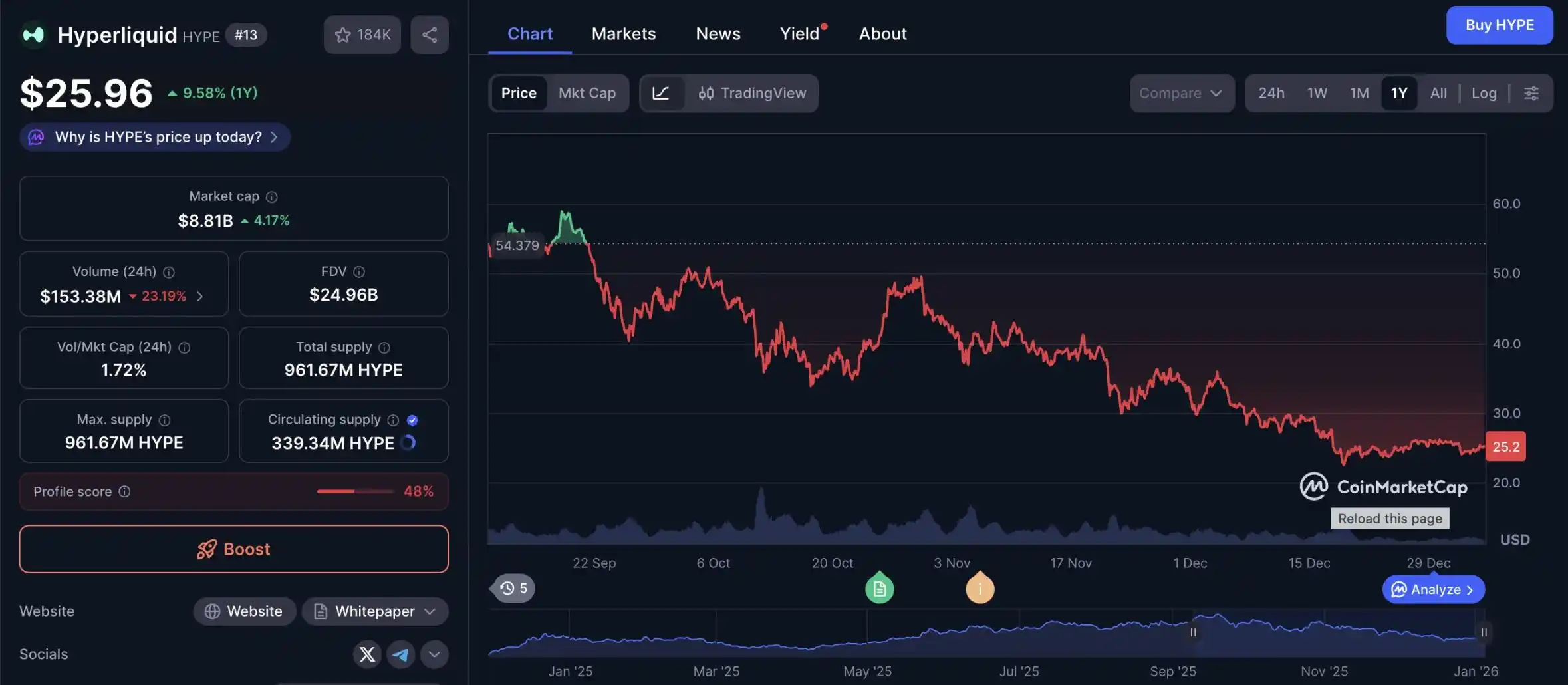
I thought, at the very least, I could open an account on the X platform, write about my views on HYPE and the investment logic behind it, and convince everyone why this cryptocurrency was severely undervalued, hoping to drive up its price.
So, I wrote an in-depth analysis article and posted it on this newly registered account, hoping to reach a wider audience. To my surprise, this article went viral.
If you are not a player in the cryptocurrency field, you may not have heard of the Hyperliquid platform, which is fine as it is not the focus of this article.
However, from the beginning, I was convinced that this ecosystem held immense potential.
I started thinking about what else I could do besides posting to actively contribute to the trading volume and market cap of HYPE, thereby driving token buybacks, increasing its market attention and influence.
First Failed Attempt
I decided to develop a product on the Hyperliquid platform to generate more trading volume and revenue for the platform. This way, the platform would not only increase its buyback of HYPE tokens but also enhance the token's exposure and market consensus.
At that time, the Hyperliquid ecosystem was already quite mature, with developers creating many impressive financial tools, such as the platform for trading pre-listed company stocks, Ventuals, and tools that provided stock futures leverage trading, like trade.xyz.
But one thing has been overlooked: forex trading pairs. As one of the largest derivatives in the traditional financial market, it's surprising that no one has brought it to the Hyperliquid platform yet.
First, let me give you some background. Hyperliquid is a permissionless trading platform where anyone can issue their own trading products.
The daily trading volume of the forex market reaches up to $7.5 trillion, a scale that is a whopping 10 times the total of global stock markets. With my experience in the traditional derivatives field, I keenly sensed the enormous opportunity in this.
I'm sure other developers haven't even realized how big this pie is. As long as I can be the first to launch forex trading pairs on Hyperliquid, I can earn a significant amount through future fee sharing.
I can't believe such a great opportunity has been consistently ignored.
I knew I had to act immediately and race against the clock, as it wouldn't be long before other developers discovered this hidden opportunity.
I swallowed 20mg of instant-release Adderall (a central nervous system stimulant), ordered a few bottles of Red Bull on a food delivery platform, and immediately immersed myself in development work.
I programmed through the night, and by the next morning, the prototype of the product was already complete.
I registered the domain name Hyperfx.xyz, and I even prepared around 500,000 HYPE tokens worth approximately $15 million as payment for the platform deployment fee.
I felt like my moment was finally coming.
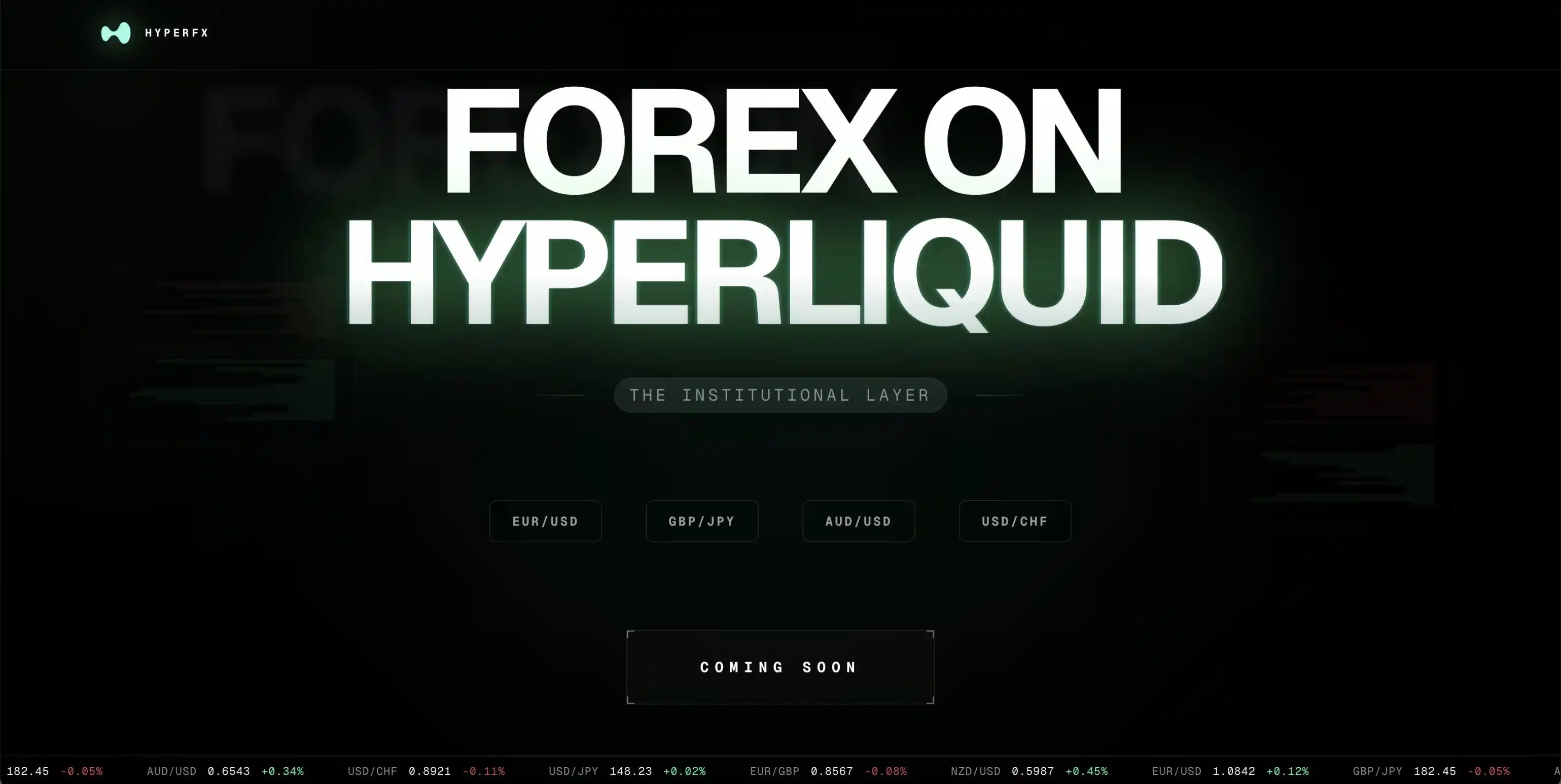
However, I made a fatal mistake.
Before the effect of the stimulant wore off and I drifted into a drowsy state, following the usual procedure, I deployed the product to the testnet and then fell asleep.
This was the most serious mistake I have ever made in my life.
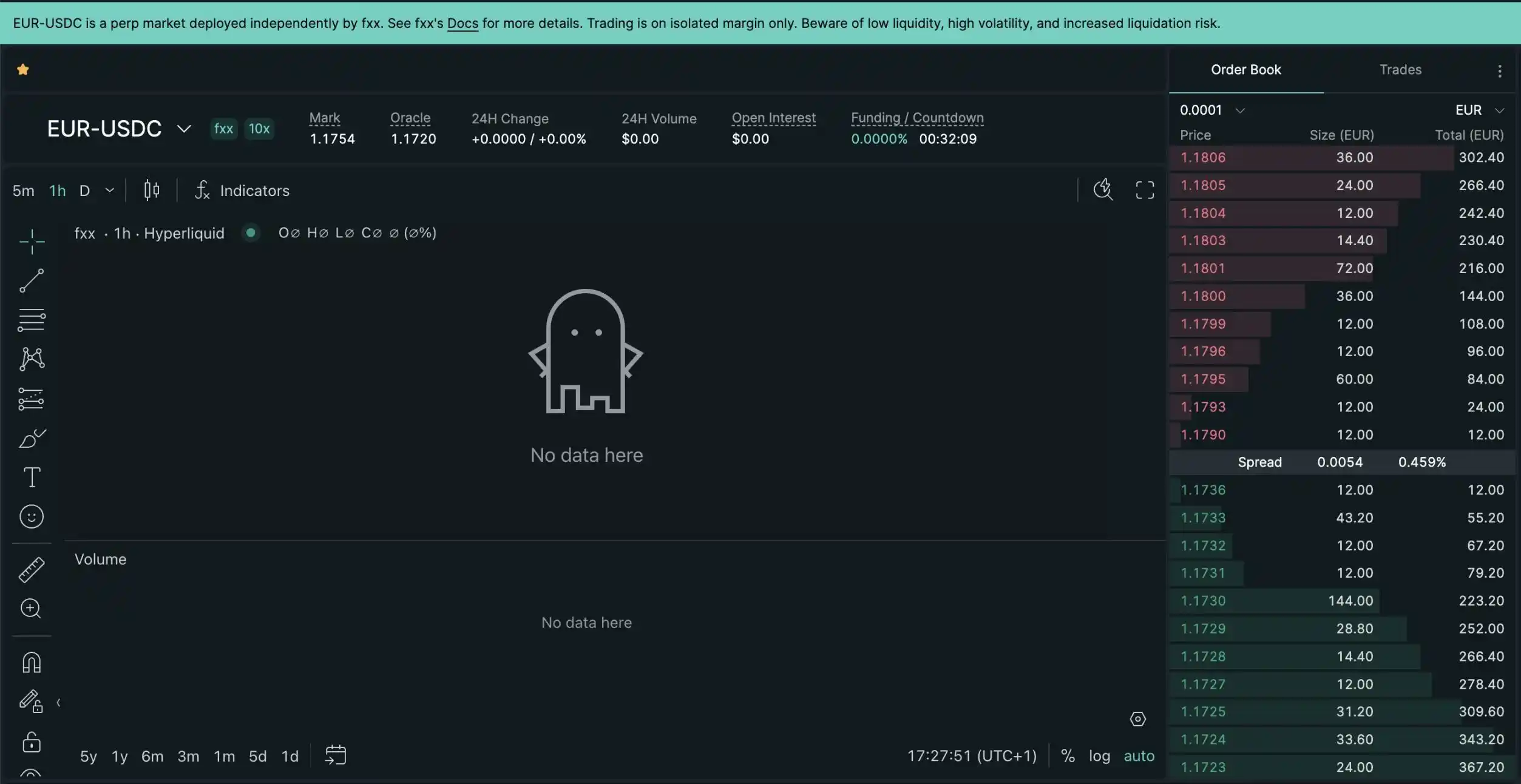
I never expected that someone would closely monitor a new deployment project on the testnet. When I woke up, I found out that the news of my deployment of forex trading pairs on the testnet had already spread in the Hyperliquid developer private community.
The entire Hyperliquid ecosystem was in an uproar. Everyone knew that a new developer was about to launch forex trading pairs on the platform. Only then did everyone realize, belatedly, that there was still such a large blank space in the market. Before me, no one had actually thought of doing forex trading pairs.
The news quickly reached the ears of trade.xyz. The company responded swiftly, immediately seizing the Japanese Yen to US Dollar (JPYUSD) trading pair, announcing its intention to be the first to launch a forex trading product on Hyperliquid.
It is important to note that trade.xyz's platform has a daily trading volume in the billions of dollars, with the funds behind its trading pairs numbering in the billions.
I was well aware that I was no match for such a giant.
On the Hyperliquid platform, what would be the point of becoming a second-rate forex trading service provider?
One wrong step leads to total loss. I single-handedly ruined my bright future.
Instead of launching a me-too product in the market, thinning out the platform's liquidity, I might as well abandon this project altogether. After all, contributing to the Hyperliquid ecosystem is my original intention.
As expected, shortly thereafter, trade.xyz officially launched the Euro to US Dollar (EURUSD) trading pair.
I was shaking with anger, a kind of rage that words cannot describe. If it weren't for the despair that had already engulfed me at the time, I really wanted to smash my computer to pieces. I never knew I could be so overwhelmed by anger to such an extent.
But more than anything, I was angry with myself. How could I make such a rookie mistake and just hand over my hard work like that?
This is basic knowledge in the entrepreneurial field, yet I messed up big time. This time, I lost completely, and I may have missed the opportunity to earn up to $1 billion in fees over the next few years.
A foolish mistake has caused my entire plan to fall through. I can hardly believe my eyes. I've made plenty of mistakes before, but never has one been as absurd and ridiculous as this.
I swear to myself that from now on, I will never deploy any product to a public testnet again.
The frustration compounded by the fading effects of the Adrafinil left me in a state of acute depression. I became a defeated and dejected ox.
Until one day, I finally reached my breaking point...
I had to pull myself together.
I started brainstorming, considering other possibilities. Since everyone was not thinking about forex trading pairs, there must certainly be other overlooked opportunities.
Although I was momentarily frustrated, I will never give up. I am determined to find a new breakthrough.
After all, the realm of the financial system is so vast that I am sure to find some unknown market gap. However, this time, I will never repeat the same mistakes.
I noticed a serious issue in the Hyperliquid ecosystem: a few top developers are copying each other, which is quite short-sighted and only leads to a significant fragmentation of the platform's liquidity.
For example, trading pairs for popular stocks like Tesla (TSLA) and NVIDIA (NVDA) have been redundantly deployed by multiple developers.
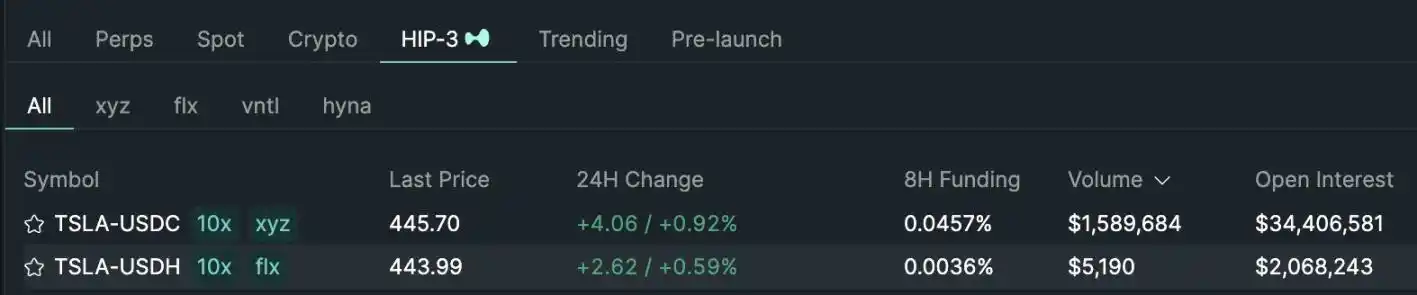
No one is willing to innovate; everyone is just copying each other, launching products that are more or less the same. Of course, this approach can bring a certain amount of trading volume and revenue, but it is ultimately not a long-term solution.
The Road to Rebirth: My Moment of Success
At this point, I noticed that the Monero (XMR) community's needs had been severely overlooked for a long time. Due to Monero's privacy features that have angered regulators, most exchanges have delisted this token.
Nevertheless, Monero still ranks in the top 20 of cryptocurrency market capitalization, with a market cap of nearly $10 billion and a large and loyal community of users. There is a market demand for a platform to meet the trading needs of Monero users.
This is simply the perfect target tailored for Hyperliquid. After all, the very purpose of a permissionless decentralized exchange lies here.
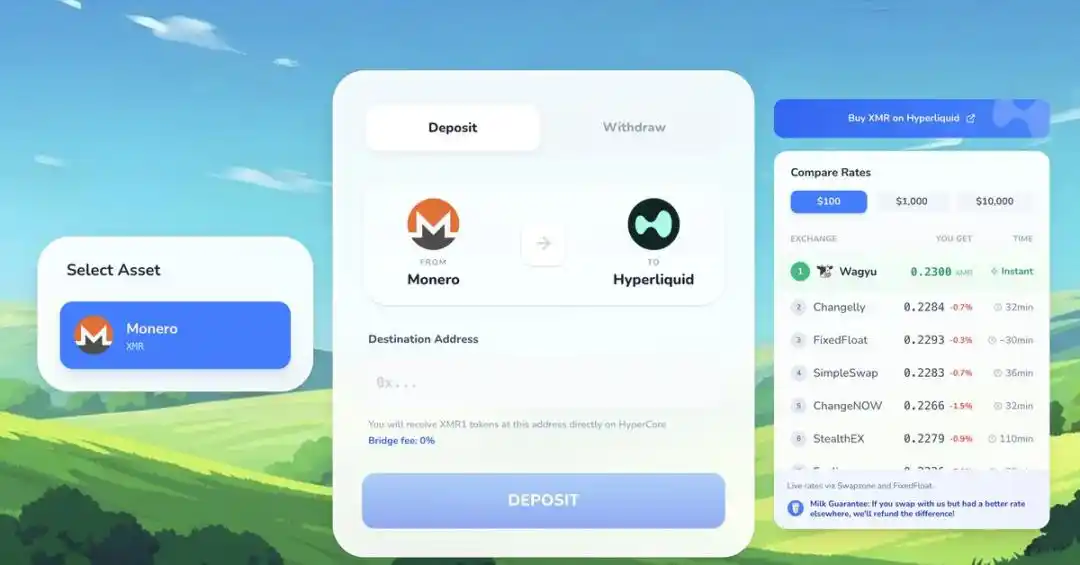
Let me give you a brief background: before I launched wagyu.xyz, it was nearly impossible for ordinary people to buy Monero.
You either had to use some dubious instant exchange websites, paying over 1% in fees to complete a transaction, or resort to centralized exchanges, which often freeze your account when you deposit or withdraw Monero.
Today, most centralized exchanges have delisted Monero. Even the world's largest cryptocurrency exchange, Binance, announced last year that it was delisting Monero, with other exchanges following suit.
I saw the potential in this situation and created wagyu.xyz, making Monero transactions easier than ever before. Users only need to deposit any token (such as ETH, BTC, SOL, USDC) on the Hyperliquid platform to exchange it for the XMR1 token I issued.
When you hold XMR1 on the Hyperliquid platform, you can easily withdraw it to your Monero wallet with just a few clicks at wagyu.xyz.
I created a short demo video explaining the process, which quickly went viral and caused a huge sensation in the Monero community.
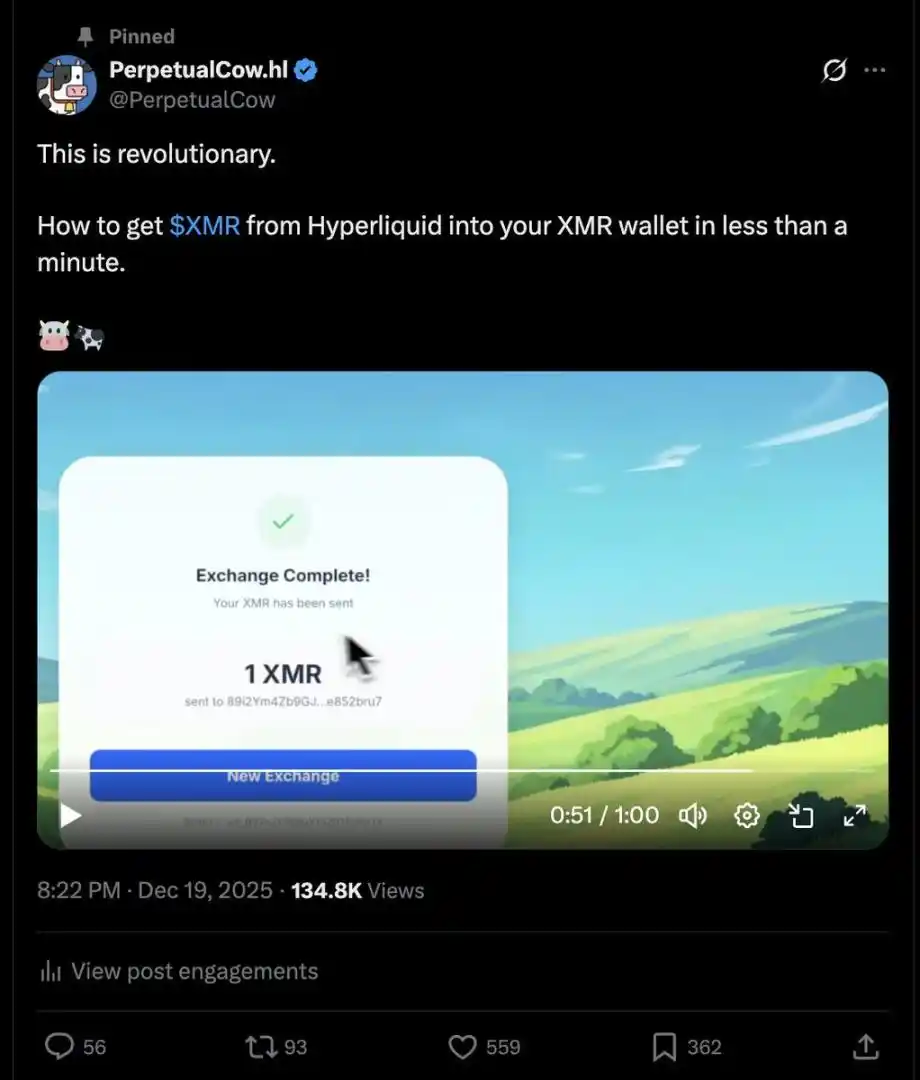
Video Link: https://x.com/PerpetualCow/status/2002112238044483642
My product is more user-friendly than any similar tool on the market. After all, an excellent product is always the market winner.
A pure Monero token is a treasure for users. The Monero community is ecstatic, as they have never seen such a user-friendly tool that completely solves their transaction pain points. In comparison, previous alternatives were simply terrible.
Since then, the Wagyu platform has been advancing rapidly. Just two weeks after launch, the platform's withdrawal amount exceeded $10 million, bringing in over $20 million in additional trading volume to the Hyperliquid platform.
Since the platform's launch, we have enabled more investors who were previously unable to access Monero to finally buy this token. When people can confidently buy Monero and securely hold it in cold storage without worrying about their accounts being frozen, buying demand naturally continues to flow in.
Now, users can easily buy or sell Monero on a scale of millions of dollars using a time-weighted average price algorithm and securely store the tokens in their wallets. The platform's order book liquidity has become very robust, and over time, as the platform continues to operate, liquidity will only improve – after all, we are only two weeks into this journey.
$50 Million Valuation in Two Weeks
Just two weeks after launch, the Wagyu platform generated $200,000 in revenue, with an annualized revenue of $5.2 million.
I initiated a small-scale fundraising round for members of the Hyperliquid community and friends I met during my entrepreneurial journey. The company was valued at $50 million, with a corresponding P/E ratio of 10x. The fundraising amount was quickly oversubscribed, clearly showing that many people have already seen the tremendous potential of this project.
However, I will not stop here. Monero's success is just the first step in my strategic plan.
I plan to develop wagyu.xyz into a leading developer platform within the Hyperliquid ecosystem and introduce a rewards system to incentivize users to provide liquidity to the platform and generate trading volume.
My goal is to build Wagyu into a platform that can compete with other top projects in the Hyperliquid ecosystem. We will focus on developing high-quality products that users truly need, are willing to trade, and hold.
Entrepreneurship Insights
This story tells us a truth: if you think of it, just go ahead and do it.
Go find the market gap. In this world, there are still too many unmet needs waiting for you to discover and fulfill.
We are in a golden age of entrepreneurship, where success is within reach. Don't follow the trend of creating run-of-the-mill artificial intelligence products; instead, build hardcore products that truly have market demand.
Original Post Link
You may also like

Decode Bitget TradFi: How to Bridge the Final Gap Between Crypto and Traditional Assets?

Meme Army Front’s Rising Short Position on Surging PEPE
Key Takeaways The Meme Army Front has been building substantial short positions in trending meme coins, particularly PEPE…

The Rise of the HyperEVM Ecosystem: Much More Than Hyperliquid
Key Takeaways Hyperliquid is a decentralized exchange running on its own L1 blockchain, supporting efficient and cost-effective trading.…
Solana 2025 Report Card: $15 Billion Annual Revenue, Surpassing Hyperliquid+ Ethereum Total

Header Fund 2025 Postmortem: What were the successful and unsuccessful trades made?

Arkstream Capital: When Cryptocurrency Returns to 'Financial Logic' by 2025

DeFi 2.0 Explosion Post-Disorderly Restructuring in 2026

Lighter Token Distribution Sparks Controversy, Zama Launches USDT Private Transfers, What is the Overseas Crypto Community Talking About Today?

The Fed’s Monetary Policy Minutes and the Crypto Trading Insights
Key Takeaways The Federal Reserve is set to disclose the minutes from its recent monetary policy meeting, highlighting…
HYPE Token Unlocks Ignite Investor Interest
Key Takeaways Significant HYPE Token unlock scheduled today at 3:30 PM Beijing Time, releasing 9.92 million tokens valued…

Flow Chain Rollback Sparks Outrage, Whale Starts Lighter Rebalancing, Mainstream Ecosystem Update Overview
Hyperliquid Whales Shift Strategies: BTC Longs Decline, ETH Shorts Dominate
Key Takeaways A significant reduction in Bitcoin long positions has been observed on Hyperliquid, with large holders decreasing…

Uniswap Token Burn Proposal Approved, What Is the Overseas Crypto Community Talking About Today?

December 24th Market Key Intelligence, How Much Did You Miss?

Aave Community Governance Drama Escalates, What's the Overseas Crypto Community Talking About Today?

Where Did $362 Million Go? Hyperliquid Counters FUD in Decentralization Showdown

2025 Whale Saga: Mansion Kidnapping, Supply Chain Poisoning, and Billions Liquidated
Coinbase Joins Prediction Market, AAVE Governance Dispute - What's the Overseas Crypto Community Talking About Today?
Over the past 24 hours, the crypto market has shown strong momentum across multiple dimensions. The mainstream discussion has focused on Coinbase's official entry into the prediction market through the acquisition of The Clearing Company, as well as the intense controversy within the AAVE community regarding token incentives and governance rights.
In terms of ecosystem development, Solana has introduced the innovative Kora fee layer aimed at reducing user transaction costs; meanwhile, the Perp DEX competition has intensified, with the showdown between Hyperliquid and Lighter sparking widespread community discussion on the future of decentralized derivatives.
This week, Coinbase announced the acquisition of The Clearing Company, marking another significant move to deepen its presence in this field after last week's announcement of launching a prediction market on its platform.
The Clearing Company's founder, Toni Gemayel, and the team will join Coinbase to jointly drive the development of the prediction market business.
Coinbase's Product Lead, Shan Aggarwal, stated that the growth of the prediction market is still in its early stages and predicts that 2026 will be the breakout year for this field.
The community has reacted positively to this, generally believing that Coinbase's entry will bring significant traffic and compliance advantages to the prediction market. However, this has also sparked discussions about the industry's competitive landscape.
Jai Bhavnani, Founder of Rivalry, commented that for startups, if their product model proves to be successful, industry giants like Coinbase have ample reason to replicate it.
This serves as a reminder to all entrepreneurs in the crypto space that they must build significant moats to withstand competition pressure from these giants.
Regulated prediction market platform Kalshi launched its research arm, Kalshi Research, this week, aimed at opening its internal data to the academic community and researchers to facilitate exploration of prediction market-related topics.
Its inaugural research report highlights Kalshi's outperformance in predicting inflation compared to Wall Street's traditional models. Kalshi co-founder Luana Lopes Lara commented that the power of prediction markets lies in the valuable data they generate, and it is now time to better utilize this data.
Meanwhile, Kalshi announced its support for the BNB Chain (BSC), allowing users to deposit and withdraw BNB and USDT via the BSC network.
This move is seen as a significant step for Kalshi to open its platform to a broader crypto user base, aiming to unlock access to the world's largest prediction market. Furthermore, Kalshi also revealed plans to host the first Prediction Market Summit in 2026 to further drive industry engagement and development.
The AAVE community recently engaged in heated debates around an Aave Improvement Proposal (AIP) titled "AAVE Tokenomics Alignment Phase One - Ownership Governance," aiming to transfer ownership and control of the Aave brand from Aave Labs to Aave DAO.
Aave founder Stani Kulechov publicly stated his intention to vote against the proposal, believing it oversimplifies the complex legal and operational structure, potentially slowing down the development process of core products like Aave V4.
The community's reaction was polarized. Some criticized Stani for adopting a "double standard" in governance and questioned whether his team had siphoned off protocol revenue, while others supported his cautious stance, arguing that significant governance changes require more thorough discussion.
This controversy highlights the tension between the ideal of DAO governance in DeFi projects and the actual power held by core development teams.
Despite governance disputes putting pressure on the AAVE token price, on-chain data shows that Stani Kulechov himself has purchased millions of dollars' worth of AAVE in the past few hours.
Simultaneously, a whale address, 0xDDC4, which had been quiet for 6 months, once again spent 500 ETH (approximately $1.53 million) to purchase 9,629 AAVE tokens. Data indicates that this whale has accumulated nearly 40,000 AAVE over the past year but is currently in an unrealized loss position.
The founder and whale's increased holdings during market volatility were interpreted by some investors as a confidence signal in AAVE's long-term value.
In this week's top article, Morpho Labs' "Curator Explained" detailed the role of "curators" in DeFi.
The article likened curators to asset managers in traditional finance, who design, deploy, and manage on-chain vaults, providing users with a one-click diversified investment portfolio.
Unlike traditional fund managers, DeFi curators execute strategies automatically through non-custodial smart contracts, allowing users to maintain full control of their assets. The article offered a new perspective on the specialization and risk management in the DeFi space.
Another widely circulated article, "Ethereum 2025: From Experiment to Global Infrastructure," provided a comprehensive summary of Ethereum's development over the past year. The article noted that 2025 is a crucial year for Ethereum's transition from an experimental project to global financial infrastructure. Through the Pectra and Fusaka hard forks, Ethereum achieved significant reductions in account abstraction and transaction costs.
Furthermore, the SEC's clarification of Ethereum's "non-securities" nature and the launch of tokenized funds on the Ethereum mainnet by traditional financial giants like JPMorgan marked Ethereum's gaining recognition from mainstream institutions. The article suggested that whether it is the continued growth of DeFi, the thriving L2 ecosystem, or the integration with the AI field, Ethereum's vision as the "world computer" is gradually becoming a reality.
The Solana Foundation engineering team released a fee layer solution called Kora this week.
Kora is a fee relayer and signatory node designed to provide the Solana ecosystem with a more flexible transaction fee payment method. Through Kora, users will be able to achieve gas-free transactions or choose to pay network fees using any stablecoin or SPL token. This innovation is seen as an important step in lowering the barrier of entry for new users and improving Solana network's availability.
Additionally, a deep research report on propAMM (proactive market maker) sparked community interest. The report's data analysis of propAMMs on Solana like HumidiFi indicated that Solana has achieved, or even surpassed, the level of transaction execution quality in traditional finance (TradFi) markets.
For example, on the SOL-USDC trading pair, HumidiFi is able to provide a highly competitive spread for large trades (0.4-1.6 bps), which is already better than the trading slippage of some mid-cap stocks in traditional markets.
Research suggests that propAMM is making the vision of the "Internet Capital Market" a reality, with Solana emerging as the prime venue for all of this to happen.
The competition in the perpetual contract DEX (Perp DEX) space is becoming increasingly heated.
In its latest official article, Hyperliquid has positioned its emerging competitor, Lighter, alongside centralized exchanges like Binance, referring to it as a platform utilizing a centralized sequencer. Hyperliquid emphasizes its transparency advantage of being "fully on-chain, operated by a validator network, and with no hidden state."
The community widely interprets this as Hyperliquid declaring "war" on Lighter. The technical differences between the two platforms have also become a focal point of discussion: Hyperliquid focuses on ultimate on-chain transparency, while Lighter emphasizes achieving "verifiable execution" through zero-knowledge proofs to provide users with a Central Limit Order Book (CLOB)-like trading experience.
This battle over the future direction of decentralized derivatives exchanges is expected to peak in 2026.
Meanwhile, discussions about Lighter's trading fees have surfaced. Some users have pointed out that Lighter charged as much as 81 basis points (0.81%) for a $2 million USD/JPY forex trade, far exceeding the near-zero spreads of traditional forex brokers.
Some argue that Lighter does not follow a B-book model that bets against market makers, instead anchoring its prices to the TradFi market, and the high fees may be related to the current liquidity or market maker balance incentives. Providing a more competitive spread for real-world assets (RWA) in the highly volatile crypto market is a key issue Lighter will need to address in the future.
Decode Bitget TradFi: How to Bridge the Final Gap Between Crypto and Traditional Assets?
Meme Army Front’s Rising Short Position on Surging PEPE
Key Takeaways The Meme Army Front has been building substantial short positions in trending meme coins, particularly PEPE…
The Rise of the HyperEVM Ecosystem: Much More Than Hyperliquid
Key Takeaways Hyperliquid is a decentralized exchange running on its own L1 blockchain, supporting efficient and cost-effective trading.…


 App
App